
REVIEW · USA
Atlanta: Fall In Love With Atlanta Bicycle Tour
Atlanta looks better from a bike seat. This 2.5-hour, 8-mile ride links the BeltLine, Inman Park, and Little Five Points with major Civil War and Civil Rights sites, giving you a broad feel for the city without spending the day in a van. I like the strong mix of history and local color, and I like that the route includes photo stops, murals, gardens, and streets you could easily miss on foot. The main drawback is simple: you need to be comfortable riding for about two and a half hours, and the published age information is inconsistent, so families should confirm the rules before booking.
The tour also earns praise for its careful guides and well-kept bicycles. Lisa is described as both entertaining and safety-minded, while Walt receives high marks for his energy and local know-how. Comfortable shoes and closed toes are required, and you should allow up to three hours from arrival to finish.
Key points at a glance
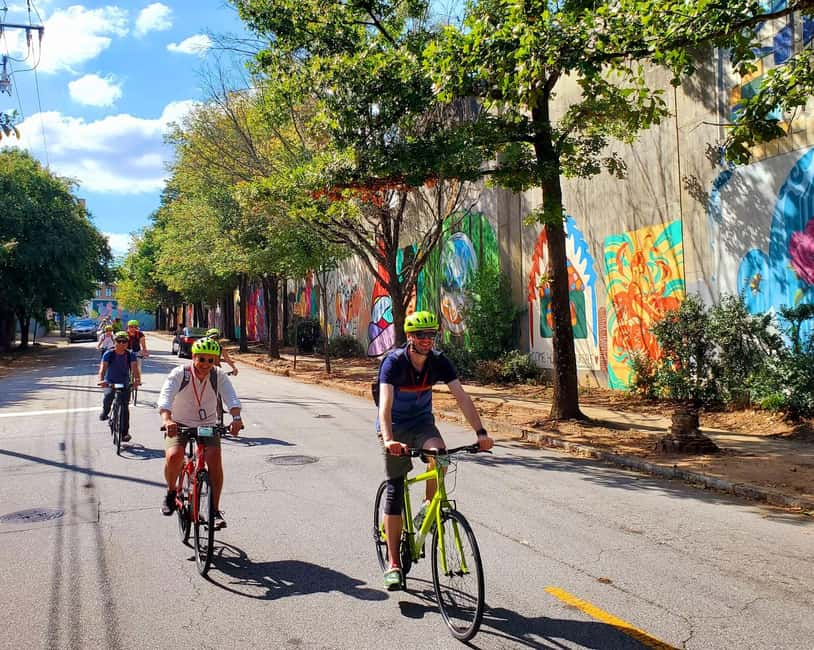
- Eight miles through changing Atlanta: Ride from the Old Fourth Ward through Inman Park, Cabbagetown, Little Five Points, and the King Historic District.
- A useful mix of past and present: See places tied to the Civil War and Civil Rights Movement alongside murals, gardens, and new BeltLine projects.
- Good photo opportunities: Jackson Street Bridge, the Krog Tunnel, Victorian homes, street art, and neighborhood scenes all add variety.
- Safety gets real attention: Guides check on riders, and the bicycles are reported to be in excellent condition.
- Easy post-tour planning: The shop sits in the Old Fourth Ward, near places to eat and drink after your ride.
- Price and timing: The tour costs $70 per person, includes a bicycle, helmet, water, and trail mix, and allows free cancellation up to 24 hours ahead.
Why two wheels work so well in Atlanta
Atlanta is spread out, and its most interesting areas do not line up neatly around one central square. A bicycle helps bridge that gap. You can cover eight miles while still seeing homes, parks, art, landmarks, and active city projects at street level.
That is the real value here. A car can get you from the King Historic District to the BeltLine, but it will not give you the same sense of how the neighborhoods connect. On a bike, you notice the shade from old trees, the changing house styles, small gardens, painted walls, and the shift from historic streets to newer urban development.
The ride is also more active than a standard sightseeing tour, but it is not presented as a race. The tone is relaxed, and the guide is there to keep the group together, explain what you are seeing, and help you feel secure on the road and trails.
I would choose this experience early in an Atlanta stay. It gives you a useful map of several neighborhoods, and the guides can point you toward places worth returning to later. Since the shop is in the Old Fourth Ward, you finish near food and drink options rather than being dropped far from the city center.
A few more days on two wheels around the USA worth a look
- Guided Bike Tour of Old Town Key West
★ 5.0 · 2,611 reviews - NYC: Central Park Bike Rentals
★ 4.2 · 2,528 reviews - Red Rock Canyon eBike Half-Day Tour
★ 5.0 · 1,870 reviews
Starting at Studioplex Lofts in the Old Fourth Ward
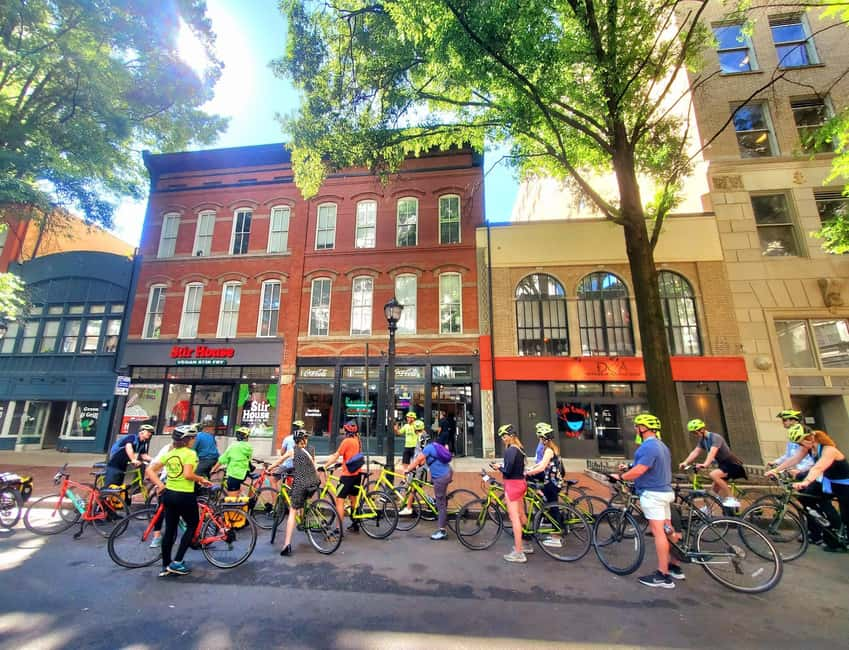
The meeting point is Bicycle Tours of Atlanta inside Studioplex Lofts, a repurposed industrial property. Look for two buildings. The bicycle shop is in the larger two-story building on the right, with an open courtyard and the Studioplex sign along the roofline. Signs direct you into the correct entrance.
This is a practical place to begin because the Old Fourth Ward is already one of the areas featured on the route. You do not waste the first part of the tour crossing town to reach the sightseeing. The shop can also store luggage or personal items in a secure area while you ride.
Transportation deserves a little planning. Rideshare services such as Uber or Lyft are recommended for reaching the start. Free street parking is available in the neighborhood, while onsite parking costs $24 for the tour period. That makes rideshare the easier choice if you are staying nearby or do not want to deal with Atlanta parking.
Arrive ready to ride. You receive a high-quality bicycle, helmet, bottled water, and trail mix snacks, but you should bring comfortable, closed-toed shoes. Smoking and pets are not allowed.
The Atlanta BeltLine shows the city changing
The BeltLine is one of the tour’s most useful stops because it helps explain modern Atlanta. This large urban planning project is changing how people move, live, and spend time in parts of the city. Riding along it lets you see the project as public space rather than as an abstract planning idea.
You will also get a feel for how the BeltLine ties different neighborhoods together. The route presents Atlanta as a city still being reshaped, with older communities and new development meeting along the same corridors.
Do not expect the entire experience to focus on the BeltLine. It is one piece of a wider ride, and that is a strength. You get the context without spending the full 150 minutes on one type of scenery.
The trail portion may appeal to less confident riders because it offers a break from ordinary city streets, but you still need to remain alert and follow the guide’s instructions. The tour is suitable for confident young riders and relaxed older riders, yet it is not designed for someone who dislikes sustained cycling.
Inman Park brings Victorian Atlanta into view
Inman Park adds a different mood. The neighborhood is known for beautiful Victorian homes and tree-canopied streets, giving you a look at Atlanta’s residential past. From a bicycle, you can take in the scale and detail of the homes without repeatedly stopping a car or walking a long block between viewpoints.
This section is especially good for photography. The leafy streets provide a calmer contrast to the murals, tunnels, and city projects elsewhere on the route. A guide can also explain how the neighborhood fits into Atlanta’s wider story, rather than leaving you with a collection of attractive houses and no context.
The tradeoff is that a bicycle tour cannot give every home or street a long stop. If you are devoted to architecture, you may want to return to Inman Park afterward for a slower walk. The tour gives you an introduction and helps you decide where to spend more time.
Same roads, a different day in the saddle:
- NYC: Central Park Bike Rental
★ 4.1 · 1,651 reviews - Central Park Bike Rental
★ 4.7 · 1,509 reviews - Austin Biker Gang E-Bike Tour
★ 5.0 · 1,399 reviews - Asheville Historic Downtown Guided Electric Bike Tour with Scenic Views
★ 5.0 · 1,234 reviews
Little Five Points adds Atlanta’s creative edge
Little Five Points brings a sharper, more unconventional feel to the ride. It is one of the places where Atlanta’s arts, independent businesses, and street culture come through most clearly. The point is not only to see a famous neighborhood, but to understand how different it feels from the historic residential streets.
This is where the route becomes especially useful for first-time visitors. You get a quick look at a part of Atlanta that may not fit into a traditional downtown sightseeing plan. Murals, unusual local spots, and changing streets keep the ride from becoming a procession of formal landmarks.
Little Five Points is also a reminder that Atlanta does not have one single personality. The city can feel polished, historic, experimental, and community-focused within a short ride. You will appreciate that range more if you enjoy observing neighborhoods rather than checking off monuments.
Krog Tunnel and Cabbagetown make strong photo stops
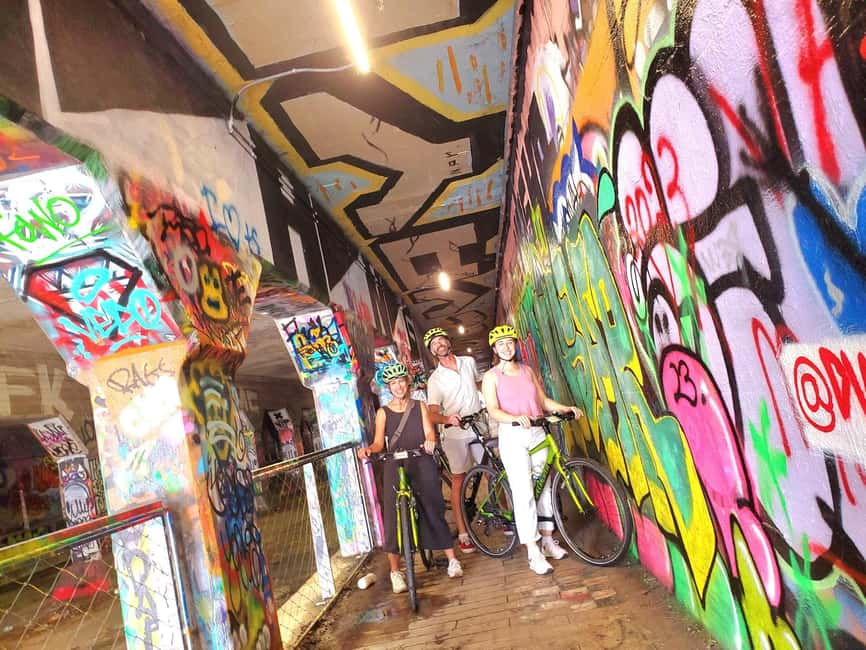
The Krog Tunnel is one of the route’s most recognizable art-focused locations. Its changing painted surfaces give you a colorful place to stop and take photographs. It is also a good example of how Atlanta uses public art to give ordinary infrastructure a local identity.
Cabbagetown continues the neighborhood story with a more community-centered feel. The route includes community gardens and residential streets, so you see more than the city’s headline attractions. These details help explain why a bicycle is valuable here. You can move slowly enough to notice a garden or mural, but far enough to connect several areas in one outing.
The tour is not a dedicated street-art walk, so art lovers should keep their expectations measured. You will see bold murals and creative spaces, but the guide’s attention is divided among history, safety, neighborhood life, and city planning. That broad focus makes the experience more useful for a general visit, though less suited to someone seeking a specialist art tour.
Jackson Street Bridge puts the city in one frame
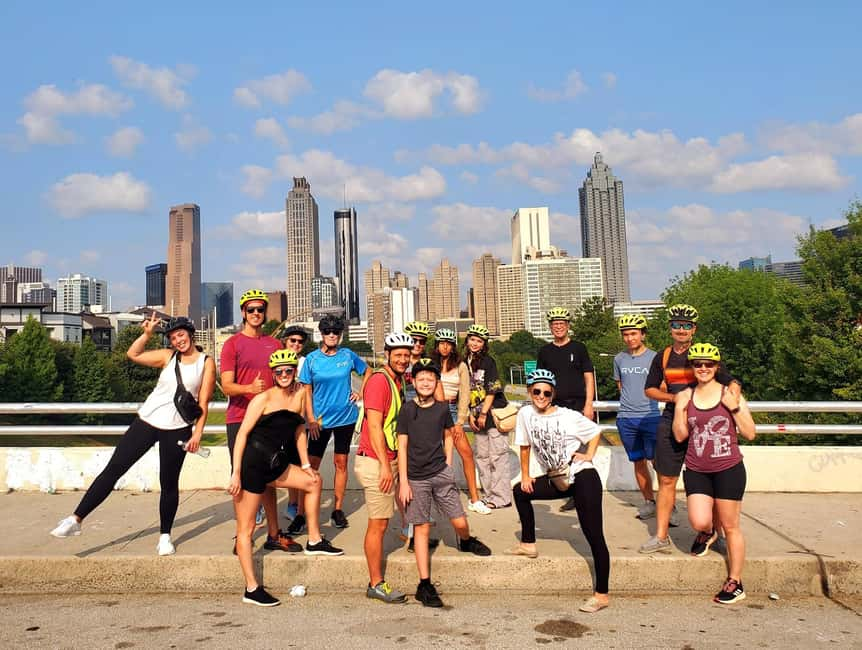
Jackson Street Bridge is included as a photo stop and provides a strong visual point on the route. It is the kind of place where the city’s different eras can come together in one view: older neighborhoods, newer construction, and Atlanta’s wide urban reach.
Photo stops matter on a bicycle tour because they break up the riding. You are not expected to pedal continuously for 150 minutes. Stopping at a place like the bridge gives you time to take pictures, listen to the guide, and reset before continuing.
Bring a phone or camera if you enjoy taking pictures, but keep your belongings secure and easy to manage. The shop provides water and snacks, which helps, but you should still arrive prepared for an active outing.
Oakland Cemetery connects memory and city history
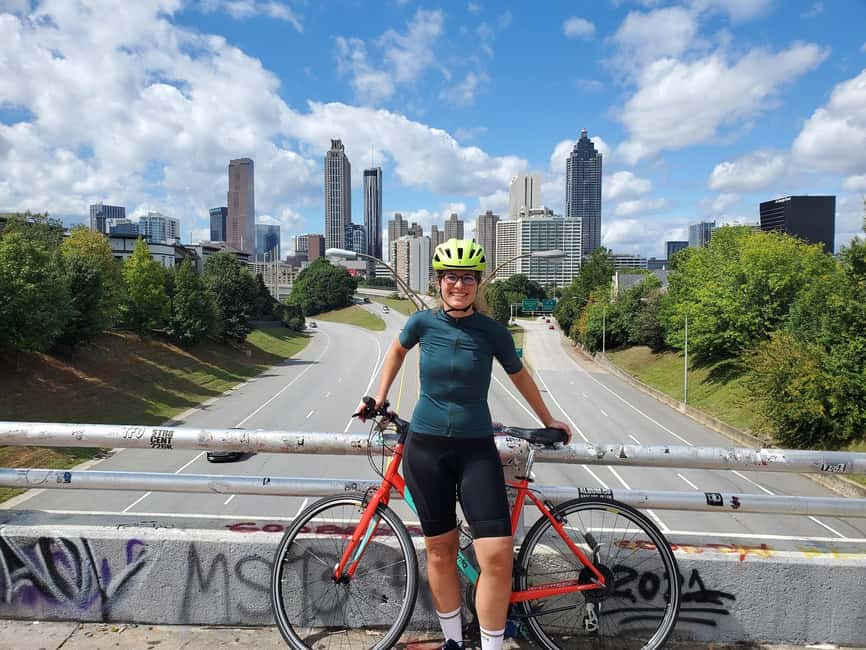
Oakland Cemetery adds one of the tour’s clearest links to Atlanta’s past. The route connects the cemetery with landmarks tied to the Civil War and Civil Rights Movement, giving you a broader view of the forces that shaped the city and the country.
A bicycle tour cannot replace a long cemetery visit or a dedicated Civil Rights history tour. Its benefit is different. You see Oakland Cemetery as part of a connected urban story, not as an isolated stop. The guide can help place it alongside the surrounding neighborhoods and explain why the city’s past remains visible in its streets and landmarks.
This is also one reason I would not treat the experience as only a recreational ride. The cycling keeps things light, but the subject matter has weight. You will come away with more context than you would from a route focused only on murals and good views.
The King Historic District gives the ride its moral center
The King Historic District brings the Civil Rights Movement directly into the experience. Including it alongside the Civil War-related sites gives the tour a clear historical arc. Atlanta is presented not simply as a Southern city with attractive old neighborhoods, but as a place shaped by conflict, reform, leadership, and continuing change.
The district is one of the most meaningful parts of the route, especially if you want an introduction to Atlanta’s role in American history. The bicycle format keeps the visit moving, though you should not expect the time for a full museum program or extended indoor visit. Think of this as an outdoor overview that can guide later sightseeing.
If Civil Rights history is your main reason for visiting Atlanta, pair this ride with a longer visit to the King Historic District on another day. The tour provides useful orientation, but its goal is to show the connections among several parts of the city.
Guides, bicycles, and the pace of the ride
Guide quality matters more than almost anything else on a bicycle tour. A good guide has to manage traffic, explain complicated history in plain language, watch the group, and keep the mood relaxed. The comments about Lisa, Tanner, and Walt suggest a team that takes both storytelling and safety seriously.
Lisa is praised for being informative and entertaining while checking that riders stayed safe. Tanner is associated with a small-group atmosphere, good photo stops, and a careful manner. Walt is described as entertaining and well known around town. Those details point to guides who add personality rather than simply reciting facts.
The bicycles also receive strong praise. You are provided with a high-quality bike, and the equipment is reported to be in excellent condition. That matters because a poorly adjusted or worn bicycle can turn a pleasant outing into a tiring one.
You should still be honest about your own fitness. The total activity lasts about 2.5 hours once everyone is ready, and the full experience can take up to three hours. The published information says it suits confident riders age 10 and older, but it also says people over 95 are not suitable and separately uses the unusual phrase ages 100 and up. Since those statements conflict, families and older riders should confirm the current age policy before paying.
Is $70 a fair price?
At $70 per person, this is not the cheapest way to see Atlanta. It is a fair price if you value a guided route, a maintained bicycle, a helmet, water, snacks, local explanation, and access to several neighborhoods in one outing.
The price looks better when you compare it with the time covered. In 150 minutes, you reach the BeltLine, Inman Park, Little Five Points, Krog Tunnel, Jackson Street Bridge, Cabbagetown, Oakland Cemetery, the Old Fourth Ward, and the King Historic District. You could visit some of these independently, but you would spend more time figuring out connections and less time hearing how they relate.
The value is weaker if you already know Atlanta well, dislike cycling, or plan to visit only one district. In that case, walking or using public transportation may cost less and let you set your own pace. For a first visit, though, the combination of transportation and interpretation makes the fee reasonable.
Free cancellation up to 24 hours before the start and a reserve-now, pay-later option also reduce the risk of fitting this into a changing schedule.
Who should book this Atlanta bike tour?
I would recommend it to first-time visitors who want more than downtown, active families with confident riders, couples who enjoy neighborhood exploring, and solo visitors who like having a local guide. It is also a good choice if you want practical ideas for what to do after the tour.
The route suits people who enjoy variety. You will see architecture, public art, historic sites, city planning projects, gardens, and local streets in one session. The guides can also help you decide which areas deserve a return visit.
I would hesitate if you are uncomfortable on a bicycle, cannot ride for about 2.5 hours, need a fully indoor activity, or want a slow, detailed visit to one historical site. It is also not suitable for children under 10, and the upper age information should be clarified directly with the provider.
Should you book it?
Book this tour if you want Atlanta explained through its neighborhoods rather than viewed only from a downtown attraction list. The strongest reasons are the varied eight-mile route, careful guides, good bicycles, and the way the ride connects old Atlanta with the city being built today.
Skip it if cycling will make you anxious or if you want long visits inside museums and historic buildings. Otherwise, $70 buys a lively introduction to a wide slice of Atlanta, plus a useful list of places to explore after the wheels stop turning.
FAQ
How long is the Atlanta bicycle tour?
The tour lasts 150 minutes, or 2.5 hours. You should allow up to three hours for the full experience, including getting everyone prepared to ride.
How far do you ride?
The route covers about eight miles through Atlanta’s historic and arts-focused neighborhoods.
What is included in the price?
The $70 price includes a high-quality bicycle, helmet, bottled water, and trail mix snacks.
What neighborhoods and sites are included?
The route includes the Atlanta BeltLine, Inman Park, Little Five Points, Krog Tunnel, Jackson Street Bridge, Cabbagetown, the Old Fourth Ward, Oakland Cemetery, and the King Historic District.
Where does the tour meet?
The meeting point is Bicycle Tours of Atlanta inside Studioplex Lofts. Use the larger two-story building on the right, with an open courtyard and the Studioplex sign on the roofline.
What should I wear or bring?
Wear comfortable, closed-toed shoes. You should also provide a correct cellphone number and email address in case the operator needs to contact you.
Is parking available at the meeting point?
Free street parking is available throughout the neighborhood. Onsite parking costs $24 for the duration of the tour, and rideshare services are recommended for transportation to the start.
Can I cancel or pay later?
You can cancel up to 24 hours in advance for a full refund. A reserve-now, pay-later option is also available.
Just added around the USA
- Garden of the Gods Original Electric e-Bike Tour★ 5.0 · 45 reviews
- 3-Hour E-Bike Tour of Trail of the Silver Kings (Old Mine Tour)★ 5.0 · 18 reviews
- Gold Camp Road by E-Bike★ 5.0 · 21 reviews
- Pikes Peak & Garden of the Gods E-Bike Expedition★ 5.0 · 29 reviews
- EBIKE Mountain Adventure in Colorado Springs: Gold Camp Road★ 5.0 · 16 reviews
- Ride Manitou Springs & Garden of the Gods Best Guided eBike Tour!★ 4.5 · 16 reviews
- Ebike 2 Hour Rental Experience in Manitou Springs, Colorado★ 5.0 · 33 reviews
- Historical Bicycle Tour of Dunedin★ 5.0 · 44 reviews
USA Cycling Tours, compared.






Asheville Historic Downtown Guided Electric Bike Tour with Scenic Views
Read our review →
Browse the lists this tour appears in