
REVIEW · NORWAY
Geiranger Fjord: Downhill Self-Guided Bike Tour
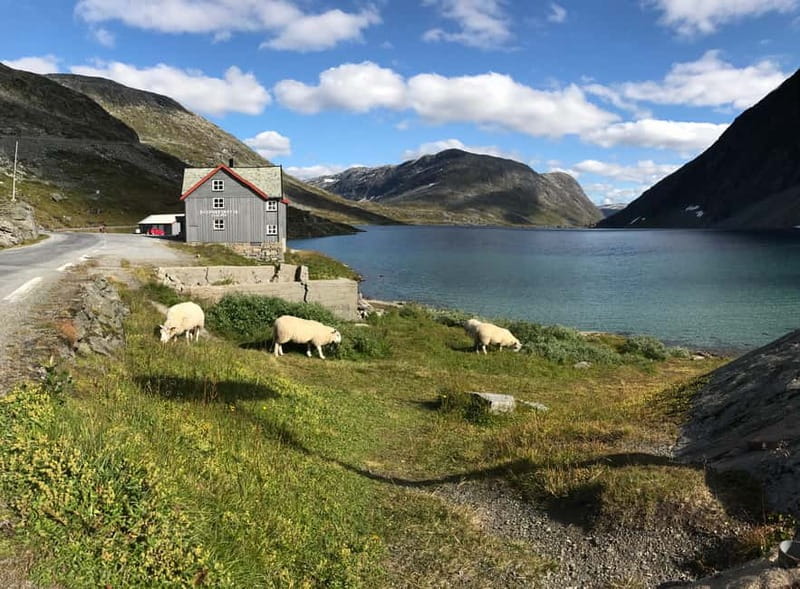
Norway gives you a downhill view to remember. This three-hour ride starts high above Geiranger at Djupvatnet Lake, then follows winding roads toward the fjord, with time to stop at famous Flydalsjuvet. I like the easy downhill format and the chance to see Geiranger from above without spending the day on a hard uphill route. The main concern is traffic: this is a public road shared with buses, vans, and other vehicles, not a quiet mountain-bike trail.
I also like that the small group is limited to eight people, with bikes, helmets, gloves, visibility vests, and transport to the starting point included. You need to be a confident cyclist, though, especially if rain arrives. There is no guide riding with you, so safe decisions, controlled speed, and awareness of traffic are part of the experience.
Key Points To Know Before You Ride
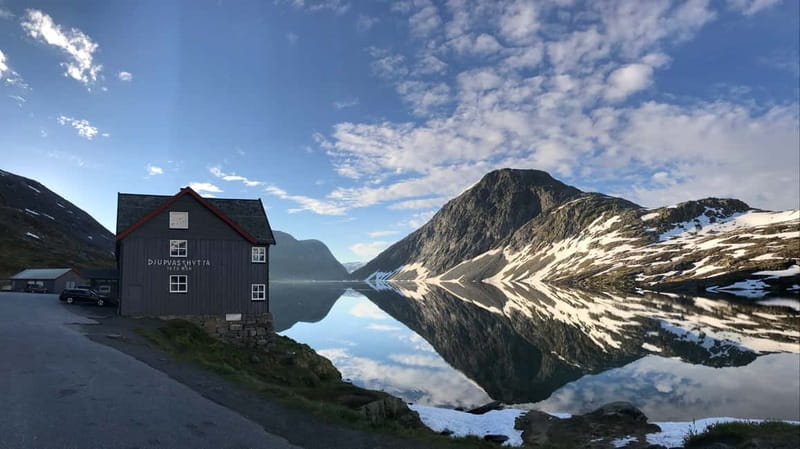
- The route begins at 1,030 meters: You are driven up from Geiranger to Djupvatnet Lake before the cycling starts.
- Flydalsjuvet is the scenic high point: Stop here for one of the best views down toward Geiranger Fjord.
- It is downhill, but not off-road: You ride on a public road with buses, camping vans, and other traffic.
- The cycling takes about 2.5 hours: The full activity lasts roughly three hours, including the safety talk, equipment fitting, and transport.
- You ride without a guide: An English-speaking instructor handles the briefing, but you make your own way down.
- Weather can change the plan: If the road to Djupvatnet is closed, the alternate starting point is Eagle Bend viewpoint.
Why This Downhill Route Works So Well
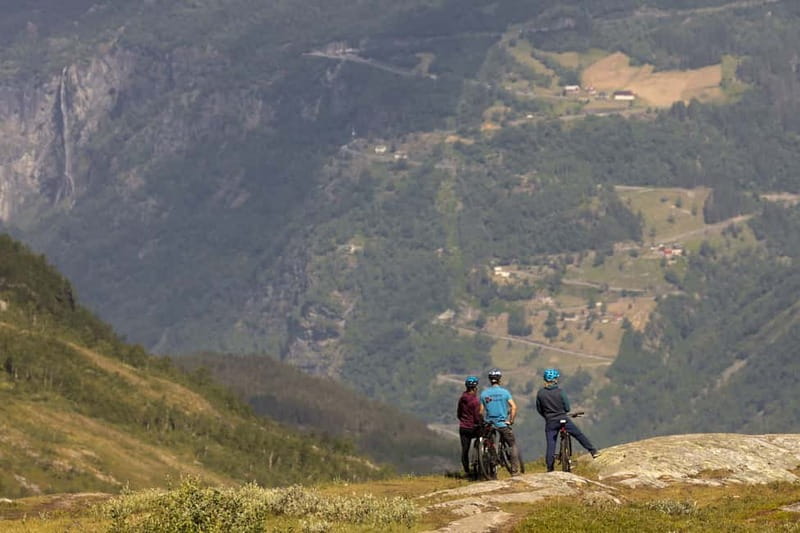
The appeal is simple: you begin high above the fjord and let gravity do most of the work. Instead of climbing through Geiranger’s steep terrain, you get a long descent through some of the area’s most dramatic scenery.
The ride begins after you meet at the supplier’s office at Geirangervegen 10, directly before Cafe Ole. There, you receive a safety talk and get fitted with a bicycle, helmet, bicycle gloves, and visibility vest. The equipment list is modest but sensible. The vest matters on a busy road, while gloves are useful for a long ride and changing weather.
You then ride in a vehicle to the starting point at Djupvatnet Lake, 1,030 meters above sea level. That drive is an important part of the setup because it gives you the height needed for the downhill route. It also means the cycling begins in a colder, more exposed setting than Geiranger village, so warm clothing and a windbreaker are not optional extras.
The cycling itself lasts about 2.5 hours, although your exact timing depends on how often you stop. You are encouraged to pause for photos, and the route gives you plenty of reason to do so. The pace is yours, which is a real advantage if you want to stop often rather than stay locked to a guide’s timetable.
More Self-Guided Bike Tours in Norway:
- Red Rock Canyon Self-Guided Electric Bike Tour
★ 5.0 · 783 reviews - Private Self-Guided E-Bike Ride in Tuscany with Vineyard Visit
★ 5.0 · 775 reviews - Haleakala Sunrise Best Self-Guided Bike Tour
★ 4.5 · 745 reviews
Djupvatnet Lake: The High Starting Point
Djupvatnet Lake gives this ride its sense of scale. From the start, you are high above Geiranger and looking out over Norway’s mountain scenery before beginning the descent.
The exact character of the start depends on the weather. On a clear day, the high elevation should make the surrounding scenery feel broad and open. In rain or wind, it can feel much more serious. That is why the supplied advice to bring warm clothing, a windbreaker, snacks, water, and sportswear deserves attention.
You should also be comfortable with the first moments of the ride. The route is downhill, but downhill does not mean effortless. You still need to control the bicycle, manage turns, watch the road, and respond to vehicles. If you are only an occasional cyclist, this is not the place to discover that braking on a descent makes you nervous.
The road to Djupvatnet may occasionally be closed. If that happens, the alternative starting point is Eagle Bend viewpoint. This changes the opening section, but the operator provides a backup plan rather than simply canceling the ride whenever the upper road is unavailable.
Riding the Road Instead of a Mountain-Bike Trail
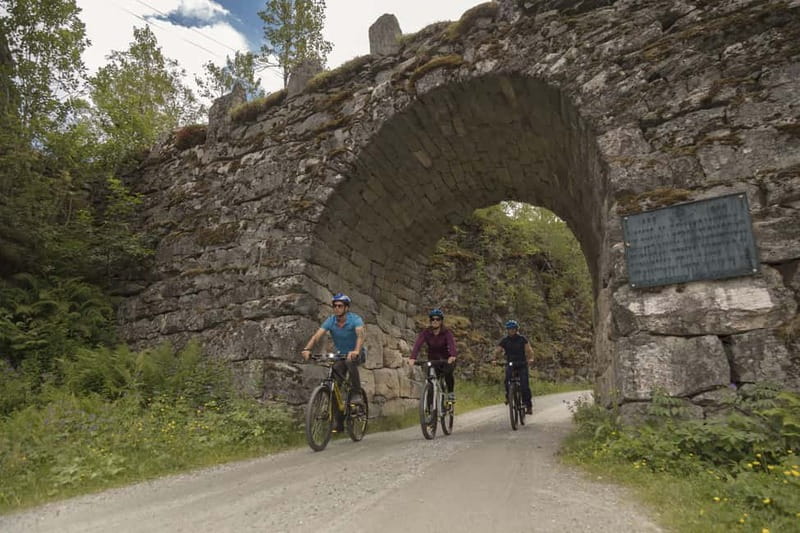
This experience is best described as a scenic road-bike descent, not mountain biking. You ride on a public road, and the route can be busy in the high season.
That distinction matters. Some people picture a narrow trail through the forest, with no vehicles and a more adventurous off-road feel. That is not what you get here. You may share the road with camping vans and large tour buses, and you need to stop or pull over when traffic makes that necessary.
The road setting has two sides. On the good side, it makes the ride accessible to people who want scenery and a downhill route without technical mountain biking. The bicycles are described as easy to operate, and the descent lets you cover a lot of ground without a demanding climb.
The downside is that traffic can interrupt the flow. You may need to slow down often, and your attention cannot stay fixed on the fjord. A self-guided ride gives you freedom, but it also puts responsibility on you. Stay alert, keep your speed under control, and never treat the route like a closed cycling course.
If riding beside vehicles makes you uncomfortable, this may not be the right activity. The road can be especially challenging during peak season, when buses and motorhomes add to the traffic. A confident rider will get more from this tour than someone who wants a relaxed, protected cycle path.
Flydalsjuvet: The Photo Stop You Should Not Rush
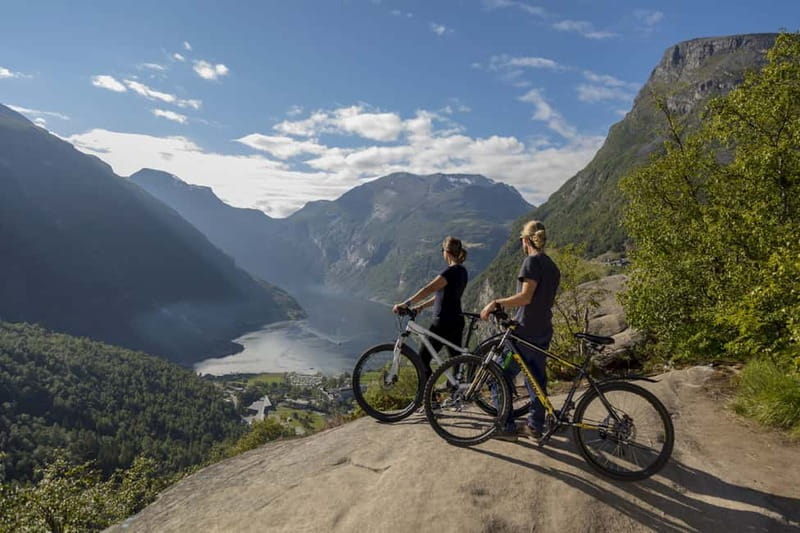
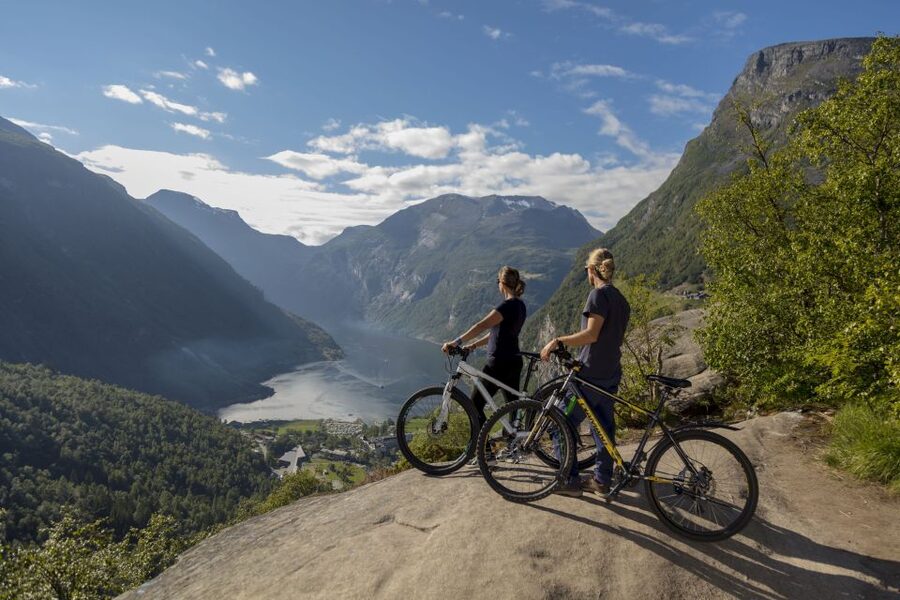
Flydalsjuvet is the route’s signature stop. This famous viewpoint gives you a high view toward Geiranger Fjord and the village below, making it one of the strongest reasons to choose this ride.
Do not treat Flydalsjuvet as a quick roadside pause. The point of a self-guided tour is that you can stop for photos and take in the view without waiting for a group to finish a formal explanation. You can use the stop to catch your breath, check your bicycle, and enjoy the scenery at your own pace.
The view also helps explain why the ride is worth doing from above. Geiranger Fjord is often experienced from the water or from the village. Here, you see it from a higher angle, with the road descent linking mountain, viewpoint, village, and fjord into one outing.
Timing still matters. You need to allow enough time for Flydalsjuvet without losing track of the return schedule. The ride is self-guided, not open-ended. Stopping frequently is encouraged, but you must also make it back safely and on time.
More Guided Rides in Norway:
- Guided E-Bike Tour in Haugesund: city, vikings, Rising Tides
★ 4.6 · 47 reviews - Olden: Guided e-bike tour
★ 4.8 · 38 reviews - 3-Hour Porto Highlights on a Electric Bike Guided Tour
★ 5.0 · 4,392 reviews - Small Group Guided Bike Tour of Amsterdam’s Hidden Gems
★ 5.0 · 3,936 reviews
A Self-Guided Ride Requires More Than Pedaling
The phrase self-guided is the key to understanding this activity. An English-speaking instructor provides the safety talk and helps you get equipped, but no guide accompanies you on the road.
That arrangement suits independent cyclists. You can choose your own pace, stop for pictures, and avoid being pushed along by a guide who wants to keep a tight schedule. One particularly useful strength is the ability to ride slowly when scenery catches your eye, then continue when you are ready.
It also means you do not have a guide managing traffic or leading the group through every turn. You need to understand the instructions, judge road conditions, and make sensible choices for yourself. If you are hoping for route commentary, regular guidance, or an escort in busy sections, you may find the format too hands-off.
The small group limit of eight helps keep the operation manageable, but it does not turn the activity into a guided procession. You are still responsible for your own ride. The best approach is to treat the safety briefing seriously and ask questions before leaving Geiranger.
Weather Can Change the Character of the Ride
The weather in the mountains can make a major difference. On a clear day, you should get the broad fjord views that make this route special. In heavy rain, the ride becomes more demanding, with reduced comfort and greater need for caution.
A wet day does not automatically ruin the experience. The descent can still feel exciting, and the scenery can remain impressive. But you need to be confident on a bicycle, particularly when the road is wet and traffic is present.
Bring layers rather than relying on a single warm jacket. A windbreaker, warm clothing, water, and snacks are specifically recommended. Sportswear is the sensible choice, since you will be cycling for around 2.5 hours and may spend time waiting for traffic or stopping at viewpoints.
The tour depends on good weather conditions. That gives you some protection against unsafe conditions, but you should still plan with flexibility. The reserve-now-and-pay-later option and free cancellation up to 24 hours before departure can help if your schedule is uncertain, although the weather decision itself remains important on the day.
Is $156 a Fair Price?
At $156 per person, this is not a cheap way to rent a bicycle for a few hours. The value comes from the full setup: transport from Geiranger to the high starting point, the bike, helmet, gloves, visibility vest, safety briefing, and a planned downhill route.
The transport is especially important. Without it, you would lose much of the appeal of starting at Djupvatnet Lake, since the major attraction is beginning high above the fjord. You are paying for access to that elevated route, not just for bicycle use.
The price makes the most sense if you want a structured scenic activity but do not need a full guide. It is also useful if you have limited time in Geiranger and want to combine movement with major viewpoints. Three hours gives you a substantial outing without taking the entire day.
The value is weaker if you expect a dedicated mountain-bike trail, technical riding, or a guided sightseeing experience. You are not paying for an off-road course or constant interpretation. You are paying for the equipment, uphill transfer, and freedom to make a downhill road ride your own.
Who Should Book This Geiranger Bike Tour?
I would recommend it most strongly to confident cyclists who enjoy scenery, can ride on a public road, and like setting their own pace. It suits adults and children aged 12 or older who can comfortably ride a bicycle and are accompanied by an adult.
It is a good choice if you want:
- A downhill route rather than a strenuous climb
- Views of Geiranger Fjord from above
- Time for photo stops at Flydalsjuvet
- A small-group activity with no large organized cycling procession
- The freedom to control your own speed and stops
I would be cautious if you have back problems, heart problems, or limited cycling confidence. The activity is not suitable for children under 12, and unaccompanied minors are not allowed.
You should also think honestly about traffic. A busy public road can be more tiring than a quiet trail, even when the route goes downhill. If you need a guide beside you for reassurance, the self-guided format may not provide enough support.
Practical Details That Make the Day Easier
Meet at Geirangervegen 10, directly before Cafe Ole. Hotel pickup and drop-off are not included, so you need to make your own way to the meeting point.
The full activity lasts about three hours, while the cycling portion takes approximately 2.5 hours. Starting times vary, so check availability when you book. The instructor speaks English, and the group is limited to eight participants.
Food and drinks are not included. Bring water and snacks with you, especially since the ride includes transport, equipment preparation, a lengthy descent, and photo stops. Warm clothing and a windbreaker are also worth carrying even when conditions look pleasant in the village.
The activity has a free cancellation policy up to 24 hours before departure, and you can reserve now and pay later. Those options are useful in Geiranger, where your plans may depend on weather and transport timing.
Final Verdict: A Scenic Road Ride With Real Road Conditions
Book this tour if you want a memorable downhill ride, strong fjord views, and the freedom to stop when you wish. The combination of Djupvatnet Lake, the high starting point, and Flydalsjuvet gives you an excellent way to see Geiranger from above.
Skip it if you are expecting a quiet mountain-bike trail or a guide leading the way. The road can be busy, and you need to be confident, alert, and ready for changing weather. For the right rider, $156 buys a well-organized scenic descent with the hardest uphill work handled for you. That is a fair deal, as long as you understand that the road, not a private trail, is the main stage.
FAQ
Where does the Geiranger downhill bike tour meet?
Meet at the local supplier’s office at Geirangervegen 10, directly before Cafe Ole.
How long does the activity last?
The full activity lasts about three hours. The cycling portion takes approximately 2.5 hours.
Where does the bike ride begin?
The usual starting point is Djupvatnet Lake, 1,030 meters above sea level. Transportation from Geiranger to the starting point is included.
Is a guide included during the ride?
No. The activity includes an English-speaking instructor for the safety briefing, but no guide accompanies you while you cycle.
What happens if the road to Djupvatnet Lake is closed?
An alternative starting point at Eagle Bend viewpoint will be offered.
What should I bring?
Bring warm clothing, a windbreaker, snacks, water, and sportswear. A bicycle, helmet, bicycle gloves, and visibility vest are provided.
Just added around Norway
- Premium eBike rental★ 5.0 · 18 reviews
- Mountain Bike – Voss Storålsen★ 5.0 · 13 reviews
- Mountain Bike – Voss Forest★ 5.0 · 35 reviews
- Geiranger: Sky to Fjord Downhill Biking Adventure★ 4.5 · 23 reviews
- E-bike And Hiking Tour In Ålesund★ 5.0 · 47 reviews
- Oslo: Winter Highlights 3-Hour Bike Tour★ 4.9 · 46 reviews
- Olden: Guided e-bike tour★ 4.8 · 38 reviews
- Guided E-Bike Tour in Haugesund: city, vikings, Rising Tides★ 4.6 · 47 reviews
Self-Guided Bike Tours, compared.
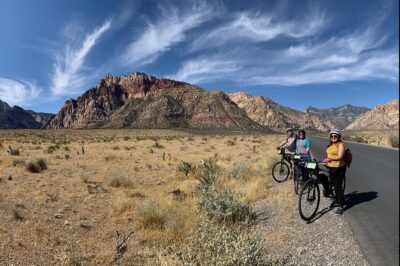
Red Rock Canyon Self-Guided Electric Bike Tour
Read our review →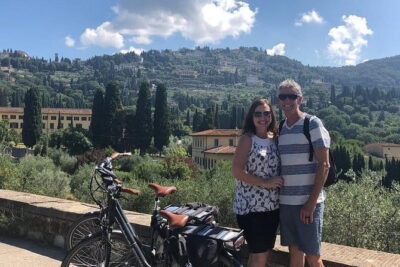
Private Self-Guided E-Bike Ride in Tuscany with Vineyard Visit
Read our review →
Best Haleakala Downhill Self-Guided Bike Tour with Maui Sunriders
Read our review →
Self-Guided Ebike Tours of Acadia National Park Carriage Roads
Read our review →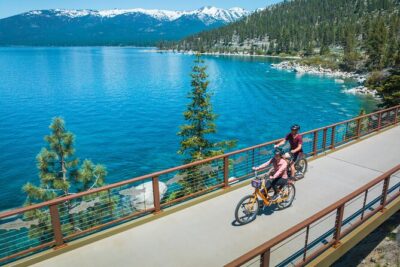
Tahoe Coastal Self-Guided E-Bike Tour – Half-Day | World Famous East Shore Trail
Read our review →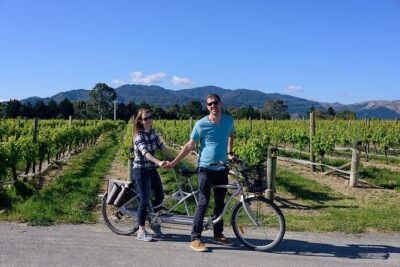
Self-Guided Wine Tours by Bike with Lorelle & Greg
Read our review →Browse the lists this tour appears in