
REVIEW · GERMANY
Hamburg: City Tour by Bike with Elbphilharmonie incl. Bike
Hamburg reveals itself best on two wheels. This 210-minute bike tour links the city’s water, old port districts, grand shopping streets, and modern HafenCity in one well-planned ride. You move from the leafy Alster to brick-built Speicherstadt, then onward to the dramatic Elbphilharmonie and St. Michael’s Church.
I like the route’s wide historical range and the way it reaches places that can feel scattered on foot. I also like the regular photo stops, which make a long ride manageable. The main concern is language control: at least one booking had an English tour that was conducted only in German, so confirm your guide language before setting out.
Key things to know before you book
- A full Hamburg sampler by bicycle: The route covers Alster Lake, the Old Town, Deichstrasse, Speicherstadt, HafenCity, the Elbphilharmonie, Neustadt, St. Michael’s Church, and the St. Pauli Piers.
- The city’s water is the main thread: You follow the Außenalster and Binnenalster, cross former harbor areas, and ride alongside the waterways called Fleete.
- A useful mix of famous and lesser-known places: The tour includes major sights, plus the Gängeviertel, Fleet-Island, Peterstraße, and the birthplace memorial for Johannes Brahms.
- The bicycle is included: You meet outside the Fahrradstation of the University of Hamburg at Schlüterstraße 11, then use a provided bike for the tour.
- The guide makes a major difference: Wolfgang is praised for historical detail, while Tobias is noted for careful attention and a good way of handling changing weather.
- Elbphilharmonie access is not guaranteed: You may have time to reach the plaza, but major events or other unexpected restrictions can close access.
Starting in Rotherbaum beside the University of Hamburg
The tour begins outside the Fahrradstation at Schlüterstraße 11, in the Rotherbaum area. This is a practical starting point because you are close to the university district and can get onto the city streets without first spending time on a long transfer.
Your guide provides the bicycle, a city map, and a live tour in English or German. The price is $40 per person, which is fair for a bike, a guide, and three to three and a half hours of sightseeing. The published duration is 210 minutes, while the experience is also described as a three-hour tour, so I would plan on roughly three and a half hours from start to finish.
This is not a race through Hamburg. The route includes frequent stops for photographs and explanations. That matters because the city has a lot to take in, and a nonstop ride would leave you remembering little more than traffic lights and wet pavement.
More City Highlights Bike Tours in Germany
- Berlin: Sights and Highlights Bike Tour with a Local Guide
★ 4.8 · 2,698 reviews - Berlin Highlights 3-Hour Bike Tour
★ 5.0 · 948 reviews - Berlin Highlights: 3-Hour Bike Tour
★ 4.9 · 809 reviews
Alster views and Hamburg’s city center
The first major stretch follows the Außenalster toward the Binnenalster. These connected waters give you a quick sense of Hamburg’s character. The city is commercial and urban, but water and open space are never far away.
At the Binnenalster, you get the classic panorama of the old and new city. It is a good early photo stop, and it helps you understand how Hamburg’s central districts gather around the water. From a bicycle, you can cover the distance between the lake and the central streets without dealing with a bus timetable or searching for a parking place.
The route then reaches Hamburg’s Old Town and the Rathaus area. Expect a guided look rather than a long interior visit. The emphasis is on the city’s public spaces, architecture, and connections between the old center and the former port.
I would pay close attention here if you enjoy city planning. The tour does not treat Hamburg as a collection of isolated monuments. It explains how streets, waterways, commercial districts, and port activity fit together.
Gängeviertel and the Brahms birthplace memorial
One of the more unusual parts of the ride is the passage through the Gängeviertel of the Neustadt. This former working-class district dates in part to the 18th century and now has strong links with Hamburg’s art scene.
This section gives the tour a more local feel. You are not just checking off the Rathaus and the Elbphilharmonie. You are also seeing a district shaped by ordinary housing, narrow passages, and later creative use.
The route includes a memorial stone marking the birthplace of Johannes Brahms. That small detail is easy to miss if you are moving through Hamburg on your own. It also shows the value of having a guide who can point out places that do not announce themselves with a large sign or grand facade.
If you prefer only major landmarks, this portion may feel less urgent. If you like city layers and small pieces of cultural history, it is one of the tour’s better choices.
From Fleet-Island to Neuer Wall
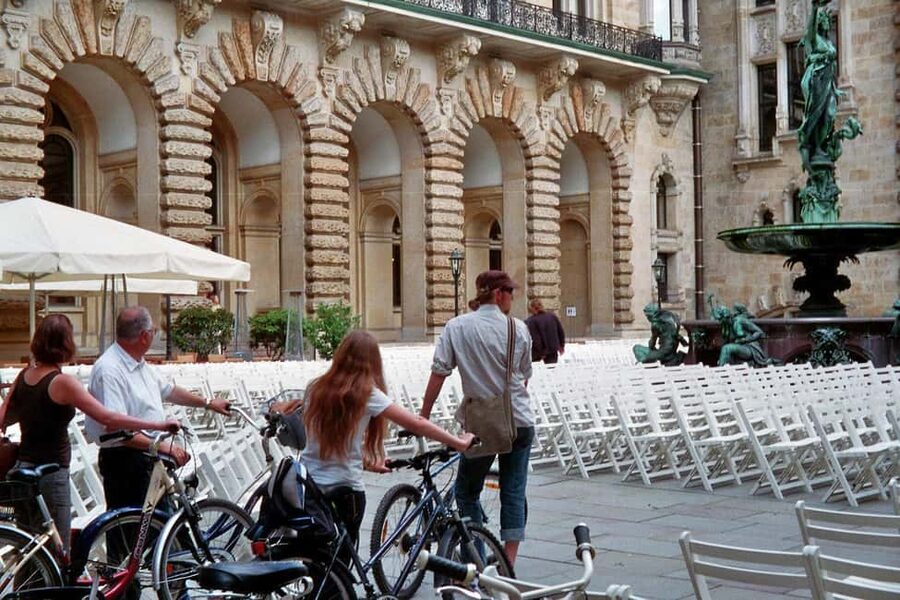
The ride continues through the new city and across Fleet-Island, a former harbor area. The guide connects this part of Hamburg with the great fire of 1842, a major event that changed the city’s layout and construction.
That historical link is useful because the city can otherwise look like a mix of unrelated eras. The route helps explain why Hamburg has old brick quarters, rebuilt commercial streets, and modern developments so close together.
Neuer Wall brings a different mood. This is Hamburg’s high-end shopping street, known for designer stores and passages. You can enjoy the metropolitan atmosphere without needing to stop for shopping. The point is to see another side of the city, one shaped by finance, retail, and polished architecture.
I like this contrast. In a short period, you move from former working-class lanes to luxury retail, then toward the old port. The changes are clear from a bicycle because you experience them street by street.
Same roads, a different day in the saddle:
- Munich 3-Hour Guided Bike Tour
★ 4.5 · 1,731 reviews - Hamburg 3-Hour Bike Tour
★ 4.8 · 1,583 reviews - Classic Mike’s Bike Tour daily @ 11.30 incl Beer Garden & Surfers
★ 5.0 · 1,246 reviews - Berlin City Bike Tour with Beer Garden Stop
★ 5.0 · 917 reviews
Deichstrasse and the old port
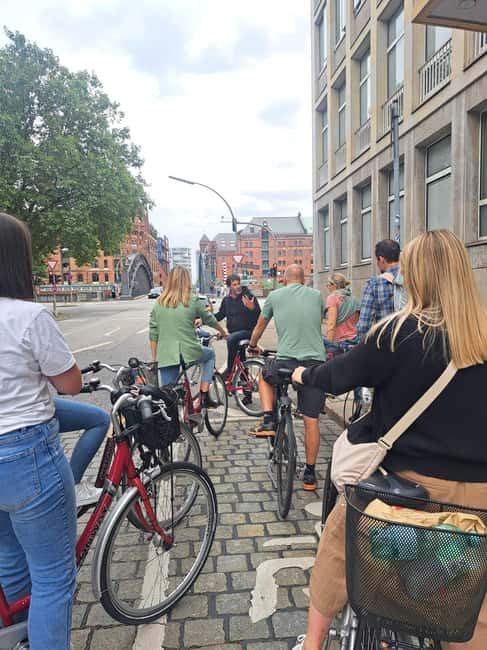
Deichstrasse is one of the route’s most atmospheric stops. It marks the historic origin of port operations in Alt-Hamburg and provides a link between the central city and the old harbor.
The guide uses this area to explain how Hamburg grew through trade and water access. You also get time for photographs, which is welcome because the architectural details deserve a slower look.
The best part is the sense of transition. Deichstrasse leads you toward Speicherstadt, where the city’s port story becomes much larger and more dramatic.
Speicherstadt’s brick warehouses and Fleete
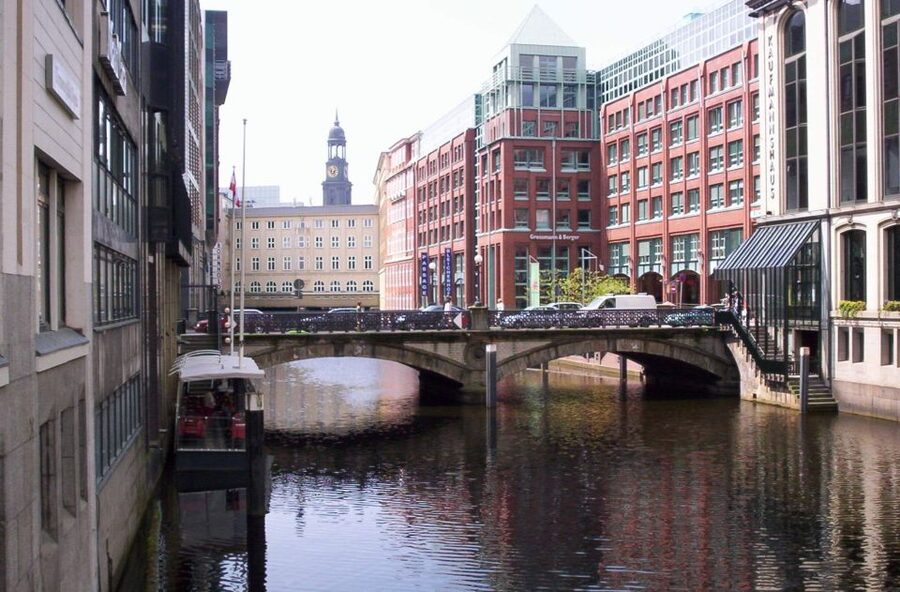
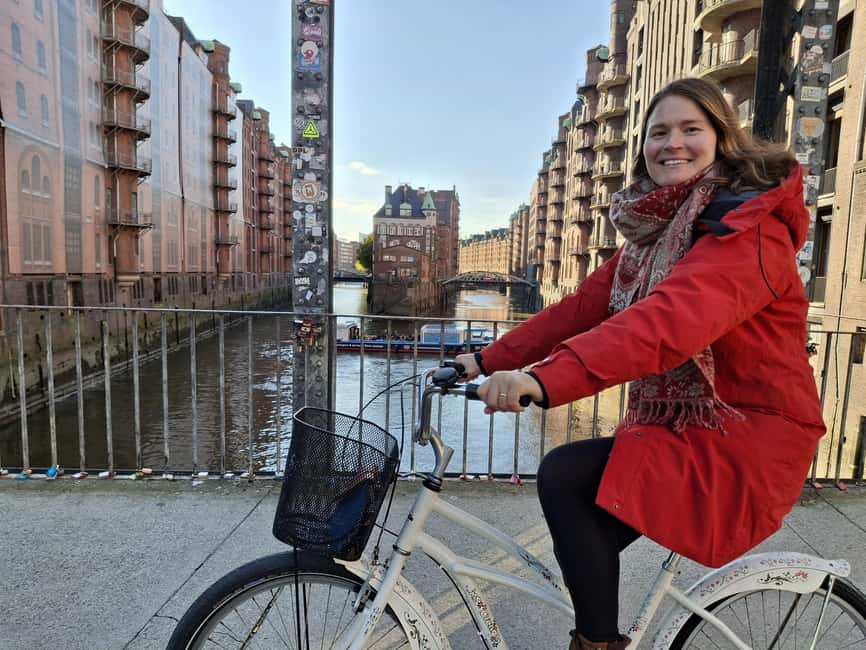
Speicherstadt is the visual centerpiece of the historic port section. The UNESCO World Heritage site is known for massive 19th-century brick buildings built on millions of oak poles, with waterways called Fleete running between them.
A bicycle is particularly useful here. You can cover more ground than on foot, yet still stop often enough to look at the warehouse walls, bridges, and water channels. The route gives you context instead of treating Speicherstadt as a quick photo backdrop.
The scale of the district is striking. Its red brick architecture feels solid and practical, while the waterways remind you that this was a working storage area tied directly to shipping and trade.
This is also a place where weather can affect the experience. Hamburg’s rain is part of the deal, and the tour runs in outdoor areas for most of its length. One guide, Tobias, was praised for making a wet day work by using stops and explanations well. Bring clothing that can handle changing conditions, even if the forecast looks friendly.
HafenCity and the Elbphilharmonie
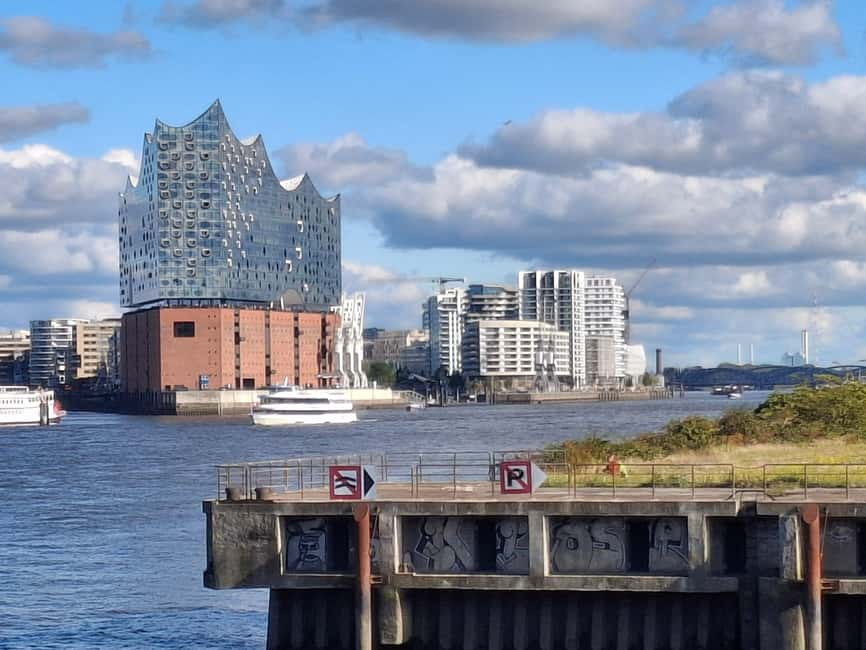
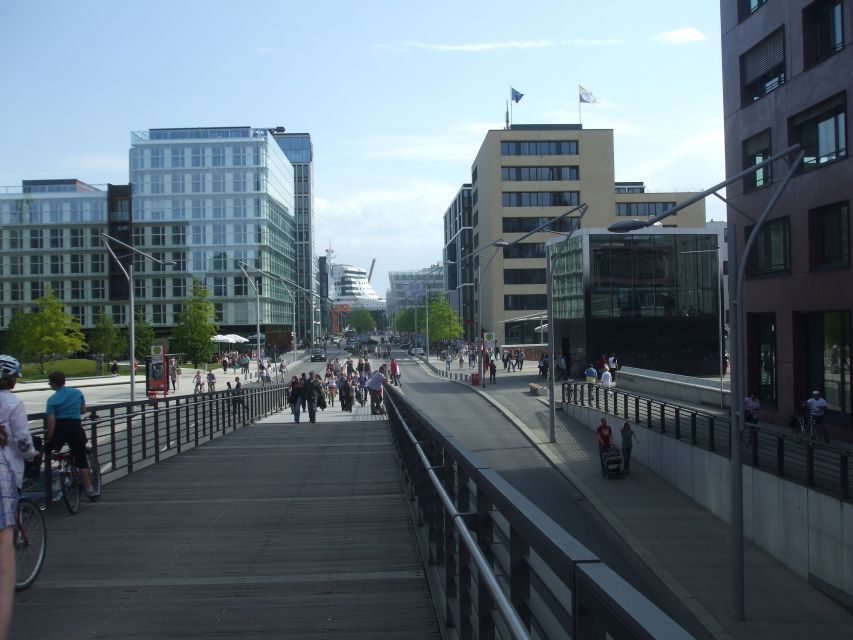
After Speicherstadt, the route enters HafenCity, the former harbor area that has been rebuilt in a postmodern style. This is Hamburg’s most obvious old-meets-new section. Brick warehouses give way to newer buildings, broad public spaces, and the striking outline of the Elbphilharmonie.
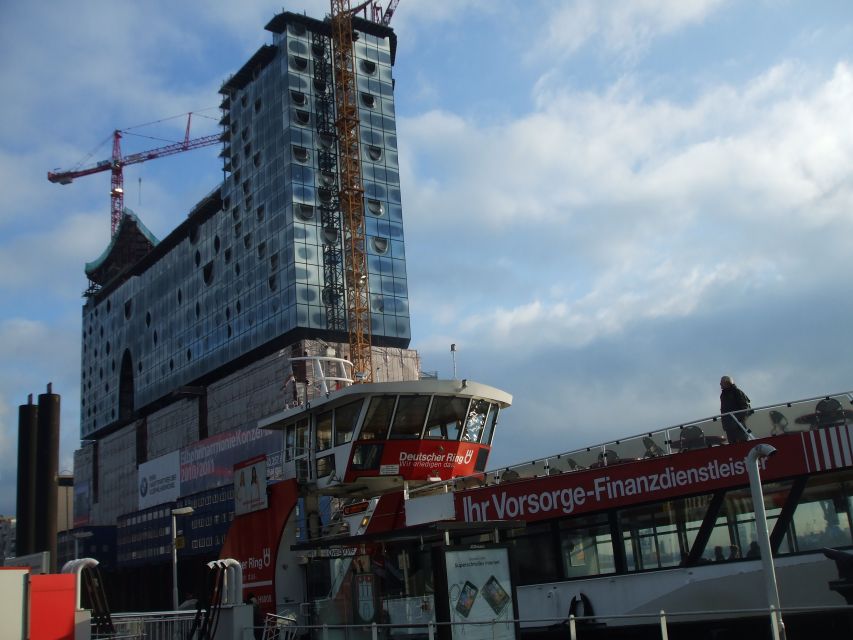
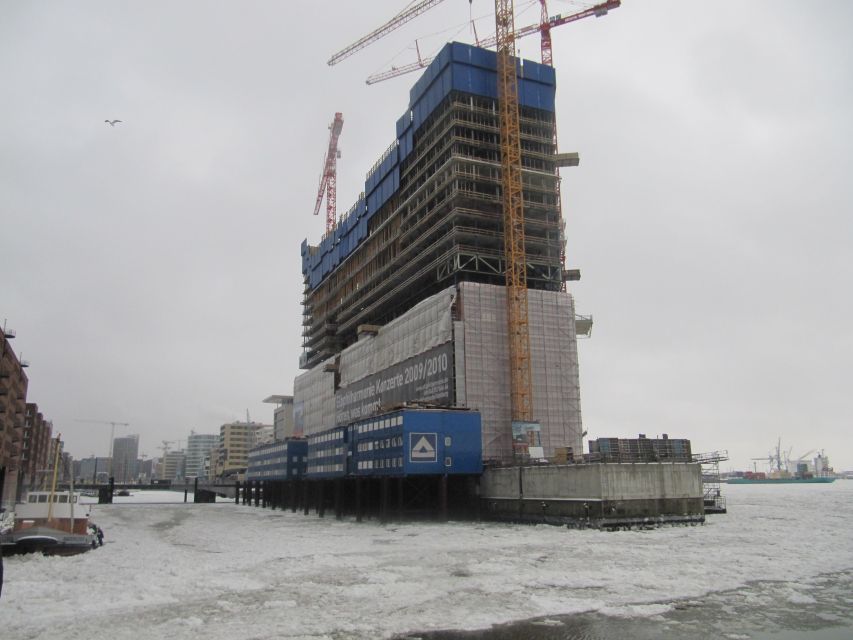
The concert hall rises about 110 meters and remains one of the city’s most recognizable buildings. Its design has also been controversial, which gives the guide an opening to explain more than its appearance. From below, you can appreciate the contrast between the old warehouse base and the wave-like glass structure above.
The tour includes time to ride toward the Elbphilharmonie plaza, but access depends on conditions. Major events can restrict or close entry, and other unexpected situations may affect the stop. Treat the plaza as a planned possibility rather than a firm promise.
Even if access is limited, the exterior views remain worthwhile. The route follows the new flood protection system and offers strong views of the concert hall from below. This is a good example of why the bicycle format works: you can approach the building from different angles instead of seeing it only from a distant square.
Baumwall, St. Michael’s, and Peterstrasse
The ride continues through the unusual publishing building at Baumwall, described as a steel structure with an almost futuristic appearance. This section keeps the focus on Hamburg’s newer commercial architecture before the tour turns back toward older streets.
St. Michael’s Church, known locally as the Michel, provides another major landmark. The tour includes a guided stop and photograph opportunity, but the supplied details do not indicate an interior visit or tower climb. Plan on seeing the church as part of the street route rather than booking this tour specifically for access inside.
From there, the route follows historic Peterstraße. The Brahms and Telemann museums are located here, adding another music-related thread after the Brahms birthplace memorial earlier in the tour.
This stretch is valuable because it brings the ride back from the large scale of HafenCity to quieter historic streets. You get another reminder that Hamburg’s story includes commerce, music, religion, housing, and port life all within a compact central area.
St. Pauli Piers and the ride back
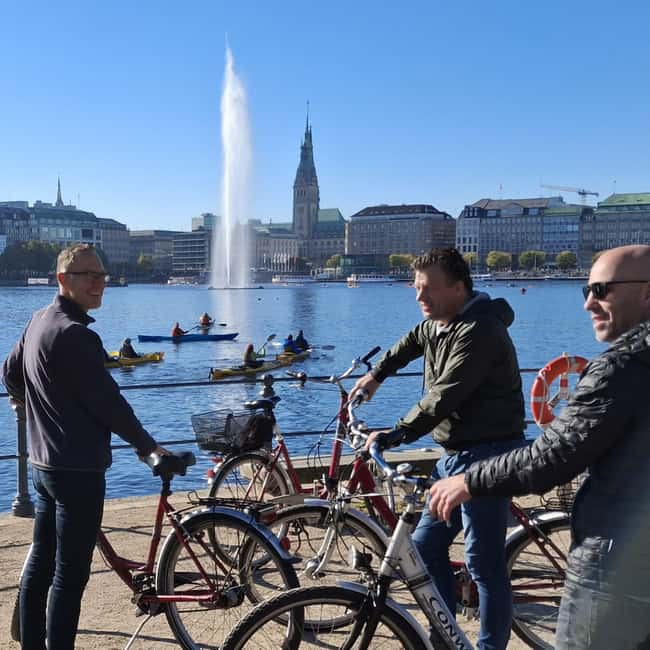
The itinerary includes the St. Pauli Piers before returning to Schlüterstraße 11. This adds a final maritime note to the day and reinforces the connection between Hamburg and the Elbe.
The tour does not promise a long pier-side stay or a separate harbor cruise. You should think of this as part of the cycling route, with guided viewing and photo stops rather than a dedicated boat experience.
By the end, you will have crossed a large section of central Hamburg under your own power. That is the main advantage over a standard walking tour. You see more districts in one outing, while still receiving explanations at the places that need them.
What the guides add to the ride
The guide is the key variable. The strongest feedback centers on clear historical information, attention to individual interests, and the ability to show less familiar corners of Hamburg.
Wolfgang is specifically praised for supplying many historical facts. Tobias is praised for looking after the group and keeping the ride comfortable during rain. Another positive point is the guide’s willingness to answer questions and adjust attention to the people on the tour.
There is one serious practical warning. An English-language booking was reportedly conducted only in German, leaving some participants unable to follow the content well. Since the experience is guide-led rather than audio-based, language matters a great deal. Confirm that your selected departure has the language you need.
The ride also appears suitable for people who want flexibility. A group of six had a particularly good experience with Tobias, and individual requests were accommodated on another outing. That does not guarantee a private tour, but it suggests that the guide may be able to respond to the group rather than simply recite a fixed script.
Is $40 a good value?
At $40, this is a reasonable price for a 210-minute guided city tour that includes the bicycle. You are paying for transportation between districts, local interpretation, and the convenience of covering Alster, Old Town, Speicherstadt, HafenCity, and the Elbphilharmonie in one outing.
The value is strongest if you would otherwise rent a bike and try to build this route yourself. You would still need to plan the order, find the less obvious stops, and understand how the great fire, port development, music history, and modern construction fit together.
The price is less attractive if you want long interior visits. This is primarily an outdoor sightseeing ride. The Elbphilharmonie plaza may be accessible, but major events can block it, and the tour does not promise extended entry to museums or churches.
You also need to be comfortable cycling for several hours. Frequent stops make the ride easier, but this is still more active than a bus tour. The route is best for someone who wants to move through the city and does not mind weather changes.
Who should book this Hamburg bike tour?
I would choose this tour if you have one full morning or afternoon in Hamburg and want a broad first look at the city. It suits visitors who enjoy history, architecture, port districts, and the freedom of moving outdoors.
It is especially useful for first-time visitors who want orientation before exploring specific areas on foot. After the ride, you will know which parts of Speicherstadt, HafenCity, Neustadt, or the waterfront deserve a longer visit.
I would hesitate if cycling is uncomfortable for you, if you need guaranteed English commentary without confirming it, or if your main goal is going inside the Elbphilharmonie. I would also check the forecast and dress for rain.
For most active visitors, the tour offers a good balance of famous sights and less obvious corners. The regular stops, thoughtful route, and strong guide feedback make it more than a simple bike rental with directions.
FAQ
Where does the Hamburg bike tour begin?
It begins outside the Fahrradstation of the University of Hamburg at Schlüterstraße 11.
How long does the tour last?
The listed duration is 210 minutes. The experience is also described as a three-hour bike tour, so you should allow about three to three and a half hours.
Is a bicycle included?
Yes. The bicycle is included in the tour price.
What languages are available?
The live tour guide is available in English and German.
Does the tour visit the Elbphilharmonie?
Yes. The route includes a guided stop and photo opportunity at the Elbphilharmonie, with time to go to the plaza when access allows.
Is Elbphilharmonie plaza access guaranteed?
No. Access can be restricted or closed during major events or because of other unpredictable situations.
Which Hamburg sights are included?
The route includes Alster Lake, Hamburg Old Town, the Rathaus area, Deichstrasse, Speicherstadt, HafenCity, the Elbphilharmonie, Neustadt, St. Michael’s Church, and the St. Pauli Piers.
What is included besides the bicycle and guide?
You receive a city map and a photo series about Hamburg by email after the tour.
Just added around Germany
- 3-Hour Cologne Street Art Bike Tour in Small Group with Guide★ 4.5 · 20 reviews
- Private-Group Bike Tour of Cologne with Guide★ 5.0 · 20 reviews
- Berlin Wall and Cold War Bike Tour in Small Groups★ 5.0 · 114 reviews
- Berlin: Guided Private Bike Tour to Explore the Highlights★ 5.0 · 12 reviews
- Berlin : The best bike tour with a Berlin guide and insider tips★ 5.0 · 14 reviews
- Alternative Berlin Bike Tour – Off the Beaten Tracks in Small Groups★ 5.0 · 99 reviews
- Potsdam Bike Tour with Rail Transport from Berlin★ 4.5 · 81 reviews
- Berlin: Guided Bike tour of the Berlin Wall and Third Reich★ 5.0 · 160 reviews
City Highlights Bike Tours, compared.
3-Hour Porto Highlights on a Electric Bike Guided Tour
Read our review →
City Highlights 3-Hour Guided Electric Bike Tour
Read our review →
Highlights & Hidden Spots of Barcelona Bike Tour w/ Local Guide
Read our review →
Sights and Highlights Bike Tour with a Local Guide
Read our review →
Highlights 3 Hour Bike Tour with a Local Guide
Read our review →
Browse the lists this tour appears in