
REVIEW · SOUTH AFRICA
Soweto: Guided Bicycle Tour with Lunch
See Soweto at street level. This four-hour bicycle tour takes you through Orlando West and nearby neighborhoods, linking apartheid history with everyday township life. I like the small-scale feel of cycling, which lets you cover far more ground than a walking tour, and I like the chance to eat a local kota sandwich rather than finish at a standard tourist café. The main catch is the route’s hills: at roughly 11 kilometers, it calls for reasonable fitness, especially on bikes without gears.
The tour costs $52 per person and includes the bicycle, English-speaking local guide, lunch, and drinks. I also like that the route does not stop with Mandela House. You pass through several parts of Soweto, visit sites tied to the 1976 uprising, and hear about people such as Lilian Ngoyi and Desmond Tutu. Hotel pickup is not included, so you need to make your own way to Vilakazi Espresso.
Key points at a glance
- About 11 kilometers of cycling: You cover several distinct parts of Soweto, with some uphill stretches.
- Three major historic addresses: The route includes Hector Pieterson Museum, Mandela House, and Tutu House.
- A local lunch: Your meal is a kota, a South African sandwich, served during a stop on Vilakazi Street.
- Guides with strong local connections: Thabo, Teboho, and Themba have led recent departures, with Thabo receiving especially high praise for his storytelling and care.
- A broader view of Soweto: You see Orlando West, Orlando East, Mzimhlophe, community facilities, and the area around Orlando Stadium.
- Good value at $52: The price covers four hours, a bike, guiding, food, and drinks, but not transportation to the meeting point.
Why a bicycle works so well in Soweto
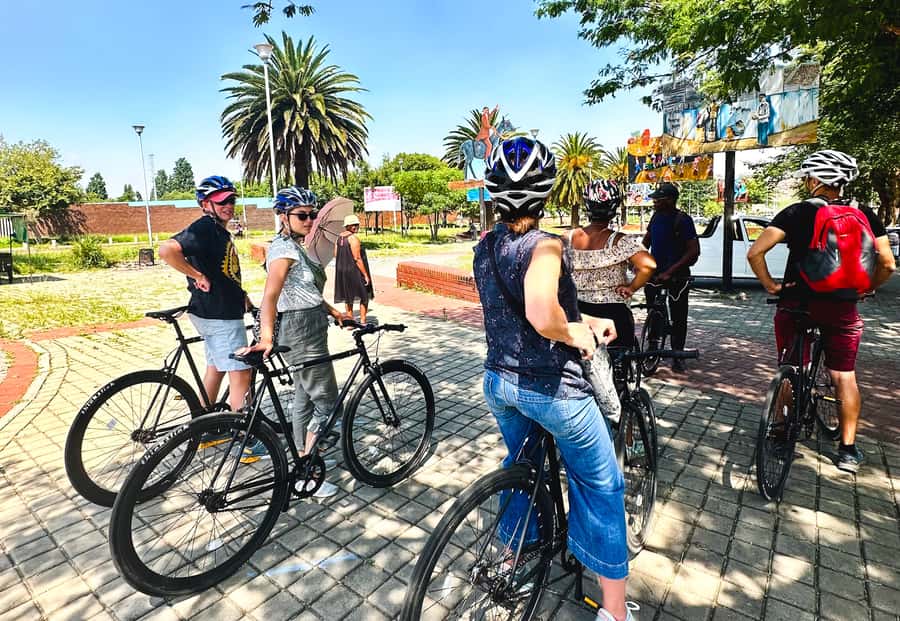
Soweto is too spread out for a short walking tour to show much beyond Vilakazi Street. A bicycle gives you a better sense of how the neighborhoods connect. You move from the famous sites into residential areas, pass community buildings, and reach parts of Soweto that are easy to miss from a car.
The ride also keeps the day active without turning it into a race. Stops are built into the route, and the pace can be adjusted to the group. One recent group included people in their late twenties as well as parents in their sixties and seventies, and everyone managed the ride. Still, you should not read that as a promise of an effortless outing. Several riders specifically pointed out the uphill sections, and one described the route as a pleasant but real workout.
The bicycles have generally been praised as comfortable and well maintained. Some bikes may not have gears, which matters on the climbs. If you are used to flat city cycling, give yourself extra time and do not treat the distance as the whole story. Johannesburg’s altitude can also make the ride feel harder than the number of kilometers suggests.
More Rides with Lunch in South Africa:
- Franschhoek: E-bike Tour with Wine Tasting and Lunch
★ 4.8 · 30 reviews - Electric Cycling Tour of Ubud with Free Hotel Transfer and Lunch
★ 5.0 · 1,397 reviews - Bangkok: Bike and Canal Boat Tour with Lunch
★ 4.9 · 1,350 reviews
Starting at Vilakazi Espresso in Orlando West
You meet at Vilakazi Espresso, a practical starting point near the best-known part of Orlando West. This puts you close to Vilakazi Street, the only street associated with two Nobel Peace Prize winners, Nelson Mandela and Desmond Tutu.
The early part of the experience is about getting comfortable on the bicycle and hearing how Soweto developed. The area was created in 1904, and your guide sets the neighborhoods you pass into that larger story. This opening matters because the tour is not simply a string of famous addresses. It aims to show how political history, housing, community life, and present-day Soweto fit together.
The guide is central to the experience. Thabo, also referred to as Teboho on some departures, has earned particular praise for clear explanations, humor, and a calm approach to safety. Themba has also led tours and is noted for answering questions, fixing a flat tire quickly, and explaining both older events and current conditions. Guide assignments can change, so you should not book on the assumption that one particular person is guaranteed.
Mzimhlophe and the women’s hostel
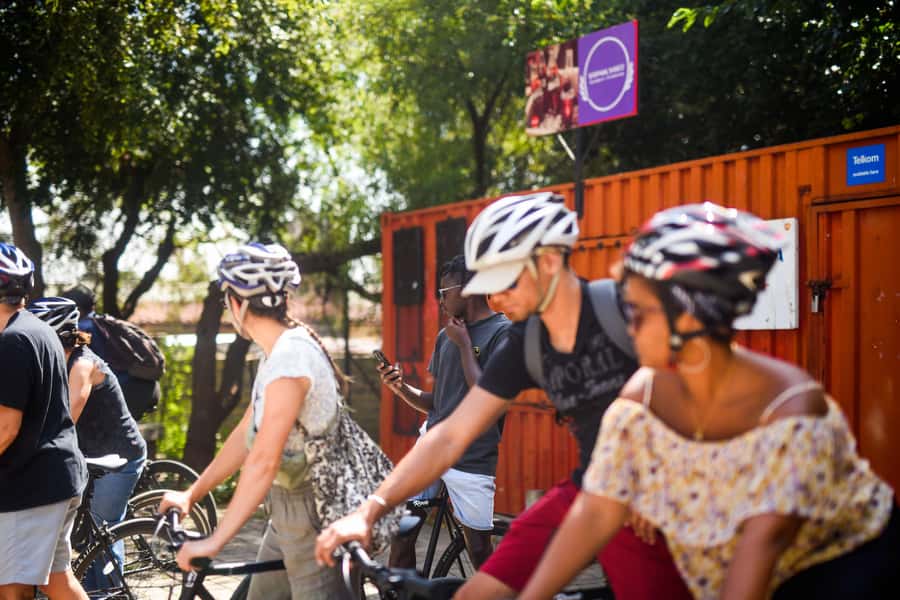
The route heads toward Mzimhlophe, where you pass the Mzimhlophe Internet Cafe and visit the Mzimhlophe Women’s Hostel. This is one of the tour’s more useful sections because it shifts attention away from famous leaders and toward the social structure of township life.
The hostel is connected to the working lives and housing pressures that shaped Soweto. You hear about how residents lived and how different parts of the township developed. The visit is brief, around 15 minutes, but it gives the tour a wider frame before the major museum stop.
You may also visit an informal settlement with a local guide during the tour. A gratuity of R20 to R50, or more if you wish, is welcomed at or after that visit. Carry small cash for this reason, as well as for any personal purchases. The stop should be approached with respect. It is not a staged show, and you should ask before photographing people or homes.
Lilian Ngoyi’s home and the politics of resistance
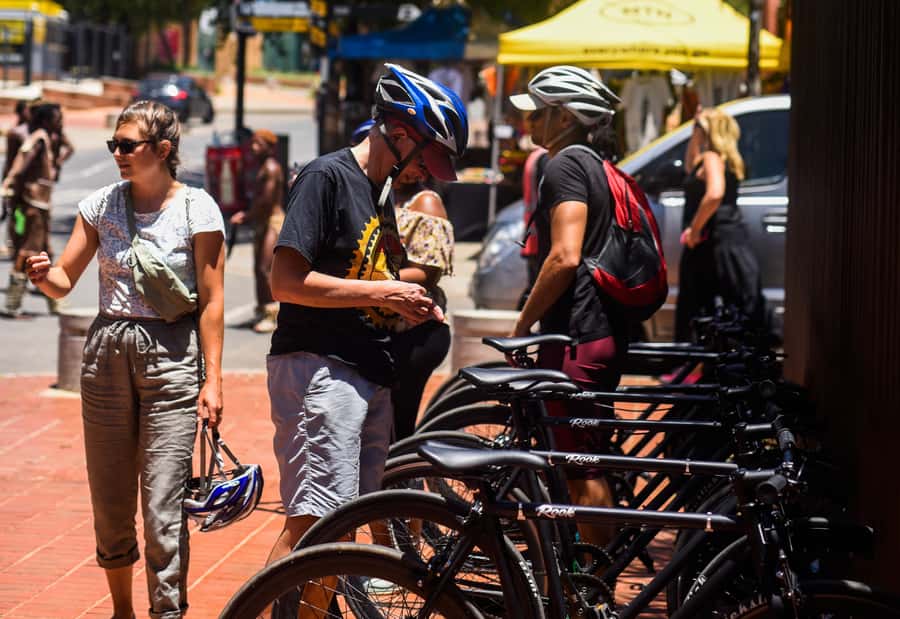
The route continues toward the former home of Mama Lilian Ngoyi, an anti-apartheid activist. Her story adds an important women’s perspective to a tour that could otherwise focus too heavily on male political figures.
This is one of the places where a local guide adds real value. A short description in a museum cannot always explain how political organizing affected ordinary neighborhoods. Your guide can connect the address with the broader resistance movement and with the people who helped challenge apartheid in daily, organized ways.
The stops at Mzimhlophe, Orlando East, and nearby community facilities are not long. Some are photo stops of five to ten minutes, and some are viewed while cycling. Their value comes from the connections between them, not from a large amount of time at any single building.
More Guided Rides in South Africa:
- Cape Town: Guided Bike Tour
★ 4.9 · 193 reviews - Soweto: Bike Tour with a Local Tour Guide
★ 4.7 · 114 reviews - Franschhoek: E-Bike Guided Winery Tour
★ 4.6 · 96 reviews - Stellenbosch: Wine Farm E-Bike Guided Tour
★ 4.6 · 88 reviews
Hector Pieterson Museum and the 1976 uprising
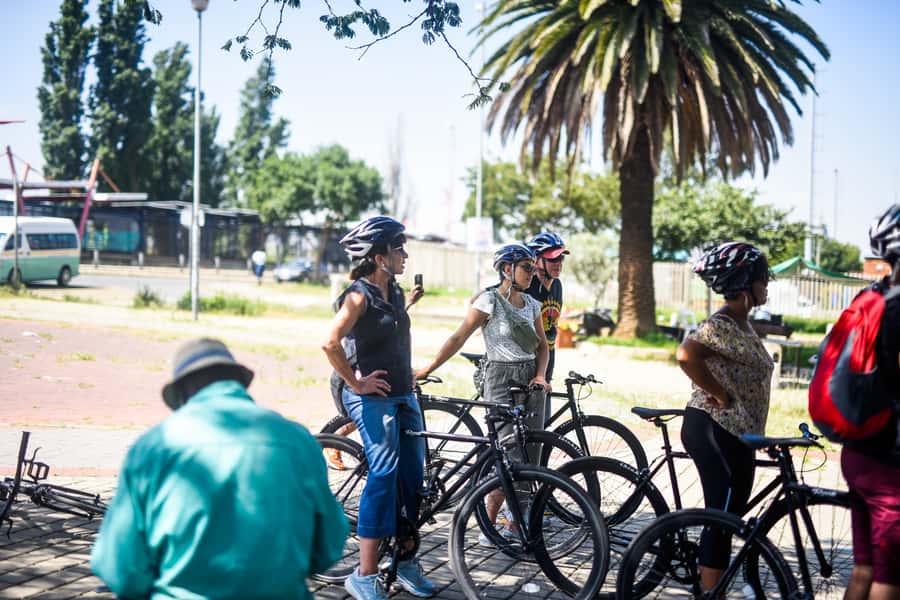
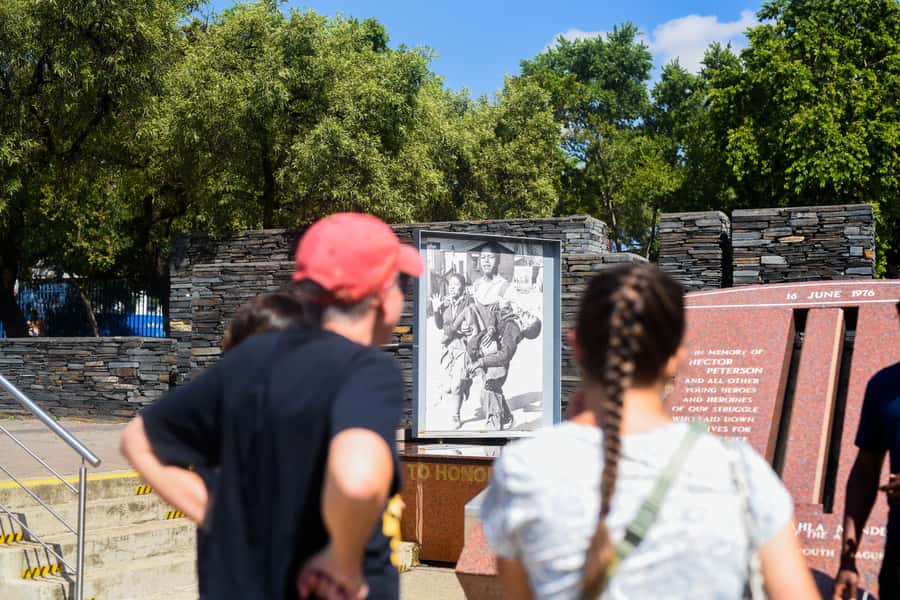
The visit to Hector Pieterson Museum is the emotional center of the route. You have about 20 minutes for a visit, guided discussion, and walking around the memorial area.
The museum commemorates the Soweto uprising of June 16, 1976, when students protested against the forced use of Afrikaans in schools. The death of Hector Pieterson became one of the defining images of apartheid-era South Africa. The site helps explain why Soweto became known around the world, but the focus is not only on one photograph. It also points to the students, families, schools, and wider community caught up in the conflict.
This is a place where you should allow the tone of the tour to change. The bicycle ride is social and light, but the museum calls for quiet attention. The best guides, including Thabo and Themba, are praised for making the history understandable without turning it into a dry lecture. You will have time to ask questions, which is useful if you want to understand how the uprising affected later resistance and South Africa’s political change.
Orlando East, Orlando Stadium, and the community center
After the museum, the route continues through Orlando East and past Orlando Stadium. These stops are short, generally around five minutes, but they help show that Soweto is not a single historic district.
Orlando Stadium is a useful landmark for understanding the area’s sporting and public identity. You then pass the Orlando Community Centre, where you spend roughly ten minutes. These sections give you a look at civic life and neighborhood facilities rather than only memorials and former homes.
I appreciate this part of the route because it prevents the experience from becoming a checklist of apartheid sites. You are still seeing history, but you are also moving through a living urban area. The tradeoff is that the short stops do not allow for extended visits or detailed tours inside every location. The main value is the guide’s explanation and the changing view from the bicycle.
Vilakazi Street and a kota lunch
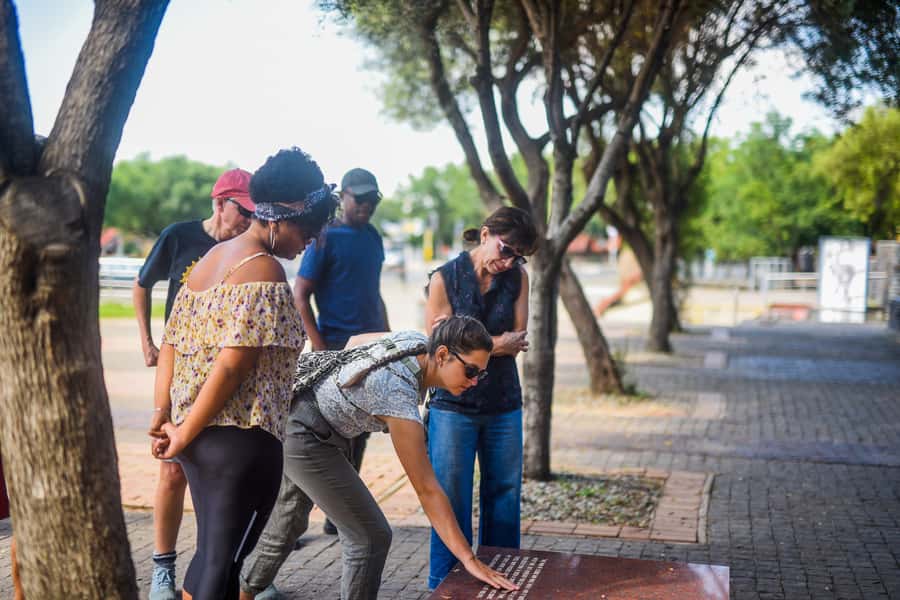
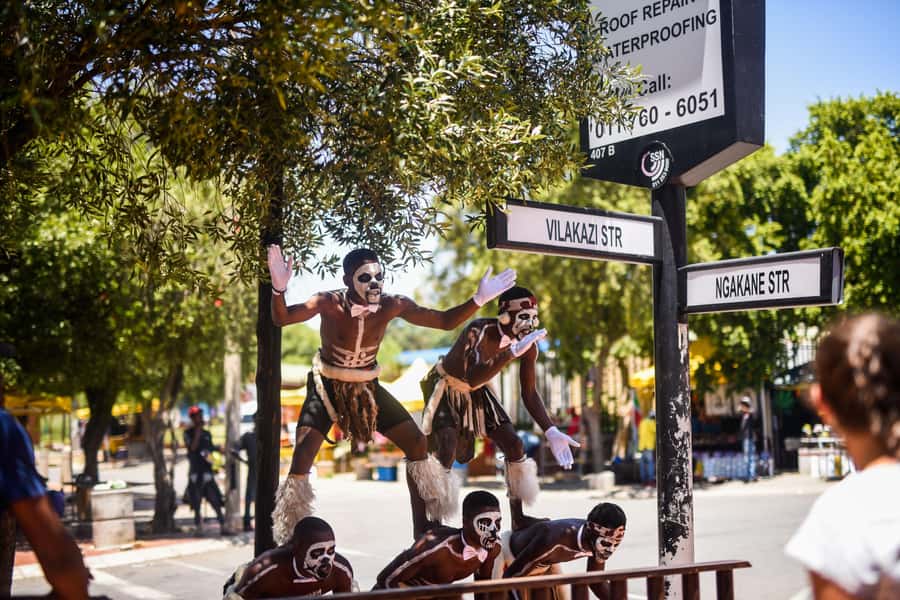
Vilakazi Street is the tour’s most famous stretch. You pass Tutu House, where Archbishop Desmond Tutu and his family lived, and visit Mandela House, where Nelson Mandela lived from 1946 to 1962.
Tutu House is a quick stop, around five minutes, and is mainly viewed from outside or while passing. The guide explains Tutu’s role in opposing apartheid and his contribution to South Africa’s political change. Mandela House receives more attention, with about 15 minutes for a guided visit and a possible traditional dance performance.
Mandela House is worth seeing, even if you have already visited other Mandela sites elsewhere in South Africa. The address is personal and domestic rather than monumental. You get a sense of the home connected to Mandela’s years in Johannesburg before he was imprisoned for decades.
The lunch stop lasts about 25 minutes and includes a kota. This is a filled South African sandwich, usually substantial enough to serve as a proper meal. It is a simple but effective choice for this tour. You eat local food in a local setting, and the stop gives your legs a rest before the ride back.
Several people have singled out the kota as one of the best parts of the day. If you prefer a slow restaurant meal, 25 minutes may feel quick. If you want the tour to keep moving, it works well. Food and drinks are included, but you should still bring water and sunscreen. One past participant specifically wished that bottled water had been provided.
Safety, fitness, and the feel of the ride
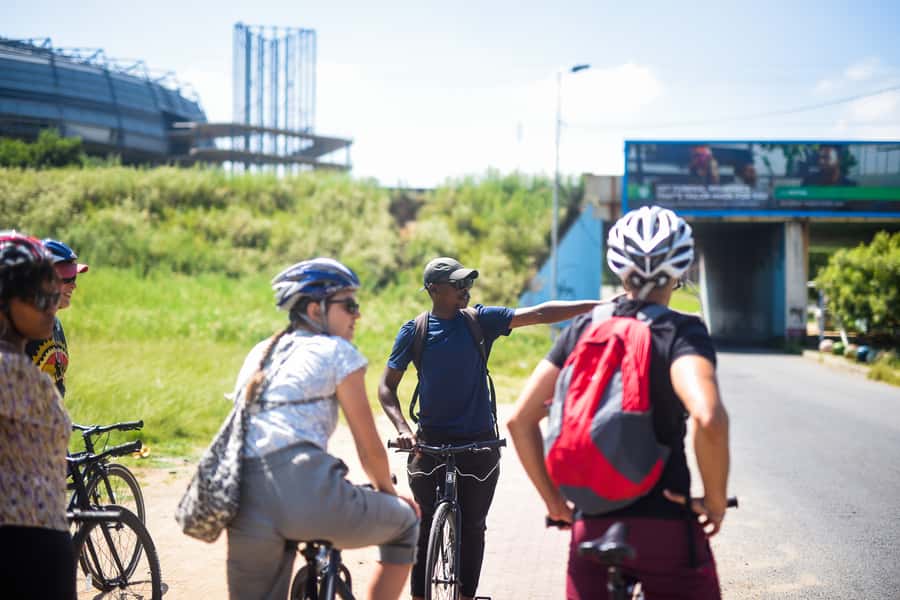
The guide leads from the front and keeps an eye on the group. The experience has been described as comfortable and safe by solo participants, couples, older riders, and an all-women group. That does not remove the need for normal cycling awareness. You are riding through an urban area, not a closed cycle path.
The route rises and falls. People who cycle regularly should find it manageable, while anyone unused to hills should expect to slow down or work harder. A past rider suggested that bikes with gears would make the uphill portions easier, and another said electric bikes would be welcome. Those comments are useful warnings, not reasons to avoid the tour.
I would choose this activity if you can ride confidently for several hours and are comfortable with moderate exertion. It is not suitable for people who cannot ride a bicycle, wheelchair users, or pregnant women. Wear practical clothing, use sunscreen, and bring rain gear because conditions can change. Cash is also useful for the informal settlement gratuity.
Is $52 a fair price?
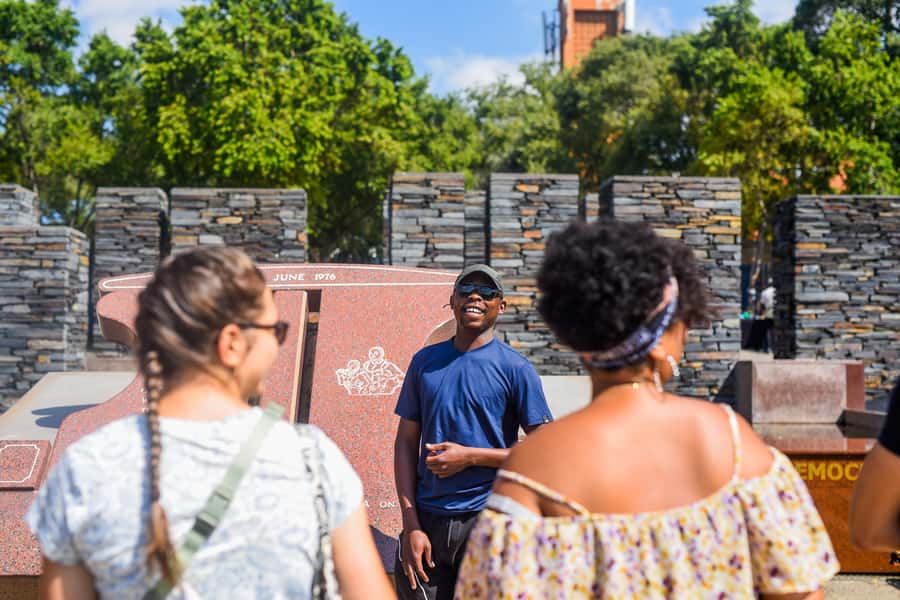
At $52, the tour is good value if you want history, food, and active sightseeing in one half-day. You are paying for four hours of guiding, bicycle use, drinks, a local lunch, and a route that reaches places beyond the main tourist strip.
The value depends heavily on what you would otherwise book. A short walking tour of Vilakazi Street would cost you less in effort, but it would not cover as much ground. A private car tour might be easier on your legs, but cycling gives you a closer view of the neighborhoods and a more direct connection with the place.
The tour does not include hotel pickup or drop-off. If you are staying outside Soweto, add the time and cost of reaching Vilakazi Espresso. That is the main extra expense to plan for.
Who should book this Soweto bicycle tour?
I would recommend it to first-time visitors to Johannesburg who want a strong introduction to Soweto without spending a full day in a vehicle. It suits people who enjoy asking questions, learning through conversation, and seeing both major landmarks and ordinary streets.
It is also a good choice for repeat visitors. The route’s strength is its mix of locations: Orlando West, Mzimhlophe, Orlando East, the stadium area, community facilities, and Vilakazi Street. You get more than a famous-home circuit.
Families with older children may enjoy the movement and the food, provided everyone can handle the cycling. Solo visitors can also feel at ease, particularly when the group is small. One person ended up on what was effectively a private tour, while another group appreciated the guide’s handling of different fitness levels.
I would skip it if you dislike hills, need a fully accessible activity, or want a slow museum-focused day. You should also consider a different tour if hotel pickup is essential.
FAQ
How long is the Soweto bicycle tour?
The tour lasts four hours. The cycling route is about 11 kilometers, with stops for sightseeing, historic sites, lunch, and guided discussion.
Where does the tour meet?
You meet at Vilakazi Espresso in Soweto.
Is hotel pickup included?
No. Hotel pickup and drop-off are not included, so you need to arrange transportation to and from Vilakazi Espresso.
What is included in the price?
The $52 price includes a bicycle, an English-speaking local guide, food, and drinks.
What food is served?
Lunch is a kota, a South African sandwich served during the Vilakazi Street stop.
Which historic sites are visited?
The route includes Hector Pieterson Museum, Mandela House, and Tutu House. It also passes places connected with Lilian Ngoyi, Mzimhlophe, Orlando East, Orlando Stadium, and the Orlando Community Centre.
Do I need to be fit to take part?
You need to be able to ride a bicycle and should have a reasonable level of fitness. The route includes uphill sections, and some bicycles may not have gears.
What should I bring?
Bring sunscreen, rain gear, and cash. Cash may be useful if you visit an informal settlement and wish to offer the suggested R20 to R50 gratuity.
Is the tour suitable for everyone?
The tour is not suitable for pregnant women, people who cannot ride a bicycle, or wheelchair users. The guide speaks English.
Should you book it?
Book this tour if you want to understand Soweto through movement, conversation, and place rather than a quick drive between monuments. The strongest parts are the local guides, the broad route, Hector Pieterson Museum, and the kota lunch.
The decision comes down to your legs. If you can manage roughly 11 kilometers with some uphill riding, the bicycle is an excellent way to connect Soweto’s history with its present-day neighborhoods. If hills or cycling are a concern, choose a vehicle-based tour instead. For active visitors who want a respectful, well-priced introduction to Soweto, this is a very solid choice.
Just added around South Africa
- Bicycle Township Tour in Cape Town★ 5.0 · 43 reviews
- Cape Town City and Woodstock Bicycle Tour★ 4.5 · 15 reviews
- Cape Town’s Finest City Bike Tour★ 5.0 · 43 reviews
- Private Cycling Tour of The Cape Peninsula from Cape Town★ 5.0 · 14 reviews
- Mountain Biking Table Mountain to Constantia Morning Ride★ 5.0 · 17 reviews
- Stellenbosch: Countryside Banhoek valley E-Bike Wine Tour★ 4.9 · 20 reviews
- Soweto: Bike Tour with a Local Tour Guide★ 4.7 · 114 reviews
- Johannesburg: Inner City Guided Cycling Tour★ 4.6 · 15 reviews
South Africa Cycling Tours, compared.
Stellenbosch: Historical Bike Tour & Wine Tasting
Read our review →



Guided eBike Tour with Signal Hill and Clifton …
Read our review →Browse the lists this tour appears in