
REVIEW · SOUTH AFRICA
Johannesburg: Inner City Guided Cycling Tour
Johannesburg looks different from a bicycle. This 10-kilometer ride links Braamfontein street art with Newtown’s music story, Marshalltown’s gold-mining past, Maboneng’s creative scene, and several lesser-seen inner-city neighborhoods. I like the way the tour covers a lot of ground in two to four hours, and I like that local guides such as Lebo, Franck, and Rambo bring the city’s recent changes into the story.
The route is mostly flat and designed for ordinary riders, with bikes, helmets, water, and a guide included. The main caution is traffic. One rider found the roads chaotic and the single-gear bicycles hard work, so I would choose this tour if you are comfortable cycling in an active city, not if you want a quiet recreational ride.
Key points to know before you ride
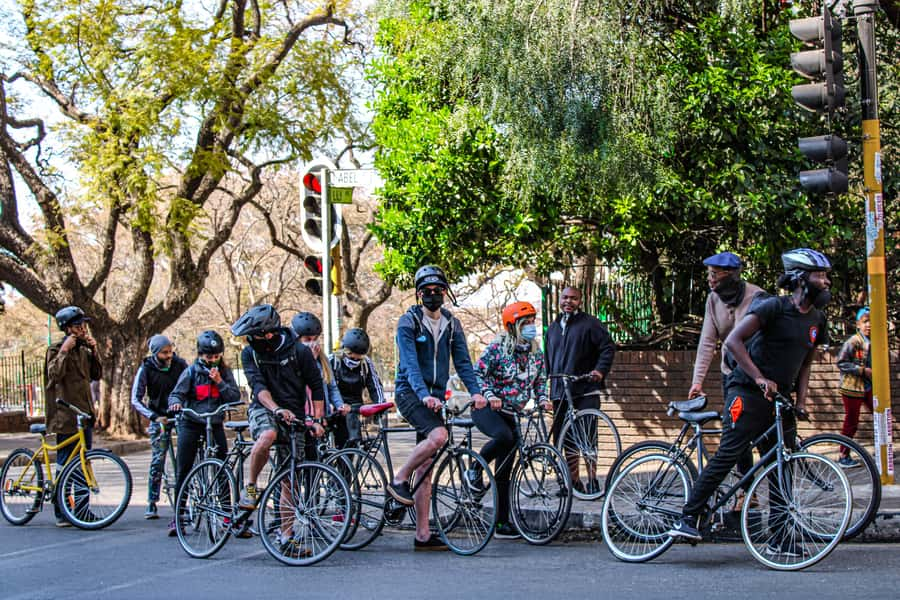
- About 10 kilometers on mostly flat roads: You see several inner-city districts without spending the day on foot.
- A tour about Johannesburg since the 1990s: The guide explains how neighborhoods have changed, not just what happened during the gold rush.
- Braamfontein and Maboneng provide the strongest creative stops: Expect street art, local artists, and modern urban culture.
- Traffic is the main challenge: The route is manageable physically, but city riding requires attention and confidence.
- Good for families and moderate fitness levels: You must be able to ride a bicycle, but the route has few hills.
- $84 per person can be fair for a small, guided city experience: The value depends on how much you want local explanation rather than simple transport between sights.
Why a bicycle works well in Johannesburg
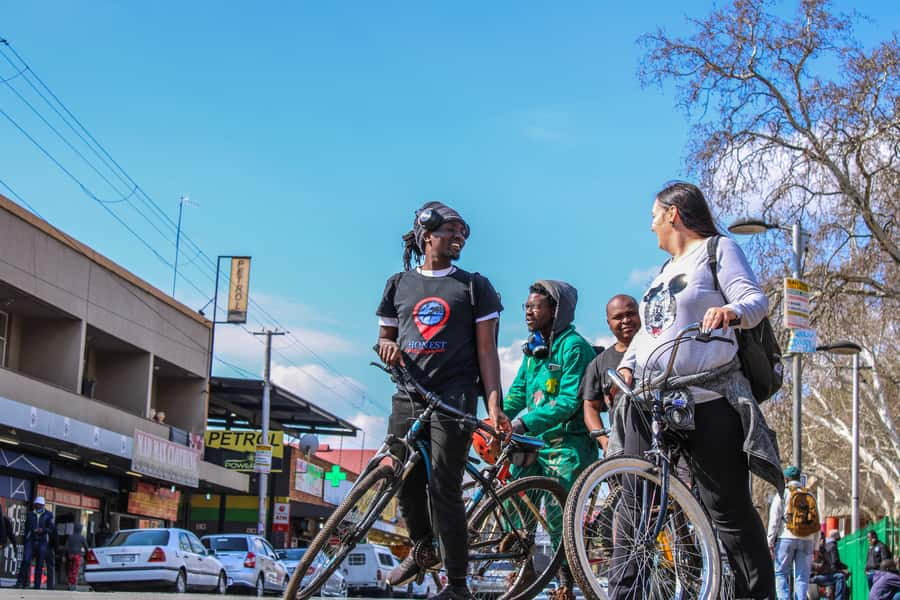
Johannesburg is spread out. A walking tour can give you close views, but it will not cover Braamfontein, Newtown, Marshalltown, Maboneng, and Victoria Yards in one short outing. A bus can cover the distance, but you lose the street-level feel.
A bicycle sits between those two options. You move fast enough to see several districts, yet you can stop for street art, buildings, and conversations. The route is about 10 kilometers, and the mostly flat surface keeps the physical demand reasonable.
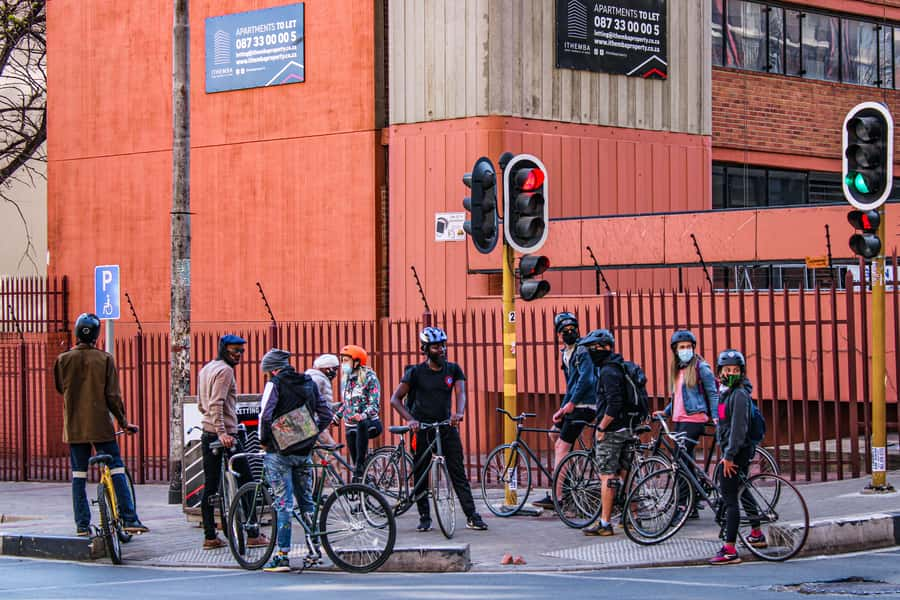
I would not treat this as a casual cycle through an empty park. You ride through the inner city, where traffic is part of the experience. One rider praised the guide for managing the roads safely but still warned that cycling here is not for the faint-hearted. That is useful advice. The tour may not require serious fitness, but it does require calm handling, awareness, and confidence around cars.
The bicycles have been described as good quality, though one rider found the single heavy gear awkward. If you are used to several gears, the bike may feel basic. On the other hand, the limited hills mean you do not need a sophisticated touring bicycle to finish the route.
More Guided Rides in South Africa:
- Soweto: Guided Bicycle Tour with Lunch
★ 4.9 · 292 reviews - Cape Town: Guided Bike Tour
★ 4.9 · 193 reviews - Soweto: Bike Tour with a Local Tour Guide
★ 4.7 · 114 reviews
Starting with a city briefing and safety gear
You meet the guide at the location assigned to your booking option. The exact meeting point can vary, so check your confirmation carefully instead of assuming every departure begins in the same place.
At the start, you receive a bicycle, helmet, and water. The guide gives you an outline of the route and explains what you will see. This short briefing matters because the tour moves through several parts of Johannesburg, each with its own character and story.
The guide is one of the main reasons to book this rather than rent a bicycle alone. English and French guiding are available, and an English audio guide is also included. Individual guides have received warm praise for their care and local insight. Lebo was singled out for handling traffic safely, Franck for giving detailed explanations with clear enthusiasm, and Rambo for looking after the group on the road.
Those names also show that the experience can vary slightly depending on who leads your ride. A strong guide will connect the stops and help you understand how the city changed after the 1990s. If the guide is late or the bicycle is not ideal, the experience can lose some of its shine, so allow a little patience at the start.
Braamfontein’s street art and student energy
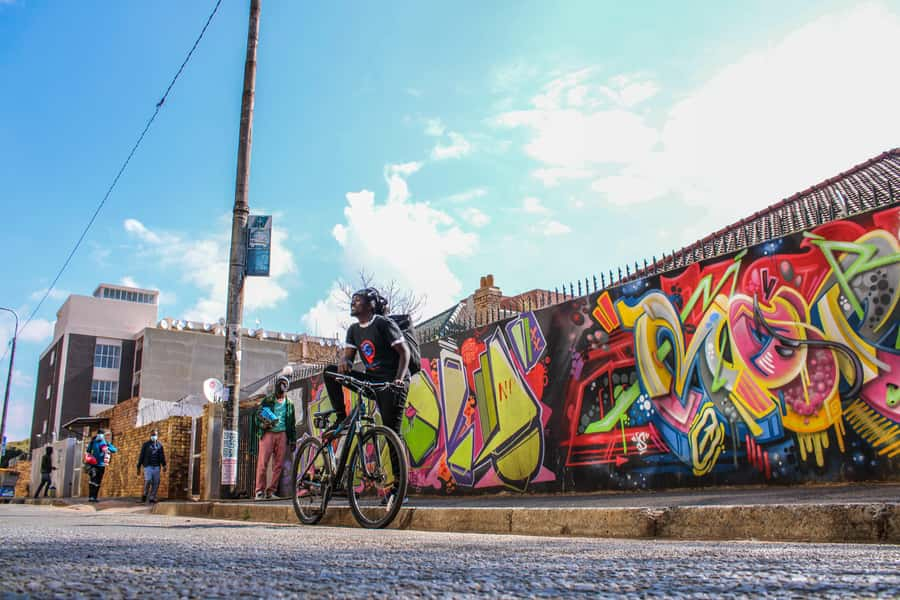
Braamfontein is one of the tour’s best stops if you care about public art and modern city life. The focus here is street art, giving you a chance to see Johannesburg through walls, painted facades, and creative work rather than only through official landmarks.
The bicycle is useful in this district because you can cover more streets than you would on foot. The guide can point out works you might otherwise pass without understanding. I would ask questions about the artists, the neighborhood, and how public art fits into the area’s change.
The tour description places special emphasis on street art, and one rider specifically appreciated that the guide adjusted the experience to include more of it. That is a good sign for anyone whose main interest is visual culture. Still, this is a guided city ride, not a dedicated art walk. You will see street art as part of a wider route rather than spend a long time at each mural.
Newtown, where music shapes the story
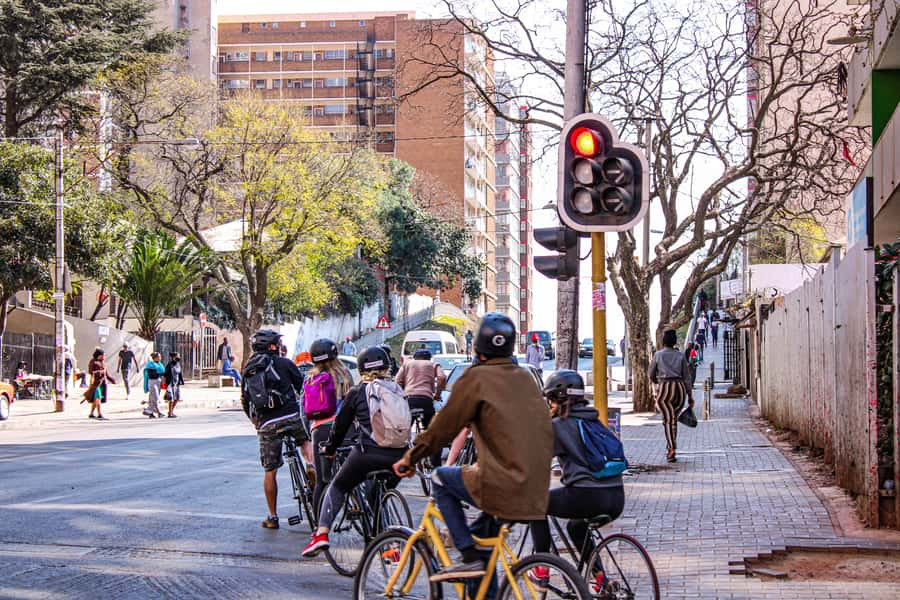
Newtown is presented as Johannesburg’s home of jazz, adding a cultural layer to the ride. This stop helps move the tour beyond buildings and dates. Music is one way to understand how a city expresses identity, and Newtown gives the guide room to talk about Johannesburg’s creative life.
You should expect an explanation of the district and its place in the city, not a concert or music performance. The attraction is the setting and the story. If you enjoy seeing how arts and urban neighborhoods connect, Newtown adds welcome variety after the street art focus in Braamfontein.
Because the full route covers many districts, your time in Newtown may be brief. That is part of the trade-off. You gain a broad sense of the city instead of a long, detailed visit to one cultural quarter.
A few more days on two wheels around South Africa worth a look
- Stellenbosch: Historical Bike Tour & Wine Tasting
★ 4.9 · 248 reviews - Cape Town City Cycling Tour
★ 5.0 · 199 reviews - Franschhoek: E-Bike Guided Winery Tour
★ 4.6 · 96 reviews - Stellenbosch: Wine Farm E-Bike Guided Tour
★ 4.6 · 88 reviews
Marshalltown and Johannesburg’s mining past
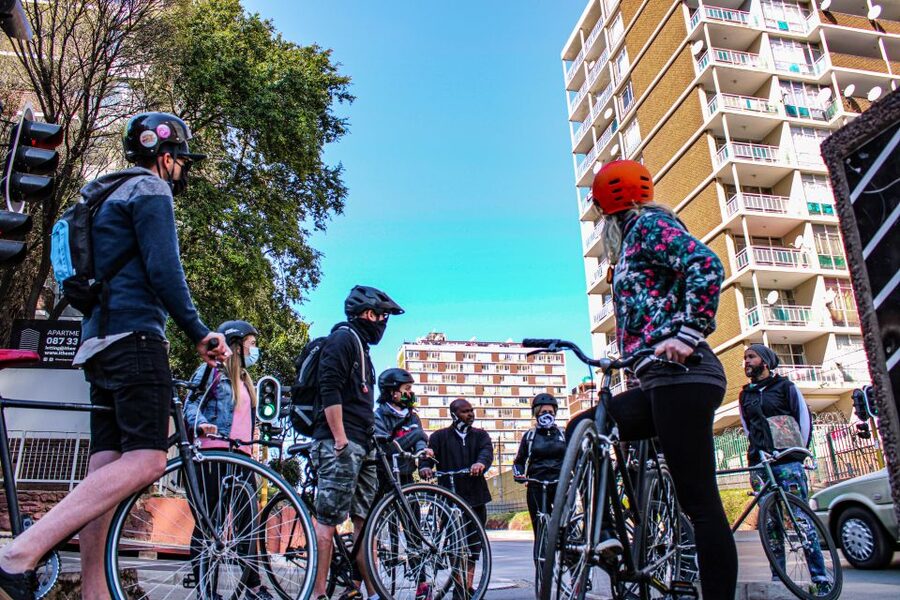
Marshalltown brings the city’s gold-mining story into view. Johannesburg grew around mining, and this section gives the ride historical weight. The guide explains the forces that shaped the inner city and helps you understand why the districts around you developed as they did.
I like this part of the route because it connects the present-day city to its origins. Street art and creative businesses show where Johannesburg is going, while Marshalltown helps explain where it came from. The contrast is useful. It keeps the tour from becoming only a sightseeing ride.
The value here depends heavily on the guide. A bicycle cannot explain a mining district by itself. Ask for clear context about the buildings, the gold rush, and the later changes to the inner city. The tour promises a closer look at Johannesburg’s mining story, but the available information does not identify specific mine sites or museums included in the ride.
Ellis Park Stadium and Bertrams
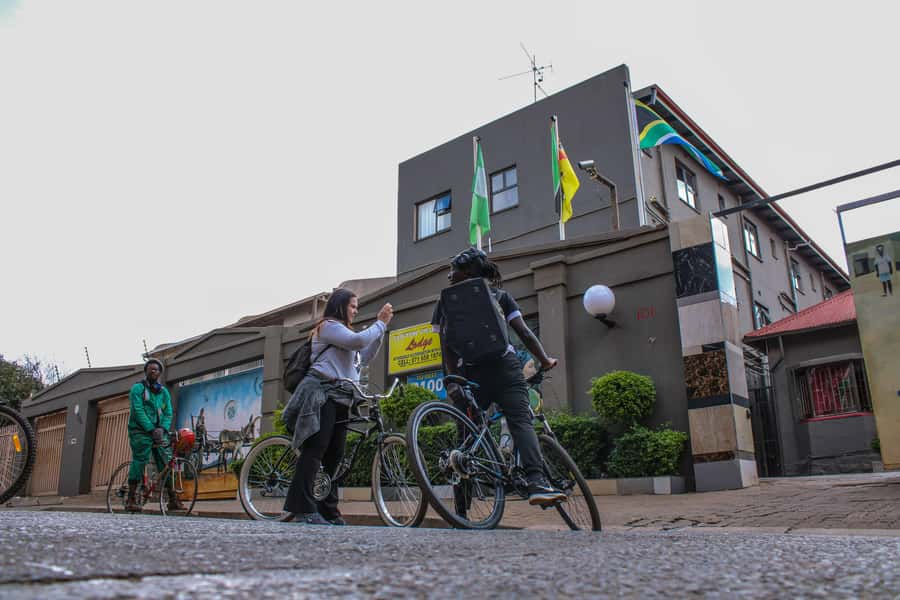
The route includes Bertrams and the impressive Ellis Park Stadium. The stadium gives you a large, recognizable landmark and a sense of the scale of Johannesburg’s sporting culture.
This is also a practical benefit of cycling. You see the stadium as part of a lived-in neighborhood rather than traveling directly from one tourist stop to another. The surrounding route helps you notice how major public places sit alongside ordinary city streets.
The information provided does not promise entry to the stadium, a match, or a guided stadium visit. Think of it as an exterior sight and a point of orientation. It should appeal to sports fans, though it is not the central focus of the tour.
Maboneng and a meeting with local creativity
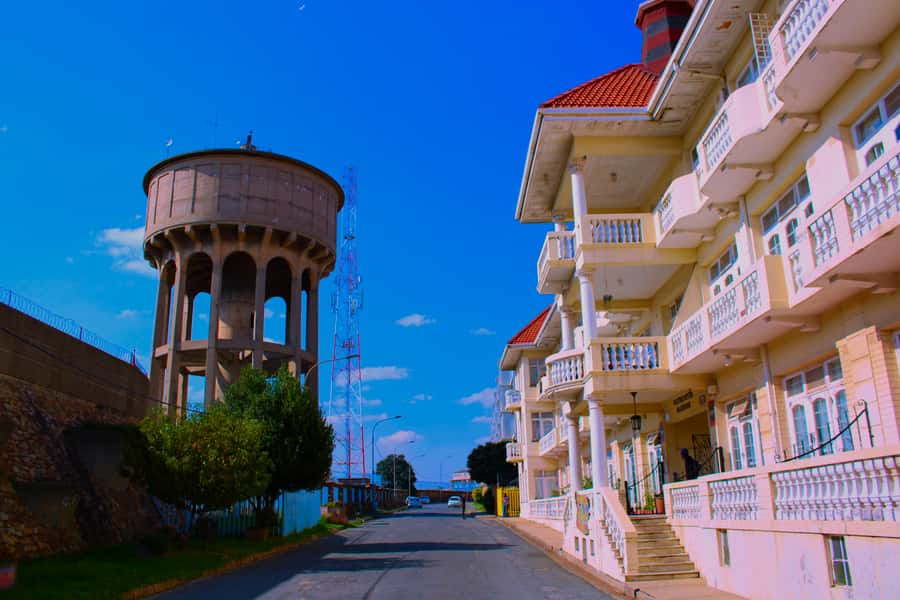
Maboneng is one of the most anticipated sections of the route. The tour includes a chance to meet a local artist, giving you more than a quick look at painted walls or converted spaces.
That personal contact is valuable because it puts a human face on Johannesburg’s creative economy. You are not only hearing that the neighborhood has changed. You have the chance to encounter someone involved in that change.
The tour also includes Jewel City, Jeppes Town, and Victoria Yards. Each area has its own story, and the guide uses the route to explain how the inner city has shifted over recent decades. The experience is strongest when you stay curious about the differences between districts. Maboneng may feel creative and visitor-friendly, while other parts of the route may feel more raw and everyday.
The exact format of the artist meeting is not specified, so do not assume a workshop or long studio visit. It is best understood as a short local encounter within a broader cycling tour.
Victoria Yards and the city’s changing face
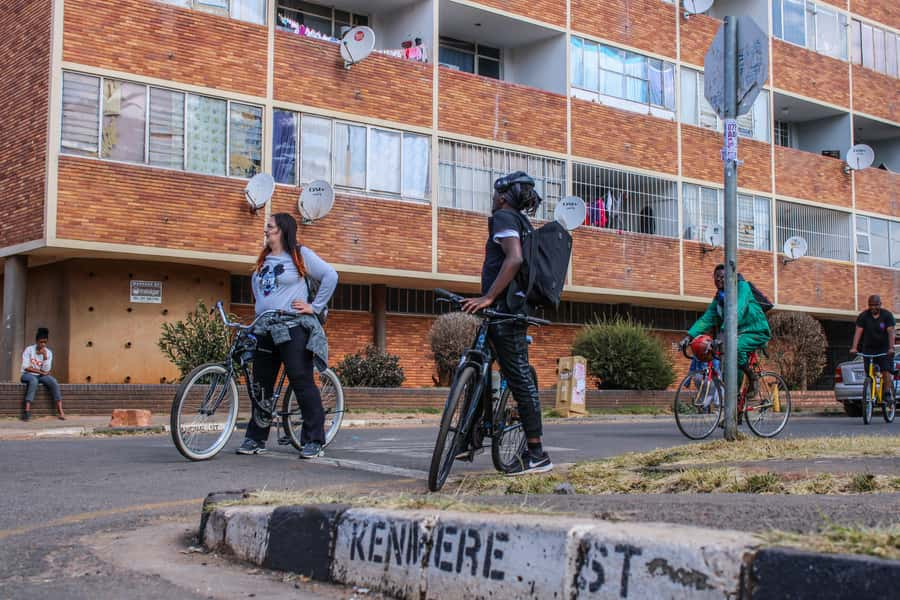
Victoria Yards adds another view of urban renewal and local enterprise. Along with Maboneng, it shows how parts of Johannesburg are being reshaped through art, small businesses, and community activity.
The tour’s larger theme is transformation from the 1990s to today. That makes these newer creative areas important. You get to compare older mining and industrial stories with current efforts to bring new life into inner-city spaces.
I appreciate that the route does not pretend Johannesburg has one simple identity. It moves through districts with different histories and different moods. The guide’s job is to explain those contrasts without reducing the city to a quick before-and-after story.
How difficult is the 10-kilometer ride?
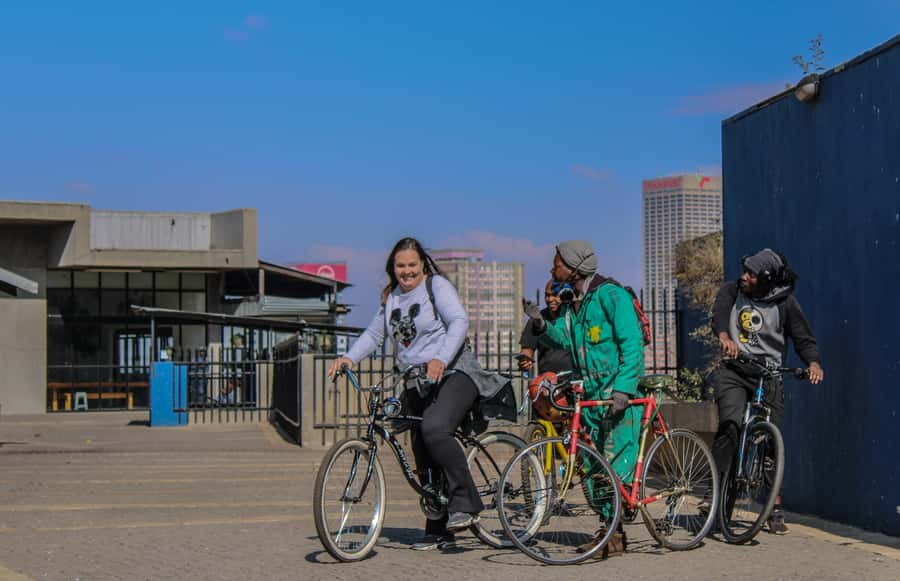
The route is described as flat, with very few hills, and suitable for people with moderate fitness. You do not need to be a serious cyclist. Comfortable clothes and shoes should be enough for most participants.
The bigger issue is traffic, not hills. One rider called the traffic chaotic and noted that they saw few other cyclists. That means you should be comfortable following instructions, keeping control of the bicycle, and staying alert.
The tour is child-friendly, but children still need to be capable cyclists. It is not suitable for anyone who cannot ride a bike, has mobility impairments, or has heart problems. If you have concerns about city traffic, a walking tour combined with a bus tour may be a calmer way to cover similar districts.
What the $84 price gets you
At $84 per person, this is not the cheapest way to see Johannesburg. You are paying for the bicycle, helmet, water, guide, route planning, and local interpretation. Lunch and hotel pickup are not included.
The price makes the most sense if you want an active introduction to several inner-city areas in one outing. A self-guided ride may cost less, but it would not give you the same historical links or local commentary. You would also need to arrange the bicycle and route yourself.
I would judge the value by your interests. If you care about street art, urban change, local culture, and a guide who can explain the city as you ride, $84 is reasonable. If you mainly want to see landmarks quickly or dislike traffic, the cost may feel high for an experience that demands some effort.
The duration ranges from two to four hours, with starting times depending on availability. That range matters. A shorter ride may feel brisk, while a longer version can allow more stops and explanation. Check the specific option before booking.
Tips for getting more from the ride
Wear comfortable shoes and clothing that let you pedal easily. Bring your attention as much as your camera. The best parts of this experience come from noticing how the districts change from one street to the next.
Ask the guide about the 1990s and the forces behind the inner city’s changes. Ask about the art in Braamfontein, the music connection in Newtown, and the contrast between Marshalltown and Maboneng. Guides such as Franck, Lebo, and Rambo have been praised for making the experience informative and safe, so take advantage of that local perspective.
Do not expect a polished sightseeing route with no interruptions. City traffic, uneven moments in the ride, and the basic single-gear bikes are part of the practical picture. The tour works best when you see the bicycle as a way to connect with Johannesburg, not as a luxury cycling excursion.
Free cancellation is available up to 24 hours before the activity, and you can reserve now and pay later. The meeting point varies by option, so confirm that detail before setting out.
Should you book the Johannesburg cycling tour?
Book it if you want an active, wide-ranging introduction to Johannesburg and feel comfortable riding in traffic. The route gives you street art in Braamfontein, jazz culture in Newtown, mining history in Marshalltown, Ellis Park Stadium, and creative districts including Maboneng and Victoria Yards.
I would especially recommend it to confident cyclists, families with capable children, and first-time visitors who want local context rather than a quick list of sights. The guide can make the difference, and the strongest experiences appear to come from careful road support and clear storytelling.
Skip it if you are uneasy on busy streets, need an accessible route, cannot ride a bicycle, or want long visits at each stop. In that case, pair a walking tour with a bus tour. For everyone else, this is a lively and practical way to see more of Johannesburg in a short time, provided you accept that the city ride itself is part of the adventure.
FAQ
How long is the Johannesburg inner-city cycling tour?
The tour lasts between two and four hours. Starting times depend on availability and the option you select.
How far do you cycle?
The route is about 10 kilometers long.
Is the cycling route hilly?
The route is described as mostly flat, with very few hills.
What is included in the tour?
The tour includes the cycling experience, a guide, a bicycle, a helmet, and water.
Is lunch included?
No. Lunch is not included in the tour price.
Is hotel pickup included?
No. Hotel pickup and drop-off are not included.
What languages are available?
Live guiding is available in English and French. An English audio guide is also included.
Is the tour suitable for children?
The tour is described as child-friendly. Children must still be able to ride a bicycle and manage a city cycling route.
What should I wear or bring?
Wear comfortable shoes and comfortable clothing suitable for cycling.
Who should not take this tour?
The tour is not suitable for people who cannot ride a bicycle, people with mobility impairments, or people with heart problems. A moderate level of physical fitness is recommended.
Just added around South Africa
- Bicycle Township Tour in Cape Town★ 5.0 · 43 reviews
- Cape Town City and Woodstock Bicycle Tour★ 4.5 · 15 reviews
- Cape Town’s Finest City Bike Tour★ 5.0 · 43 reviews
- Private Cycling Tour of The Cape Peninsula from Cape Town★ 5.0 · 14 reviews
- Mountain Biking Table Mountain to Constantia Morning Ride★ 5.0 · 17 reviews
- Stellenbosch: Countryside Banhoek valley E-Bike Wine Tour★ 4.9 · 20 reviews
- Soweto: Bike Tour with a Local Tour Guide★ 4.7 · 114 reviews
- Half-Day Winelands E-Bike Tour with Wine Tasting★ 4.2 · 13 reviews
South Africa Cycling Tours, compared.
Stellenbosch: Historical Bike Tour & Wine Tasting
Read our review →

Browse the lists this tour appears in