
REVIEW · GREECE
Meteora Electric Bike Tour
Meteora looks made for two wheels. This four-hour ride from Kalambaka takes you beneath towering rock pillars, up to cliff-hung monasteries, and along viewpoints that are harder to reach by car. I like the electric assistance, which takes the sting out of the slopes, and I like the small-group feel, which gives guide Vasilis time to explain the geology, religion, and stories behind the rocks. The one catch is that monastery entry costs extra, and the time available inside may not allow you to see every monastery in depth.
You start around 9:00 a.m. at Ioanninon Street 3, opposite Kalambaka’s town hall, and return there at about 1:00 p.m. Along the way, you see all six functioning monasteries from the road, old monastery remains, hermit caves, and wide views across the valley. The bikes make the route much less demanding, but this is still an active outing, not a sightseeing bus with a bicycle cameo.
The route in brief
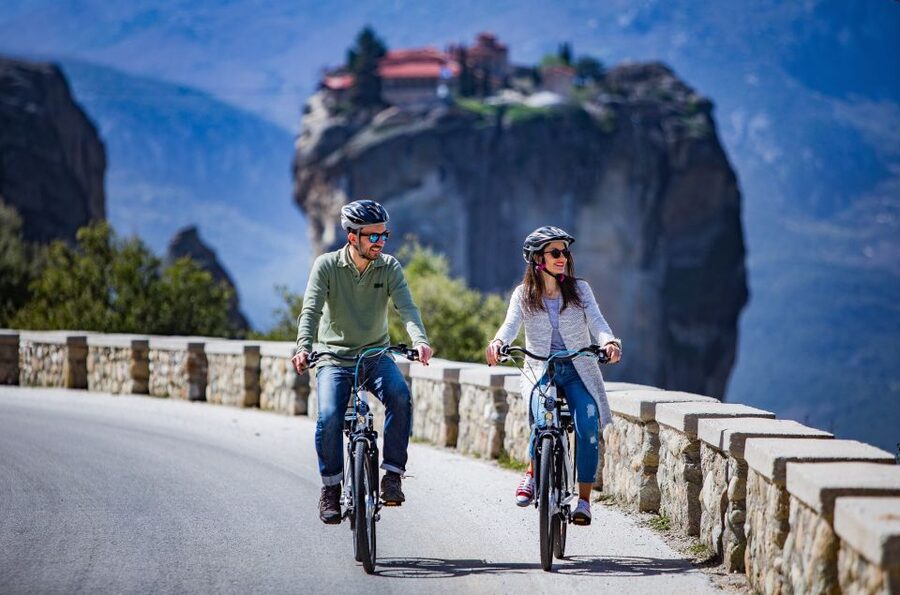
- Ride beneath Meteora’s giant rock pillars: The route enters the UNESCO-protected area, where cliffs rise sharply above the road and settlement.
- Use electric assistance on the uphill stretches: The motor helps you manage the slopes with far less effort than a standard bicycle.
- Visit up to three operating monasteries: You can choose which monasteries to enter, with Varlaam and St. Stephen’s Monastery among the stops used on the tour.
- Pause at viewpoints and older religious sites: The guide stops for photographs, explanations, old monastery remains, and hermit caves.
- Learn from a small-group guide: Vasilis is praised for clear explanations, friendly service, and careful pacing.
- Return with water and a light snack provided: A cooler accompanies the group, so you do not need to carry fresh water or food for the ride.
Why an e-bike makes sense at Meteora
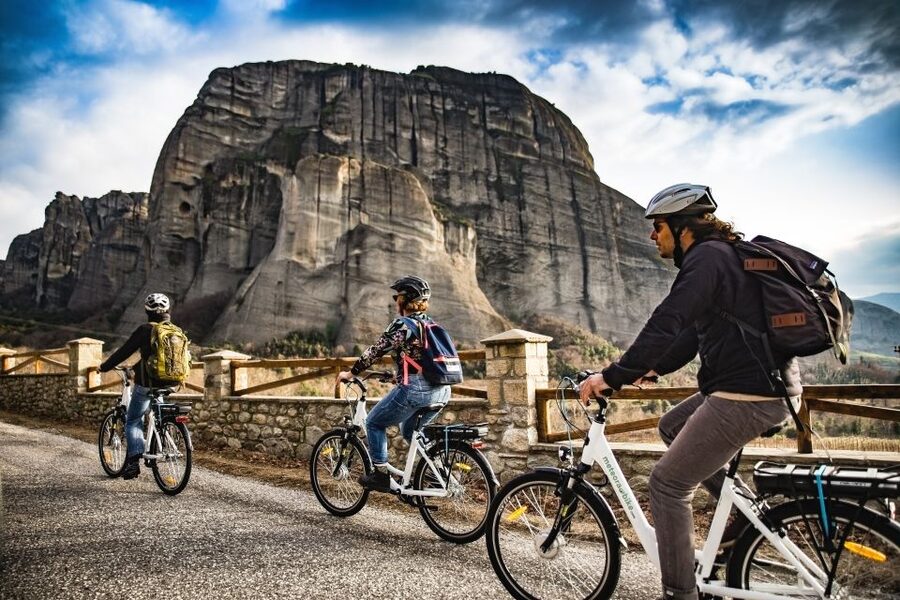
Meteora is not flat. The monasteries sit high on rock formations, and the road climbs and bends between the pillars. A regular bicycle would turn the outing into a serious workout, especially if you want enough energy left for stairs and monastery visits.
The electric bicycle changes the mood. You still pedal, but the motor helps when the road rises. You can look up at the cliffs, listen to the guide, and stop for photographs instead of focusing only on the next hill. The bikes do not remove all physical effort, but they make the ride manageable for many people who would not choose a conventional cycling tour.
I also like the practical advantage of moving by bike. Cars and coaches must search for parking and often pass through the route in clusters. A small bike group can stop more easily at viewpoints and travel between sights without sitting in traffic. You get a closer look at the rock walls and the spaces between the major stops.
The tour is not advertised as suitable for pregnant women or people with heart problems. That warning matters. Even with motor assistance, you are riding for several hours and dealing with uneven terrain, slopes, and monastery access points.
More E-Bike Tours in Greece
- Athens Scenic Electric Bike Tour with optional Acropolis visit
★ 5.0 · 3,350 reviews - Athens: City Electric Bike Tour with Acropolis Visit Option
★ 4.9 · 1,017 reviews - Athens Small Group E-Bike Tour
★ 5.0 · 1,013 reviews
Starting in Kalambaka at 9:00 a.m.
The meeting point is Meteora E-bike Tours at Ioanninon Street 3 in Kalambaka, opposite the town hall. This central start keeps the morning simple if you are already staying in town, but hotel pickup is not included. You need to make your own way to the office.
After a safety briefing, you receive the electric bicycle and helmet. The guide explains how the assistance works before the group heads toward Meteora. This is useful even if you already ride bikes, since the motor changes how quickly you move and how much pressure you need to apply on a hill.
The morning timing is sensible. A 9:00 a.m. departure gives you several hours in the rocks before the tour ends around 1:00 p.m. Starting early also gives the group a better chance to enjoy viewpoints before the day feels crowded, though exact conditions can change.
Bring sunglasses and sunscreen. The supplied water and light snack are welcome, and one participant specifically appreciated that the guide carried chilled water in a cooler. Rain does not automatically cancel the trip. Raincoats are provided, so the ride can continue in wet weather.
Entering the UNESCO-protected Meteora area
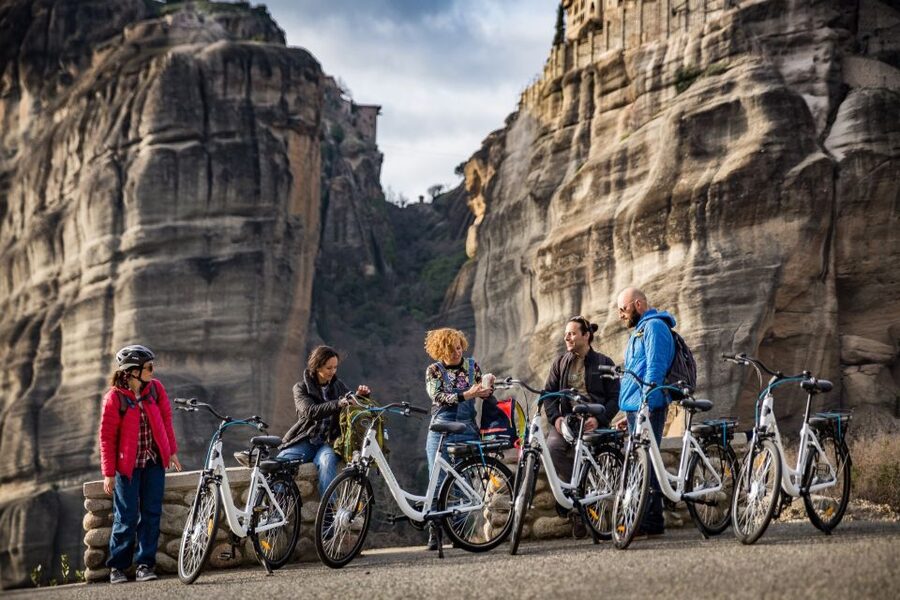
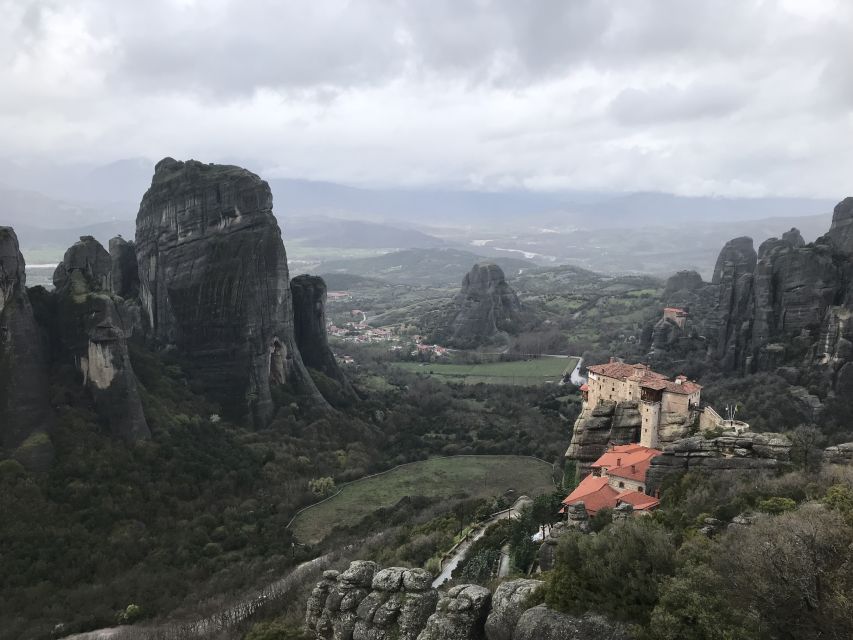
Once the group leaves Kalambaka, the setting changes quickly. Meteora’s rock pillars rise above the road in huge, irregular masses. The route is valuable because you do not simply arrive at a monastery, take a picture, and leave. You move through the rock formations and see how the religious sites relate to the cliffs around them.
The guide explains the geology as well as the human story. You learn how the rock formations developed, why monks chose these difficult places, and how religion shaped the area. The tour also covers cultural details and points out old monastery remains and hermit caves.
Those stops give Meteora more meaning than a string of viewpoints. The caves and ruins show that the famous monasteries are only part of the area’s religious past. You see traces of people who chose even more isolated places for prayer and retreat.
The guide also points out filming locations, including a place connected with Game of Thrones. That is a small detail, but it gives you another way to read the rocks. Meteora has a dramatic shape that filmmakers notice immediately, yet the religious use of the cliffs remains the main story.
The six functioning monasteries from the road
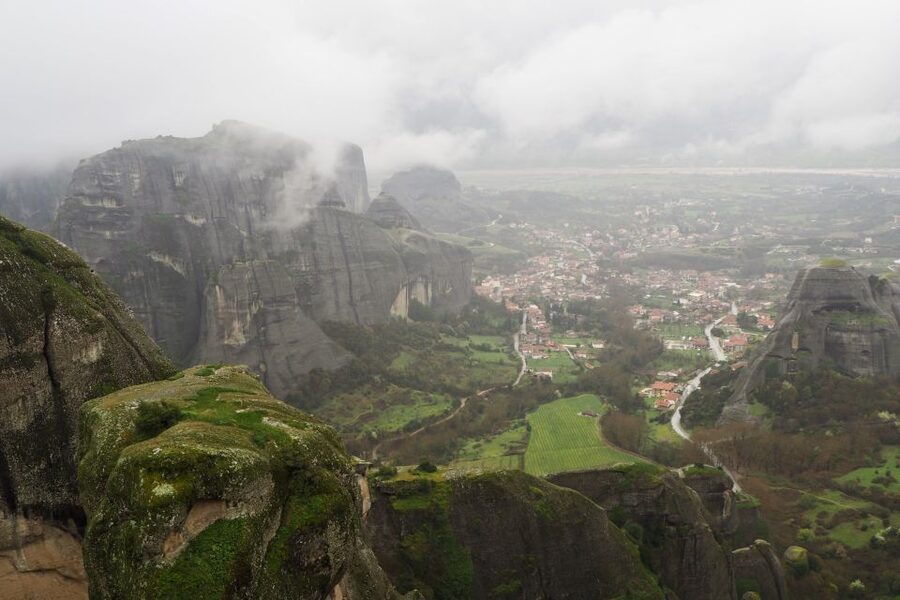
The route passes all six functioning monasteries. That does not mean you spend equal time inside each one. Instead, the guide uses the road and viewpoints to show you the full group, then you choose operating monasteries to enter.
This is a smart arrangement for a four-hour tour. Trying to enter all six would leave little time for cycling, photographs, and explanations. You get a broad view of the entire complex, then more personal time at selected sites.
The monastery visits do require planning. Entry costs €3 per monastery, and that fee is not included. Bring cash because cards are not accepted. If you enter three monasteries, budget €9 per person for admission.
Clothing rules are also important. Women need a long skirt when entering the monasteries. Men need trousers or shorts below the knee. Pack suitable clothing from the start, or you may lose time sorting out what to wear at the entrance.
The supplied information says you can choose three operating monasteries. One account describes visits to Varlaam and St. Stephen’s Monastery, while another describes three monastery visits. The exact number and choice may depend on the day’s pace and the group, so ask the guide at the start if entering three is a priority.
Same roads, a different day in the saddle:
- Historic Athens: Small Group Electric Bike Tour
★ 4.9 · 966 reviews - Athens Electric Bike Tour
★ 5.0 · 836 reviews - Athens: City Bike tour with Acropolis Visit Option
★ 4.9 · 665 reviews - Acropolis & Parthenon Tour and Athens Highlights Bike tour
★ 5.0 · 605 reviews
Varlaam, St. Stephen’s, and time inside
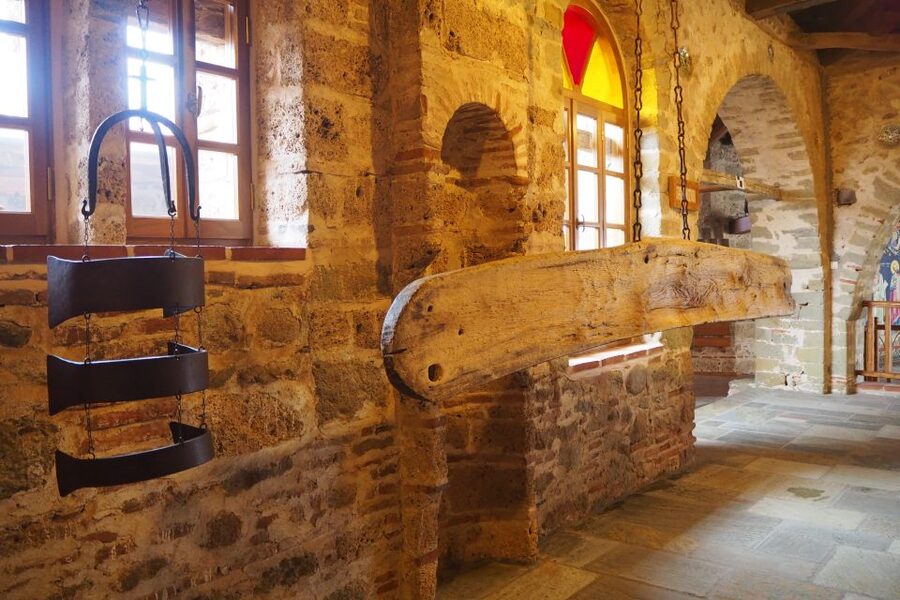
Varlaam is one of the monasteries specifically associated with the route. St. Stephen’s is another. Having time at both gives you a useful contrast between the monasteries, while the bike ride links them in a way a standard transfer does not.
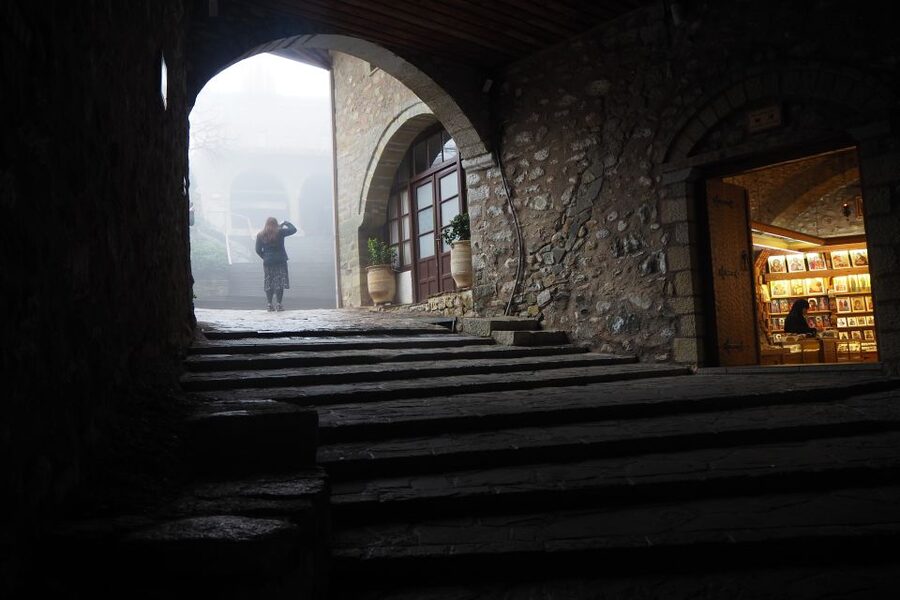
The tour includes access to the monastery grounds when you pay the entrance fee, but it does not include a separate guided tour inside. The outdoor guide commentary covers the wider area, its religion, culture, and geology. Inside, you explore independently and follow each monastery’s own rules.
That distinction affects your expectations. If you want a detailed explanation of every icon, room, or religious object, you may need a separate indoor guide or more time on your own. If you mainly want to understand the setting and see the monasteries without arranging several transfers, this tour gives you a good balance.
The monasteries are active religious places, not just monuments. Modest clothing is part of showing respect for monastic life. The quiet, the dress rules, and the simple entry process are all part of the visit, so treat them as part of the experience rather than an inconvenience.
Viewpoints, photographs, and the pace of the ride
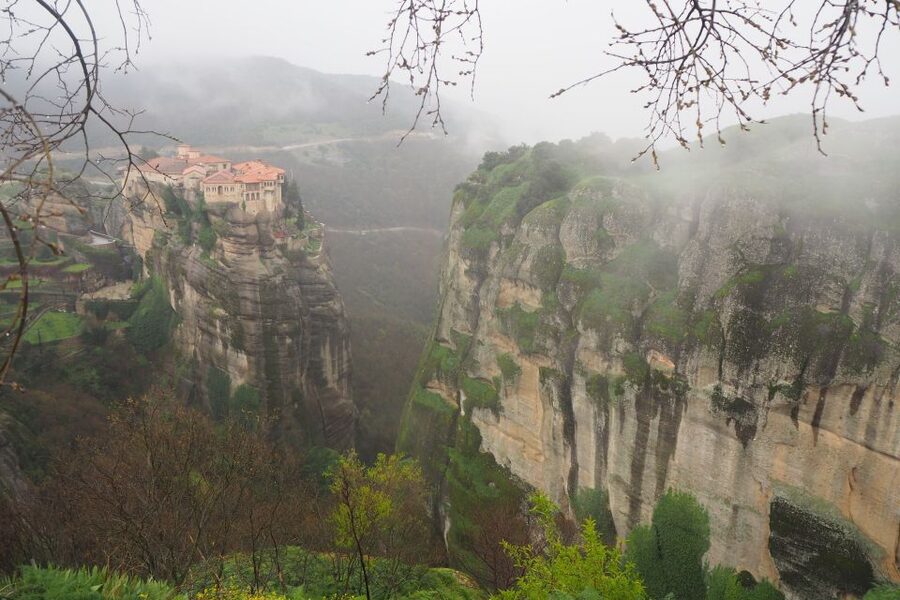
The guide makes frequent stops for photographs and explanations. That is one of the strongest reasons to choose a bike instead of a coach. You can pause when a rock formation opens into view, then continue without a long search for parking.
The views extend across the valley and back toward the cliffs. You will have plenty of chances to photograph the monasteries from different angles, not just from the usual roadside pull-off. The route’s appeal is as much the movement between the sites as the sites themselves.
The pace appears relaxed rather than rushed. Several accounts praise the regular stops, the chance to enjoy the scenery, and the feeling of moving without stress. That matters because Meteora can become a checklist if you rush from monastery to monastery.
At the same time, remember that a relaxed four-hour tour still has a fixed end point. You cannot stop indefinitely at every viewpoint. If photography is your main interest, tell the guide early so you understand how much time is available at each stop.
What the guide adds
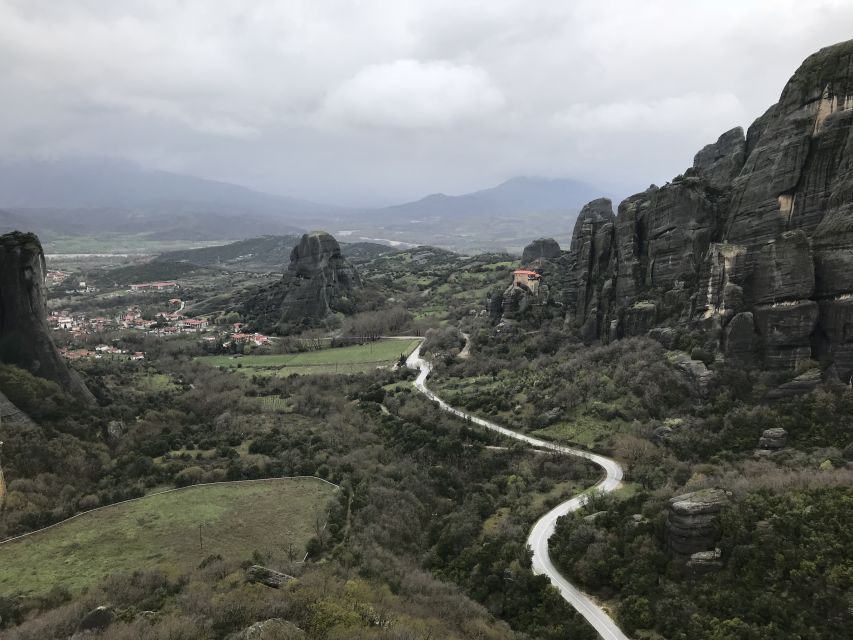
A good guide is especially useful at Meteora because the cliffs can look spectacular without explaining anything. Vasilis receives strong praise for his friendly manner, clear information, and ability to explain the geology, history, and religious importance of the area.
The small-group format helps. With fewer people, you can ask questions and hear the answers without the guide shouting across a coach. The guide can also adjust the pace more easily and keep the ride comfortable.
Private and small-group options are available. A private outing may suit you if you want more control over photo stops or monastery choices. A small shared group is likely the better value if you enjoy meeting other people and do not need a custom schedule.
The tour is offered in English and Greek. If you need another language, this is not the right choice based on the information provided.
Price and what you get for $51
At $51 per person, the tour is not the cheapest way to look at Meteora from the roadside. You are paying for a four-hour guided route, an electric bicycle, helmet, water, a light snack, and the guide’s time. You are also paying for the convenience of covering more ground without arranging a vehicle.
The value improves if you have only one day in Meteora. A car or coach can show you the main monasteries, but the bike gives you a more active connection to the rock formations and makes stops easier. You also avoid the effort of planning a route and working out how to move between viewpoints.
You should add €3 for each monastery you enter. Hotel transfers, personal spending, and indoor monastery guiding are not included. Those extras do not make the tour poor value, but you should count them before booking.
For students or anyone on a tight budget, $51 may feel high. One participant described the tour as expensive for students but still worth doing once. I agree with that assessment if Meteora is a major part of your trip. If you have several days and can cycle independently, you may prefer to compare other options.
Free cancellation up to 24 hours before the start and the reserve-now, pay-later option make planning less risky. These are useful features, but the main value still comes from the route, the e-bike, and the guide.
Rain, clothing, and practical preparation
The tour runs in rain, with raincoats provided. That is helpful in a mountain setting, where conditions can shift. Still, bring clothing that dries reasonably well and shoes suitable for walking around monastery grounds.
Wear sunscreen and sunglasses even on a cool morning. The ride includes open viewpoints, and glare can be strong around pale rock surfaces. Water is supplied, so you do not need to bring a large bottle, though you may prefer a small personal bottle for comfort.
Dress for monastery entry before you leave Kalambaka. Women need a long skirt, and men need trousers or shorts below the knee. The information does not state that suitable clothing is supplied, so do not rely on borrowing something at the entrance.
The tour ends back at the starting point around 1:00 p.m. That makes it easy to plan lunch in Kalambaka afterward or continue with another activity. There is no hotel transfer at the end, so your onward plans should begin from the town meeting point.
Who should book this Meteora bike tour?
I would choose this tour if you want to see Meteora actively but do not want a punishing cycle. The electric motor handles the harder slopes, while the regular stops keep the ride social and manageable.
It suits first-time visitors who want an introduction to the cliffs, monasteries, caves, and religious background in one morning. It also suits anyone with limited time who wants to cover all six functioning monasteries from the road and enter selected sites.
Families and mixed-age groups may appreciate the motor assistance, but the activity is not suitable for pregnant women or people with heart problems. The route still involves cycling and walking, so consider your own fitness before booking.
I would hesitate if your priority is spending long periods inside every monastery. The four-hour schedule gives you a broad introduction and selected visits, not a slow architectural study. I would also hesitate if you dislike fixed group timings or want to stop whenever you choose.
Should you book it?
Book this Meteora electric bike tour if you want easy uphill cycling, frequent viewpoints, and a human guide rather than a coach ride. The strongest part is the combination of movement and explanation: you see the cliffs from the road, stop for photographs, learn why the monasteries are there, and enter selected sites without dealing with parking.
Before you commit, confirm how many monasteries the group expects to enter, carry cash for the €3 fees, and dress correctly for monastic rules. If you accept those limits, the $51 price is fair for a four-hour, small-group introduction to one of Greece’s most unusual places.
FAQ
Where does the Meteora electric bike tour start?
It starts at Meteora E-bike Tours, Ioanninon Street 3, Kalampaka 42200, opposite the town hall.
Where does the tour finish?
The tour finishes back at the same meeting point.
How long does the tour last?
The tour lasts four hours and is scheduled to finish at approximately 1:00 p.m. when it begins around 9:00 a.m.
What languages does the guide speak?
The live tour is offered in English and Greek.
Are electric bicycles and helmets included?
Yes. An electric bicycle and helmet are included in the tour price.
Are monastery entrance fees included?
No. Entry costs €3 per monastery, and cash is required because credit cards are not accepted.
Can I visit the monasteries during the tour?
Yes. You can choose operating monasteries to visit, with up to three stated as part of the experience. The tour also passes all six functioning monasteries and includes views of older remains and hermit caves.
What clothing do I need for the monasteries?
Women should wear a long skirt. Men should wear trousers or shorts below the knee.
Does the tour run in the rain?
Yes. The tour operates in rain, and raincoats are provided if needed.
Just added around Greece
- Sustainable Athens Bike tours with photos★ 5.0 · 13 reviews
- Athens Street Art Bike Tour★ 5.0 · 20 reviews
- Athens Sights Highlights on eBike Tour with Local Food & Drinks★ 5.0 · 13 reviews
- Bike tour ! It’s Ride through Athens’ Local Treasures★ 5.0 · 90 reviews
- Discover the City e-bike night tours★ 5.0 · 23 reviews
- Explore Athens Historical Centre by Bike★ 5.0 · 54 reviews
- Electric Trikke Bike Athens Complete Tour★ 5.0 · 35 reviews
- Athens Tour with Electric Bike★ 5.0 · 96 reviews
E-Bike Tours, compared.
3-Hour Porto Highlights on a Electric Bike Guided Tour
Read our review →
Hills, Alfama, and Mouraria Tour by Electric Bike
Read our review →
Athens Scenic Electric Bike Tour with optional Acropolis visit
Read our review →
City Highlights 3-Hour Guided Electric Bike Tour
Read our review →
Rome EBike Tour: Appian Way, Catacombs & Roman Aqueducts
Read our review →
Top Highlights & Hidden Gems Tour by Cannondale E-Bike
Read our review →Browse the lists this tour appears in