
REVIEW · MILAN
Milan: Bike tour of the city
Milan reveals itself best at street level. This 3.5-hour ride links major sights with quieter roads, lively districts, and local stories, making it a smart first look at the city. I especially like the small group limit of 10 and the use of historic Milanese Rossignoli bicycles. The main drawback is that you need reasonable fitness, confidence on a bike, and a minimum height of 150 centimeters.
I also like that the guides are Milan natives who know the city beyond its postcard stops. Giacomo, named often by participants, brings a personal connection to the route, and the team has shown a willingness to adjust the pace or route when needed. Still, this is not a gentle sightseeing ride for someone who cannot comfortably cycle for several hours.
What makes this Milan ride worth considering
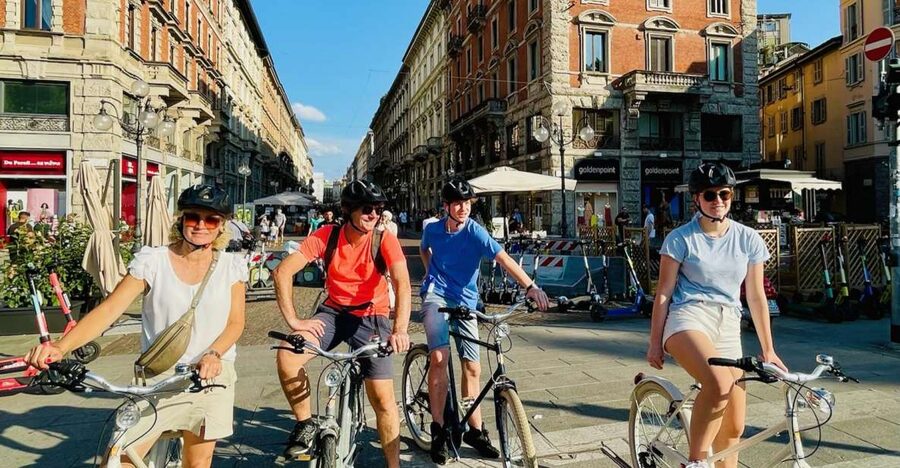
- Local guides with deep city knowledge: Giacomo and the AllRide Milan team grew up in Milan and bring personal stories, shortcuts, and neighborhood context.
- Rossignoli bicycles: You ride a bicycle from a historic Milanese brand, with a helmet included.
- A compact route with broad coverage: In 3.5 hours, you pass through Porta Nuova, Brera, the Duomo area, Navigli, Porta Ticinese, and more.
- Small groups capped at 10: The format allows more direct contact with the guide and easier stops for photographs.
- A balanced pace: The route includes short riding sections and longer 30-minute neighborhood visits, rather than racing from monument to monument.
- English and Italian tours: You can join a live guide in either language.
Why a bike is a smart way to see Milan
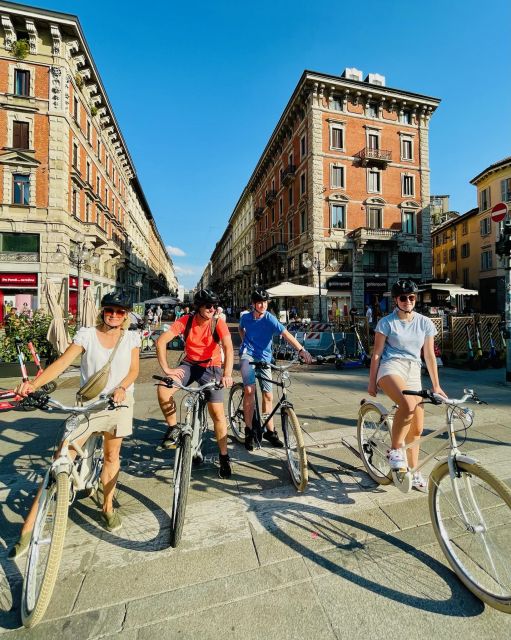
Milan is walkable in parts, but its best-known areas are spread across the center. A bicycle lets you connect the modern towers of Porta Nuova with the lanes of Brera, the grand scale of the Duomo, and the canals of Navigli without spending half the morning waiting for transport.
You also see the transitions between neighborhoods. On foot, you may focus on one district at a time. From a saddle, you get a quick sense of how Milan changes from finance center to art quarter to canal district to elegant residential streets.
The route is not a hard cycling expedition, but it is not a passive sightseeing bus either. You need to keep moving, follow the guide, and remain comfortable in city traffic. The team describes the ride as safe and suited to bike-friendly lanes, but city cycling still calls for attention. I would choose this tour early in a Milan visit, when a broad overview can help you decide where to return later.
The price is $55.80 per person. That is fair for a 3.5-hour guided outing when you consider that the bicycle, helmet, and guide are included. You are also paying for local route planning and the chance to cover much more ground than a walking tour. The value is strongest if you want orientation, neighborhood variety, and stories in one morning. It is less compelling if you prefer to linger inside museums or spend a long time at each monument.
A few more days on two wheels around Italy worth a look
- Rome EBike Tour: Appian Way, Catacombs & Roman Aqueducts
★ 5.0 · 1,766 reviews - Rome: Top Highlights & Hidden Gems Tour by Cannondale E-Bike
★ 4.9 · 1,760 reviews - Rome: Appian Way & Aqueducts E-Bike Tour (Catacombs & Food)
★ 4.9 · 1,498 reviews
Starting at AllRide Milan
The meeting point is AllRide Milan, by the fountain at the center of the tree-lined square. This is a useful place to arrive a little early, since you will need to get settled on the bicycle and listen to the opening instructions.
The tour ends back at the same point. That makes the outing easy to fit into a larger day, especially if you plan to visit a museum or book a meal afterward. Since start times vary, check the available departure when you reserve.
The small format matters here. With no more than 10 participants, the guide can keep the group together without the long pauses and complicated head counts that often slow larger rides. One outing used two guides, one at the front and one at the rear, which helped everyone stay together and made the ride feel more relaxed.
Porta Nuova: Milan’s modern face
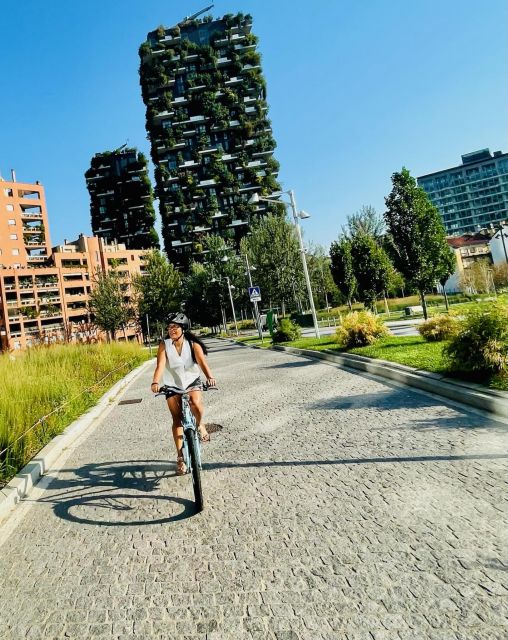
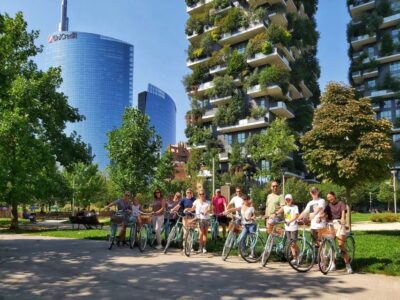
The first riding section heads toward Porta Nuova, where Milan shows its newer side. The district is known for contemporary architecture and the city’s financial center, a sharp contrast with the older quarters later in the route.
This is a good opening stop because it immediately widens your idea of Milan. The city is not only cathedral stone and historic palace fronts. You get a look at its modern ambitions before heading into older neighborhoods.
The Porta Nuova section lasts about 15 minutes by bike. Do not expect a long architectural tour here. Instead, treat it as a quick introduction and a chance to settle into the riding rhythm.
Brera: lanes, art, and a slower pace
Brera gets about 30 minutes, making it one of the more substantial parts of the route. This is the kind of district where a local guide adds real value. You are not simply checking off a famous name. You are moving through one of central Milan’s most appealing areas and hearing the stories, small facts, and anecdotes that give the streets personality.
Brera is also a welcome change after Porta Nuova. The mood becomes more intimate, and the route gives you time to take photographs or ask questions. The small group helps here because you are less likely to feel rushed through a narrow street or crowded around a guide.
Do not expect the bike tour to replace a visit to Brera’s museums. The purpose is to introduce the district and show you why it deserves more of your time. If the area catches your eye, mark it for a return visit on foot.
Same roads, a different day in the saddle:
- Rome: Appian Way, Catacombs, & Roman Aqueducts E-bike Tour
★ 4.9 · 1,421 reviews - Rome City Small Group Bike Tour with quality Cannondale EBike
★ 5.0 · 1,380 reviews - Milan: Hidden Gems Guided Bike Tour
★ 4.8 · 1,334 reviews - Tuscany Bike Tours Through the Chianti Hills with Wine Tasting
★ 5.0 · 1,300 reviews
Piazza della Scala and Sforza Castle
The ride continues to Piazza della Scala, one of Milan’s grand civic spaces. You spend about 15 minutes cycling through this area, enough for an introduction but not a full theater visit or architectural study.
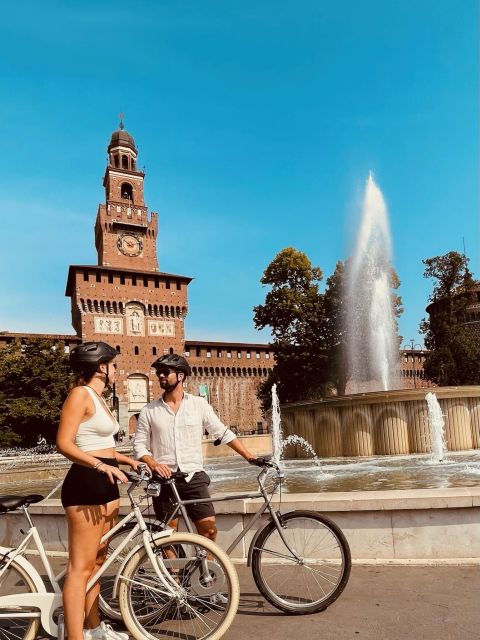
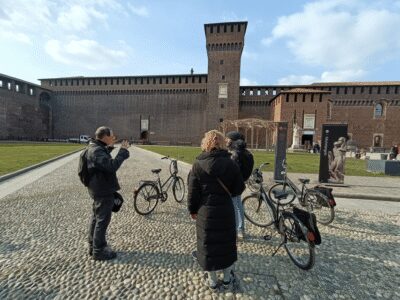
From there, the route reaches Sforza Castle, another short 15-minute riding segment. The castle is one of the city’s major historic landmarks, and its broad presence gives the guide an easy opening for stories about Milan’s past and public spaces.
The practical advantage is that you see these central landmarks without committing your whole day to them. If you have limited time in Milan, this helps you build a mental map. The limitation is equally clear: you will not tour the castle’s interior during this bike ride, so plan a separate visit if its museums interest you.
Navigli: Milan’s canal district
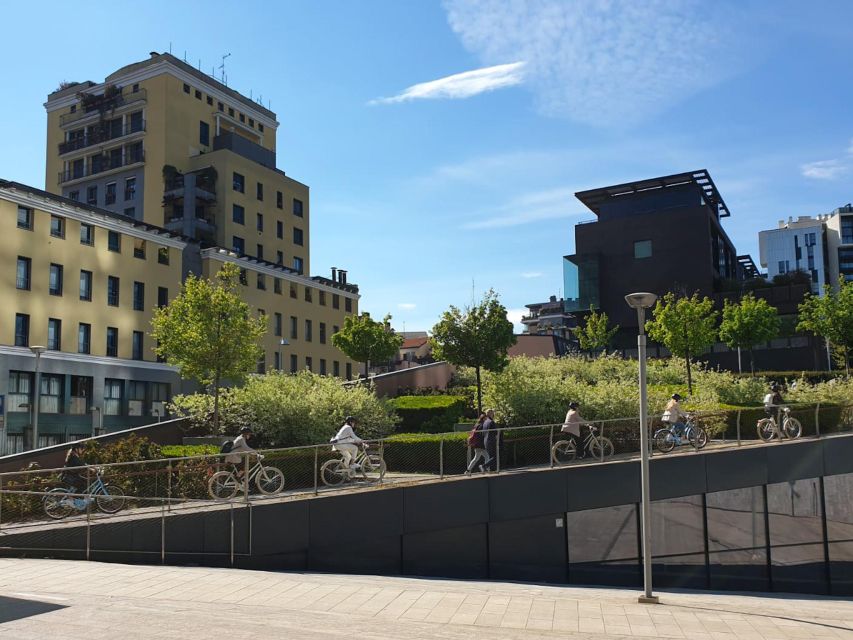
Navigli receives about 30 minutes, and that longer stop reflects its importance to the city’s character. The canal district offers a different mood from the formal center and the polished streets around Milan’s major monuments.
Here, the ride gives you a chance to notice the contrast between water, neighborhood life, and the rest of central Milan. The guide’s local knowledge is especially useful because the point is not just to reach the canals. It is to understand how this part of the city fits into Milan’s daily life and evening culture.
The tour is still moving through the district rather than settling in for a meal or long canal-side break. I would use this section to note places you may want to revisit later. Navigli is often best enjoyed with time to wander, stop for a drink, or sit and watch the area, none of which is the main purpose here.
Porta Ticinese and the link between districts
Porta Ticinese follows Navigli with another 15-minute riding section. This part helps connect the canal district to the historic center and gives the route a sense of movement rather than a series of disconnected photo stops.
It is also where the value of a local guide becomes clearer. A guide who knows the city’s back roads can create a more interesting ride than one that simply follows the most direct route between famous monuments. The team describes its routes as the result of two decades of exploring Milan, and this section is designed to show more than the standard center-city path.
As with the other short sections, the focus is on seeing and understanding rather than extensive time at one attraction. Keep your camera ready, but do not expect a long stop at every corner.
Milan Cathedral: the big central moment
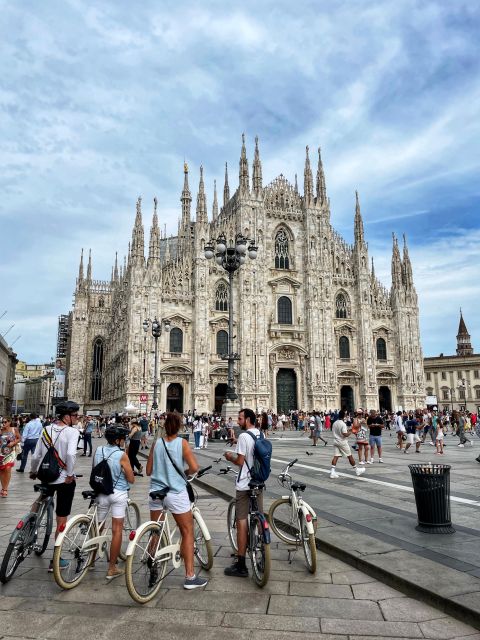
The Duomo area receives about 30 minutes, giving you more time than several of the earlier landmarks. That makes sense. Milan Cathedral is the city’s visual center, and most first visits need a proper look at the square and its scale.
Arriving by bicycle lets you approach the cathedral as part of a wider city route. You have already seen modern Milan, Brera, the castle, and Navigli, so the Duomo feels like one important chapter rather than the entire story.
This is not a ticketed cathedral visit. The itinerary calls for cycling and sightseeing, not entry to the interior or rooftop. If you want to go inside, arrange that separately and avoid booking another activity too tightly after the ride. The tour ends back at AllRide Milan, so you can return to the Duomo later by public transport or on foot.
Quadrilatero della moda: Milan’s polished side
The route then moves through the Quadrilatero della moda, Milan’s famous fashion quarter. This is a short 15-minute riding section, but it adds another useful contrast to the day.
The district shows Milan as a center of style and luxury, quite different from the canals or the youthful feel often associated with Brera. You will get a taste of the streets and atmosphere rather than a shopping appointment or detailed fashion history.
If you enjoy design, window displays, and elegant streets, note the area for later. If shopping is not on your list, the brief pass through is enough to understand its place in the city without using valuable sightseeing time.
Villa Necchi Campiglio and Indro Montanelli Gardens
Villa Necchi Campiglio receives about 30 minutes. This gives the ride another residential and architectural angle, away from the busiest monuments. The villa is a useful reminder that Milan’s appeal includes refined private spaces and neighborhoods, not only public squares.
The guide can help explain why the villa matters and point out details you might miss while moving through the city alone. You should not assume that the tour includes entry inside the villa. The scheduled activity is a bike visit, so plan a separate ticket if you want to tour the interior.
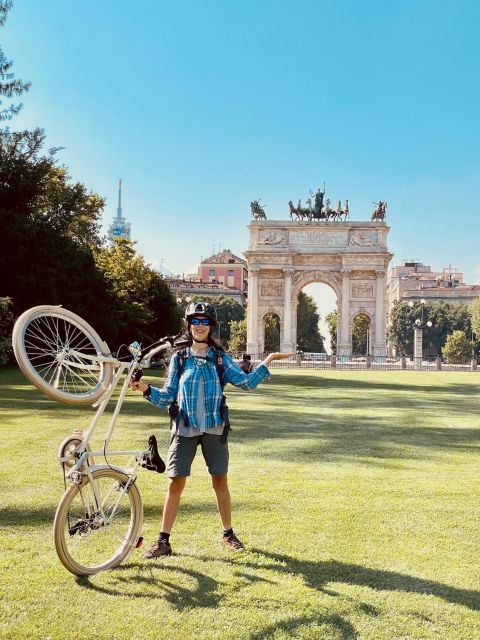
The final stop is Giardini Pubblici Indro Montanelli, reached during a 15-minute riding section. The public gardens offer a greener pause before the group returns to AllRide Milan. One participant particularly enjoyed the city’s parks and described the route as moving from the modern finance center to forest-like public spaces. That contrast is one of the ride’s strengths.
The final garden section is brief, but it helps end the tour on a calmer note. After several central districts and major sights, you get a different view of how Milan uses open space.
The guides and the feel of the ride
The strongest reason to book this outing is the guide team. Giacomo is repeatedly singled out for warmth, flexibility, and enthusiasm for Milan. He grew up in the city and is comfortable pointing out routes and corners that are easy to miss on foot.
The guiding style sounds personal rather than scripted. The team shares stories, curiosities, and anecdotes, and the small group gives you room to ask questions. The route may also be adjusted to suit the group’s comfort or interests, though you should not assume every departure will follow exactly the same pattern.
The pace receives particular praise. It is quick enough to cover a large part of Milan but controlled enough for the group to remain together. That balance matters. A bike tour becomes frustrating when the guide races ahead or stops so often that the outing loses momentum.
You should still be realistic about the physical side. The tour is unsuitable for children under 14, people who cannot ride, anyone under 150 centimeters, and those with a low level of fitness. A helmet is included, and the bicycles are Rossignoli models, but the information does not specify electric bicycles or special adaptive equipment.
Who will get the most from this tour
I would recommend this ride to first-time visitors who want a quick city orientation and to repeat visitors who want a fresh look at familiar districts. It also suits people who find walking tours too slow and want to cover more ground without sitting in a vehicle.
You are a good match if you:
- Ride a bicycle comfortably in an urban setting
- Can handle 3.5 hours with repeated stops and riding sections
- Want local stories rather than only monument facts
- Prefer a group of 10 or fewer
- Like seeing both famous sights and less obvious connecting streets
I would choose something else if your priority is extended time inside the Duomo, Sforza Castle, or Villa Necchi Campiglio. This is a city overview on wheels, not a museum tour. I would also avoid it if you are uneasy cycling in a city or expect a completely effortless ride.
The tour is offered in English and Italian. Free cancellation is available up to 24 hours before the start, and you can reserve without paying immediately. Those policies are useful if your Milan schedule is still shifting.
My verdict: book it for orientation, not for long visits
At $55.80, this is a good-value introduction to Milan if you want local guidance, a quality bicycle, and a broad route in one morning or afternoon. I especially like the mix of Porta Nuova, Brera, Navigli, the Duomo, the fashion quarter, and the gardens. Few short walking tours cover such different sides of the city.
Book it if you want to get your bearings fast, enjoy cycling, and value the personal touch of guides such as Giacomo. Skip it if you need a slow architectural tour, indoor sightseeing, or an easy ride with little physical effort. For the right cyclist, this is a lively and practical way to meet Milan before deciding where to spend the rest of your stay.
FAQ
How long is the Milan bike tour?
The tour lasts 3.5 hours. Starting times vary, so check availability when choosing your date.
What is included in the price?
The price includes a Rossignoli bicycle, a helmet, and a live guide.
How much does the tour cost?
The listed price is $55.80 per person.
Where does the tour start?
It starts at AllRide Milan. Meet by the fountain at the center of the tree-lined square.
Where does the tour end?
The tour ends back at the AllRide Milan meeting point.
What languages are available?
The live tour guide is available in English and Italian.
How large is the group?
The group is limited to 10 participants.
Who cannot join this activity?
The tour is not suitable for children under 14, people who cannot ride a bike, people under 150 centimeters tall, or people with a low level of fitness.
Can I cancel for a refund?
Yes. You can cancel up to 24 hours in advance for a full refund. You can also reserve now and pay later.
Just added around Italy
- Discovering Chianti, e-bike tour – daily experience★ 5.0 · 20 reviews
- Mountain bike tour of the Madonie from Cefalù★ 5.0 · 38 reviews
- Cagliari E-Bike Tour: Gulf, Canals & Flamingos at Molentargius★ 5.0 · 79 reviews
- Private Bike Tour with Olive Oil Tasting★ 4.5 · 15 reviews
- E-bike tour in Ostuni. Oil mill, Dolmen and huge olive trees★ 5.0 · 13 reviews
- E-Bike tour and Wine tasting from Desenzano Inland★ 5.0 · 24 reviews
- Desenzano e-bike tour★ 5.0 · 17 reviews
- Bologna Panoramic Bike Tour★ 4.0 · 14 reviews
Milan Cycling Tours, compared.
Milan’s Hidden Gems: Unique Bike Tour (ENG, NL)
Read our review →
Browse the lists this tour appears in