
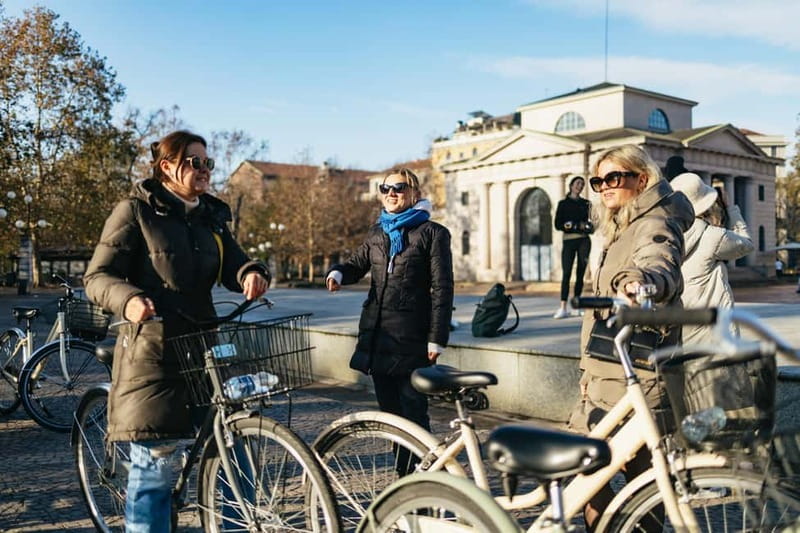
REVIEW · MILAN
Milan: Hidden Gems Guided Bike Tour
Milan has more to offer than the Duomo. This three-hour bike tour takes you through parks, quiet streets, courtyards, design districts, and old industrial quarters, giving you a useful feel for the city beyond its famous center. I especially like the excellent bikes and the steady pace, which make covering a wide stretch of Milan feel easy rather than athletic. The main consideration is traffic: most of the route uses bike paths, parks, and calm streets, but some city riding can still feel busy, and a group of 15 may be harder to hear than a small one.
The route also gets the balance right between major sights and places you might never find alone. I like the relaxed café break and the way guides such as Paulina, Carolina, Ana, Mila, and Paola bring together Milanese history, design, industry, and daily life. If you want a quiet ride focused only on the Duomo and central landmarks, this is not that tour. If you want to understand how Milan works beyond the postcard view, it is a strong choice.
Five things to know before you ride
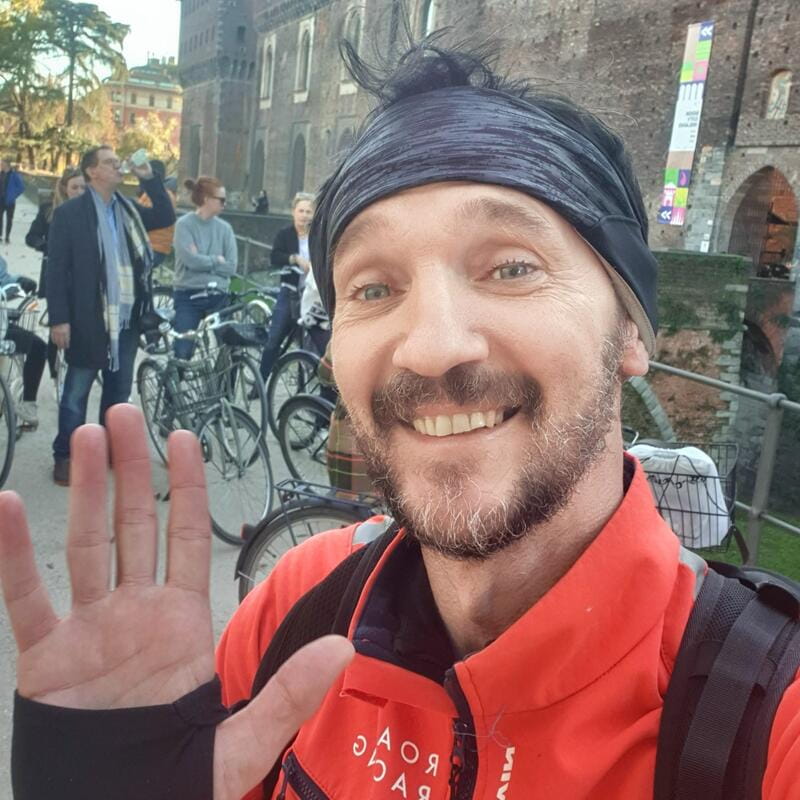
- A seven-mile city loop: You cover a broad section of Milan without spending the day on foot.
- About 90 percent away from heavy traffic: The route favors bike paths, parks, pedestrian areas, and peaceful side streets, though you still need to watch cars, mopeds, bicycles, and pedestrians.
- Excellent seven-speed city bikes: Belt-drive bikes, disc brakes, and comfortable designs make the ride appealing even if you are not a regular cyclist.
- A useful mix of old and new Milan: You pass Bosco Verticale, Brera, Sforza Castle, CityLife, Chinatown, Corso Como, and the Monumental Cemetery.
- Good family support: Cargo bikes are available for children up to age 10, and child seats can be requested. E-bikes cost extra.
Why a bike is a smart way to see Milan
Milan is walkable in sections, but its most interesting districts are spread out. You can spend hours moving between central sights, then still miss the quieter residential streets, former factory areas, and green spaces that explain the city’s character.
A bicycle fixes that problem. You get the movement of a walking tour, but with enough range to connect Brera, Sempione, CityLife, Chinatown, and the northern central districts in one outing. The route is described as roughly seven miles, although the exact distance may vary.
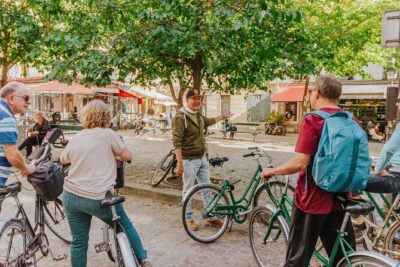
I like the pacing reported by several riders. The ride is not treated as a race, and the guide stops often to explain buildings, neighborhoods, and Milan’s development. One family with teenagers found the route enjoyable, while a group of four people in their 60s described the pace as steady and manageable. That tells you more than the word relaxing ever could: you need basic cycling comfort, but you do not need to be especially fit.
The city does require attention. Milan’s traffic can be untidy, particularly where cars, mopeds, cyclists, and pedestrians share space. One rider found the route easy overall but advised staying alert. Sunday may be especially pleasant because there can be less road traffic, though the tour runs on different days and conditions change.
More Hidden Gems Bike Tours in Italy:
- Rome: Top Highlights & Hidden Gems Tour by Cannondale E-Bike
★ 4.9 · 1,760 reviews - Milan’s Hidden Gems: Unique Bike Tour (ENG, NL)
★ 5.0 · 970 reviews - Milan: Highlights and Hidden Gems E-Bike Tour
★ 4.7 · 558 reviews
Starting near Garibaldi and Bosco Verticale
You meet at Via Guglielmo Pepe 12, near Garibaldi station. From the Metro, follow the underground signs toward Via Pepe, then look for the shop on the corner of Via Pepe and Via Carmagnola. This is a useful starting point because Garibaldi connects easily with the wider Milan transport network.
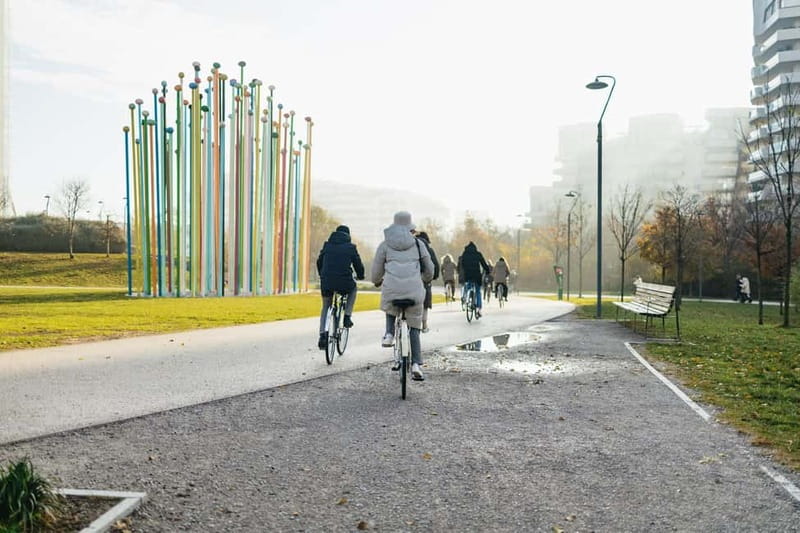
The first major sight is Bosco Verticale, the pair of residential towers covered with trees and plants. It gives you an immediate introduction to modern Milan: architecture, urban planting, and high-end redevelopment all in one view.
The stop is brief, about 15 minutes of riding time in the published route. Do not expect an extended architectural visit or access inside the buildings. Instead, use it as a visual starting point for the city’s newer identity before the route turns toward older neighborhoods.
Brera, Palazzo Citterio, and the quieter side of the center
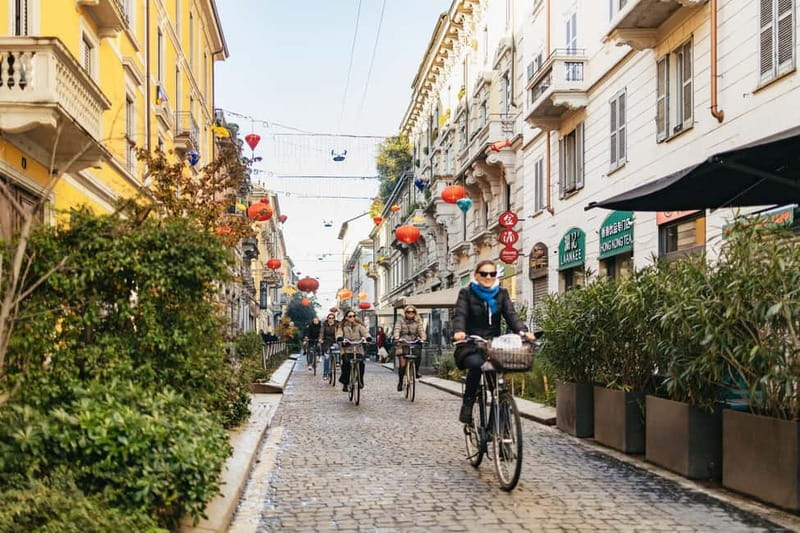
The ride continues toward Brera, one of Milan’s most appealing districts. Brera is associated with art, elegant buildings, small streets, and a more human scale than the broad commercial avenues. On a bike, you get a sense of how the district connects to the center without having to walk every block.
The itinerary allows about 20 minutes around Brera. That is enough for orientation and stories, not enough for a full visit to its museums or galleries. Plan a separate visit if Brera’s art collections are high on your list.
Palazzo Citterio follows, with around 10 minutes of cycling time. The building is linked to Milan’s cultural life and offers another look at the city’s refined architecture. This part of the route works well because the guide can connect the public face of Milan with its less obvious courtyards and side streets.
You will hear more than dates and names. Guides explain how Milan grew from a Roman settlement into a center of industry, fashion, design, and craftsmanship. The best guides, including Paulina and Carolina, appear to adjust the emphasis to the group. One rider said Paulina asked about interests and shaped the explanations accordingly.
Sforza Castle and Parco Sempione
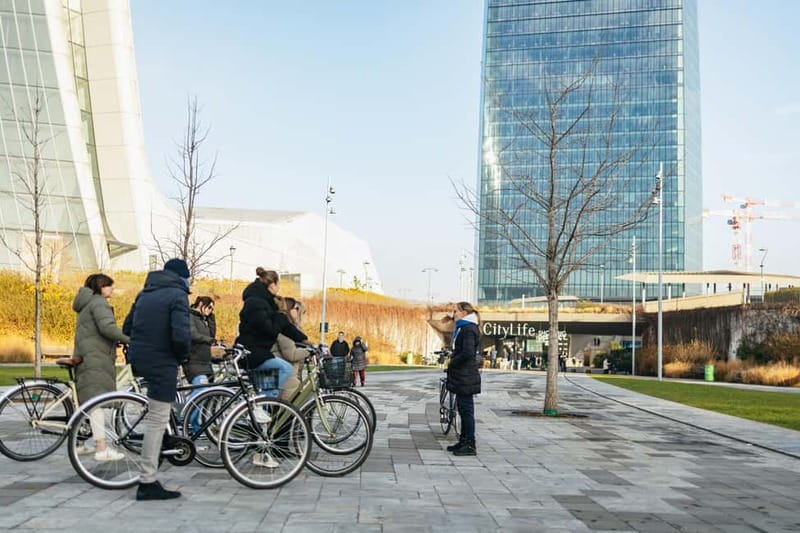
Sforza Castle is the tour’s strongest major landmark. The massive fortress sits at the edge of Parco Sempione and gives you a clear sense of Milan’s political and artistic importance over the centuries.
The tour does not replace a proper castle visit. You are passing through by bicycle, with roughly 20 minutes in this part of the route, so you should not expect detailed access to every museum or courtyard. What you do get is useful context and a chance to see how the castle fits into the city plan.
Parco Sempione provides one of the ride’s most welcome stretches. The park brings trees, open space, and a break from traffic. About 15 minutes are assigned here, but the overall ride includes several stops, so you are not pedaling continuously for three hours.
This is one reason the route suits warm weather. The breeze helps while you ride, and the guide keeps the pace moving without turning the outing into a workout. A morning departure may be especially comfortable in summer, before the afternoon heat becomes stronger.
More Guided Rides in Italy:
- Florence: Guided E-Bike Tour to Piazzale Michelangelo
★ 4.4 · 1,204 reviews - Florence: 2-Hour Guided Sightseeing Bike Tour
★ 4.5 · 1,004 reviews - Naples Guided Tour by Bike
★ 5.0 · 891 reviews - Naples: City Highlights Guided Bike Tour
★ 4.7 · 850 reviews
A café break and Milan’s quieter rhythm
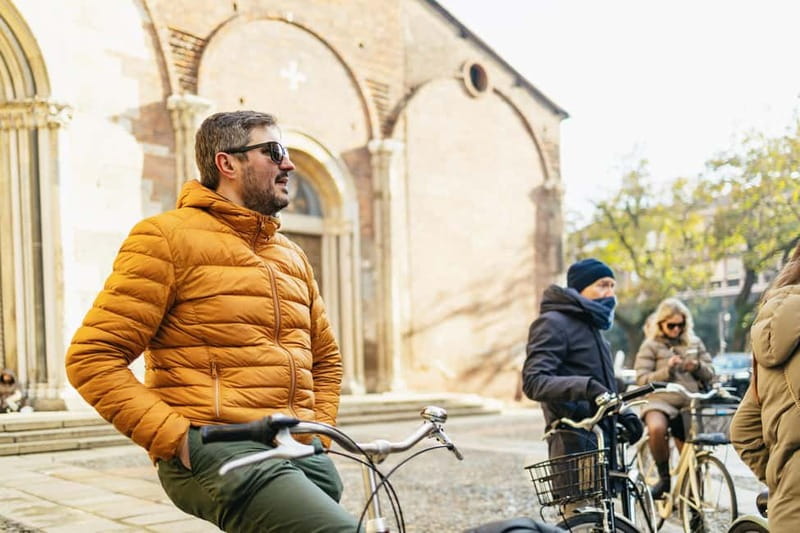
At some point, the group pauses at a café. An espresso or artisanal gelato is not included in the $45 price, so bring a little spending money if that break matters to you. The stop is useful even if you skip the purchase because it gives you time to rest, ask questions, and catch up with the group.
The café pause also helps the tour feel less mechanical. You are not simply ticking off landmarks. You have time to notice how Milan works at street level, with people meeting for coffee, children using courtyards, and residents moving through their neighborhoods.
The exact café and timing can vary, so do not book this expecting a particular menu or a food-focused experience. Think of it as a short Italian pause built into a sightseeing ride.
Secret stops, CityLife, and the city’s changing identity
After the central parks and historic areas, the route moves through less obvious parts of Milan. There are two stops described only as a secret stop and a hidden gem. Since the precise locations are not specified, you should expect the guide to reveal them during the ride rather than plan around them.
That uncertainty is part of the appeal. These stops are intended to show details you might pass without noticing, such as an unusual building, courtyard, public space, or local corner. They are also the part of the experience most dependent on the guide’s storytelling.
CityLife shifts the focus again. This newer district represents Milan’s modern development and design culture. Its presence beside older districts makes the city’s contrasts easy to see: historic structures, new towers, planned public areas, and changing patterns of urban life.
You will not get a full architectural tour of every CityLife building. The stop is part of a wider city story, showing how Milan keeps rebuilding and rethinking itself.
Arco della Pace and Chinatown
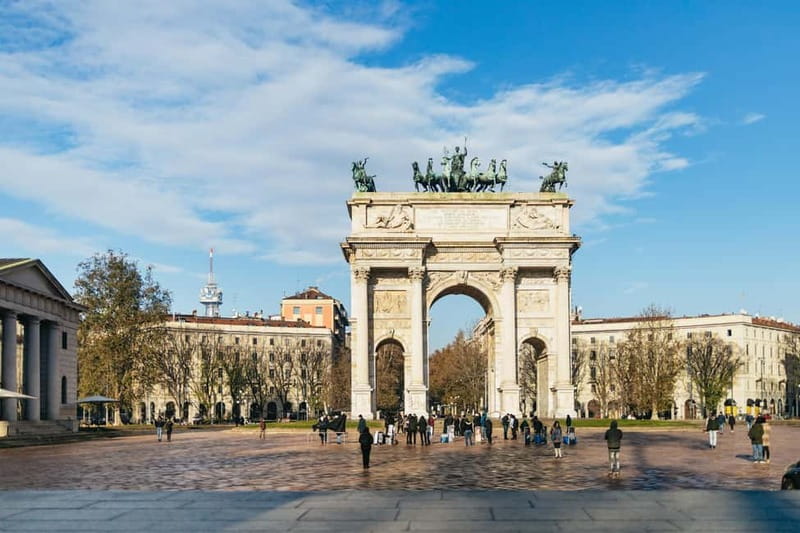
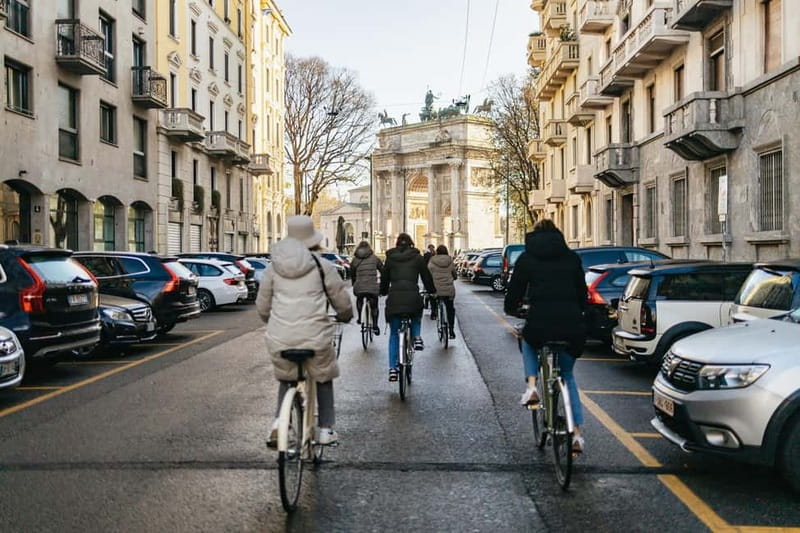
Arco della Pace, the Arch of Peace, sits near the edge of Parco Sempione and makes a natural continuation from the castle and park. The route gives this area about 15 minutes of riding time.
The arch is a strong photo stop, but the more useful point is its setting. You see how grand civic spaces connect with parks, avenues, cafés, and neighborhood streets. Milan often reveals itself through these transitions rather than through a single monument.
Chinatown follows. Milan’s Chinatown adds a different social and food culture to the ride, along with a more local commercial atmosphere than the luxury streets near the center. The route does not promise a food tasting or a market visit, so think of this as a guided ride through the district rather than a culinary tour.
This section is valuable because it widens your picture of Milan. The city is not only Italian palaces and fashion showrooms. It is also a modern, mixed urban community with many layers.
The Monumental Cemetery makes a memorable final stop
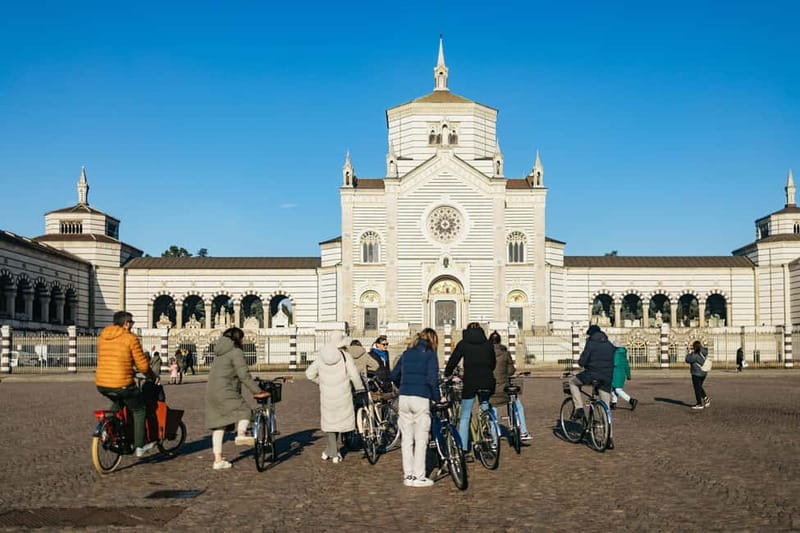
The Milan Monumental Cemetery is the most distinctive stop on the route. It is not simply a place to pass on the way back. Its tombs, sculptures, and grand memorials provide a visual record of Milan’s wealthy families, artists, industrialists, and civic figures.
About 20 minutes are assigned to this part of the ride. That is enough for an introduction and selected stories, but not a complete examination of the grounds. If you are interested in sculpture, architecture, or Milanese society, you may want to return independently with more time.
Several riders considered the cemetery the perfect ending. I understand why. After seeing the city’s new towers, parks, shopping areas, and former industrial districts, the cemetery brings the focus back to memory, craftsmanship, and the people who shaped Milan.
It also gives the tour a stronger finish than simply ending at a shopping street. You leave with a sense that Milan’s identity is built not only on fashion and design, but also on work, ambition, family, and public memory.
Corso Como and the ride back to Via Pepe
The final major area is Corso Como, known for its stylish atmosphere, nightlife, design, and proximity to the Garibaldi district. It connects naturally with the tour’s opening near Bosco Verticale and the meeting point.
The itinerary allows about 15 minutes here, followed by the return to Via Guglielmo Pepe 12. The loop covers enough ground to give you a broad picture of Milan, but the three-hour length keeps the experience practical for a morning or afternoon.
Most riders finish on time, and the schedule includes enough stopping to prevent the ride from becoming tiring. Still, the exact feel depends on the group. A larger group can slow movement and make it harder to hear the guide, especially near traffic. One rider found a group of 15 a little large, while another group of 12 had a very good experience.
Bikes, children, and comfort
The included seven-speed city bike is one of the strongest parts of this experience. The bikes have been described as nearly new, smooth, easy to shift, and fitted with belt-drive systems and disc brakes. Those details matter in Milan, where frequent stops and starts are more important than high speed.
Helmets, bottled water, and rain ponchos are included. Wear comfortable clothes, and choose shoes you can pedal in for three hours. You do not need special cycling equipment.
Families have several useful options. Cargo bikes can carry children up to age 10, and child seats are available on request. One family specifically appreciated the child support, and another found the ride enjoyable with teenagers. Ask about these arrangements before the tour rather than waiting until arrival.
E-bikes are available for an extra charge. That is worth considering if you are uneasy about the distance, traveling in hot weather, or simply want more help on the ride. The tour is generally moderate, but electric assistance can make it easier to enjoy the stops and commentary.
The guide makes or breaks the experience
The route is good, but the guide determines how much you take away. The strongest feedback centers on guides who are friendly, clear, flexible, and good at mixing history with contemporary Milan.
Paulina is praised for answering questions and adjusting the tour to the group. Carolina is described as especially strong on Milan’s history. Ana, Mila, Paola, and other guides are also singled out for warmth, humor, and clear explanations.
There is one practical weakness: a guide standing at the front of a group may be difficult to hear when traffic is loud or people spread out. Stay close whenever the group stops. A microphone and headphones would help, but none are listed as included.
The tour is offered in English and Dutch. Confirm your preferred language when booking, especially if language is central to your experience.
Is $45 a fair price?
At $45 per person, the value is good if you want broad coverage and a guide. You receive a quality bicycle, helmet, water, poncho if needed, and three hours of local explanation. Renting a bike alone would not give you the route planning, historical context, or the confidence to find these districts efficiently.
The price does not include coffee, gelato, or other café purchases. It also does not include an e-bike upgrade. Those are small costs, but they are worth knowing before you arrive.
The tour is less valuable if you want extended time inside museums, the castle, or the cemetery. It is built around seeing many areas from the saddle, not lingering at one attraction. For a first or second day in Milan, I think the route earns its price by helping you understand the city’s shape quickly.
Free cancellation is available up to 24 hours before departure, and you can reserve now and pay later. In heavy rain, the provider contacts you about rescheduling or a full refund.
Who should book this Milan bike tour?
I would choose this for anyone who enjoys seeing a city in motion. It is especially useful if you have limited time, dislike spending all day on foot, or want to see beyond the Duomo, Galleria, and fashion streets.
Families can benefit from the cargo bike and child-seat options. Older riders and less athletic cyclists may also be comfortable because of the steady pace and frequent stops, though everyone should be able to ride safely in an urban setting.
I would be cautious if you dislike traffic, struggle to follow a guide in a group, or want a small private experience. Ask about group size and special requests before booking. Staying near the guide is important when streets are noisy.
FAQ
How long is the Milan Hidden Gems Guided Bike Tour?
The tour lasts three hours and returns to Via Guglielmo Pepe 12.
How much does the tour cost?
The listed price is $45 per person.
Where does the tour meet?
You meet at Via Guglielmo Pepe 12, on the corner of Via Pepe and Via Carmagnola near Garibaldi Metro station.
What is included?
The tour includes a seven-speed city bike, live guide, helmet, bottled water, and rain ponchos when needed.
Are child bikes or seats available?
Cargo bikes are available for children up to 10 years old, and child seats can be requested. Contact the provider before the tour for special arrangements.
Can I use an e-bike?
An e-bike is available on request for an additional charge.
What happens if it rains heavily?
The provider contacts you to reschedule or cancel for a full refund if there is heavy rain. You can also cancel up to 24 hours in advance for a full refund.
Should you book it?
Book this tour if you want to cover a lot of Milan without rushing and prefer local streets, parks, courtyards, and neighborhood life to a standard landmark checklist. The quality bikes, thoughtful route, strong guides, and memorable stop at the Monumental Cemetery make it good value.
Skip it if your priority is spending long periods inside Milan’s museums or if urban cycling makes you nervous. For most reasonably comfortable cyclists, though, this is a smart way to see the city’s quieter side, learn how old Milan became modern Milan, and save your feet for dinner.
Just added around Italy
- Discovering Chianti, e-bike tour – daily experience★ 5.0 · 20 reviews
- Mountain bike tour of the Madonie from Cefalù★ 5.0 · 38 reviews
- Cagliari E-Bike Tour: Gulf, Canals & Flamingos at Molentargius★ 5.0 · 79 reviews
- Private Bike Tour with Olive Oil Tasting★ 4.5 · 15 reviews
- E-bike tour in Ostuni. Oil mill, Dolmen and huge olive trees★ 5.0 · 13 reviews
- E-Bike tour and Wine tasting from Desenzano Inland★ 5.0 · 24 reviews
- Desenzano e-bike tour★ 5.0 · 17 reviews
- Bologna Panoramic Bike Tour★ 4.0 · 14 reviews
Hidden Gems Bike Tours, compared.
Top Highlights & Hidden Gems Tour by Cannondale E-Bike
Read our review →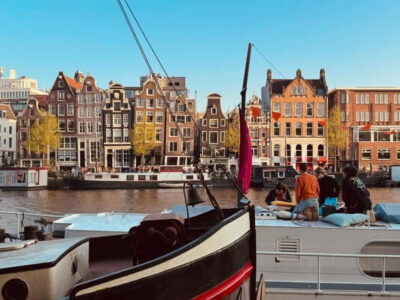
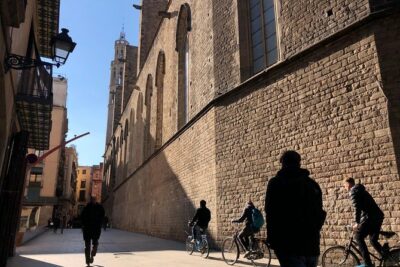
Barcelona 3-hour Bike or E-Bike Tour: Highlights and Hidden Gems
Read our review →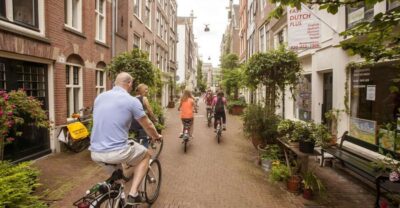
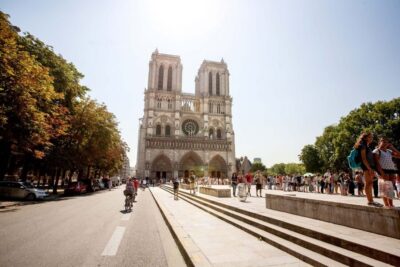
Paris Local Districts and Stories Off the Beaten Track Guided Bike Tour
Read our review →
Milan’s Hidden Gems: Unique Bike Tour (ENG, NL)
Read our review →Browse the lists this tour appears in