
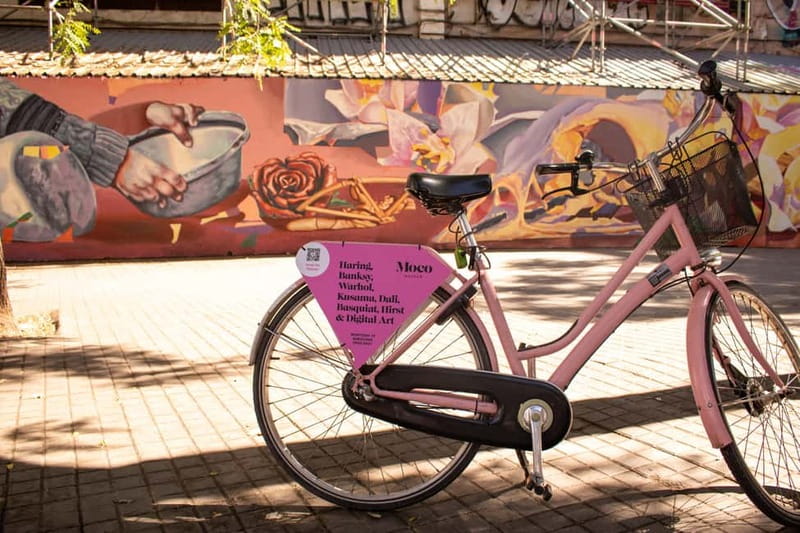
REVIEW · BARCELONA
Barcelona | StreetArt Bike Tour Moco Museum
Barcelona’s walls tell plenty of stories. This 2.5-hour electric-bike ride links street art, public sculpture, old industrial spaces, and famous city sights in one energetic outing. I especially like the Keith Haring mural and the chance to see works by artists such as Xupet Negre, Space Invader, and Mariscal without spending the day inside museums. I also like the guide’s focus on the meaning behind the art, not just quick photo stops.
The main drawback is the pace. You cover a lot of ground, and some works are passed rather than explored at length. You also need to ride confidently, and adults who want a helmet should request one ahead of time for an extra fee. Still, at $34 per person, this is a strong value if you want a lively introduction to Barcelona’s urban art scene.
Key points to know before you book
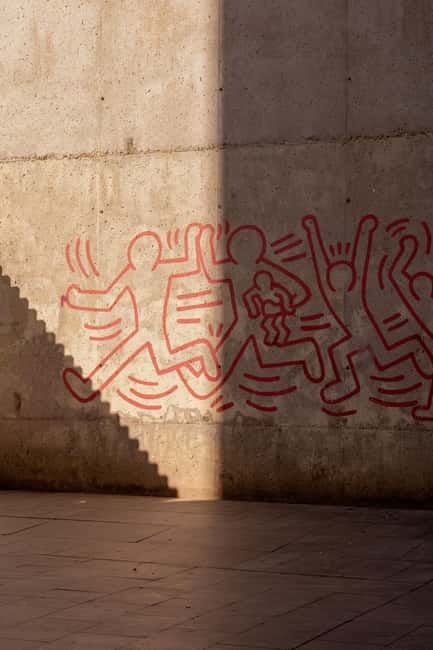
- Keith Haring takes center stage: See the Mural del Sida near MACBA, one of the tour’s most important artistic stops.
- You ride an electric bike: The bike helps cover central Barcelona efficiently during the 2.5-hour route.
- The route keeps changing: New wall art can replace older work, so the exact selection may shift over time.
- It mixes famous sights with street corners: Expect MACBA, the Columbus Monument, Barcelona Cathedral, Casa Batlló, and less polished streets in El Raval.
- The guide adds context: Eirini received particular praise for making the subject engaging and enjoyable.
- Come ready for the sun: Sunglasses, a hat, sunscreen, comfortable clothing, and a charged phone are sensible choices.
Why this bike ride works for art-minded visitors
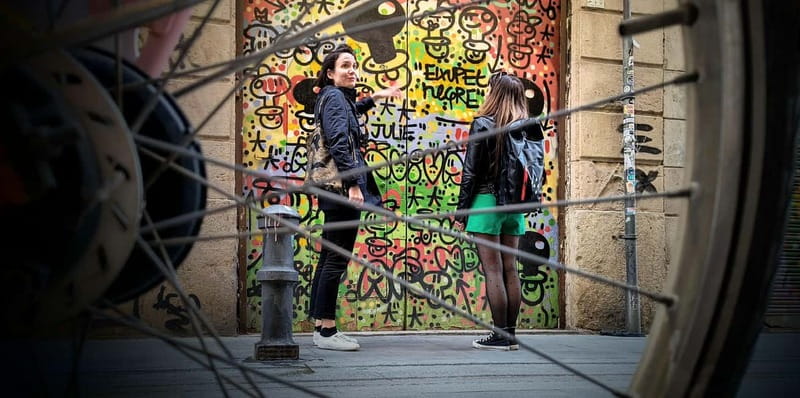
Barcelona is easy to admire from its grand avenues, Gaudí façades, and Gothic lanes. Street art shows you another side of the city, one shaped by protest, humor, neighborhood identity, and artists working outside traditional galleries.
The route begins at Carrer dels Tallers 45, close to the Centre de Cultura Contemporània de Barcelona and MACBA. From there, you move through areas where contemporary art is part of daily life. You are not simply parked in front of one mural. You keep riding, stopping, and seeing how public art changes from street to street.
I like that the tour does not treat every wall as equally permanent. Barcelona’s street art changes. Paint fades, buildings are renovated, and new work appears. The guide adapts the route to that shifting scene, which means the experience is more about seeing the city as it exists now than checking off a fixed museum collection.
The ride is conducted in English and includes one bike per person, a bottle of water, and a handlebar bag for small belongings. The price also includes photo stops. That combination makes $34 reasonable, especially if you want both a guided art experience and a practical orientation to several central neighborhoods.
More Museum Visits in Barcelona:
- Frida Kahlo VIP [Museum Tickets Included] Bike, Markets & Churros
★ 5.0 · 1,072 reviews - Paris: Street Art Open-Air Museum Bike Tour
★ 4.8 · 51 reviews - Biking Vidova – Skrip & museum of olive oil – Splitska – Postira
★ 5.0 · 20 reviews
Starting at Carrer dels Tallers and El Gat de Botero
Arrive about 10 minutes early at Carrer dels Tallers 45. Look for the palm tree and enter the passage where the tour team is waiting. This is the Barcelona Ciclo Tour meeting point, so the address matters. Do not simply wait on the main street and assume the group will find you.
After a short five-minute safety briefing, the ride gets moving. El Gat de Botero provides an early public-art reference point. The giant cat is playful and easy to recognize, and it sets the tone for a tour that treats Barcelona itself as an open-air gallery.
The bikes are electric, which helps with the distance and keeps the ride manageable. You still need to know how to ride a bike, and the tour is not suitable for anyone who cannot cycle. The route includes roads and city traffic, so pay attention to the guide and stay alert rather than treating the ride like a passive sightseeing bus.
CCCB and MACBA: where public art meets the city
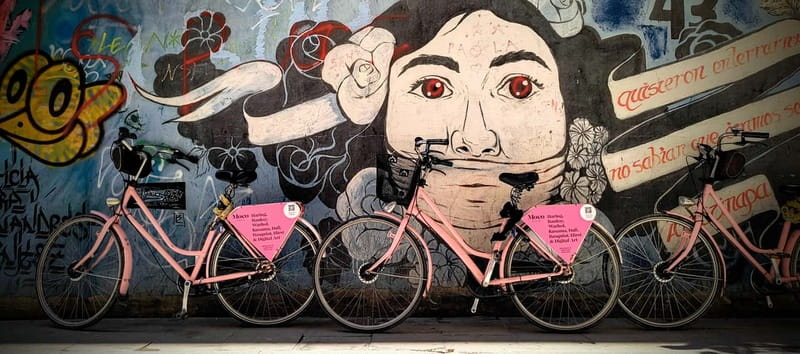
The Centre de Cultura Contemporània de Barcelona is an early photo and sightseeing stop. The tour highlights the Sant Jordi Sculpture and the skyline around the center. This is a useful place to see how Barcelona places contemporary cultural spaces among older streets and dense city blocks.
The next major art reference is MACBA, the Barcelona Museum of Contemporary Art. Even if you do not enter the museum, its surroundings are central to the city’s modern art identity. Here, the route brings you to the Keith Haring mural, also called the Mural del Sida.
This is one of the strongest moments of the experience. Haring’s work is direct, graphic, and easy to read from a bicycle, but the subject carries weight. The guide explains the message and the history connected to the mural, giving you more than a fast photograph. You also see Colp One Dog in the same broad art district, adding another example of how different artists use walls to claim public attention.
The stop is short, listed at about five minutes for the Haring mural. That is enough to see it and hear an introduction, but not enough for a long art lecture. If you want extended time with one piece, a museum visit will suit you better.
Joaquín Costa, Ferlandina, and the early graffiti scene
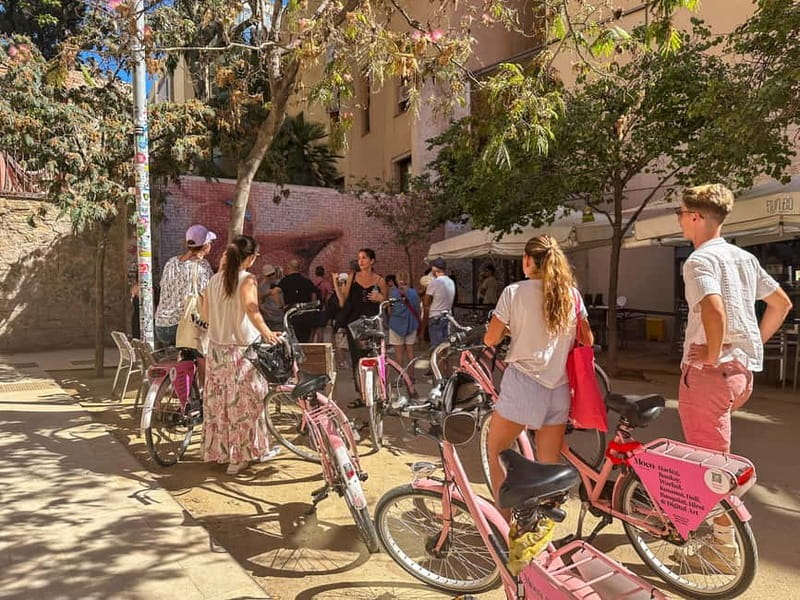
The ride continues through streets such as Carrer de Joaquín Costa and Carrer de Ferlandina. This part of the route feels more local and less polished than Barcelona’s grand tourist corridors, which is exactly the point.
Xupet Negre is a key name here. The work is linked to one of the city’s early graffiti traditions, and the guide explains how street artists developed recognizable symbols and methods. You may also see Birdie Al Awan, another example of the range of styles found in this part of the city.
This section is valuable because it puts the art into neighborhood context. You see walls beside ordinary shops, apartment buildings, and narrow streets rather than isolated works in a formal gallery. The tradeoff is that city conditions can affect what you see. A mural may be partly covered, altered, or replaced, and the route can change with it.
A few more days on two wheels around Barcelona worth a look
- Highlights & Hidden Spots of Barcelona Bike Tour w/ Local Guide
★ 4.5 · 3,009 reviews - Barcelona 3-hour Bike or E-Bike Tour: Highlights and Hidden Gems
★ 5.0 · 1,429 reviews - Barcelona: Private Group Bike Tour
★ 4.8 · 1,420 reviews - Barcelona: 2.5-Hour Bike or E-Bike Historical Tour
★ 4.5 · 1,262 reviews
El Raval, Carrer de la Lluna, and Ágora Benítez
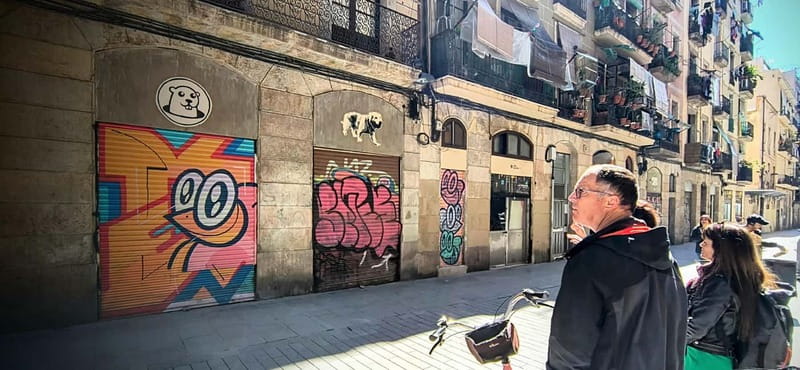
Rambla del Raval brings a different group of works, including the Feminist Wall, Space Invader, and contributions by Ana Eliza. The themes here include strength, identity, and diversity. The guide’s storytelling matters because some pieces need a little explanation before their symbols and messages become clear.
The tour then reaches Carrer de la Lluna and the Ágora Juan Andrés Benítez area. Ágora Benítez’s work adds another layer to the route, showing how public art can connect with community space and local memory.
Carrer de la Riereta and Carrer de Sant Pau continue the ride through El Raval. These are not just transfer streets. The route uses them to show how art appears in different settings, sometimes as a large planned wall and sometimes as a smaller mark tucked into the city fabric.
You should expect the guide to keep the group moving. The listed timing gives many stops around five to ten minutes, with a longer 15-minute stop at La Gamba. That schedule suits people who want variety. It is less suitable if you prefer to stand quietly and study brushwork, lettering, or composition for a long time.
Tres Xemeneies and the old industrial edge
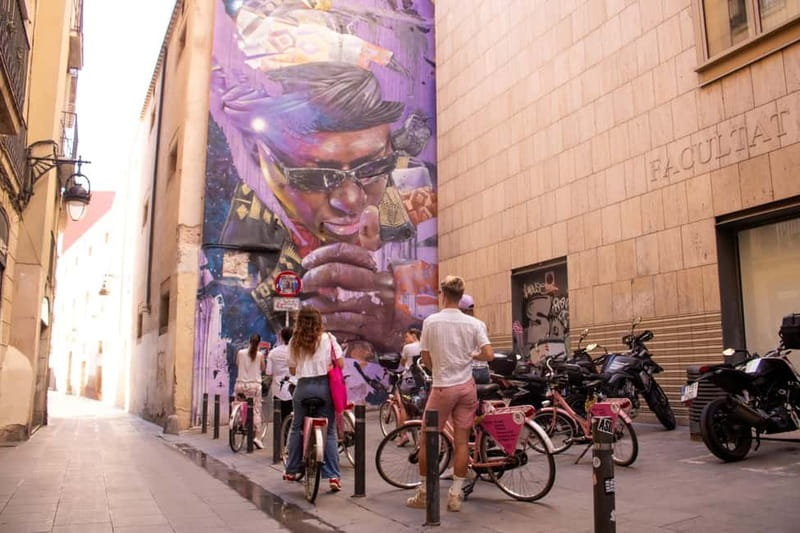
Jardins de les Tres Xemeneies is one of the more distinctive places on the ride. The garden includes old industrial structures, giving you a clear example of Barcelona turning former working spaces into public areas.
This stop helps explain the city’s changing character without turning the tour into a conventional history lesson. You see how old infrastructure can sit beside new art, skate-friendly public space, and modern city life. The guide connects the setting to the wider art route, showing that the location around a mural can matter as much as the image itself.
The tour also passes the Theatre Arnau and Galería Arnau on Avenida Paralelo. These stops add architecture and performance culture to the mix. You will not spend long inside any one site, but the bike makes it possible to connect several places that would feel scattered on foot.
From Columbus to La Gamba and El Cap de Barcelona
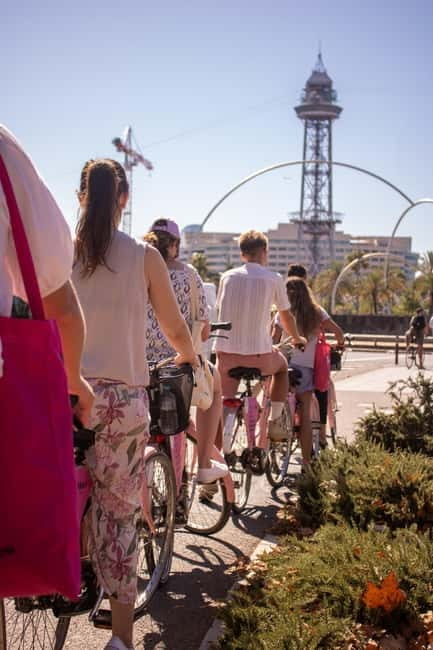
The ride heads toward the waterfront and passes the Columbus Monument. This is a good transition from the dense inner streets to a more open route along the city’s edge.
At Passeig de Colom, you see La Gamba, the famous lobster sculpture by Mariscal. It is a bright, humorous piece that contrasts sharply with the political and socially focused murals earlier in the ride. That contrast is one of the tour’s strengths. Barcelona’s public art is not one-note.
You also pass El Cap de Barcelona, known as Barcelona’s Head, associated with Roy Lichtenstein. Along with La Gamba, it shows how large-scale public sculpture can become part of the city’s visual identity. These pieces are easy to photograph from the bike, though traffic and the route’s pace may limit how long you linger.
A bottle of water is included, which is helpful on a sunny day. Bring your own sunglasses, sunscreen, and hat, since much of the ride takes place outdoors. Comfortable clothing is more useful than anything stylish. Barcelona pavement, stops, and bike handling will keep your attention.
Cathedral, El Beso, and the final art connections
Barcelona Cathedral appears later in the route, giving you a Gothic landmark amid the contemporary art stops. The tour passes by rather than offering an interior visit, so think of this as a city-viewing moment, not a cathedral tour.
Near the cathedral, El mural del petó, or El Beso Photomosaic, brings together thousands of small photographs to form a large image. It is a fitting stop for this tour because it combines individual stories with a public artwork visible to everyone passing by.
The route also connects the city’s historic center with the Palace of Catalan Music and Passeig de Gracia. These areas show another side of Barcelona, where ornate architecture and major cultural landmarks share the same streets as stickers, murals, and small interventions.
Casa Batlló is one of the final major stops. You see the exterior and hear the guide’s comments while the bike route passes through the area. The tour does not replace a dedicated Gaudí visit, but it gives you a useful preview if you are deciding which buildings deserve more of your time later.
The ride returns to Carrer dels Tallers 45. Since the activity ends where it begins, you can collect anything left nearby and continue exploring central Barcelona without arranging another transfer.
What the guide adds to the experience
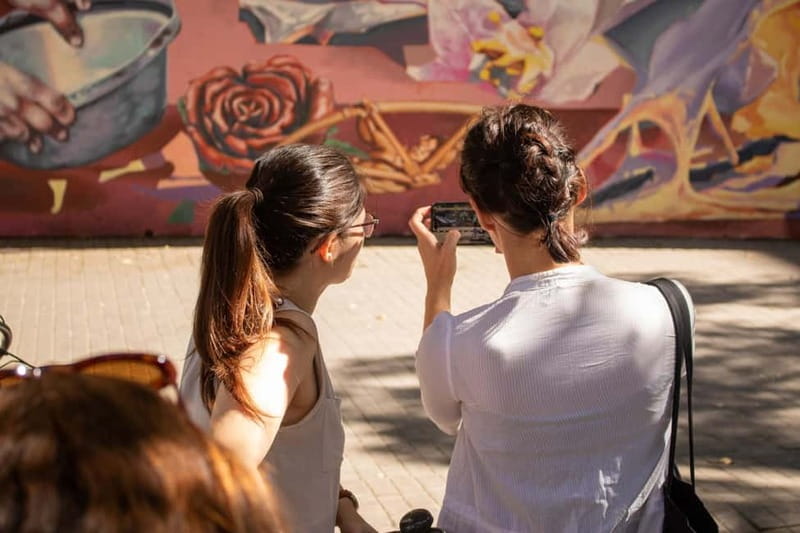
A street-art ride can easily become a string of photo stops. The guide is what gives the route shape.
The best parts of the commentary explain who made a work, what the image means, and why it appears in that particular neighborhood. You hear about local artists, internationally known names, early graffiti, feminist messages, and the way Barcelona’s public art changes.
Eirini was specifically praised for making the ride enjoyable and for handling the subject with energy. Another guide received strong praise for offering useful food suggestions after the tour. That is a small but worthwhile benefit: a good guide can help you turn the ride into a starting point for the rest of your Barcelona stay.
The experience also suits families. A German-speaking family found it interesting, informative, funny, and enjoyable for children. The English language and the steady movement help hold attention, though younger riders still need to manage a city bike route.
Price, pace, and practical value
At $34, you are paying for a guided electric-bike experience, not just bike hire. The value is strongest if you want to see many districts in a short time and would appreciate explanations along the way.
A walking route could cover some of the same central streets, but it would take longer and require more effort. The electric bike lets you reach the waterfront, El Raval, Paralelo, the Gothic center, and Passeig de Gracia in one outing. The compromise is less time at each individual artwork.
The tour lasts 2.5 hours, with starting times shown during booking. It runs rain or shine, and a free poncho is provided if the weather turns wet. Adults can request a helmet in advance for an additional cost. Helmets are mandatory for children up to age 16, and children’s helmets are supplied free.
Bring a charged smartphone, although the handlebar bag gives you a place to keep small items. Headphones are not allowed, which makes sense for safety and for hearing the guide. The tour is not suitable for wheelchair users because of the bike format.
You can cancel up to 24 hours before departure for a full refund, and you can reserve now and pay later. Those terms help if your Barcelona schedule is still taking shape.
Who should book this street-art ride?
I would choose this tour if you like public art, want a quick orientation to several central neighborhoods, and feel comfortable riding in a city. It is also a smart first or second-day activity because the route introduces places you may want to revisit on foot.
Families with cycling children can find it appealing, especially since younger riders receive helmets. Art fans should note that the tour is introductory rather than academic. You get stories and context, but the short stops do not allow a detailed study of every piece.
I would skip it if you cannot ride a bike, need wheelchair access, or prefer a slow walking tour with long stops. I would also avoid booking it with the expectation of seeing a fixed collection. Barcelona’s street art changes, and the exact walls may change with it.
Should you book the Moco Street Art Bike Tour?
Book it if you want Barcelona’s art scene served with movement, local stories, and a good mix of famous landmarks and less formal streets. The Keith Haring mural, Xupet Negre, La Gamba, El Beso, and the Tres Xemeneies garden give the ride plenty of variety.
At $34, the experience offers a practical way to cover a lot of ground without losing the human explanation that makes street art meaningful. Arrive early, wear sun protection, and expect a brisk route with photo stops rather than a long gallery-style discussion. For curious cyclists, it is an entertaining and useful look at the city’s creative side.
FAQ
Where does the tour start?
It starts at Carrer dels Tallers 45 in Barcelona. Meet by the palm tree and enter the passage where the tour team will be waiting.
Where does the tour end?
The tour returns to Carrer dels Tallers 45, the same place where it begins.
How long does the tour last?
The tour lasts 2.5 hours. Starting times depend on availability.
What language is the tour conducted in?
The live tour guide speaks English.
Is a bike included?
Yes. One bike per person is included, along with a handlebar bag and a free bottle of water.
Is the bike electric?
Yes. The experience uses electric bikes.
Is a helmet included?
Helmets are free for children up to age 16, and helmets are mandatory for them. Adults can request a helmet in advance for an additional cost.
What should I bring?
Bring sunglasses, a sun hat, sunscreen, weather-appropriate and comfortable clothing, a charged smartphone, and a passport or identity card. A copy of your passport or ID card is accepted.
Does the tour operate in the rain?
Yes. The tour runs rain or shine, and a poncho raincoat is provided free if needed.
Can I cancel the tour?
Yes. You can cancel up to 24 hours in advance for a full refund. You can also reserve now and pay later.
Just added around Barcelona
- Barcelona: Bike or eBike Tour, Top Sights & Local Insights★ 5.0 · 47 reviews
- E-Bike tour in Barcelona with English Guide★ 5.0 · 128 reviews
- Private Ultimate Gaudi Legacy ebike Tour with Park Güell★ 5.0 · 26 reviews
- Private Electric Bike Guided Tour in Barcelona★ 4.5 · 18 reviews
- Sightseeing by Bike & Photo Shooting★ 5.0 · 31 reviews
- Sights of Barcelona E-Bike Tour Led by a Local Guide★ 4.5 · 39 reviews
- Private Boat rental – Pedal Cruises Barcelona – Cycle Boat★ 5.0 · 29 reviews
- Private electric bike tour – Discovery of Barcelona★ 5.0 · 34 reviews
Museums, compared.
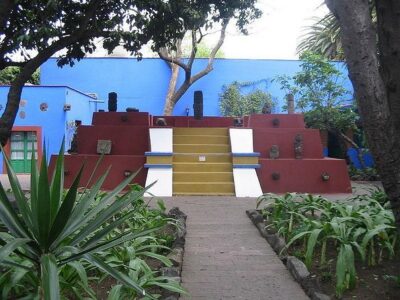
Frida Kahlo VIP [Museum Tickets Included] Bike, Markets & Churros
Read our review →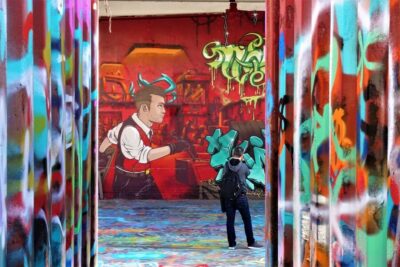

Biking Vidova – Skrip & museum of olive oil – Splitska – Postira
Read our review →
Geneva Countryside And Art Museum At A Castle Wine By E-Bike
Read our review →Browse the lists this tour appears in