
REVIEW · POLAND
3-Hour Guided Cycling Tour of Warsaw
Warsaw reveals itself quickly by bike. This three-hour ride links the famous center with places that are awkward to reach on foot, including the Palace of Culture, Powiśle, and the Vistula River banks. I like the easy pace and the way the route mixes major sights with a few local-feeling stops. At $41 per person, it offers good value if you want an overview early in your stay.
I also like the guides’ strong storytelling. Marcin receives repeated praise for his historical detail and humor, while Jakub, Maria, Michal, and others have also led engaging tours. The main consideration is that you visit many places briefly rather than spending long periods at any one monument. Cobblestones and a final uphill section may also test casual cyclists.
The tour covers about 8 miles and includes a 30-minute café break. You need to be able to ride a bicycle, and the minimum height is 4 feet 9 inches, or 150 centimeters. There are no child seats or trailers, so families should contact the provider before booking.
Key points at a glance
- About 8 miles at a relaxed pace: You cover a large part of central Warsaw without rushing from one taxi stop to another.
- A strong first-day activity: The route helps you decide which landmarks deserve a longer visit later.
- History comes with the scenery: Expect explanations about the Warsaw Uprising, wartime destruction, Polish culture, and important national figures.
- A useful mix of city and river: Old Town, grand avenues, modern central Warsaw, Powiśle, and the Vistula all appear in one outing.
- A 30-minute café pause: You get time to rest and ask questions before the second half.
- Good value, with a few extras: Bike hire and a guide are included, but refreshments, baskets, and rain ponchos cost extra.
Why a bicycle works so well in Warsaw
Warsaw is spread across a broad central area. Old Town is compact, but several important sights sit well beyond its medieval-looking streets. On foot, you can reach them, but the distances begin to add up. By bicycle, you can connect the old center, the Royal Route, the modern city core, and the river without losing half a day to transport.
The route also gives you a useful sense of how Warsaw fits together. You start near the Old Town, move south along formal avenues, cross through central districts, and later head toward Powiśle and the Vistula. That sequence makes the city easier to understand than a collection of isolated monuments.
The pace is designed for sightseeing, not sport. You ride, stop, listen, and continue. Several stops are listed as roughly ten minutes, so you should expect short explanations and photo opportunities rather than guided interior visits. That is the right approach for a first look, but it may feel too brief if you already know Warsaw well.
A few more days on two wheels around Poland worth a look
- Krakow: 3-Hour Small Group Tour on E-Bike
★ 4.8 · 135 reviews - 3-Hour Porto Highlights on a Electric Bike Guided Tour
★ 5.0 · 4,392 reviews - 3-hour Complete Prague Bike Tour
★ 5.0 · 3,674 reviews
Starting at Koźla Street and the Warsaw Uprising Monument
The meeting point is Eat Polska at 16/18 Koźla Street, about 1 kilometer from Sigismund’s Column in Castle Square. The closest metro station is Metro Ratusz Arsenał, about 1.2 kilometers away. Allow extra time to reach the start, especially if you are carrying luggage or walking from another part of the center.
One of the first major stops is the Warsaw Uprising Monument. This gives the guide an early chance to explain one of the defining events of modern Polish history. The monument is powerful even before the details are added, and the stop helps set the tone for the rest of the ride.
You will not spend a long time here, so listen closely and ask questions while the group is gathered. Guides such as Marcin are praised for adding anecdotes and historical photographs to their explanations, which can make a brief stop much more meaningful.
Old Town, Castle Square, and the Royal Route
The ride then reaches Old Town and Castle Square. Warsaw’s historic center was rebuilt after the Second World War, and that fact is central to understanding what you see. The colorful facades and carefully restored streets look old, but much of the area reflects an extraordinary postwar reconstruction effort.
Castle Square is one of the city’s key meeting points. From here, the route connects with the Royal Route, the grand line running through several of Warsaw’s best-known public buildings and monuments. You get the visual pleasure of the route without having to walk every section.
Cycling through Old Town requires attention. Cobblestones can feel less smooth than ordinary streets, and pedestrians may be numerous around the most popular squares. One rider specifically noted that cobblestones were manageable but unfamiliar, while another pointed out a final cobblestone hill. Comfortable clothing and a steady pace matter more than athletic ability.
Presidential Palace, Tomb of the Unknown Soldier, and Saxon Garden
The Presidential Palace provides a look at Warsaw’s political center. The guide can explain the building’s role and place it within Poland’s modern public life. This is not a stop for a long visit inside, but it is useful as part of the wider story told along the Royal Route.
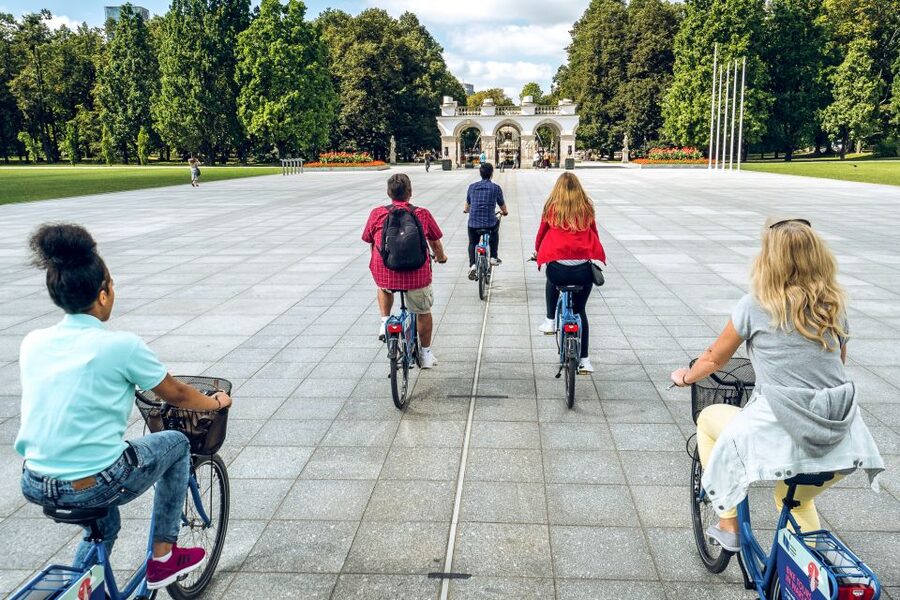
Next comes the Tomb of the Unknown Soldier, one of the city’s most solemn memorials. The nearby Saxon Garden gives the group a change of pace, with a more open setting after the formal avenues and busy squares.
These stops show why the tour works as an introduction. You are not seeing only postcard sights. The route connects government, military memory, parks, religion, science, and daily city life. At each point, you get enough context to recognize the place later if you return on foot.
More Guided Rides in Poland:
- Krakow: Old Town Bike Tour with a Guide
★ 4.5 · 54 reviews - Katowice and Nikiszowiec: bicycle tour with guide
★ 4.3 · 14 reviews - Small Group Guided Bike Tour of Amsterdam’s Hidden Gems
★ 5.0 · 3,936 reviews - Porto: City Highlights 3-Hour Guided Electric Bike Tour
★ 4.8 · 3,092 reviews
Grzybowski Square and the Palace of Culture
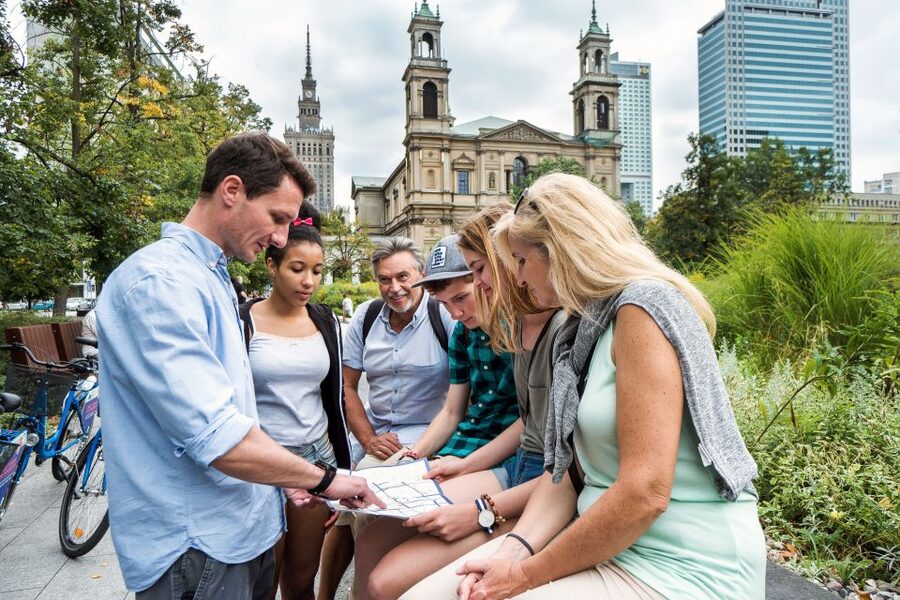
Plac Grzybowski brings you into a part of central Warsaw where the city’s complicated past is especially visible. The square and surrounding streets connect with the former Jewish district and with the changing face of modern Warsaw. Your guide’s explanation matters here, since the physical clues can be easy to miss while riding.
The Palace of Culture and Science is one of Warsaw’s unmistakable landmarks. Its tall tower rises above the center and remains a subject of strong opinions in Poland because of its Soviet-era origins. You can touch the base during the stop and get a close look at the scale of the building.
This is also where the bicycle saves time. The Palace is not difficult to reach by public transport, but seeing it as part of a continuous route gives you a better sense of its place in the city. You move from older streets to the central skyline in a matter of minutes.
The café break after the first half
A 30-minute break at a local café comes after the Palace of Culture and Science. Refreshments are not included, so bring money for your drink or snack. This pause is practical, not decorative. It gives you a chance to rest, warm up or cool down, and ask the guide about places you may want to visit later.
The break also prevents the ride from becoming a three-hour endurance test. Most riders describe the pace as comfortable, and one family found it suitable for different fitness levels and interests. Still, the tour is active, so use the pause properly rather than treating it as wasted sightseeing time.
A bicycle basket costs 10 PLN, and a rain poncho costs 10 PLN. Neither is included. If you need a basket for a camera or small bag, arrange that before setting off.
Holy Cross Church and the world of Chopin
After the café stop, the group continues toward Holy Cross Church and the Copernicus Monument. Holy Cross Church is closely associated with Frederic Chopin, one of Poland’s most famous cultural figures. The guide can connect Chopin’s life with Warsaw and point out why this church matters to the city’s memory of him.
The Copernicus Monument adds another side of Polish achievement. Nicolaus Copernicus changed how people understood the universe, and his monument sits in a prominent location along the Royal Route. Together, these stops broaden the tour beyond wartime history and government buildings.
The route is particularly good for visitors who want a clear introduction to Polish culture but do not yet know which subjects to pursue. You might leave interested in Chopin, the Warsaw Uprising, postwar reconstruction, or the city’s political history. The tour gives you several useful starting points.
Powiśle, the Warsaw Mermaid, and the Vistula
The ride then moves toward Powiśle and the Mermaid Monument. The Warsaw Mermaid is a symbol of the city, and the stop gives you one of the tour’s lighter cultural moments after the more serious memorials.
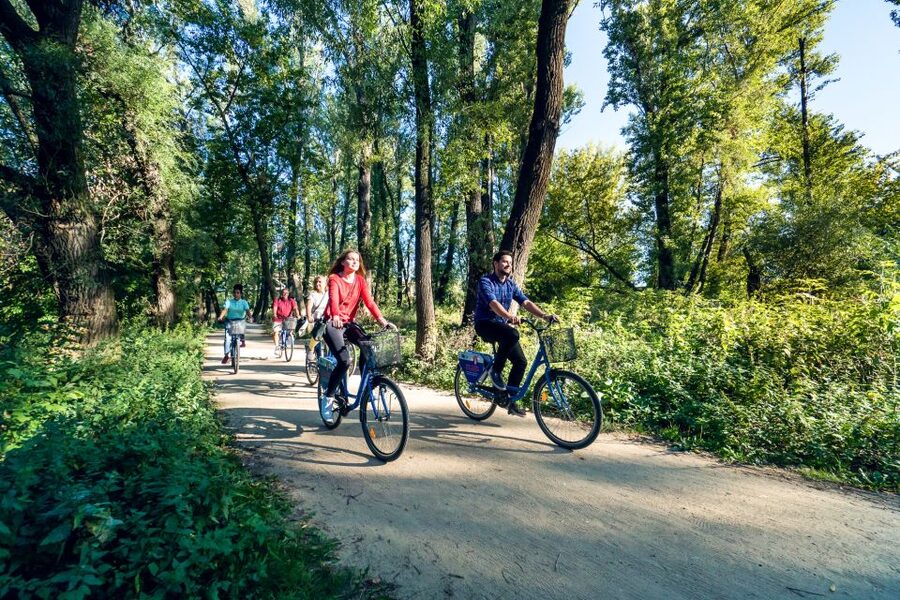
From there, the Vistula Boulevards offer a change of scenery. You get open views and a chance to see how Warsaw meets its river. The ride along the banks helps explain why the Vistula is such an important part of the city, even though the historic center sits slightly back from the water.
The river section is one of the best reasons to choose the bicycle tour instead of a standard walking route. You cover ground quickly, and the ride itself becomes part of the experience. The city feels less like a list of monuments and more like a connected place.
Royal Castle Gardens, Fountain Park, and Maria Skłodowska Curie
The final stretch includes the Warsaw Royal Castle Gardens, Multimedia Fountain Park, and the Maria Skłodowska Curie Monument. The castle gardens provide another view of the Old Town area, this time from a more open and landscaped setting.
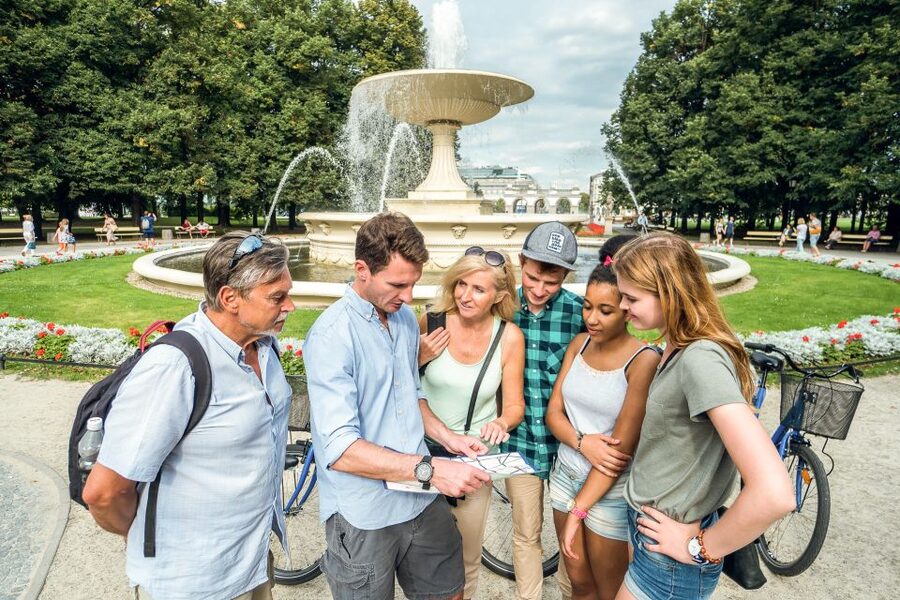
Multimedia Fountain Park adds a modern public-space stop. It is a pleasant contrast to the historic squares and national memorials visited earlier. The route does not focus only on Warsaw’s past, and that balance helps you see the city as a living capital rather than an open-air museum.
The Maria Skłodowska Curie Monument honors the Warsaw-born scientist who became famous for her work in physics and chemistry. Like the Copernicus stop, it gives the tour a strong link to science and education. The group then returns to Eat Polska.
What the guides add to the experience
The guide is the heart of this tour. The best parts are not simply the number of monuments. They are the explanations that connect one place to the next.
Marcin is repeatedly praised for his clear English, humor, historical detail, and ability to keep a group moving through crowded areas. Jakub is noted for patience and strong knowledge, while Maria is praised for a cheerful manner and a good pace. Michal and Maarten are also singled out for informative presentations.
That consistency matters because Warsaw’s past can be difficult to explain in a quick city tour. You need a guide who can handle painful subjects with care, add a few jokes when appropriate, and keep the story understandable. The strongest feedback points to guides who do exactly that.
The tour can also adapt when conditions require it. One route had to change because of military parades, but the experience still worked. That suggests you should focus on the overall route rather than expecting every stop to happen in a rigid order.
Is $41 good value?
At $41 per person, the price is reasonable for a three-hour guided experience that includes bicycle rental. You are paying for transport between widely spaced sights, a live English-speaking guide, and a coherent explanation of the city.
The value is strongest if you have only two or three days in Warsaw. You can see the main areas quickly, then return later to the places that caught your interest. One visitor described it as an ideal first activity for exactly this reason.
The value is less obvious if you want long visits at each monument or plan to explore only Old Town. You could walk that compact area on your own. The bicycle earns its price by taking you farther, especially toward the Palace of Culture, Powiśle, and the Vistula.
Refreshments are extra, as are the optional basket and poncho. These are small costs, but include them in your planning. Free cancellation up to 24 hours before the tour and the option to reserve now and pay later also make the booking fairly flexible.
Who should book this ride?
I would choose this tour for first-time visitors, short-stay visitors, couples, families with children over the minimum height, and anyone who wants history explained while moving through the city. It is also a good choice if you are unsure how Warsaw’s districts connect.
You should be comfortable riding in an urban setting. The route includes streets and paths with pedestrians, and you may encounter cobblestones, crowded areas, or a mild hill. The ride is described as easy, but easy does not mean completely effortless.
There are no child seats or trailers, and the tour is not suitable for anyone under 150 centimeters. You may bring your own bicycle, but the standard booking includes bike rental. Drinking alcohol before or during the ride is forbidden, and a guide may refuse participation if someone appears unfit to ride.
Should you book the Warsaw cycling tour?
Book it if you want a clear first look at a large, layered capital and prefer movement to long museum stops. The route covers an impressive range, from the Warsaw Uprising Monument and Old Town to Chopin, the Palace of Culture, the Mermaid, and the Vistula.
Skip it if cycling on cobblestones worries you, if you need a slow pace with extended time at each sight, or if you are below the height requirement. For most reasonably confident cyclists, though, the combination of distance, guide commentary, and price makes this a smart way to begin a Warsaw visit.
FAQ
How long is the Warsaw cycling tour?
The tour lasts three hours and covers about 8 miles at an easy, relaxed pace.
What is included in the price?
The price includes bicycle rental and an English-speaking live guide.
Are food and drinks included?
No. The tour includes a 30-minute café break, but refreshments are paid for separately.
Where does the tour start?
It starts at Eat Polska, located at 16/18 Koźla Street. The meeting point is about 1 kilometer from Sigismund’s Column in Castle Square.
What landmarks does the tour visit?
Stops include the Warsaw Uprising Monument, Old Town, Castle Square, the Royal Route, Presidential Palace, Tomb of the Unknown Soldier, Saxon Garden, Plac Grzybowski, Palace of Culture and Science, Holy Cross Church, Copernicus Monument, Powiśle Mermaid Monument, Vistula Boulevards, Royal Castle Gardens, Multimedia Fountain Park, and Maria Skłodowska Curie Monument.
Is the tour suitable for children?
Participants must be at least 150 centimeters tall. There are no child seats or trailers, and you should contact the provider if you plan to bring children.
Can I cancel the booking?
You can cancel up to 24 hours before the tour for a full refund. You can also reserve now and pay later.
Just added around Poland
- Secrets of Warsaw 4-hour Bike Tour★ 5.0 · 25 reviews
- Krakow: Complete Bike tour with all the highlights★ 4.9 · 90 reviews
- Krakow: Old Town Bike Tour with a Guide★ 4.5 · 54 reviews
- Krakow: 3-Hour Small Group Tour on E-Bike★ 4.8 · 135 reviews
- Katowice and Nikiszowiec: bicycle tour with guide★ 4.3 · 14 reviews
- Gdansk Private Bike Tour★ 5.0 · 21 reviews
- Gdańsk: Highlights Bike Tour★ 4.9 · 173 reviews
- Full Bike Tour – the Old Town, Jewish Qtr & the Ghetto NEW BIKES★ 5.0 · 437 reviews
Poland Cycling Tours, compared.
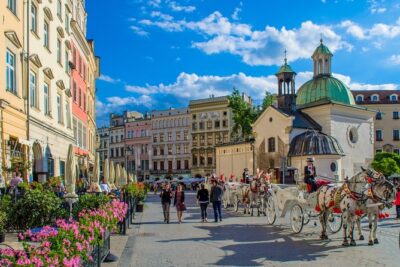
Complete Cracow Bike Tour (small group of maximum 15 people!)
Read our review →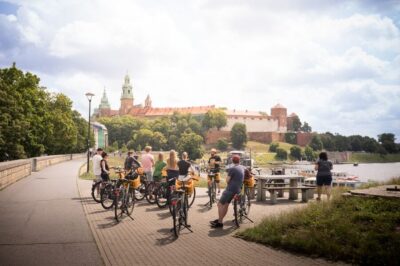
Krakow: Bike Tour of Old Town, Jewish Quarter and the Ghetto
Read our review →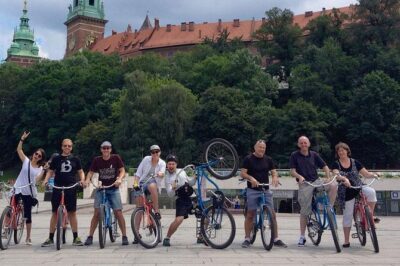
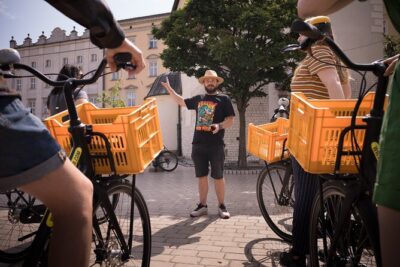
Full Bike Tour – the Old Town, Jewish Qtr & the Ghetto NEW BIKES
Read our review →
Krakow: Highlights of Krakow Bike Tour – Small Group
Read our review →
Krakow: Complete Bike tour with all the highlights
Read our review →Browse the lists this tour appears in