
REVIEW · CANADA
Toronto: Heart of Downtown 3.5-Hour Bike Tour
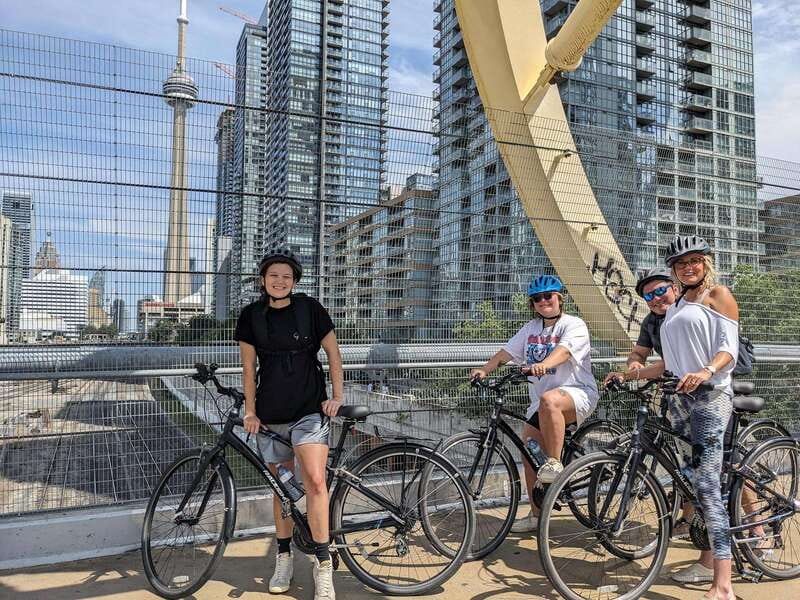
Toronto opens up quickly by bike. This 3.5-hour ride covers far more ground than a walking tour, linking the CN Tower, Chinatown, Kensington Market, the waterfront, and several major downtown landmarks at an easy pace. I especially like the mix of famous sights and less obvious routes through parks, bike lanes, back alleys, and quieter streets.
The guides are the other big strength. Carlos, Ryan, Oscar, Consuela, and Sydney are among the guides praised for clear safety instructions, useful local advice, and good stories. The main consideration is that you still ride through a working city, so some busy road crossings and traffic are part of the deal.
I also like that the tour covers roughly 15 kilometers with plenty of stops, rather than turning into a fitness test. At $90 per person, it is not the cheapest introduction to Toronto, but the bicycle, helmet, water, snack, guide, and wide route make it a sensible first-day choice if you want to get your bearings fast.
Key Points to Know Before You Ride
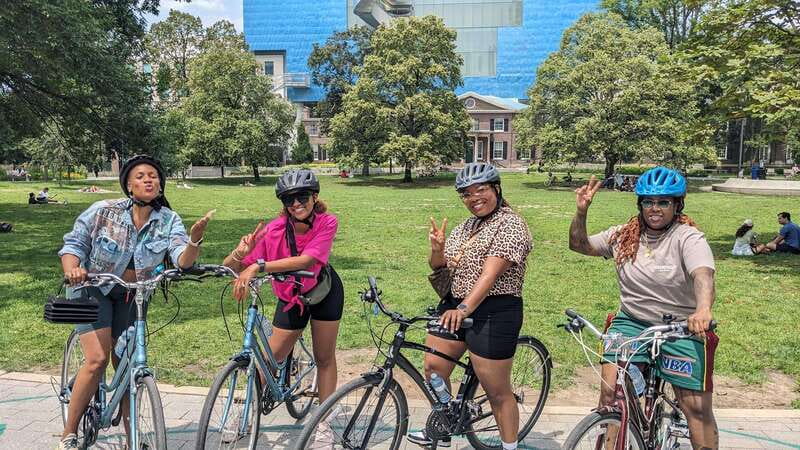
- About 15 kilometers in three and a half hours: The relaxed pace includes frequent stops for photos, explanations, and short breaks.
- A smart first-day orientation: You pass enough neighborhoods and landmarks to decide where you want to return for a longer visit.
- Safety gets real attention: Helmets are required, and the route uses quiet streets, park paths, and bike lanes where possible.
- A broad downtown route: Expect the CN Tower, Union Station, Chinatown, Kensington Market, the waterfront, St. Lawrence Market, City Hall, and much more.
- Good support for mixed abilities: Beginners and experienced riders can join, with guides checking the group’s pace and comfort.
- Useful practical extras: Bikes and helmets are supplied, along with water, a snack, photo help, and locker space.
Why a Bike Is the Right Way to See Downtown Toronto
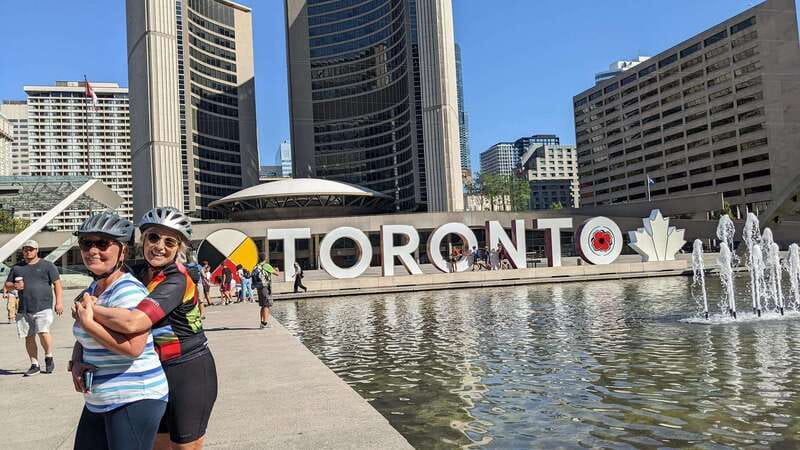
Toronto is spread across a wide downtown area. Walking between the CN Tower, Chinatown, Kensington Market, the waterfront, and St. Lawrence Market would take much of a day, while a car or bus often leaves you looking through glass and waiting in traffic.
A bicycle gives you a useful middle ground. You cover real distance, but you still notice street art, old facades, small parks, changing neighborhoods, and the way the downtown core meets Lake Ontario. You can also stop close to the sights instead of searching for parking.
The tour is designed for an easy pace, not speed. The route covers about 15 kilometers, according to one detailed account, spread over three hours of riding and stops. That makes this a city orientation with exercise, not a serious cycling challenge.
If you are nervous about riding in traffic, tell the guide at the start. Consuela and Carlos were praised for looking after groups with different levels of riding comfort, while other guides regularly checked that everyone stayed together. The operator gives safety instructions before departure, and helmets are mandatory.
Still, do not picture a completely traffic-free outing. One account specifically noted some busy roads, and downtown riding always requires attention. You should be comfortable starting, stopping, steering, and following a guide’s instructions.
A few more days on two wheels around Canada worth a look
- The Grand Bicycle Tour by Cycle City Tours
★ 5.0 · 1,827 reviews - Epic Electric Bike Tour by Cycle City Tours
★ 5.0 · 848 reviews - The Stanley Park Bicycle Tour by Cycle City Tours
★ 5.0 · 785 reviews
Starting Underground at the Dundas Meeting Point
The meeting point is inside a parking garage about 50 meters south of Dundas, on the west side of the street. Enter the garage and follow the yellow signs down to level P2, section H.
This is the least intuitive part of the experience. One rider spent several minutes finding the location because the signs were missed on arrival. Give yourself extra time, read the garage directions carefully, and call the local operator if you need help.
Once you arrive, you receive a bicycle and helmet. Bikes have been repeatedly praised for being comfortable and well maintained, and each one has a water bottle holder. Locker space is available, so bring only what you want during the ride.
Dress for the weather and for cycling. Avoid dress shoes and fancy clothing. Sunglasses, sunscreen, and a camera are sensible, while light luggage makes the ride easier. A water bottle and snack are included, with guides also providing a cereal or snack bar on some outings.
The Downtown Core: Towers, Stations, and Big Toronto Symbols
The opening part of the route introduces Toronto through its most recognizable buildings. The CN Tower gives you the city’s unmistakable vertical marker, while Rogers Centre shows how closely sports and entertainment sit beside the downtown core.
You also pass Union Station and the Royal York Hotel. Together, they offer a quick lesson in Toronto’s role as a major rail and business center. The route then reaches the Financial District, where tall office towers replace the older street-level feel of neighborhoods such as Kensington Market.
The Hockey Hall of Fame adds another piece of local identity. Even if you do not stop inside, it helps explain the place hockey holds in Canadian culture. Nearby, the Flatiron building, St. James Cathedral, and St. James Square shift the view again, mixing older architecture with the modern towers.
The guide usually stops at major points rather than trying to narrate while riding. That matters. You have time to listen, ask questions, and take photos without holding up the group or balancing awkwardly on the bike.
Chinatown, Kensington Market, and Queen Street West
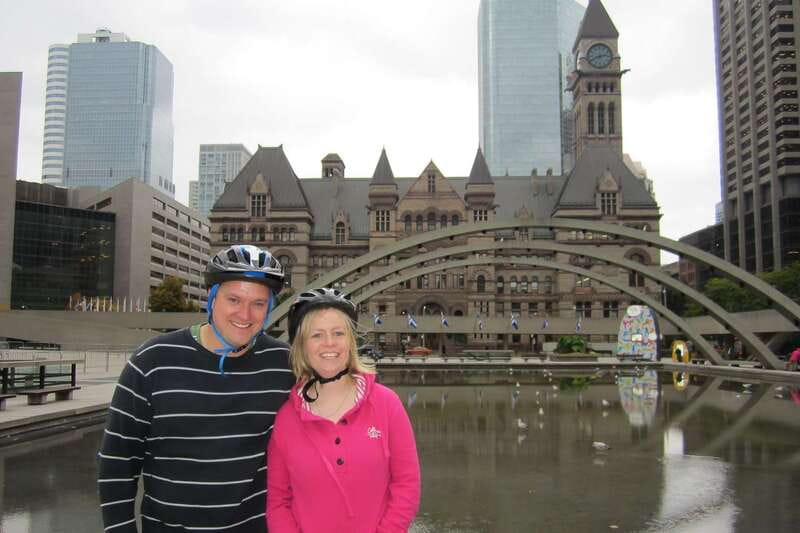
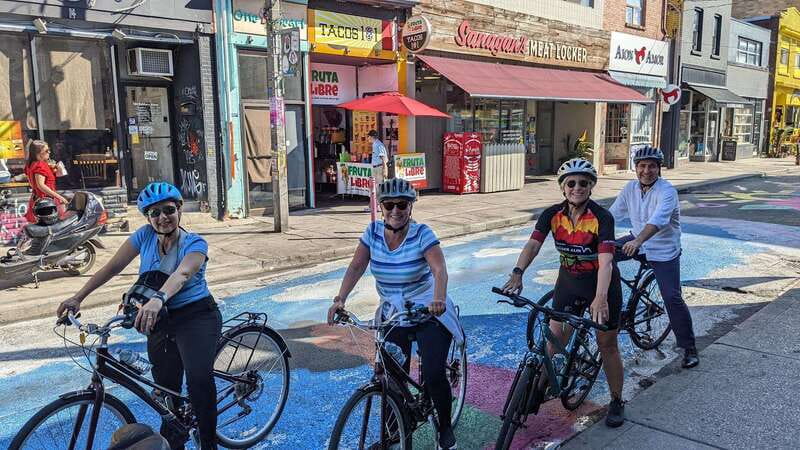
The route becomes more colorful and street-level around Chinatown and Kensington Market. These areas show a different Toronto from the glass towers near Union Station. You pass busy shopping streets, varied food options, older buildings, and neighborhoods with a stronger local feel.
Do not expect a long market visit built into the schedule. The tour is meant to show you the area and help you decide where to return. One useful suggestion was to allow 10 to 15 minutes at the markets for a drink or quick snack, but that is not part of the listed plan.
Queen Street West brings more shops, galleries, and creative institutions into the picture. The route also includes the Art Gallery of Ontario and the Ontario College of Art and Design. These stops make the tour useful even for people more interested in art and city life than in sports or skyscrapers.
The benefit here is range. In one ride, you see commercial downtown, immigrant neighborhoods, market streets, cultural buildings, and residential areas. The drawback is that each stop receives a short introduction, not a full guided visit.
Same roads, a different day in the saddle:
- Montreal eBike Sightseeing Tour
★ 5.0 · 573 reviews - Vancouver: Guided Bike Tour
★ 4.9 · 435 reviews - Montreal: E-Bike Sightseeing Tour
★ 4.8 · 365 reviews - eBike Adventure in Whistler
★ 5.0 · 365 reviews
City Hall, Eaton Centre, Dundas Square, and Massey Hall
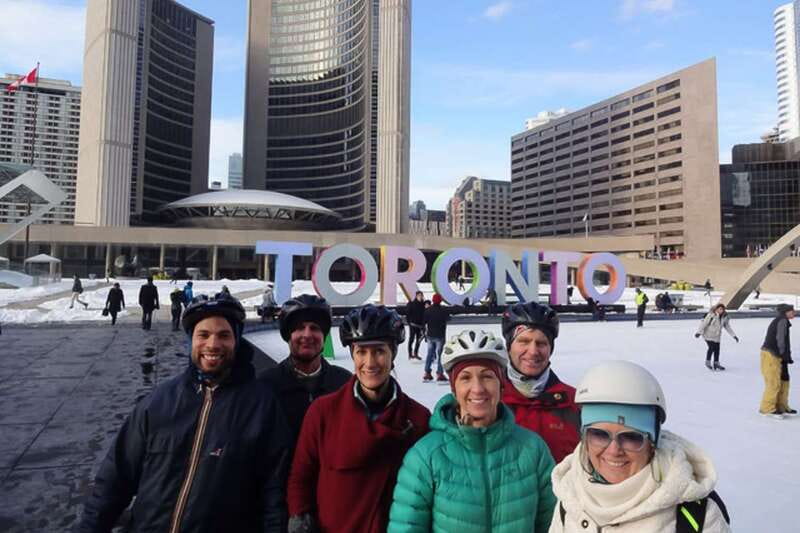
Around City Hall, Eaton Centre, and Dundas Square, the tour returns to Toronto’s busiest central zone. City Hall is an essential stop for architecture and civic life, while Eaton Centre shows the scale of downtown shopping.
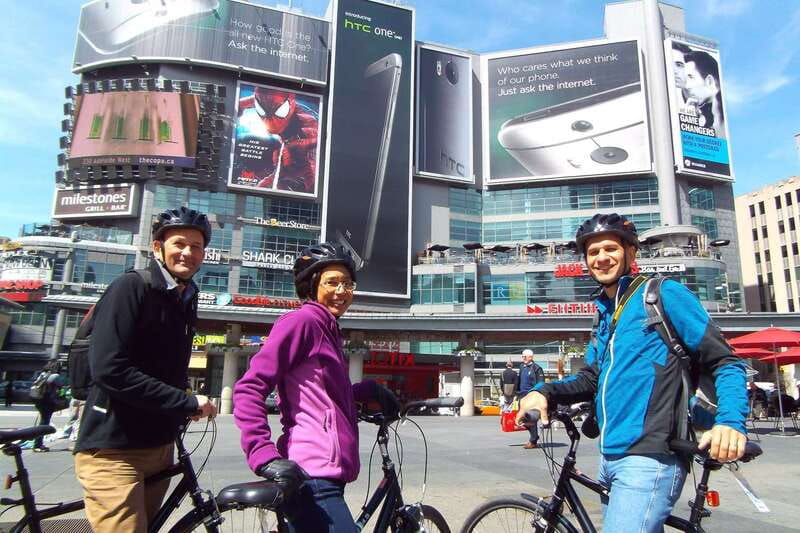
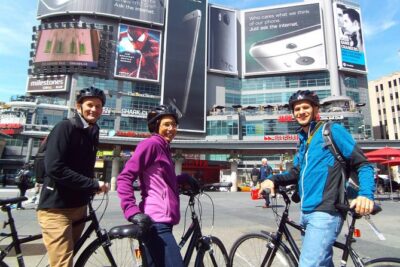
Dundas Square is a useful contrast to the quieter paths and neighborhood streets. It is one of the places where you feel the city’s crowds, advertising, traffic, and constant movement. The bike lets you reach it efficiently, but you should expect a more urban riding environment here.
Massey Hall adds an important cultural stop. The building is one of Toronto’s best-known performance venues, and the guide can place it within the wider story of the city’s music and public life.
These central landmarks are easy to find on your own, but a guide helps connect them. You learn which areas are worth revisiting, how the streets fit together, and where the downtown core changes character within a few blocks.
Harbourfront, Roundhouse Park, and the Lake
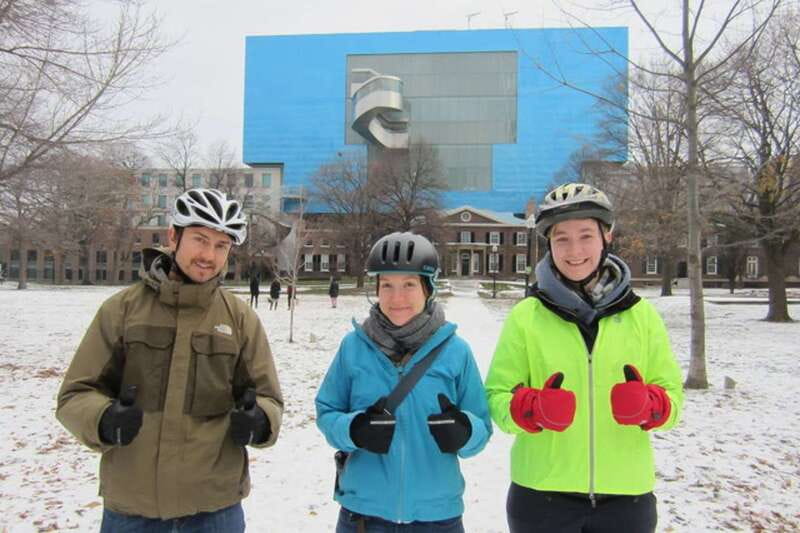
The waterfront section is one of the best reasons to choose this tour over a conventional bus ride. Harbourfront and the lake offer open views after the enclosed feel of the Financial District and shopping streets.
Roundhouse Park adds another angle, with railway connections and industrial-era character close to the CN Tower and Rogers Centre. The route then continues toward Sugar Beach, Sherbourne Common, and Corus Quay.
Sugar Beach is particularly useful as a photo stop. Its sandy public space and lake views feel removed from the nearby office towers, even though the downtown core is close. Sherbourne Common and Corus Quay show Toronto’s newer waterfront development and public spaces.
The waterfront paths are also where the ride can feel easiest. You get room to look around, take pictures, and enjoy the lake without dealing with downtown traffic at every turn. Weather matters here, though. Wind, sun, or rain can make the open waterfront feel very different from the sheltered streets inland.
St. Lawrence Market and the Flatiron Building
St. Lawrence Market is another important stop, though the schedule is built around seeing it rather than sitting down for a full meal. If you want to eat there, plan a return visit after the tour.
The nearby Flatiron building is one of Toronto’s most photographed older structures. It gives the route a strong architectural change after the modern waterfront and downtown towers. St. James Cathedral and Square continue that older side of the city.
This stretch is valuable because it shows Toronto as a layered place. Railways, markets, churches, financial offices, public squares, and new waterfront construction all sit within a manageable cycling distance.
The tour cannot provide a detailed history of every building. What it does well is give you enough context to recognize the places later, then return with more time.
The Guides Make the Difference
The quality of the guide is central to this experience. Carlos is repeatedly praised for being friendly, informative, and attentive to safety. Ryan is described as funny, considerate, and helpful with practical ideas, including advice about planning a day at Niagara Falls.
Oscar receives praise for keeping the route relaxed and interesting, while Consuela is noted for making nervous riders feel secure. Sydney, Mariana, Liam, Terence, and Jeff have also been praised for clear explanations and a welcoming manner.
Guide style can vary. One rider found a strong French accent occasionally difficult to understand, so you should be prepared for some variation in speaking style. The listed languages are English, Spanish, and French.
A good guide does more than point at buildings. The best ones explain how neighborhoods connect, answer questions, take group photos, and adjust the pace. Several guides have been praised for emailing or taking photos during the ride, though you should not treat this as a guaranteed feature.
Is $90 a Fair Price?
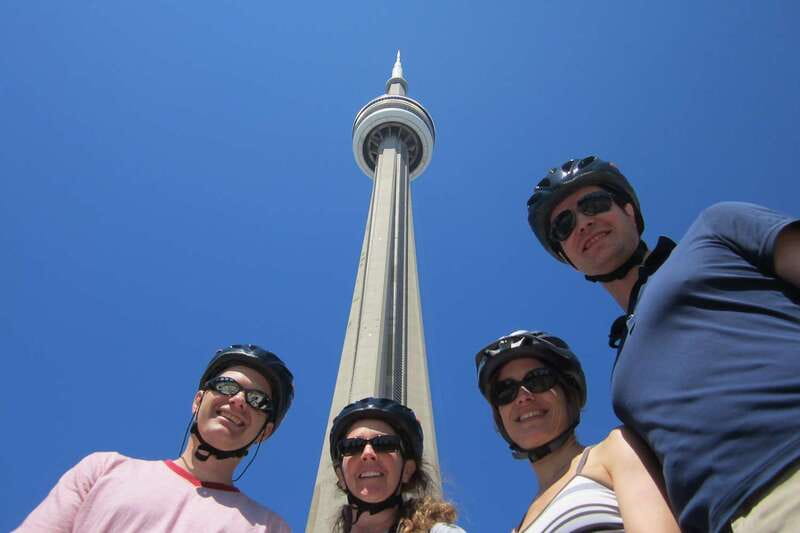
At $90 per person, this tour costs more than simply renting a bike and riding around on your own. The price includes the bicycle, helmet, water, snack, guide, and locker space, but the larger value is time.
You would need to plan a route, choose safe streets, find the landmarks, and work out how to connect the downtown core with the waterfront. The guide handles that work while giving you local context and keeping the group together.
The price makes the most sense if you have limited time in Toronto or want a strong introduction early in your stay. It is less appealing if you already know downtown well, dislike group activities, or want long visits inside museums and markets.
You can cancel up to 24 hours before the tour for a full refund, and the reserve-now-pay-later option keeps your plans flexible. Starting times vary, so check availability when booking.
Who Will Enjoy This Tour Most?
This is a strong choice for first-time visitors, couples, families with children, and solo riders who want company and direction. Children are welcome with a parent or guardian.
It also suits people who can ride but feel uneasy about city streets. The route favors quiet streets, park paths, and bike lanes where possible, and the guides take safety seriously. You still need basic bike control and the ability to pay attention around traffic.
I would choose it early in a Toronto stay. The ride gives you a practical map of the city and helps you decide where to return, such as St. Lawrence Market, Kensington Market, the waterfront, or the Entertainment District.
It is less suitable for anyone expecting a leisurely sightseeing vehicle with no physical effort. Three and a half hours on a bike is manageable for most riders at this pace, but it is still an active outing.
Should You Book the Toronto Heart of Downtown Bike Tour?
Book it if you want to see Toronto at street level, cover a lot of ground, and learn the city’s layout in one afternoon. The strongest reasons are the relaxed pace, careful guides, comfortable bikes, and broad route linking downtown, neighborhoods, landmarks, and the lake.
Skip it if you need long stops at individual attractions or do not feel comfortable riding near city traffic. For everyone else, especially on the first day of a short visit, $90 buys a useful orientation and a pleasant way to decide what deserves more of your time.
FAQ
How long is the Toronto Heart of Downtown Bike Tour?
The tour lasts 210 minutes, or three and a half hours.
How far do you ride?
The ride covers about 15 kilometers, spread across cycling time and frequent stops.
Is the tour suitable for beginners?
Yes. The tour moves at an easy pace and is designed for beginners as well as experienced riders. Safety instructions are provided before departure.
Is a helmet provided?
Yes. A bicycle and helmet are included, and helmets are mandatory.
What languages are available?
The tour is offered in English, Spanish, and French.
What sights are included?
The route includes the CN Tower, Union Station, Chinatown, Kensington Market, Eaton Centre, Dundas Square, Harbourfront, the Financial District, Queen Street West, the Art Gallery of Ontario, the Hockey Hall of Fame, City Hall, St. Lawrence Market, Sugar Beach, and many other downtown landmarks.
Are children allowed?
Yes. Children are welcome when accompanied by a parent or guardian.
What should I wear and bring?
Wear clothing suitable for the weather and cycling. Avoid dress shoes and fancy clothing. Sunglasses, sunscreen, a camera, and a small amount of luggage are recommended.
Can I cancel the booking?
Yes. You can cancel up to 24 hours in advance for a full refund. You can also reserve now and pay later.
Just added around Canada
- 3 Hour E-Bike Tour of Charlottetown★ 4.5 · 40 reviews
- 2 Hour E-bike tour of Charlottetown★ 5.0 · 13 reviews
- Canmore’s #1 Food Bike Tour: A Must Do Mountain Experience!★ 5.0 · 38 reviews
- Calgary City Highlights 3 Hour Bike Tour, E-Bike Upgrade Avail.★ 5.0 · 182 reviews
- Calgary #1 Food Bike Tour: Taste Local And See The City By E-Bike★ 5.0 · 15 reviews
- Small Group E-Bike Tour the Banff Local Explorer★ 5.0 · 40 reviews
- Banff Mountain Lakeside – E-bike Tour★ 5.0 · 36 reviews
- Sundance Canyon eBike and Hike Guided Tour★ 5.0 · 26 reviews
Canada Cycling Tours, compared.


The Stanley Park Bicycle Tour by Cycle City Tours
Read our review →

Browse the lists this tour appears in