
REVIEW · BANGKOK
Past and Present Bike Tour of Bangkok
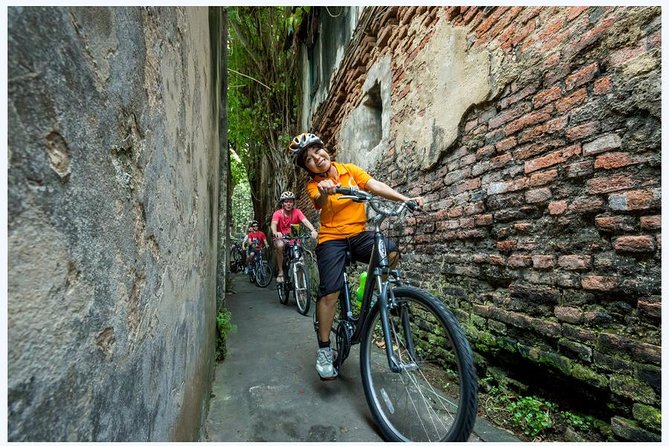
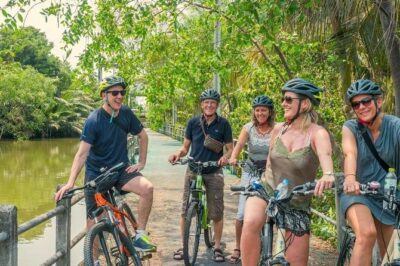
Bangkok makes more sense from a bicycle. This four-hour ride links Chinatown’s narrow lanes and flower markets with the quieter Thonburi side of the Chao Phraya River, and I like the small groups, usually capped at six people. I also like that the ferry crossing and bicycle use are included in the $35.68 price, though narrow streets, traffic, heat, and a moderate amount of walking mean you should arrive ready to pedal, not simply sit back and sightsee.
The tour begins near Bang Rak and returns to the same office, making the plan simple. Guides such as Woody, Té, Kim, Qing, and Jig have earned praise for their care, energy, and local explanations. The main thing to consider is timing: the advertised four hours can run longer, especially when the group pauses at temples or markets.
Key points at a glance
- Ride through Chinatown’s back lanes: You see a side of Bangkok that is easy to miss from a car or standard sightseeing bus.
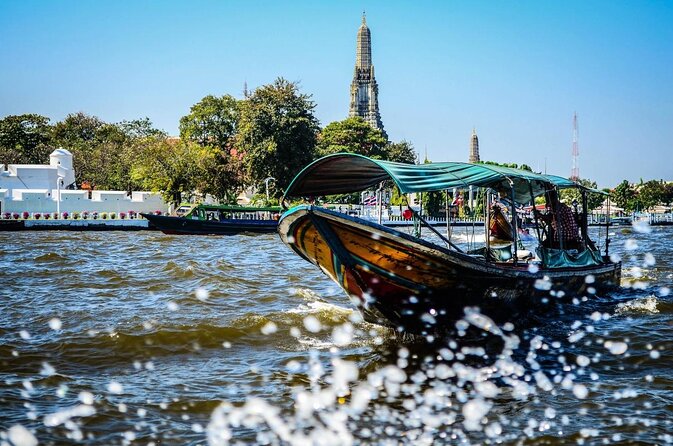
- Cross the Chao Phraya by ferry: The short river crossing adds a useful change of pace and links two very different parts of the city.
- Visit three important temples: Wat Arun, Wat Prayoon, and Wat Kalayanamitr provide the cultural heart of the route.
- Keep the group small: A maximum of six riders makes it easier to follow the guide and ask questions.
- Choose morning or afternoon: The two departure options help you fit the ride around a Bangkok sightseeing day.
- Expect an active outing: You will cycle, walk briefly at stops, and need a moderate level of fitness.
Why a bicycle works so well in Bangkok
Bangkok can feel hard to read from street level. Major roads are packed with cars, taxis, buses, and motorbikes, while the most interesting corners often hide behind a plain entrance or down an alley too narrow for a tour vehicle.
A bicycle solves part of that problem. You can move through small lanes, stop quickly, and notice ordinary details that disappear behind a window. The route takes you through several communities rather than giving you one polished version of the city.
I like the contrast built into the ride. On one side, Chinatown offers dense lanes, food stalls, shops, temples, and a constant hum of activity. On the other, Thonburi gives you a different view of Bangkok, with riverside temples and a slower rhythm.
This is not a race. The schedule includes stops where you can get off the bicycle and look around. One strong feature is the guide’s ability to explain what you are seeing while keeping the ride moving. Past outings led by Woody, Té, Kim, Qing, and Jig were praised for clear explanations, good route management, and personal attention.
A few more days on two wheels around Bangkok worth a look
- Bangkok: Temples, Canals & Local Life Bike Tour
★ 4.9 · 3,511 reviews - Experience Real Bangkok by Bike
★ 5.0 · 2,439 reviews - Bangkok: Bike and Canal Boat Tour with Lunch
★ 4.9 · 1,350 reviews
Starting in Bang Rak near the Old Customs House
The meeting point is Bangkok Bike Tours, at 2 Soi Charoen Krung 44 in Talad Luang, Bang Rak. You return here at the end, and free lockers are available at the headquarters.
The opening section takes you through a Muslim community toward the Old Customs House on the river. This building marks an older gateway into Bangkok, when boats were the main way many newcomers entered the city. It is a smart first stop because it gives the tour a sense of place before the route turns into Chinatown.
The area also shows how several faiths and communities share this part of Bangkok. Your guide supplies the context, so you are not simply pedaling past buildings without knowing why they matter.
You should provide your height when booking so the operator can prepare a suitable bicycle frame. A current passport or ID number is required on the day for insurance purposes. These are small administrative points, but handling them ahead of time helps the start go smoothly.
Chinatown by bicycle, alley by alley
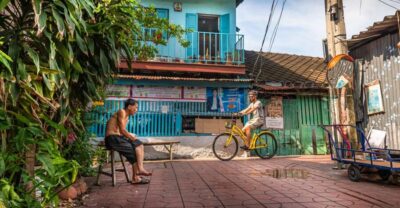
The Chinatown section is the tour’s most distinctive stretch. Instead of sticking to the broadest roads, the group works through a maze of side streets and lanes.
That makes the ride more intimate, but it also demands attention. You need to be comfortable riding in confined urban spaces and following the guide closely. The route is designed for a moderate fitness level, and the description specifically warns that walking is part of the stops.
I like this section because cycling gives you time to notice the mix of sounds, smells, signs, homes, shops, and religious buildings. You are not rushing through a checklist of famous sights. The guide helps connect the different communities that have shaped the neighborhood.
The ride is also family-friendly, but children must be accompanied by an adult. Family-friendly does not mean effortless. Parents should judge their children’s comfort with bicycles, narrow streets, and a four-hour outing before booking.
A useful practical point is the group limit. The activity allows a maximum of six people, and no booking can contain more than six unless you contact the operator about a larger party. A small group makes a real difference here. It is easier to hear the guide, cross streets together, and pause without creating a long line of riders.
Flower and vegetable markets
After Chinatown, the route reaches the flower and vegetable markets. This is one of the strongest parts of the tour for anyone who wants to see Bangkok as a working city rather than only a collection of monuments.
Markets give you a quick lesson in daily life. Produce, flowers, movement, and trade fill the route with color and activity, but the value is not only visual. You get a sense of what local commerce looks like and how food and flowers move through the city.
You should expect a real market environment, not a quiet exhibit. Bicycles and pedestrians share space, and your guide’s route management matters. Qing was specifically praised for planning the route well and keeping the ride safe and smooth, while another guide helped after a rider fell and arranged a taxi back to the office.
That incident also points to an honest limitation. Cycling in central Bangkok carries normal urban risks, and accidents are possible. The guide can assist, but you remain responsible for riding within your ability and paying attention.
Same roads, a different day in the saddle:
- Bangkok Classical Bicycle Tour
★ 4.8 · 1,278 reviews - Bangkok: Night Bike Tour with Temples & Flower Market Visit
★ 4.8 · 751 reviews - Bangkok: Must-Try Hidden Bike & Food Experience
★ 4.9 · 613 reviews - Bangkok Jungle Bike Tour – Hotel-pickup & Lunch
★ 5.0 · 489 reviews
Crossing the Chao Phraya by ferry
The ferry crossing is a short but memorable change in the tour. You bring the bicycle across the Chao Phraya and shift from the city’s eastern side to Thonburi.
The river is not just scenery here. It explains why Bangkok developed as it did and why the two banks can feel so different. From the ferry, you get a broad view of the waterway and the city skyline before continuing by bicycle.
Ferry fees are included, so you do not need to budget a separate charge during the ride. You also avoid the awkwardness of arranging your own river transfer, since the guide leads the group through the crossing.
The ferry is one reason this tour feels like more than a neighborhood bicycle ride. In a few hours, you experience streets, markets, water, and temples, with each part changing the feel of the outing.
Wat Arun and the riverside temples
On the Thonburi side, the route stops at Wat Arun, one of Bangkok’s best-known temples. Its position beside the river makes it especially striking after the ferry ride.
The stop gives you time to walk around and look at the temple grounds, gardens, and exhibitions. You are not expected to remain on the bicycle for the whole experience. That pause matters after the busy Chinatown section.
The next temple is Wat Prayoon. It offers another view of Thai religious design and gives the guide a chance to explain how different temple compounds function. The final temple, Wat Kalayanamitr, completes the trio and adds another riverside setting.
I like that the tour does not treat one famous temple as the entire cultural story. Three stops create useful variety, even if you do not receive a long formal visit at each site. The tradeoff is time. With only four hours, the temples are part of a moving route rather than a full temple study.
Dress and behavior should be respectful at religious sites. The supplied details do not set out a specific dress code, so you should plan modest clothing suitable for temple visits and be ready to follow your guide’s instructions.
What the four-hour schedule really means
The tour is described as lasting about four hours, with morning and afternoon departure choices. In practice, you should keep some flexibility after the scheduled finish.
One outing lasted more than five hours, and another guide allowed extra time at stops when the group wanted to linger. That sounds positive if you enjoy an unhurried pace, but it can matter if you have a dinner booking, a flight, or another timed attraction afterward.
The ride begins and ends at the Bang Rak office. Hotel pickup and drop-off are not included, and you must arrange your own transport to and from the meeting point. The tour also does not provide lunch.
You receive free cold water and soft drinks after the ride, and beer may be available to buy once the tour is over. Alcohol is not included and is available for purchase only after the cycling portion. That is a sensible arrangement for a hot-weather bike ride.
Souvenir photos are also included and are emailed after the tour. Since you will be busy riding and looking around, this gives you a useful record without requiring you to stop constantly for pictures.
Is $35.68 good value?
At $35.68 per person, the price is reasonable for a four-hour guided activity that includes the bicycle, helmet, ferry fees, lockers, photos, and a small group.
The value comes from the route, not from luxury. You are paying for access to lanes and neighborhoods that are awkward to explore alone, plus a guide who handles the route between Bang Rak, Chinatown, the markets, the river, Thonburi, and three temples.
The ferry fare being included is a nice detail, but it is not the main reason to book. The better value is the time saved on planning. You do not need to work out which streets to use, how to move the bicycle across the river, or how to connect these areas in one half-day.
I would be less enthusiastic about the price if you dislike cycling in cities or prefer long, quiet visits at temples. In that case, the tour covers a lot of ground but may feel active and quick. If you enjoy seeing a city from street level, the mix is much stronger.
The published rating is 4.9 from 27 reviews, with 100 percent recommending the experience. That points to a consistently strong outing, though the sample is not huge. The most praised features are the guides, the unusual route, the safe organization, and the chance to see areas you might not reach independently.
The guides make the difference
A bicycle route is only as good as its guide. Here, the guide is responsible for traffic decisions, timing, ferry coordination, temple context, and group safety.
Woody received especially warm praise for clear explanations and for allowing time at stops. Té was praised for taking the group to quiet backstreets and local neighborhoods. Kim was described as energetic and well informed about the area, while Qing was praised for friendliness, route planning, and keeping the ride smooth.
Jig also received credit for explaining Bangkok’s social, cultural, and religious life. These details matter because the route crosses several communities quickly. Without a guide, you might see plenty but understand little.
The small group helps the guide tailor the pace. One outing became a private tour after another participant canceled, and the guide adjusted the route to suit someone who had already taken several Bangkok bike tours. You should not assume a private tour will happen, but the example shows that the format can allow some flexibility.
Who should book this ride?
I would recommend the tour to you if you can ride comfortably, want an active introduction to Bangkok, and prefer local streets to a standard bus route.
It suits first-time visitors especially well because it connects several major themes in one outing: Chinese Bangkok, Muslim Bang Rak, river transport, Thai temples, markets, and Thonburi. It also works for families with older children who can manage the distance and urban riding.
The tour may not suit you if you have limited mobility, dislike heat, or want a slow temple-focused visit. The description calls for moderate fitness and notes that walking is involved. You should also avoid placing a tight appointment immediately afterward, since the ride may run beyond four hours.
Book at least a few days ahead if possible. The average booking lead time is eight days, and confirmation arrives within 48 hours, subject to availability. Free cancellation is available until 24 hours before the start time, but changes or cancellations inside that window are not accepted for a refund.
Final call: an excellent active introduction
I would book the Past and Present Bike Tour of Bangkok if I wanted one half-day to get oriented without staying on the main tourist roads.
The strongest reasons are clear: you ride through Chinatown’s smaller lanes, pass through the markets, cross the Chao Phraya by ferry, and visit Wat Arun, Wat Prayoon, and Wat Kalayanamitr. The $35.68 price is fair because the bicycle, helmet, ferry, lockers, guide, drinks after the ride, and photos are all built into the experience.
Choose the morning if you prefer to have the rest of the day free, or the afternoon if you want a slower start. Either way, wear practical clothing, provide your height in advance, bring your passport or ID details, and leave room in your schedule in case the group lingers.
This is not the right pick for a passive sightseeing day. For an active, well-organized look at Bangkok’s old neighborhoods and river culture, it is one of the better-value options in the city.
FAQ
How long does the Past and Present Bike Tour of Bangkok last?
The tour lasts approximately four hours. One reported outing exceeded five hours, so it is wise to keep extra time available after the scheduled finish.
Where does the tour begin and end?
It begins and ends at Bangkok Bike Tours, 2 Soi Charoen Krung 44, Talad Luang, Bang Rak, Bangkok 10500, Thailand.
What is included in the tour price?
The price includes a local guide, bicycle, helmet, ferry fees, free lockers at the headquarters, and souvenir photos emailed after the tour. Cold water and soft drinks are available after the ride.
Are morning and afternoon departures available?
Yes. You can choose either a morning or afternoon departure.
Is lunch included?
No. Lunch is not included, and hotel pickup or drop-off is also not provided.
What fitness level is required?
A moderate level of physical fitness is recommended. You will cycle through city streets and walk during some stops, and children must be accompanied by an adult.
Just added around Bangkok
- Bangkok City Bike Tour – Hotel-pickup & Lunch★ 5.0 · 27 reviews
- Bamboo Bicycle Tour in twilight: watch dancing Fireflies in Bangkok★ 5.0 · 228 reviews
- Bangkok Green Oasis 4-Hour Bike Tour with Boat Ride★ 5.0 · 46 reviews
- Half-Day Bangkok Bike Tour Including Lunch★ 5.0 · 257 reviews
- Thai Culture and Local Life 4- Hour Bangkok Bike Tour★ 5.0 · 86 reviews
- The Original Bicycle Tour in the Green Jungle of Bangkok★ 5.0 · 106 reviews
- Colors of Ayutthaya Full-Day Bike Tour★ 5.0 · 60 reviews
- Green Bangkok Bicycle Tour★ 4.5 · 59 reviews
Bangkok Cycling Tours, compared.
Night Bike Tour with Temples & Flower Market Visit
Read our review →
Bangkok Jungle Bike Tour – Hotel-pickup & Lunch
Read our review →
Browse the lists this tour appears in