
REVIEW · BANGKOK
Thai culture and Bangkok local life guided bike tour
Bangkok reveals itself between the big sights. This four-hour bike tour leads you through Talat Noi, Chinatown, old temple communities, and riverside lanes, giving you a closer look at daily life than a standard sightseeing route. I like the small group size, capped at eight, and the mix of cycling, street food, temples, markets, and a short ferry ride. The main consideration is simple: you need to feel comfortable riding a bicycle, and Bangkok’s heat, traffic, uneven lanes, and sudden rain can make the ride tiring.
I also like that the route includes meaningful local stops rather than only photo opportunities. You can make an offering at a Chinese shrine, feed turtles at a temple, and explore Pak Khlong Talat, Bangkok’s major flower market. The bikes could be better, though. One rider found the saddle uncomfortable, especially for women, so anyone particular about bicycle fit should ask about the equipment before setting off.
Key points to know before you book
- Talat Noi opens the tour with old shophouses, shrines, and narrow lanes that show Bangkok’s Chinese heritage at street level.
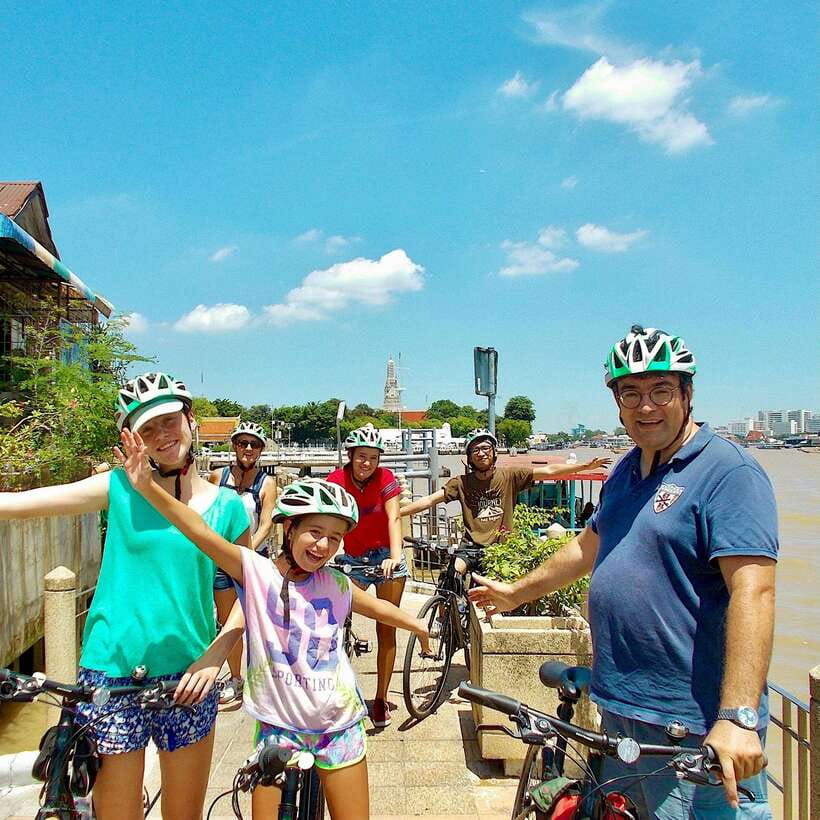
- The route crosses the Chao Phraya River by ferry, adding a pleasant change from cycling and giving you a fresh view of the city.
- Pak Khlong Talat flower market is a sensory stop, with flowers from around Thailand, strong scents, and busy stalls.
- Wat Kalayanamitr offers a quieter pause, where you can feed turtles and learn about Buddhist offerings.
- Small groups make a real difference, especially when the guide leads you through tight alleys and local neighborhoods.
- Bring comfortable clothes and a small backpack, and remember that the tour runs in rain as well as sunshine.
Why this four-hour ride works so well in Bangkok
Bangkok can feel hard to read from the back seat of a taxi. You pass temples, markets, canals, and old neighborhoods, but the city’s smaller details disappear behind glass and traffic. A bicycle changes the scale. You move slowly enough to notice the painted walls, food stalls, shrines, homes, and working streets that sit just beyond the main roads.
The route is also well judged for a half-day. You get several different sides of the city without spending an entire day in the saddle. The stops break up the ride, and the ferry provides a natural pause before the route returns along the river.
The tour costs $41 per person. That is fair value if you want more than bicycle hire. The price includes an English-speaking Thai guide, an adult bicycle, a helmet, cold water, a soft drink, street food snacks, the ferry crossing, and entrance fees. You are paying for local navigation and interpretation as much as for the bicycle itself.
The group limit of eight is one of the strongest features. A guide can keep a small group together more easily in narrow lanes, and you have a better chance to ask questions. Recent high ratings also point to the guides as a major strength. Khun Mem was praised for making the four-hour route entertaining and varied, while Ti was singled out for explaining the city well and keeping the ride easygoing.
More Hidden Gems Bike Tours in Bangkok:
- Bangkok: Temples, Canals & Local Life Bike Tour
★ 4.9 · 3,511 reviews - Bangkok Experiences Bike Tours-Backstreets and Hidden Gems
★ 5.0 · 336 reviews - Thai Culture and Local Life 4- Hour Bangkok Bike Tour
★ 5.0 · 86 reviews
Starting at Loftel Station Hostel near Hua Lamphong
The meeting point is Loftel Station Hostel at 368/1-3 Rama 4 Road. From Hua Lamphong MRT Station, use exit 4 and walk for about two minutes against the traffic. Look for the four-story dark blue building beside the elevated roadway.
This is useful information to take seriously. Bangkok’s roads can be confusing, and the elevated roadway is a better landmark than relying only on the address. If you take a taxi, the Thai address supplied for the driver identifies the building and its position near Hua Lamphong MRT exit 4.
Hotel pickup and drop-off are not included, so plan your own way to the start. Arrive ready to ride rather than treating the meeting point as a sightseeing stop. You will receive the bicycle and safety helmet there, and the guide will lead the group from that point.
The tour provides children’s bicycles for children at least 120 centimeters tall. Child carriers are available for children up to 18 kilograms and 115 centimeters tall. Children must be with an adult, and anyone taking part needs to be able to ride a bike unless using an approved child carrier.
Talat Noi: old Bangkok in narrow streets
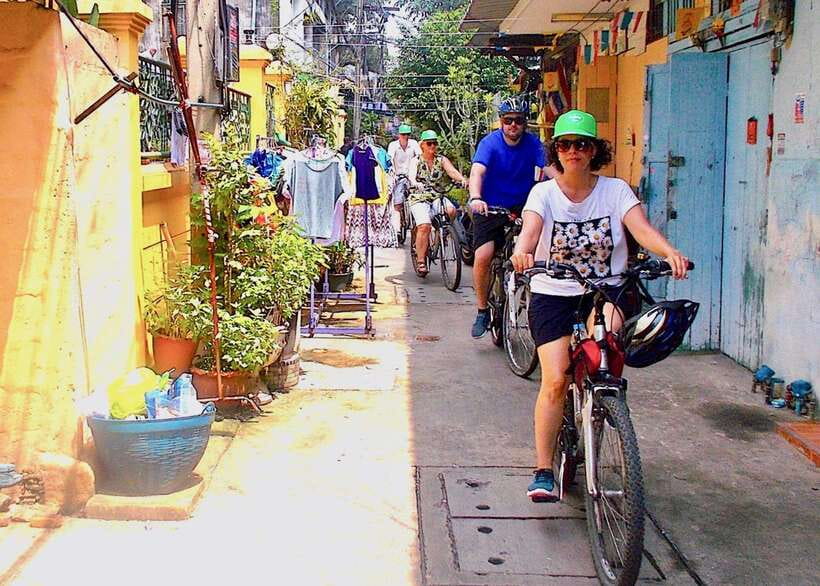
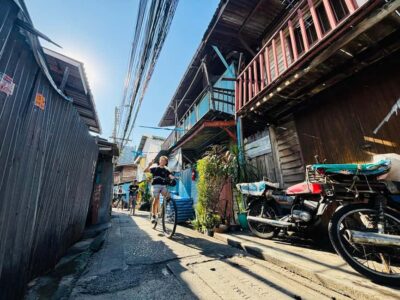
The first major stop is Talat Noi, one of the most characterful parts of the route. This old neighborhood is known for traditional Chinese shophouses, small lanes, and temples connected to the city’s Chinese immigrant communities.
Talat Noi works well by bicycle because the area is not about one grand monument. Its appeal comes from the street-level details. You pass close to homes and businesses, and the guide can point out the neighborhood’s customs, buildings, and connections to Bangkok’s early development.
Expect a slower pace here. The lanes are part of the neighborhood, not a closed cycling track, so you need to follow the guide carefully and watch for pedestrians, scooters, and changing surfaces. That is part of the value, but it also means this is not a smooth, fast ride.
One stop listed along this section is 758 Soi Phanu Rangsi, used for a visit and photo stop. The exact amount of time at each location can change depending on the group’s pace and other conditions. That flexibility is useful in Bangkok, where a short delay can affect the whole route.
A Chinese shrine and the meaning of making an offering
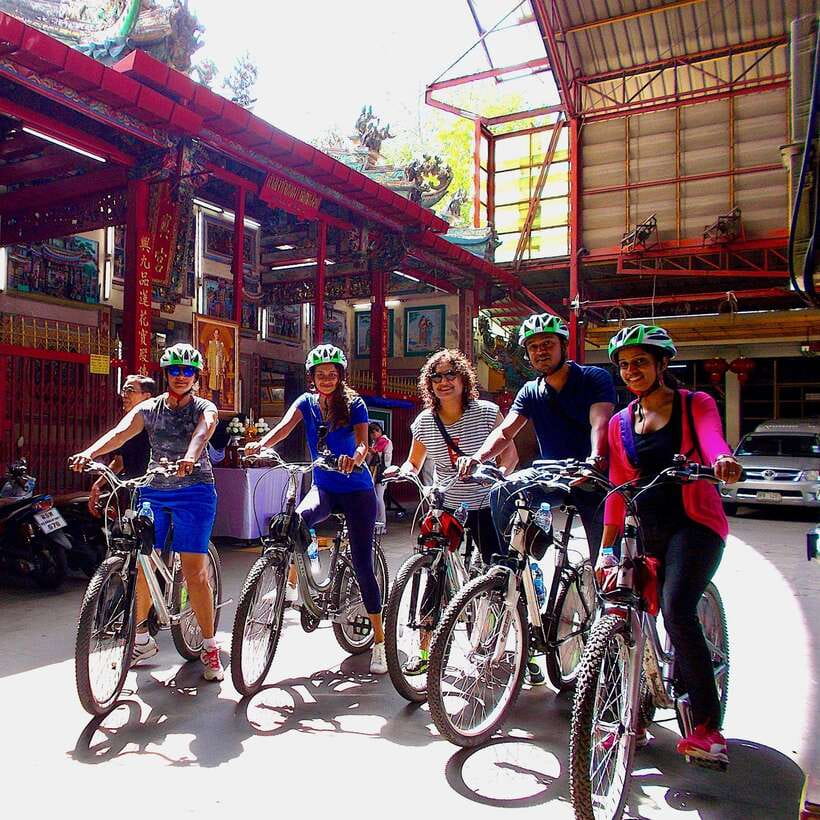
The local Chinese shrine adds a spiritual element to the ride. You have time to make an offering to the deity and wish for good health and protection.
This is more than a quick stop for a photograph. The shrine gives you a way to see how neighborhood religious life works alongside shops, homes, and food businesses. Bangkok’s religious culture is not confined to major temple compounds. Small shrines are part of ordinary routines, and the guide explains their place in the community.
You should dress respectfully and listen to the guide’s instructions about offerings. The activity is brief, but it gives the route a sense of purpose. You are not only looking at old buildings. You are seeing how local people connect daily life with religious practice.
More Guided Rides in Bangkok:
- Bangkok : Old City Guided E-Scooter &/or Bike Tour
★ 4.7 · 29 reviews - 3-Hour Porto Highlights on a Electric Bike Guided Tour
★ 5.0 · 4,392 reviews - Small Group Guided Bike Tour of Amsterdam’s Hidden Gems
★ 5.0 · 3,936 reviews - Porto: City Highlights 3-Hour Guided Electric Bike Tour
★ 4.8 · 3,092 reviews
Chinatown and the pleasures of a street-food break
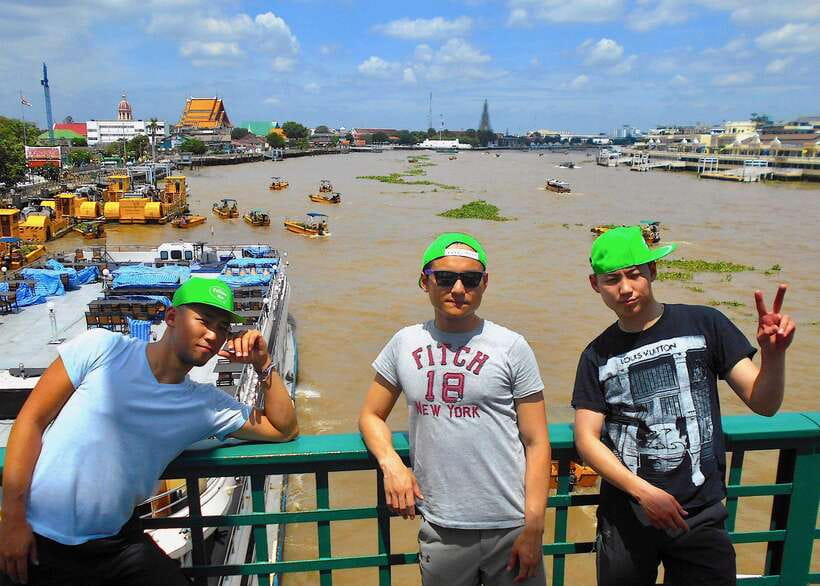
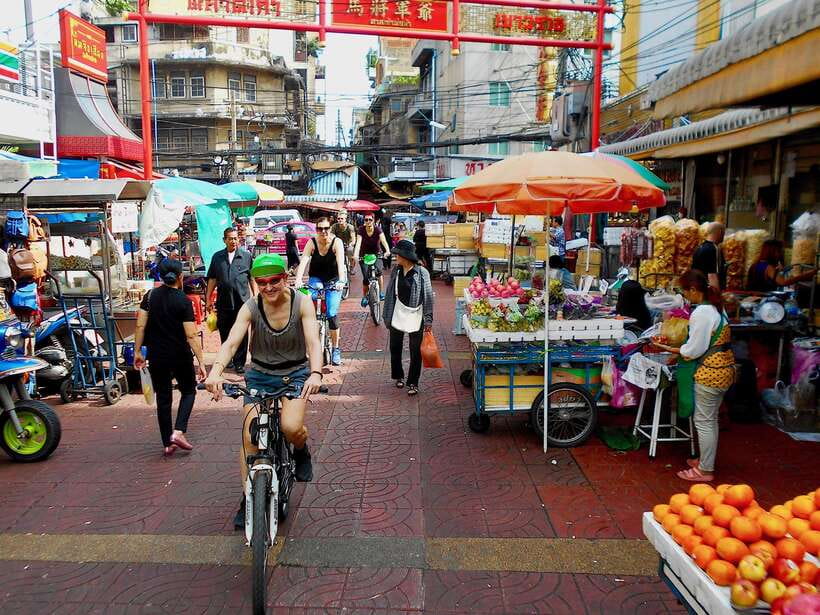
From Talat Noi, the ride heads into Chinatown. This is where the route becomes louder and more crowded, with market stalls, food vendors, and busy streets competing for space.
The bicycle is useful here because it lets you move through connected lanes rather than spending the whole visit on one main road. Still, you should expect interruptions and tight spaces. The guide may need to slow the group or make small changes based on conditions.
A street-food snack is included. The supplied information does not specify exactly what you will eat, so you should treat this as a chance to sample something selected during the route rather than a full meal. If you have allergies or dietary restrictions, tell the guide before accepting food.
Chinatown is a good counterpoint to Talat Noi. Talat Noi feels quieter and more residential, while Chinatown brings market energy and plenty of visual movement. Together, the two areas show how Bangkok’s Chinese heritage has shaped both neighborhood life and commerce.
Pak Khlong Talat: Bangkok’s flower market
The next important stop is Pak Khlong Talat, Bangkok’s largest fresh flower market. After the darker lanes and crowded market streets, the flowers provide a welcome change in color and scent.
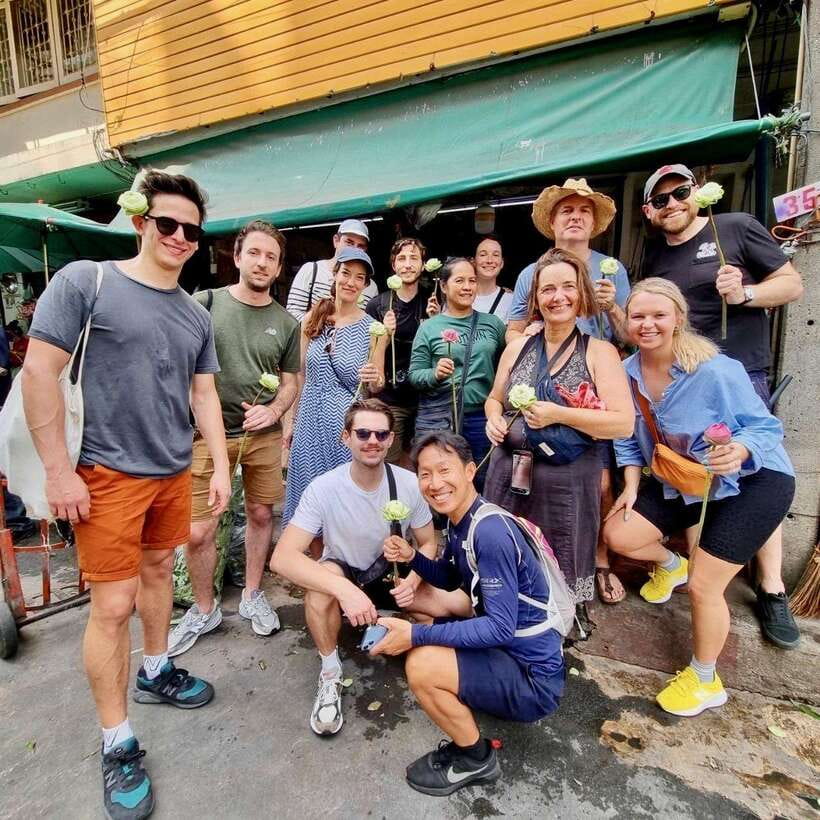
You can expect stalls filled with flowers from across Thailand. This is a working market, not simply a decorative display, so the experience is about seeing flowers being handled and sold as part of Bangkok’s daily trade. The stop includes time for photographs and a break.
I particularly like this part of the route because it gives you a different view of the city’s economy. Bangkok is often presented through temples and food, but flowers are also part of its cultural life. They are used for offerings and ceremonies, which connects the market naturally to the temple visits later in the tour.
The market can be busy and wet underfoot, so comfortable shoes matter. Keep your small backpack close and avoid carrying anything that makes it hard to walk or return quickly to the bicycle.
Crossing to the old capital of Thailand
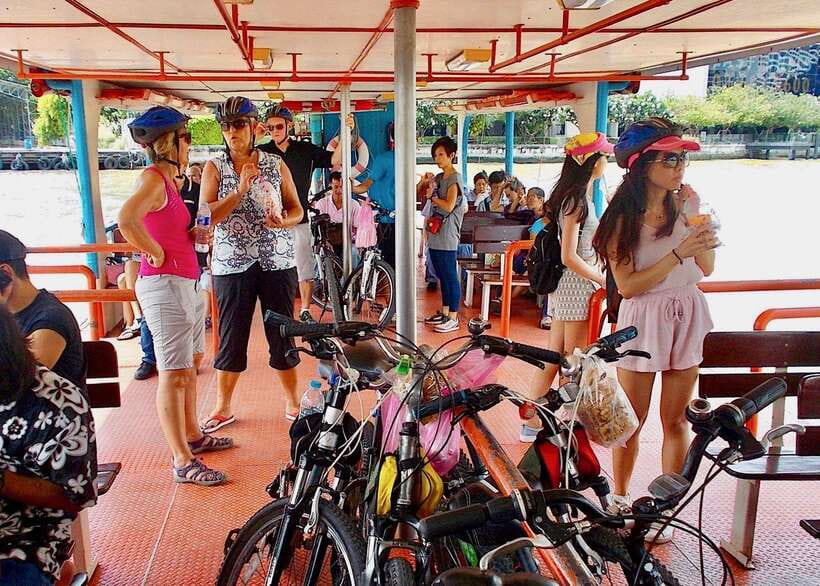
After the flower market, the group continues toward the riverside and crosses the River of Kings by ferry. The ferry ride takes about 15 minutes.
This is one of the route’s practical pleasures. You get a break from pedaling, enjoy the breeze, and see Bangkok from the water. The change in transport also helps divide the tour into two parts: old Chinese neighborhoods on one side of the river, then temple grounds and riverside communities on the other.
The ferry crossing is included in the price, so you do not need to arrange or pay for it separately. Keep your belongings secure during the crossing, and be ready to get back on the bicycle when the group reaches the other side.
The route then reaches the old capital area, where the surroundings become calmer. This shift is one of the most satisfying features of the tour. In a few hours, you move from market lanes to open water and then into temple grounds.
Wat Kalayanamitr and feeding the turtles
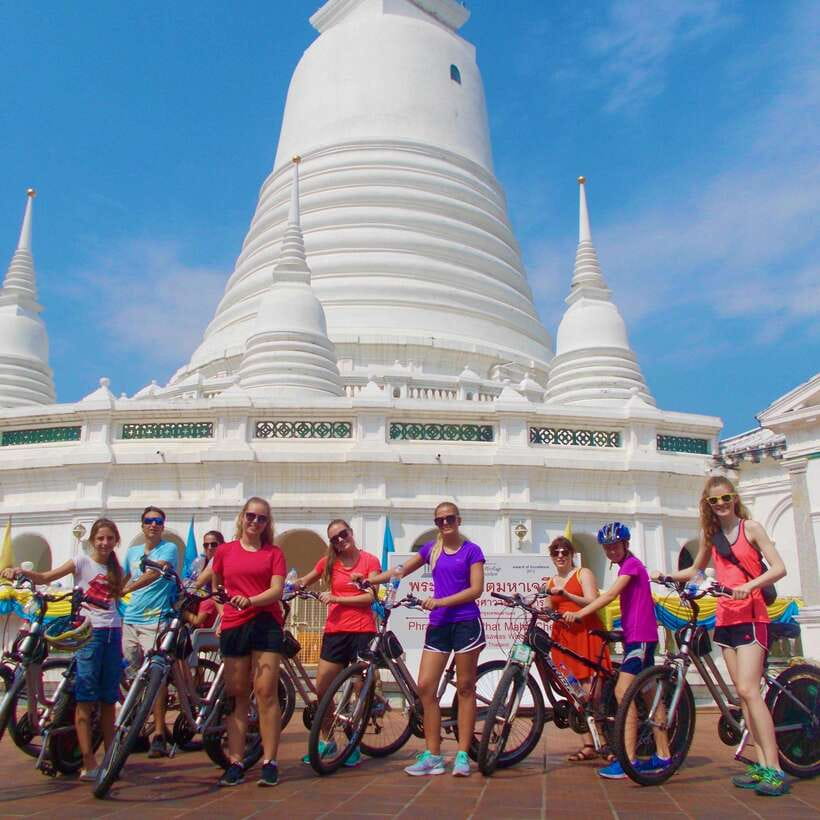
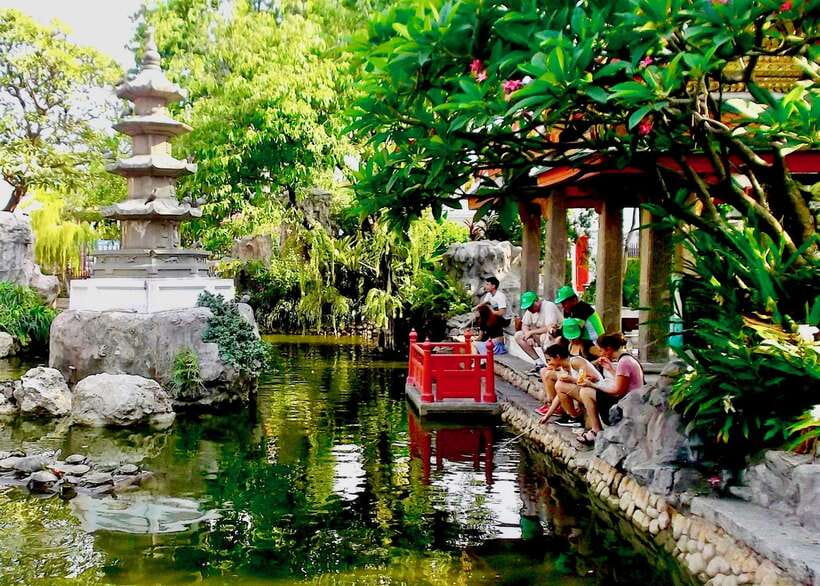
Wat Kalayanamitr Varamahavihara is one of the tour’s quieter stops. Here you can spend time in the temple grounds, feed turtles, and learn about Buddhist customs.
Feeding the turtles gives the visit a simple, memorable focus, especially for families. It also creates a pause after the noise of Chinatown and the flower market. The temple stop is not just about architecture. The guide explains the role of making offerings to Buddha and helps you understand how religious practice fits into Thai life.
You should follow local temple etiquette. Wear clothing suitable for visiting a religious site, and listen when the guide explains where you may go and what you may do. The tour includes entrance fees, which keeps the stop straightforward.
The temple can feel peaceful, but do not expect a long, silent visit. This is a guided cycling tour with several stops, not a dedicated temple study. If you want extended time for meditation, detailed architectural research, or a slow temple photography session, you may find the schedule too active.
Wang Burapha Phirom and the ride back
The route includes a photo stop at Wang Burapha Phirom before continuing through riverside communities. This section helps connect the historic sights with present-day Bangkok.
The return ride follows a riverside cycle path and passes through local neighborhoods away from the main tourist areas. This may be the most useful part of the experience for anyone curious about ordinary city life. You see the rhythm of homes, lanes, and local movement rather than only the places built for sightseeing.
The guide may make unscheduled changes based on the group’s cycling ability or other conditions. That is worth understanding before you book. The tour has a planned route, but Bangkok is not a machine with a fixed timetable. A slower group, rain, or local conditions can shorten one stop and extend another.
The final ferry crossing brings you back toward the starting area. You finish with a view from the river and a cooling breeze, then return to Follow Me Bangkok Tours.
Bikes, weather, and the small practical catches
The tour supplies adult bicycles, children’s bicycles, child carriers, and safety helmets. Helmets are recommended, and I would use one. The route includes city streets, narrow alleys, market areas, and cycle paths, so the helmet is sensible even if you are an experienced cyclist.
The bicycles received one clear criticism: the saddle may not suit everyone, particularly women. This does not mean the tour is poorly equipped, but it is a fair warning. If the fit feels wrong at the start, ask the staff to adjust or change the bicycle before leaving.
Bangkok heat adds another challenge. Wear light, comfortable clothing and shoes suited to cycling and walking. Bring a small backpack, but keep it light. Cold water and a soft drink are provided, which helps, though you should still dress for warm weather.
The tour operates in all weather. Rain does not automatically cancel it, and free rain ponchos are provided. Bangkok rain can be local and short, but wet streets may slow the group. If you dislike cycling in wet conditions, this policy is important to understand before paying.
Intoxication is not allowed. You also need to bring your passport, or a copy of it.
Who should book this Bangkok bike tour?
I would recommend this tour to you if you want to see Bangkok through neighborhoods rather than only major landmarks. It suits visitors who enjoy short cultural stops, local food, markets, temples, and gentle exploration by bicycle.
It is especially good for:
- First-time visitors who want an introduction to old Bangkok
- Couples and small groups looking for a more personal guide
- Families with children who meet the height requirements
- Cyclists who are comfortable with narrow city lanes and changing surfaces
- Anyone interested in Chinese-Thai communities, Buddhist customs, and riverside life
It is less suitable if you cannot ride a bicycle, dislike heat, need a predictable route, or want a long, quiet visit at each temple. It is also not the right choice for someone seeking a serious athletic ride. The tour is about seeing and understanding the city, not covering maximum distance.
The guides receive particularly strong praise. Khun Mem was noted for making the route entertaining and varied, while Ti was described as an excellent guide who explained many parts of the city. Another guide was praised for covering Bangkok’s historical, religious, and everyday sides and answering questions carefully. These details matter because a route through small lanes is only as good as the person leading it.
Is $41 good value?
At $41, the tour offers solid value for a four-hour activity. You receive the bicycle, helmet, guide, drinks, snacks, ferry crossing, and entrance fees. You also avoid the hassle of planning a route through neighborhoods that are not always easy to connect by public transport.
The strongest value comes from the range of experiences packed into the time. You visit Talat Noi, Chinatown, a Chinese shrine, Pak Khlong Talat, a temple, riverside communities, and the ferry. A self-guided visit could cost less, but it would be difficult to reproduce the same route and local explanations without spending time on navigation.
The price does not include hotel pickup or drop-off, so include your own transport costs when planning. Even with that extra expense, the tour is reasonably priced for a small group of no more than eight people.
Should you book it?
Book this tour if you want Bangkok to feel like a living city rather than a collection of famous stops. The combination of Talat Noi, Chinatown, flowers, turtles, temple customs, local lanes, and ferry views gives you a varied half-day with plenty to remember.
Before booking, be honest about your cycling ability and comfort in hot, changing weather. Ask about the bicycle fit at the start, wear practical clothes, and keep your expectations flexible. If you can handle those conditions, this is a well-balanced way to see the less polished and more personal side of Bangkok.
FAQ
How long does the Bangkok bike tour last?
The tour lasts four hours. The exact timing can change depending on the group’s cycling ability and other unforeseen conditions.
Where does the tour start?
It starts at Loftel Station Hostel, 368/1-3 Rama 4 Road, Mahapruettaram, Bangrak, Bangkok 10500. From Hua Lamphong MRT Station, use exit 4 and walk for about two minutes against the traffic.
Is hotel pickup included?
No. Hotel pickup and drop-off are not included, so you must make your own way to the meeting point.
What languages does the guide speak?
The tour is available with a live guide who speaks English and Thai.
How many people are in the group?
The tour is limited to eight participants.
Are bicycles available for children?
Yes. Children’s bicycles are available for children with a minimum height of 120 centimeters. Child carriers are available for children up to 18 kilograms and 115 centimeters tall.
Does the tour run when it rains?
Yes. The tour operates in all weather and is not cancelled because of rain. Free rain ponchos are provided.
What is included in the price?
The price includes an English-speaking Thai guide, adult or children’s bicycles, a child carrier where suitable, safety helmets, cold water, a soft drink, street food snacks, the ferry crossing, and entrance fees.
Just added around Bangkok
- Bangkok City Bike Tour – Hotel-pickup & Lunch★ 5.0 · 27 reviews
- Bamboo Bicycle Tour in twilight: watch dancing Fireflies in Bangkok★ 5.0 · 228 reviews
- Past and Present Bike Tour of Bangkok★ 5.0 · 27 reviews
- Bangkok Green Oasis 4-Hour Bike Tour with Boat Ride★ 5.0 · 46 reviews
- Half-Day Bangkok Bike Tour Including Lunch★ 5.0 · 257 reviews
- Thai Culture and Local Life 4- Hour Bangkok Bike Tour★ 5.0 · 86 reviews
- The Original Bicycle Tour in the Green Jungle of Bangkok★ 5.0 · 106 reviews
- Colors of Ayutthaya Full-Day Bike Tour★ 5.0 · 60 reviews
Hidden Gems Bike Tours, compared.
Top Highlights & Hidden Gems Tour by Cannondale E-Bike
Read our review →
Barcelona 3-hour Bike or E-Bike Tour: Highlights and Hidden Gems
Read our review →
Paris Local Districts and Stories Off the Beaten Track Guided Bike Tour
Read our review →Browse the lists this tour appears in