
REVIEW · BERLIN
Berlin: Private Bike Tour of the Berlin Wall and Third Reich
Berlin’s past is easier to grasp on two wheels. This private bike tour links the Berlin Wall, Nazi-era sites, Holocaust memorials, and Cold War landmarks in about three hours. I like the efficient route and the freedom to adjust it to your group’s interests. I also like that the guide designs each tour rather than following one fixed script.
The main drawback is the brisk pace. You get around far more ground than you would on foot, but most stops last only about 5 to 15 minutes. The tour also requires at least four people, and Checkpoint Charlie is included only on the English-language version.
Key points at a glance
- Covers several eras in one ride: You move from medieval Berlin to Nazi rule, the Holocaust, the Berlin Wall, and present-day government.
- The Wall Memorial is the strongest stop: This is where the border system becomes easier to understand as a physical place, not just a line on a map.
- Private means flexible: Your guide can shape the route around your group’s interests, within the available time.
- Bikes save serious time: A single walking route would take much longer to connect these scattered sites.
- The English tour includes Checkpoint Charlie: This famous Cold War crossing is not part of every language option.
- Plan for changing weather: The tour runs in all conditions, so clothing matters.
Why this Berlin bike tour works
Berlin’s major historical sites are spread across a wide area. The Reichstag sits near the Spree, the Wall memorial is north of the center, Checkpoint Charlie is farther south, and the East Side Gallery is another major Wall site elsewhere in the city. Walking between all of these places would eat up much of your day.
A bike gives you a useful middle ground. You are close enough to see streets, walls, memorials, and surviving structures, but you can cross the city quickly. One review praised this exact advantage, noting that the same route would take about twice as long on foot.
The tour lasts around three hours and is private, so your group does not share the ride with strangers. That matters here because the subject can be complicated. You can pause for clarification, ask about a particular period, or request more attention to Nazi history, the Wall, or Berlin’s Jewish heritage.
The advertised price is $107.42 per person. That is not a budget bike rental, but it includes the bicycle, helmet, professional guide, and private format. I see the value mainly in the route planning and the amount of ground covered. You are paying for a focused history tour with transport between sites, not simply for access to a bicycle.
The 4.9 rating from 23 reviews and the 96 percent recommendation rate suggest a strong record, though the sample is not huge. The clearest praise concerns the guide’s command of the subject and clear English. That is important on a history tour where names, dates, and political terms can blur together.
More Private Cycling Tours in Berlin
- Private Berlin Street Food Tour by Bike
★ 5.0 · 87 reviews - The Beauty of Berlin by Bike: Private Tour
★ 5.0 · 59 reviews - Private Berlin Street Food Bike Tour
★ 4.9 · 42 reviews
Nikolaiviertel and Berlin’s rebuilt old center
The meeting point is Free Berlin Bike Tours & Rental at Poststraße 11, in the central 10178 area. The first stop is Nikolaiviertel, described as Berlin’s only real old town.
Do not expect an untouched medieval quarter. The question here is how old the area really is after Berlin suffered heavy bombing during the Second World War. That makes Nikolaiviertel a useful opening lesson: Berlin’s past is often a mix of original traces, destruction, rebuilding, and later interpretation.
The stop lasts about 10 minutes. That is enough for an introduction, but not enough for a long architectural walk. I like beginning here because it gives you a sense of Berlin before the tour turns toward dictatorship and division.
The New Synagogue and an act of courage
The tour then moves to the New Synagogue, home of the Centrum Judaicum. The stop is brief, about five minutes, but the story carries weight.
You hear about a police officer whose actions helped save the building during Kristallnacht, the November 1938 pogrom often called the Night of Broken Glass. The focus on civil courage offers a human counterpoint to the machinery of Nazi persecution.
This is not a full visit inside the synagogue. You should think of it as a short outdoor explanation that connects the building to Jewish life in Berlin and to the choices individuals made during a violent period.
Deportation and Holocaust memorials
Several Holocaust-related memorials appear along the route. The tour includes a memorial for victims of deportation and discusses memorials for major victim groups of the Holocaust.
The itinerary gives special attention to the Memorial to the Murdered Jews of Europe near Brandenburg Gate. Its large field of concrete slabs is difficult to absorb from a bicycle, so the guide’s explanation matters. You will have about 10 minutes here, enough to walk among the blocks and consider how the open design changes as you move through it.
The description presents it as one of the world’s largest genocide memorials and points to the painful fact that the memorial was created in the country responsible for the killings. That is a useful way to approach the site. You are not simply looking at an object. You are seeing how modern Germany addresses a crime committed by its own state.
The shorter memorial stops may appeal to history-focused visitors who want context beyond the best-known sites. If you prefer long, quiet periods at memorials, this bike tour may feel too quick. I would consider returning to the Holocaust Memorial on your own if you want more time there.
More Private Cycling Tours in Germany
- Berlin : Guided Private Sightseeing Tours with Funbikes, Teambikes
★ 5.0 · 20 reviews - Private Highlights of Berlin Bike Tour
★ 5.0 · 13 reviews - Berlin: Guided Private Bike Tour to Explore the Highlights
★ 5.0 · 12 reviews - Private-Group Bike Tour of Cologne with Guide
★ 5.0 · 20 reviews
The Berlin Wall Memorial, where the border makes sense
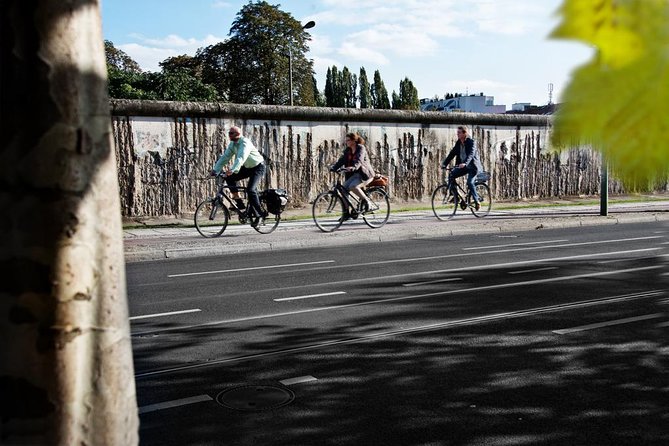
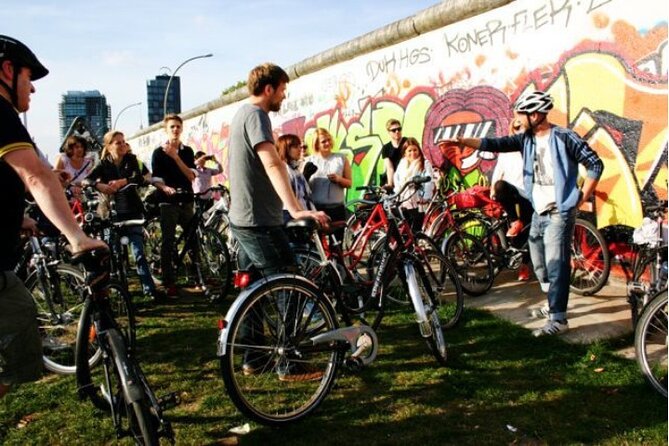
The Berlin Wall Memorial is the emotional center of the ride. The tour calls this one of the few places where the Wall is still alive in the sense that its former layout and effects remain understandable.
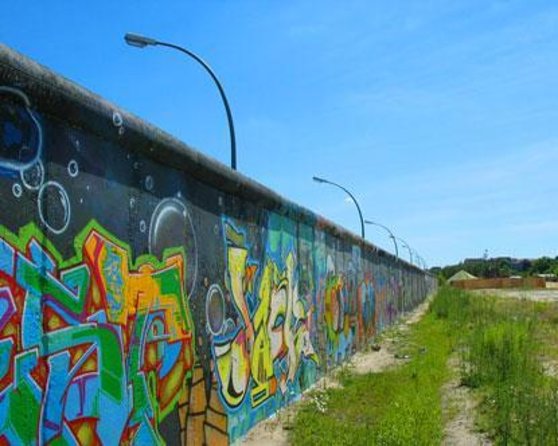
That distinction matters. Many sections of the Wall have been reduced to a strip of concrete or a painted fragment. At the memorial, you get a clearer sense of how the border cut through neighborhoods and controlled movement. The stop lasts about 10 minutes, so listen closely and ask questions while you are there.
The guide presents the Wall through both physical evidence and explanation. You should leave with a better idea of how the border worked, not just how it looked. For many people, this will be more useful than a quick photograph beside an isolated section of concrete.
Mauerpark and the failed perfect border
Mauerpark is now known for its Sunday flea market, but its earlier role was far more severe. The area shows repeated attempts by East Germany’s rulers to create what they considered a perfect border.
The stop is about 10 minutes. It gives the tour a chance to explain how border security changed over time and why simply building a wall was never the end of the story.
This is one of the tour’s better examples of using an ordinary modern place to explain a former political system. On a Sunday, the flea market atmosphere may feel far removed from the border’s old function. That contrast is part of what makes the stop memorable.
Humboldthain Flak Tower and Nazi construction
At Humboldthain, you see a huge flak tower that served as both a fortress and an air-raid shelter. The stop combines a panoramic view with an explanation of Nazi architecture.
The structure is a powerful reminder that Nazi planning was not limited to grand government buildings. Military construction also reshaped the city. The tower’s scale helps you understand the regime’s focus on defense, control, and monumental engineering.
You get about 10 minutes here. The panorama gives your group a chance to look across Berlin while the guide connects what you see to the city’s wartime past. Since this is an outdoor tour, the view will depend on the weather, which makes a clear day especially useful.
Günter Litfin’s memorial tower
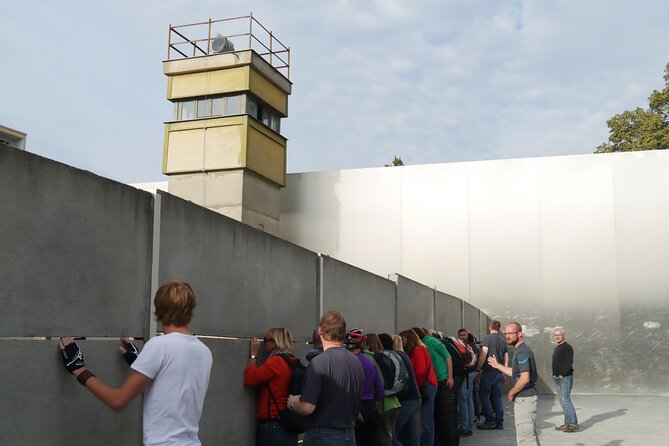
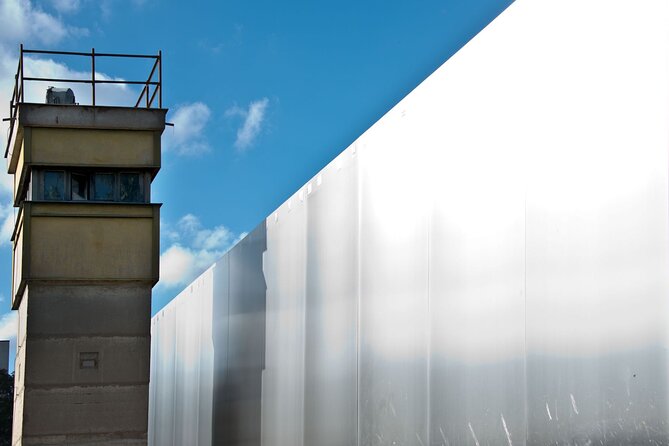
The Günter Litfin Memorial preserves an original watchtower connected to the first person shot at the Berlin Wall. The stop commemorates Günter Litfin and puts a personal name on the Wall’s human cost.
A tower can make the border system feel official and impersonal. A memorial to one person brings the issue back to an individual life. That shift is valuable, especially after the broader explanations at the Wall Memorial and Mauerpark.
The visit lasts around 10 minutes. You will not spend long inside any one location, but the route builds a sequence: border design, surveillance, escape attempts, and death.
Invalidenfriedhof and a divided cemetery
Invalidenfriedhof was created for important figures in German military history. The Berlin Wall later cut through the cemetery, leaving another clear example of how division reached into ordinary spaces and places of remembrance.
The site also invites a more careful look at military memory. Some of the people honored there deserve historical attention without necessarily deserving admiration. That distinction is handled as part of the discussion, and it helps you avoid treating every military monument as an unquestioned tribute.
The stop takes about 10 minutes. You may find it especially worthwhile if you want a broader view of German history beyond the familiar Wall photographs and Nazi landmarks.
Spreebogenpark and Hitler’s Great Hall
At Spreebogenpark, the modern government district opens up in front of you. The Reichstag and surrounding institutions offer a direct view of present-day German democracy, but the guide also uses this location to explain Albert Speer’s plans under Hitler.
Speer envisioned a Great Hall large enough for 180,000 people. That number is hard to picture until you connect it to the open space around the government district. The contrast between today’s democratic institutions and the planned architecture of dictatorship is the point.
This is a strong example of why a bicycle route can add value. You are not only hearing about a proposal in a museum room. You are looking at the area where such plans would have reshaped Berlin.
The Reichstag from outside
The Reichstag stop lasts about five minutes, and you do not go inside. Instead, the guide explains Hitler’s rise to power and Germany’s democratic development while you view the building from outside.
That short time works if you mainly want historical orientation. It will not satisfy anyone hoping to visit the dome or explore the interior. You should arrange a separate visit if entering the Reichstag is a priority.
Still, the building is a useful anchor. Its history connects the end of the German Empire, the Weimar Republic, the Nazi seizure of power, postwar division, and the modern federal government.
The Führerbunker and the empty parking lot
The Führerbunker is one of the tour’s more unusual stops because almost nothing remains to see. The site is now a parking lot.
The guide explains why the bunker was not turned into a shrine or preserved as a major public attraction. That absence is the story. It reflects the difficult balance between documenting Nazi crimes and avoiding a place that could attract dangerous fascination.
The stop lasts about 10 minutes. If you expect dramatic ruins, you may be disappointed. If you want to understand how Berlin handles a site tied to Hitler’s final days and suicide, the explanation makes the otherwise ordinary setting worthwhile.
Checkpoint Charlie and the Cold War flashpoint
Checkpoint Charlie is included on the English-language tour and takes about 10 minutes. It was the best-known crossing point between East and West Berlin, and the site became famous because American and Soviet forces faced each other there during a Cold War confrontation.
The stop works best as a lesson in how a border crossing could become an international crisis point. The location is also one of Berlin’s most recognizable Cold War landmarks, so it gives you a clear final chapter after the earlier Wall sites.
Because it is included only in the English version, confirm the language when booking if Checkpoint Charlie matters to you. German is also available, while Dutch, French, and Spanish may be possible on request, but the stated itinerary specifically reserves this stop for English.
Bikes, helmets, weather, and family needs
The tour provides bicycles and helmets. Children are welcome, and infant seats can be supplied on request. Children must be accompanied by an adult.
You should dress for the forecast, but also prepare for changes. The ride operates in all weather conditions, and there is no hotel pickup or drop-off. You meet at the rental shop and return there when the tour ends.
Several departure times are available during the day. That makes it easier to fit the ride around museum visits or other plans, though you should avoid scheduling a major timed attraction immediately afterward. A three-hour tour can run close to its stated length, especially when questions or route adjustments are involved.
The tour is available in English and German, with other languages possible by request. English appears to be the strongest choice if you want Checkpoint Charlie included.
Who gets the most from the $107.42 price?
I would recommend this tour most strongly to a group of four or more with a serious interest in twentieth-century Berlin. The private format gives you room to ask questions, and the bicycle makes it possible to connect sites that would be tiring to reach on foot.
Families can also benefit, especially if children are old enough to follow a moving outdoor lesson. The bikes add variety, though the subject matter is heavy and the short stops require attention.
The price makes less sense for someone who wants a relaxed sightseeing ride with only a little history. This is a focused tour about dictatorship, war, persecution, division, and democracy. You are paying for a guide-led route through difficult subjects, not for a casual spin around central Berlin.
The strongest value comes from the combination of speed and interpretation. One clear English-speaking guide can help you make sense of places that otherwise might look disconnected: a parking lot, a cemetery, a watchtower, a concrete memorial, and a government building.
Should you book this private Berlin bike tour?
Book it if you want to understand how Berlin’s major historical chapters fit together and you have at least four people in your group. I especially recommend it for first-time visitors who want the Berlin Wall and Third Reich sites in one efficient route.
Skip it if you need long visits at each memorial, want to go inside the Reichstag, or dislike cycling in uncertain weather. You should also choose another plan if your group has fewer than four people.
For the right group, this is a smart use of three hours. The route is fast, the subject matter is serious, and the private format gives you more control than a standard group outing. Its most praised feature is also its practical strength: you cover far more ground by bike, while a clear guide helps turn scattered Berlin sites into one understandable story.
FAQ
How long does the private bike tour last?
The tour lasts approximately three hours.
Where does the tour start?
It starts at Free Berlin Bike Tours & Rental, Poststraße 11, 10178 Berlin, Germany.
Where does the tour end?
The tour ends back at the meeting point.
Is the tour private?
Yes. Only your group participates in the activity.
How many people are required to operate the tour?
The tour operates for a minimum of four people.
Which languages are available?
The tour is offered in English and German. Dutch, French, and Spanish may also be possible on request.
Is Checkpoint Charlie included on every version?
No. Checkpoint Charlie is included only on the English-language version of the tour.
Are bicycles and helmets provided?
Yes. The tour includes use of a bicycle and helmet.
Can children join the tour?
Yes. Children are welcome, but they must be accompanied by an adult. Infant seats can be provided on request.
Just added around Berlin
- Berlin Wall and Cold War Bike Tour in Small Groups★ 5.0 · 114 reviews
- Berlin: Guided Private Bike Tour to Explore the Highlights★ 5.0 · 12 reviews
- Berlin : The best bike tour with a Berlin guide and insider tips★ 5.0 · 14 reviews
- Alternative Berlin Bike Tour – Off the Beaten Tracks in Small Groups★ 5.0 · 99 reviews
- Berlin: Guided Bike tour of the Berlin Wall and Third Reich★ 5.0 · 160 reviews
- Berlin : Guided Private Sightseeing Tours with Funbikes, Teambikes★ 5.0 · 20 reviews
- Potsdam Bike Tour with Rail Transport from Berlin★ 4.5 · 81 reviews
- Small-Group Berlin Wall Bike Tour★ 5.0 · 17 reviews
Private Cycling Tours, compared.
Private Self-Guided E-Bike Ride in Tuscany with Vineyard Visit
Read our review →
Bilbao: Guided Highlights Small Group or Private E-Bike Tour
Read our review →
Florence Vintage Bike Tour–guided, small group or private option
Read our review →
Bike Tour Copenhagen. Private Guide, Concierge Service, Small Grp
Read our review →
Prague Bike City Tour with Small Group or Private Option
Read our review →
Browse the lists this tour appears in