
REVIEW · CAPE TOWN
Cape Town City and Woodstock Bicycle Tour
See Cape Town beyond the postcard. This three-hour bicycle tour links street art, painful history, and major city sights in one compact ride from Woodstock into central Cape Town. I like the route’s mix of places, especially the Old Biscuit Mill and District Six, and I like that bike hire and an entrance fee are included. The main consideration is that the exact route can change with your host, and some city-center streets may feel busy on two wheels.
This is a good choice when your time is short but your curiosity is broad. Guides Terrence and Sipho receive special praise for their warmth, local insight, and passion for art. At $54.83 per person, the price is reasonable if you value a small group, a guide, and the chance to cover more ground than you could on foot.
Key points to know before you ride
- The tour begins in Woodstock: Meet at Shop 5 in Salt Circle Arcade, 374 Albert Road.
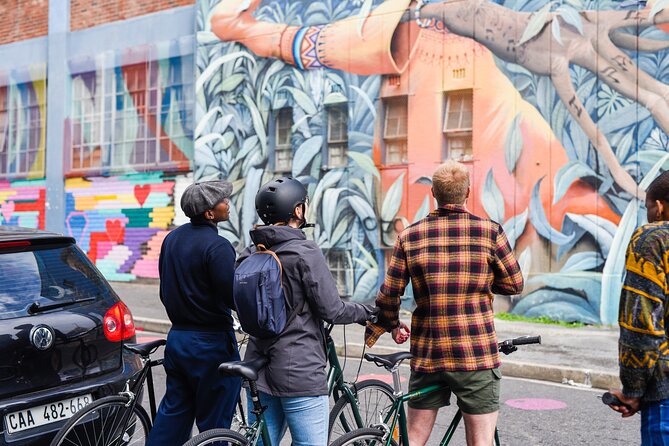
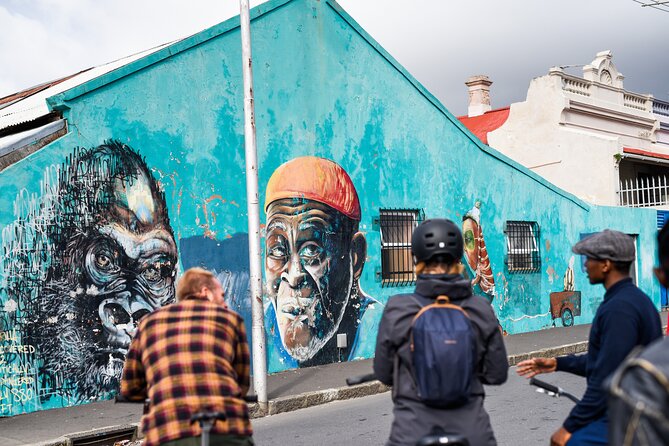
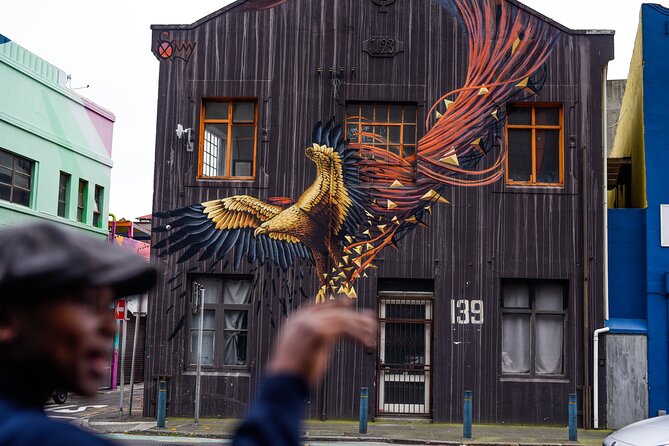
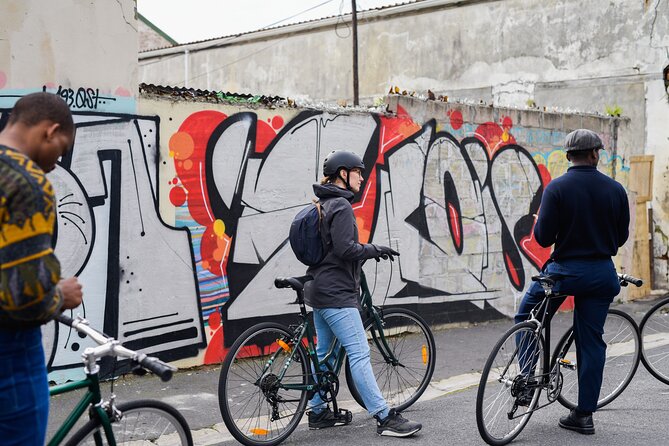
- Street art is a major theme: The Old Biscuit Mill and Woodstock add a creative side of Cape Town that standard sightseeing can miss.
- History comes with real weight: District Six, the Grand Parade, the Old Town Hall, and the Castle of Good Hope connect the ride to apartheid, colonial rule, slavery, and Nelson Mandela.
- You cover a lot in three hours: Company’s Garden, Greenmarket Square, St George’s Mall, Long Street, and Bo-Kaap may all feature along the way.
- The group is capped at 15 people: That gives the guide room to answer questions and keep the ride more personal.
- Weather matters: You can cancel free up to 24 hours ahead, but poor weather may also cause the operator to reschedule or refund the tour.
Why a bicycle is the right way to see central Cape Town
Cape Town’s central sights are spread across several neighborhoods. On foot, you can explore them well, but a three-hour walk would force you to cut out Woodstock, or move quickly between the city’s older quarters.
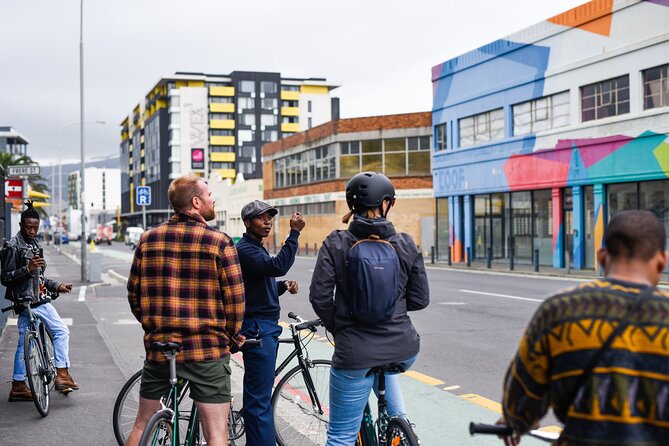
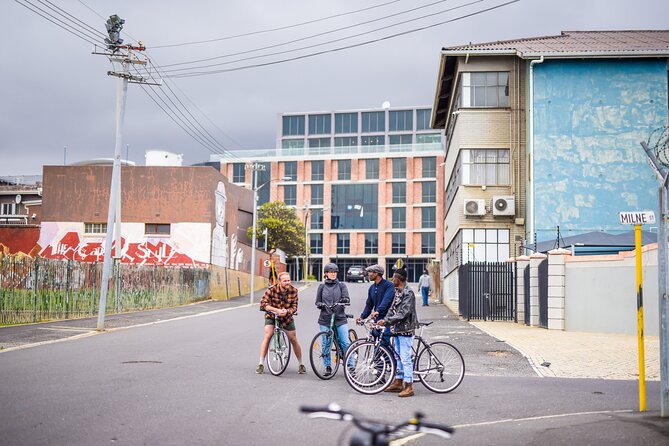
A bicycle changes the pace. You can stop for a mural, cross from the former industrial district of Woodstock toward District Six, then continue into the city center without spending much time in a vehicle. You also get a better sense of how the neighborhoods connect.
I especially like the art-and-history focus. This is not simply a ride past buildings with a list of dates. The route gives you a chance to see how Cape Town’s present-day creative culture sits beside places shaped by forced removals, slavery, colonial settlement, and political change.
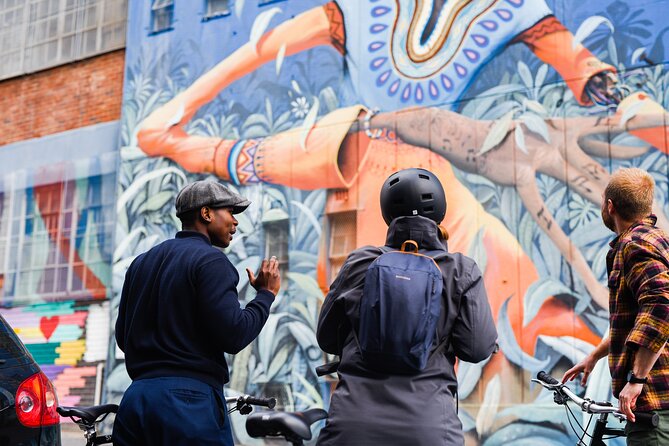
The group limit of 15 is useful here. A large cycling group can become a traffic problem, while a small group makes it easier to hear the guide and ask about a mural or landmark. The strongest feedback points to Terrence and Sipho as guides who bring both warmth and enthusiasm, with Terrence receiving particular praise for his passion for street art and local stories.
A few more days on two wheels around Cape Town worth a look
- Cape Town City Cycling Tour
★ 5.0 · 199 reviews - Cape Town: Guided Bike Tour
★ 4.9 · 193 reviews - Cape Town: E-Bike City Tour
★ 4.8 · 76 reviews
Starting at Salt Circle Arcade in Woodstock
The meeting point is Shop 5 at Salt Circle Arcade, at 374 Albert Road in Woodstock. This is more than a neutral starting point. Woodstock itself helps set the tone for the tour, since the suburb is known for its mix of older urban fabric, creative spaces, and street art.
The use of a meeting point in a converted or repurposed commercial setting fits the tour’s focus on Cape Town’s changing neighborhoods. You begin away from the most polished tourist areas, then ride toward the historic center.
Your bicycle is included, so you do not need to arrange a rental separately. The tour also includes an entrance fee, though the supplied information does not identify every possible attraction you might enter. Additional purchases and costs are not included, so you should budget separately for food, drinks, or shopping.
Old Biscuit Mill: food, shops, and public art
The Old Biscuit Mill is one of the most appealing early stops. A former biscuit factory, it now houses shops, restaurants, boutiques, and arts spaces. Its walls are decorated with work by local and international artists, making it a natural place for a guide who pays close attention to street art.
The setting also shows how old industrial buildings can gain a second life. You are not just looking at a row of stores. You are seeing a former working site become a meeting place for food, design, and small businesses.
If your tour runs on a weekend, the Neighbourgoods Market may add another layer to the visit. The information provided identifies the market as a weekend feature, but it does not guarantee that the tour stops for browsing or that every departure operates on a market day.
That distinction matters. You should treat the Old Biscuit Mill as a cultural and visual stop, not plan the entire outing around shopping or lunch there.
District Six and the cost of forced removal
District Six is the emotional center of the route. The District Six Museum was founded in 1994 to honor residents who were removed from their homes after the South African government declared the area for white occupation.
About 60,000 nonwhite residents were relocated in the mid-1960s to a township far from the city. Their former neighborhood was then destroyed. The result was not just a change of address. Families lost homes, businesses, schools, places of worship, and the daily connections that made the district a community.
A bicycle ride cannot explain every part of that story in a few minutes, but it can place you directly in the part of Cape Town where the damage occurred. That physical connection gives the history more force than a detached list of dates.
The entrance fee is included, which may help if the museum is part of your host’s selected route. Still, the route can vary, so confirm what you will enter if the museum is a priority for you.
Same roads, a different day in the saddle:
- Cape Town: Guided eBike Tour with Signal Hill and Clifton …
★ 4.9 · 71 reviews - Cape Town: E-Bike Cape Peninsula Tour
★ 4.7 · 54 reviews - Bicycle Township Tour in Cape Town
★ 5.0 · 43 reviews - Cape Town’s Finest City Bike Tour
★ 5.0 · 43 reviews
Grand Parade and the road to democracy
The Grand Parade carries several layers of Cape Town’s past. The Dutch built their first fort here in 1652. The square was later tied to the slave trade and punishment, and it became a gathering place for major public events.
It is also linked to Nelson Mandela’s first address to the nation after his release from prison. He spoke from the balcony of the Old Town Hall after 27 years behind bars. That moment gives the square a clear place in the country’s transition toward democracy.
Today, the area also serves practical city purposes, including a market and parking. Do not expect a preserved historic plaza untouched by modern life. The contrast is part of the point: Cape Town’s most important public spaces remain working parts of the city.
Bo-Kaap, color with a serious story
Bo-Kaap is easy to recognize by its brightly painted homes and lively streets on the slopes of Signal Hill. Yet the color is only the surface of a neighborhood with deep cultural importance.
The area was one of the first settlements of freed slaves and Muslim immigrants in South Africa. Its cultural influences include Malaysian, Indian, Sri Lankan, and African communities. That mix is central to the identity of the neighborhood.
A bicycle visit lets you see Bo-Kaap as a lived-in community rather than a quick photo stop. You should remember that this is a residential area, so keep the group moving as directed and treat the streets and houses with respect.
The route may not allow an extended visit. The experience is designed to connect several districts in about three hours, not to provide a full neighborhood walk or a dedicated food tour.
Company’s Garden and Greenmarket Square
Company’s Garden offers a change of pace. When the Dutch East India Company arrived in 1652, one of its first projects was a garden to supply food for the settlement. The garden still exists as a public park in the middle of the city.
Its importance comes from that long connection between food, colonial expansion, and urban life. Today, you can see it as a green public space used by both local people and visitors, while still remembering why it was first planted.
Greenmarket Square brings you back into a more active public setting. The cobblestone square was first connected to a slave market and later used for produce. Today, vendors sell painted fabrics, jewelry, and other handmade goods, while performers provide music and dance.
The modern market can be appealing, but prices and quality vary. If you shop, compare items and ask about cost before buying. The tour gives you a look at the square, but it does not include purchases.
St George’s Mall and Long Street

St George’s Mall was once a congested city street. It is now a pedestrian area filled with buskers, dancers, drummers, street artists, coffee shops, and restaurants.
This is one of the places where a bicycle may be less useful than it is in Woodstock. You may need to slow down, dismount, or follow the guide closely around pedestrians. That is not a flaw in the route, but it does mean the ride includes periods of careful urban maneuvering rather than open cycling.
Long Street has a major place in Cape Town’s culture and city life. It runs from the convention center area through the central business district toward Kloof Street and draws both local and international visitors.
Together, these streets show Cape Town as a working city, not only a collection of monuments. You see cafés, entertainment, vendors, and everyday movement alongside historic buildings.
The Old Town Hall and Castle of Good Hope
The Old Town Hall is an Edwardian building dating from 1905. Its balcony is remembered as the place where Mandela gave his first public speech after leaving prison in February 1990.
The building is especially meaningful when paired with the Grand Parade. One is the public square, the other the balcony above it. The connection helps you understand how a single speech became a citywide and national event.
The Castle of Good Hope offers a different view of the city’s past. Built in the 17th century, it is a bastion fort created during the Dutch period. Land reclamation changed its surroundings, so the fort now sits inland even though it was originally near the shoreline.
The Castle was declared a historical monument in 1936. Its inclusion adds military and colonial history to a route that already covers social change and public life.
The supplied route also refers to possible additional stops chosen by the host. That means you should not assume every departure visits every named site. If the Castle, District Six Museum, or another landmark is essential to you, ask for confirmation before booking.
Price, group size, and what you receive
At $54.83 per person, this is not the cheapest way to see Cape Town, but it offers fair value for a guided three-hour outing. Your fee includes bicycle use and an entrance fee, and the group can reach a wider area than a walking tour in the same time.
The value depends on what you want from a city tour. If you prefer to stop for long museum visits, shop at the Old Biscuit Mill, or spend an hour in Bo-Kaap, the schedule may feel too tight. If you want a clear introduction to several neighborhoods, the compact format works well.
The maximum group size is 15. That is small enough for questions and local stories, though not a private tour. The strongest praise is directed at the guides, particularly Terrence and Sipho. Their personal interest in art and history appears to be one of the main reasons the ride feels more meaningful than a basic sightseeing circuit.
The experience is booked an average of 19 days ahead. That suggests you should reserve early if your Cape Town schedule is fixed, especially if you want a particular date.
Practical details before you book
Confirmation arrives at booking, and the meeting point is near public transportation. The tour ends back where it begins, at Salt Circle Arcade.
Most people can participate, but you should be comfortable riding a bicycle for roughly three hours, with stops and city streets along the way. The provided information does not give details about bike types, helmets, hills, or specific riding requirements, so ask the operator if any of those points matter to you.
The tour requires good weather. You can cancel for a full refund up to 24 hours before the start time. If the operator cancels because of poor weather, you will be offered another date or a full refund. Changes or cancellations made within 24 hours are not accepted for a refund.
Should you book the Cape Town city and Woodstock bike tour?
Book it if you want an active introduction to Cape Town that joins street art with serious history. It suits first-time visitors, people with limited time, and anyone who prefers seeing several neighborhoods rather than spending a full morning in one museum.
I would also choose it if you want local interpretation. Terrence and Sipho are praised for being friendly, patient, and passionate, which matters when the route moves from colorful Bo-Kaap to the difficult history of District Six.
Think twice if you dislike cycling in city traffic, need a slow pace, or have one specific attraction you must visit. The route can change, and three hours is enough for an overview, not a full exploration of every stop.
For most active visitors, the combination of included bike hire, small-group attention, art, and major historical sites makes the $54.83 price worthwhile. It gives you a useful first look at Cape Town, then leaves you with a list of places worth returning to on your own.
FAQ
Where does the Cape Town bicycle tour begin?
The tour begins at Shop 5 in Salt Circle Arcade, 374 Albert Road, Woodstock, Cape Town, 7925, South Africa.
Where does the tour end?
The activity ends back at the meeting point in Salt Circle Arcade.
How long does the bicycle tour last?
The tour lasts approximately three hours.
Is bicycle rental included?
Yes. Use of a bicycle is included in the tour price.
What is the maximum group size?
The tour has a maximum of 15 participants.
Can I cancel for a full refund?
Yes. You can cancel at least 24 hours before the local start time for a full refund. If poor weather causes the operator to cancel, you will be offered a different date or a full refund.
Just added around Cape Town
- Bicycle Township Tour in Cape Town★ 5.0 · 43 reviews
- Cape Town’s Finest City Bike Tour★ 5.0 · 43 reviews
- Private Cycling Tour of The Cape Peninsula from Cape Town★ 5.0 · 14 reviews
- Mountain Biking Table Mountain to Constantia Morning Ride★ 5.0 · 17 reviews
- Half-Day Winelands E-Bike Tour with Wine Tasting★ 4.2 · 13 reviews
- Cape Town: Cultural Cycling Tour★ 4.8 · 19 reviews
- Cape Town: Peninsula Road Bike Tour★ 5.0 · 23 reviews
- Cape Town: Half-Day e-Bike City Tour★ 4.4 · 35 reviews
Cape Town Cycling Tours, compared.



Guided eBike Tour with Signal Hill and Clifton …
Read our review →


Browse the lists this tour appears in