
REVIEW · CHIANG MAI
Chiang Mai: Historic Old City Bike Tour – Morning or Night
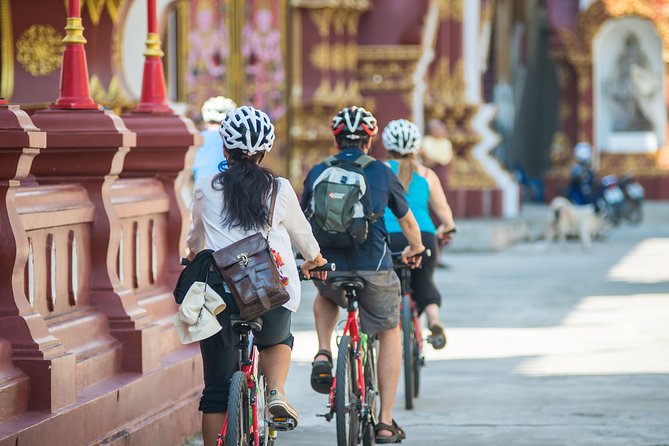
See Chiang Mai at street level. This four-hour cycling tour gives you a lively introduction to the Old City, linking major temples and monuments with quiet lanes, local markets, and small food stops. I especially like the mostly flat route and the chance to see parts of Chiang Mai that are easy to miss on foot. The included water, snacks, helmet, and temple donation also make the $39 price feel fair.
The main thing to consider is the pace. You will cover roughly 12 to 14 kilometers, but the ride is broken up by many stops, so this is more of a sightseeing tour on bicycles than a long cycling outing. Group size can also affect the experience, with a maximum of 20 people and some departures forming groups of around 10.
Key points at a glance
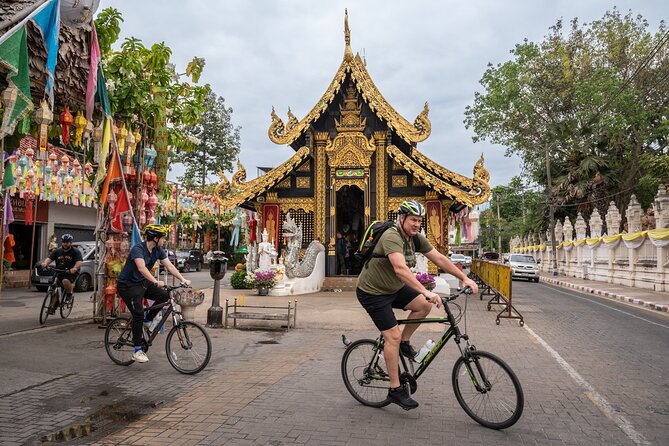
- Quiet lanes over busy roads: Much of the route uses back streets, alleys, and calmer roads rather than keeping you on main traffic routes.
- A useful first-day activity: The route helps you get your bearings around Chiang Mai’s Old City before exploring independently.
- Temples plus everyday life: You see major religious sites, historic monuments, markets, neighborhood streets, and local food.
- Morning or night market stop: Morning departures visit a produce market, while night departures include a market with street food.
- Friendly local guides: Guides such as Kitty, Farm, James, Gun, Boy, Nene, and Aei are praised for clear explanations, patience, safety, and good local suggestions.
- Easy riding, but not a private tour: The route is generally flat and relaxed, though larger groups can mean waiting at turns and shorter stop times.
Why a bicycle works so well in Chiang Mai’s Old City
Chiang Mai’s historic center is compact, but walking between all the important places takes time. A bicycle lets you move from Tha Phae Gate to temple courtyards, old squares, markets, and back lanes without spending the day on foot.
The best part is not simply speed. A bicycle gives you a closer look at daily life. You can pedal through narrow lanes, pass homes and small businesses, and notice food cooking nearby. Several guides also use quieter streets to reduce time around traffic, which makes the ride feel calmer than you might expect in a city center.
This is not a demanding cycling trip. The route is described as flat, and the bikes are quality mountain bikes with helmets. Several people found the bikes easy to use and the pace comfortable. Still, you should be happy sitting on a bicycle for several hours, even though the frequent stops make the ride less strenuous.
I would book this early in your stay. It gives you a basic map of the Old City and shows you where several key sights sit in relation to one another. Afterward, it is easier to return to a temple, market, café, or massage shop on your own.
More Night Bike Tours in Thailand
- Chiang Mai: Historic Old City Bike Tour – Morning or Night
★ 4.7 · 263 reviews - Chiang Mai: Private Historic Old City Bike Tour – Night
★ 4.7 · 143 reviews - Chiang Mai Night Bike Tour
★ 5.0 · 69 reviews
Starting near Chang Puak Gate
The tour begins at the Discova Day Tour Shop on Wiang Kaew Road, near Chang Puak Gate, the Old City’s north gate. Arrive ready to ride, since the opening period is used for meeting the guide, preparing the bicycles, and getting the group moving.
The guide provides the bike, helmet, drinking water, and light snacks. Accidental insurance, taxes, fees, and a temple donation allowance are also included. You will need to provide passport details for all participants when booking, and children must be accompanied by an adult.
Child seats are available on request, but they are limited to children weighing up to 14 kilograms. That makes the tour workable for some younger families, though the seating limit is worth checking before you pay.
The tour ends back at the same shop. That is useful because you do not need to arrange a ride from a different part of Chiang Mai after four hours in the heat.
Tha Phae Gate and the Old City walls
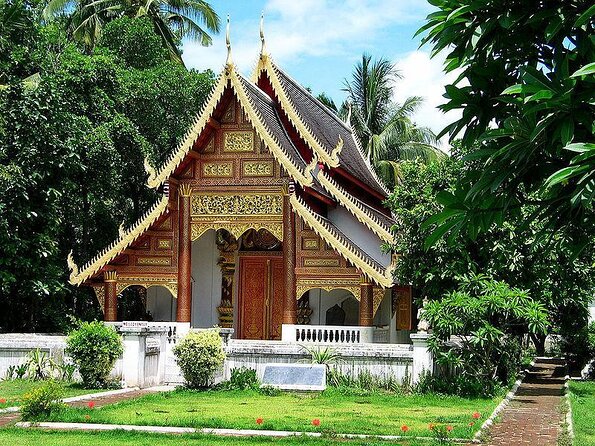
The first major stop is Tha Phae Gate, one of Chiang Mai’s best-known historic entrances. It once served as a main trading gateway into the city, and it remains a good place to begin understanding the Old City’s layout.
The stop lasts about 30 minutes, giving you time to hear the background and take photographs. You also get an early sense of the tour’s rhythm: ride, stop, listen, look around, then continue through a different kind of street.
Tha Phae Gate is a familiar Chiang Mai sight, but seeing it as part of the old city plan adds useful context. Instead of treating it as an isolated photo stop, the guide connects it with the former trading life of the city and the surrounding historic center.
Wat Chedi Luang and the city’s spiritual center
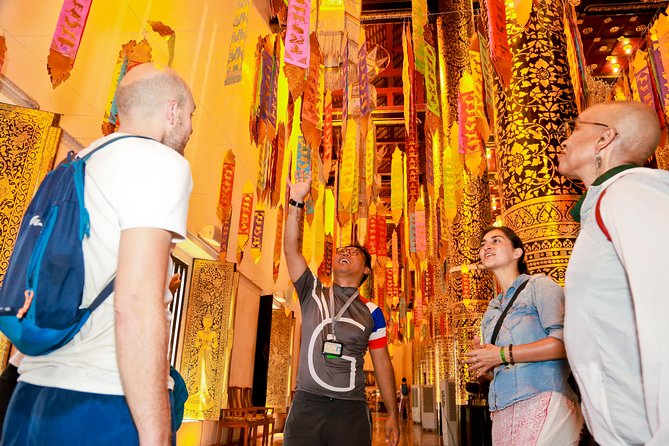
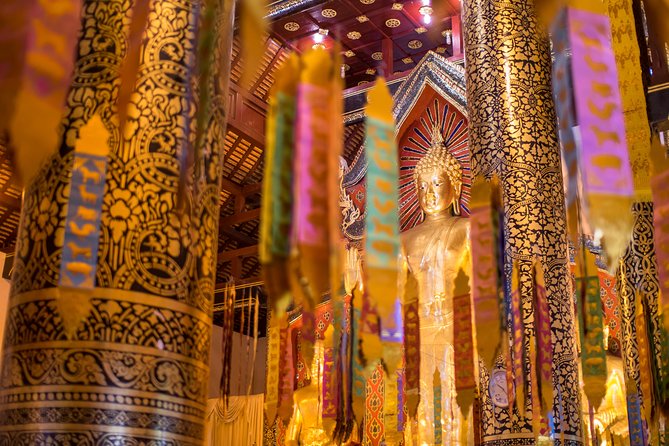
The ride continues to Wat Chedi Luang Varavihara, one of the most impressive temple sites in Chiang Mai. Its huge ruined chedi gives the stop real visual weight, even before the guide explains its place in the city’s past.
You also hear about the ancient City Pillar, a sacred marker linked to Chiang Mai’s foundation and protection. The temple stop is not just a quick look at decorated buildings. Guides explain Buddhist customs, local beliefs, and the meaning behind what you are seeing.
The route includes several religious sites, so anyone hoping mainly for neighborhoods and markets should know the emphasis is strongly historical and temple-focused. One participant felt that roughly 90 percent of the tour centered on temples. That is not a problem if you want an introduction to Chiang Mai’s major religious places, but it may feel less varied if you have already booked a separate temple tour.
More Night Bike Tours in Chiang Mai:
- Rome by Night – Ebike Small Group Tour – Food and Wine (Option)
★ 5.0 · 1,275 reviews - Rome by Night: E-bike Small Group Tour -Food & Wine (Option)
★ 4.9 · 1,233 reviews - Paris Evening Snapshot Bike Tour
★ 4.5 · 819 reviews - Bangkok: Night Bike Tour with Temples & Flower Market Visit
★ 4.8 · 751 reviews
Wat Inthakhin and the Three Kings Monument
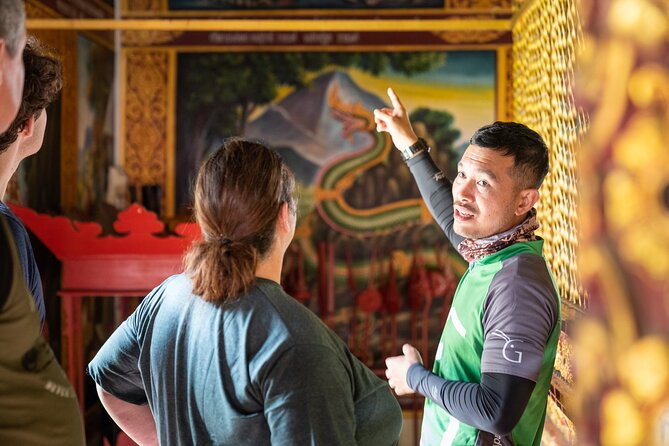
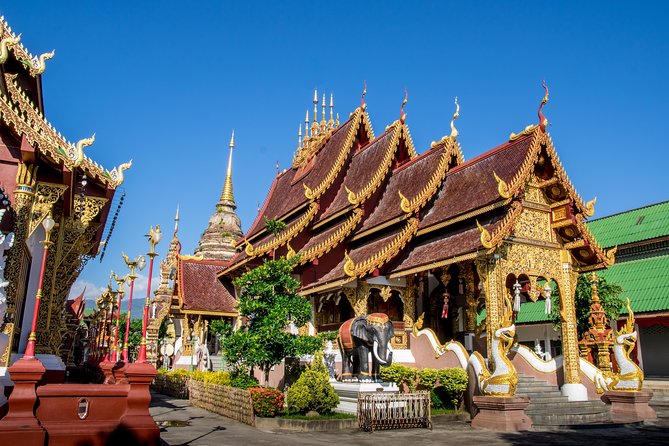
Wat Inthakhin Sadue Muang is sometimes called the City Navel Temple. The site marks the symbolic center of the old kingdom, giving the guide another opportunity to explain how Chiang Mai was organized and why certain locations mattered.
The next stop is the Three Kings Monument, set in a historic square. It is one of the city’s central public landmarks and a helpful place to connect local history with the modern street plan.
These stops are valuable because the guide supplies the meaning that a quick independent visit may lack. Without background, a monument or small temple can look like another stop on a long list. With a good guide, you begin to understand why it is there and how it fits into Chiang Mai’s story.
The quality of this part depends heavily on your guide. Names praised for clear English, humor, and useful explanations include Kitty, Farm, James, Gun, Boy, Nene, and Aei. James was also praised for taking care around traffic, while Farm was noted for staying patient with families and helping with suggestions for lunch and massage afterward.
The market stop brings the city down to earth
The market is the most important change of pace. Morning departures visit a fresh market with produce, while night departures use a market with street food and a livelier evening atmosphere.
Your guide helps you try simple local snacks, fruit, and other market items. Past examples include fresh fruit, coconut, smoothies, and local foods selected at the market. Water and light snacks are included, so you are not left to manage the heat and exertion with an empty stomach.
This is where the tour feels most connected to everyday Chiang Mai. Temples tell you about belief and power. The market shows what people eat, sell, and buy today.
The one limitation is time. The market stop is scheduled for about an hour, but some people wished they could stay longer to ask about fruits, spices, and vegetables or buy items to take away. If food is your main interest, a dedicated food tour will give you more time and a wider range of tastings. If you want a short introduction alongside temples and monuments, the market fits well.
What the cycling itself feels like
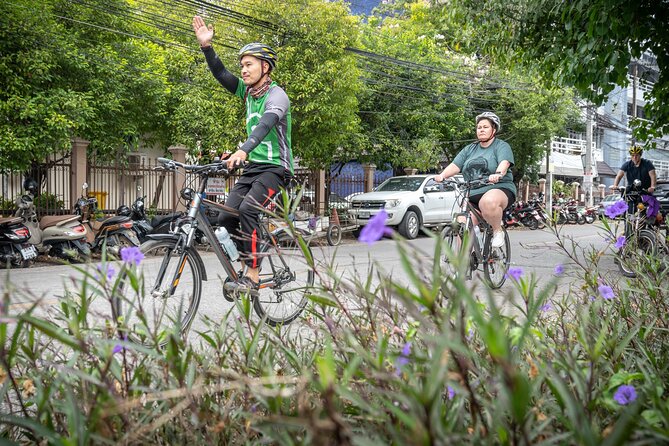
The tour covers about 7.5 miles, or roughly 12 kilometers, at a relaxed pace. The route is generally flat, and the bicycle sections use quieter lanes whenever possible. That makes the outing accessible to most people who can comfortably ride a bicycle.
Do not expect four uninterrupted hours of pedaling. The route is stop-and-start, with time at temples, monuments, markets, and refreshment stops. One person found the cycling sections shorter than expected and wished the route crossed more of the city. Another enjoyed the slower rhythm because it allowed time for explanations and photographs.
The quiet lanes are the strongest part of the route. You see a side of the Old City that is easy to miss from a car or tuk-tuk, and you avoid spending the whole tour beside traffic. A few sections may feel more adventurous, with one account mentioning a short off-road stretch beside a canal, but the main character of the ride is relaxed sightseeing.
Guides also take photographs and videos on some departures. Tom was especially praised for sharing many photos and videos at the end over coffee. This is not guaranteed as a formal feature, but it shows how some guides add a personal touch beyond the scheduled stops.
Group size, guides, and the human side of the tour
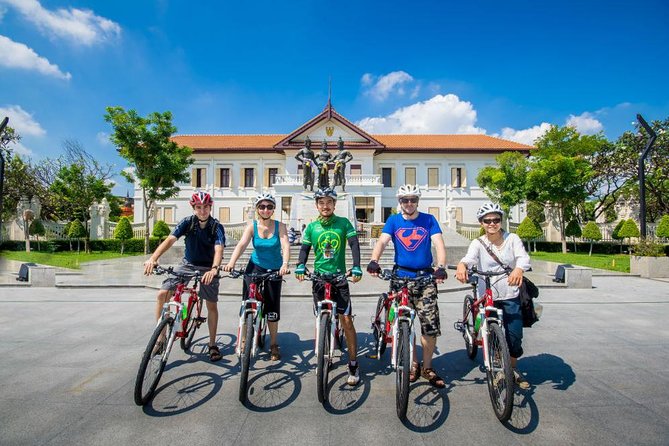
The advertised maximum is 20 people, while the experience is described as a relaxed small-group tour. In practice, group size can vary. A group of three or five will feel much more personal than a group of 10 or more.
That distinction matters on a bicycle. A small group can move smoothly through turns, spend longer at a market, and ask more questions. A larger group may need to wait when someone misses a turn, especially if the route splits between guides.
The guides are a major strength. Kitty is praised for her explanations of Chiang Mai’s past and Buddhism. Farm is described as warm, patient, and good with families. James, sometimes called 007, is praised for clear English, historical knowledge, and safe riding. Gun is noted for humor and useful explanations, while Nene and Aei are both remembered for friendly service and market help.
Guide quality can vary from one departure to another, but the repeated pattern is clear: the best guides make this tour much more than a route between temples. They explain what you are looking at, help you try food, watch the group carefully, and suggest places to eat or relax after the ride.
Is $39 a good value?
At $39 per person, the tour is reasonably priced for a four-hour guided outing. You receive a mountain bike, helmet, guide, water, snacks, temple donation allowance, insurance, and a route covering several major sights.
The value is strongest if you are new to Chiang Mai. You are paying for local interpretation and route planning, not only bicycle rental. A rental bike alone would not give you the same context at Wat Chedi Luang, Wat Inthakhin, or the Three Kings Monument, and you might miss the back lanes and market connections.
The price is less compelling if you have already visited the main temples or want a serious cycling workout. The frequent stops mean you are paying for a cultural tour with bicycles, not a long-distance ride.
Group discounts may be available, which could help families or friends booking together. Gratuities are optional and personal expenses are not included.
Who should book this Chiang Mai bike tour?
I would recommend it to first-time visitors who want a friendly orientation to the Old City. It suits couples, families with older children, and groups of friends who like history but do not want to spend half a day walking between sights.
It is also a good match for visitors who enjoy local food but want only a small taste rather than a full food program. The market stop, fresh fruit, coconut, smoothies, and snacks add variety without taking over the day.
Families should feel encouraged by the reports of patient guides and safe riding, but remember that children need adult supervision. Check the child-seat limit if you need one.
I would be more cautious if you want a private experience, a long uninterrupted ride, or extensive market time. In that case, ask about a private booking or choose a dedicated cycling or food tour instead. Larger groups may feel stop-and-start, and the advertised temple route may not include every site on every departure.
The morning option is best if you want a produce market and cooler riding conditions. The night option makes sense if street food and an evening market sound more appealing. Your exact stops can vary, so confirm the departure details when booking.
Final verdict: an easygoing first look at Chiang Mai
Book this tour if you want to see the Old City’s main temples, learn the basic story of Chiang Mai, sample local food, and ride through quieter streets without planning the route yourself.
Skip it if you have already covered the temples or want a market-focused experience. The best reason to choose it is the combination of bicycle access, local explanation, and small everyday details: a coconut at the market, a quiet lane, a canal-side stretch, or a guide pointing out a good place for lunch afterward.
For most first-time visitors, especially on the first or second day, it offers a useful map of Chiang Mai and a pleasant way to get oriented without working too hard.
FAQ
How long does the Chiang Mai Old City bike tour last?
The tour lasts approximately four hours, including cycling, temple and monument visits, the market stop, and refreshment breaks.
How far do you cycle?
The route covers approximately 12 to 14 kilometers, or about 7.5 miles, at a relaxed pace.
Where does the tour begin and end?
It begins and ends at the Discova Day Tour Shop at 10/3 Wiang Kaew Road, near Chang Puak Gate in Chiang Mai’s Old City.
Are bicycles and helmets included?
Yes. A quality mountain bike and safety helmet are included, along with drinking water and light snacks.
Is the tour suitable for children?
Most people can participate, but children must be accompanied by an adult. Child seats are available on request for children weighing up to 14 kilograms.
What is included in the price?
The $39 price includes the English-speaking guide, bicycle, helmet, water, light snacks, temple donation allowance, accidental insurance, taxes, fees, and handling charges. Personal expenses and optional gratuities are not included.
Just added around Chiang Mai
- Sticky Waterfall Cycling Tour★ 5.0 · 68 reviews
- Buffalo Soldier Trail Mountain Biking Tour from Chiang Mai with Lunch★ 5.0 · 15 reviews
- Stairway to Heaven Trail Mountain Biking Tour Chiang Mai★ 5.0 · 12 reviews
- Smoke on the Water Trail Mountain Biking Tour Chiang Mai★ 5.0 · 47 reviews
- Full-day E-bike Countryside and Nam Phrae (flat-hilly, GUIDED)★ 5.0 · 11 reviews
- LIFECYCLING – Half Day City Bike Tour★ 5.0 · 68 reviews
- Half-day E-bike Nam Phrae (hilly, fully paved roads, GUIDED)★ 5.0 · 122 reviews
- Full-Day Hike and Bike Tour from Chiang Mai★ 5.0 · 14 reviews
Night Bike Tours, compared.

Rome by Night – Ebike Small Group Tour – Food and Wine (Option)
Read our review →
Rome by Night: E-bike Small Group Tour -Food & Wine (Option)
Read our review →
Night Bike Tour with Temples & Flower Market Visit
Read our review →
Washington DC Sites at Night Guided Bicycle Tour
Read our review →
Browse the lists this tour appears in