
REVIEW · BERLIN
Berlin (E)Bike Tour Historical Highlights in Small groups
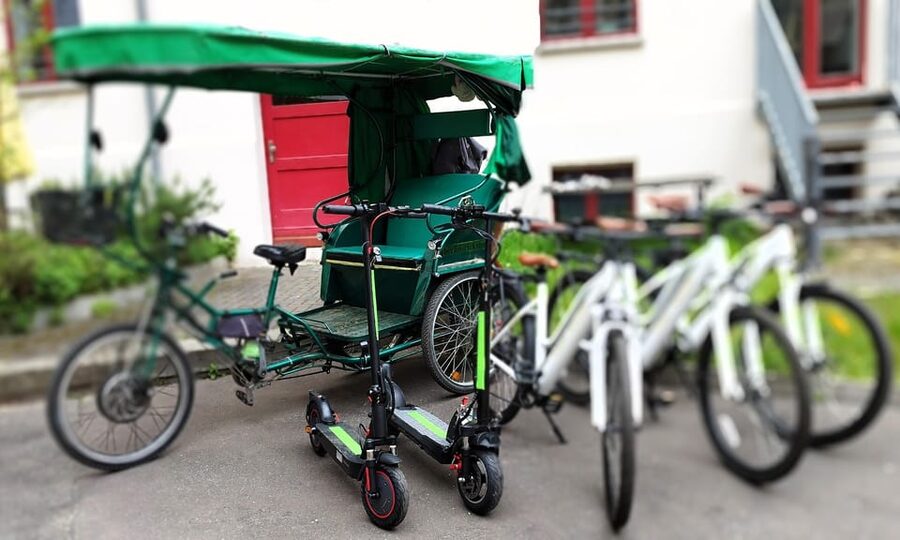
Berlin is easiest when you keep moving. This 3.5-hour small-group e-bike tour links Berlin Mitte’s major historical sights without making you march between them, and the rickshaw option lets bikers and non-bikers tour together. I like the unusually broad route, from Museum Island to Checkpoint Charlie and the Reichstag, and I like the thoughtful transport choice for grandparents, children, or anyone with limited mobility. The main concern is that the equipment and organization may not always be as smooth as the guiding.
The tour costs $82 per person and is limited to six people. That is not a bargain-basement price, but it can be good value if you want a guide, bikes, bottled water, photography help, and a quick overview of central Berlin in one outing. The route covers a lot of ground, so expect photo stops and short explanations rather than long visits inside museums or memorial sites.
Quick reasons to consider this Berlin tour
- One route, many major sights: In 210 minutes, you pass the TV Tower, Museum Island, Unter den Linden, Brandenburg Gate, the Reichstag, the Berlin Wall, and several Nazi and Cold War sites.
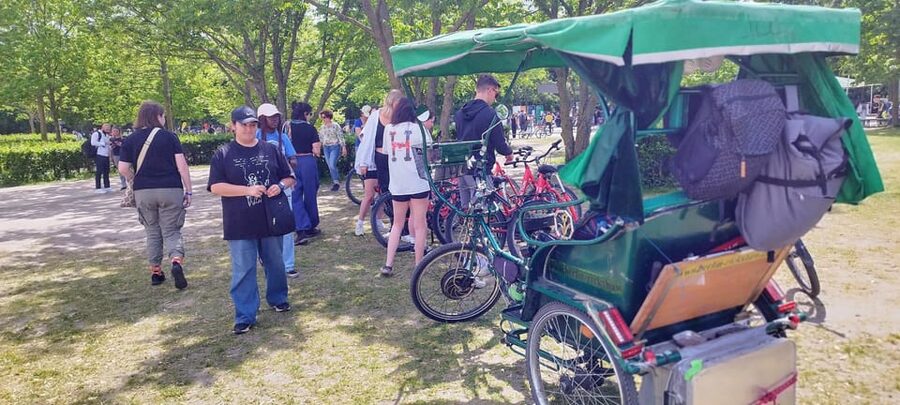
- A practical mixed-mobility option: Up to two people can ride in a rickshaw, allowing bikers, young children, grandparents, and less-mobile companions to stay together.
- A compact group: With no more than six participants, the guide can usually keep the ride personal and answer questions along the way.
- Useful early in your stay: The route gives you a strong map of central Berlin, helping you decide which places deserve a longer visit later.
- Photography is part of the service: Guides make frequent photo stops and can take pictures for you, so you do not have to choose between being in the image and taking it.
- Guide quality matters: Levent earned praise for his enthusiastic Dutch-language guiding, while other feedback highlights an informative guide and a less organized bike handoff.
Why the e-bike and rickshaw format works in Berlin
Berlin’s central sights are close enough to belong in one history lesson, but far enough apart to make walking tiring. Public transport can get you near most places, yet it does not always give you a clear sense of how the sites connect. On two wheels, you travel through the spaces between the monuments, which is part of the story.
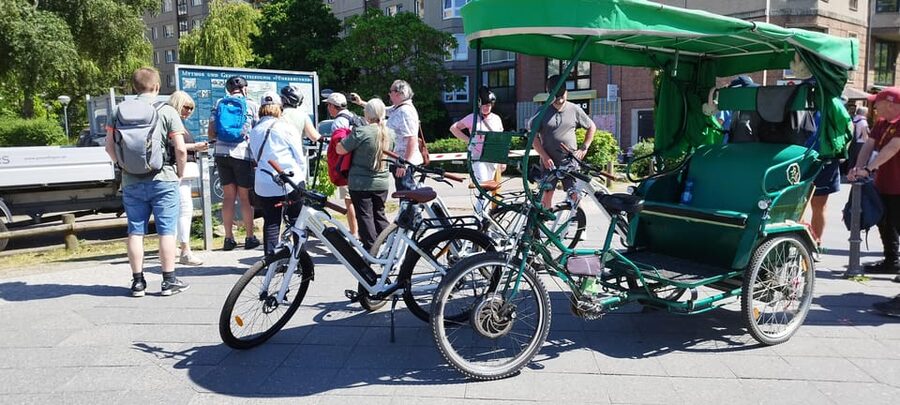
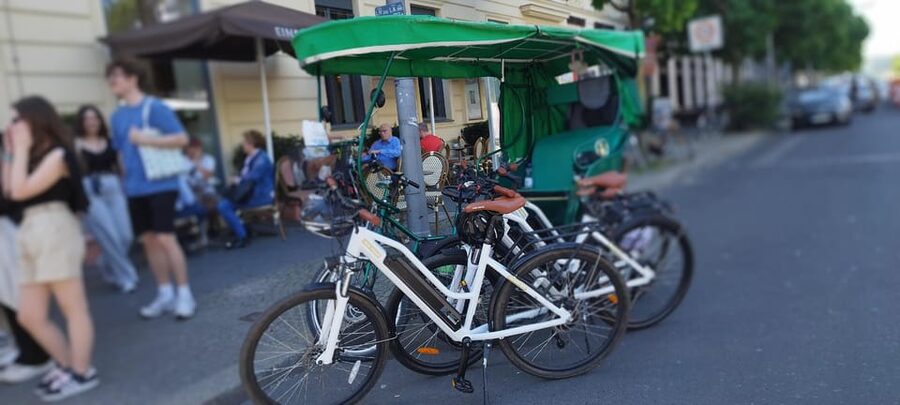
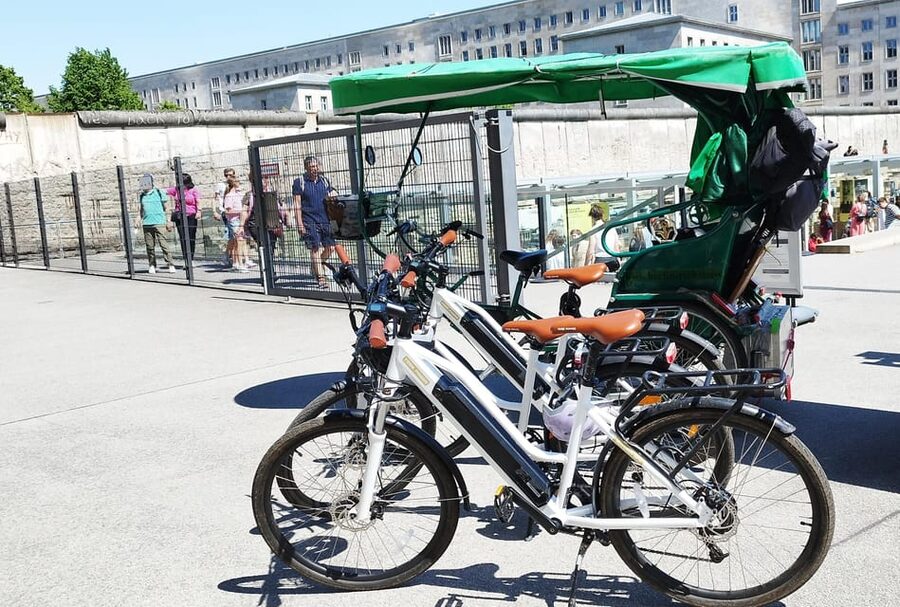
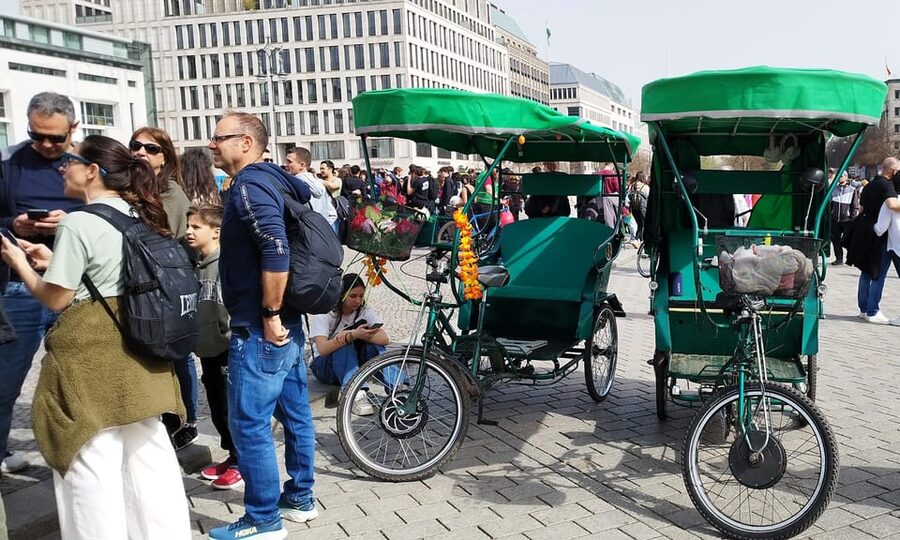
The e-bikes are intended for a comfortable self-drive route, while the rickshaws carry up to two people. That makes this especially useful for a family or friend group with different energy levels. You can ride while a parent, partner, or child travels in the rickshaw, instead of splitting up for the afternoon.
The rickshaw also changes the pace. You sit above the street with a close view of the monuments, and boarding takes only a few steps according to the tour information. It is a relaxed way to see Berlin if balancing on a bike is not appealing. Just remember that this is still a moving city tour, not a fully step-free sightseeing program. The exact ease of access can depend on the person and the stop.
The group limit of six is another plus. A guide can speak to everyone without using a microphone, and you have a better chance of asking about the difficult parts of Berlin’s past. The route is in English, although Levent has also guided in Dutch.
More City Highlights Bike Tours in Berlin
- Berlin: Sights and Highlights Bike Tour with a Local Guide
★ 4.8 · 2,698 reviews - Berlin Highlights 3-Hour Bike Tour
★ 5.0 · 948 reviews - Berlin Highlights: 3-Hour Bike Tour
★ 4.9 · 809 reviews
Starting at Weinbergsweg near Rosenthaler Platz
The meeting point is Weinbergsweg 6, close to the Rosenthaler Platz U-Bahn station. This is a useful starting area, with cafes, small shops, street art, and Weinbergspark nearby. If you arrive early, you can wait in the park or find something to eat around the square.
The location is in the Mitte district, but not directly beside the first historical monument. That is worth noting if you are trying to minimize walking before the tour. Look for the Weinbergsweg address rather than relying only on the name of the station.
After introductions and vehicle arrangements, the group heads toward central Berlin. Allow time for the guide to match people with an e-bike or rickshaw. One poor experience involved an electrical problem that left the riders without assistance for about half the ride, and another described the bike organizer as chaotic. That appears to be an exception rather than the main pattern, but it is sensible to check the battery and controls before setting off.
TV Tower and Museum Island: Berlin’s changing face
The first major sight is the Berlin TV Tower, the tall landmark rising from Alexanderplatz. From street level, you get a strong view of the tower and the surrounding city center. It is a good opening image because the tower represents postwar East Berlin, while much of the rest of the route deals with Prussian, Nazi, wartime, and Cold War history.
The tour continues toward Museum Island. This island in the Spree holds several of Berlin’s major museums and is one of the city’s most impressive architectural areas. You stop for photographs and a guide explanation, rather than entering the museums. That keeps the group moving, but you should return on your own if you want galleries, collections, or more time with the buildings.
Berlin Cathedral is part of this central view, even though it is not listed as a separate timed stop. The mix of grand museums, the cathedral, the river, and the TV Tower gives you an instant lesson in how different periods share the same city center.
Unter den Linden and the book-burning memorial
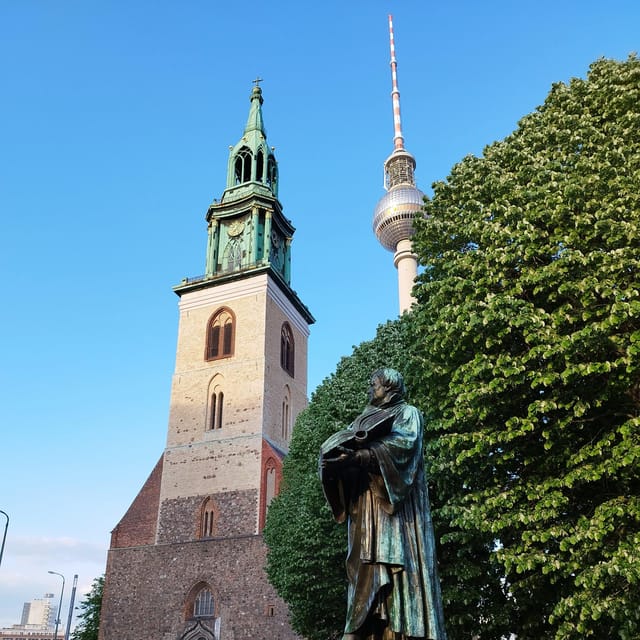
From Museum Island, the route follows Unter den Linden, Berlin’s famous boulevard. The avenue connects the cathedral area with Brandenburg Gate and the western side of historic Mitte. From a bike or rickshaw, you can take in the long sightlines and grand public buildings without spending much time crossing wide streets on foot.
One of the more serious stops is the memorial for the Nazi book burning of May 10, 1933. The site recalls the public destruction of books by Nazi supporters and offers a quieter counterpoint to the broad avenue around it. The guide’s explanation matters here because the memorial is easy to pass without understanding what happened below the square.
This is a photo stop and guided sight, not a long memorial visit. I would listen closely and avoid treating the stop as just another backdrop for pictures. Berlin’s history is not presented as a tidy parade of monuments, and this pause helps show how quickly public spaces can be used for political intimidation.
More City Highlights Bike Tours in Germany
- Berlin Highlights Sightseeing Bike Tour in Small Groups
★ 5.0 · 652 reviews - Berlin: Guided Bike Tour to Explore the Highlights
★ 4.8 · 506 reviews - Berlin: Guided Bike Tour to Explore the Highlights
★ 5.0 · 159 reviews - Berlin: E-Bike Tour of the Berlin Wall and Mitte Highlights
★ 4.7 · 60 reviews
Checkpoint Charlie and the Cold War city
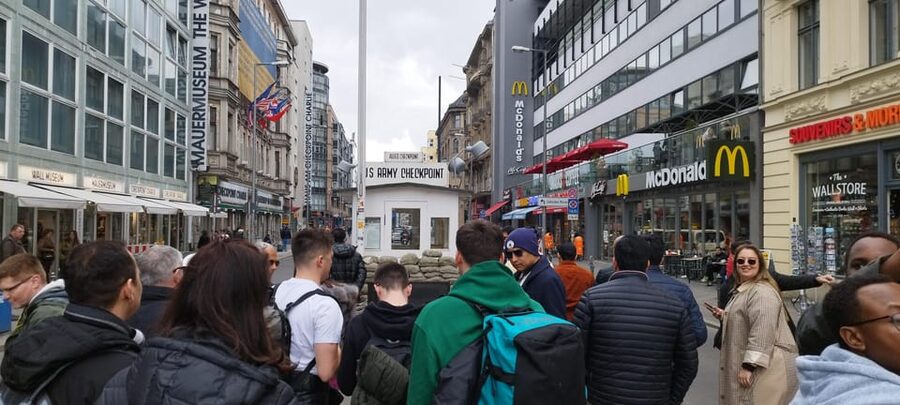
Checkpoint Charlie brings you into Cold War Berlin. The former crossing point became one of the best-known symbols of the divided city, and the stop helps explain how the Wall cut through ordinary streets, neighborhoods, and daily routines.
The location is visually familiar, but the meaning is larger than the famous checkpoint sign and guardhouse replicas. Your guide can place it within the wider division between East and West Berlin. Since the route is moving quickly, you will probably get an overview rather than every detail of escape attempts, border controls, and the Wall’s fall.
This is one place where the bike format saves time. The distance from Unter den Linden to Checkpoint Charlie is manageable by bicycle, but less pleasant on foot if you are trying to fit many other sights into the same afternoon. The rickshaw gives less-mobile participants the same view without requiring them to keep pace on a bike.
Hitler’s bunker and the Holocaust Memorial
The stop at Hitler’s bunker is deliberately understated. The bunker itself is underground and not presented as a dramatic attraction. The site is marked in an ordinary urban setting, which can feel strange at first. That plainness is useful: it keeps the focus on what happened rather than turning the location into a shrine.
The route then reaches the Holocaust Memorial, officially the Memorial to the Murdered Jews of Europe. Its field of concrete blocks creates a powerful physical experience, but this tour gives you only a short introduction and a chance to see the memorial from the outside. You should return later if you want to walk through it slowly or visit the underground information center.
These two stops work well together. One marks the final phase of the Nazi leadership, while the other honors the Jewish victims of the regime. I appreciate that the route gives them space in the same afternoon, though the short schedule means the guide must keep explanations focused.
Berlin Wall and Topography of Terror
The Berlin Wall stop adds another piece to the city’s divided past. You get a guided look at what remains or is marked today, along with the chance to understand how the barrier shaped Berlin. The experience is less about seeing one uninterrupted wall and more about recognizing the former border as part of the city’s streets.
At the Topography of Terror, the group stops near the former SS and Gestapo headquarters. The site documents Nazi persecution and state terror. It is an important historical stop, but the tour does not provide the time needed to study the full exhibition in detail. If this subject interests you, plan a separate visit.
The sequence from the bunker to the Holocaust Memorial, Wall, and Topography of Terror is heavy. That is not a criticism of the route. It reflects the central truth of Berlin sightseeing: the city’s most famous landmarks often carry painful stories. A good guide can help you move between them without reducing each place to a quick fact.
Brandenburg Gate and the Reichstag
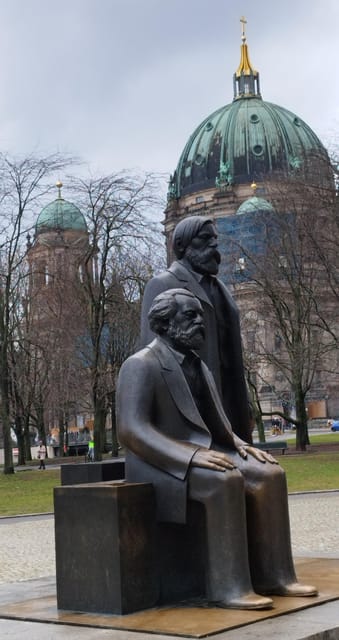
Brandenburg Gate is the tour’s grandest visual stop. Once a city gate, it became a symbol of Prussian Berlin, Nazi spectacle, Cold War division, and German reunification. The guide can point out how political meaning changed around the same structure.
The gate is usually crowded, so the bike and rickshaw approach has a practical advantage. You can get close, pause for photos, and then move on without organizing another long walk across the central district. The photography service is useful here, especially for couples or families who want a picture together.
The final major stop is the Reichstag, home of the German parliament. You see the building from outside and hear about its place in modern German government. The glass dome is a separate visit and is not included in this tour, so do not assume you will go inside.
The Reichstag and Brandenburg Gate make a fitting end to the historical route. One represents national government and the other a former royal entrance, yet both now sit within a democratic capital shaped by the events covered during the ride.
What the $82 price gets you
At $82 per person, this tour costs more than simply renting a bicycle and following a map. You are paying for a guide, a planned route, the e-bike or rickshaw, a small group, bottled water, and help with photographs. The value is strongest if you want context and convenience rather than independent wandering.
The price also makes more sense for a group with mixed abilities. Hiring separate transport or splitting up can quickly become inconvenient, and the rickshaw lets everyone share the same route. For a couple where one person does not cycle, this may solve a real practical problem.
The value is weaker if you already know Berlin well or want long visits inside museums. Nearly every stop is a photo stop or short guided visit. You cover a great deal, but you do not have time to study each memorial, read every display, or linger at a cafe along the way.
A rating of 4.5 from 24 ratings suggests generally strong satisfaction, with the guide often receiving the warmest praise. The clearest criticism concerns equipment reliability and the behavior of one bike organizer. I would treat the bikes as an important part of the purchase and ask at the start what happens if an e-bike loses power.
Who should book this experience
I would recommend this tour to first-time visitors who want a clear overview of central Berlin. It is particularly useful on the first or second day of a stay, before you choose which museums and memorials deserve a longer visit. One participant specifically wished they had taken it earlier, after already seeing some of the sights independently.
It also suits families with young children, grandparents, and couples with different physical abilities. The rickshaw means one person does not have to sit out while the rest of the group cycles. People who prefer a gentle pace can still get close to the monuments.
You should think twice if you dislike guided schedules, cycling near city traffic, or quick stops at serious memorials. This is not a quiet walking tour, and it is not designed for deep study of one site. It is a moving overview with frequent explanations and photographs.
Wear comfortable shoes, even though much of the route is by bike or rickshaw. You will likely stand at stops, and the tour lasts three and a half hours. Free cancellation up to 24 hours before departure and the option to reserve without paying immediately add useful flexibility.
Should you book the Berlin e-bike and rickshaw tour?
Book it if you want to see most of Berlin Mitte’s key sights in one afternoon, need a solution for a mixed-mobility group, or would benefit from an informed guide who can connect the monuments. The route is ambitious, practical, and especially helpful for getting your bearings early in a visit.
Skip it if you want extended time inside museums and memorial exhibitions, or if reliable e-bike equipment is your top concern. Before starting, check the bicycle, confirm the rickshaw arrangement, and ask how the group will handle a power problem. With those points settled, the $82 price can be fair for the coverage, transport, and personal guiding in a group of six or fewer.
FAQ
How long does the Berlin e-bike and rickshaw tour last?
The tour lasts 210 minutes, or three and a half hours.
Where does the tour start?
The meeting point is Weinbergsweg 6, near the Rosenthaler Platz U-Bahn station in Berlin.
Is the tour conducted in English?
Yes. The listed tour language is English. Levent has also guided a tour in Dutch.
How many people are in the group?
The small group is limited to six participants.
Can someone who does not cycle join the tour?
Yes. The rickshaw option is intended for non-bikers, people with limited mobility, grandparents, and young children. Each rickshaw can accommodate up to two people.
What sights are included?
The route includes the TV Tower, Museum Island, Unter den Linden, the book-burning memorial, Checkpoint Charlie, Hitler’s bunker site, the Holocaust Memorial, the Berlin Wall, Topography of Terror, Brandenburg Gate, and the Reichstag.
More Heritage and Temple Bike Tours in Berlin
- Small-Group Historical Bike Tour in Berlin
★ 4.5 · 103 reviews - Bangkok: Temples, Canals & Local Life Bike Tour
★ 4.9 · 3,511 reviews - Historical Singapore Bike Tour on Full-Sized Bicycles
★ 5.0 · 1,421 reviews - Barcelona: 2.5-Hour Bike or E-Bike Historical Tour
★ 4.5 · 1,262 reviews
Just added around Berlin
- Berlin Wall and Cold War Bike Tour in Small Groups★ 5.0 · 114 reviews
- Berlin: Guided Private Bike Tour to Explore the Highlights★ 5.0 · 12 reviews
- Berlin : The best bike tour with a Berlin guide and insider tips★ 5.0 · 14 reviews
- Alternative Berlin Bike Tour – Off the Beaten Tracks in Small Groups★ 5.0 · 99 reviews
- Potsdam Bike Tour with Rail Transport from Berlin★ 4.5 · 81 reviews
- Berlin: Guided Bike tour of the Berlin Wall and Third Reich★ 5.0 · 160 reviews
- Berlin : Guided Private Sightseeing Tours with Funbikes, Teambikes★ 5.0 · 20 reviews
- Small-Group Berlin Wall Bike Tour★ 5.0 · 17 reviews
Heritage and Temple Bike Tours, compared.
Historical Singapore Bike Tour on Full-Sized Bicycles
Read our review →
Night Bike Tour with Temples & Flower Market Visit
Read our review →
Intramuros, Manila: Historical Bamboo Bike Tour
Read our review →
Historical Bike Tour of Savannah and Keep Bikes After Tour
Read our review →Browse the lists this tour appears in