
REVIEW · BUDAPEST
Budapest: Historic Downtown Bicycle Ride with Scenic Views
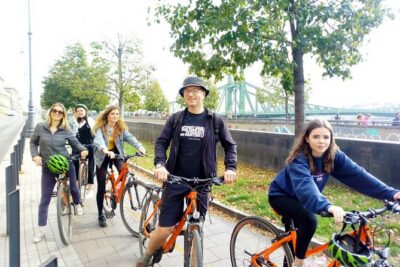
Budapest rewards a wide view. This 3.5-hour ride links Heroes’ Square, City Park, Parliament, the Danube, and Buda in one well-paced outing. I like the route’s range, and I like that small groups are limited to 10, so you can usually hear the guide and keep a sensible pace. The main drawback is simple: there is little time for a proper meal, and the tour is not suited to anyone who cannot ride confidently.
Starting in the Jewish Quarter, you see both sides of Budapest without spending the day changing trams or retracing your steps. I especially like the regular photo stops and the chance to cross the Chain Bridge by bicycle. Guides such as Oliver, Karol, and Bálint have been praised for making the history lively, though meeting-point signs can be easy to miss.
Key points to know before you ride
- A broad first-day introduction: The route covers Pest, crosses the Danube, and continues through Buda before returning to Pest.
- Small groups matter: A maximum of 10 people makes city riding and guide commentary easier to manage.
- Major sights come fast: Heroes’ Square, the Opera House, Parliament, the Shoes on the Danube Bank, and the Buda panorama all fit into one ride.
- The pace is relaxed, not athletic: Past participants describe it as comfortable and safe, but you still need to cycle for 3.5 hours.
- Bring a snack and suitable clothing: A drink is included, but meals are not, and weather can shape the experience.
- The meeting point is central: Madach Imre utca 12 sits between Madach Square and Gozsdu Court, close to Deak Square.
Why this bicycle tour works well on your first day
Budapest is spread across two sides of the Danube, with Pest on the flatter eastern bank and Buda rising on the west. Seeing both in a single outing helps you understand the city’s shape before you spend time returning to the places you like best.
On foot, this route would require a great deal of energy and careful transport planning. By bicycle, you move from the Jewish Quarter to Andrássy Avenue, onward to City Park, down to the river, across the Chain Bridge, and back through the market district. You get a useful orientation without sitting behind a bus window.
The tour is also more than a checklist of grand buildings. The guide connects Hungarian royal history, twentieth-century dictatorship, Jewish heritage, thermal bathing, and modern city life. That mix gives you clues about what to revisit later. You might return to the baths, spend more time at the Great Synagogue, or book an interior visit to Parliament if tickets are available for your dates.
The cost is $45 per person. For 3.5 hours with a guide, a bicycle, a drink, and a route covering both Buda and Pest, I consider that a fair price. It is especially good value if this is your first Budapest visit and you want a quick sense of where the main sights are. It is less useful if you prefer long interior visits, quiet museum time, or a tour focused on one neighborhood.
A few more days on two wheels around Budapest worth a look
- Budapest: Grand Sightseeing Bike Tour
★ 4.8 · 984 reviews - Budapest Highlights Bike Tour
★ 5.0 · 770 reviews - Budapest: Guided City Discovery Bike Tour
★ 4.7 · 702 reviews
From Madach Square into the Jewish Quarter
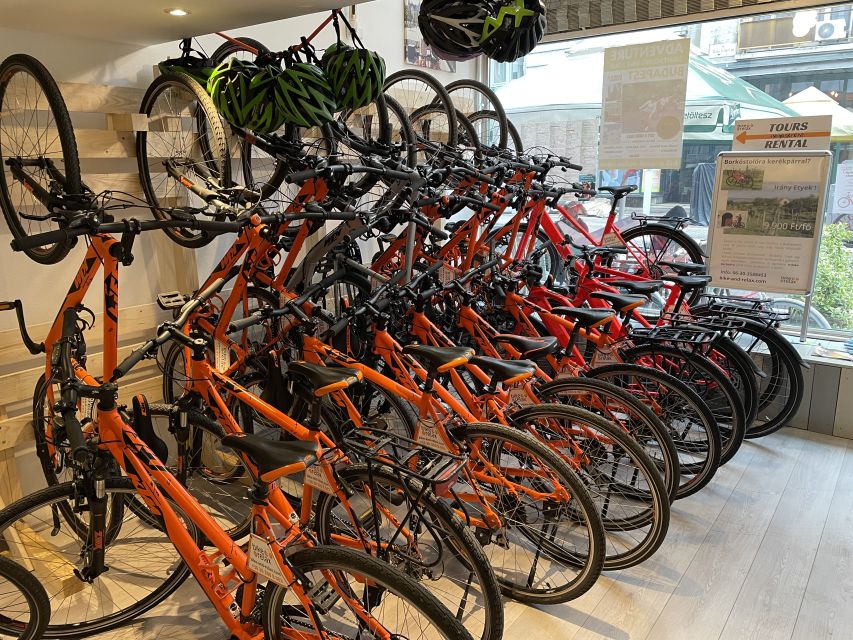
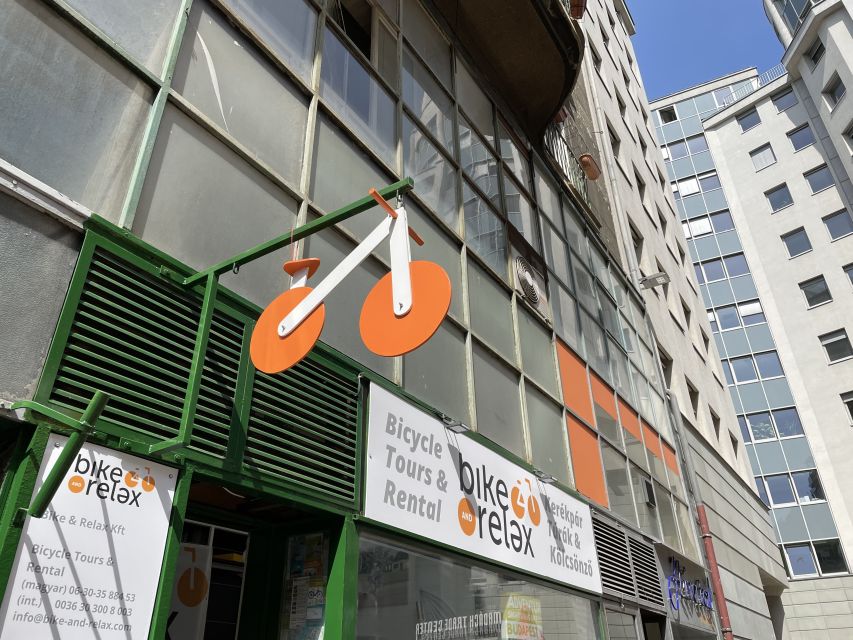
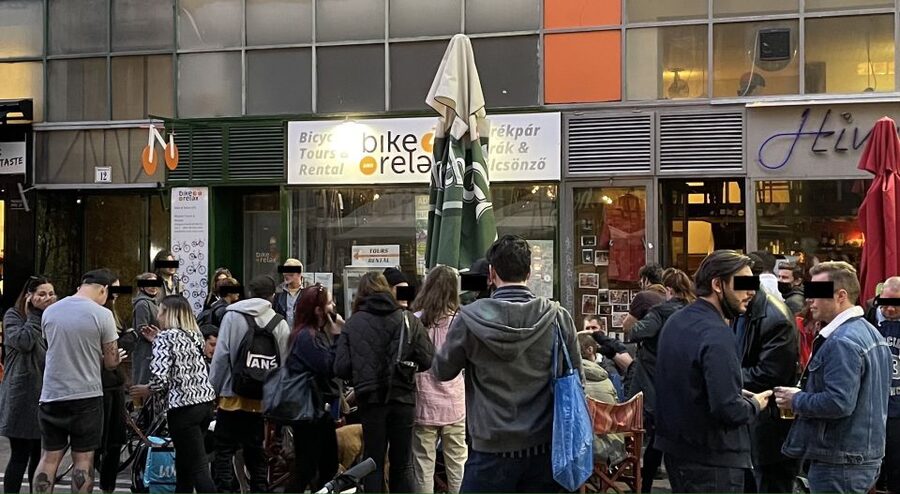
The ride begins at Madach Imre utca 12, in the center of the Jewish district. Look for Bike & Relax beside Cafe Hivatal, near the passage linking Madach Square and Gozsdu Court.
This is a practical start because the district is easy to reach from Deak Square, where the M1, M2, and M3 metro lines meet. Trams 47, 48, and 49 also serve the area, along with the airport bus. Give yourself a little extra time. The shop can be easy to overlook, and one past participant found that map directions were not perfectly clear.
The opening ride introduces the Jewish Quarter, an area known for nightlife, historic streets, restaurants, and the Dohány Street Synagogue. The synagogue appears again near the end, so you get a useful first look before returning there for a closer photo stop.
This is also where you meet the guide and settle into the group. The small-group limit of 10 is helpful in central Budapest, where a large line of bicycles would be harder to manage. You should still expect a city ride, not an empty country lane.
Andrássy Avenue and the route to Heroes’ Square
The first major stretch follows Andrássy Avenue, Budapest’s grand boulevard. Along the way, the tour pauses at the Franz Liszt Academy of Music, a good place to hear how music fits into Hungarian cultural life.
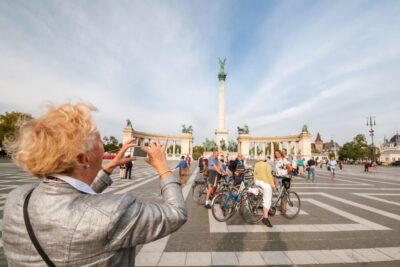
The avenue leads toward Heroes’ Square, one of Budapest’s most recognizable open spaces. The monument honors important figures from Hungarian history, and the guide uses the stop to place the country’s past in context. You have about 15 minutes here for photographs, enough to take in the broad composition without turning the visit into a long lecture.
A short stop at the House of Terror adds a harder edge to the morning. The museum examines the Nazi and Communist periods, so the building carries a serious story even if you only see it from outside. This is one of the route’s useful choices: it moves beyond palace views and gives you a reminder of the political forces that shaped modern Hungary.
You will not have time to visit the museum on this tour. If its subject interests you, mark it for another day and plan a separate visit.
City Park, Vajdahunyad Castle, and the thermal-bath tradition
From Heroes’ Square, the bicycles continue into Városliget, or City Park. This greener section offers a change from the formal avenues and dense central streets. The guide spends about 20 minutes here, giving you time to look around and hear about the area.
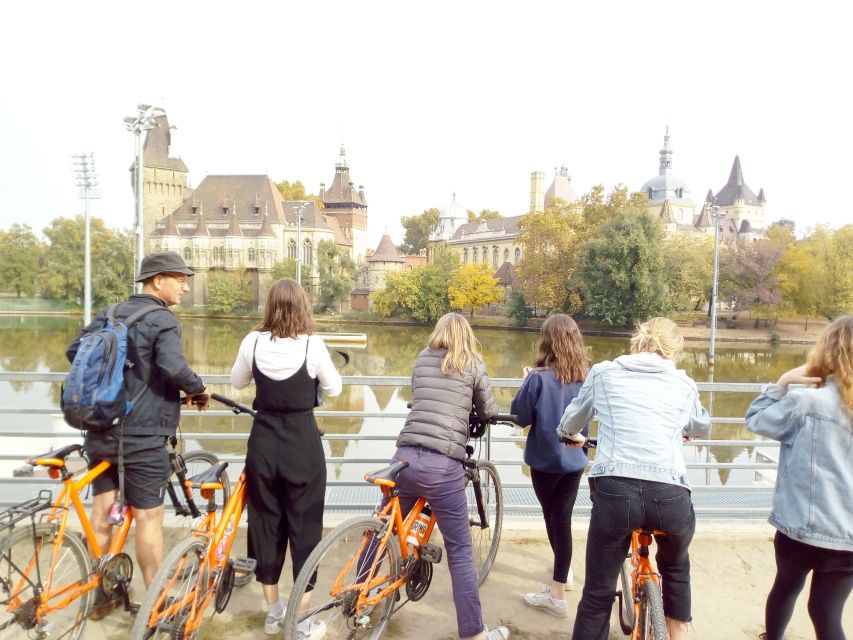
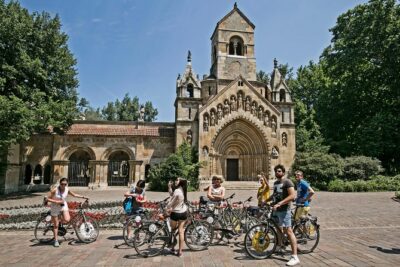
The route includes Vajdahunyad Castle, a playful architectural mixture that draws on different Hungarian building styles. Its towers and courtyards make a strong photo stop, but the short timing means you should not expect a full architectural study.
The Szechenyi Thermal Bath is another highlight. Budapest’s public bathing culture is part of everyday city life, not just a sightseeing theme, and the bath’s large exterior gives you a sense of why thermal water matters here. You stop for photographs rather than a soak. Pack swimwear only if you plan to visit the baths separately later.
This part of the ride is one reason the tour feels varied. Within a short period, you move from national monuments to twentieth-century political history, then to parkland, castle-style architecture, and bathing culture.
Same roads, a different day in the saddle:
- Budapest: Guided Downtown Electric Bike Tour
★ 4.9 · 595 reviews - Budapest: Monster Bike Roller Guided City Tour
★ 5.0 · 538 reviews - Budapest Bike Tour
★ 5.0 · 365 reviews - Budapest Historic Downtown Bicycle Tour in small groups
★ 5.0 · 288 reviews
Opera, Basilica, and Liberty Square
The return toward central Pest brings you past the Hungarian State Opera House. The exterior is an easy subject for a quick photograph, and the guide can point out its place along Andrássy Avenue. Again, this is an introduction, not an interior tour.
St. Stephen’s Basilica follows. Its dome and grand facade make it one of the city’s key landmarks, and the stop gives you time to frame the building without rushing straight past. You may want to revisit the basilica later if you care about the interior or panoramic views, neither of which fits into this cycling schedule.
At Liberty Square, the mood changes again. The square offers a way to discuss more recent Hungarian history and the country’s political memory. This is a good example of why a live guide adds value: a photograph alone does not explain why the square matters.
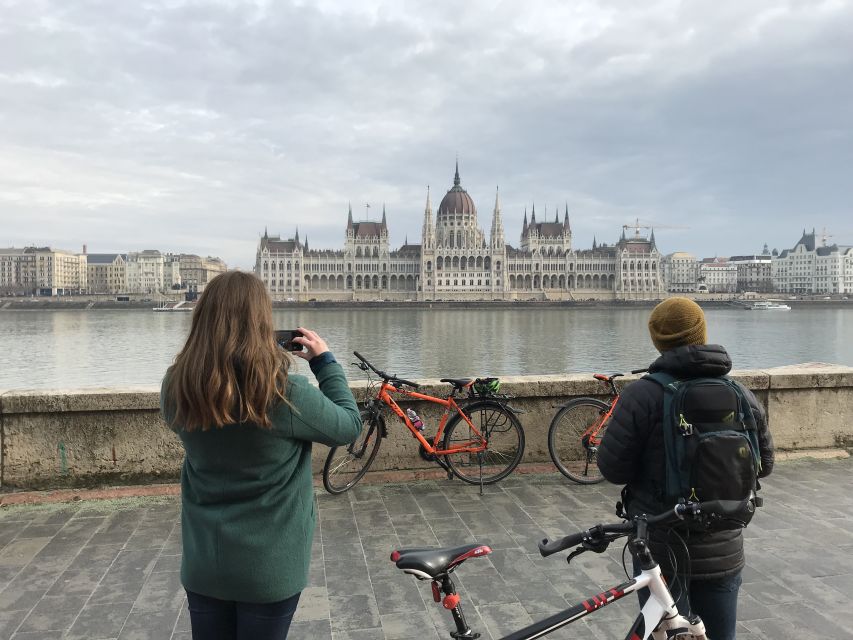
The route then moves toward the Hungarian Parliament Building. The riverside setting gives you one of the best exterior views in Budapest, especially when the building is seen across or along the Danube. The stop lasts about 10 minutes, so keep your camera ready.
The Danube memorial and Chain Bridge crossing
The Shoes on the Danube Bank memorial is a brief but serious stop. The iron shoes honor Jewish people who were killed along the river during the Second World War. You can photograph the memorial from the route, but direct access to the shoes is not provided on this tour.
That detail matters. If you want time beside the memorial, plan to return independently. The bicycle stop gives you context and a view, but it is not a full memorial visit.
From there, you follow the river downstream to the Chain Bridge. Crossing this famous bridge by bicycle is one of the tour’s most enjoyable transitions. The urban view opens as you move from Pest toward Buda, and the crossing makes the city’s two-part geography feel real rather than abstract.
Traffic and road conditions can change, so you should follow the guide closely. The route has been described as safe and easy by past participants, but Budapest remains a working city. You need to pay attention, keep your pace, and avoid treating the ride like a photo session while moving.
Buda views at Matthias Church and Fisherman’s Bastion
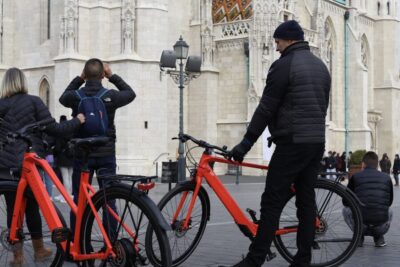
After the bridge, the route continues on the Buda side and includes photo stops at Matthias Church and Fisherman’s Bastion. These are among the city’s most rewarding viewpoints, with sightlines back toward the Danube and the Pest skyline.
Matthias Church is known for its patterned roof and ornate exterior. Fisherman’s Bastion provides the postcard-style terraces and broad river views many people hope to see in Budapest. You get about 10 minutes at each stop, enough for photographs and a short explanation.
The timing is both a strength and a limitation. You can quickly understand why these places matter, but you will not have time to explore the church interior, linger on every terrace, or sit down for a long view. I would note the spots you want to revisit and return on foot or by public transport later.
The Buda section also gives the tour a nice visual rhythm. After the flat central avenues of Pest, the route shifts to the western bank and its elevated viewpoints, then returns toward the river and the thermal baths.
Rudas and Gellért Baths before crossing back to Pest
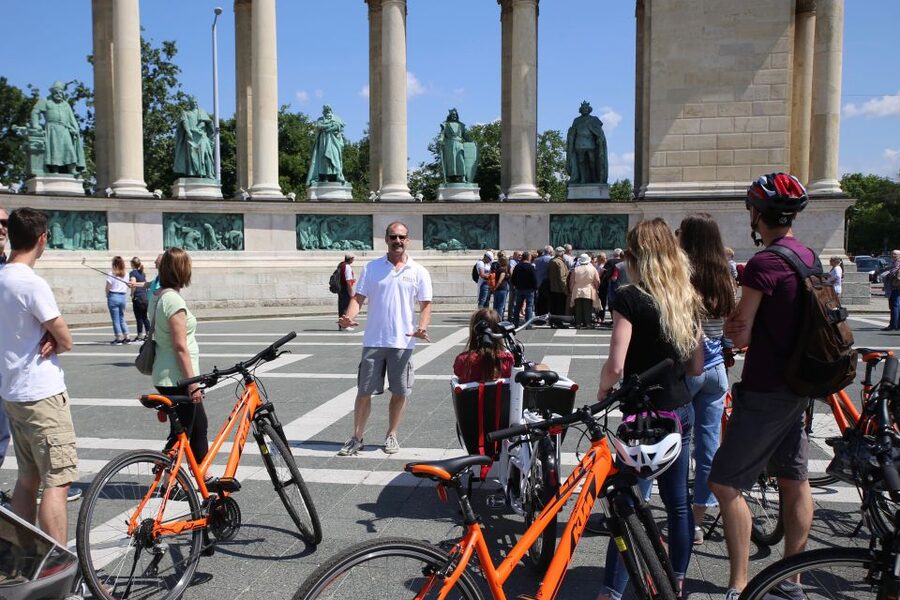
The route passes Rudas Thermal Bath and then Gellért Baths. These brief stops introduce two more pieces of Budapest’s bathing culture and show how common thermal facilities are in the city’s identity.
The stops are mainly for exterior views. You should not expect changing facilities, bathing time, or a treatment. If you want a spa visit, book that separately and allow several hours rather than trying to combine it with this ride.
The bicycles then cross back over Liberty Bridge to the Pest side. The bridge is a useful visual contrast to the Chain Bridge, and the crossing completes the tour’s sweep across both banks. You see Budapest not as a set of disconnected attractions, but as a city tied together by its river crossings.
Central Market Hall, National Museum, and the synagogue finish
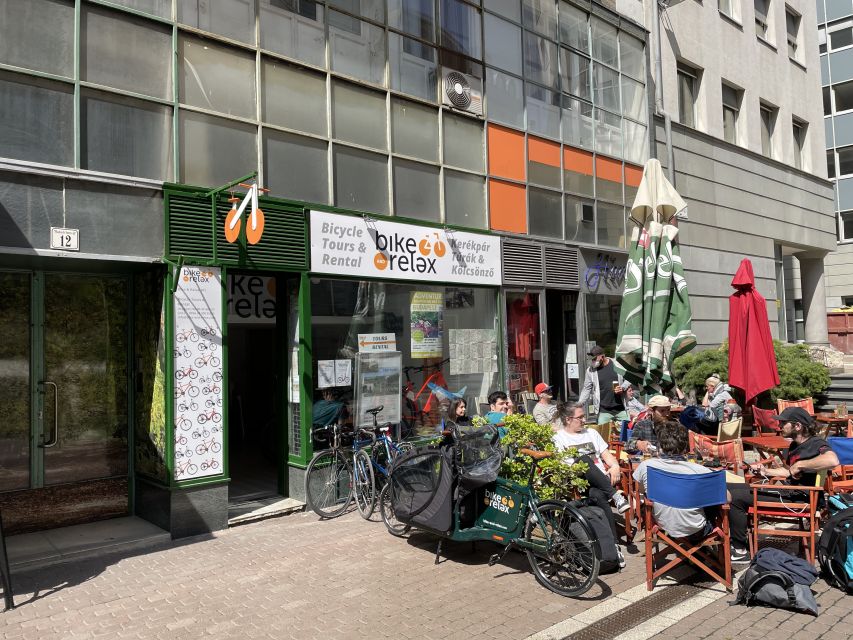
Near the end, the route pauses at Central Market Hall. The building is worth seeing for its scale and colorful roof, even if you do not have time to shop inside. It is also a useful place to remember for a later visit when you can browse food stalls and local products at your own pace.
The Hungarian National Museum follows, with a photo stop of about 10 minutes. Like the House of Terror and the synagogue, it is best treated as a note for a future visit if you want a proper museum day.
The final stop is the Dohány Street Synagogue, bringing the route back to the Jewish Quarter and close to the starting point. The location is practical for the evening, with many places nearby for food and drinks. Since the tour does not include a meal, this is a good point to continue exploring on your own.
Pace, bicycles, and what to bring
Past participants have described the ride as relaxed, comfortable, and easier than expected. One person who had taken several city bicycle tours called this route especially safe, while another said the bicycles were comfortable even in heavy rain. Those comments suggest that the emphasis is on getting around efficiently, not on exercise.
Still, you need reasonable cycling ability. The activity is not suitable for people who cannot ride, people with mobility impairments, wheelchair users, pregnant women, people with epilepsy, people with visual impairments, or people prone to motion sickness. The stated weight limit is 243 pounds, or 110 kilograms.
Child bicycles and child seats are available only in limited numbers. Contact the local partner in advance if you are bringing small children or anyone under 1.50 meters tall. Babies under one year are not suitable for the activity.
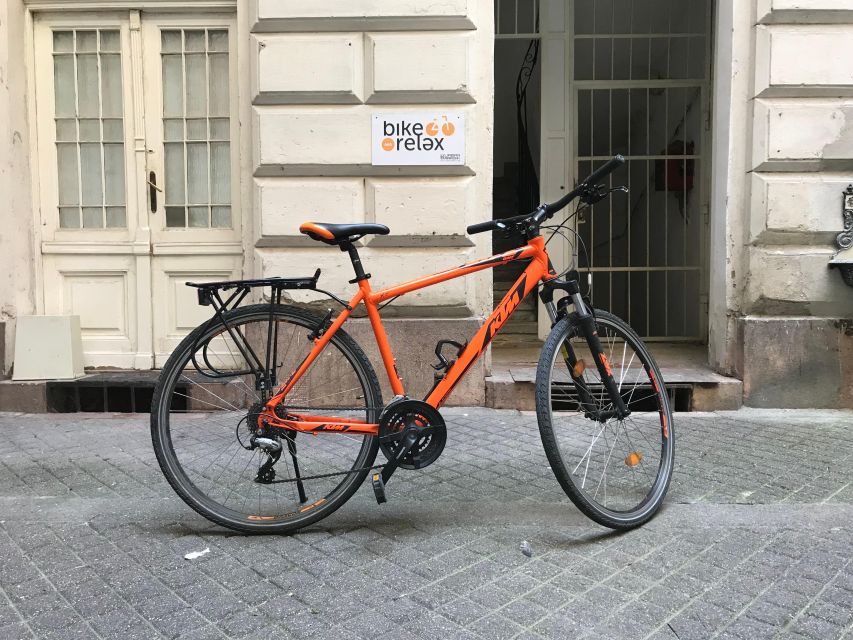
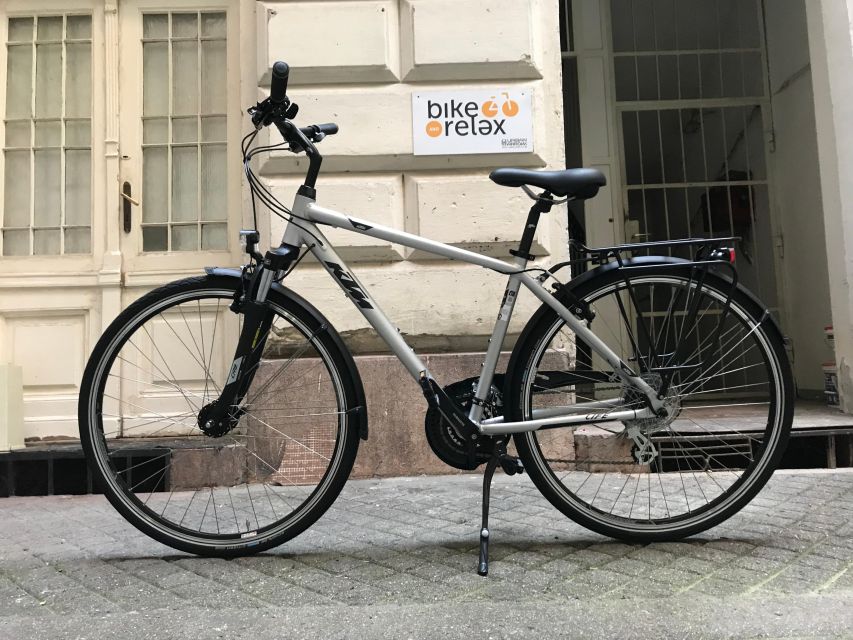
Wear comfortable shoes and clothing suited to the forecast. Large bags and luggage are not allowed, so leave bulky items at your accommodation. Bring a small amount of water and a snack. A refreshing drink is included, but there are no meals, and one past participant specifically wished for a lunch stop.
The tour runs in English and has a maximum of 10 participants. You can cancel up to 24 hours before departure for a full refund, and the reserve-now, pay-later option gives you some flexibility while arranging your schedule.
Should you book this Budapest bicycle ride?
Book it if you want a strong first-day overview and are comfortable cycling in a city. The route covers far more ground than a walking tour, the guide adds useful historical context, and the regular photo stops help you build a list of places to revisit.
I would be especially happy to choose it for a first visit, a short stay, or a trip where you want to understand Budapest quickly. The repeated praise for the calm pace, clear route, and friendly guides, including Oliver, Karol, and Bálint, supports that choice.
Skip it if you need long interior visits, a sit-down meal, or a fully gentle sightseeing experience with no cycling demands. Also think twice if weather looks poor or if you are traveling with a child who needs a particular bicycle or seat, since those supplies are limited.
At $45, this is a sensible way to cover Budapest’s main sights in half a day. Just bring a snack, arrive early at Madach Imre utca 12, and save your favorite stops for a slower return visit.
FAQ
How long is the Budapest bicycle tour?
The tour lasts 3.5 hours.
What is the price?
The price is $45 per person.
Where does the tour begin and end?
It begins and ends at Madach Imre utca 12 in the Jewish Quarter, near Madach Square and Gozsdu Court.
What language is the tour in?
The live guided tour is conducted in English.
How many people are in the group?
The small group is limited to 10 participants.
Is a drink included?
Yes. A refreshing drink is included, but meals and additional drinks are not.
Can children join the tour?
Children may join, but child bicycles and child seats are limited. You should contact the local partner in advance for small children or anyone below 1.50 meters tall.
Can I cancel the booking?
Yes. You can cancel up to 24 hours in advance for a full refund.
Just added around Budapest
- Coolest E-bike Tour in Budapest★ 5.0 · 23 reviews
- Budapest to Szentendre bike & boat tour★ 5.0 · 25 reviews
- Private Budapest Bike Tour with Cafe Stop★ 5.0 · 21 reviews
- Monster Bike Sightseeing Tour – City Budapest on Electric Rollers★ 5.0 · 69 reviews
- Budapest: Historic Downtown ride on E-Bicycles Buda & Pest★ 5.0 · 227 reviews
- Budapest Bike Ride★ 5.0 · 11 reviews
- Budapest Bike Tour with Hungarian Goulash★ 5.0 · 198 reviews
- Budapest private Bike & e-Bike Tour with a drink★ 5.0 · 12 reviews
Budapest Cycling Tours, compared.
Budapest Historic Downtown Bicycle Tour in small groups
Read our review →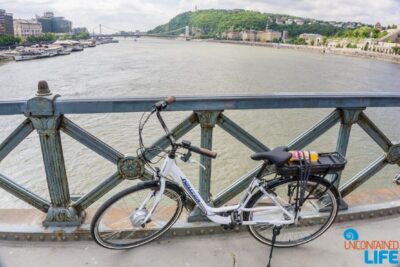
Browse the lists this tour appears in