
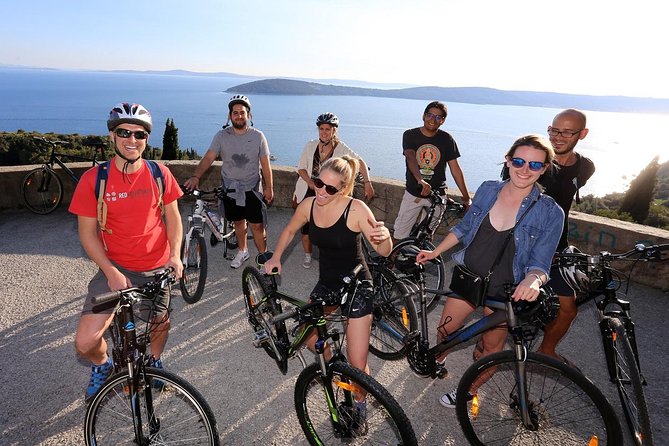
REVIEW · SPLIT
City Bike Tour of Split
Split is best understood on two wheels. This small-group ride links Diocletian’s Palace and the Riva with Marjan Park, Varos, Sustipan, and several lively corners that are easy to miss on foot. I especially like the broad view of the city from Marjan and the chance to cover a lot of ground in three to three and a half hours. The main drawback is the long uphill section, so ask about an e-bike if you are not keen on a serious climb.
The tour also gets strong marks for its guides. Darla, Eva, Ivana, Yvonne, and Egor have all been praised for making the ride personal, explaining local life, and helping with photos or later restaurant and sightseeing advice. Still, group size can affect how clearly you hear the guide, and one group covered more than 10 miles, so this is an active sightseeing tour rather than a gentle pedal.
Key points before you book
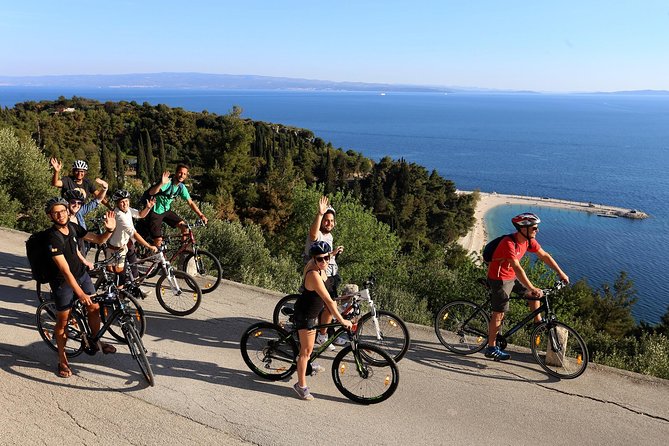
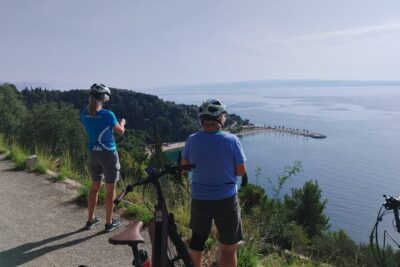
- The route reaches Marjan Park: The forested hill provides the best wide views of Split, its harbor, beaches, islands, and surrounding hills.
- The climb is real: A regular bike is manageable for fit riders, but several people found the uphill stretch tough. An e-bike can make a major difference.
- You see old and everyday Split: The route combines Diocletian’s Palace, the fish market, the Croatian National Theatre, Varos, Poljud, and Sustipan.
- Guides shape the experience: Darla, Eva, Ivana, Yvonne, and Egor have been praised for local stories, patience, and practical advice.
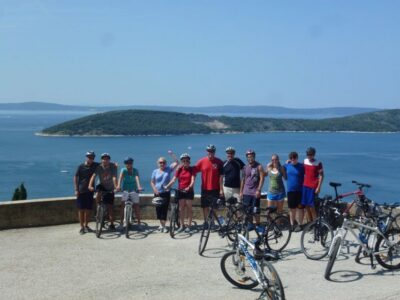
- It is a small-group ride, but not always tiny: The maximum is 15 people, and a larger group may make it harder to hear every explanation.
- The tour returns to its starting point: You meet at Ul. kralja Zvonimira 8 and finish at the same location.
Why a bike is a smart way to see Split
Split’s center is compact, but its sights are spread across different kinds of city space. The old palace area is made for walking, while Marjan, Poljud, Sustipan, and the western neighborhoods make more sense when you have wheels.
This route gives you a useful first look at the city. You move from the harbor and market to the waterfront, then into the old center, through neighborhoods, and finally into pine-shaded Marjan Park. That variety is the tour’s biggest strength. You are not spending three hours circling only the most obvious monuments.
A bike also helps you understand Split as a living city. The palace is not a sealed archaeological site. People shop, work, eat, and pass through its ancient walls every day. The route adds fish sellers, sports culture, working-class lanes, beaches, harbor views, and green space to the usual Roman story.
The price is $53.95 per person. That is fair if you want equipment, a local English-speaking guide, and a broad orientation in one outing. It is less attractive if you only want to see Diocletian’s Palace, which you can explore on foot without paying for a bike tour. The value comes from the distance covered and the access to Marjan.
A few more days on two wheels around Croatia worth a look
- Elafiti Islands Sea kayaking: Full-Day Bike and Kayak tour on Lopud and Šipan
★ 4.5 · 236 reviews - Hvar Island Self-Guided E-Bike Tour
★ 5.0 · 144 reviews - Split 3-Hour Guided Bike Tour
★ 4.8 · 117 reviews
Starting near the green market and Riva
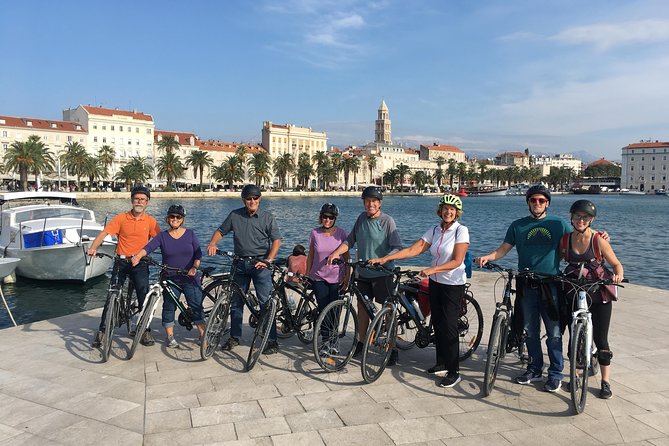
You meet Red Adventures Croatia at Ul. kralja Zvonimira 8. The tour supplies a high-quality bicycle and helmet, and you should give the company each rider’s height when booking so the bike can be prepared properly.
The opening ride takes you past the city harbor and the main green market. This is a useful beginning because it places Split in its present-day setting before the tour turns toward the ancient center. The market helps show the daily rhythm of the city, while the harbor points toward the sea routes that have shaped Split for centuries.
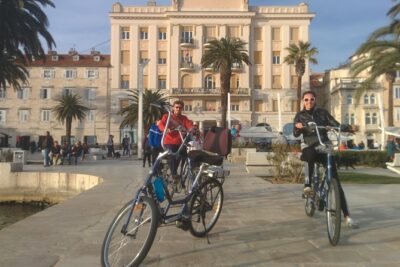
Then you reach the Riva, Split’s famous seaside promenade. Here, the view puts two eras side by side: the water on one side and the roughly 1,700-year-old walls of Diocletian’s Palace on the other.
You do not spend the whole tour inside the palace. Instead, you pass along its edge and use it as a starting point for understanding the city. That works well for a short bike outing, though anyone wanting detailed palace interiors should plan a separate walking visit.
Diocletian’s Palace from the saddle
The palace section gives you the classic Split setting without requiring you to leave your bike for a long guided walk. You see how the old walls meet the modern waterfront and how the historic center functions as part of ordinary city life.
This is also where the pace may feel slightly quick for history lovers. A bicycle tour has to keep moving, and the palace itself rewards slow wandering through lanes, courtyards, cellars, and squares. Think of this stop as an orientation, not a full archaeological tour.
Your guide may also help you decide what to revisit later on foot. That is one reason the human element matters here. Egor, Eva, Ivana, Darla, and Yvonne have all been praised for answering questions and suggesting things to do after the ride. A good guide can turn this first pass through the center into a useful plan for the rest of your stay.
Fish market, theater, and old fortifications
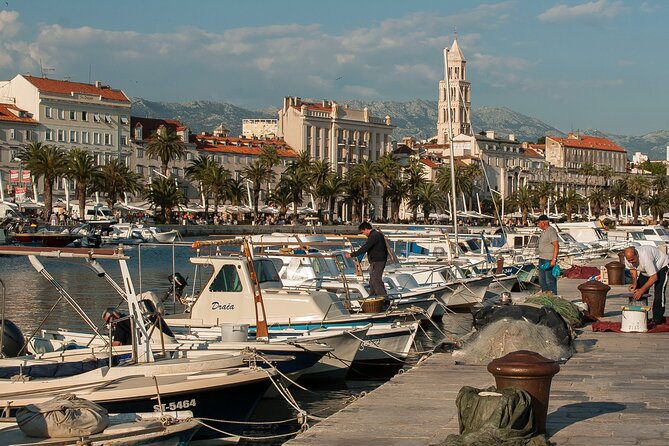
After the palace area, the route moves through the old town and past the fish market, Croatian National Theatre, and Ottoman-era fortifications. This part adds texture to Split’s story.
The fish market gives you a glimpse of local commerce rather than a polished monument. The theater points to Split’s cultural life, while the fortifications remind you that the city’s defenses changed as different powers controlled the Adriatic.
The guide’s commentary is important here, since some of these places can pass quickly from a bicycle. In a group of 15, it may be harder to hear every word, especially near traffic or busy streets. One rider specifically found that information was lost in a larger group. Stay close to the guide and ask for a repeat if needed.
The pace is generally suited to sightseeing, with time for photos and short pauses. You should still expect an active ride, not a stop-at-every-corner walking tour.
Same roads, a different day in the saddle:
- Split City Electric Bike Tour
★ 4.9 · 106 reviews - Split Electric Bicycle Tour
★ 5.0 · 105 reviews - E-Bike Tour + Gourmet Snack + Wine Tasting (Small Group)
★ 5.0 · 95 reviews - Zagreb: 2.5-Hour Highlights Bike Tour
★ 4.8 · 93 reviews
Split’s sports story and Poljud Stadium
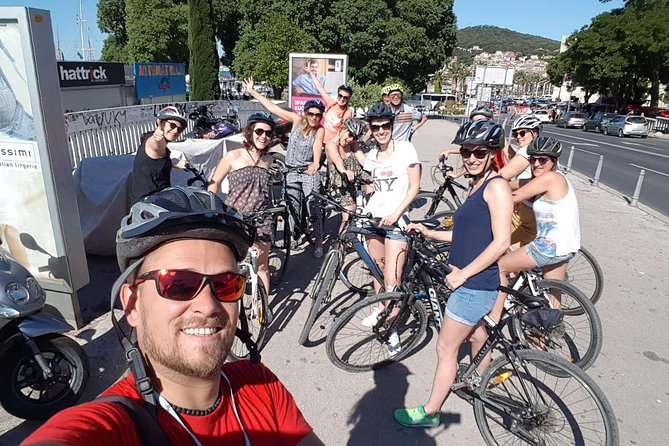
The ride then shifts from old stones to modern local pride. Split has a strong sports identity, and the guide explains the city’s Olympic success and its intense football culture.
You pass by Poljud Stadium, one of the city’s important sports landmarks. This is a nice change of subject after the palace and fortifications. It shows that Split’s identity is not only about Roman remains and coastal views.
The sports section also gives your guide room to talk about everyday passions. The best moments on this tour are not necessarily the largest monuments. They are the stories that explain why a place matters to people who live there.
If you are interested in football, local competition, or Croatian sporting achievement, this part may be a highlight. If you prefer architecture and ancient history, it is a shorter, more social pause before the ride heads toward Marjan.
The climb into Marjan Park
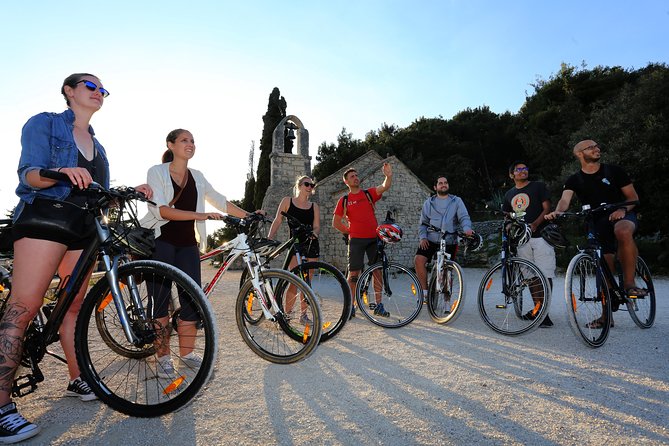
Marjan is the heart of the tour, and it is also the part you need to prepare for. The road rises, and several riders found the climb long or difficult. One fit rider on a regular bike described it as very tough, while others managed comfortably by riding at the guide’s pace.
The company offers e-bikes as an optional upgrade. Based on the practical feedback from the ride, I would seriously consider one if you dislike hills, have not cycled recently, or want to spend your energy looking around rather than pushing uphill. Couples can also split the choice, with one person on an e-bike and the other on a standard mountain bike.
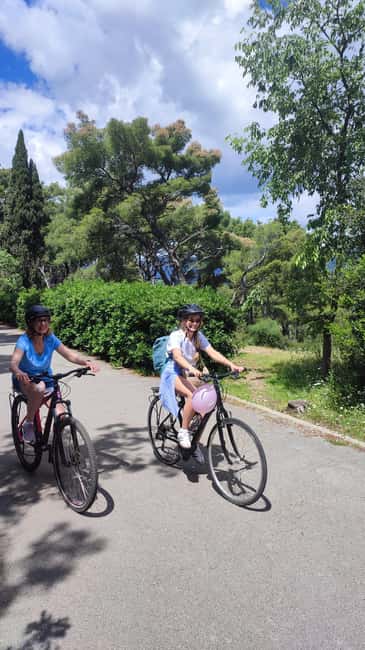
The climb is worth it for the change in atmosphere. City streets give way to the shade of a pine forest, and the ride becomes calmer. You get a sense of Marjan as a recreation area, not simply a viewpoint.
The route includes time for stops and photographs. Some guides have adjusted the pace for the group, waited for slower riders, and made sure everyone stayed together. That matters on a hill, especially when riders have different fitness levels.
Views over Split, the islands, and the sea
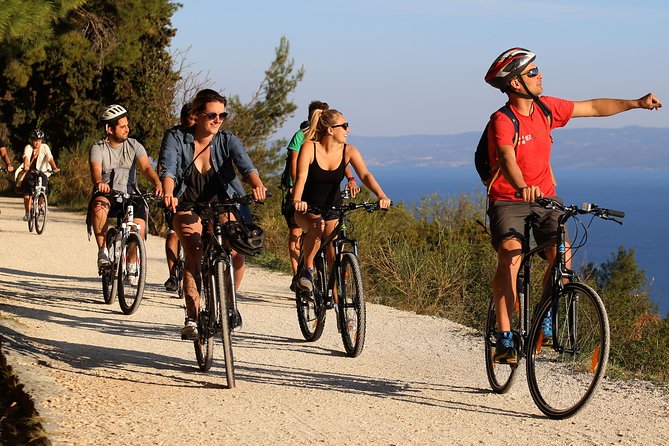
From Marjan, you gain the wide perspective that is difficult to get from the old center. You can look back toward the marina, beaches, harbor, islands, and hills around Split.
The view is a major reason to choose this tour instead of a standard city walk. You see the palace and waterfront as part of a larger coastal setting. After spending time among narrow lanes, the open outlook helps the city make sense.
The downhill portion is also a welcome reward. One rider noted that the descent required little pedaling for a long stretch. That does not erase the climb, but it helps balance the effort.
If you dislike heights, take the route description seriously. One rider wished the high viewpoint had been made clearer before departure. Ask the guide about the height and uphill section at the start if either could make you uncomfortable.
Through Varos and onward to Sustipan
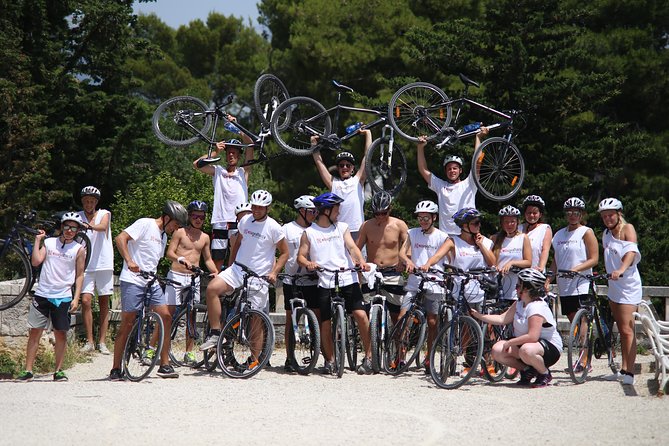
The return route takes you through Varos, a dense neighborhood once associated with farmers, fishermen, and working people. Its narrow streets offer a different view of Split from the grand palace and waterfront.
Varos is valuable because you are not only seeing monuments. You are passing through a neighborhood shaped by work, family life, and tight urban space. The bike makes it possible to connect these areas without a long walk between them.
The final stop is Sustipan, an old area with coastal views and a quieter feel. The exact amount of time at each stop can vary with the group and guide, but Sustipan gives the route a calm finish before you return to the starting point.
This final stretch also helps you see the contrast between Split’s dense historic core and its more open edges. It is a fitting end to a tour built around changing scenery.
Guides make the biggest difference
The strongest part of this experience is the guiding. Darla has been praised for explaining how the city developed, taking photos, and adjusting the outing to the group. Eva has been described as accommodating and helpful, including with suggestions for a local lunch afterward.
Ivana is known for making the afternoon feel personal and for handling a thunderstorm delay with flexibility. Yvonne has been praised for her local knowledge, conversation, and skill at showing less obvious parts of Split. Egor has received praise for combining information with practical suggestions for exploring without a bike.
These details matter because the route itself is fixed, but the tone is not. A friendly guide can turn a demanding uphill ride into a fun challenge. A rushed guide or oversized group can make the same route feel less personal.
The tour has a maximum of 15 people. That is smaller than a big bus excursion, but it does not guarantee a quiet experience. If your group is full, position yourself near the guide and pay attention during stops. A staff member may ride at the back to keep the group together.
Fitness, clothing, and what to bring
You need a moderate level of physical fitness. The tour may cover around 10 miles or more, and the Marjan climb is the main test.
Wear comfortable clothes suited to cycling. A helmet is provided, as is the bike, but food and drinks are not included. Bring water and plan for a few hours outdoors, especially because the route includes an exposed climb before the shaded park.
Children must be accompanied by an adult. At least two people are required per booking. The tour operates near public transportation, but hotel pickup and drop-off are not included, so arrange your own way to Ul. kralja Zvonimira 8.
The experience requires good weather. If poor weather cancels the tour, you can choose another date or receive a full refund. You can also cancel up to 24 hours before the start for a full refund. Changes or cancellations inside that 24-hour window are not accepted.
Who should book the Split bike tour?
I would choose this tour if you want a broad first look at Split and enjoy active sightseeing. It suits couples, friends, and independent visitors who want the palace, waterfront, neighborhoods, sports landmarks, and Marjan in one outing.
It is especially useful early in your stay. The guide can help you identify places to revisit, and the high viewpoint gives you a practical map of the city. The local suggestions from guides such as Eva and Egor can also improve the rest of your time in Split.
I would hesitate if you want a slow, detailed tour of Diocletian’s Palace alone. I would also think twice about a standard bike if hills are a concern. An e-bike upgrade may be the difference between enjoying the views and counting the meters until the climb ends.
Should you book it?
Yes, if you want to see more than the old center and are ready for a genuine ride. The strongest reasons are the Marjan views, the mix of historic and everyday Split, the return through Varos and Sustipan, and the guides’ personal approach.
Book with an e-bike in mind if you are unsure about hills. Choose a different experience if you want a purely relaxed outing or an in-depth palace visit. For active visitors, this is a good-value way to understand Split quickly, with enough scenery and local detail to make the effort worthwhile.
FAQ
How long does the City Bike Tour of Split last?
The tour lasts approximately three to three and a half hours.
Where does the tour begin?
It begins at Ul. kralja Zvonimira 8, 21000 Split, Croatia.
Where does the tour finish?
The tour ends back at the original meeting point.
Are bicycles and helmets provided?
Yes. A high-quality bicycle and helmet are included.
Is an e-bike included?
The included bicycle is a standard bike. E-bikes may be available as an optional upgrade, so ask about this when booking.
How difficult is the ride?
You need a moderate level of physical fitness. The route includes a significant uphill section into Marjan Park, and some riders found the climb tough.
What is the maximum group size?
The maximum is 15 people.
Can children join the tour?
Yes, but children must be accompanied by an adult.
Is hotel pickup included?
No. Hotel pickup and drop-off are not included, so you need to reach the meeting point yourself.
What happens if bad weather cancels the tour?
You can choose a different date or receive a full refund if poor weather causes the cancellation.
Just added around Croatia
- Biking Vidova – Skrip & museum of olive oil – Splitska – Postira★ 5.0 · 20 reviews
- Split: Old Town and Marjan Park Bike Tour★ 4.6 · 51 reviews
- Split/Omiš: Cetina River Water Bike Safari★ 4.9 · 91 reviews
- Private Hvar Island E-Bike Tour (Self Guided)★ 4.3 · 15 reviews
- Skradin: Krka National Park E-Bike Adventure & Viewing Point★ 5.0 · 12 reviews
- Hvar Island E-Bike Tour with Wine Tasting and Starters★ 4.9 · 25 reviews
- Hvar Island Self-Guided E-Bike Tour★ 4.9 · 24 reviews
- From Zadar: Full-Day Ugljan Self-Guided Bike Tour★ 4.7 · 12 reviews
Split Cycling Tours, compared.
Browse the lists this tour appears in