
REVIEW · AMSTERDAM
Escape Amsterdam: E-Bike to Zaanse Schans Windmills & Zaandam
Leave the city behind on two wheels. This small-group e-bike tour links Amsterdam with quiet farm paths, working windmills, Zaanse Schans, Zaandam, and the street art of NDSM Wharf in about five and a half hours. I like the pedal-assist bikes, which make the 40-kilometer ride manageable, and I like the chance to meet a real windmill miller before reaching the more famous heritage site. The main consideration is simple: you must already know how to ride a bicycle, and this is a serious half-day ride, not a short city spin.
The route is mostly flat, and the pace is designed to keep the group together rather than push for speed. Guides such as Gabe, Kevin, Phoebe, Petra, Corbin, and Ronan have been praised for clear explanations, careful riding, and good judgment in changing weather. Still, rain is always possible in the Netherlands, and the opening and closing stretches through Amsterdam traffic require more attention than the peaceful country paths.
Five useful things to know before booking
- The ride covers about 40 kilometers: Some outings have reached roughly 45 kilometers, though the electric assistance makes the distance far easier than it sounds.
- You cross the IJ by free ferry: The tour begins behind Amsterdam Centraal Station, where you board a public ferry to Amsterdam-Noord.
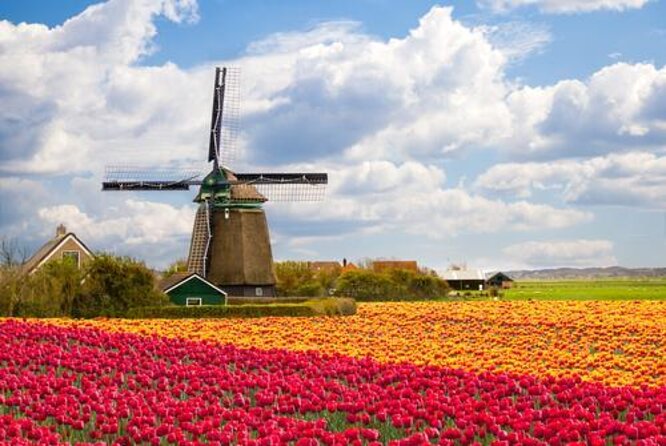
- The working windmill may be the highlight: At Krijtmolen d’Admiraal, you can get close to an operating mill, and the miller Marcel has sometimes offered a personal look inside.
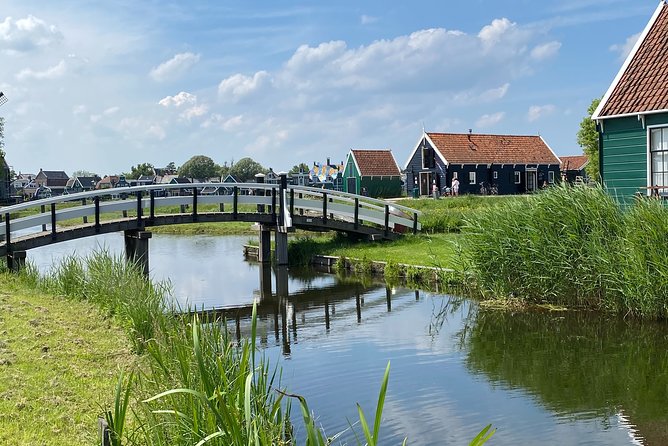
- Zaanse Schans is not the entire day: You get about 1 hour and 15 minutes there, with time for lunch, clogs, cheese-making, windmills, and the outdoor heritage site.
- The group is capped at 10 people: That keeps the ride more personal and makes it easier for the guide to watch the group.
- Weather gear is supplied: A helmet and rain poncho are available, and the ponchos have been praised for being sturdy enough to help during wet rides.
Why this route is better than a bus for some visitors
Zaanse Schans is one of the most popular side trips from Amsterdam. You can reach it by bus, train, car, or organized excursion, but a vehicle keeps you on the main line between the city and the windmills. This bike route shows you the transition.
You start among Amsterdam’s canals and traffic, cross the water by ferry, and then move into a world of narrow cycle paths, fields, sheep, cows, villages, and water-managed farmland. That change is the real point of the day. Zaanse Schans becomes part of a wider Dutch experience instead of a single photo stop.
I also like the small-group format. With no more than 10 people, the guide can check that everyone is comfortable and keep the pace sensible. Several guides have been praised for making sure nobody gets left behind, especially in city traffic or bad weather.
The ride is not effortless in the sense that you can sit back like you would on a scooter. These are pedal-assist e-bikes. You still pedal, but the motor helps with distance and fatigue. That distinction matters. If you have not ridden a bike in years, the electric assistance can make the tour feel surprisingly gentle, but you still need basic balance, steering, braking, and road awareness.
More E-Bike Tours in Amsterdam
- Amsterdam: Windmill, Cheese, and Countryside E-Bike Tour
★ 4.5 · 1,308 reviews - Amsterdam Highlights Bike or E-Bike Tour
★ 5.0 · 1,171 reviews - Cheese, Canals & Windmill Countryside E-Bike Tour Amsterdam
★ 5.0 · 501 reviews
Starting at Oosterdokskade and crossing the IJ
The meeting point is at Oosterdokskade 63A, near Amsterdam Centraal Station. The shop can be a little hard to spot, so allow time to find it rather than arriving at the last second. At the start, you receive your e-bike, a helmet if you want one, and a rain poncho.
The first section takes you through Amsterdam toward the ferry. This is not the quietest part of the route. Amsterdam is a cycling city, but that does not mean every street feels relaxed to someone unfamiliar with local bike traffic. Your guide handles the route and group, which is useful if you are unsure about Dutch cycling etiquette.
Behind the station, you board the free ferry to Amsterdam-Noord. The crossing is short, but it gives you a clear sense of the city’s geography. In just a few minutes, the dense center is behind you and the northern side of the IJ opens the way toward the countryside.
That ferry ride is also a practical benefit. You avoid a long detour and get a small slice of ordinary Amsterdam transport without paying extra for it.
Krijtmolen d’Admiraal and the human side of windmills
The first major stop is Krijtmolen d’Admiraal, a working windmill. You spend only a short time here on the formal schedule, but the stop can become especially memorable when the miller is available.
Marcel, who works and lives at a windmill with his wife, has given visitors a personal tour and explained how the mill functions. Some have even been allowed to climb part of the mill’s structure, including a blade area. That sort of encounter gives the machinery a human scale.
At Zaanse Schans, you will see historic windmills in a carefully arranged heritage setting. At Krijtmolen d’Admiraal, you get a better sense that windmills are not simply decorative symbols printed on souvenirs. They were working tools, and some still operate today.
The exact access inside the mill can depend on the day and the miller’s availability, so treat this as a possible bonus rather than a guaranteed private tour. Even a close look at a live working mill adds something the standard photo stop cannot.
Landsmeer: cows, sheep, and paths beyond car traffic
From the windmill, the route heads toward Landsmeer. This is where the ride begins to feel properly rural.
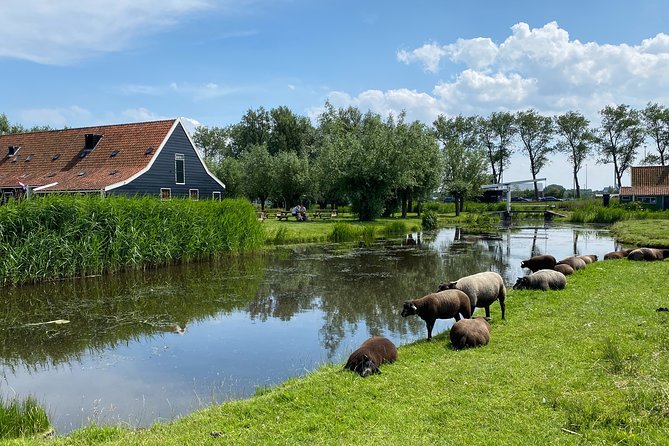
The tour uses narrow paths that cars cannot reach. You pass farmers’ fields with cows and sheep rather than staying on a main road. The country here is not dramatic in the mountain or coastal sense. Its appeal is quieter: low horizons, flat fields, open skies, water, and the orderly network of bike paths that makes this part of the Netherlands so pleasant to explore by bicycle.
You should keep your eyes open rather than staring only at the front wheel. The guide will share details about the area, Dutch planning, and the way people live with water and open farmland. Kevin, who has a background in city planning, has been praised for connecting the countryside to the way Amsterdam and nearby towns developed.
The flat terrain is a major help, but distance is still distance. The electric motor reduces strain, not time in the saddle. Wear comfortable clothes and make sure you are happy riding for several hours.
More E-Bike Tours in the Netherlands
- Amsterdam: 3h E-Bike Tour with break
★ 4.6 · 230 reviews - Amsterdam: Zaanse Schans Windmills & Zaandam E-Bike Tour
★ 4.9 · 162 reviews - Amsterdam: E-Bike Sightseeing Tour
★ 4.7 · 99 reviews - Amsterdam: Dutch Countryside E-Bike with Cheese & Clogs
★ 4.9 · 95 reviews
Het Twiske, a local recreation area
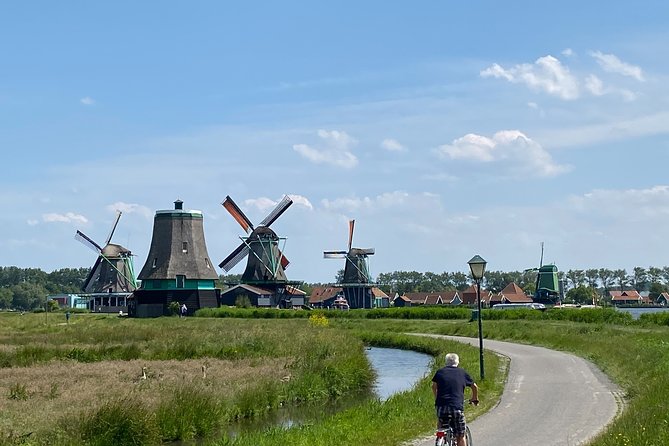
The route continues through Het Twiske, a recreational area used for swimming, relaxing, and outdoor time. This gives the day a different rhythm. You are no longer looking only at heritage buildings or windmill machinery. You are seeing a place where local people go to enjoy the outdoors.
The planned stop here is brief, so do not expect a long swim or extended picnic. Its value is in the scenery and in the contrast with central Amsterdam. The ride through Het Twiske helps you understand how quickly the urban area gives way to green space once you cross to the north.
If the weather is warm and sunny, this part of the route can be especially pleasant. If the weather turns wet, the supplied poncho becomes useful. Several riders have completed the route in rain, and the guides have adjusted their pace or timing when needed.
Zaanse Schans: allow time for the main attraction
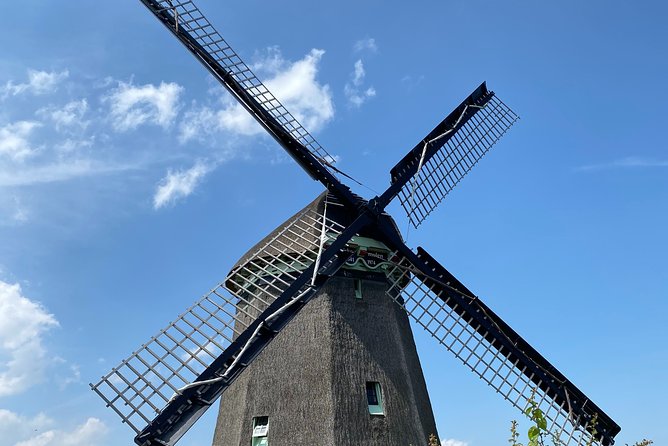
Zaanse Schans receives the longest stop, about 1 hour and 15 minutes. This is the centerpiece of the excursion, but the ride means you arrive with some context already in place.
The heritage area brings together windmills, traditional buildings, craft displays, and Dutch food traditions. You can look at clogs, learn about cheese-making, inspect more windmills, and find something for lunch. Traditional Dutch pancakes have also been a popular meal choice during the stop.
The allotted time is enough for a useful visit, but not enough to inspect every attraction at length. You need to choose. If the windmills matter most, head toward them first. If you want food and a quick look at the craft displays, plan that before wandering too far.
This is one of the tour’s trade-offs. Zaanse Schans can fill an entire morning or afternoon if you explore it slowly. Here, you get a focused visit inside a longer day. The reward is seeing the surrounding countryside by bike. The cost is less time for museums, interiors, and shopping at the heritage site.
The setting can also feel more visitor-oriented than the farm paths earlier in the day. That is not a criticism so much as a reminder that Zaanse Schans is a major attraction. The quieter, more personal moments may come at Krijtmolen d’Admiraal or along the route rather than at the main site.
Zaandam and the architecture inspired by Monet
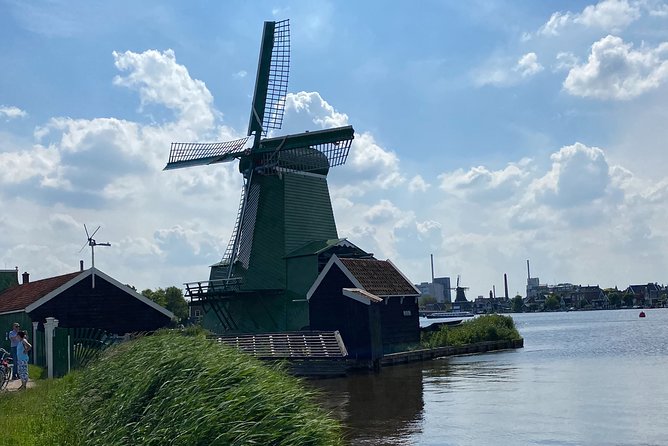
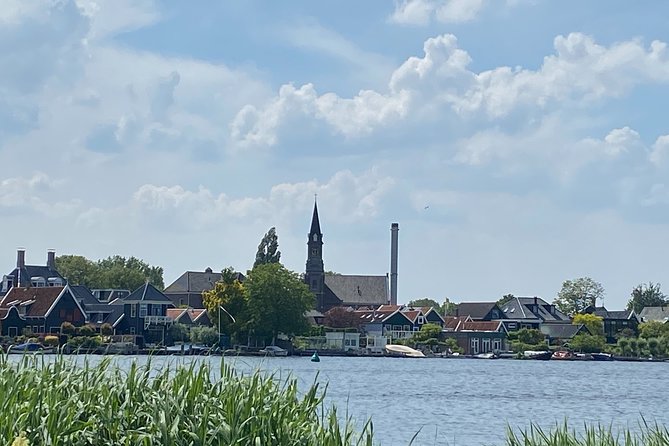
After Zaanse Schans, you ride toward Zaandam. The stop lasts about 20 minutes and focuses on the town’s unusual architecture, including the distinctive hotel buildings made from stacked house-like forms.
The tour also points out places connected with the painter Claude Monet. The references to Monet help explain why this region attracted artists. The combination of water, timber buildings, industrial activity, and strong color gave the area a character very different from the grand streets of central Amsterdam.
Twenty minutes is enough to see the main visual details and hear the story, but not enough for a full town visit. Think of Zaandam as a compact architectural and cultural pause on the return route.
This section is useful because it broadens the day beyond the standard windmill image. You see how Dutch towns can be playful and modern while still drawing on older local forms.
Returning through NDSM Wharf and Amsterdam Centraal
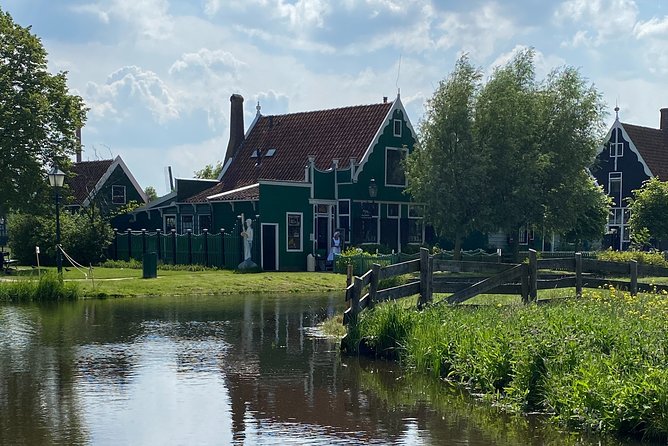
The return route comes through NDSM Wharf, a former shipping area now known for changing street art, graffiti, and large murals. It is a strong contrast with the orderly heritage buildings of Zaanse Schans.
The stop is short, but the industrial setting gives the final part of the route some energy. NDSM is not polished in the traditional Amsterdam sense. Its appeal is the rougher walls, creative reuse, and public art. If you enjoy contemporary urban culture, this may be one of the most surprising parts of the day.
From NDSM, the group re-enters Amsterdam and finishes at Centraal Station before returning to the shop. The route therefore gives you three very different views of the region: historic city, open countryside, and reused industrial space.
By this stage, the e-bike assistance matters most. The final kilometers are easier when your legs have already spent hours riding. Several guides, including Petra and Ronan, have been praised for watching the weather closely and bringing the group back safely and comfortably.
The e-bikes, distance, and physical effort
The advertised distance is about 40 kilometers, or 25 miles. Some accounts describe rides closer to 45 kilometers, so I would prepare for the upper end rather than assume the shorter figure is exact.
The bikes are pedal-assist electric models with comfortable saddles. They are not scooters, and you must pedal throughout the tour. The assistance is designed to make a long, flat ride manageable, especially toward the end.
People who had not ridden for several years have found the tour less demanding than expected. First-time e-bike users also report getting used to the controls quickly. Still, I would not book this if you are uncomfortable on a bicycle or have trouble riding for extended periods.
The route includes city streets, ferry boarding, dedicated cycle paths, and narrow rural lanes. You need to stay alert and follow the guide’s instructions. The tour is friendly to ordinary bike riders, but it is not a passive sightseeing activity.
Guides, group size, and weather planning
The guide can shape the whole day. Gabe has been praised for combining archaeology with stories about Amsterdam and Dutch history. Kevin is noted for city-planning explanations, careful group management, and useful restaurant suggestions. Phoebe, Petra, Corbin, Ronan, Pedra, Michael, and Kendra have also received strong praise for patience, humor, route handling, and safety.
That range of names matters because the experience may differ slightly depending on who leads your departure. The common thread is a guide who keeps the group together and explains what you are seeing instead of simply pointing the way.
Weather deserves realistic attention. Rain ponchos are available, and they have proved useful during heavy showers. But a poncho does not turn a wet six-hour ride into a dry one. Check the forecast, dress in layers, and bring clothing that will remain comfortable if the weather changes.
The tour is offered in English. German, Spanish, French, and Dutch are available upon request for private tours, not as a standard promise for this small-group departure.
Is the $108.84 price good value?
At $108.84 per person, this is not the cheapest way to reach Zaanse Schans. You are paying for much more than transport, though. The price includes the e-bike, guide, route planning, ferry connection, windmill stops, countryside riding, and the return through Zaandam and NDSM Wharf.
The value is strongest if you want an active day and would otherwise need to arrange several separate visits. You see more than a single heritage attraction, and the guide adds context that you would miss by simply arriving at Zaanse Schans on your own.
Food, gratuity, and any personal purchases are extra. The main question is not just cost. It is whether you value the ride itself. If you only want to photograph windmills, a shorter visit may suit you better. If you want to understand how the city connects to its surrounding fields, towns, and industrial areas, the longer route earns its price.
Who should book this e-bike tour?
I would recommend it to confident cyclists, first-time e-bike users who can already ride a normal bicycle, couples, friends, and families with children tall enough for the bikes. The minimum height is listed as 1.50 meters for adults and 1.55 meters for children, with limited alternatives available by email.
It is especially good for someone spending several days in Amsterdam who wants one day outside the center. The route offers fresh air, working windmills, farm animals, local architecture, and street art without requiring you to rent a car.
I would hesitate to recommend it to anyone who dislikes rain, tires quickly on a bike, or wants long, unhurried visits inside each attraction. The day has a clear rhythm and a lot of distance. You get variety, not deep time at every stop.
FAQ
How long is the e-bike tour?
The tour lasts approximately 5 hours and 30 minutes.
How far do you ride?
The planned ride is about 40 kilometers, or 25 miles. Some outings have covered about 45 kilometers.
Do I need to know how to ride a bicycle?
Yes. You need to be able to ride a bike for the full route. The e-bikes provide pedal assistance, but they are not scooters.
What is included with the bike?
The tour includes an electric bike with a comfortable saddle. Helmets and rain ponchos are available at the shop.
How many people can join the group?
The maximum group size is 10 people.
Is the tour offered in languages other than English?
The regular tour is offered in English. German, Spanish, French, and Dutch can be requested for private tours.
Where does the tour start and finish?
It starts at Oosterdokskade 63A in Amsterdam and ends back at the meeting point after the return through Amsterdam.
Should you book it?
Book this tour if you want to ride into the Dutch countryside, not merely be driven to a windmill village. The combination of ferry, farm paths, working windmill, Zaanse Schans, Zaandam, and NDSM Wharf gives you a broad view of the area in one well-planned day.
Skip it if 40 kilometers sounds unpleasant or if your main goal is a slow, detailed visit to Zaanse Schans alone. For capable cyclists, though, the e-bike turns a long distance into a manageable outing, and the personal stories from guides and miller Marcel add real value. With a 4.9 rating from 446 reviews and 98 percent recommendation, it has earned its strong reputation, provided you come ready to pedal.
Just added around Amsterdam
- Amsterdam E Bike Tour to the Windmills of Zaanse Schans★ 5.0 · 65 reviews
- Bike tour in Amsterdam with an Italian guide★ 5.0 · 15 reviews
- Zaanse Schans Windmills E Bike Day Trip from Amsterdam★ 5.0 · 15 reviews
- Daily group bike tour in Spanish.★ 5.0 · 60 reviews
- Explore Amsterdam by Bike in the Company of a French Local Guide★ 4.5 · 31 reviews
- Bill’s Bike Tour Amsterdam – Culture, Liberalism & Tolerance★ 5.0 · 28 reviews
- Amsterdam 3 hrs Bike Tour – live guide En/Fr/De/Nl/Sp★ 4.5 · 138 reviews
- Urban Adventures Amsterdam Bike Tour, Graffiti and Magnet Fishing★ 5.0 · 105 reviews
E-Bike Tours, compared.
3-Hour Porto Highlights on a Electric Bike Guided Tour
Read our review →
Hills, Alfama, and Mouraria Tour by Electric Bike
Read our review →
Athens Scenic Electric Bike Tour with optional Acropolis visit
Read our review →
City Highlights 3-Hour Guided Electric Bike Tour
Read our review →
Rome EBike Tour: Appian Way, Catacombs & Roman Aqueducts
Read our review →
Top Highlights & Hidden Gems Tour by Cannondale E-Bike
Read our review →Browse the lists this tour appears in