
REVIEW · LUCCA
From Lucca to Pisa: Self-Guided Bike Tour
Pisa is better by bike. This self-guided route gives you a pleasant way to connect two famous Tuscan cities while spending much of the day beside the Serchio River, on country roads, and through small towns. I especially like the scenic variety and the freedom to pause when you want, rather than being tied to a group schedule.
I also like the practical setup: the shop is just outside Lucca train station, the bikes are fitted with phone holders, and the staff can help you get the route app running. The main drawback is navigation. The app has worked well for many riders, but it can drain a phone battery quickly and may feel slow or unclear at points.
This is sold as an easy to intermediate ride, but it is not simply a short pedal through town. The route to Pisa is about 33 kilometers, and riding back makes for a serious full-day outing. For most people, I would choose an e-bike and return by train.
Key Points Before You Book
- The ride is about 33 kilometers to Pisa: Plan on roughly 2 to 4 hours for the outward journey, depending on stops, traffic, and your cycling pace.
- The scenery is the main event: You follow the Serchio River, cross dirt and asphalt roads, and pass through small towns and rural areas around the Monti Pisani.
- An e-bike is worth the extra cost for many people: It helps in warm weather, on uneven surfaces, and after several hours in the saddle.
- The route app needs a charged phone: Bring a power bank or a second phone, especially if you might cycle back.
- The return is flexible: Ride back on a separate route or take a train that reaches Lucca in about 25 minutes.
- The roads are mostly quiet but not entirely traffic-free: You may encounter busy roads, roundabouts, railroad crossings, gravel, and rougher sections.
Starting Beside Lucca Train Station
The meeting point is just outside Lucca train station, on the left side of the square. This is one of the most convenient parts of the experience. You do not need to cross Lucca looking for a rental shop, and the station gives you an easy reference point if you arrive by train.
The bike shop provides a trekking bike or e-bike, a lock, a repair kit, a handlebar phone holder, and access to the route app. Staff explain how to use the bike before you leave. Several riders found the bikes well maintained, and e-bike users were given basic instruction before setting off.
You should allow time for this setup. You need to adjust the seat, learn the controls, check the route, and make sure your phone is secure. If you use an e-bike for the first time, do not rush this part. Ask for a short practice run and confirm how to change the assistance level.
The shop has also stored luggage free of charge for some riders, though you should confirm this before relying on it. That service can be especially useful if Lucca is one stop on a longer train journey.
The standard bikes suit people over 150 centimeters tall. E-bikes are available for people over 155 centimeters and over age 14. The bike frames are rated for a maximum weight of 130 kilograms. No child seat, trailer, or tag-along can be attached to either type of bike.
More Self-Guided Bike Tours in Italy:
- Private Self-Guided E-Bike Ride in Tuscany with Vineyard Visit
★ 5.0 · 775 reviews - Lucca: Self-Guided Tour by Bike
★ 4.6 · 104 reviews - Verona: Valpolicella Wine Self-Guided E-Bike Tour & Tastings
★ 4.8 · 78 reviews
Riding Through Lucca and Toward the Serchio River
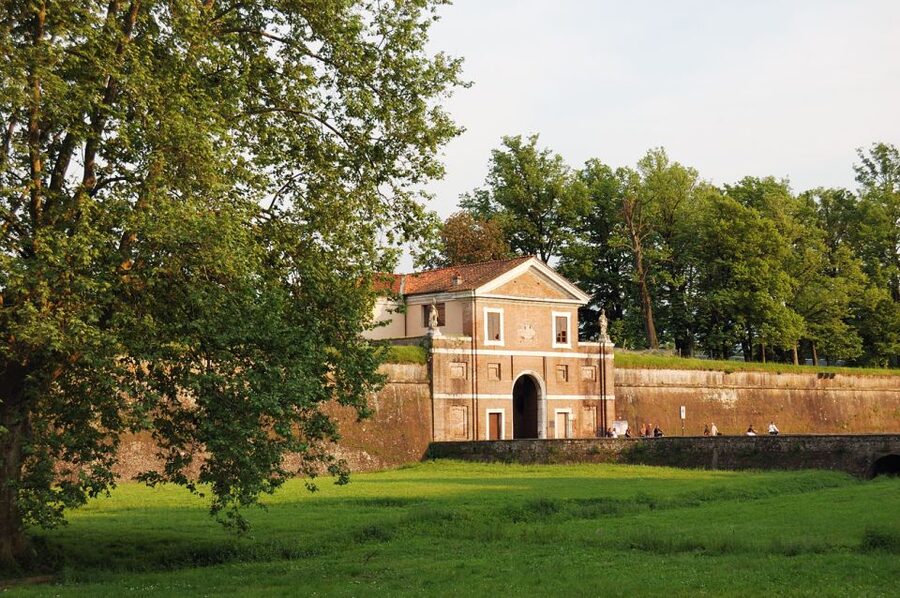
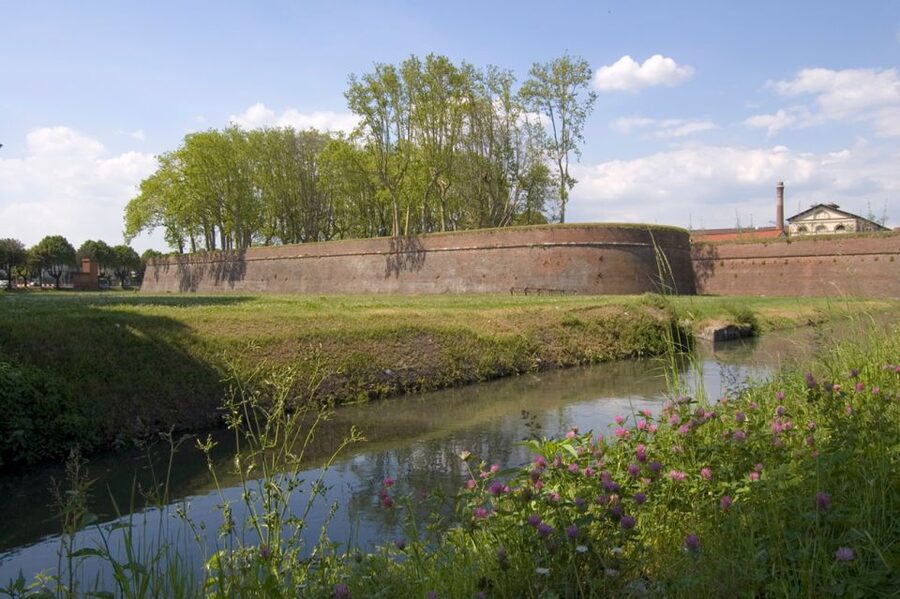
The route begins by taking you through Lucca before moving into quieter surroundings. This opening section lets you see the city from a different angle. Lucca is famous for its historic center and broad tree-lined walls, but a bicycle gives you a wider sense of how the city connects to the countryside.
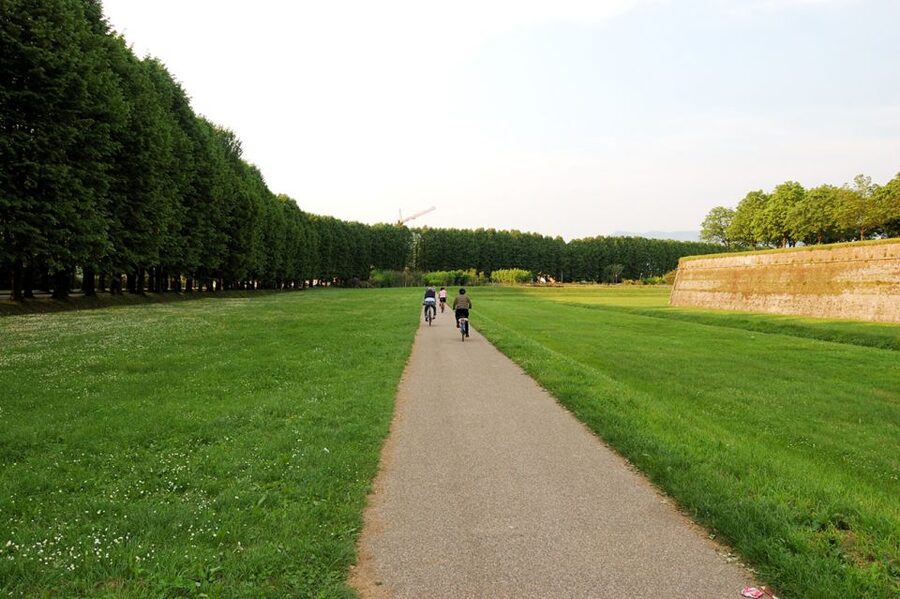
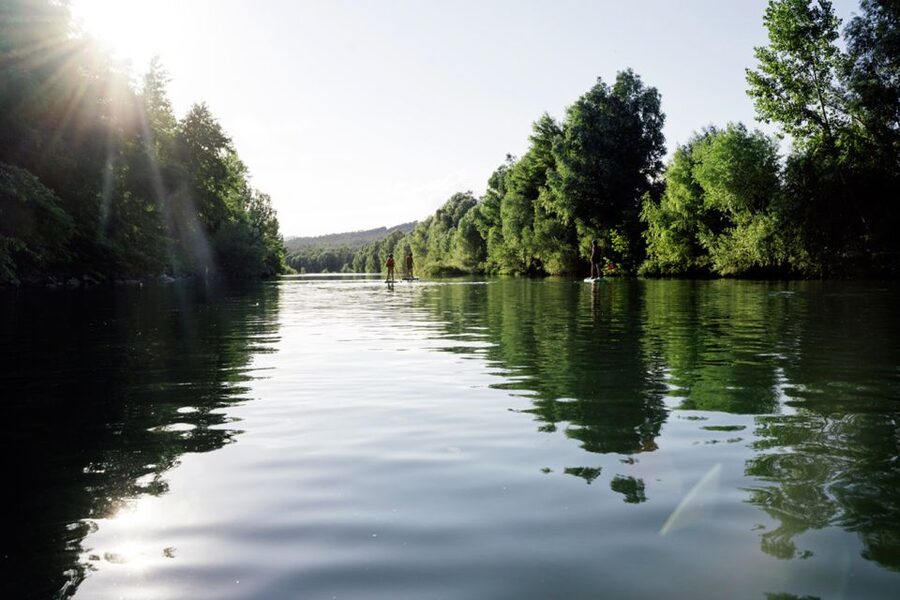
Once outside the busiest streets, the route follows the Serchio River and uses secondary roads, paths, and tracks. This is where the ride becomes special. You are not simply traveling between two attractions. You are watching the built-up center give way to fields, village roads, and views toward the Monti Pisani.
The surface changes often. Expect a mixture of asphalt, hard-packed dirt, cycle paths, and rougher tracks. That variety keeps the ride interesting, but it also means you should not expect a polished paved trail from beginning to end.
The outward route is less direct than the route back. That is intentional, since it takes you through more rural scenery, but it can make the app more important. At a few points, the route uses busier roads and roundabouts. Cars have generally been respectful, but you still need to pay attention and ride defensively.
A railroad crossing has caused confusion for some riders. Look closely at the map before crossing, since an alternate way may be available. The route is suitable for most reasonably fit cyclists, but you should be comfortable riding on mixed surfaces and sharing short sections with traffic.
San Giuliano Terme After About 20 Kilometers
After approximately 20 kilometers, you reach San Giuliano Terme. This is the natural rest point on the route and a sensible place to pause before the final section to Pisa.
The town is known for its spa, and the central square provides a pleasant setting for a drink. Food and beverages are not included, so carry water and budget for your own refreshment. In hot weather, this stop matters more than it might on paper. One rider completed the route in 30-degree heat and found the breeze helpful, but you should not count on mild conditions.
San Giuliano Terme also breaks the journey into manageable parts. Instead of thinking about one long ride to Pisa, you can treat the day as Lucca to San Giuliano Terme, then San Giuliano Terme to the city center.
There is no formal guide waiting for you at the stop. This is a self-guided outing, so the timing is yours. You might stop for ten minutes or longer, depending on the weather and your energy. That freedom is one of the better reasons to choose this format.
Arriving at Piazza dei Miracoli
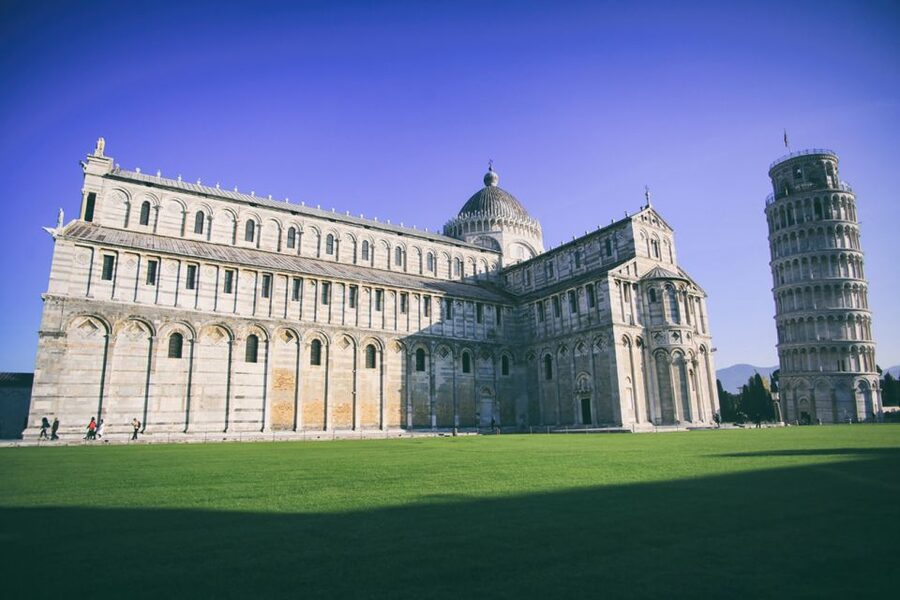
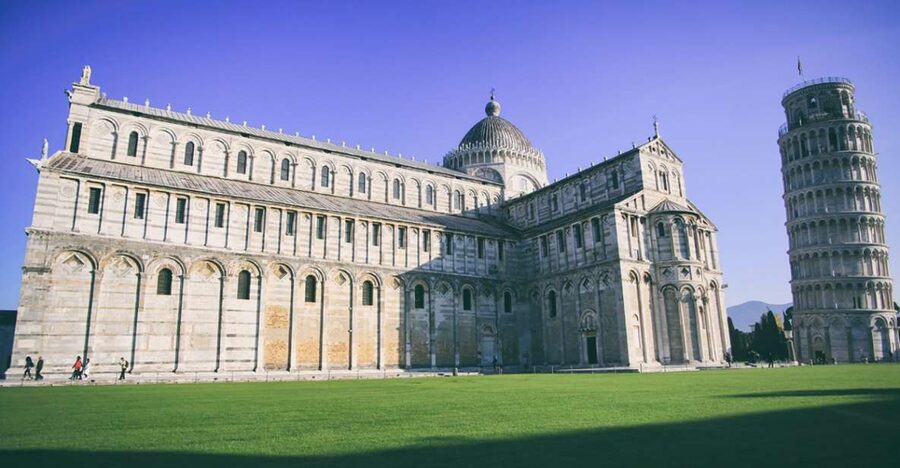
The route ends at Piazza dei Miracoli, the grand square containing the Leaning Tower of Pisa and the other famous monuments. Reaching the square by bicycle gives the day a clear payoff. You have arrived under your own power, after seeing a side of Tuscany that most visitors miss from a train window.
This is your main photo stop. You can lock the bicycle and spend time around the tower, cathedral, baptistery, and open lawns. The bike ride itself does not include entry to the monuments or a ticket to climb the Leaning Tower.
Plan your timing carefully if you have a reserved tower visit. One rider suggested leaving at least two and a half to three hours between collecting the e-bike and a timed tower ticket. That allows for setup, the ride, stops, and a little breathing room. You do not want to begin the day watching the clock.
If you want to explore Pisa beyond the square, keep the return arrangements in mind. The route may finish near the monuments, while bike return or train arrangements can involve a different location.
More Guided Rides in Italy:
- Milan: Hidden Gems Guided Bike Tour
★ 4.8 · 1,334 reviews - Florence: Guided E-Bike Tour to Piazzale Michelangelo
★ 4.4 · 1,204 reviews - Florence: 2-Hour Guided Sightseeing Bike Tour
★ 4.5 · 1,004 reviews - Naples Guided Tour by Bike
★ 5.0 · 891 reviews
Returning by Train or Bicycle
The easiest return is the train. The journey takes about 25 minutes, and the bikes fit into the train storage wagons. Train tickets are not included, but the local partner can help you buy them in advance.
This option makes the ride much easier to fit into a wider Italian itinerary. You can cycle from Lucca to Pisa, see the monuments, and continue by train rather than retracing the entire route. Some riders have also arranged to leave the bikes at a shop near Pisa train station for an extra fee, which can help if you are continuing toward Florence.
There is one practical detail that is easy to miss. The Pisa bike shop is not a ten-minute walk from the Leaning Tower. It can take around 30 minutes or more on foot, so a taxi may be useful if you need to reach the station-side shop with a strict train timetable.
If you return the bikes by train to Lucca, be prepared to handle them. The bikes are large and may not fit in a station elevator. At Lucca, you may need to carry a bike down from the train before using a ramp to leave the station. This is manageable, but it can be awkward if you are traveling alone or carrying luggage.
Cycling back is possible and gives you a second route. The return route is reported to be more direct and easier to follow, with many back roads. Still, riding both ways turns this into a long day. Start early, check the daylight, and be realistic about your fitness.
How Good Is the App?
The app is central to the experience. The phone holder makes it easy to keep the map in view, and many riders found the directions simple enough to follow. The route is not guided by a person, so the app replaces the guide’s spoken instructions.
Its weak point is power use. GPS navigation can drain an iPhone quickly over several hours. Bring a fully charged phone and a power bank. If you are cycling back, consider carrying a second phone with the route available.
The app may also need mobile data, depending on how it is set up. One bike shop helped a rider download the route offline, which is a useful step. Ask the staff to show you how to access the route before leaving, rather than assuming the map will be obvious.
The return route may be provided separately. Make sure you know how to switch from the outward route to the route back. One group missed the instructions for scanning the QR code and found the return navigation tricky.
These issues do not ruin the ride, but they are worth handling at the shop. Take a few minutes to zoom in, identify the route direction, and check that your phone can last until Pisa.
Trekking Bike or E-Bike?
The choice depends on your fitness, the weather, and your plans for the return.
A trekking bike should work for a reasonably fit cyclist. The route is mostly flat, and several sections are easy to pedal. Still, the mixed surfaces and distance add up. If you plan to ride back, the standard bike demands much more from your legs.
I would choose the e-bike for a family day, a summer ride, or any trip where you want energy left for Pisa. Riders have found the e-bikes easy to use and well maintained, including people who had never used one before. The electric assistance is especially useful after 20 kilometers, when the novelty of the scenery remains but your legs may be less enthusiastic.
An e-bike does not remove every challenge. You still need to steer over gravel and dirt, handle roundabouts, watch traffic, and manage battery use. But it lets you focus more on the river, villages, and views instead of fighting the distance.
Value at $34 Per Person
At $34 per person, the price is reasonable for a full day of independent transport and sightseeing. You get the bike, lock, repair kit, phone holder, and route app. That is a good deal if you would otherwise pay for separate transport between Lucca and Pisa and still want a countryside experience.
The return train ticket costs extra, as do drinks, food, and any optional monument tickets. An e-bike may also cost more than a standard trekking bike. Add those costs before booking, but the base price remains fair for the amount of time involved.
The greatest value is flexibility. You can choose your departure time, pause in San Giuliano Terme, take photos, stop for a drink, and decide later if you want to return by train or bike. A guided coach transfer would be simpler, but it would not give you the same view of rural Tuscany.
Who Will Enjoy This Most?
I would recommend this to couples, active families, teenagers, and small groups who like to combine a famous sight with time outdoors. It also works well for people staying in Florence who want a greener day away from city streets, provided they can manage the train connections.
You do not need to be a serious cyclist, but you should be comfortable on a bike and reasonably fit. An e-bike makes the route accessible to a wider range of riders, though it does not turn the day into a short outing.
I would hesitate to recommend it to anyone who dislikes navigation, mixed road surfaces, or carrying a bike up station stairs. It is also not suitable for those needing a child seat, trailer, or tag-along, since those attachments cannot be used.
Should You Book This Ride?
Book it if you want Pisa to be part of a day outdoors rather than just another train stop. The best parts are the river route, the small towns, the changing surfaces, and the satisfying arrival at the Leaning Tower.
Choose the e-bike, charge your phone, bring water, and plan to return by train unless you are genuinely comfortable riding a long distance. With those details handled, this is an excellent-value way to connect Lucca and Pisa at a slower, more memorable pace.
FAQ
How long is the bike ride from Lucca to Pisa?
The route from Lucca to Pisa is about 33 kilometers. The journey usually takes between 2 and 4 hours, depending on pace, stops, and conditions.
Where does the tour start?
It starts just outside Lucca train station, on the left side of the square.
Where does the route finish in Pisa?
The itinerary ends in Piazza dei Miracoli, in front of the Leaning Tower of Pisa.
Is the ride suitable for families?
It is described as family-friendly and suitable for most reasonably fit cyclists. The route includes dirt roads, asphalt, paths, some busier roads, and roundabouts.
Are e-bikes available?
Yes. E-bikes are available for people over 155 centimeters tall and over 14 years old.
How tall do you need to be for a trekking bike?
Trekking bikes are available for people over 150 centimeters tall.
Can I attach a child seat or trailer?
No. A seat, trailer, or tag-along cannot be connected to the e-bikes or trekking bikes.
Is the return train included?
No. The return train ticket is not included. The bikes fit into the train storage wagons, and tickets can be purchased in advance through the local partner.
Can I cycle back to Lucca?
Yes. You can return by bike using a separate, more direct route, or take the train back to Lucca.
What equipment is included?
The rental includes a trekking bike or e-bike, bike lock, repair kit, smartphone itinerary app, and handlebar phone holder. Food, drinks, and the return train ticket are not included.
Just added around Italy
- Discovering Chianti, e-bike tour – daily experience★ 5.0 · 20 reviews
- Mountain bike tour of the Madonie from Cefalù★ 5.0 · 38 reviews
- Cagliari E-Bike Tour: Gulf, Canals & Flamingos at Molentargius★ 5.0 · 79 reviews
- Private Bike Tour with Olive Oil Tasting★ 4.5 · 15 reviews
- E-bike tour in Ostuni. Oil mill, Dolmen and huge olive trees★ 5.0 · 13 reviews
- E-Bike tour and Wine tasting from Desenzano Inland★ 5.0 · 24 reviews
- Desenzano e-bike tour★ 5.0 · 17 reviews
- Bologna Panoramic Bike Tour★ 4.0 · 14 reviews
Self-Guided Bike Tours, compared.
Red Rock Canyon Self-Guided Electric Bike Tour
Read our review →
Private Self-Guided E-Bike Ride in Tuscany with Vineyard Visit
Read our review →
Best Haleakala Downhill Self-Guided Bike Tour with Maui Sunriders
Read our review →
Self-Guided Ebike Tours of Acadia National Park Carriage Roads
Read our review →
Tahoe Coastal Self-Guided E-Bike Tour – Half-Day | World Famous East Shore Trail
Read our review →
Self-Guided Wine Tours by Bike with Lorelle & Greg
Read our review →Browse the lists this tour appears in