
REVIEW · INDONESIA
Jatiluwih (UNESCO Site) 2-Hour E-Bike Cycling Tour
Rice terraces, bamboo, and a few sharp questions. This two-hour e-bike tour takes you from the Batukaru Temple area into Jatiluwih, where broad rice terraces fill a valley between four extinct volcanoes. I like the easy-to-use electric bikes, which make the hills manageable, and I like the chance to see village life rather than simply photograph the terraces from a roadside viewpoint. The included Indonesian lunch adds value, too.
The main concern is consistency. Some recent experiences included bike problems, missing helmets, falls, and much less cycling than advertised. At $69 per person, the tour can be a good deal if you get a well-maintained bike, a full ride, and a strong guide. It is less convincing if much of the two hours becomes waiting or stopping.
Key points before you book
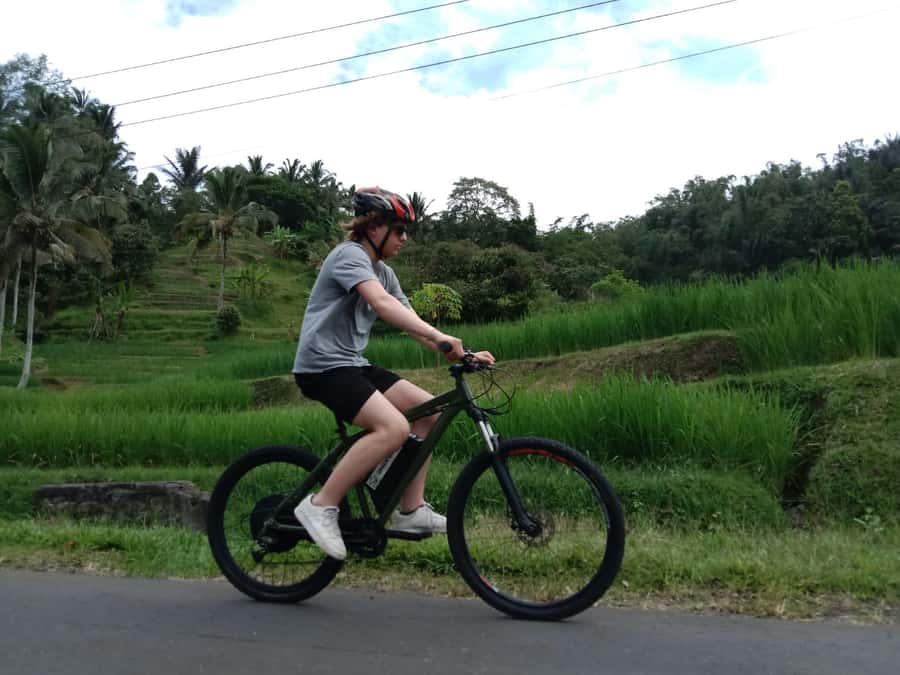
- Jatiluwih covers more than 300 hectares of tropical vegetation and rice terraces, giving you wide views instead of a single photo stop.
- The route begins near Batukaru Temple, but the temple itself is not part of the visit.
- You ride through several types of scenery, including dense jungle, giant bamboo, village roads, rice fields, and open valleys.
- An English-speaking local guide leads the ride, with commentary about Jatiluwih and its traditional irrigation system.
- Lunch, admission, water, insurance, a helmet, and a cold towel are included, with hotel pickup available as an added option.
- Recent quality has been uneven, so confirm that your helmet and e-bike are ready before setting off.
From Batukaru’s foothills to Jatiluwih
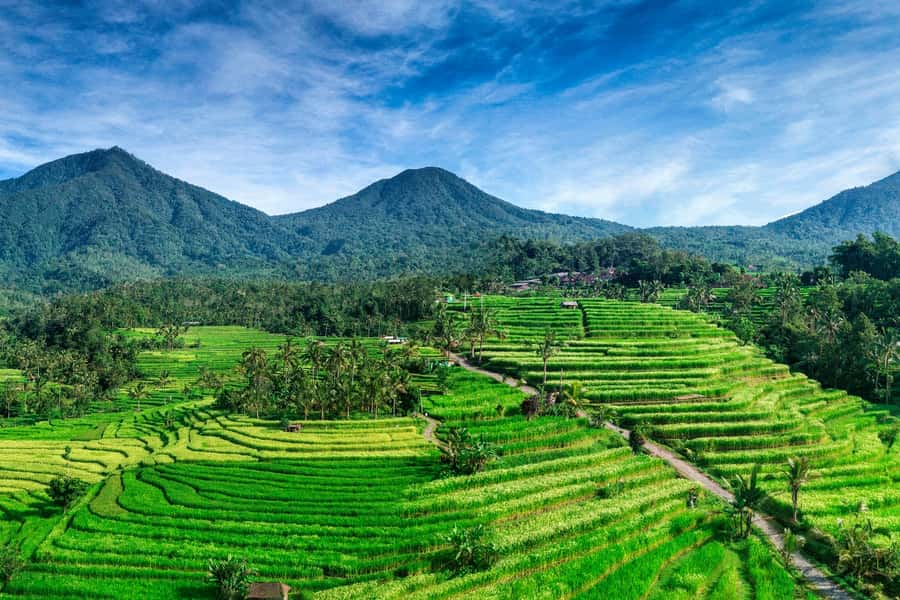
The meeting point is in the Batukaru Temple area, close to the pool before the temple entrance. The operator waits there with the electric bikes. This is a useful detail because the tour does not include a temple visit, so you should not plan on entering Batukaru as part of the two-hour activity.
The ride heads from Batukaru toward Jatiluwih. That opening section has beautiful scenery, but it is not the same as the central rice-terrace area. You should think of it as a transition from forest and village country into the main UNESCO site, not as two hours spent entirely among the famous terraces.
The electric assistance matters here. Jatiluwih is not flat, and an e-bike lets you enjoy the views without turning the outing into a hard fitness test. You still need to pedal and control the bike, but the motor helps on uphill sections. For many people, that makes the route accessible and keeps attention on the scenery.
The tour is capped at 12 people. That is small enough for a guide to keep an eye on the group, though a larger group can still become spread out on narrow or uneven roads. If you are not confident on a bicycle, this is not the place to learn from scratch. The activity is specifically unsuitable for anyone who cannot ride a bike.
More E-Bike Tours in Indonesia
- Ubud: Rice Terraces & Villages Half-Day Fat Tire E-Bike Tour
★ 4.9 · 602 reviews - Ubud eBikes Tour to Tegallalang Rice Terrace
★ 5.0 · 507 reviews - Electric Bike Tour in Ubud
★ 5.0 · 281 reviews
Jungle, giant bamboo, and village roads
One of the best parts of the route is its variety. You move past dense jungle, then through giant bamboo forest, then into local villages and rice-growing country. Each setting gives you a different view of rural Bali.
The bamboo section is especially worthwhile because it feels different from the open rice terraces. Tall bamboo creates a cooler, enclosed passage, while the village sections give you a look at daily life away from Bali’s beach resorts and busy southern towns. The experience is not just a ride to a viewpoint. You are moving through places where people live and work.
Your guide provides commentary in English. The most useful subject is likely the subak, Bali’s traditional irrigation system. This cooperative approach helps distribute water among rice fields and connects farming with village life and religious practice. Understanding that system makes the terraces more than a pleasing pattern of green steps.
The route also passes rice terraces at different angles. Some sections provide broad views across the valley, while others bring you closer to the edges of the fields. The scenery changes with the road, which is one reason cycling works better here than a quick vehicle stop.
Still, you should keep your expectations realistic. The route includes stops, and the advertised two-hour duration does not necessarily mean two hours of continuous pedaling. One recent account described only about 20 minutes of riding, with most of the time spent stopped. Another reported roughly an hour on the bike. That gap is too large to ignore.
Reaching the heart of the UNESCO site
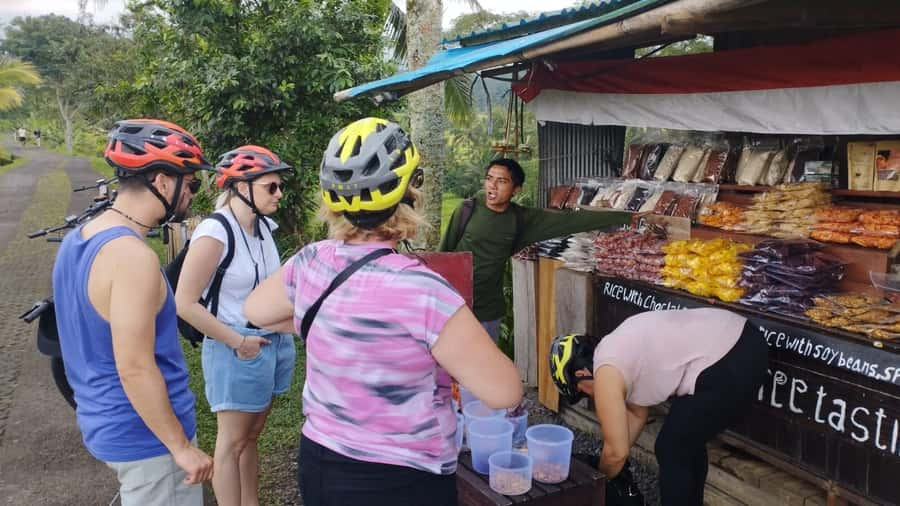
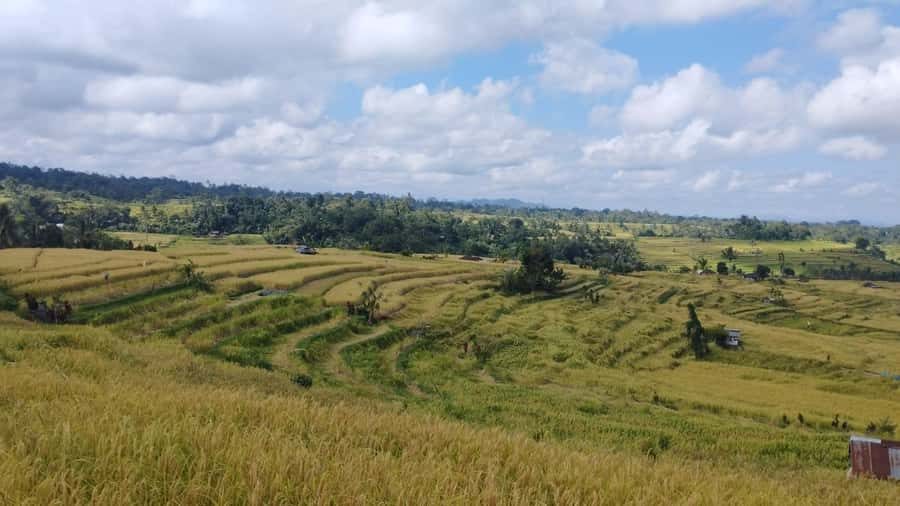
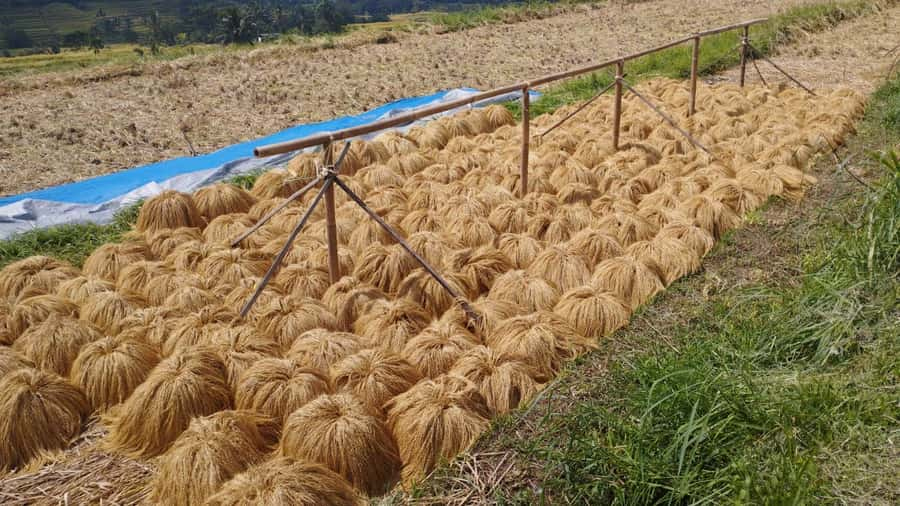
Jatiluwih is the main prize. More than 300 hectares of tropical vegetation and rice terraces spread across a valley between four extinct volcanoes. The scale is what makes this place special. You are not looking at one manicured field. You are seeing a working agricultural area laid across a broad mountain setting.
The word UNESCO can create inflated expectations, so it helps to know what you are paying for. The designation recognizes the cultural value of the rice terraces and the subak irrigation system, not just pretty scenery. The local farming system is the reason the area matters.
The ride takes you toward the center of Jatiluwih. That gives you more than a roadside overlook, although the amount of time inside the central area depends on how the group is managed and how smoothly the bikes operate. Ask your guide at the start how much riding time is planned and where the main stops will be.
The wide valley views are the strongest visual reward. You might see terraces stepping across slopes, tropical vegetation along the edges, and mountain forms beyond. Bring a camera, but also leave room to watch the route itself. The changing views are part of the appeal, and a quick stop does not always capture the scale.
What the ride feels like in practice
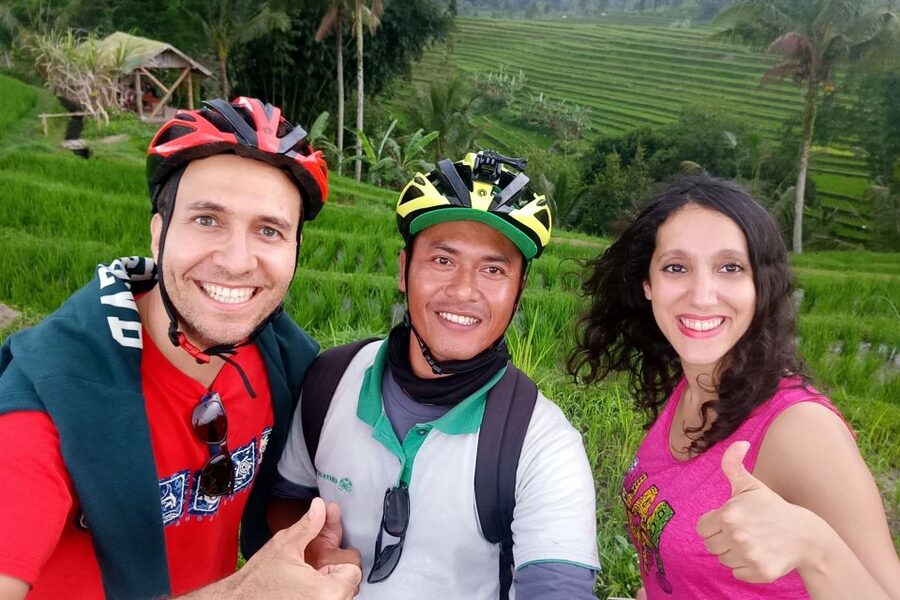
The e-bikes are intended to be simple to use. That is good news if you have not ridden an electric bicycle before. Your guide should explain the controls and help you get moving before the route becomes more demanding.
You need sport shoes and comfortable clothes. Sunglasses, sunblock, and a hat or cap are sensible because some sections are exposed. A camera is worth bringing, but protect it if rain arrives. Raincoats are supplied when needed.
Safety deserves direct attention. The equipment list includes a helmet, and the tour includes insurance. Yet recent accounts described one group in which several bikes developed technical problems, some participants lacked helmets, and three people fell, with two ending up in the rice fields. One person was hurt, and some of the group reportedly remained wet and muddy for the rest of the ride.
That is not a minor complaint. Before leaving, check that your helmet fits, the brakes work, the tires look sound, and the electric assistance responds properly. Tell the guide at once if anything feels wrong. It is better to pause beside the starting point than to discover a mechanical problem on a narrow road.
The route may be easy for a regular cyclist, but easy does not mean risk-free. Wet roads, uneven surfaces, slopes, and rice-field edges require attention. You should be comfortable slowing down and stopping without panic. The tour is not suitable for anyone under 4 feet 8 inches, or 145 centimeters, and there is a listed weight limit of 260 pounds, or 118 kilograms.
Same roads, a different day in the saddle:
- Electric Cycling Tour of Ubud with Free Hotel Transfer and Lunch
★ 5.0 · 1,397 reviews - From Ubud: Downhill Bike Tour with Rice Terraces and Meal
★ 4.9 · 664 reviews - Menoreh Village Cycling
★ 5.0 · 611 reviews - Ubud: Downhill Cycling with Volcano, Rice Terraces and Meal
★ 5.0 · 536 reviews
Lunch after the rice terraces
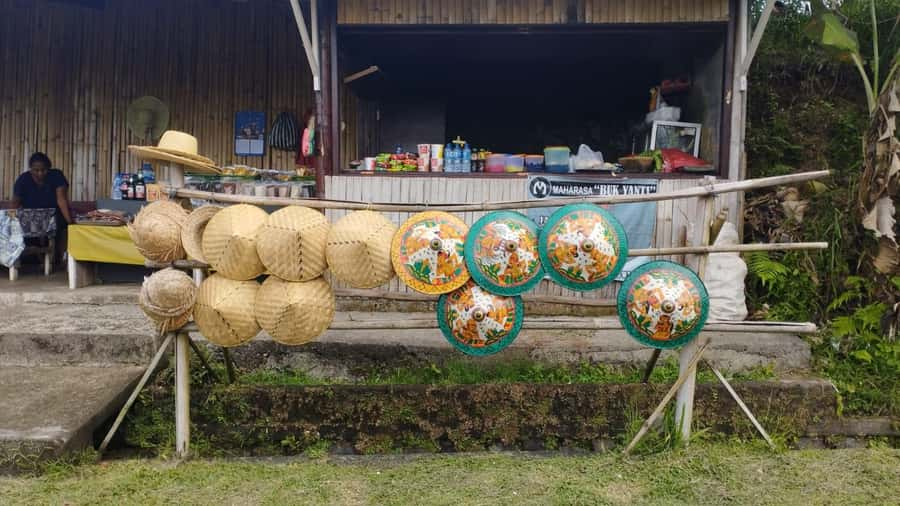
After the cycling, you receive an Indonesian lunch at a nearby restaurant. Free-flow water, coffee, and tea are included. This is a practical finish because you do not need to arrange another meal after riding.
The food is meant to be authentic and has been praised as tasty nasi by some people. At the same time, one recent meal was described as dry, bland, and disappointing. That tells me the lunch may depend on preparation and timing. It should be treated as a useful inclusion rather than the main reason to book.
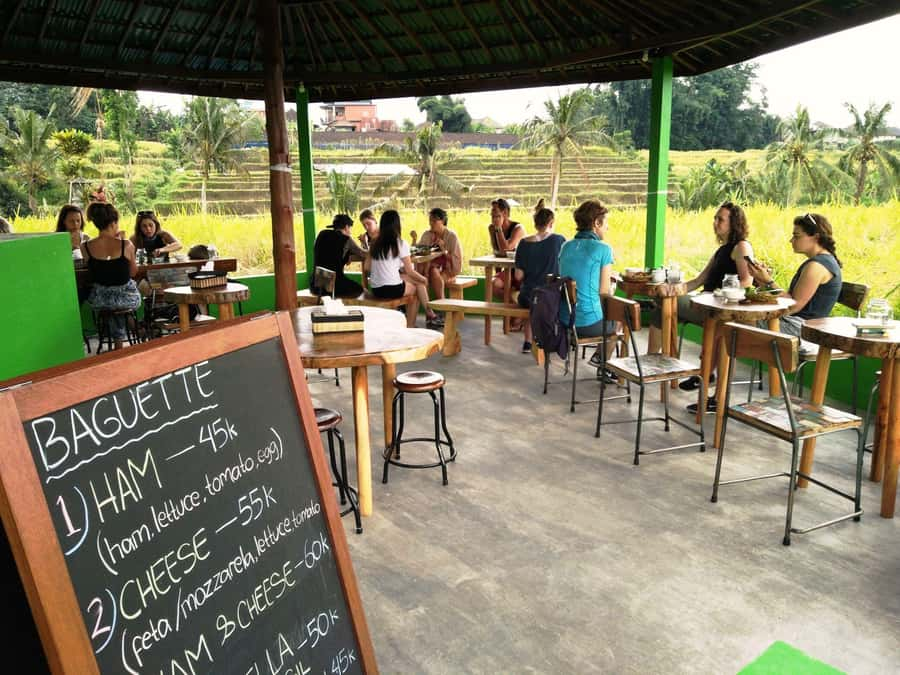
The setting is part of the appeal. Lunch takes place in natural surroundings near the ride area, so you can slow down after the hills and take in the setting. If food quality matters greatly to you, keep your expectations moderate. The value comes from having a meal, drinks, and a break included, not from expecting a special restaurant experience.
Is $69 a fair price?
At $69 per person, the price is reasonable when the package works as intended. You receive the e-bike, helmet, Jatiluwih admission, English-speaking guide, insurance, water, rain protection when needed, lunch, coffee, tea, and a cold towel at the end. Hotel transfers may also be included if you choose that option.
The price becomes harder to justify if you are picked up late, spend much of the activity waiting, or receive less than an hour of riding. Pickup from Ubud deserves particular care. One recent account warned that the drive can take longer than expected, so leave plenty of time if you arrange hotel collection. Traffic and distance can eat into a short activity.
The small-group format adds value. With up to 12 people, the guide can offer more help than on a large coach outing. But the group size does not guarantee a smooth tour. The operator needs enough working bikes and a clear plan for stops.
For me, the value rests on three things: safe equipment, meaningful riding time, and a guide who explains the farming system rather than rushing the group from photo stop to photo stop. If those are in place, the tour combines transport, entry, activity, guide service, and lunch for one price. If not, the cost feels high for a short ride.
The guide makes the difference
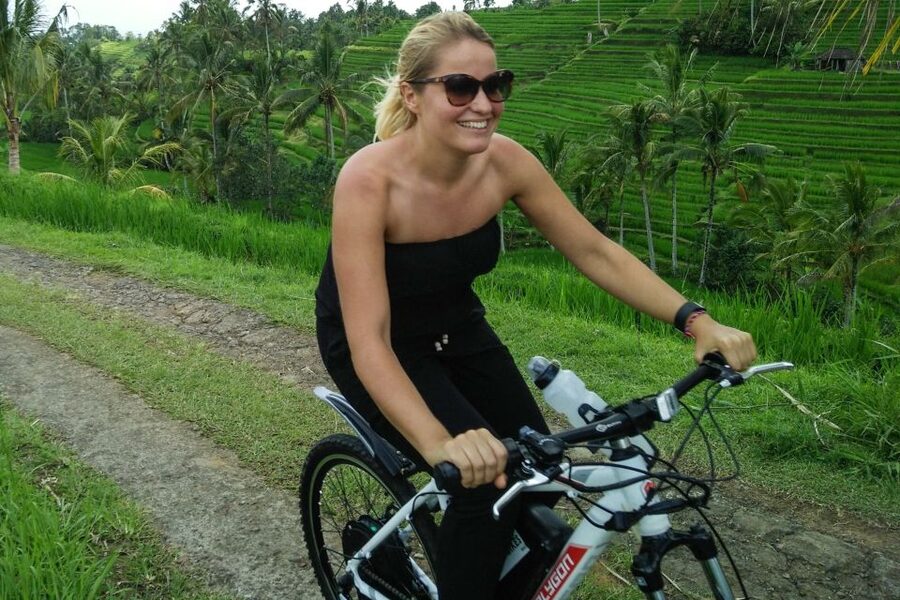
The guide is important here because Jatiluwih can otherwise become a series of attractive views without much context. A good guide explains why the fields are arranged as they are, how water reaches them, and how the villages connect to farming.
The guide also controls the practical side of the outing. You need clear instructions on braking, spacing, stopping, and handling slopes. A friendly, experienced guide can make a first e-bike ride feel simple. A rushed briefing can make the same route uncomfortable.
The strongest feedback praises the guide’s passion and explanations, especially around subak and pesticide-free farming traditions. That kind of commentary adds real value. It helps you see the rice fields as a living system rather than a backdrop.
Because the tour is in English, you should be comfortable following spoken instructions in English. If you need repeated help with cycling technique, mention that before departure so the guide can keep an eye on you.
Who should choose this Jatiluwih ride?
I would recommend it most strongly to you if you want a gentle outdoor activity with scenery, local context, and a meal afterward. It suits regular cyclists who like the idea of covering more ground than they could comfortably walk.
It is also a good fit if you want to see several sides of rural Bali in one outing. The jungle, bamboo, village roads, terraces, and valley views give the experience more range than a single rice-field viewpoint.
You may want to skip it if you dislike bikes, have poor balance, or want a calm sightseeing trip with no equipment concerns. The listed restrictions are firm, and the recent safety problems make cycling ability especially important.
You should also think twice if your schedule is tight. The activity itself lasts two hours, but optional hotel pickup can add travel time, particularly from Ubud. Since the cycling time may vary, do not book a major appointment immediately afterward.
Free cancellation up to 24 hours ahead and reserve-now, pay-later terms make it easier to hold a place while you sort out your Bali plans. Those policies help with planning, but they do not solve the main question: can the operator provide safe bikes and a full, well-run ride on your date?
Practical preparation for the day
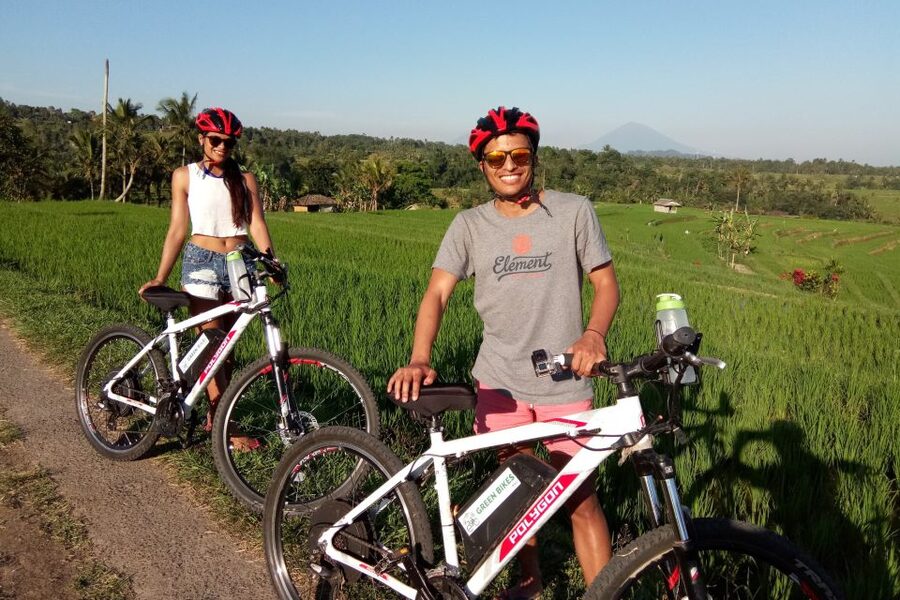
Wear sport shoes with a secure sole. Comfortable clothing is best, and sun protection matters even when parts of the route pass through forest or bamboo.
Bring sunglasses, sunblock, a hat or cap, and a camera. Water is provided, and the end of the ride includes a cold towel, which should be welcome after warm-weather cycling. Raincoats are available when needed, but a small waterproof pouch for personal items is still sensible.
At the meeting point, find the operator near the pool before entering Batukaru Temple. Do not assume the temple visit is included. The activity begins in that area and continues toward Jatiluwih.
Before setting off, ask three simple questions: How much time will we actually ride? Are all helmets available and fitted? What happens if a bike develops a problem? These questions are practical, not fussy, and the recent equipment complaints make them worthwhile.
Should you book the Jatiluwih e-bike tour?
Book it if the idea of riding through jungle, bamboo, villages, and enormous rice terraces appeals to you more than simply viewing Jatiluwih from a car. The scenery and the chance to learn about subak are the tour’s best features, and the included lunch and admission improve the $69 value.
I would book with a little caution. Confirm the pickup time, arrive ready to inspect the bike, and make sure you receive a helmet. If the operator can provide safe equipment and a genuine ride of around an hour or more, this can be one of the more active and rewarding ways to see Jatiluwih.
If you want guaranteed continuous cycling, spotless equipment, or a polished food experience, the uneven reports suggest you should consider another option. The setting is excellent, but the operator must match it with better consistency.
FAQ
Where does the Jatiluwih e-bike tour meet?
The meeting point is in the Batukaru Temple area, near the pool before entering the temple. The temple itself is not visited during the tour.
How long does the activity last?
The stated duration is two hours. The actual amount of time spent riding can vary, so ask the guide about the planned cycling time before departure.
Is hotel pickup available?
Yes. Hotel or villa pickup is available if you select that option. The driver collects you from your accommodation lobby.
Is lunch included?
Yes. Lunch at a nearby restaurant is included, along with free-flow water, coffee, and tea.
What does the tour price include?
The package includes the e-bike, helmet, Jatiluwih admission, an English-speaking cycling guide, insurance, water, a cold towel at the end, lunch, and a raincoat when needed. Hotel transfers depend on the option selected.
Is the tour suitable for beginners?
It can suit people who are comfortable riding a bicycle because the e-bike helps with hills. It is not suitable for anyone who cannot ride a bike.
What should I wear and bring?
Wear sport shoes and comfortable clothes. Bring sunglasses, sunblock, a hat or cap, and a camera.
Are there age, height, or weight requirements?
The supplied information lists a minimum height of 4 feet 8 inches, or 145 centimeters, and a maximum weight of 260 pounds, or 118 kilograms. Anyone unable to ride a bike should not join.
Is the tour available in English?
Yes. The live guide language is English, and the activity uses a small group of up to 12 people.
More 2-Hour Experiences in Indonesia
- Florence: 2-Hour Guided Sightseeing Bike Tour
★ 4.5 · 1,004 reviews - 2-Hour Explore Savannah Bike Tour
★ 5.0 · 970 reviews - Florence: 2-Hour Guided Bike Tour
★ 4.7 · 646 reviews - Copenhagen: 2-hour City Highlights Bike Tour
★ 4.7 · 632 reviews
Just added around Indonesia
- Scenic Cycling Tours Through Bali’s Sidemen Countryside★ 5.0 · 12 reviews
- Mount Batur: Black Lava Cycling Tour w/ Natural Hot Spring★ 3.8 · 63 reviews
- Mount Batur: Sunrise Dirt Bike Trek with Trained Riders★ 4.6 · 15 reviews
- Kuta: Kintamani Culture and Nature Guided Cycling Tour★ 5.0 · 14 reviews
- Bali: Jatiluwih Rice Terraces 1 Hour Electric Bike Tour★ 4.7 · 41 reviews
- E-Bike: Ubud Rice Terraces & Traditional Villages Cycling★ 4.6 · 37 reviews
- Jogja Hidden Gems – Cycling Tour★ 5.0 · 12 reviews
- Bali: Kintamani Downhill Bike Tour, Jungle and Waterfalls★ 4.9 · 20 reviews
E-Bike Tours, compared.
3-Hour Porto Highlights on a Electric Bike Guided Tour
Read our review →
Hills, Alfama, and Mouraria Tour by Electric Bike
Read our review →
Athens Scenic Electric Bike Tour with optional Acropolis visit
Read our review →
City Highlights 3-Hour Guided Electric Bike Tour
Read our review →
Rome EBike Tour: Appian Way, Catacombs & Roman Aqueducts
Read our review →
Top Highlights & Hidden Gems Tour by Cannondale E-Bike
Read our review →Browse the lists this tour appears in