
REVIEW · GERMANY
Leipzig: 3-Hour Bike Tour
Leipzig opens up on two wheels. This three-hour ride links the old center with leafy parks, graceful Jugendstil streets, and former industrial districts, giving you a much broader look at the city than a short walk around the market square. I especially like the chance to see giraffes at Rosenthal Park and the elegant Forest Street Quarter, two places that can be easy to miss without a bike. The main drawback is clear: the bicycle is not included, so you must bring one or arrange a rental at the meeting point.
I also like the way this tour moves beyond postcard Leipzig. You will see the Old Town Hall and Augustusplatz, but you will also reach Plagwitz and the Buntgarnwerke, where old factory buildings now share space with the city’s younger, creative side. Guides such as Christian and Tom have been praised for clear explanations and strong storytelling, though the tour is conducted in German, which matters if you do not understand the language.
Key things to know before you ride
- The route connects several sides of Leipzig: You move from the historic center to Rosenthal Park, the Waldstraßenviertel, and Plagwitz.
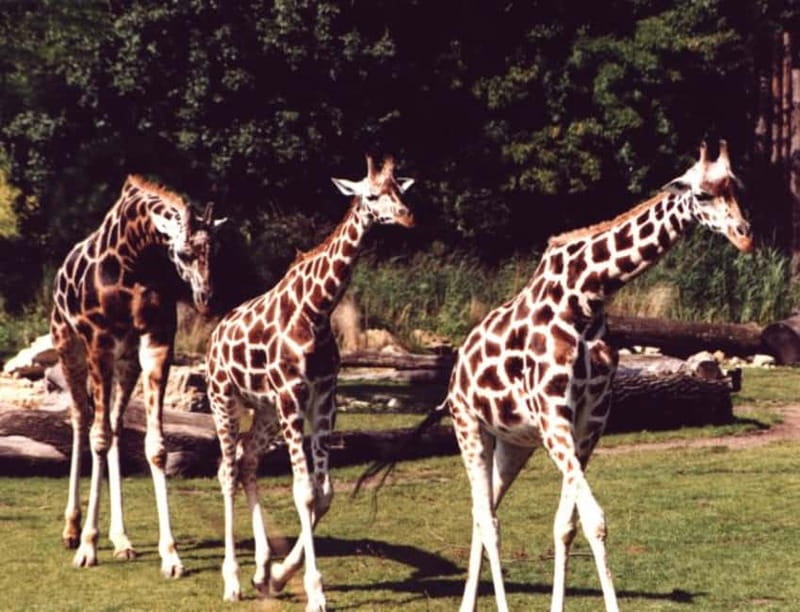
- Rosenthal Park includes zoo views: Giraffes, zebras, and gazelles can be seen near the route.
- The Waldstraßenviertel is an architecture stop: Look for Jugendstil details featuring leaves, flowers, and women.
- Plagwitz adds Leipzig’s industrial story: The Buntgarnwerke show the scale of the city’s former yarn production.
- The guide stays with you throughout: Christian and Tom are among the guides praised for lively, informative explanations.
- Bring or rent a bike: The rental price is listed as 14 or 15 euros in the supplied details, so confirm the current amount before booking.
Starting near Leipzig Hauptbahnhof
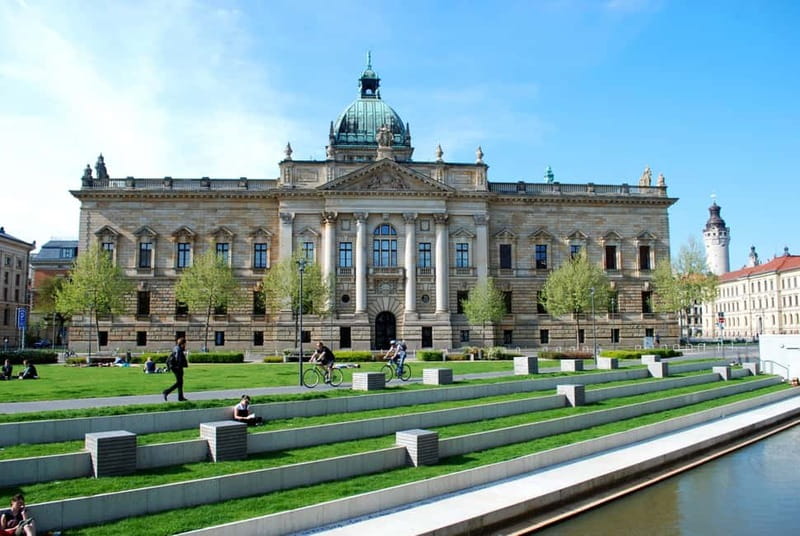
The tour begins at the Mobilitätszentrum der Leipziger Verkehrsbetriebe, opposite Hauptbahnhof-West. That is a useful starting point if you arrive in Leipzig by train, since the main station is one of the city’s easiest landmarks to find.
You need to arrive with your own bicycle, or arrange a rental directly at the meeting point. The activity details give two different rental prices, 14 euros in one place and 15 euros in another. I would plan on paying 15 euros and confirm the exact amount when you contact the provider.
If you need a rental bike, send an email to [email protected] before the tour. Do not assume that booking the guided experience automatically reserves a bicycle for you. One practical complaint from an otherwise happy participant was precisely this misunderstanding.
The meeting point also tells you something about the tour. This is not a sightseeing bus ride with a quick photo stop. You need to be ready to ride through city streets and park areas for three hours. A bike makes Leipzig’s broad layout easier to understand, but you should be comfortable cycling at a steady sightseeing pace.
A few more days on two wheels around Germany worth a look
- Munich 3-Hour Guided Bike Tour
★ 4.5 · 1,731 reviews - Hamburg 3-Hour Bike Tour
★ 4.8 · 1,583 reviews - Berlin Highlights 3-Hour Bike Tour
★ 5.0 · 948 reviews
Leipzig’s historic center and old fairgrounds
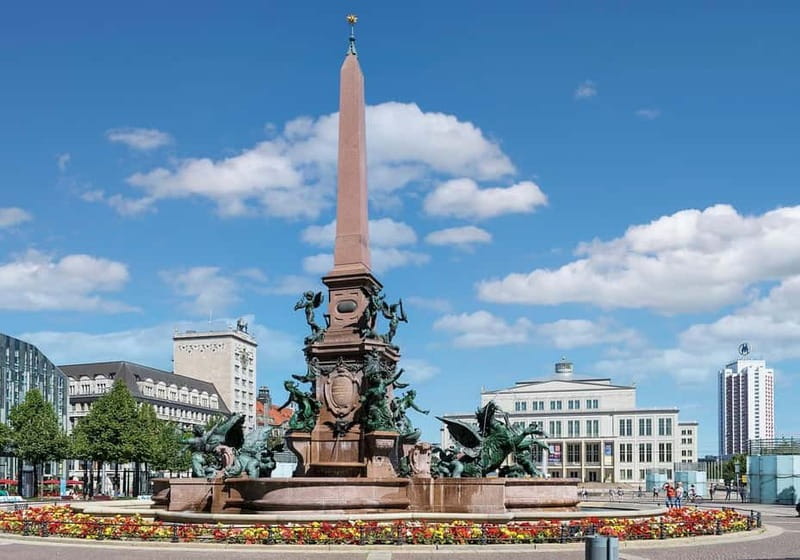
The ride begins with Leipzig’s best-known historic sights. You can expect to see the Old Town Hall, an important Renaissance building on the market square, along with places connected to the city’s old fairs.
Leipzig grew wealthy and influential through trade fairs. Merchants came here to buy and sell goods, and the city center developed around that commercial role. Seeing the old fair locations by bicycle gives you a sense of how closely trade and urban life were linked.
The Old Town Hall is a strong early stop because it gives you a visual anchor. Its Renaissance design helps separate Leipzig’s older civic identity from the later industrial districts you will visit. I like this contrast. Within one outing, you are not simply collecting buildings. You are following the city from trading center to industrial powerhouse and then into its current university-city phase.
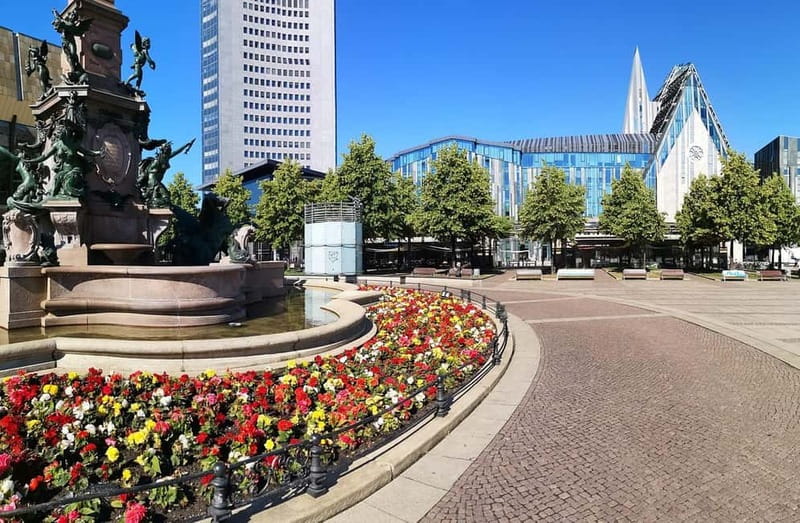
The route also reaches Augustusplatz, one of Leipzig’s major public spaces. The square helps show the city on a larger scale. It is not just a narrow old-town lane or a single grand building, but an open civic setting connected to Leipzig’s modern identity.
A bike is useful here because you can cover more ground than on foot while still moving slowly enough to hear the guide and look around. You should not expect a long indoor visit at every sight. The value comes from the guide’s explanation and from seeing how the center connects to the districts beyond it.
Rosenthal Park and the zoo’s giraffes
One of the tour’s most unusual moments comes at Rosenthal Park, where you can see giraffes, zebras, and gazelles near the zoo. This is a welcome change from the standard city tour pattern of churches, squares, and monuments.
The animals give the ride a light, memorable pause. You are still in Leipzig, but the setting feels more open and green than the central streets. If you are cycling with children, this part may be especially appealing. Even adults tend to enjoy the surprise of seeing giraffes during a city outing.
The park also helps explain why this tour suits people who want more than the Old Town. The route includes nature alongside architecture and political history. One guide’s tour was praised for showing the city’s outer areas and for appealing to people who enjoy nature. That is a fair description of the experience.
You should keep your expectations sensible. This is not a dedicated zoo tour, and the animals are not the main subject of the outing. You are passing the zoo as part of a wider route. Still, the giraffes are a memorable bonus and one of the details that makes this bike tour different from a standard walking circuit.
Jugendstil details in the Waldstraßenviertel
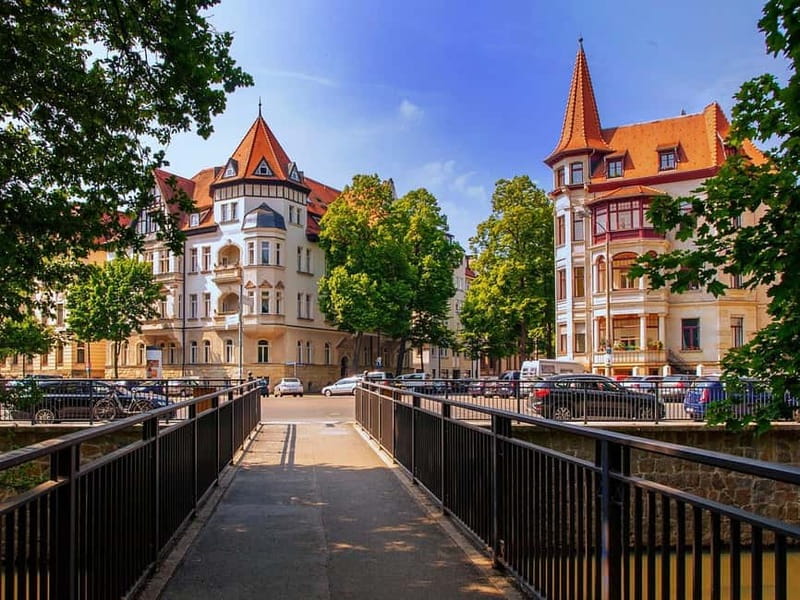
The Forest Street Quarter, known in German as the Waldstraßenviertel, is one of the tour’s prettiest architectural sections. Its stately buildings are decorated with Jugendstil motifs, including leaves, flowers, and female figures.
Jugendstil is the German-speaking world’s version of Art Nouveau. It favors flowing lines and natural forms instead of the strict symmetry often found in older classical buildings. In the Waldstraßenviertel, you can look upward and notice decorative details around entrances, windows, and façades.
This is exactly where a guided ride earns its keep. You might pass these buildings on your own and register only a pleasant row of large apartments. A guide can point out the repeated shapes and explain what makes the quarter special. I would slow down here and let your eyes move from the whole street to the small ornaments.
The bicycle is helpful in this district because the area is too spread out to treat as one quick photo stop. You can move from one façade to another without spending the whole afternoon walking between them. At the same time, you need to stay alert. The supplied information does not give details about traffic conditions, group size, or the exact cycling route, so listen closely to the guide and follow the riding instructions.
For architecture fans, this may be the strongest part of the tour. It has the visual appeal of a classic city walk, but the bike lets you reach more of the quarter with less effort.
Same roads, a different day in the saddle:
- Berlin: Sights and Highlights Bike Tour with a Local Guide
★ 4.8 · 2,698 reviews - Classic Mike’s Bike Tour daily @ 11.30 incl Beer Garden & Surfers
★ 5.0 · 1,246 reviews - Berlin City Bike Tour with Beer Garden Stop
★ 5.0 · 917 reviews - Cologne: 3-Hour Guided Bike Tour
★ 4.8 · 878 reviews
The Monument to the Battle of the Nations
The Monument to the Battle of the Nations is another major sight included in the route. Its name refers to the Battle of Leipzig, fought in 1813 during the Napoleonic Wars.
The monument is imposing, and its scale is easier to appreciate when you approach it as part of a longer city ride. It adds a major historical theme to the day: Leipzig was not only a center of trade and industry, but also a place tied to a turning point in European military history.
The available details do not promise an interior visit or a climb to the top, so you should think of this as an exterior sightseeing stop with commentary. The guide’s role matters here. A large monument can feel remote if you do not know why it was built or what event it commemorates.
This stop also broadens the tour’s timeline. The Old Town Hall represents Leipzig’s civic and commercial past. The Monument to the Battle of the Nations points to the city’s role in European history. Later, Plagwitz brings you into the industrial age and the city’s present-day changes.
Plagwitz and the Buntgarnwerke
Plagwitz gives the tour its strongest industrial character. The district was once home to much of Leipzig’s yarn spinning and dyeing, and the Buntgarnwerke provide an impressive example of that production era.
The architecture here is different from the Waldstraßenviertel. Instead of decorative residential façades, you get large industrial buildings designed for work, storage, and manufacturing. The scale tells you that Leipzig was not simply a handsome trade city. It was also a major center of production.
Today, Plagwitz is described as a lively part of the university city. That change is what makes the stop useful. You see how an old industrial district can take on a new role without losing all signs of its past. The tour does not treat history as something sealed off in a museum. It puts former factories into the living city around you.
I particularly like this section for visitors who have already seen the Old Town and want a more complete picture of Leipzig. The Buntgarnwerke are not the usual first image of the city, but they explain a great deal about how Leipzig developed.
The exact amount of time spent in Plagwitz is not specified, so do not expect a full neighborhood exploration. The route gives you an introduction and a chance to understand the area’s importance. If the district catches your interest, you can return later on your own.
What the guide adds to the ride
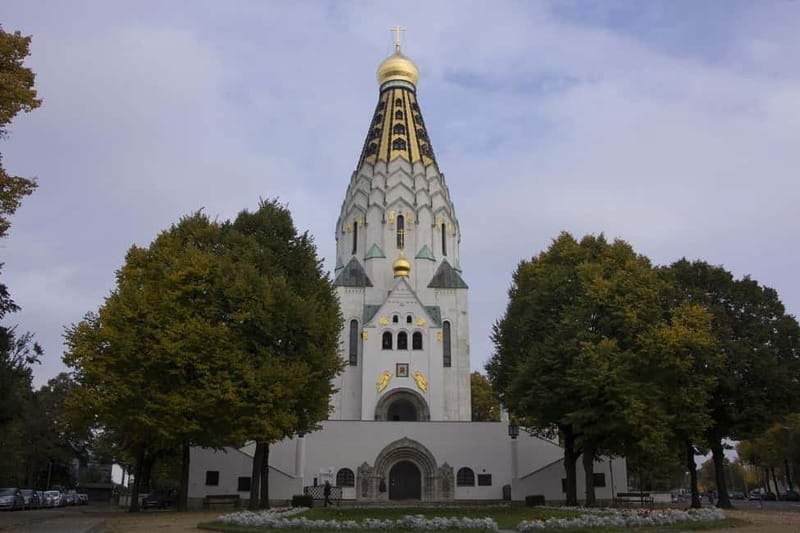
The guide accompanies you throughout the city tour and provides a map. That combination is simple but useful. You get live explanations while riding, plus a paper reference that can help you remember the route afterward.
The strongest praise has gone to the guides’ storytelling. Christian has been singled out for being friendly and explaining things well. Tom has been praised for his enthusiasm, historical commentary, and ability to point out special places. Another participant found the guide’s broad knowledge and discussion of German reunification especially thought-provoking.
That last point matters. Leipzig is not only about Renaissance buildings and old factories. Its modern identity is also tied to the changes surrounding German reunification. The tour may give you ideas for thinking about that period, rather than simply delivering a list of dates.
The experience depends partly on your German ability. The official tour language is German, and no other language is listed. If you are comfortable following German explanations, the guide can add real depth. If you are not, you may still enjoy the route and sights, but much of the tour’s value will be harder to access.
The tour does not include a bottle of water. That is a small point, but three hours on a bicycle can feel long, especially on a warm day. Bring your own water and dress for the weather.
Is the 25 dollar price good value?
At about $25 per person, the guided portion is reasonably priced for three hours of live sightseeing. You are paying for a guide who stays with you, a planned route through several distinct parts of Leipzig, and a map.
The total cost is higher if you need a bicycle. With a rental of about 14 or 15 euros, the bike becomes a significant extra expense. Even so, the combined price can still be worthwhile if you want to see more than the center and prefer an organized route to arranging everything yourself.
I would judge the value this way:
- Good value for active visitors: You cover a lot of ground and see historic, natural, residential, and industrial areas in one outing.
- Good value for first-time visitors with three hours free: The route helps you understand how the districts relate to one another.
- Less attractive if you already have a bicycle and know Leipzig well: You may prefer exploring independently.
- Less suitable if you want a museum-focused tour: The emphasis is on moving through the city and hearing explanations outdoors.
The reserve-now-and-pay-later option can help if your schedule is uncertain. You can cancel for a full refund up to 24 hours in advance, according to the activity terms. Those policies are useful, but the more important planning question is still the bicycle. Sort that out before the day of the tour.
Who should book this Leipzig bike tour?
I would recommend this outing to anyone who likes cities best when several pieces fit together. You see the old trading center, public squares, parks, decorative apartment buildings, a major monument, and former factories. That range gives you a more grounded picture of Leipzig than a short central walking tour.
It is also a good choice if you enjoy architecture but do not want to spend the entire day inside museums. The Waldstraßenviertel offers attractive details, while Plagwitz supplies a strong contrast.
Families may enjoy the zoo animals in Rosenthal Park, though the tour still lasts three hours and requires steady cycling. People interested in German history may appreciate the references to the Battle of Leipzig and reunification.
I would hesitate to book it if you do not understand German, cannot comfortably ride a bicycle, or are expecting the bicycle to be included. I would also skip it during a very tight Leipzig visit if you mainly want the central sights, since the Old Town can be explored more directly on foot.
FAQ
How long is the Leipzig bike tour?
The tour lasts three hours.
Where does the tour begin?
You meet at the Mobilitätszentrum der Leipziger Verkehrsbetriebe, opposite Hauptbahnhof-West in Leipzig.
Is a bicycle included in the price?
No. You need to bring your own bicycle or arrange a rental directly at the meeting point.
How much does bicycle rental cost?
The supplied details list the rental as 14 euros in one place and 15 euros in another. Confirm the current price with the provider before booking.
What language is the tour conducted in?
The live tour guide speaks German.
Can I cancel the booking for a refund?
Yes. You can cancel up to 24 hours in advance for a full refund. A reserve-now-and-pay-later option is also available.
Should you book it?
Book this tour if you want Leipzig in broad strokes, not just its historic center. The combination of Rosenthal Park, Jugendstil architecture, the Monument to the Battle of the Nations, and Plagwitz’s old factories gives you a varied three-hour introduction, and the guides appear to add much of the experience’s value.
Before booking, confirm the bicycle rental price, email ahead if you need a bike, and make sure German works for you. If those points fit, this is a practical, well-priced way to see the Leipzig that lies beyond the market square.
Just added around Germany
- 3-Hour Cologne Street Art Bike Tour in Small Group with Guide★ 4.5 · 20 reviews
- Private-Group Bike Tour of Cologne with Guide★ 5.0 · 20 reviews
- Berlin Wall and Cold War Bike Tour in Small Groups★ 5.0 · 114 reviews
- Alternative Berlin Bike Tour – Off the Beaten Tracks in Small Groups★ 5.0 · 99 reviews
- Berlin: Guided Private Bike Tour to Explore the Highlights★ 5.0 · 12 reviews
- Berlin : The best bike tour with a Berlin guide and insider tips★ 5.0 · 14 reviews
- Potsdam Bike Tour with Rail Transport from Berlin★ 4.5 · 81 reviews
- Berlin: Guided Bike tour of the Berlin Wall and Third Reich★ 5.0 · 160 reviews
Germany Cycling Tours, compared.
Sights and Highlights Bike Tour with a Local Guide
Read our review →
Classic Mike’s Bike Tour daily @ 11.30 incl Beer Garden & Surfers
Read our review →
Browse the lists this tour appears in