
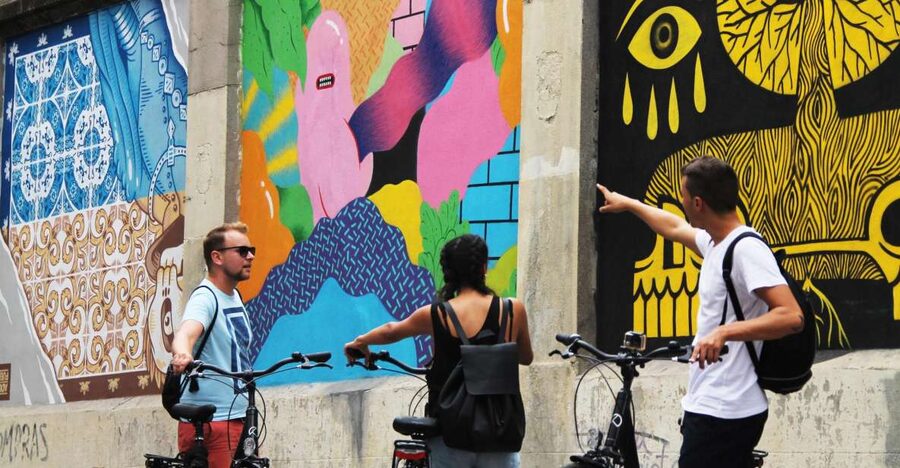
REVIEW · MADRID
Madrid: Street Art Bike Tour
Madrid’s walls tell its story. This 2.5-hour bike tour takes you beyond the usual sights, linking festival artwork, community gardens, and famous local crews across Malasaña and Lavapiés. I like the mix of art and city life, and I especially like having a local graffiti artist explain how tags, shutters, murals, and public spaces are made.
The $46 price includes the bike, helmet, lock, map, and English or Spanish guide, which makes it fair for a guided city ride. The main caution is that this is not a gentle sightseeing pedal for everyone: the activity is described as medium level, includes one uphill section, and Madrid traffic can challenge anyone who is not comfortable cycling in a city.
Key points at a glance
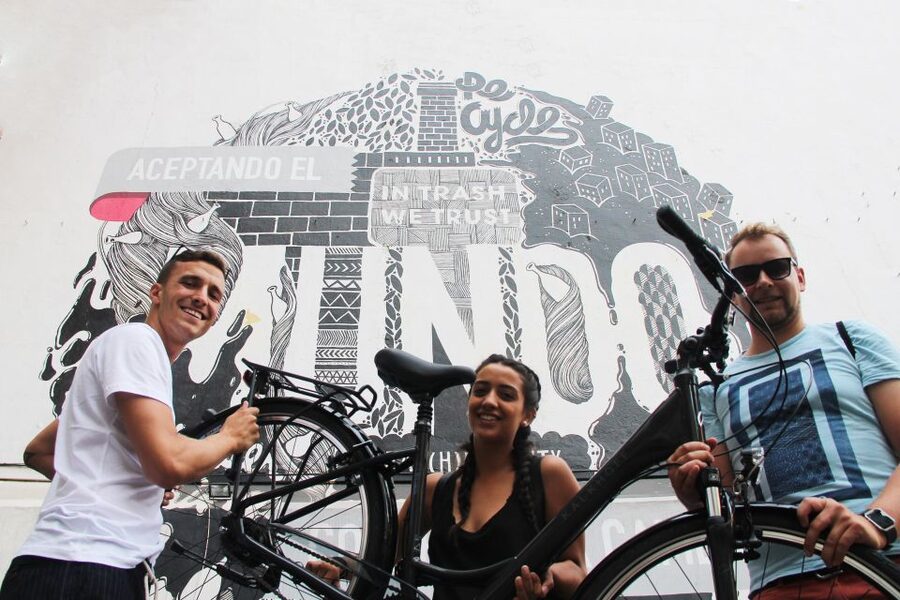
- Muelle’s 1989 tag: See one of Madrid’s oldest preserved links to the city’s graffiti movement.
- Malasaña by bicycle: Ride through the neighborhood during a look at work from the Pinta Malasaña festival.
- Plaza Dos de Mayo artwork: See Bolardo Voy, Bolardo vengo, a playful installation using traffic barriers and street furniture.
- Lavapiés community spaces: Visit Solar Antonio Grilo and Esto es una Plaza, former abandoned sites turned into public gardens and art hubs.
- Local artist as guide: Learn about Madrid’s graffiti scene, techniques, and artists from someone connected to the culture.
- Moderate cycling required: The route includes city traffic and one uphill stretch, so basic urban cycling skill matters.
Why this Madrid bike tour is different
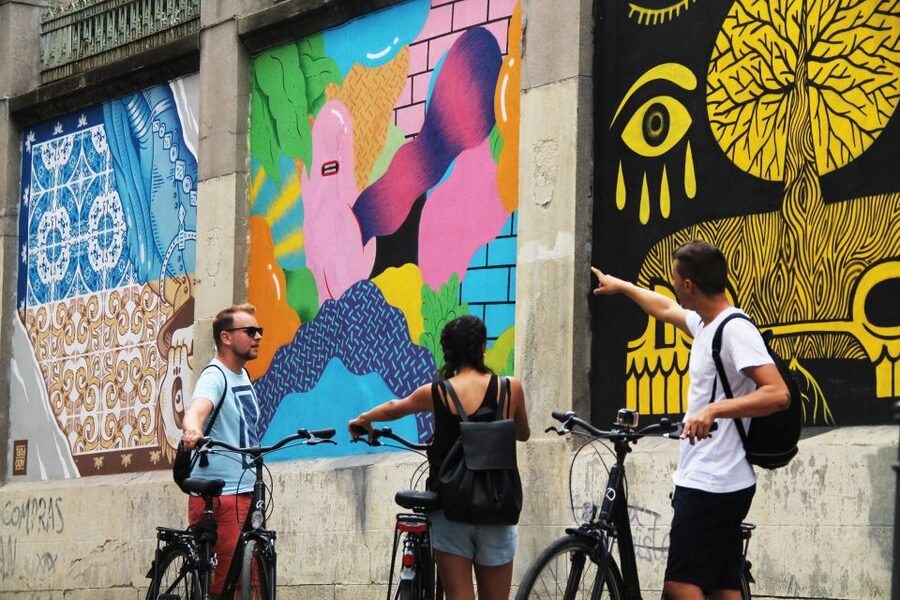
Madrid has plenty of grand architecture, royal rooms, and formal museums. This tour looks at the city from street level, where artists use walls, metal shutters, traffic posts, and abandoned lots as their canvas.
That change in viewpoint is the real reason to book. You are not simply pedaling past painted walls and taking quick photographs. The guide explains how graffiti developed in Madrid, how artists work with different surfaces, and how street art festivals have helped bring temporary and permanent work into public view.
I also like the fact that the route connects two neighborhoods with very different personalities. Malasaña has a fashionable, creative feel and a strong festival presence. Lavapiés offers community-run spaces where art is tied to local projects, gardens, and shared use of neglected land.
The experience provider is Cooltourspain, and the guide speaks either English or Spanish. One guide named Javier has been praised for making the ride friendly and easy for a family with a seven-year-old riding their own bike. That suggests the tour can work for families, but the other practical detail matters more: the route still requires comfort on a bicycle around traffic and inclines.
More Street Art Bike Tours in Madrid:
- London Bike Tour: Landmarks, Secret Gems, Pub Stop & Street Art
★ 5.0 · 943 reviews - Barcelona Street Art and Graffitti Bicycle Tour
★ 5.0 · 361 reviews - London: Landmarks & Secrets Bike Tour with Pub & Street Art
★ 4.9 · 314 reviews
Starting near Puerta del Sol and Gran Vía
You meet outside the small Carrefour Express at C/Montera 32. The nearest metro stations are Gran Vía and Sol, so the starting point is central and easy to reach by public transport.
This is a useful place to begin because you are close to Madrid’s main commercial core but soon move into less polished streets and more local neighborhoods. Before riding, expect the practical setup: bike rental, helmet, lock, and safety instructions.
The safety briefing is not just a formality. Madrid’s center has busy roads, pedestrians, narrow lanes, and frequent distractions. If you usually cycle only on quiet paths, give yourself time to listen carefully and get used to the bike before the group sets off.
A restroom break is included. Be sensible about timing, since the tour lasts about 2.5 hours, although the information also describes it as a three-hour, medium-level activity. Starting times vary, so check the exact schedule when booking and allow a little extra time around the stated duration.
Muelle and the beginning of Madrid graffiti
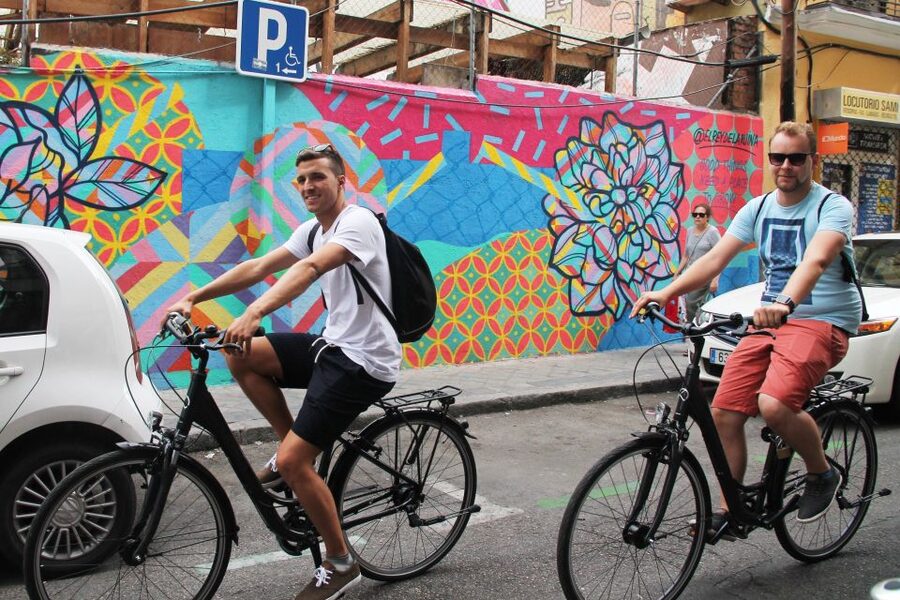
One of the most interesting early stops is a preserved tag by Muelle, dated to 1989. Muelle, whose name is translated in the tour material as Spring of a mattress, is considered a pioneer of Madrid’s graffiti movement.
This small detail gives the tour historical weight. A tag can look simple compared with a giant mural, but it represents a young artist helping establish a new cultural movement in the city. Seeing an older mark in place also helps you understand that Madrid’s graffiti culture did not appear overnight as a fashionable decoration.
Your guide explains the basic language of street art and the methods artists use. You learn how artists approach different surfaces, including walls and metal shutters, and why some work is designed to last while other pieces are temporary.
I would pay close attention here rather than treating the stop as a quick photograph. The value is in learning how to look. After this visit, you are more likely to notice tags, lettering, layers of paint, and changes to a wall as you walk around Madrid on your own.
Alonso Martínez and Boa Mistura
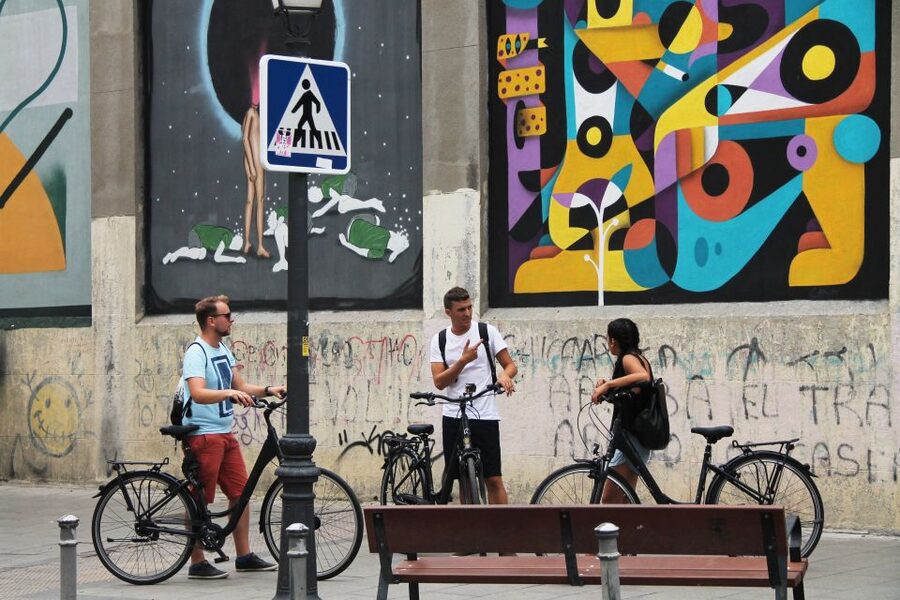
After the safety instructions and the opening section, the route heads toward Alonso Martínez. Here you see the first piece created by Boa Mistura, a Madrid crew that began in the city’s outskirts and later worked on street art projects around the world.
This stop adds another useful angle. Graffiti is not presented as one single style or one fixed movement. The route introduces artists and crews who developed in Madrid but also became involved in wider design and public art work.
The guide can help you read the piece in context rather than viewing it as anonymous decoration. For you, that means the tour offers a clearer sense of the people behind the art, including their origins and how their work has grown beyond the city.
Because this is a bicycle route, the stop also keeps the experience moving. You do not spend the whole session standing in one plaza while someone gives a long lecture. You ride between works and see how the art changes as the neighborhoods change.
A few more days on two wheels around Madrid worth a look
- Madrid Highlights Bike Tour
★ 5.0 · 1,731 reviews - Best of Madrid: 3-Hour Guided Bike Tour in Small Groups
★ 4.8 · 1,417 reviews - Madrid: City Highlights Guided Vintage Bike Tour
★ 4.9 · 1,159 reviews - Madrid: 3 hour Guided Highlights Bike Tour with Optional Tapas
★ 5.0 · 443 reviews
Malasaña and the Pinta Malasaña festival
Malasaña is one of the tour’s main sections. The neighborhood is known for its fashionable, alternative character, and the route passes artwork made by Spanish artists who took part in the 2017 edition of Pinta Malasaña.
The festival colors the area during April, and its work gives you a look at how a neighborhood can become an open-air exhibition. Some of the art may be more temporary than a museum display, so the exact condition of individual pieces can change. Street art is not a collection you can expect to remain untouched.
Plaza Dos de Mayo is the center of this section. One featured work, Bolardo Voy, Bolardo vengo, uses colorful traffic elements. The idea is amusing and practical at the same time: ordinary pieces of street infrastructure become part of the artwork.
That is one reason I like this stop. It encourages you to look down and around, not only at large painted walls. Madrid’s street art appears on objects people normally ignore, and the bicycle makes it easier to cover several such details in one outing.
Malasaña is also where cycling conditions may feel more demanding. Pedestrians, traffic, and urban congestion can make the ride less relaxed than a dedicated cycle path. One person in the group may find the pace easy while another struggles, so you should be comfortable riding in a city before booking.
Solar Antonio Grilo and a different kind of public art
The route then takes you toward Solar Antonio Grilo and other community spaces connected with Noviciado and Lavapiés. These sites were once abandoned places. They have since become urban gardens and shared areas filled with art.
This part of the tour is important because it moves beyond the idea of street art as something added to a finished city. Here, art is part of a wider effort to give unused land a purpose. The spaces were created for and by the community, and they offer examples of how residents can reshape neglected corners.
You may find these stops more rewarding if you are interested in local life, not only in dramatic murals. They show how public art can work alongside gardens, gathering spaces, and local projects. The result is less polished than a formal gallery, but that is part of the point.
The tour describes these spaces as examples of hybrid economy systems that have attracted attention from other communities around the world. The useful takeaway is simple: the art is tied to the way the space is run and shared.
Esto es una Plaza in Lavapiés
Esto es una Plaza is another key stop. Like Solar Antonio Grilo, it began as an abandoned site and became a community garden and public meeting place.
Lavapiés gives the experience a different feel from Malasaña. You see art connected to neighborhood use, not just a festival program. That makes the stop a good counterpoint to Pinta Malasaña, where the focus is on a concentrated burst of artistic activity across the neighborhood.
You may see work linked to artists such as El Rey de la Ruina, Cassassola, Ze Carrión, and Por Favor. The exact pieces can change, since street art is exposed to weather, repainting, construction, and new projects. Still, the route gives you a strong introduction to the artists and spaces that shape Madrid’s current street art culture.
I would not book this tour expecting a permanent checklist of famous murals. Book it for the act of exploring, learning, and seeing how public art changes with its surroundings.
The pace, bikes, and level of effort
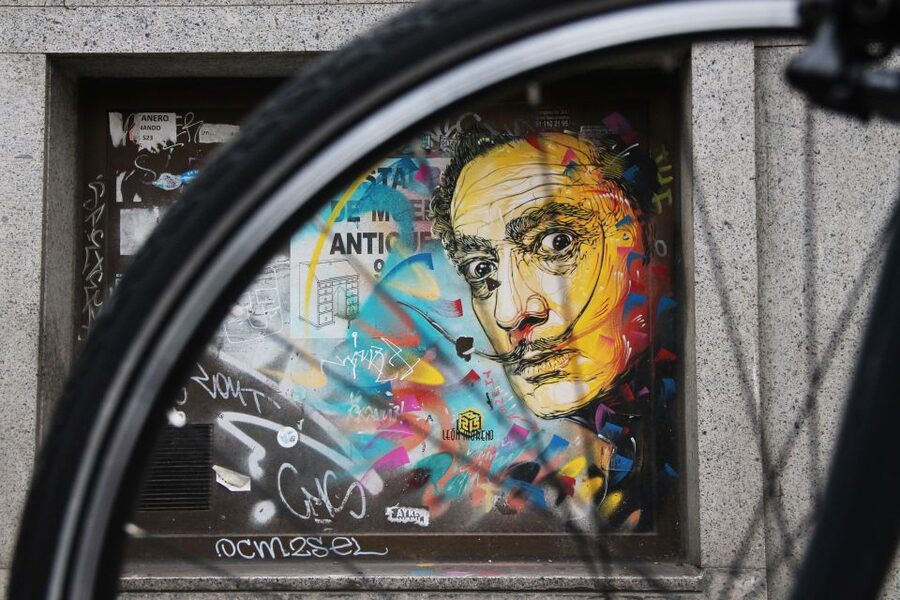
The tour lasts about 2.5 hours and includes bike rental, helmet, lock, and a Madrid city map. The route is described as medium level, with one uphill section.
That sounds manageable for anyone who cycles regularly, but the city setting adds effort. You must pay attention to traffic, other cyclists, pedestrians, and the group. One participant specifically found the traffic and uphill routes difficult for people who were below average in cycling ability, even though the guide adjusted the ride as much as possible.
This is the most useful warning in the entire description. You do not need to be a serious cyclist, but you should feel secure starting, stopping, steering, and riding near traffic. Comfortable shoes are recommended, and you should bring a passport or ID card.
Families can consider the tour. Javier successfully guided a family that included a seven-year-old riding independently. Still, children should be able to manage an urban ride rather than only a quiet park path.
The guide’s role matters here. A good guide does more than point out walls. The strongest feedback praises the guide for combining art information with a fun ride and for helping adjust the experience when cycling ability varied. That balance is what makes this more useful than renting a bike and searching for murals on your own.
Is $46 a fair price?
At $46 per person, this is not the cheapest way to look around Madrid. You are paying more than a self-guided ride, but the price includes the bicycle, helmet, lock, map, live guide, safety briefing, and restroom break.
The stronger value comes from access to context. Without a guide, you might photograph the large pieces and miss the story behind Muelle, Boa Mistura, the Pinta Malasaña festival, and the community spaces in Lavapiés.
The route also covers several neighborhoods in one outing. Walking between all these places would take more time and energy, while public transport would leave you constantly switching between short trips. The bicycle gives you a practical way to connect them.
I would call the price reasonable if street art is a major interest and you want a guide who can explain techniques and local artists. It is less convincing if you want a slow, effortless city tour or if you are mainly interested in Madrid’s traditional monuments.
Beverages are not included, so bring what you need for the ride. The tour does include a map, but do not expect the map alone to replace the guide. Its real value is helping you remember where you went and perhaps return to a favorite area later.
Who should book this ride?
I would recommend it to first-time Madrid visitors who want an introduction to neighborhoods beyond the main plazas and museums. It also suits repeat visitors looking for a more current view of the city.
Art students, photographers, families with confident young cyclists, and anyone curious about how cities use public space should get a lot from it. You will see both finished work and the settings around it, which gives each stop more meaning.
I would be cautious if you dislike urban cycling, have limited balance, or want a fully relaxed sightseeing experience. The activity is not described as difficult, but medium level plus traffic plus one uphill section is enough to rule it out for some people.
The tour is offered in English or Spanish. Cancellation is free up to 24 hours before the start, and you can reserve while paying later, which is useful if your Madrid plans are still shifting.
Should you book the Madrid Street Art Bike Tour?
Book it if you want to connect Madrid’s graffiti past with its current public art scene. The preserved Muelle tag, Boa Mistura’s work, the Pinta Malasaña pieces, and the community spaces of Lavapiés create a varied route rather than a string of similar murals.
I especially recommend it if you are comfortable cycling in city traffic and value a guide who can explain the people, methods, and local projects behind the artwork. If you are a hesitant cyclist, choose a walking art tour instead. For everyone else, $46 buys an active and unusually local look at Madrid, with enough practical structure to make the city easier to understand afterward.
FAQ
Where does the Madrid Street Art Bike Tour start?
It starts at the entrance of the small Carrefour Express at C/Montera 32. The nearest metro stations are Gran Vía and Sol.
Where does the tour end?
The activity ends back at the original meeting point.
How long does the bike tour last?
The stated duration is 2.5 hours. The activity information also describes it as a three-hour, medium-level activity, so you should check the available starting time and allow some flexibility.
Is the tour offered in English?
Yes. The live guide can conduct the tour in English or Spanish.
What is included in the price?
The price includes bike rental, a helmet, a lock, a Madrid city map, a live guide, and a restroom break. Beverages are not included.
What should I bring, and how difficult is the ride?
Bring comfortable shoes and a passport or ID card. The activity is described as medium level and includes one uphill section, along with cycling through Madrid traffic.
Just added around Madrid
- Madrid: Sunset and Night Lights eBike Tour★ 4.9 · 16 reviews
- Madrid: Magic Retiro Park Bike Tour★ 4.8 · 58 reviews
- Madrid: Literary Quarter & Retiro Park Electric Bike Tour★ 4.8 · 31 reviews
- Madrid: Retiro Park and Literary Quarter by Bike★ 4.9 · 22 reviews
- Madrid: Guided Electric Bike Tour. City center & Retiro Park★ 4.7 · 40 reviews
- Private Madrid Bike Tour | Exclusive Guided Tour | From 30€★ 5.0 · 22 reviews
- Madrid at Night: Vintage Bike Tour of City Highlights★ 4.9 · 95 reviews
- Madrid: City Highlights Private Bike Tour★ 4.7 · 27 reviews
Street Art Bike Tours, compared.
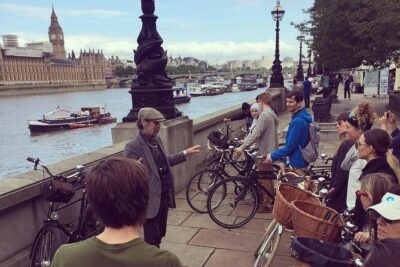
London Bike Tour: Landmarks, Secret Gems, Pub Stop & Street Art
Read our review →
Barcelona Street Art and Graffitti Bicycle Tour
Read our review →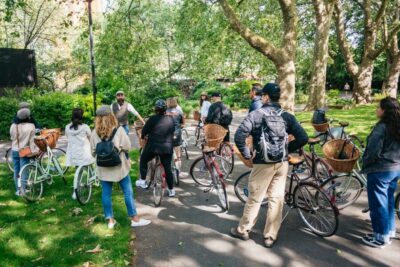
Landmarks & Secrets Bike Tour with Pub & Street Art
Read our review →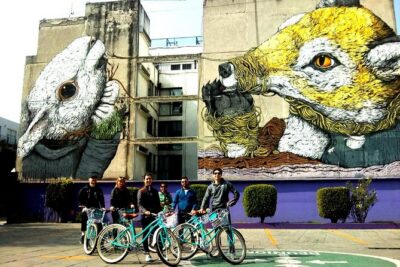
Mexico City; ART NACO : Murals & Street Art Bike Tour
Read our review →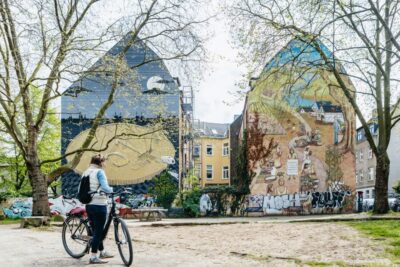
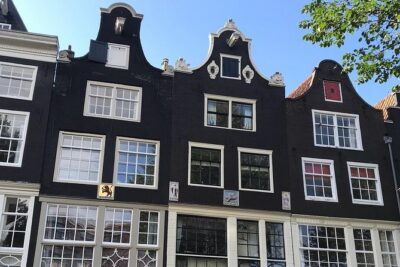
Urban Adventures Amsterdam Bike Tour, Graffiti and Magnet Fishing
Read our review →
Guided Asheville E-bike Tour of River Arts, Mountains and Murals
Read our review →Browse the lists this tour appears in