
REVIEW · MARRAKECH
Marrakech: Cultural Bicycle Tour with Pastry and Tea
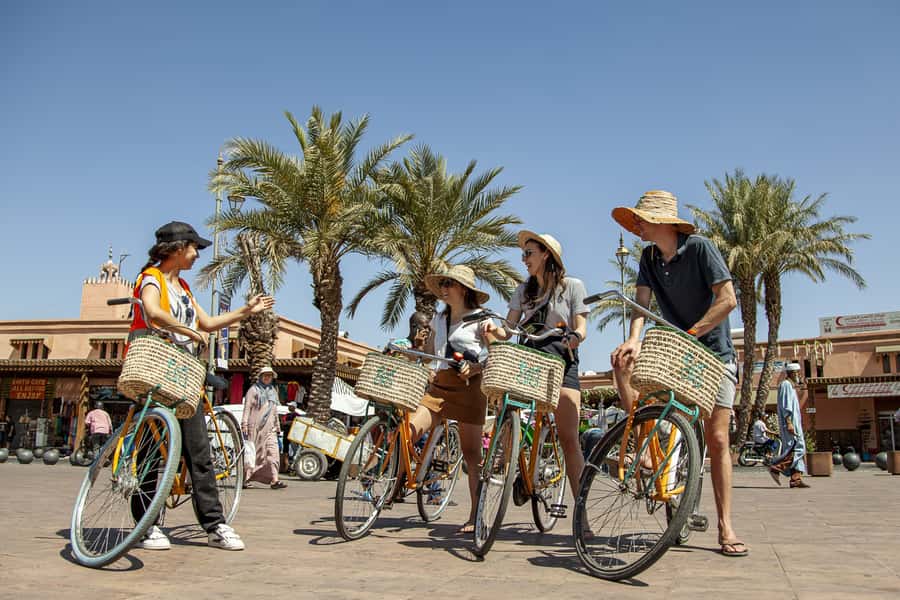
Marrakech is best understood from a bicycle. This three-hour ride takes you past the usual souk circuit and into daily Moroccan life, with stops at a community bakery, a zellige tile workshop, a public hammam, and the gardens near the Royal Palace. I especially like the local focus and the chance to see how bread, bathing, craft, and faith shape the city. The main drawback is clear: Marrakech traffic takes concentration, especially in the medina.
The tour costs $34 per person, a fair price for a small-group experience that includes a bicycle, water, fruit, suncream, local tastings, and entry to the stops. Guides such as Ayoub, Rabab, Hamid, Sayid, Yassir, Kenza, and Yasmin have earned praise for being warm, patient, and attentive. Expect a fun ride, but not a lazy spin through empty lanes.
You should be a confident cyclist who can manage pedestrians, mopeds, donkey carts, and other bicycles in tight spaces. The guides take care of group crossings and regularly check that everyone is present, yet you still need to stay alert. Comfortable clothes are best, and long skirts or dresses can get in the way.
Key points at a glance
- Bread is a cultural lesson: Watch loaves bake in a clay oven and learn why Moroccan families often use neighborhood ovens.
- Zellige is made by hand: A tile workshop offers a close look at the patient craft behind Morocco’s famous geometric decoration.
- The city changes quickly: The route moves from narrow medina lanes to the wider streets of Gueliz and Hivernage.
- Traffic is part of the experience: The riding is generally flat and not fast, but the first hour can feel intense.
- Pikala has a social purpose: The organization trains Moroccan youth as guides and supports local businesses and community causes.
- The finish is easy to enjoy: Moroccan pastries, tea, juice, and local snacks are served at Pikala Cafe.
Why this bicycle tour shows you more than the medina
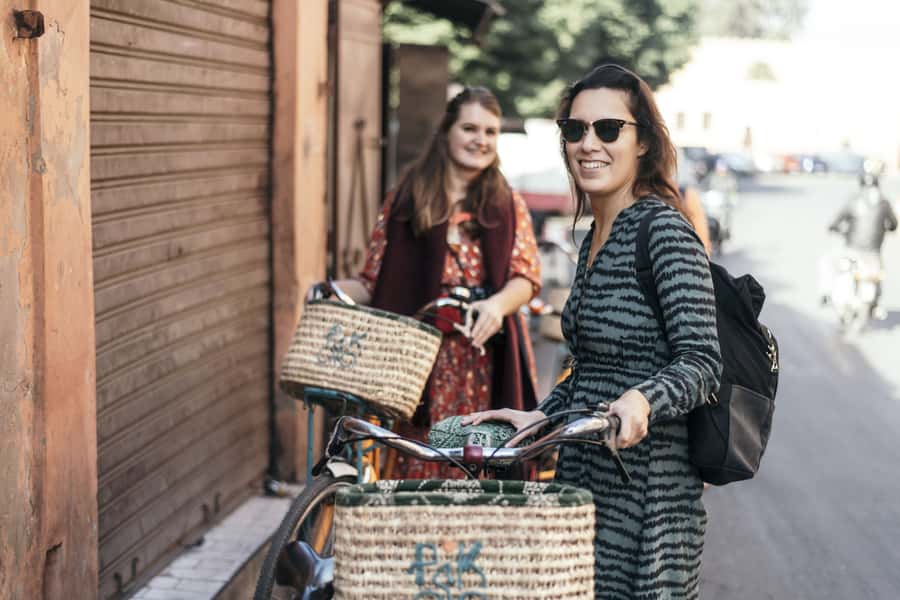
Marrakech can be hard to read on foot. The souks are noisy and crowded, the lanes twist without warning, and it is easy to spend a whole morning seeing shops aimed at visitors. A bicycle gives you a wider view. You move through working neighborhoods, craft spaces, public gardens, religious sites, and newer districts in one compact outing.
The value here is not simply seeing more places. It is learning how the city works. A bakery becomes a lesson in household routines. A hammam becomes a way to understand social life. A tile workshop explains why palaces and mosques look the way they do.
I like that the guides focus on present-day life as well as history. One guide, Said, was described as a law student with excellent English and a good sense of humor. Another, Hamid, was praised for watching the group closely on the road. Those details matter because a strong guide makes the traffic feel manageable and turns quick stops into useful conversations.
Pikala also trains Moroccan youth to lead tours. That gives the experience a worthwhile local connection. You are not simply hiring a bicycle and following a flag. You are supporting a program that helps young Moroccans build work experience while presenting their own city.
A few more days on two wheels around Morocco worth a look
- Marrakech: Bicycle Tour with a Local Guide
★ 4.7 · 495 reviews - Marrakech : Electric Bicycle City Tour
★ 4.8 · 363 reviews - Cycling Adventure in Marrakech
★ 5.0 · 289 reviews
Starting at Pikala Bikes and entering the old city
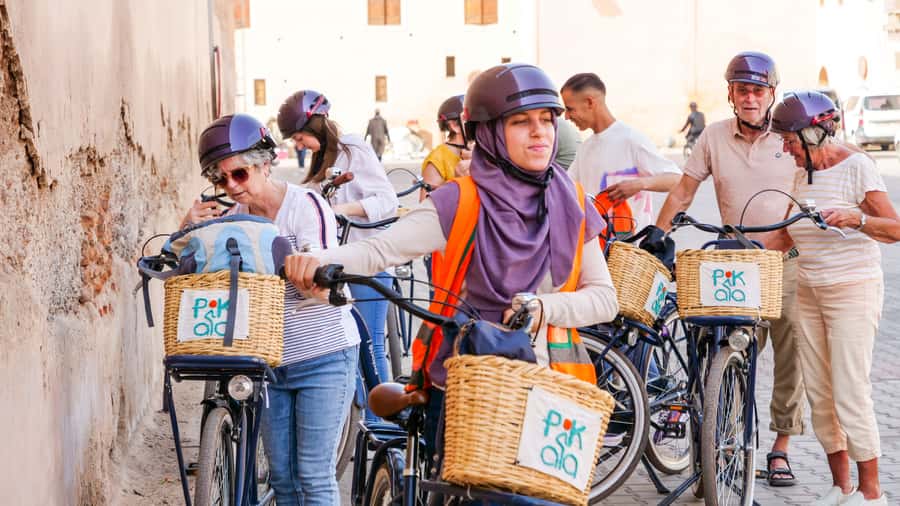
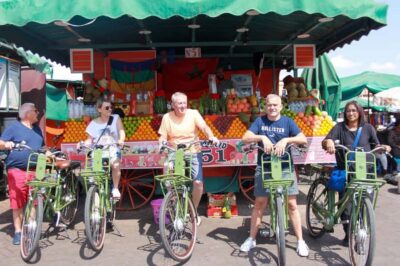
The tour begins at Pikala Bikes headquarters. You receive a bicycle and set off with a guide who speaks English or French. The bikes are described as solid Dutch-style bicycles with comfortable saddles, though some riders found them a little heavy to handle.
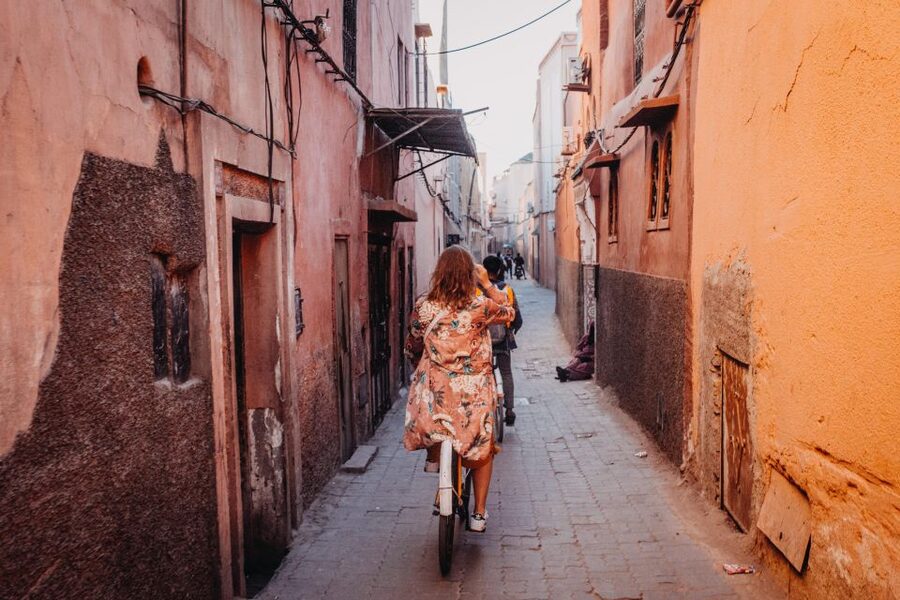
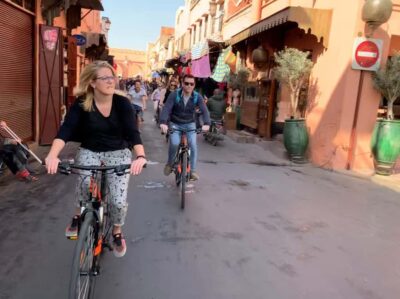
The route soon reaches the old medina, where the cycling becomes more demanding. The lanes can be narrow, and you may need to slow for pedestrians, mopeds, donkeys, carts, and other cyclists. This is not a race. The group moves at a gentle pace, with regular stops, but you must be comfortable keeping your balance and reacting quickly.
The first hour is the part to take seriously. Several people found the traffic nerve-racking at first, then settled into the rhythm. Guides help by leading the way, waiting at crossings, and turning around to check on the group. A morning departure, such as 9:30, may offer somewhat quieter roads, although conditions can change from one day to the next.
Once you understand the local rhythm, the ride becomes one of the tour’s pleasures. Marrakech traffic may look chaotic, but cyclists, pedestrians, animals, and drivers constantly adjust to one another. You are not protected from the city’s movement, which is precisely why the ride feels more connected to ordinary life.
Sidi Bel Abbas and the first look at local traditions
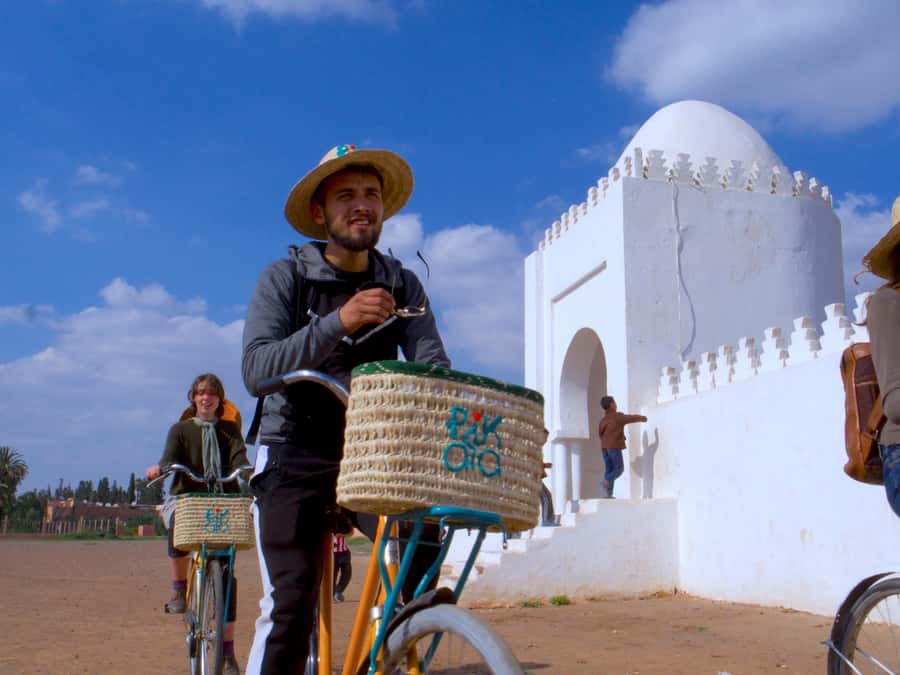
One of the early stops is the Zawiya of Sidi Bel Abbas. You have time for photographs, sightseeing, and an explanation of the site. The stop introduces the religious and social character of the medina before the tour turns to more hands-on subjects.
The visit is relatively short, around 15 minutes, so do not expect a long formal lecture. Its value comes from the guide’s explanation of what you are seeing and how religious places fit into the city. The tour works best when you ask questions. Guides are happy to explain customs, beliefs, and local routines in plain language.
This is also a good point to settle into the pace. You will stop often enough to listen, but the experience remains a bike ride rather than a walking history lesson.
A clay oven and the daily importance of bread
The local bakery is one of the strongest stops. You step into a working bakery, see bread baking in a clay oven, and taste fresh Moroccan bread. The visit lasts about 10 minutes, but it gives you a useful glimpse of a service that is tied closely to daily routines.
Bread is not treated as an afterthought in Morocco. It is a basic part of meals and a familiar feature of neighborhood life. A communal oven also shows how domestic work and local business overlap. Instead of hearing a general statement about Moroccan food, you see the heat, the oven, and the process.
This stop can be especially rewarding if you enjoy food tours but do not want a parade of restaurant samples. The emphasis is on how food is made and shared. The bakery may feel busy and practical rather than polished, so keep an open mind and watch where you step.
Water and fruit are provided along the way. That is helpful in warmer weather, when the combination of sun, cycling, and city traffic can wear you down faster than expected.
Same roads, a different day in the saddle:
- Dutch Bike Tour in Marrakech with Local Guide
★ 4.7 · 269 reviews - Marrakech:Guided City Cycling Tour – Culture, Colors & Charm
★ 4.7 · 231 reviews - Marrakech: Guided Bike Tour with a local Guide
★ 4.6 · 79 reviews - Marrakech: Cycling Tour in Palm Groove with Local Breakfast
★ 4.7 · 73 reviews
Zellige tile work, done one piece at a time
The tile workshop explains the making of Moroccan zellige, the small hand-cut tiles seen in palaces, mosques, courtyards, fountains, and homes. This is more than a quick photo opportunity. You see artisans at work and gain a better sense of the skill behind the finished patterns.
Zellige designs can look perfectly ordered from a distance. Up close, the process is much more physical and exacting. The workshop helps you understand that Moroccan decoration is not only about bright color. It depends on geometry, patient cutting, and careful assembly.
This is one of the stops that gives the tour lasting value. You may pass tilework throughout Marrakech without thinking about how it was produced. After this visit, you are more likely to notice the shapes and the labor behind them.
The group may also pass several lesser-known corners between the main stops. The exact route can vary, and that is part of the appeal. Do not expect a fixed checklist of grand monuments. The guide may point out an alley, courtyard, neighborhood business, or ordinary street scene that you would likely miss alone.
Place des Ferblantiers and the Royal Palace gardens
Place des Ferblantiers provides a longer break of about 20 minutes. There is time for photos, scenery, and a little free time before continuing. The square is a useful pause after the narrow lanes, giving you room to look around and reset.
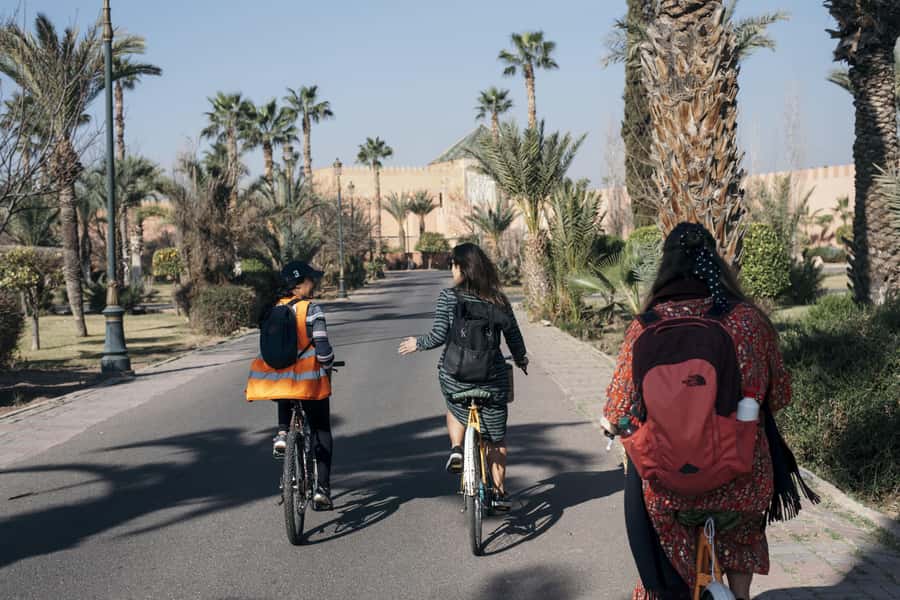
The route also passes the public gardens around the Royal Palace, Dar El-Makhzen. You view the palace from outside and hear about its place in Moroccan monarchy and national history. Do not book this expecting an interior palace visit. The appeal is the setting and the chance to understand how royal space fits beside the public city.
The palace gardens offer a different view of Marrakech from the workshops and souks. Here, the city’s ceremonial side comes forward. The guide can connect the architecture and gardens to Morocco’s monarchy without turning the stop into a dry political lecture.
A later pause at Mechouar El Barani adds another look at the area around the royal compound. The stop lasts about 15 minutes and includes sightseeing and photographs. It is a good example of how the tour balances major landmarks with street-level observation.
Understanding the hammam beyond the spa label
The hammam stop is valuable because many visitors know the word but not the tradition. A Moroccan public bathhouse is not simply a place for treatments. It has a social role and a set of rituals tied to cleanliness, routine, and community life.
The guide explains how hammams function in Moroccan society. You should think of this as a cultural visit, not a bathing session. The information helps you understand an institution that can otherwise be reduced to a tourist spa experience.
This stop is also a reminder that the tour deals with ordinary life, not only beautiful buildings. Bread ovens, bathhouses, workshops, and public streets reveal more about a city than a string of postcard views.
Koutoubia, the Church of the Holy Martyrs, and changing city views
The ride passes the Koutoubia Mosque, one of Marrakech’s best-known landmarks. You see it from the outside and hear about its place in the city. The stop is brief, around 10 minutes, so it works as a route-side introduction rather than a full mosque visit.
The Church of the Holy Martyrs offers another point of interest. Its presence adds to the tour’s broader view of Marrakech, where Islamic, royal, colonial, and modern influences can appear within the same outing. You stop for photographs and scenic views before heading toward the newer parts of town.
These short stops work well because they keep the ride moving. If you want lengthy museum-style explanations at each sight, this may feel rushed. If you prefer a broad introduction that leaves you free to explore later, the balance is sensible.
From the medina to Gueliz and Hivernage
The transition into modern Marrakech is one of the tour’s best ideas. After narrow alleys and old walls, you reach wider boulevards, cafes, hotels, and newer districts such as Gueliz and Hivernage.
The contrast is immediate. The old city feels compressed and intricate, while the newer areas offer more open streets and a different style of public life. You see how Marrakech has expanded without leaving its older customs behind.
Some riders feel nervous when the group first reaches the wider roads. That concern is reasonable. You are dealing with vehicles and crossings rather than only pedestrians and mopeds. The guides are careful with the group, but you still need road awareness.
I like this section because it prevents a one-sided view of Marrakech. The city is not only historic walls and souks. It is also cafes, hotels, new roads, young people, and modern routines. The ride gives you both sides in a single morning or afternoon.
Pikala Cafe, Moroccan pastries, and mint tea
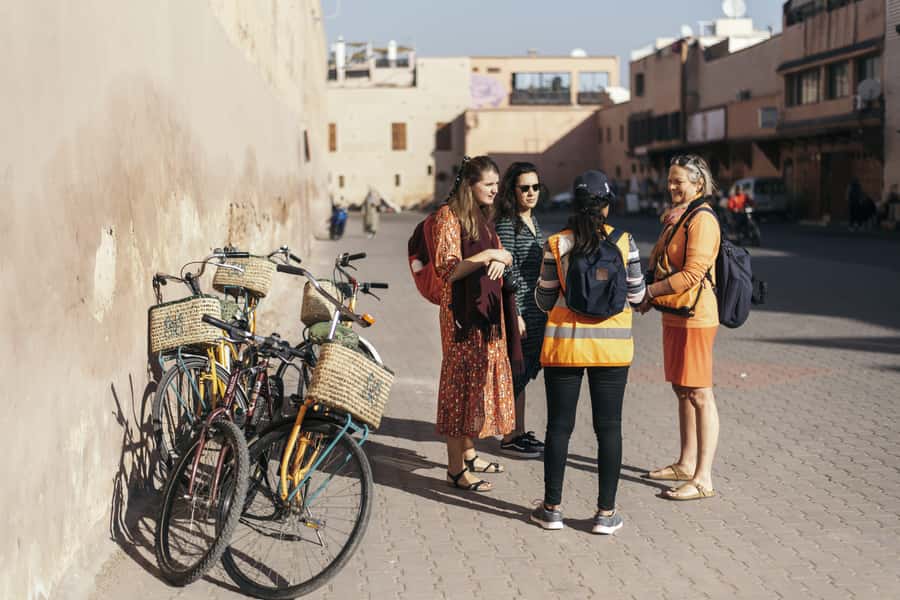
The tour ends with a stop at Pikala Cafe for about 20 minutes. You receive Moroccan pastries, tea, juice, and local snacks. Some riders enjoyed spiced cookies and mint lemonade, while others appreciated the mint tea and relaxed conversation after the ride.
This finish is more than a sugary reward. It gives the group time to talk with the guide and ask questions that may have occurred during the ride. One party enjoyed the conversation so much that it nearly skipped the snack, which tells you something about the friendly tone of the stop.
The cafe is also useful for anyone who wants a gentle introduction to Moroccan sweets without committing to a full meal. The included food is modest, so arrive having eaten if you need a substantial breakfast or lunch.
Price, pace, and what you receive for $34
At $34 per person, this is strong value if you want cultural context and active sightseeing in one package. You receive the bicycle, water, fruit, suncream, local stops, and cafe refreshments. You also get a guide who handles navigation and explains the city as you move through it.
The price is less compelling if you only want a calm bicycle ride. The traffic requires effort, and the tour spends time at cultural stops rather than covering every major monument. You are paying for access, interpretation, and a carefully planned route, not simply for bike rental.
The stated duration is three hours, though some outings have taken around three and a half hours. Small groups are common, and a single booking can sometimes become a private tour. That makes the experience more personal, but group size can vary.
Free cancellation up to 24 hours ahead and the option to reserve without paying immediately make planning easier. Hotel pickup is not included, so you need to reach Pikala Bikes headquarters yourself.
Who should book this ride?
This tour suits confident cyclists, curious first-time visitors, couples, families with older children, and anyone who wants to see Marrakech beyond the main souks. It is especially useful near the start of a stay because it gives you an overview of the medina, royal district, religious landmarks, and modern city.
It can also work for older riders if they are comfortable on a bicycle. One 72-year-old participant used a tandem and managed the outing well. That said, you should speak with Pikala about current bicycle and tandem arrangements rather than assume a particular option will be available.
Think twice if you dislike traffic, have difficulty cycling slowly, or want a quiet sightseeing experience. The route is mostly flat and not fast, but the surroundings are active and unpredictable. Long skirts and loose clothing can make riding awkward, so dress for movement.
Final verdict: an excellent choice with one clear warning
I would book this tour for the local stops, the young guides, and the sharp contrast between old and new Marrakech. The bakery, tile workshop, and hammam explain daily life in ways that a standard monument tour cannot. The cafe finish, pastries, tea, and friendly staff add genuine warmth.
The warning is simple: do not treat the cycling as effortless. You need confidence, patience, and attention in the medina and on city roads. If you can handle that, Pikala’s cultural bicycle tour offers a lively, useful, and good-value introduction to Marrakech.
FAQ
How long is the Marrakech cultural bicycle tour?
The advertised duration is three hours. Some outings have lasted around three and a half hours, depending on the pace and stops.
What languages do the guides speak?
Guides speak English and French.
Where does the tour begin and end?
The tour begins and returns to Pikala Bikes headquarters. Hotel pickup and drop-off are not included.
Is the tour suitable for beginner cyclists?
The ride is generally gentle, flat, and not fast, but the medina includes narrow lanes with pedestrians, mopeds, donkeys, carts, and other cyclists. You should be a confident cyclist and remain alert.
What food and drinks are included?
The tour includes water and fruit during the ride, then juice, Moroccan pastries, tea, and local snacks at Pikala Cafe.
Can I cancel or reserve without paying immediately?
You can cancel up to 24 hours in advance for a full refund. You can also reserve now and pay later.
Just added around Morocco
- 11 Km Guided Bike Tour in Lively Casablanca★ 5.0 · 14 reviews
- Guided Cycling Adventure in Casablanca with Licensed Tour Guide★ 5.0 · 42 reviews
- Marrakech: Cycling Tour in Palm Groove with Local Breakfast★ 4.7 · 73 reviews
- Marrakech: Guided Bike Tour with a local Guide★ 4.6 · 79 reviews
- Marrakech:Guided City Cycling Tour – Culture, Colors & Charm★ 4.7 · 231 reviews
- Marrakesh: Toubkal National Park Mountain Bike Trip w/Lunch★ 4.4 · 63 reviews
- Marrakech: Day E-Bike Tour & Atlas Mountains★ 4.7 · 29 reviews
- Essaouira: Area Highlights Guided E-Bike Tour★ 4.9 · 39 reviews
Marrakech Cycling Tours, compared.
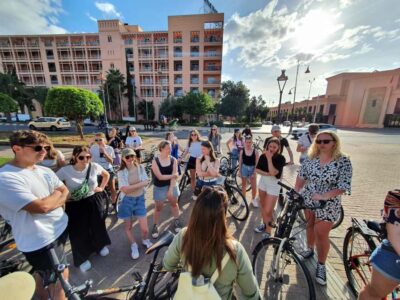
Guided City Cycling Tour – Culture, Colors & Charm
Read our review →
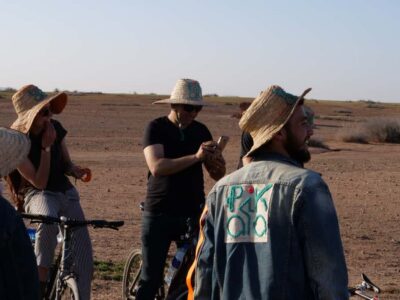
Cycling Tour in Palm Groove with Local Breakfast
Read our review →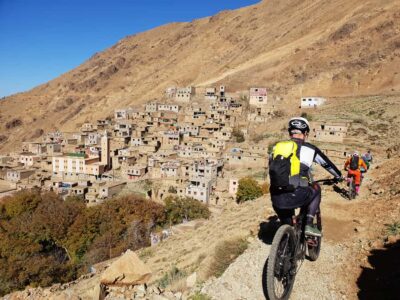
Marrakesh: Toubkal National Park Mountain Bike Trip w/Lunch
Read our review →Browse the lists this tour appears in