
REVIEW · COLORADO SPRINGS
Pikes Peak Summit Downhill Bike Tour
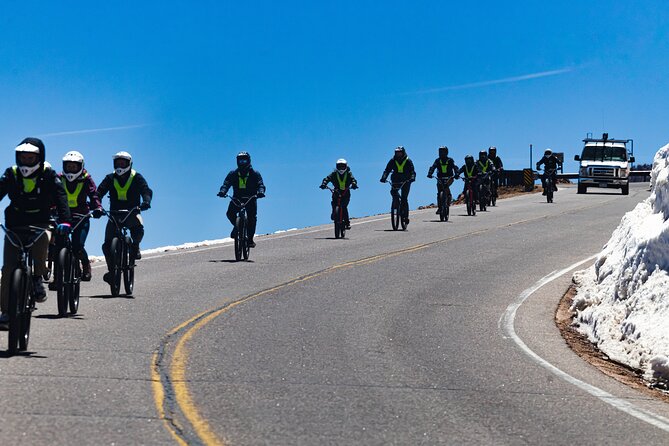
Start high, then let gravity do the work. This six-and-a-half-hour Pikes Peak bike tour gives you a rare way to experience America’s Mountain, beginning near the summit and following the paved highway downhill through five separate climate zones. I like the small maximum group of 14, and I like that admission to Pikes Peak Highway is already included. The main catch is the physical demand: you need moderate fitness, some biking experience, and you must weigh between 90 and 250 pounds.
The early start is also worth noting. You meet at 1501 W Colorado Ave in Colorado Springs at 7:30 a.m., then return to that same point after the ride. The summit can be cold, even when Colorado Springs feels mild, so layers matter. Several guides, including Spencer, Nick, Kenzie, Eric, Luke, Marcel, Mike, Mark, Ty, Anson, Kate, Dalanee, and Jess, have been praised for careful instruction, encouragement, and good mountain humor.
Key points to know before booking
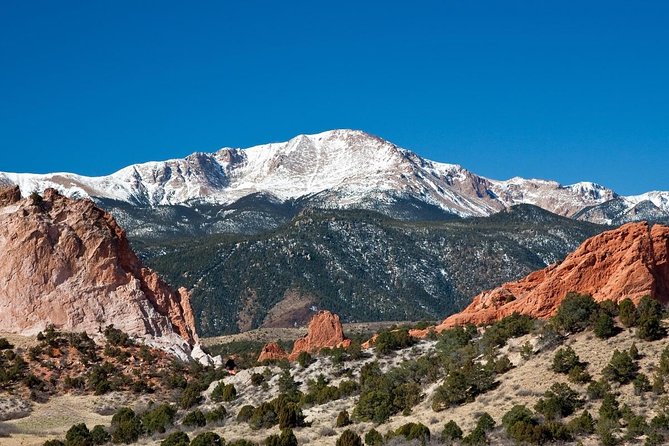
- You begin above 14,000 feet: The ride starts at the Pikes Peak summit area, where weather and temperature can change quickly.
- Five climate zones unfold downhill: You see major shifts in vegetation and scenery as you lose elevation on the highway.
- Safety gets real attention: Guides lead from the front and shepherd the group from behind, with frequent stops for photos and regrouping.
- The group stays small: A maximum of 14 people makes it easier to hear instructions and get personal help.
- The ride suits moderate fitness levels: You need to control a bike on a long downhill route, but this is not presented as an expert-only cycling event.
- You must meet the weight rule: The strict limit is 90 to 250 pounds.
Why riding down Pikes Peak feels different
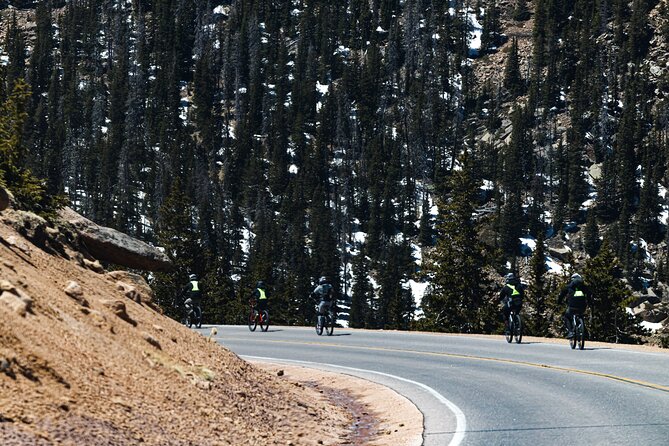
Pikes Peak is usually experienced from a car, shuttle, or summit viewpoint. A bicycle changes the pace. You have time to notice the road curling across the mountain, the air changing around you, and the way the scenery shifts as you descend.
The route follows Pikes Peak Highway, and admission to the highway is included. That matters because the ride is not simply a bike rental with directions. You are joining a guided mountain experience on a famous road, with the practical work of access, route finding, and group management handled for you.
The ride begins near the summit and works downhill. That makes the trip more approachable than a full uphill cycling challenge, but downhill riding has its own demands. You still need to brake smoothly, steer with care, watch the road, and stay alert for changing conditions.
Your guide sets the pace. The point is not to blast down the mountain as fast as possible. One description calls the ride exhilarating, and another uses the word race, but the overall guidance focuses on a steady, controlled descent. That balance is important. You get the thrill of speed and height without being left to manage a mountain road alone.
More Mountain Bike Tours in the USA:
- Waimea Canyon Downhill Bike Ride
★ 5.0 · 650 reviews - Big Island Mountain Biking on Anna Ranch
★ 5.0 · 171 reviews - Guided Mountain Bike Tour of Mustang Trail in Red Rock Canyon
★ 5.0 · 160 reviews
The 7:30 a.m. meeting in Colorado Springs
Your day starts at 1501 W Colorado Ave in Colorado Springs. The tour begins at 7:30 a.m. and finishes back at this meeting point, with the total experience lasting about six hours and 30 minutes.
That early start is practical. Mountain weather can shift during the day, and a morning departure gives you more time for the ascent and ride before afternoon conditions develop. It also leaves room later in your day for another Colorado Springs activity, though you should not plan anything that requires a precise arrival time.
The return to the original meeting point keeps the day simple. You do not need to arrange a separate pickup from the end of the route. Confirmation is provided when you book, and the ticket is mobile, so you can keep the booking on your phone.
The trip is offered in English. Since the guide is managing pace, safety, stops, and mountain information, you should be comfortable understanding spoken English while riding.
Reaching the summit and getting ready to ride
The summit portion is not just a starting line. It gives you a chance to take in the scale of Pikes Peak before heading downhill. At more than 14,000 feet, the top can feel surprisingly cold, even if the morning in town is comfortable.
Layering is the most repeated practical tip from the experience. A jacket or warm layer is sensible, and one ride included a warm jacket for a participant who did not need it. That suggests the operator plans for cold conditions, but you should still dress with the summit in mind rather than relying entirely on supplied clothing.
The high altitude is another consideration. One participant from Florida specifically advised drinking plenty of water in the days before the tour and reported no trouble adjusting. That is personal advice, not a guarantee, but it is sensible preparation for a morning that starts far above Colorado Springs.
You should also arrive ready for a moderate physical outing. The tour does not require advanced racing ability, yet you need enough control and stamina to ride downhill for a substantial part of the day. If you are uneasy on a bicycle, have not ridden for years, or struggle with braking and turning, this may not be the right mountain activity.
Five climate zones on one downhill route
One of the tour’s best features is the changing environment. You pass through five separate climactic life zones during the descent, so the ride is more than a long view from a high road.
At the top, the air and terrain feel stark and exposed. As you lose altitude, the mountain begins to change around you. The exact appearance depends on weather and season, but the main value is the progression itself. You can watch the high alpine setting give way to lower mountain environments without leaving your bicycle.
This is where the guided format earns its keep. A guide can point out changes you might otherwise miss while concentrating on your brakes and the road. Several guides have been praised for adding facts and information along the way, including Eric and Luke, who were specifically credited with making the ride more informative as well as fun.
The route also creates a natural rhythm. You ride, stop, take in a viewpoint, hear a little context, and continue. Marcel and Mike were praised for providing stops for photographs, which is especially useful on a mountain road where pulling over on your own may not be wise.
A few more days on two wheels around the USA worth a look
- Guided Bike Tour of Old Town Key West
★ 5.0 · 2,611 reviews - NYC: Central Park Bike Rentals
★ 4.2 · 2,528 reviews - Red Rock Canyon eBike Half-Day Tour
★ 5.0 · 1,870 reviews - NYC: Central Park Bike Rental
★ 4.1 · 1,651 reviews
What the guides add to the experience
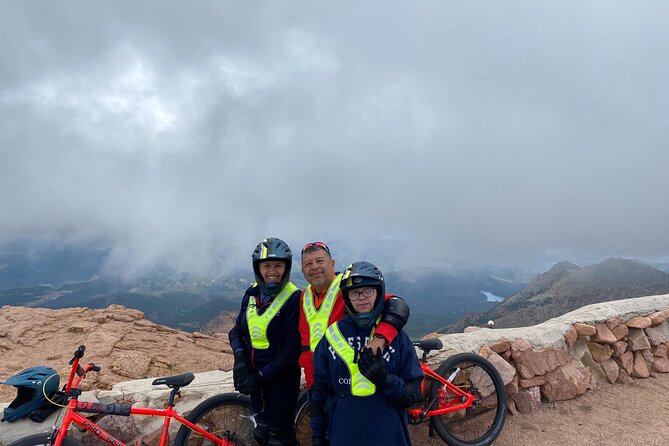
The quality of the guide team is a major reason this tour receives such strong praise. Safety is not treated as a quick briefing at the start. The guides stay involved throughout the descent.
Spencer, Nick, and Kenzie were singled out for patience and encouragement during a family outing that included ages 12 through 62. That range gives you a useful sense of the tour’s intended reach. It can work for a mixed-age family, as long as each person meets the fitness and weight requirements and can ride with reasonable control.
Mark and Ty were praised for making the group feel at ease from introductions through departure. Mark also drove the support vehicle on one outing, while Anson rode ahead of the cyclist. That front-and-back support is reassuring on a long downhill route because it helps keep the group organized.
Other guide teams named in the feedback include Michael and Eric, Marcel and Mike, Kate and Dalanee, and Dalanee and Jess. Guide assignments can change, but the consistent pattern is clear: the staff are expected to watch the group, explain the ride, and keep the mood friendly without treating safety as an afterthought.
That mix is especially valuable if you are excited but slightly nervous. You can enjoy the rush of the descent while knowing someone is setting the pace and watching the road ahead.
Bikes, helmets, and useful support
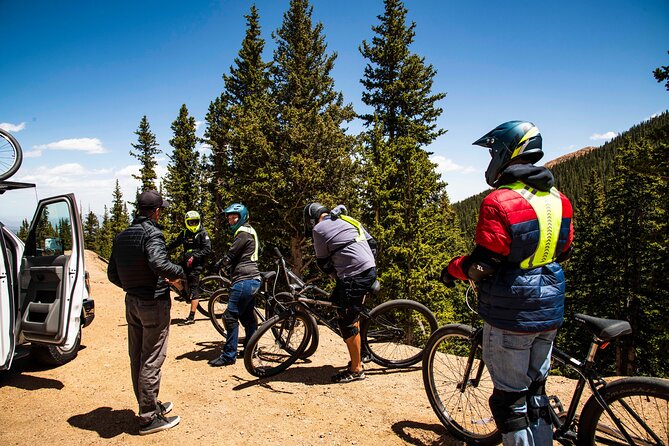
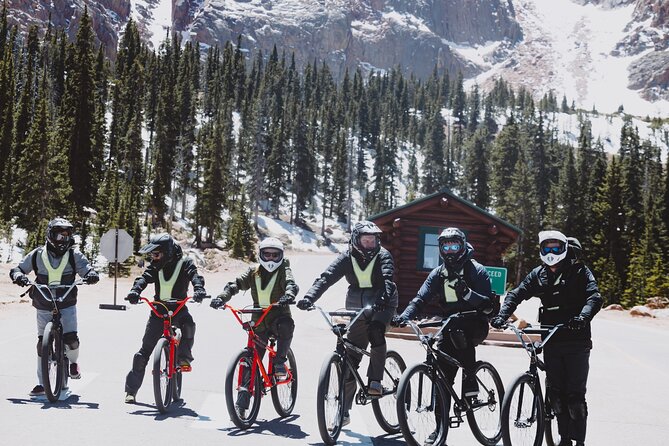
The available details indicate that safety equipment is supplied. One participant specifically praised the full-face helmets and said knee and elbow pads, gloves, and a warm jacket were provided. Water and snacks were also offered.
Those details add real value. Full-face helmets and pads are not decorative extras on a mountain ride. They give you more protection and can help you feel less tense while handling turns and braking. The gloves also make sense for a cold summit and a long morning outdoors.
The information does not specify the exact bicycle model or provide a full equipment list for every booking. I would confirm current equipment details if a particular bike, helmet fit, or clothing item matters to you.
The support is also more than physical gear. A guide leads the ride, sets a manageable pace, and stops for pictures and information. That means you are paying for supervision and route management, not just wheels.
Is the downhill ride difficult?
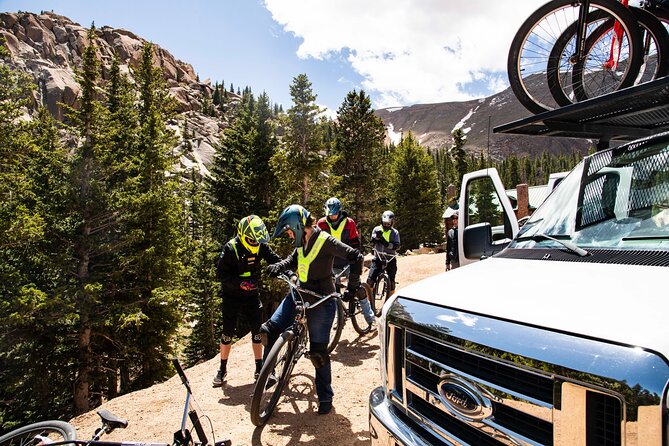
The tour is described as suitable for most abilities, but some biking experience is required. That is a fair description. You do not need to be a competitive cyclist, yet you should be comfortable riding a bicycle and controlling your speed.
The downhill direction reduces the need for sustained climbing. Still, downhill riding can tire your hands, arms, and concentration. You will need to brake before turns rather than panic-braking in them, keep enough space between riders, and follow the guide’s instructions.
The group format helps. With no more than 14 people, the guide can keep a closer eye on the group than on a large coach-style outing. The smaller size also makes it easier to ask questions and pause for a photo without creating a major delay.
The strict weight restriction is 90 to 250 pounds. This is not a casual suggestion, so check it before paying. The restriction may relate to equipment and safe operation, and the operator will not be able to bend it at the last minute.
Weather, clothing, and altitude planning
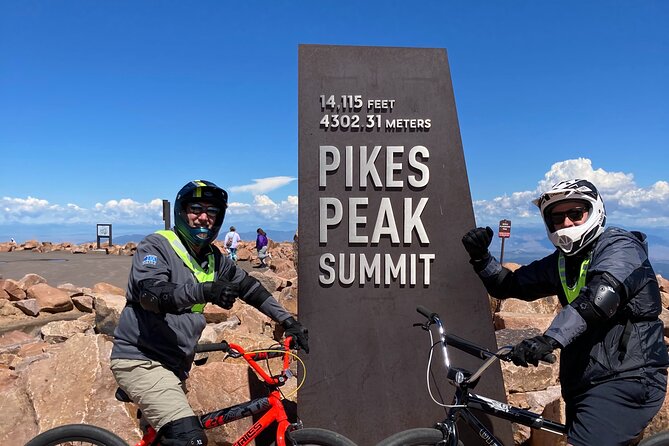
Pikes Peak weather deserves respect. The tour requires good weather, and poor conditions can lead to a cancellation, a different date, or a full refund. That policy is sensible for a high-mountain bicycle ride, where cold, wind, or poor visibility could change the experience quickly.
Bring layers rather than one heavy garment. The summit may be cold, while lower sections feel warmer. A practical outfit lets you adjust as the elevation changes.
Water is important too. The supplied information confirms that water and snacks may be offered, but I would not treat that as a reason to ignore hydration before the tour. The high starting point can make the morning feel harder than the same ride would at town level.
You should also keep your schedule flexible. The tour is approximately six hours and 30 minutes, and mountain conditions can affect the day. A weather-related change is possible, and the cancellation terms allow a full refund if you cancel at least 24 hours before the start time. Cancellations made less than 24 hours ahead are not refunded, and late changes are not accepted.
The value of a small-group mountain tour
No price is provided here, so I cannot judge the exact dollar amount. I can still assess what you receive for the cost.
The value is strongest if you want an active Pikes Peak experience but do not want to plan the route, arrange highway access, manage summit logistics, or ride without support. Admission is included, the group is capped at 14, and equipment such as helmets, pads, gloves, and possibly a warm jacket is supplied.
You also get a guided route through five life zones, photo stops, mountain information, and a return to the original meeting point. Those inclusions can make the fee worthwhile compared with handling the outing independently.
The value is weaker if you want a quiet sightseeing day, dislike early starts, or are looking for a long technical mountain-bike ride. This is a guided road descent, not an off-road expedition and not a private custom tour.
Who should book this Pikes Peak ride?
I would recommend it to an active family, a couple seeking a memorable Colorado Springs outing, or anyone who wants to experience Pikes Peak at bicycle speed. The family example involving ages 12 to 62 suggests that mixed-age groups can enjoy it when everyone is comfortable on a bike.
It is also a good match for first-time mountain tour participants who want excitement with structure. You are not left to guess where to stop or how to pace the route, and the guides have been praised for patience.
I would hesitate to recommend it if you have no recent biking experience, are uncomfortable with downhill riding, or fall outside the 90 to 250 pound limit. The tour may also disappoint anyone expecting a private ride or complete control over the schedule.
Should you book the Pikes Peak downhill bike tour?
Book it if you want one of the most active ways to experience Pikes Peak and you meet the basic fitness, biking, and weight requirements. The combination of summit views, five changing life zones, small-group support, safety equipment, and an experienced guide team gives the outing real substance.
Prepare for cold at the top, bring layers, hydrate before the morning begins, and leave room in your schedule for weather changes. If you do that, this tour offers a strong mix of scenery, controlled excitement, and practical support. It is not simply a ride downhill. It is a carefully managed mountain day that lets you enjoy the height without having to handle every detail alone.
FAQ
How long does the Pikes Peak Summit Downhill Bike Tour last?
The experience lasts approximately 6 hours and 30 minutes.
Where does the tour begin?
The meeting point is 1501 W Colorado Ave, Colorado Springs, Colorado 80904.
What time does the tour start?
The scheduled start time is 7:30 a.m.
Where does the tour end?
The activity ends back at the original meeting point in Colorado Springs.
Is admission to Pikes Peak Highway included?
Yes. Admission to Pikes Peak Highway is included in the tour.
How many people can join the tour?
The maximum group size is 14 people.
Do I need biking experience?
Yes. The tour is suitable for most abilities, but some biking experience and a moderate level of physical fitness are required.
Is there a weight restriction?
Yes. The strict weight restriction is 90 to 250 pounds.
What happens if the weather is poor?
The experience requires good weather. If it is canceled because of poor conditions, you can choose a different date or receive a full refund. You can also cancel for a full refund if you cancel at least 24 hours before the scheduled start time.
Just added around the USA
- Garden of the Gods Original Electric e-Bike Tour★ 5.0 · 45 reviews
- 3-Hour E-Bike Tour of Trail of the Silver Kings (Old Mine Tour)★ 5.0 · 18 reviews
- Gold Camp Road by E-Bike★ 5.0 · 21 reviews
- Pikes Peak & Garden of the Gods E-Bike Expedition★ 5.0 · 29 reviews
- EBIKE Mountain Adventure in Colorado Springs: Gold Camp Road★ 5.0 · 16 reviews
- Ebike 2 Hour Rental Experience in Manitou Springs, Colorado★ 5.0 · 33 reviews
- Ride Manitou Springs & Garden of the Gods Best Guided eBike Tour!★ 4.5 · 16 reviews
- Historical Bicycle Tour of Dunedin★ 5.0 · 44 reviews
Mountain Bike Tours, compared.
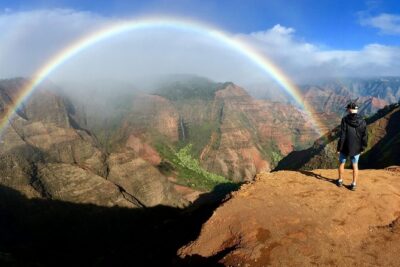
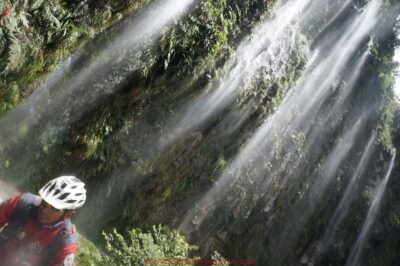
La Paz: Mountain Bike Down the World’s Most Dangerous Road
Read our review →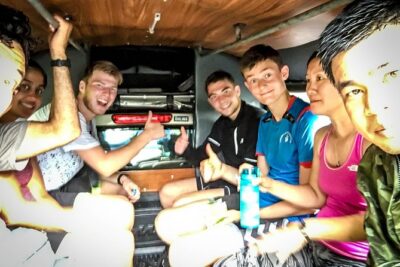
Chiang mai Hike & Downhill Bike Adventure –Suthep National Park
Read our review →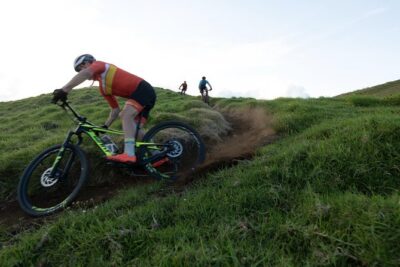
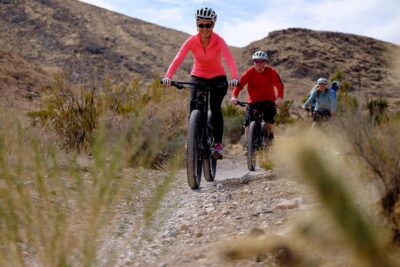
Guided Mountain Bike Tour of Mustang Trail in Red Rock Canyon
Read our review →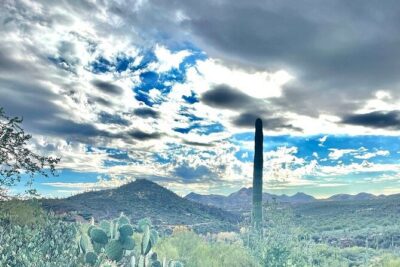
3 Hour Sonoran Desert Private Guided Mountain Bike Tour
Read our review →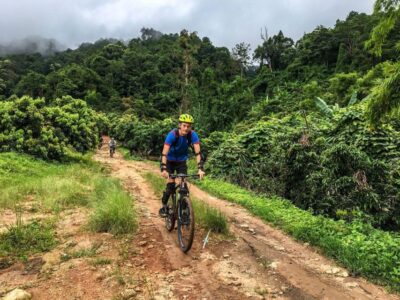
Suthep National Park Hiking & DH Mountain Biking
Read our review →
Browse the lists this tour appears in