REVIEW · QUEENSTOWN
Queenstown: Self-Guided Gibbston Valley Wineries Bike Tour
Wine, rivers, and easy-going adventure. The Gibbston Valley wineries bike tour gives you a pleasant way to leave Queenstown without hiring a car or arranging several taxis. I like the freedom to choose your own cellar doors, and I like how the route mixes wine stops with suspension bridges, river views, and the famous Kawarau Bridge bungy site. The main catch is that the ride can be longer and hillier than the short description suggests, especially before your first winery.
An e-bike is worth serious thought. Strong riders may enjoy a standard mountain bike, but several sections include climbs, gravel, narrow trail, and steep drop-offs. You also need to allow for the shuttle ride and bike briefing, which can use about an hour of the available day.
Five things to know before you ride
- The first winery may be 6 to 15 kilometres away, depending on the option you book.
- E-bikes cost extra, but they make the hills much easier and are the safer choice for many riders.
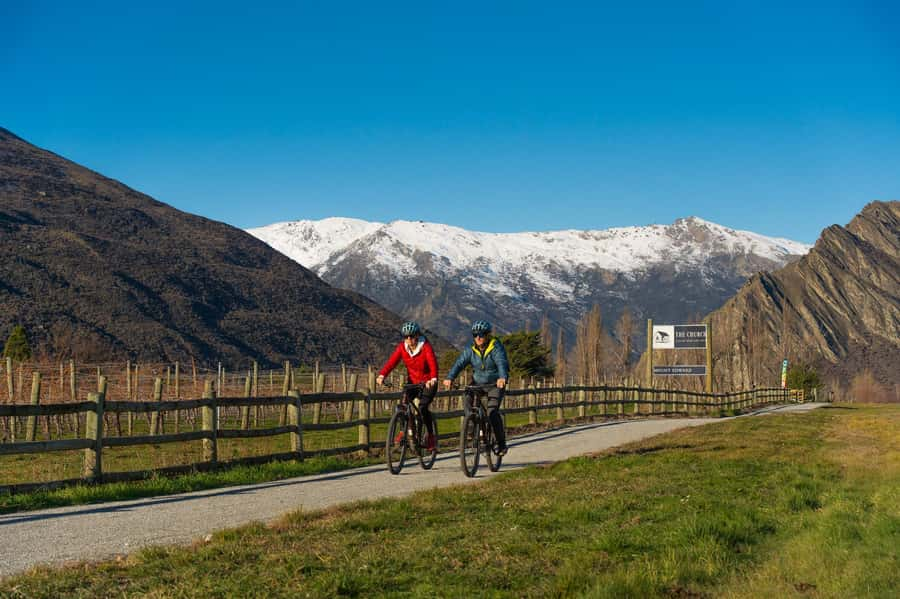
- The trail follows the Arrow and Kawarau rivers, with bridges, alpine views, and plenty of photo stops.
- You choose your own wineries, so planning lunch and tasting times matters.
- Pickup is fixed at 4:30 pm in summer and 4:00 pm in winter, with collection arranged from the location given during your briefing.
- Wine tastings and food are not included, so budget separately for both.
Leaving Queenstown for the Gibbston Valley
Your day begins at Around The Basin’s shop at 3 Searle Lane in Queenstown. Arrive 10 minutes before departure because the shuttle leaves on time. The ride out to the trailhead is part of the practical trade-off: it gets you and your bike into the wine country, but it also takes roughly 30 minutes each way.
The full-day option starts in Arrowtown. That gives you the longest ride and the widest sweep through the valley, but it also means a substantial distance before reaching the wine stops. The three-quarter-day and half-day choices begin at the bike hub in Arrow Junction, about 5 kilometres from the Kawarau Suspension Bridge.
At the hub, you receive a mountain bike or e-bike, helmet, route map, and safety briefing. This introduction is one of the strongest parts of the outing. The staff explain how to use the e-bike and how to follow the route, which is useful if you have not ridden an electric bike before.
The bikes are generally in good condition, though a few details may vary. Some riders found gear changes less than perfect, and one person found the helmets worn. The hard saddles also drew the usual complaints. Bike seats are rarely famous for comfort, so wear practical clothing and expect the first part of the ride to involve a little adjustment.
More Cycling and Wine Tours in New Zealand
- Self-Guided Wine Tours by Bike with Lorelle & Greg
★ 5.0 · 304 reviews - Marlborough: Full-Day Self-Guided Biking Wine Tour
★ 4.7 · 221 reviews - Bike & Wine Tour: Arrowtown to Valley of the Vines
★ 5.0 · 207 reviews
Arrowtown, Arrow Junction, and the first kilometres
The start point changes the shape of your day. From Arrowtown, the full-day ride gives you a longer approach through the district before you reach the main winery section. The first winery is about 15 kilometres from the full-day starting point, and the final winery can be as far as 25 kilometres away.
That distance is manageable for regular cyclists, but it is not a quick pedal between two nearby tasting rooms. You will want to leave enough time for photographs, food, and the return pickup. If you choose a standard bike, you should already be comfortable riding for several hours.
The shorter options begin closer to the main route. From Arrow Junction, the first winery is about 6 kilometres away and the final one is about 16 kilometres away. The ride to the first cellar door can still take around 60 to 75 minutes, depending on your pace and how often you stop.
That is why the half-day option can feel tighter than expected. By the time you travel from Queenstown, receive your bike, hear the briefing, and ride to the first winery, a good portion of the day has passed. Two wineries can fit comfortably if you plan well, while three may require brisk riding and short tasting visits.
River trails, suspension bridges, and mountain views
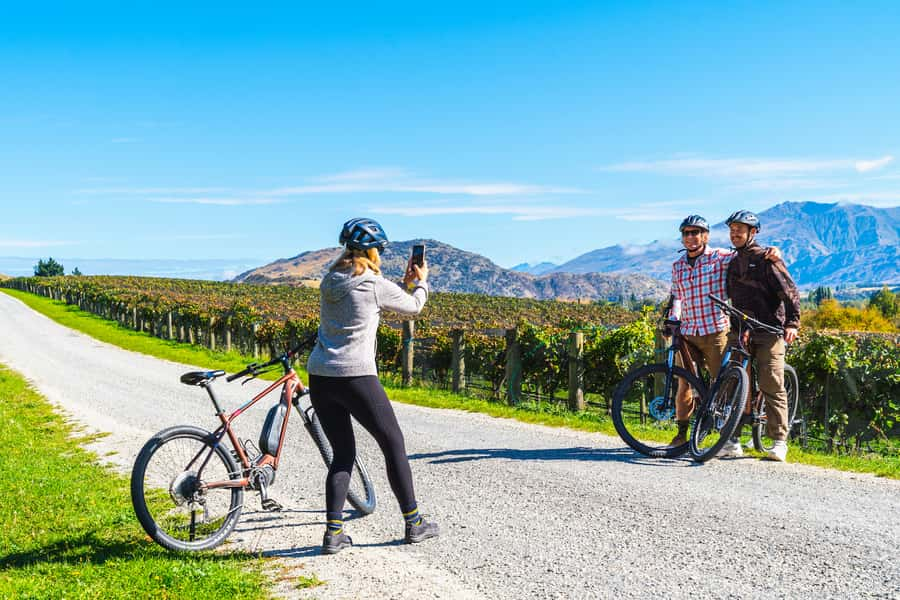
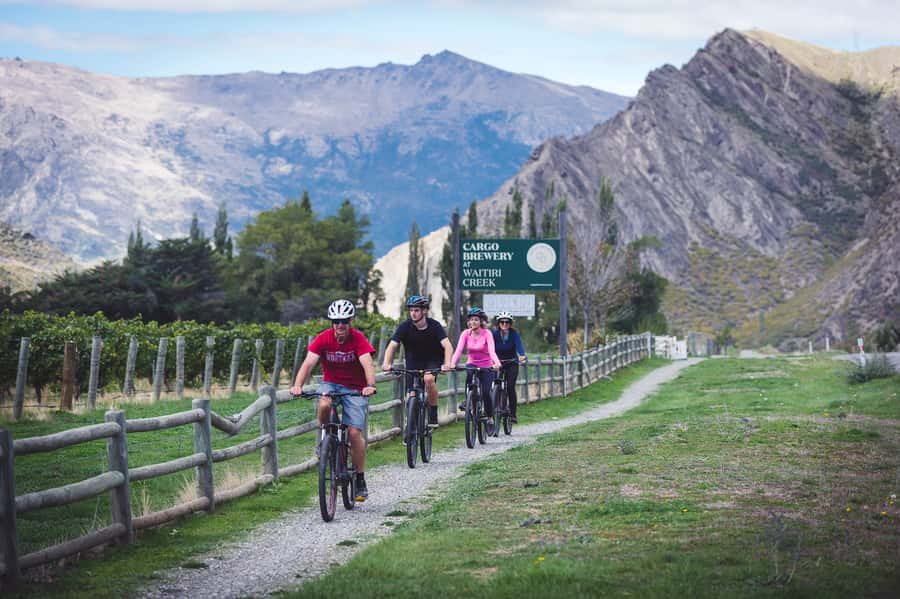
The route follows the Arrow and Kawarau rivers, giving you a changing mix of water, rocky banks, open hills, and high country views. The trail is generally smooth and well maintained, but it is not a perfectly flat cycle path from start to finish.
You will cross suspension bridges and pass the Kawarau Bridge, home to the world-famous bungy jump. Even if you have no interest in jumping, the bridge adds a memorable bit of adventure to the route. It also makes a good pause before continuing into the winery section.
Most of the riding is relaxed, yet a few parts demand attention. Gravel can be slippery, some sections are narrow, and there are steep drop-offs beside parts of the trail. The scenery is excellent, but you should stop safely before taking photographs rather than trying to admire every view while riding.
Families need to be especially careful with younger children. The operators warn that riders must be able to ride a bike, and a six-year-old may struggle with the gravel hills, handlebar brakes, and half-bike setup. A confident older child may manage better, but this is not a casual bike path for a child who is still learning.
Mixed-ability groups can work well. One member of a party can use a standard bike while another takes an e-bike. The route includes easier stretches and some climbs, so different riders do not need identical fitness levels.
Choosing between a standard bike and an e-bike
The standard mountain bike is a reasonable choice for anyone who cycles regularly. One rider completed the full-day option on a normal bike while a companion used an e-bike, and both found the route manageable. The trail is not a mountain-bike test, but the total distance adds up.
For many people, the e-bike is the better buy. You get extra help on the hills, arrive at the wineries with more energy, and have less reason to walk a steep section. Several riders specifically recommended it, including people who found the electric motor powerful and easy to control.
I would choose the e-bike if you are not a regular cyclist, if your group includes mixed fitness levels, or if you want to focus on the wine stops rather than the exercise. It is also sensible if you are booking the full-day route.
A standard bike may be enough for you if you are comfortable with gravel, modest climbs, and several hours in the saddle. One rider felt an e-bike would have been unnecessary because the track was mostly easy and never too steep. That is a fair point, especially on a sunny day with plenty of time.
Do remember that an e-bike does not remove every risk. The narrow trail and drop-offs still require care, and the extra speed can make a tricky section feel less forgiving. Use the assistance to ride comfortably, not to race between cellar doors.
More Self-Guided Bike Tours in New Zealand
- Self-Guided Biking Wine Tour (full day) in the Marlborough Region.
★ 5.0 · 206 reviews - Half-Day Self-Guided Mountain Bike Journey through Whakarewarewa Redwood Forest
★ 5.0 · 124 reviews - Queenstown: Self-Guided Bike Ride on the Arrow Bridges Trail
★ 4.8 · 96 reviews - Marlborough: Half Guided and Half Self-Guided Bike Wine Tour
★ 4.8 · 42 reviews
Planning the wineries instead of simply following the trail
The freedom to pick your own wineries is the heart of this trip. You receive a map showing the cellar doors linked by the Gibbston River Trail, then decide where to stop and how long to stay.
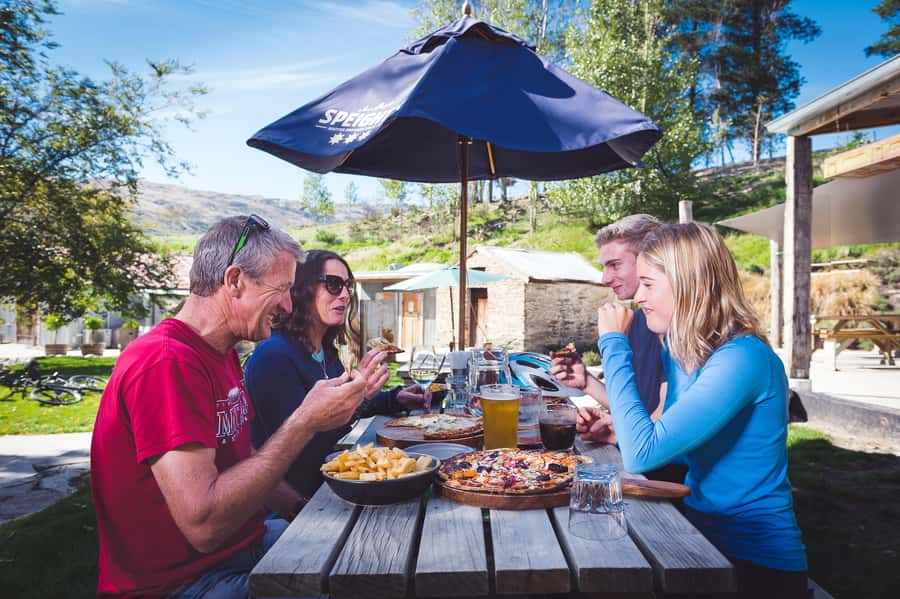
The wine region includes tasting rooms, a cheesery, the Gibbston Tavern, and other food stops. You can build a day around wine, or make it a scenic bike ride with only a few tastings. People who do not drink much can still enjoy the route and the food venues.
Kinross is a useful lunch choice and has been a favorite stop for its food and wine. Gibbston Tavern also offers a relaxed place to eat, though service may be stretched at busy times and wine flights may not always be available. Monte Christo is another option, with quality wine at reasonable prices according to one detailed outing.
Mount Rosa works well as a planned stop, particularly on the half-day route. One group booked a 2 pm tasting there and reached it on time after a few navigation mistakes. The Church, near a pickup point, can be a convenient final place for a drink while you wait, although the wine may not appeal as much as the options at Monte Christo or Kinross.
The practical lesson is simple: research the wineries before you ride. The map is useful, but it may not give enough detail about the wine styles or food available at each stop. Booking a tasting or lunch in advance can help, but leave enough flexibility for riding time and photographs.
Do not plan to visit every cellar door. The route is longer than it looks, and lingering at one or two places is usually more enjoyable than rushing through four. Three wineries can be possible on a well-timed half-day, but you may have only 30 to 45 minutes at each.
Lunch, tastings, and the real cost of the day
The $56 per-person price covers the main transport and equipment: shuttle service, a mountain bike or e-bike selection, helmet, route briefing, and map. It is a fair price for a self-guided outing that removes the need to arrange a designated driver or pay for separate transport between Queenstown and Gibbston.
The price does not include wine tastings or food. That matters because the best value depends on how you use the day. If you stop for a tasting, lunch, cheese, and another glass before pickup, your final spend will be well above the base fare.
I still think the tour offers good value for people without a rental car. You get access to a spread-out wine region and can finish at a different winery from where you started. The scheduled shuttle also means you can enjoy tastings without driving yourself back to Queenstown.
There are small omissions. A saddlebag for wine purchases would be useful, and you may need to carry purchases carefully. Ask about storage before you buy bottles. The shuttle can feel cramped, and the transfer time reduces the actual riding and tasting period, especially on the shorter options.
Timing the pickup from your final winery
Pickup times are shared across the options: 4:30 pm from September 1 through April 30, and 4:00 pm from May 1 through August 31. Your briefing tells you the exact pickup location and time for the day.
Some flexibility is possible because the bus can collect you from another winery along the route, but you need clear instructions and a firm plan. Ending near the designated pickup point is easiest, especially if you want a final glass of wine.
The return shuttle makes the route practical, but it also gives you a deadline. Do not begin a long tasting just before pickup. Allow time to finish, collect your belongings, and get your bike back to the agreed location.
Weather will affect the day. Sunny conditions make the views especially good, but you still need comfortable clothes and shoes. Bring layers suitable for cycling and stop often enough to drink water. The supplied information does not list other required equipment, so keep your packing simple and practical.
Who will enjoy this ride most?
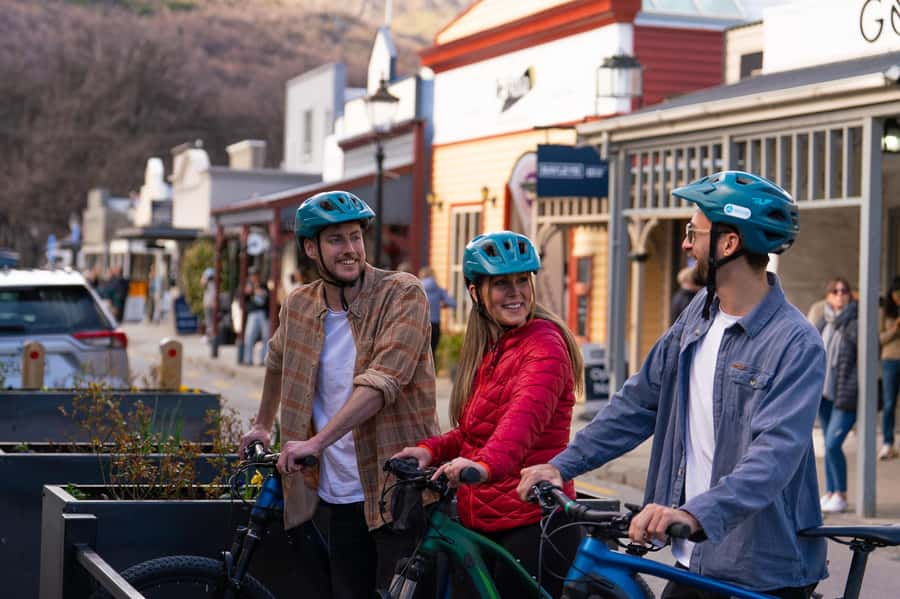
I would recommend this tour to couples, families with confident older children, and friends who want a wine day with movement built in. It works especially well for people who like making their own choices instead of following a guide from one tasting room to the next.
It suits regular cyclists and moderately active visitors. You do not need to be an athlete, but you must be able to ride competently, handle gravel, and manage several kilometres between stops.
Choose the full-day option if you want the broadest route and do not mind spending much of the day on a bike. Choose the half-day or three-quarter-day option if you prefer less riding or already have other Queenstown plans, but understand that the transfer and briefing take up a meaningful part of the available time.
I would be cautious about booking it for a young child, anyone uncomfortable near drop-offs, or anyone who dislikes gravel paths. If you are unsure about fitness, pay for the e-bike rather than hoping the hills will be easy.
Should you book the Gibbston Valley bike tour?
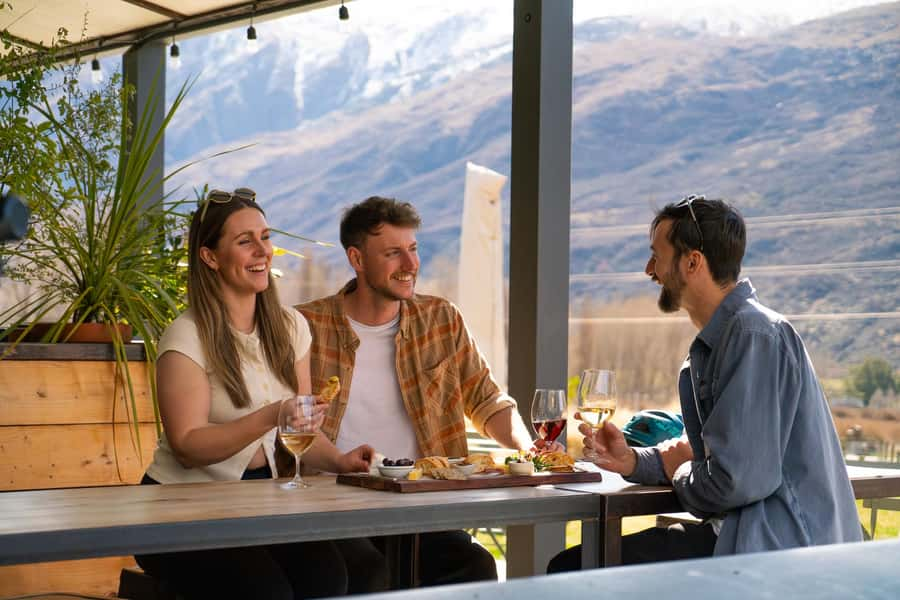
Book it if you want a scenic, self-directed day and enjoy combining wine with light adventure. The strongest reasons are the beautiful river route, high-quality bikes, helpful briefing, flexible winery choices, and easy transport from Queenstown.
I would choose an e-bike for the full-day trip or for most mixed-ability groups. For a shorter outing, a standard bike can work if you are comfortable cycling and plan only two or three stops.
Skip it if you want a quick winery transfer with almost no exercise, or if you need a completely flat and child-friendly path. For everyone else, this is one of the more memorable ways to experience Gibbston Valley, provided you respect the distances and do not pack too many tastings into one afternoon.
FAQ
Where does the Gibbston Valley bike tour begin?
Check in at Around The Basin’s shop at 3 Searle Lane in Queenstown 10 minutes before the scheduled shuttle departure.
How long does the experience last?
The advertised duration is 5 hours, with availability depending on the selected start time. The transfer, bike fitting, and briefing form part of the day.
Where do the full-day and shorter options start?
The full-day option starts in Arrowtown. The three-quarter-day and half-day options start at the bike hub in Arrow Junction, about 5 kilometres from the Kawarau Suspension Bridge.
How far is the first winery?
On the full-day option, the first winery is about 15 kilometres from the starting point. On the three-quarter-day and half-day options, it is about 6 kilometres away.
Are wine tastings and food included?
No. The tour includes the bike or e-bike, helmet, briefing, map, and shuttle transportation. You pay separately for tastings, meals, and other food or drinks.
What time is the return pickup?
Pickup is at 4:30 pm from September 1 through April 30, and at 4:00 pm from May 1 through August 31. The exact pickup location is provided during the briefing.
Can someone who cannot ride a bike join?
No. The activity is not suitable for people who cannot ride a bike. You should also be comfortable with gravel paths, modest hills, and narrow sections of trail.
Just added around New Zealand
- Morning Guided with Afternoon Self-Guided Biking Wine Tour★ 5.0 · 30 reviews
- Private Biking Wine Tour (full day) in the Marlborough Region★ 5.0 · 13 reviews
- Full-Day Marlborough Wine Region Bike Hire★ 5.0 · 35 reviews
- The Inside Loop: an electric bike tour of Auckland’s Coolest Neighborhoods★ 5.0 · 150 reviews
- Full Day Ebike Tour in Karangahake Gorge (ex Auckland)★ 5.0 · 14 reviews
- The City Lights: a unique electric bike tour of Auckland by night!★ 5.0 · 36 reviews
- Lava Loop- Guided electric mountain bike tour in Akaroa★ 5.0 · 34 reviews
- Akaroa Explorer- Guided Electric Bike Tour in Akaroa★ 5.0 · 18 reviews
Cycling and Wine Tours, compared.
Tuscany Bike Tours Through the Chianti Hills with Wine Tasting
Read our review →
Rome by Night – Ebike Small Group Tour – Food and Wine (Option)
Read our review →
Rome by Night: E-bike Small Group Tour -Food & Wine (Option)
Read our review →
Wachau Valley Wine Tasting Bike Tour from Vienna
Read our review →
Private Self-Guided E-Bike Ride in Tuscany with Vineyard Visit
Read our review →
Saint-Emilion Electric Bike Day Tour with Wine Tastings & Lunch
Read our review →
Burgundy Bike Tour with Wine Tasting from Beaune
Read our review →