
REVIEW · ROME
Rome: Cannondale E-Bike Tour of Top Landmarks & More
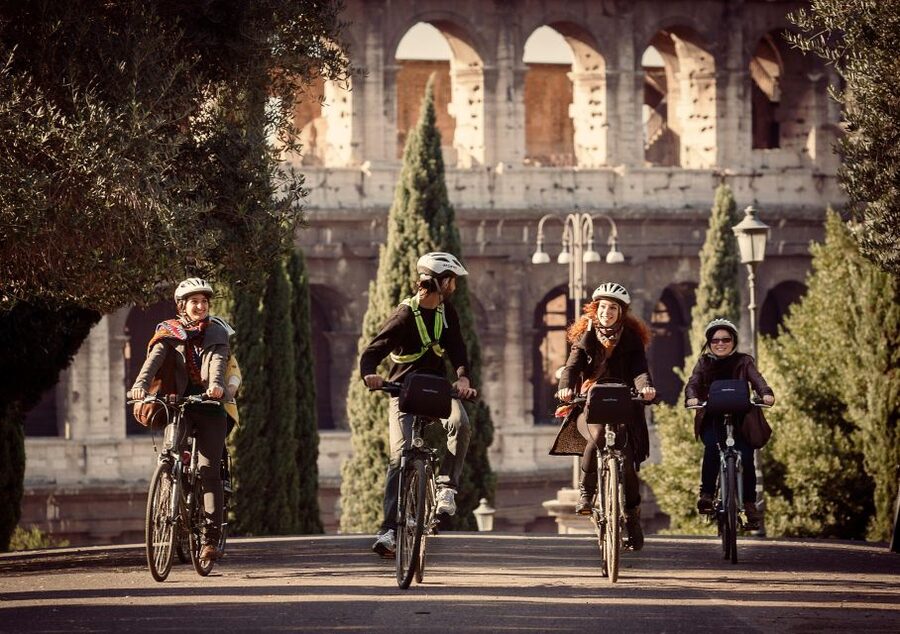
Rome is best seen on two wheels. This four-hour ride links the Colosseum, Trevi Fountain, Pantheon, Villa Borghese, and lesser-known corners without making you trudge across town. I especially like the comfortable Cannondale e-bikes and the carefully planned 14-kilometer route. The one catch is that the exact stops can change with city events or the tour time.
The small group of up to 10 makes it easier to hear the guide and stay together. Guides such as Carmen, Sina, Bita, Anna, and Khaled have been praised for clear directions, strong local knowledge, and patience with different cycling levels. You still need to pay attention in central Rome, and four hours in the saddle may feel long if you rarely cycle.
At $100 per person, this is not Rome’s cheapest sightseeing option, but it packs in a lot of ground and gives you a useful first look at the city. I would book it near the start of your stay, then return on foot to the places that deserve a slower visit.
Five useful things to know before you ride
- The route covers about 14 kilometers: You see many famous sights in four hours without spending the day on foot.
- The bikes are pedal-assist Cannondales: They help with Rome’s hills, but they are bicycles, not scooters or fully motorized vehicles.
- The group is limited to 10 people: That is a practical size for city riding and guide explanations.
- The itinerary mixes famous sights with quiet lanes: Expect grand monuments, small streets, gardens, churches, and scenic overlooks.
- Children can join with the right equipment: Infants from age one can use a child seat, while children aged five to eight can ride on a child extension.
- The tour is best as an early Rome activity: It helps you understand the city’s layout before you spend more time exploring on foot.
Rome can feel confusing at first. Ancient monuments appear beside busy streets, a quiet church may sit behind an ordinary doorway, and a short distance on the map can involve a tiring hill or a large crowd.
This e-bike tour solves part of that problem. You follow a guide through a 14-kilometer circuit that connects the city’s biggest sights with back streets, parks, and viewpoints. It is not a substitute for entering the Colosseum or touring the Pantheon inside. Instead, it gives you a broad, lively introduction to Rome from street level.
The ride lasts four hours and costs $100 per person. That price includes the e-bike, helmet, handlebar bag, water, and guide. You are paying mainly for the route and the guide’s ability to make a complicated city manageable, not just for the bicycle.
Starting near the Colosseum on Via Labicana
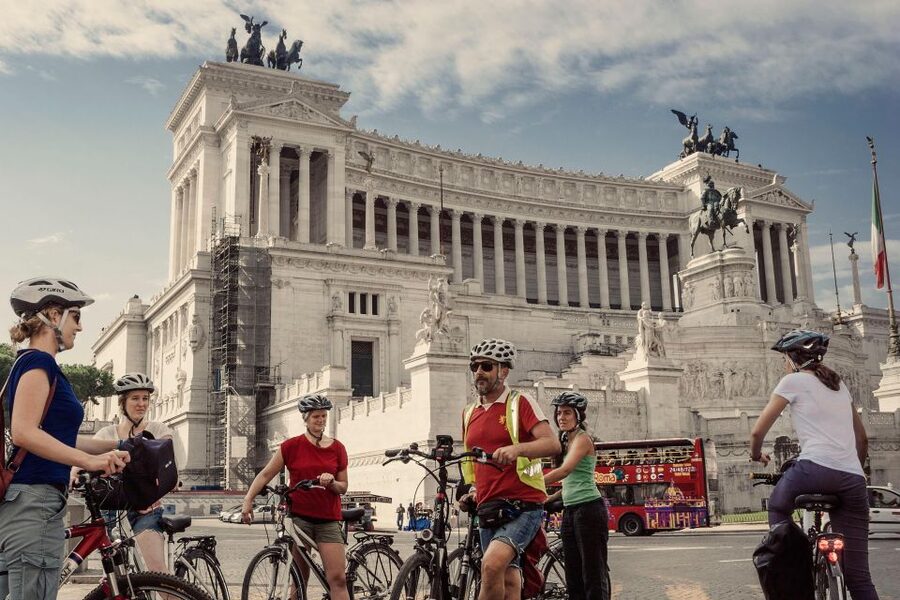
The tour begins at the provider’s shop at Via Labicana 49, a short walk from the Colosseum. That location is handy if you are already visiting the ancient center, though you should allow time to find the shop and complete the safety briefing before the ride begins.
The staff review the e-bike controls, fit the helmet, and explain how the group will move through Rome. This matters more than it may sound. Rome is not a quiet cycling town, and a clear leader, steady pace, and well-managed group make the ride less stressful.
The bikes are Cannondale pedal-assist models with anti-puncture tires and comfortable saddles. They are checked after each use, and the equipment includes a small front bag for useful personal items. One rider reported a gear problem being fixed quickly during the tour, which is reassuring when you are covering a fair distance in a limited time.
Remember that pedal assist still requires you to pedal. The electric motor helps most on hills and makes the ride easier, but you are not sitting on a motor scooter.
More E-Bike Tours in Italy
- Rome EBike Tour: Appian Way, Catacombs & Roman Aqueducts
★ 5.0 · 1,766 reviews - Rome: Top Highlights & Hidden Gems Tour by Cannondale E-Bike
★ 4.9 · 1,760 reviews - Rome: Appian Way & Aqueducts E-Bike Tour (Catacombs & Food)
★ 4.9 · 1,498 reviews
The Colosseum and Imperial Forums
The Colosseum is a natural opening act. Its enormous stone shell is familiar from photographs, but seeing it rise at the end of a Roman street gives the monument a stronger sense of scale.
You stop for explanations and pictures rather than entering the amphitheater. That is an important distinction. If you want the underground levels, arena floor, or interior galleries, you need a separate timed ticket.
From there, the route takes in the Imperial Forums. These ruins stretch along the ancient political center of Rome, where temples, government buildings, and public spaces once shaped daily life. A guide can help turn scattered columns and walls into a readable picture of the ancient city.
The cycling format works well here because you can see the setting from several angles without committing to a long walking loop. You also save your legs for later, when the route climbs toward the city’s northern side.
Trevi Fountain and the Spanish Steps
Trevi Fountain brings you into one of Rome’s most crowded central areas. The fountain is grand, theatrical, and usually surrounded by people taking pictures, tossing coins, and trying to find a clear view.
The guide gives you context and time for photos, but do not expect a quiet, personal encounter with the fountain. This stop is about seeing one of Rome’s essential sights efficiently.
The Spanish Steps offer a different kind of city scene. They connect the Piazza di Spagna with the upper streets near the Trinità dei Monti church, and the surrounding area is full of shops, cafés, and moving crowds. You will not cycle up the steps. The point is to reach the area, stop nearby, and take in the setting.
The exact timing matters. Some afternoon routes have followed a different sequence and skipped Trevi Fountain or the Spanish Steps while visiting other churches and historic corners instead. City celebrations and public events can also force a change. If one of these sights is essential to you, confirm the route and departure time when booking.
Piazza del Popolo and Villa Borghese
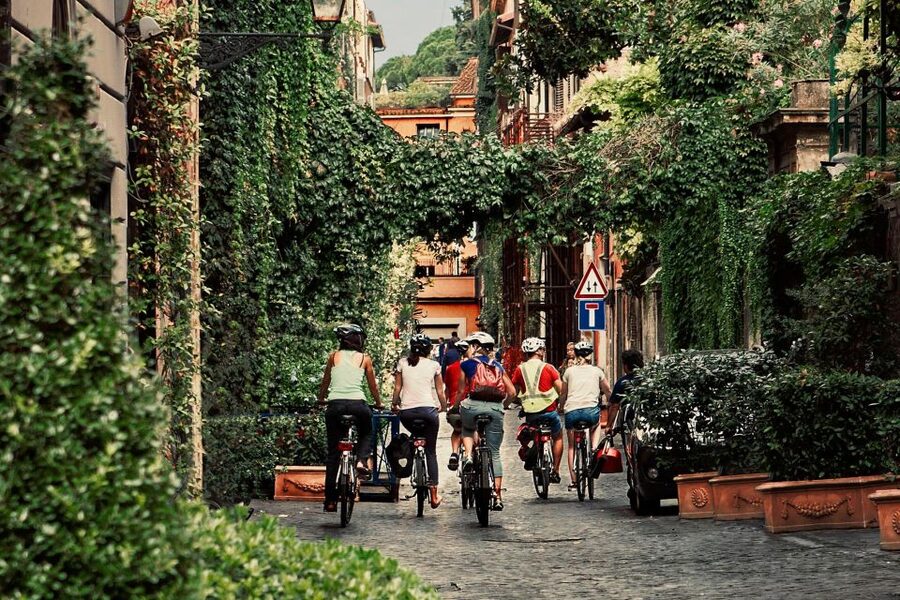
Piazza del Popolo is a welcome change after the dense streets around Trevi. Its broad oval shape, central obelisk, and surrounding churches give the group room to pause and regroup.
From here, the route reaches Villa Borghese, Rome’s large central park. This is one of the tour’s best transitions. You move from traffic and stone walls into open paths and greenery, with a scenic view back over Rome.
The park stop also gives the tour a more relaxed rhythm. Several riders have appreciated having time for coffee, gelato, or a brief break during the route. Those pauses are useful, especially for families and anyone who is not used to cycling for several hours.
Villa Borghese is not just a rest stop. It helps you understand Rome’s shape. From above, the historic center spreads out below, and the city feels less like a maze. I would pay attention here and mark the viewpoint for a return visit.
More E-Bike Tours in Rome
- Rome: Appian Way, Catacombs, & Roman Aqueducts E-bike Tour
★ 4.9 · 1,421 reviews - Rome City Small Group Bike Tour with quality Cannondale EBike
★ 5.0 · 1,380 reviews - Rome by Night – Ebike Small Group Tour – Food and Wine (Option)
★ 5.0 · 1,275 reviews - Rome by Night: E-bike Small Group Tour -Food & Wine (Option)
★ 4.9 · 1,233 reviews
Piazza Navona and the Pantheon
Piazza Navona occupies the former Stadium of Domitian, and its long shape still hints at the athletic arena that once filled this space. Today, fountains, churches, restaurants, artists, and pedestrians create a busy public square.
The guide can explain how the modern piazza grew from the ancient stadium. This kind of connection is one of the tour’s strengths. You are not simply checking off another famous square. You are seeing how Rome reused older structures and kept its public spaces active over many centuries.
The Pantheon is another highlight where the exterior tells only part of the story. Its massive columns and domed form make it one of Rome’s most impressive buildings, even from the street. The tour does not include a detailed indoor visit, so plan extra time to return if you want to study the interior.
Because the Pantheon sits in a pedestrian-heavy area, the group may stop nearby rather than ride directly to the entrance. Listen closely to the guide’s directions and keep the bicycle moving only where instructed.
The Jewish Ghetto, Portico di Ottavia, and Theatre of Marcellus
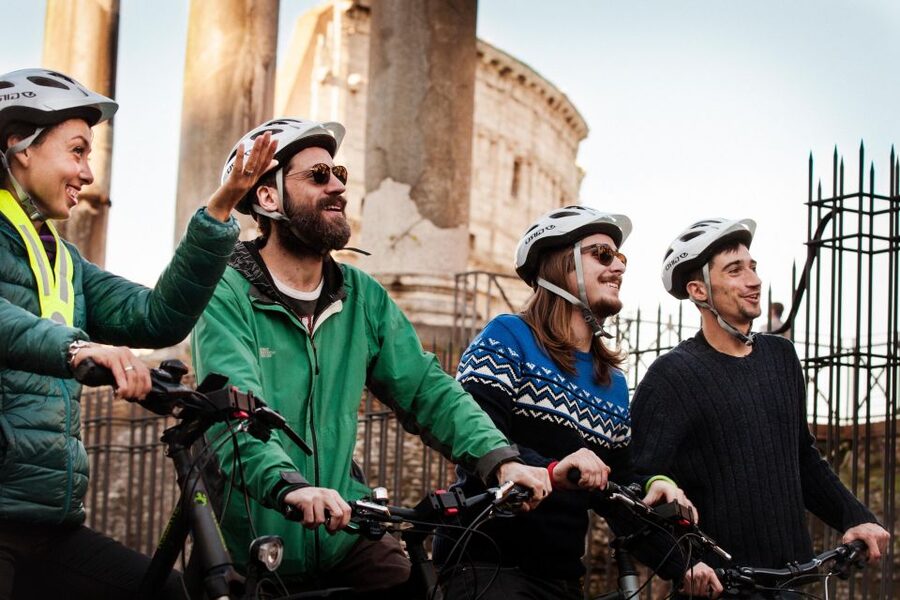
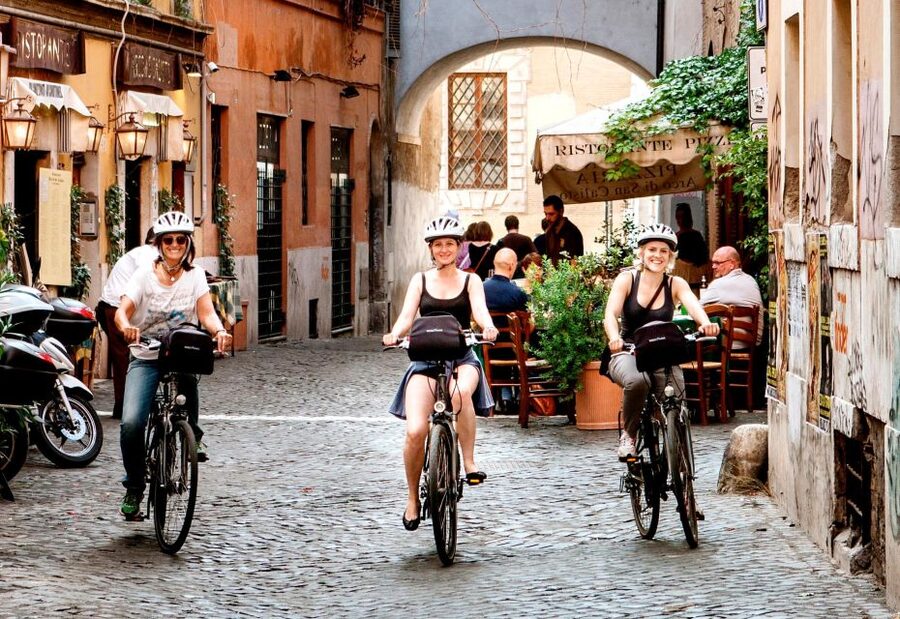
The route becomes more intimate in the Jewish Ghetto. Narrow lanes, old façades, and small squares replace the scale of the Colosseum and Imperial Forums.
This is where the tour feels less like a standard city circuit. You get a sense of Rome’s layers through streets that are easy to miss when you travel only between the major monuments. The area also has a distinct identity and a long connection to Rome’s Jewish community.
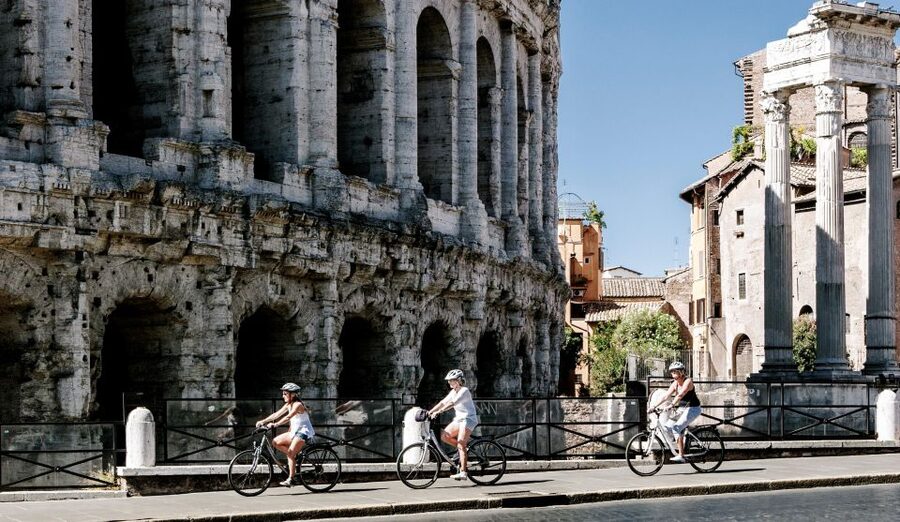
The Portico di Ottavia provides a striking ancient setting within the neighborhood. Its surviving columns and arches show how Roman ruins can become part of an ordinary urban street rather than a fenced-off archaeological site.
Nearby, the Theatre of Marcellus adds another piece to the city’s ancient story. It is smaller and less instantly famous than the Colosseum, but that is part of its appeal. You can see how historic structures have been absorbed into the living city.
Cycling through these lanes requires care. Streets may be narrow, surfaces uneven, and pedestrians unpredictable. The guides are responsible for leading and giving directions, but you still need to control your speed and leave room for others.
The Roman Forum viewpoint
One of the most memorable parts of the route is a panoramic view over the Roman Forum. Looking down from above gives you a clearer picture than walking among the ruins alone.
From this angle, the Forum’s temples, roads, arches, and broken walls fit together as part of one large civic center. You can also see the relationship between the Forum and the Colosseum, which is harder to grasp from ground level.
The stop is particularly useful if you have not yet visited the Forum. It gives you a visual map before you explore the archaeological area in detail. If you have already been inside, the viewpoint offers a different perspective and a good place for photographs.
As with the other stops, the guide explains the site and allows time for pictures. This is a sightseeing ride, not a race. The strongest guides adjust their explanations to the group, answer questions, and keep the pace comfortable.
Guides, safety, and group size
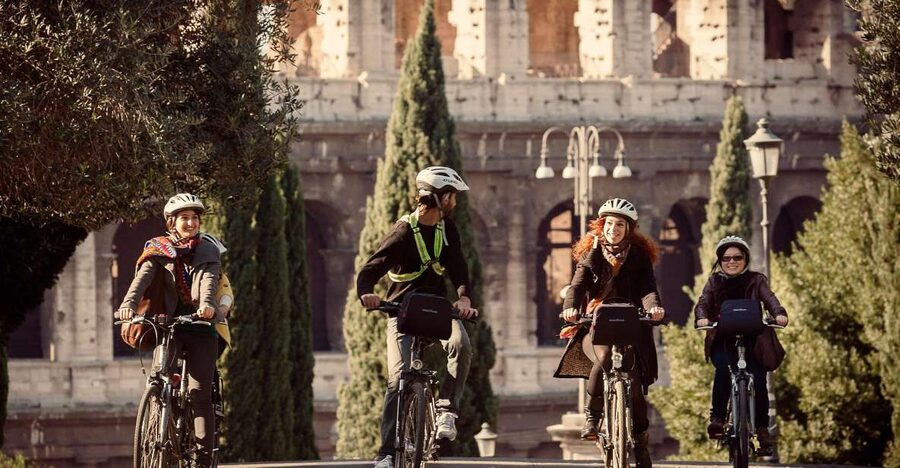
The guide can make or break a cycling tour. Here, the most praised qualities are clear instructions, humor, patience, and strong explanations at each stop.
Carmen has been singled out for leading the group clearly. Bita gave detailed background at each stop, while Sina was praised for being funny and for giving extra attention to the places that interested the group. Anna adapted to different cycling levels, and Pablo helped keep a three-year-old engaged during the ride.
Those details matter because no two groups move at exactly the same pace. A confident cyclist may want to cover ground quickly, while another person may need more time with gears, turns, or hills. The pedal assist makes uphill sections easier, but it does not remove the need for balance and traffic awareness.
Everyone must wear a helmet, which is supplied at no extra cost. The tour has a minimum of four participants, and the maximum group size is 10. If the minimum is not reached, the provider offers an alternative or a full refund.
Families, fitness, and practical limits
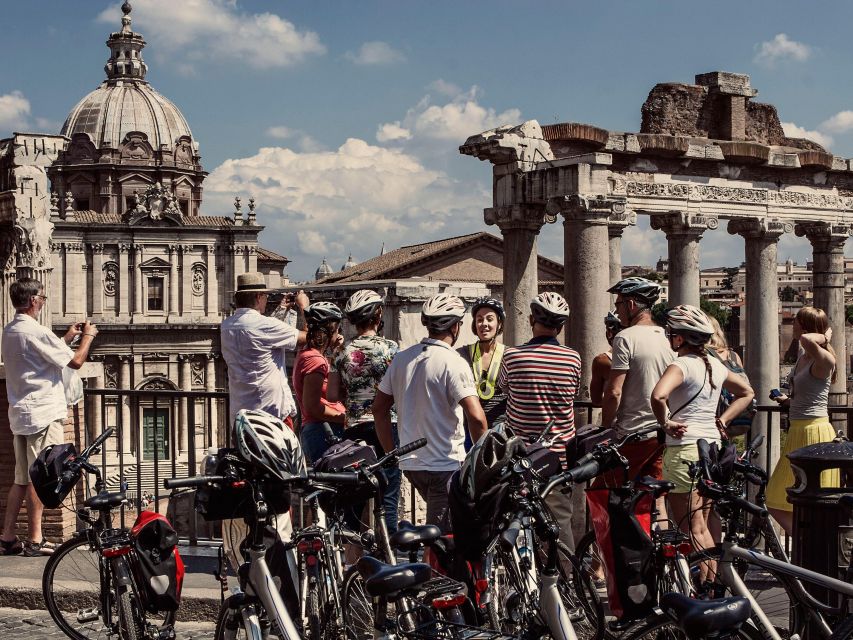
The stated difficulty is leisure, or intermediate when a child seat or child extension is attached. That description is fair for most adults who are comfortable on a bicycle, but you should not mistake leisure for completely effortless.
You cover 14 kilometers, stop often, and receive help from the electric motor. Still, Rome has hills, narrow streets, uneven surfaces, and busy areas. If you are nervous about city cycling, tell the guide at the start and stay near the leader.
Families have several options:
- Children aged one to four can ride in a child seat and join free of charge, provided they weigh less than 22 kilograms.
- Children aged five to eight can use a child extension.
- Children aged nine and older, and taller than 140 centimeters, can ride an e-bike.
- Babies under one year cannot join.
The combined equipment weight limit is 136 kilograms, or 300 pounds. Check this before booking if you plan to use a child seat or extension.
Is $100 a fair price?
At $100, the tour costs more than simply walking between the sights. But walking the same route would take much longer, and you would need to plan every turn yourself.
The value comes from four things: the maintained bicycle, the compact route, the guide’s explanations, and the ability to reach distant parts of central Rome without exhausting yourself. A bus tour may cover a similar number of famous sights, but the bicycle gets you into narrow lanes and lets you stop closer to the places you are seeing.
The price is easiest to justify if you have only a few days in Rome, want an overview, or prefer active sightseeing. It is less useful if you dislike cycling, have already explored central Rome thoroughly, or want long indoor visits at each monument.
The included water, helmet, and handlebar bag are small but practical additions. Free cancellation up to 24 hours ahead and the option to reserve now and pay later also make the booking less risky.
Who should book this Rome e-bike tour?
I would choose this tour for a first or second day in Rome. It gives you a mental map, points out places to revisit, and helps you decide which monuments deserve a full afternoon.
It suits active couples, families with older children, and anyone who finds long walking tours tiring. Teenagers often enjoy the movement and variety more than a slow history walk. The tour is also a good choice for people who want more than the standard Colosseum and Trevi Fountain circuit.
I would think twice if you are uncomfortable riding in city traffic, cannot manage a 14-kilometer route, or need guaranteed access to every listed sight. Public events, crowd conditions, and the selected departure time can change the sequence.
Should you book it?
Book it if you want to see a large slice of Rome in four hours, enjoy riding, and value a guide who can connect famous monuments with quieter streets. The well-kept Cannondales, small groups, scenic Villa Borghese stop, and Roman Forum viewpoint give the experience real value.
Choose an early departure if seeing Trevi Fountain and the Spanish Steps is important to you, and use the tour as your orientation rather than your full visit to Rome. Afterward, return on foot to the Colosseum, Pantheon, or Forum for the slower look these places deserve.
FAQ
How long is the Rome e-bike tour?
The tour lasts four hours.
How far do you ride?
The route covers about 14 kilometers, or 8.5 miles.
What sights are included?
The planned route includes the Colosseum, Imperial Forums, Trevi Fountain, Spanish Steps, Piazza del Popolo, Villa Borghese, Piazza Navona, the Pantheon, the Jewish Ghetto, Portico di Ottavia, Theatre of Marcellus, and a panoramic view of the Roman Forum.
Does the tour enter the Colosseum or Pantheon?
The provided information describes exterior stops, explanations, and photo opportunities. It does not include admission to the interiors of these monuments.
Are the e-bikes fully electric?
No. They are pedal-assist e-bikes, so you still pedal. The electric assistance helps make Rome’s hills easier.
Is a helmet provided?
Yes. Helmets are provided free of charge, and every participant must wear one.
How many people are in the group?
The group is limited to 10 participants. At least four participants are required for the tour to operate.
Can children join the tour?
Yes. Children aged one to four can use a child seat if they weigh less than 22 kilograms. Children aged five to eight can use a child extension, and children aged nine and above who are taller than 140 centimeters can ride an e-bike.
What languages are available?
The tour can be offered in English, Spanish, French, Italian, German, and Dutch.
Just added around Rome
- Rome: Guided eBike Evening Tour with italian Aperitif★ 5.0 · 16 reviews
- Rome: Villa Borghese, Villa Ada, and Coppedè E-Bike Tour★ 4.8 · 78 reviews
- Sunrise in Rome: Small Group E-Bike Tour & Italian breakfast★ 4.9 · 177 reviews
- Rome: Top 10 Highlights Guided Tour by Bike or E-Bike★ 4.4 · 15 reviews
- Rome: Appian Way, Aqueducts, & Catacombs E-Bike Guided Tour★ 4.9 · 54 reviews
- Rome: Villa Borghese E-Bike Tour (Small Group or Private)★ 4.9 · 92 reviews
- Rome: Panoramic Off-the-beaten-track Cannondale E-Bike tour★ 5.0 · 71 reviews
- Rome: Taste of Rome by quality Cannondale E-Bike★ 5.0 · 12 reviews
E-Bike Tours, compared.
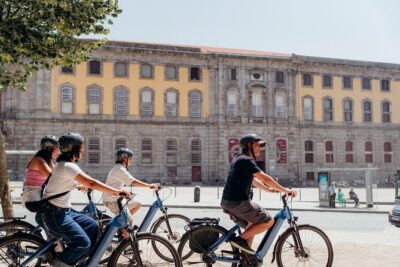
3-Hour Porto Highlights on a Electric Bike Guided Tour
Read our review →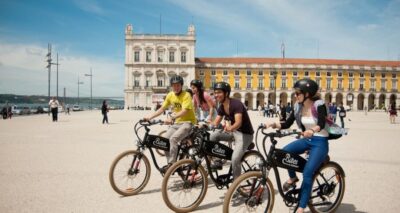
Hills, Alfama, and Mouraria Tour by Electric Bike
Read our review →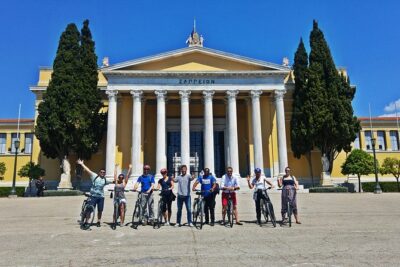
Athens Scenic Electric Bike Tour with optional Acropolis visit
Read our review →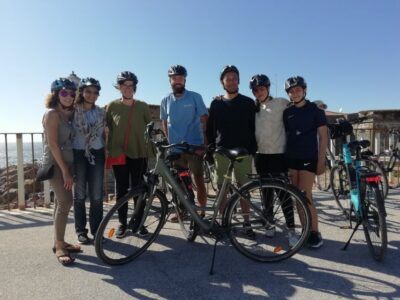
City Highlights 3-Hour Guided Electric Bike Tour
Read our review →
Rome EBike Tour: Appian Way, Catacombs & Roman Aqueducts
Read our review →
Top Highlights & Hidden Gems Tour by Cannondale E-Bike
Read our review →Browse the lists this tour appears in