
REVIEW · SEVILLE
Seville: Historic Center Bike Tour
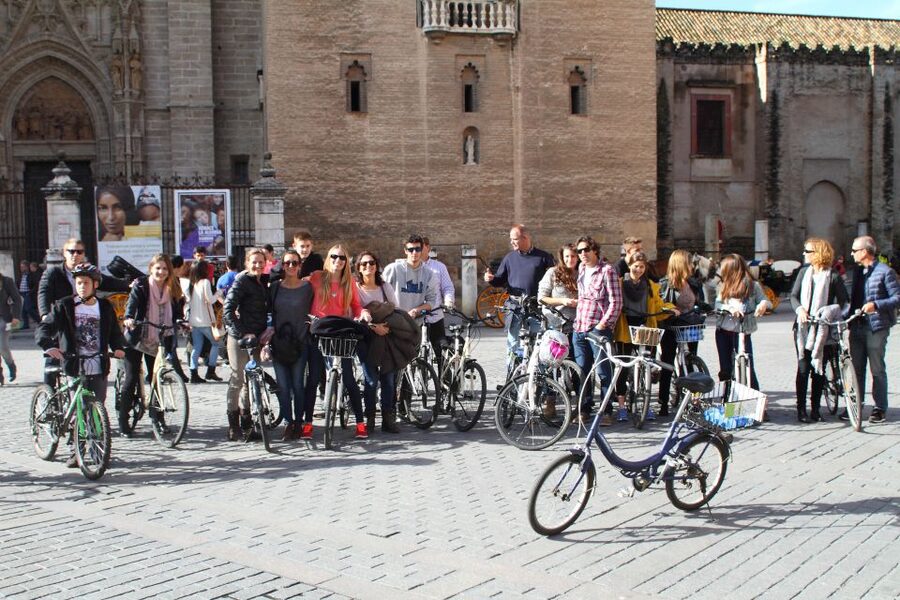
Seville’s old walls tell the city’s story. This $35 bike tour gives you a brisk way to connect Roman beginnings, Almoravid defenses, historic gates, and the upheavals of 1868. I like the route for two clear reasons: it links scattered sights into one readable story, and it gets you beyond the usual cathedral-and-palace circuit.
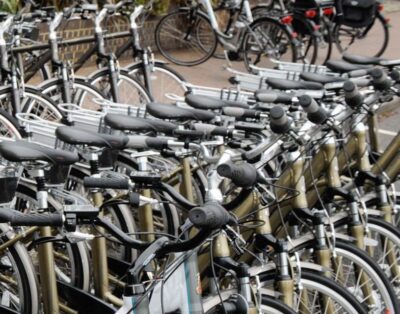
I also like that the tour includes a bike, water bottle, map, and a bilingual guide, with Spanish, English, and French available. The main consideration is the equipment: one past participant found the bicycles near the end of their working life, though not unusable. You should also be comfortable cycling for two and a half hours, since the activity is not suitable for people with mobility impairments.
Key points to know before you book
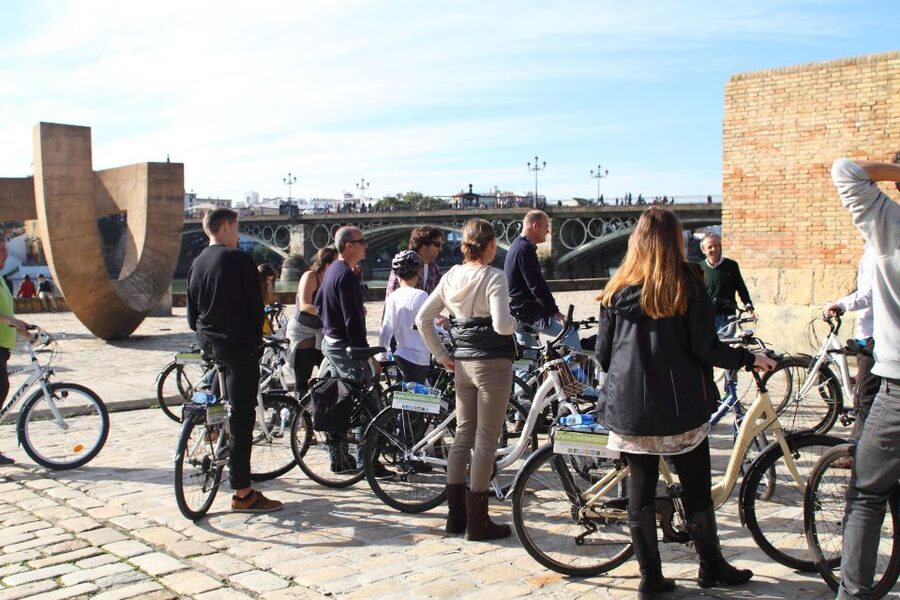
- Old defensive walls: Follow surviving sections connected with Seville’s former Almoravid defenses.
- Historic gates: Stop at Puerta Carmona, Puerta Osario, Puerta Triana, Puerta de Córdoba, and the Macarena area.
- Broad time span: The guide connects Tartessians, Carthaginians, Romans, Islamic rule, and the 1868 riots.
- Useful price: At $35 per person, the tour offers a reasonably priced orientation to central Seville.
- French, English, and Spanish: Guides may speak more than one language, with Luca receiving especially warm praise for his French, Italian, and Spanish.
- Practical extras: Bike rental, water, and a map are included, while helmets are available for children.
Why a bicycle works so well in central Seville
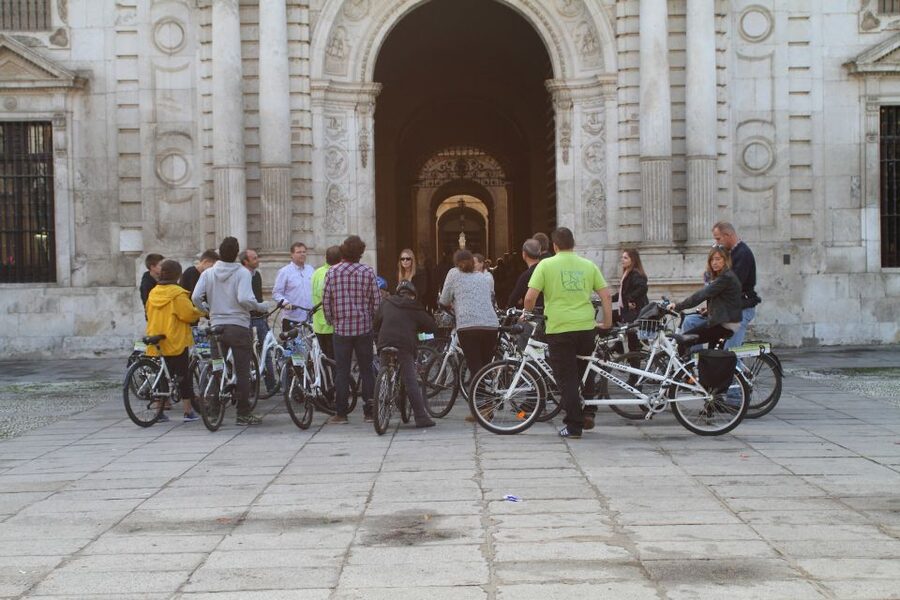
Seville’s main sights are close enough to connect on foot, but a bicycle changes how you understand the city. Instead of seeing one monument at a time, you trace the line of the old city and learn why gates, walls, and roads mattered.
That is the real value here. The tour is not simply a collection of photo stops. It uses the defensive route as a thread, showing how Seville grew, protected itself, and later changed as political power shifted.
The 2.5-hour length is long enough for a useful introduction but short enough to fit into a busy visit. I would consider it especially helpful near the start of your stay. After the ride, the old center should feel less like a maze, and you will have a clearer idea of which sites deserve a longer visit on foot.
Cycling also helps you cover more ground without turning the outing into a formal march from monument to monument. You are still close to the streets, walls, gates, and buildings, but you can move between them at a practical pace.
There is one trade-off. A bike tour gives you a moving overview, not extended time inside monuments. You should not expect long visits to the Alcázar or other major buildings. This is a city orientation and history tour, with the emphasis on streets and structures rather than interiors.
A few more days on two wheels around Seville worth a look
- Seville Highlights Bike Tour (English)
★ 5.0 · 2,225 reviews - Seville: Highlights City Bike Tour
★ 4.8 · 2,168 reviews - Seville: Relaxing City Bike Tour with a Tour Guide
★ 4.8 · 1,588 reviews
Starting at Centerbici on Espronceda Street
The tour begins at Centerbici, at C/ Espronceda, 5, in Seville’s 41004 postal area. You meet the guide there, receive your bicycle, and set off into the historic center.
The supplied information does not specify the bicycle style, route pace, or group size, so I would arrive ready for a straightforward urban ride rather than a specially designed cycling excursion. Check the bike before leaving. One participant described the bicycles as showing their age, although the problem was not serious enough to spoil the outing.
That small inspection matters. Test the brakes, saddle, and gears if the bike has them. Ask for a different bicycle if something feels wrong. A comfortable fit makes a large difference over two and a half hours.
A water bottle and map are included. Children can receive a helmet rental, which is a useful detail for families, though the activity is not suitable for people with mobility impairments.
The guide is one of the strongest parts of the experience. Daniel, Sebastián, and Luca all received particularly positive comments. Luca was praised for his care, his command of Seville, and his ability to speak French, Italian, and Spanish. French-speaking riders should still confirm the language arrangement at the start, since one French participant had an English-led tour with translation help when needed.
From Tartessians and Romans to Islamic Seville
Early in the ride, the guide places Seville in a much older setting than its famous medieval and royal buildings suggest. You hear about the Tartessians, Carthaginians, and Romans who settled or ruled in the area.
This part is useful because it prevents Seville from becoming a city you understand only through its later Islamic and Christian monuments. The history begins long before the grand palaces and churches. The guide’s job is to show how the location kept attracting different powers over time.
The Roman chapter helps explain Seville’s importance in ancient Spain. You are not simply told that the city is old. You are given a sequence of peoples and political changes, which makes the later structures easier to place.
The tour then turns toward Seville under the Almoravids. According to the historical account presented during the ride, Seville became the best-walled city in Europe under Almoravid rule. You see surviving sections and learn how the defenses shaped movement around the city.
I like this part because walls are easy to overlook when you are focused on a palace, church, or plaza. A guide can point out what remains, explain the purpose of the fortifications, and help you picture the larger defensive system.
Do keep your expectations measured. The tour follows sections and traces of the old defenses, not a complete, walkable wall circuit. Seville changed greatly over the centuries, and later construction removed much of the original system.
Following the walls through Macarena and Puerta de Córdoba
The route includes the Macarena area and Puerta de Córdoba, two places that help you see the city’s defensive past in physical form. The surviving wall sections are the attraction here, along with the chance to understand how the gates controlled access.
This is where the bicycle route becomes more than transportation. You can move along the former edge of the city and connect pieces that might seem unrelated if you visited them separately.
The Macarena area is also a reminder that historic Seville is not limited to its most polished central monuments. The defensive line gives the city a wider frame. You see Seville as a fortified settlement with boundaries, entrances, and vulnerable points.
Puerta de Córdoba adds another piece to that picture. A gate was never just an opening in a wall. It regulated people, goods, and carriages, and it offered a place where the city could watch who was coming and going.
The guide also explains the changes that followed the 1868 riots and the Glorious Revolution. Parts of the old walls and important structures, including sections connected with Macarena, Puerta de Córdoba, and the Alcázar, remained after that upheaval. This gives you a political layer that many short sightseeing rides skip.
The historical sequence can be dense. You hear about ancient peoples, Islamic rulers, Christian-era Seville, and nineteenth-century political conflict in one outing. Take notes on the map if you want to remember the names, or plan to ask the guide to repeat a date or connection.
Same roads, a different day in the saddle:
- Seville: City Sightseeing and Local Culture Bike Tour
★ 4.9 · 1,120 reviews - Seville Electric Bike Tour – Small Group
★ 5.0 · 841 reviews - Seville: Guided Tour by Electric Bike
★ 4.8 · 712 reviews - Sunset Guided Bike Tour in Seville
★ 5.0 · 438 reviews
Puerta Carmona and the working life of the gates
At Puerta Carmona, the tour turns from broad history to the practical life of a city entrance. The gates were points where carriages were stopped, checked, and sent into the city.
That detail makes the old walls feel active rather than decorative. A fortified city depended on control. People, animals, trade goods, and carriages all passed through limited openings, and each gate had its own role in the city’s daily life.
You also hear stories connected with mysteries and events around the gates. The provided description does not list every story in detail, so the exact emphasis will depend on the guide. That is a good reason to ask questions if a particular gate interests you.
Puerta Carmona is likely to appeal to anyone who enjoys urban history more than a simple monument checklist. You are looking at how Seville functioned, not just how it looked.
Puerta Osario and Puerta Triana
Puerta Osario and Puerta Triana continue the gate-to-gate route. Each stop adds another point to the former defensive network and helps you see how roads entered and left the historic city.
Puerta Osario is part of the story of controlled access through Seville. The name and location become easier to remember when placed within the full route rather than presented as an isolated fact.
Puerta Triana brings the route toward another important entrance. Here, the stories of carriages, movement, and mysteries continue. The guide connects individual gates to the larger life of Seville, showing how the city’s entrances shaped commerce, travel, and local stories.
This section should suit you if you enjoy learning through connections. If you want only the city’s most famous buildings, parts of the route may feel less urgent. The gates are meaningful because of the explanation around them, not because each one is a grand monument.
The bicycle helps keep this portion lively. You are not stopping for a long lecture at every site. You hear the main point, look closely, then continue to the next piece of the route.
Architecture beyond the headline monuments
The tour includes Seville’s varied architectural styles, not just a single period or building type. You move through a city shaped by ancient settlements, Islamic rule, Christian power, later political change, and modern alterations.
That variety is one of the best reasons to take the ride. Seville is often reduced to a few spectacular sights, but the city’s character also comes from the way different periods sit next to one another.
You will see important gates, remaining walls, historic structures, and views connected with the Alcázar area. The tour does not include entrance tickets or extended interior visits, so treat the architecture portion as an outside introduction.
I find that approach useful for planning. A guide can point out a structure, give it context, and help you decide where to return later with more time. You may finish the ride with a short list of places to explore on foot.
Because the route is guided, you do not need to spend your first morning trying to decode a map of old Seville. The included map helps, but the spoken explanation is what gives the buildings meaning.
Guides, languages, and the human side of the ride
The strongest praise centers on the guides. Luca received especially warm approval for his culture, clear explanations, care for the people on the tour, and command of several languages. Daniel and Sebastián were also singled out as excellent guides.
One French-speaking participant had hoped for French but received an English tour with patient help and phone translation when necessary. That is encouraging, but it also gives you a practical tip: state your preferred language clearly when you meet the guide.
The tour is advertised in Spanish, English, and French. The term bilingual guide means the exact language mix may vary with the group and guide. If your French is limited, do not assume every departure will be fully French-led.
The personal approach matters on a history tour. A guide who watches your comfort, answers questions, and adjusts explanations can make a familiar route much better. The comments about Luca in particular suggest a guide who treats the ride as more than a script.
Is $35 a fair price for two and a half hours?
At $35 per person, this is a solid value if you want a guided introduction to Seville rather than a simple bicycle rental. The price covers the bike, guide, water bottle, and map, and it gives you 2.5 hours of organized sightseeing.
The value is strongest when you consider the route. You are not paying only to pedal around the center. You are paying for the historical links between Roman origins, Almoravid walls, city gates, the Alcázar area, and the nineteenth-century political changes.
It is less valuable if you already know Seville well or prefer to set your own pace. You will not spend long periods inside monuments, and the condition of some bicycles may be less than perfect.
The booking terms also reduce the risk. You can cancel up to 24 hours in advance for a full refund, and a reserve-now-pay-later option is available. Starting times depend on availability, so check the schedule before building the rest of your day around it.
Who should book this Seville bike tour?
I would recommend it to first-time visitors who want a city overview with more substance than a standard sightseeing loop. It is also a good fit for people who enjoy military history, old city planning, gates, walls, and the way political events alter urban spaces.
Families may appreciate the manageable 2.5-hour format and the availability of children’s helmet rental. The tour still requires active cycling, so it is not appropriate for people with mobility impairments.
You should also be comfortable with the possibility of an older bicycle. That does not mean the equipment will be poor on every departure, but it is worth checking the bike before setting off.
Book it early in your stay if you want help finding your bearings. Choose another activity if you need a slow, interior-focused tour of Seville’s major palaces and churches.
Final verdict: a smart first look at Seville’s old defenses
I would book this tour for its route and its storytelling. The old walls and gates give the ride a clear purpose, while the history stretches from the Tartessians and Romans to the Almoravids, the 1868 riots, and the Glorious Revolution.
The price is fair, the included extras are useful, and the guides appear to be the experience’s greatest strength. Ask about your language at the start, inspect your bike, and expect an outside tour rather than monument interiors.
For a reasonably priced introduction to Seville’s historic center, this is a worthwhile choice. You will finish with a better sense of how the city was defended, how people entered it, and why its streets carry so many layers of the past.
FAQ
How much does the Seville Historic Center Bike Tour cost?
The tour costs $35 per person.
How long does the bike tour last?
The tour lasts 2.5 hours.
Where does the tour meet?
You meet at Centerbici Store, C/ Espronceda, 5, 41004 Sevilla.
What languages are available?
The tour is available in Spanish, English, and French.
Is bike rental included?
Yes. Bike rental is included in the tour price.
Are water and a map included?
Yes. Each participant receives a water bottle and a map.
Are helmets available?
Helmet rental is available for children.
What places does the route cover?
The route follows former defensive walls and includes areas or stops connected with Macarena, Puerta de Córdoba, Puerta Carmona, Puerta Osario, Puerta Triana, and the Alcázar.
Can I cancel the tour for a full refund?
Yes. You can cancel up to 24 hours in advance for a full refund. A reserve-now-pay-later option is also available.
Just added around Seville
- Seville: Relaxing Electric Bike tour with Tour Guide★ 4.8 · 31 reviews
- Seville: Dutch Cycling Highlights Tour with local guide★ 4.7 · 163 reviews
- Seville City Bike Tour: Top Seville’s Monuments★ 4.7 · 28 reviews
- Sevilla: 100% Nederlandstalige Highlights Tour op E-BIKE★ 4.9 · 54 reviews
- Seville: Electric Stand-Bike Tour★ 5.0 · 18 reviews
- Seville: 2.5-Hour Private City Tour by Bike★ 4.8 · 45 reviews
- Seville: 2.5-Hour Evening Electric Bike Tour★ 4.8 · 14 reviews
- Seville: 3-Hour Tapas Tour by Bike★ 3.9 · 72 reviews
Seville Cycling Tours, compared.
Browse the lists this tour appears in