REVIEW · UBUD
Ubud: E-Bike Tour with Rice Terrace and Village Visit
Bali looks best at bicycle speed. This three-hour Ubud e-bike tour gives you two things I especially like: easy access to working rice fields and a guide who explains Balinese homes, farming, temples, and daily life instead of simply pointing at scenery. The included meal, when you choose that option, adds real value at $27 per person.
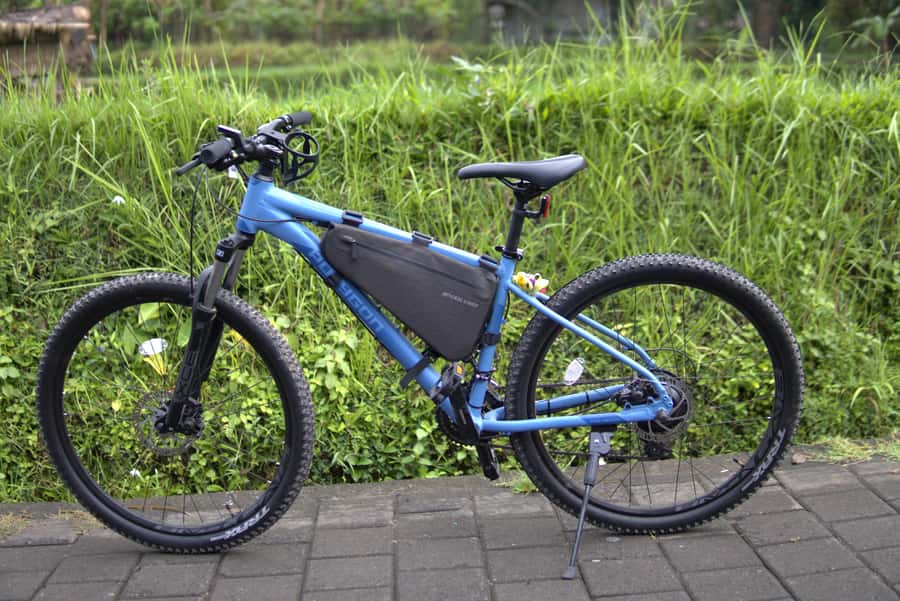
The main consideration is that you ride on public roads, including busy sections and narrow, twisting paths. You do not need strong fitness because the electric bike helps on hills, but you should already feel comfortable riding a bicycle. The route is active, social, and practical, not a quiet sightseeing trip from a vehicle.
Key points at a glance
- Rice-field riding: Reach the Cekingan and Tegallalang area by e-bike, with time for photographs and explanations of the subak irrigation system.
- Local access: Visit a traditional Balinese family compound, village areas, and a temple, depending on the route and selected option.
- Small-group feel: Groups are limited to nine people, which gives you a better chance to ask questions and stay close to the guide.
- Easy hill riding: The electric bikes handle uphill sections well, making the route suitable for a range of fitness levels.
- Food and drink: The meal option includes lunch at a local restaurant overlooking the rice terraces, with some tours also offering fresh fruit or a coffee and tea tasting.
- Flexible arrangements: Hotel pickup and drop-off, and the meal, depend on the option you book.
What this Ubud cycling tour is really like
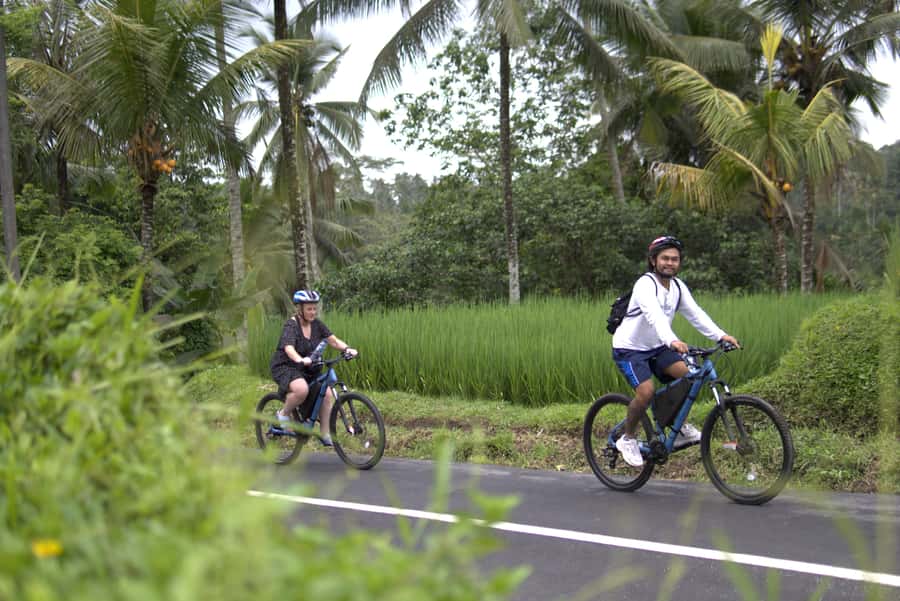
The tour begins north of central Ubud, or at your Ubud hotel if you select the transfer option. At the start, you receive a helmet, an electric bicycle, and a safety briefing. The guide explains how the bike works before you set off, which matters if you have not used an e-bike before.
The advertised duration is three hours, but the actual outing can run longer. Some reported trips lasted four to six hours, often because the guide added stops or allowed extra time. I would not build a tight afternoon plan around the published finish time. Bali time has a way of acquiring an extra cup of coffee.
The group limit of nine is a useful middle ground. You get the energy of a shared outing without the feel of a large coach group. A small group also makes it easier to stop at a family compound, temple, or rice field without creating a traffic jam of bicycles.
More Countryside Cycling Tours in Indonesia
- Ubud: Rice Terraces & Villages Half-Day Fat Tire E-Bike Tour
★ 4.9 · 602 reviews - Bali Countryside Cycling Tours
★ 5.0 · 246 reviews - Ubud : PRIVATE Bike Tour inside Rice Field Ubud Countryside
★ 4.9 · 118 reviews
The electric bike makes the hills manageable
The e-bike is not a shortcut around the whole experience. You still pedal, steer, stop, and ride with care. The motor simply takes the sting out of uphill roads and uneven sections.
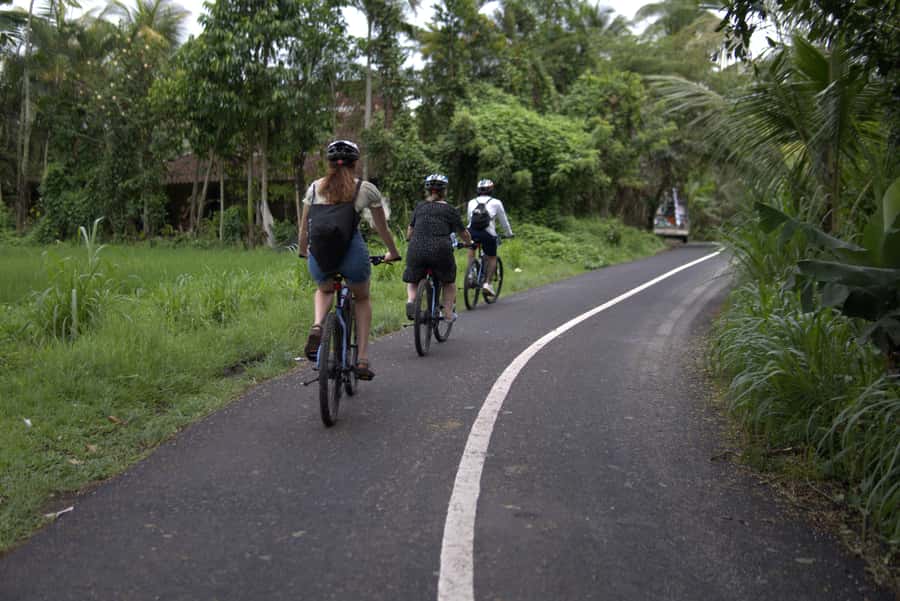
That makes a real difference around Ubud. Several parts of the area rise and fall, and the route can include rough patches, quiet village lanes, and public roads. You can adjust the power and pedal more when you want exercise. If you prefer an easy ride, the motor lets you keep moving without arriving soaked in sweat.
The ride is described as mostly easy and fairly flat by one participant, while other accounts point out hills, bumps, and narrow paths. Both descriptions can be true. The route is manageable overall, but it is not a fully paved cycle path. Wear secure shoes and clothing that lets you move freely.
You should be able to ride a standard bicycle. The tour is not suitable for someone who cannot ride or who has back problems. Bring sunscreen, a camera, and extra water. Water is provided, but Bali’s heat and humidity make a personal supply sensible.
Rice terraces and the subak irrigation system
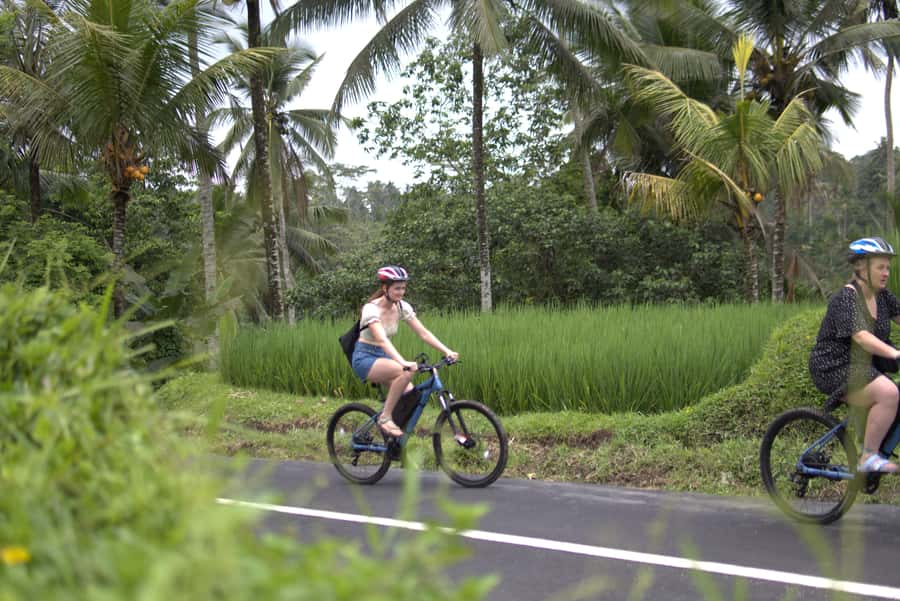
The rice terraces are the visual reason to book this outing, but the farming explanation is what gives the scenery meaning. At the Cekingan Rice Terrace and nearby Tegallalang rice fields, the guide discusses the subak irrigation system, a traditional approach to sharing and managing water among farming communities.
That context helps you see more than dramatic green steps cut into the hillsides. You begin to notice the channels, paths, planting areas, and people working the fields. One particularly memorable possibility is seeing rice harvested by traditional methods while riding through the fields.
The route offers several chances to stop for photographs. The views are strongest when you are looking across the terraces rather than rushing through them. Your guide should also help you understand where to pause safely, since some paths are narrow and not designed for long photo sessions.
Tegallalang is a popular part of Bali, and you may encounter other sightseeing activity in the area. The e-bike route gives you a more active way to reach the countryside, but it does not turn the rice terraces into an isolated wilderness. Go for the combination of scenery, farming, and access to village life, not for complete solitude.
Tegalalang village and the Balinese family compound
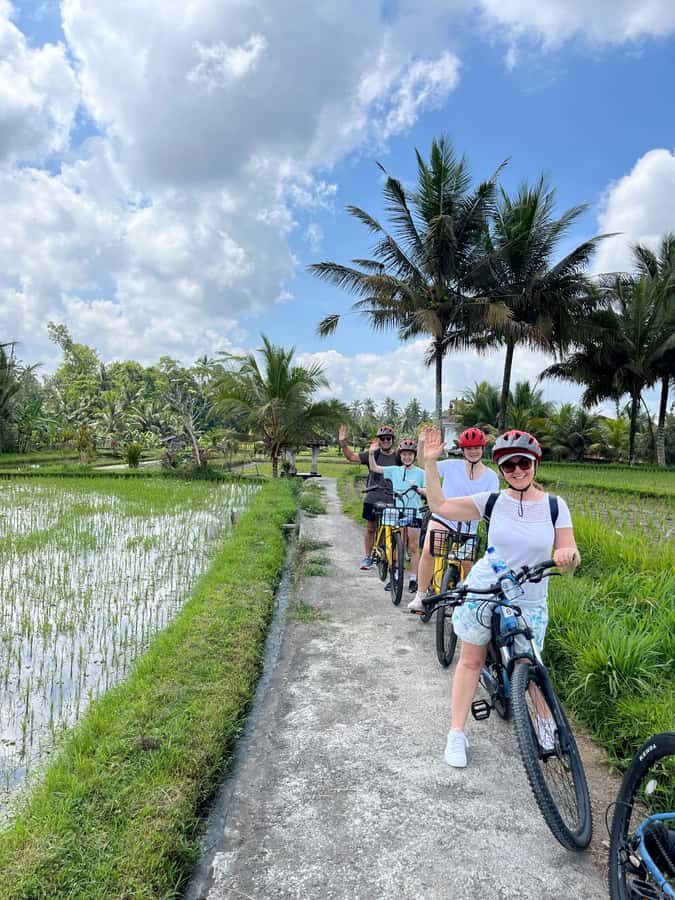
The village section is the heart of the tour for me. Instead of seeing Bali only from a main road, you pass through residential areas and get a closer look at everyday routines.
A stop at a traditional Balinese family compound may be included on the route. This is not simply an old building displayed for tourists. The visit can introduce you to the layout of a family home and the customs connected to it. Guides have explained family heritage, household arrangements, traditions, and changes they have watched during their own lives.
That personal link is valuable. A guide such as Agung, praised for answering detailed questions, can explain what you are seeing in a way a signboard cannot. Other guides, including Raika, Rika, and Sir, have been described as warm, patient, and willing to give the group time.
The exact stops may vary. The supplied information mentions a family compound, local village areas, a temple, and even a burial site on some outings. Treat the route as a guided introduction to Balinese life rather than a fixed list of guaranteed monuments.
You will also pass people working and going about their day. Be polite when taking pictures. A smile and a quick glance toward your guide can help you understand when photography is appropriate.
More Countryside Cycling Tours in Ubud
- Bali Countryside Cycling Adventure
★ 4.5 · 112 reviews - E-Bike: Ubud Rice Terraces & Traditional Villages Cycling
★ 4.6 · 37 reviews
Temples, ceremonies, and a closer look at local customs
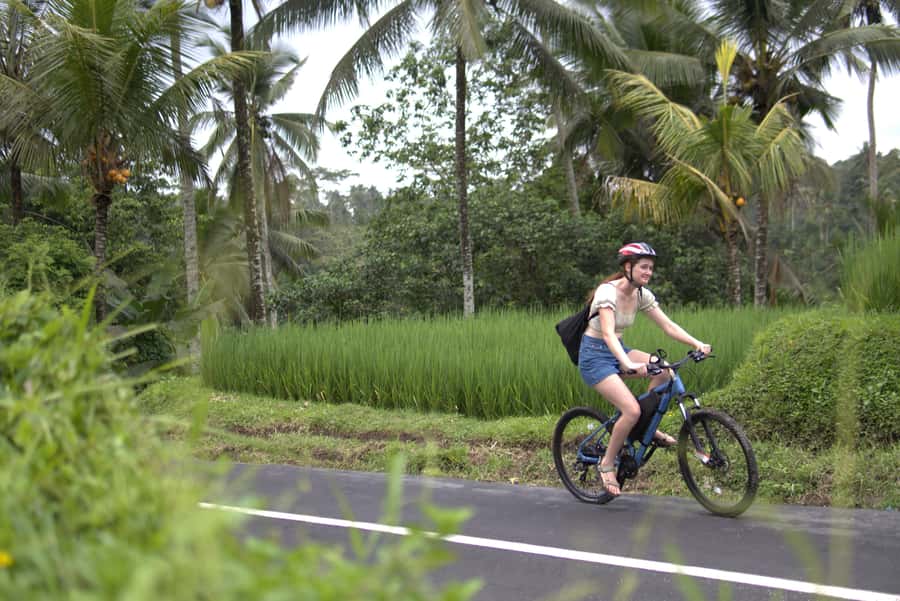
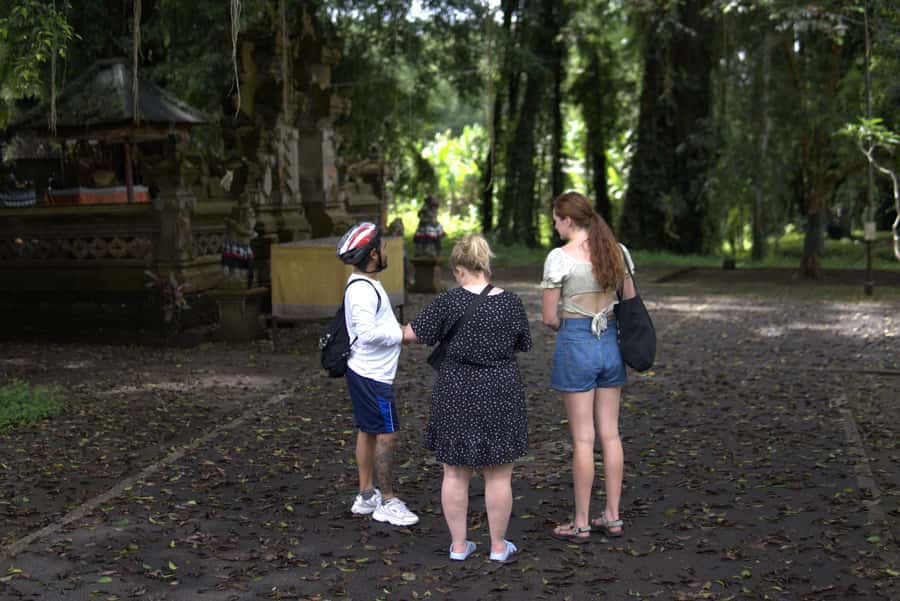
A temple visit may form part of the route, giving you another way to connect the rice fields with village life. Guides can explain Balinese traditions, temple use, ceremonies, and the relationship between homes, religion, and farming.
The value here is in asking questions. This is a good tour for someone who wants to understand why Bali’s villages look and function as they do. It is less useful if you simply want to collect a fast series of postcard stops.
The route does not promise an elaborate temple tour, and the stop can vary. Still, combining a temple with a family compound and working rice fields creates a fuller picture of the area. You are not seeing culture in separate pieces. You are seeing how several parts of village life sit close together.
Lunch with a rice-terrace view
If you choose the meal option, lunch is served at a local restaurant in the Tegallalang rice-terrace area. The setting is one of the tour’s strongest extras: you can eat while looking across the paddies rather than stopping at an anonymous roadside café.
The food has been described as tasty, and iced tea has also been served. Other outings ended with fresh watermelon. These details may depend on the restaurant and the exact route, so I would treat them as likely possibilities rather than promises of a specific menu.
At $27 per person, the tour offers good value if your booking includes the meal, bike, helmet, and guide. Check the option carefully because hotel transport and lunch are not included in every package. A cheaper base price may not represent the same total experience as an option with both additions.
Some nearby attractions, such as swings and zip lines, can cost extra. They are not necessary to enjoy the tour. If you want a simple cultural and cycling outing, you can skip them and focus on the rice terraces, meal, and village stops.
Coffee and tea tasting: worth adding?
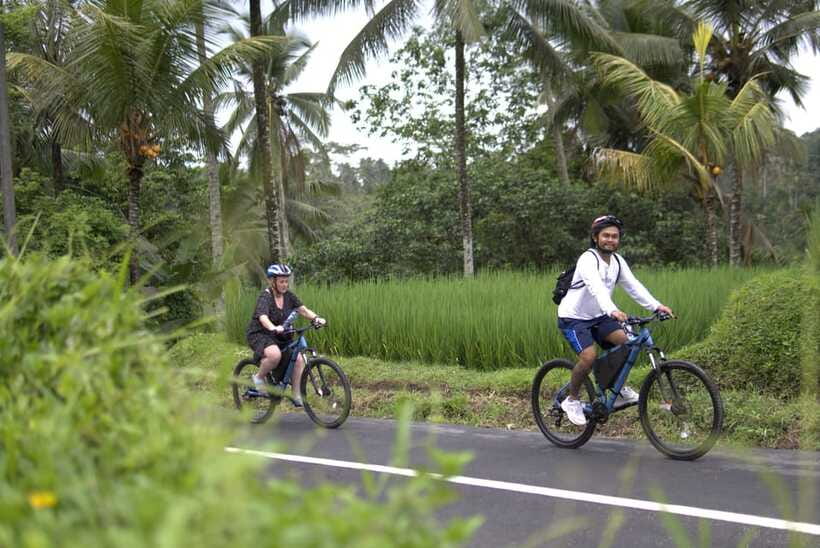
A coffee and tea tasting is available on some versions of the outing, and it has received especially strong praise. You may learn how local drinks are prepared and sample several varieties, including luwak coffee.
I would choose this addition if you enjoy food and drink experiences or want more time talking with local hosts. The tasting adds another stop and can stretch the tour beyond three hours, so it is less suitable if you need to return to Ubud at a precise time.
The tasting is not listed as part of every basic package. Check the chosen option and any extra cost before booking. Several people considered it one of the best additions, but you should not assume it is included automatically.
Riding on public roads: the main drawback
The route uses both quiet back roads and busier public roads. Guides help the group through traffic, but you remain responsible for watching the road, controlling your speed, and staying alert.
Small, twisting paths can be more demanding than the hills. If you ride regularly, this should be manageable. If you are nervous on a bike, ask about the route before booking and be honest about your experience.
The tour is not suitable for people with back problems or for anyone unable to ride a bicycle. Comfortable shoes are essential. I would also avoid loose clothing that could catch on the bike and would keep your camera secure on bumpy sections.
Smoking is not allowed during the activity.
Guide quality makes the biggest difference
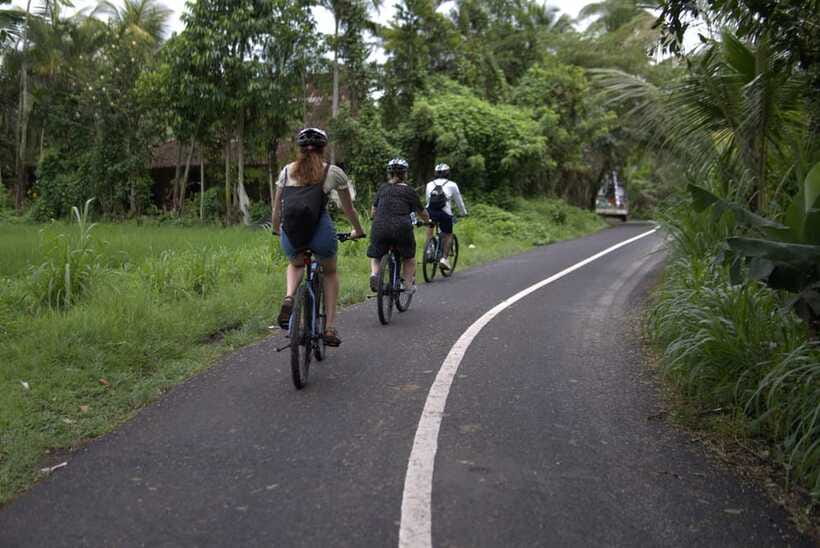
The guides are central to the experience. The most successful outings appear to be the ones where the guide treats the ride as a conversation, not a script.
Agung has been praised for explaining local homes and heritage while handling unexpected questions. Raika and Rika are also noted for their friendly, personal approach. The family-run nature of the operation adds to the feeling that you are being shown a place by people with a genuine connection to it.
This matters because rice terraces can blur together if nobody explains them. A good guide points out how farming, family compounds, temples, and village customs connect. The best moments may come between the planned stops, when you ask about something you have just seen.
The tour is offered in English. The small group size makes it easier to hear the guide and ask questions, though the pace will still depend on the other people in your group.
Pickup, timing, and what to bring
Hotel pickup and drop-off in Ubud are available with the transfer option. Otherwise, you meet at the stated starting point north of Ubud. Since the exact meeting details depend on the option, contact the operator if the location is unclear.
The published duration is three hours, but I would allow extra time. Coffee tasting, added cultural stops, traffic, and the pace of the group can extend the outing. Some participants received longer tours without an added charge, but that should be treated as a pleasant possibility, not something to demand.
Bring:
- Comfortable cycling shoes
- Sunscreen
- A camera
- Extra water
Water is provided, but having your own bottle is useful. Wear light clothing suitable for cycling and bring enough sun protection for open rice-field sections.
Free cancellation is available up to 24 hours before departure, and you can reserve now and pay later. Those terms help if your Ubud schedule is still shifting, but always check that the option you choose carries the same conditions.
Who should book this tour?
I would recommend it most strongly to first-time visitors who want more than a rice-terrace photograph. You get scenery, light exercise, local explanations, a village visit, and food in one compact outing.
It also suits couples, families with older children who can ride, and solo visitors who prefer a small guided group. The electric assistance makes it friendlier than a standard bicycle tour, especially if you are unsure about Ubud’s hills.
I would choose something else if you want a hard workout, a long-distance cycling challenge, or a fully private route with no public-road riding. The tour is also a poor fit for anyone with back trouble or little bicycle control.
Should you book the Ubud e-bike tour?
Yes, if you want an affordable and active look at the countryside around Ubud. The strongest reasons are the easy electric bikes, the family and village access, the rice-farming explanations, and the guides’ personal approach.
Choose the option with lunch if you value a terrace view and a simple meal after riding. Add the coffee and tea tasting if you enjoy local drinks and do not mind a longer outing. Before paying, confirm the pickup, meal, and tasting details, because they vary by package.
At $27, this is good value for a three-hour small-group experience, especially when your option includes lunch and transport. Just leave room in your schedule, ride carefully on public roads, and expect a real countryside tour rather than a polished theme-park attraction.
FAQ
How long does the Ubud e-bike tour last?
The stated duration is three hours. Some outings may last longer because of extra stops, tastings, or a slower group pace.
Where does the tour start?
The activity starts north of Ubud. The exact meeting point depends on the option you select, so contact the operator if you need precise directions.
Is hotel pickup available?
Yes, hotel pickup and drop-off in Ubud are available when you select the transfer option. Otherwise, you meet at the designated starting point.
Is lunch included?
Lunch is included only with the option that specifies a meal. The meal is served at a local restaurant in the Tegallalang rice-terrace area.
Is the e-bike suitable for beginners?
The electric assistance helps with uphill sections, and the ride is described as manageable for different fitness levels. You must still know how to ride a bicycle and feel comfortable on public roads and narrow paths.
Is the tour offered in English?
Yes. The tour includes a live English-speaking guide.
How large is the group?
The tour is limited to nine participants.
What should I bring?
Bring comfortable shoes, suitable cycling clothes, sunscreen, a camera, and extra water. Water is provided, but additional water is recommended.
Can I cancel the booking?
You can cancel up to 24 hours in advance for a full refund. Reserve-now, pay-later booking is also available.
More E-Bike Tours in Ubud
- 3-Hour Porto Highlights on a Electric Bike Guided Tour
★ 5.0 · 4,392 reviews - Lisbon: Hills, Alfama, and Mouraria Tour by Electric Bike
★ 4.8 · 3,438 reviews - Athens Scenic Electric Bike Tour with optional Acropolis visit
★ 5.0 · 3,350 reviews - Porto: City Highlights 3-Hour Guided Electric Bike Tour
★ 4.8 · 3,092 reviews
More E-Bike Tours in Indonesia
- Ubud eBikes Tour to Tegallalang Rice Terrace
★ 5.0 · 507 reviews - Electric Bike Tour in Ubud
★ 5.0 · 281 reviews - Private Fat Tire E-Bike Tour in Ubud
★ 5.0 · 25 reviews - Sanur Village E-bike Tour: Family-Friendly Adventure
★ 4.6 · 85 reviews
Just added around Ubud
- E-Bike: Ubud Rice Terraces & Traditional Villages Cycling★ 4.6 · 37 reviews
- Ubud: Downhill Cycling with Volcano, Rice Terraces, and Meal★ 4.9 · 189 reviews
- Private Fat Tire E-Bike Tour in Ubud★ 5.0 · 25 reviews
- Ubud: Zipline, Bali Swing, and Sky Bike in a Private Rice Terrace★ 4.5 · 60 reviews
- Electric Bike Tour in Ubud★ 5.0 · 281 reviews
- Bali Countryside Cycling Tours★ 5.0 · 246 reviews
- Bali Countryside Cycling Adventure★ 4.5 · 112 reviews
- Ubud : PRIVATE Bike Tour inside Rice Field Ubud Countryside★ 4.9 · 118 reviews
Countryside Cycling Tours, compared.
Windmill, Cheese, and Countryside E-Bike Tour
Read our review →
Siem Reap Countryside Bike Tour / E-Bike or Tuk Tuk
Read our review →
Mekong Day Trip Explore Village Bicycle CookingClass Group 12 Pax
Read our review →
Hoi An Countryside: Guided Morning or Afternoon Bicycle Tour
Read our review →
Rice Terraces & Villages Half-Day Fat Tire E-Bike Tour
Read our review →