REVIEW · TOKYO
3h Tokyo E-Bike Tour: Hidden Gems, and Local Life with guide
Tokyo opens up on two wheels. This three-hour e-bike tour links famous sights with quiet lanes, local neighborhoods, and useful cultural context that is easy to miss from a train window. I especially like the choice of morning or afternoon routes, and the chance to ride with guides such as Yo, Jenny, Ted, Kazu, and Take, who bring different local perspectives.
The electric bikes make central Tokyo much less tiring, and the small group size keeps the ride personal. At $63.01 per person, the price is fair for the bike, helmet, guide, insurance, and luggage storage. The main caution is traffic: you need to be comfortable cycling on busy city streets, and hot summer weather can make the ride demanding.
What makes this Tokyo bike tour worth considering
- Two different routes: Morning rides focus on Tokyo Station, the Imperial Palace, Ginza, Tsukiji, and Nihonbashi. Afternoon rides head toward Akihabara, Kappabashi, Asakusa, Ryogoku, and Nihonbashi.
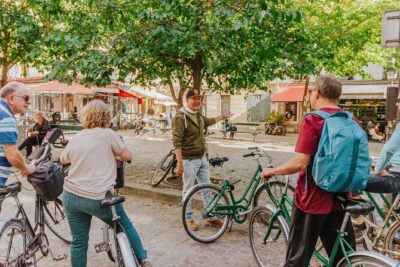
- Small groups of up to six: Your guide can keep an eye on the group and answer questions without shouting across a crowd.
- Electric assistance matters: You can cover far more ground than on foot without arriving at every stop worn out.
- A useful first-day activity: The ride helps you understand how Tokyo’s central districts fit together, giving you ideas for later visits on foot.
- Practical support included: Helmets, insurance, simple rain gear, seasonal gloves or cooling products, and luggage storage are provided.
- Local streets between major sights: The ride is not just a checklist of famous buildings. It uses back roads and passages where bicycles can move more easily than cars.
Starting near Kanda Station
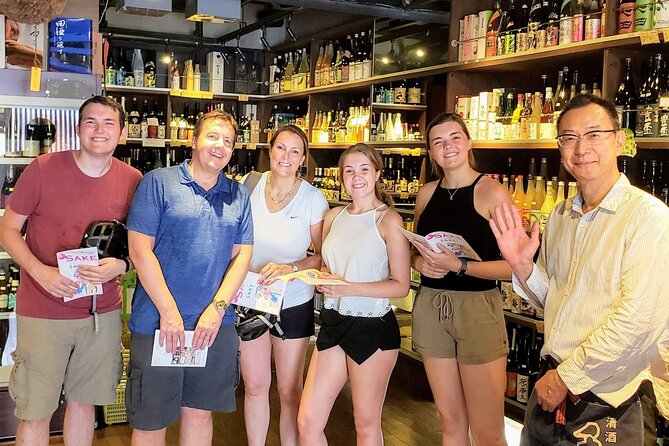
The meeting point is Cycling Holiday Tokyo, at 3-chome-8-6 Uchikanda, about a one-minute walk from the west exit of JR Kanda Station. The shop has a restroom, waiting room, and luggage storage, except for valuables.
Kanda is a useful place to begin. It is a small downtown district shaped by office workers, with compact Japanese-style bars and narrow streets. You get an early look at ordinary city life before moving toward Tokyo’s grander landmarks.
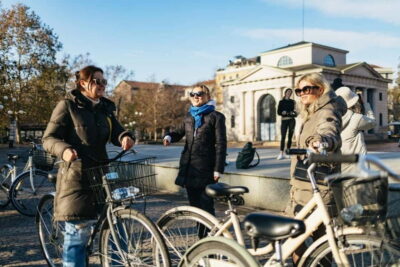
The staff provide an electric-assist bicycle and helmet, then explain how to use the bike. You must already know how to ride a bicycle. The minimum age is 12, and the minimum height is 147 centimeters, or about 4 feet 10 inches.
The bikes are meant to reduce effort, not replace cycling skill. You still need to steer, brake, watch the road, and stay with the group. One useful feature is the front basket, which can hold a water bottle and a small bag. You can leave larger luggage at the shop, but keep valuables with you.
More E-Bike Tours in Japan
- Tokyo Top Highlights 3h Guided E-bike Tour
★ 5.0 · 714 reviews - Tokyo: 3-Hour Bike or E-Bike City Highlights Tour
★ 4.8 · 435 reviews - Tokyo: 3-hour Guided E-Bike Tour of the City’s Hidden Gems
★ 4.8 · 251 reviews
Morning route: Tokyo Station and the Imperial Palace
The morning route is the better pick if you want Tokyo’s grand civic center and classic photographs. After leaving Kanda, you ride through the financial district, where modern office buildings create a sharp contrast with older commercial streets.
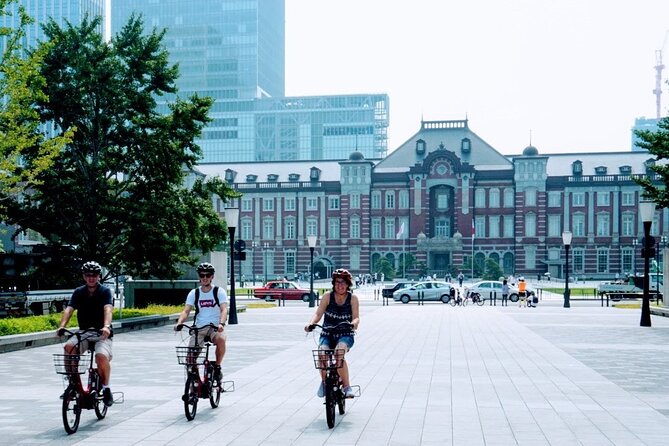
The first major stop is Tokyo Station’s Marunouchi plaza. From Gyoko-dori Street, you get a good view of the red-brick Marunouchi station building. Your guide explains the station’s background, making this more than a quick photo stop.
The pause here is short, about five minutes. That is enough for pictures and orientation, but not for a detailed architectural visit. If Tokyo Station is high on your list, plan to return later on your own.
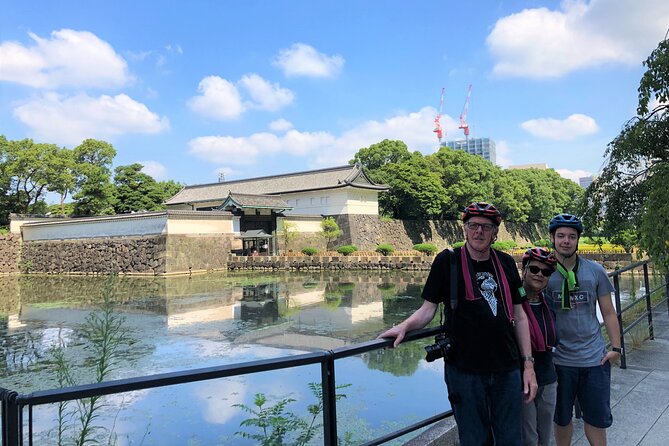
The route continues toward the Imperial Palace. At Otemon Gate, you look across the moat toward Fujimi-yagura Tower. The setting offers a quick lesson in how Tokyo combines dense office development with old defensive walls, gates, and water.
You may also pass through parts of the Imperial Palace East Gardens area. The grounds cover roughly 200,000 square meters, a surprisingly broad open space in the middle of the capital. The tour does not function as a full garden visit, so think of this section as a scenic ride and introduction rather than a long walk among the grounds.
Sakuradamon is another strong stop. Its traditional castle gate gives the ride a clear connection to the old city, even though modern Tokyo is all around it. The guide’s explanations are especially useful here because the gate, moat, and palace grounds make more sense when you understand their role in the former castle complex.
Ginza lanes and the Tsukiji food quarter
The bike route then reaches Ginza. Depending on traffic and conditions, you may ride through the main avenues or use smaller lanes behind the luxury shops.
That choice is one of the tour’s practical strengths. The guide can adjust the route for safety and crowd levels, so the experience is not locked to one road plan. The main streets show Ginza’s polished commercial face. The back streets offer a more relaxed look at the district’s restaurants, service alleys, and everyday movement.
Next comes Tsukiji Outer Market. This is not the former wholesale fish market interior, but the outer market area, where small old-fashioned food shops line the streets. You get about ten minutes here, enough to look around and note places to revisit.
Food is not included, so any snack or drink is your own expense. That is worth remembering because Tsukiji can tempt you into spending more than planned. The tour keeps the stop brief, but your guide may point out food options and explain how the area fits into Tokyo’s food culture.
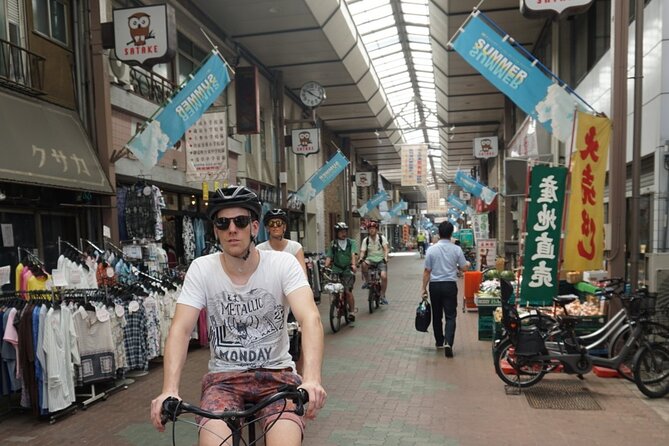
The ride also uses local streets and passages that are difficult to cover efficiently by train. This is where the e-bike earns its keep. You can move between districts without repeatedly finding stations, changing trains, and climbing stairs.
Nihonbashi and the value of seeing Tokyo by bike
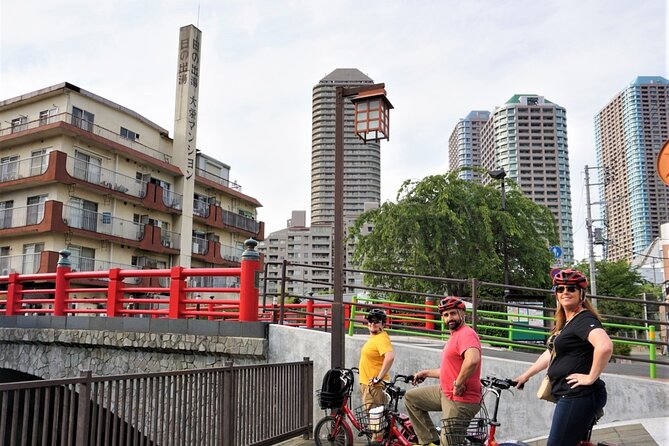
Nihonbashi Bridge appears on both the morning and afternoon routes. It is a compact stop, but its importance is larger than its size suggests. Road distances in Japan traditionally begin from Nihonbashi, making the bridge a symbolic center of the national road system.
A guide can give this kind of detail while you stand in the place itself. That is one reason the experience works well early in a Tokyo visit. You start to recognize the city not as a collection of unrelated stations, but as connected districts with different roles.
The cycling itself also changes your sense of distance. Tokyo looks enormous on a subway map, yet an e-bike lets you link Kanda, Marunouchi, the palace area, Ginza, Tsukiji, and Nihonbashi in one outing.
The tradeoff is road awareness. A ride through central Tokyo is not a quiet park excursion. You need to watch vehicles, pedestrians, signals, and the cyclist ahead of you. One rider specifically noted that the tour is best for people who are healthy and comfortable on busy urban roads.
More E-Bike Tours in Tokyo
- 3-Hour Tokyo Private E-Bike Tour Starting from Your Hotel
★ 5.0 · 117 reviews - Tokyo: 3-Hour Bike or E-Bike Tour of City’s Hidden Gems
★ 4.7 · 81 reviews - Tokyo: 3h Private E-bike Tours, Starting at Your Hotel
★ 5.0 · 36 reviews - Tokyo: Private Cycling Tour with cute E-bike
★ 5.0 · 11 reviews
Afternoon route: Akihabara, Kappabashi, and Asakusa
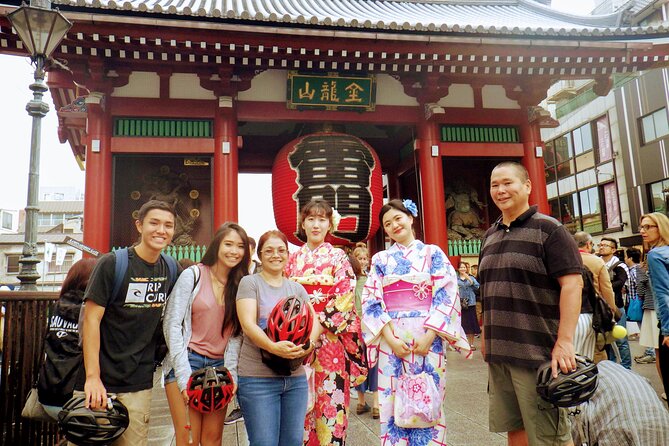
The afternoon route has a different character. It is a good choice if you want Tokyo’s pop culture, traditional shopping streets, temples, and sumo district in one ride.
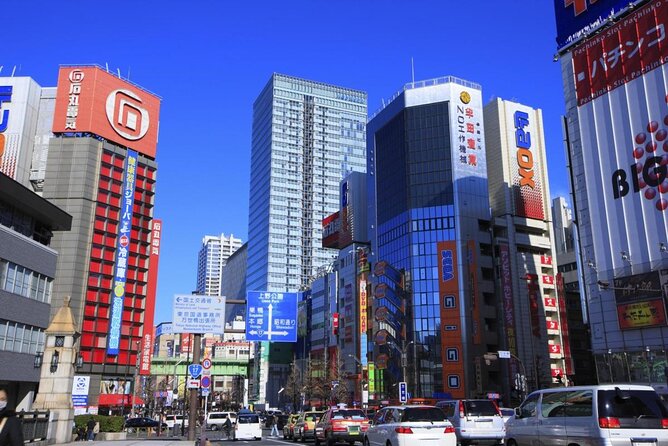
Akihabara is the first major stop. The district is known for youth culture, electronics, games, anime, manga, and maid cafes. The stop is short, around five minutes, so do not expect time for serious shopping. Instead, use it as a quick introduction before returning later if the area catches your interest.
Kappabashi Street, also called Kappabashi Dogugai, is more useful for shoppers. The stores sell kitchen utensils, professional cooking equipment, Japanese knives, restaurant supplies, and other tools. You may have time to look around or shop, though the exact timing depends on the group and traffic.
This stop has a practical advantage: it gives you a chance to find distinctly Japanese items that are useful, not just decorative. Still, check how much space you have in your luggage before buying a knife or bulky kitchen tool.
Asakusa follows. The district is home to one of Tokyo’s best-known old temples and is one of the city’s most recognizable sightseeing areas. You get about ten minutes, enough to see the main setting, take photos, and learn the basic customs for entering and paying respects at a Japanese temple.
A guide can explain the rituals, such as how to approach the worship area and behave around the temple grounds. That advice can help throughout the rest of your Japan trip. The short stop does mean you will not explore every lane or shop in Asakusa, so return independently if you want a slower visit.
Ryogoku and the search for everyday Tokyo
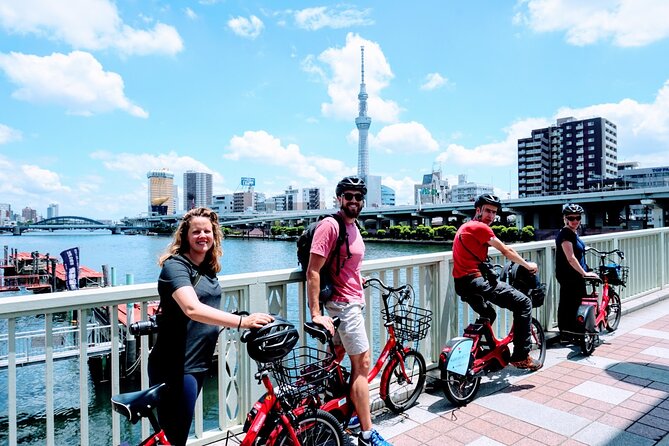
The afternoon ride continues toward Ryogoku, the district associated with sumo wrestling. If the timing is lucky, you might see sumo wrestlers in the area, but this is not guaranteed.
Ryogoku adds a different layer to the route. Akihabara shows modern subculture, Asakusa shows traditional religious Tokyo, and Ryogoku connects the city to one of Japan’s most distinctive sports. The tour gives you a taste of each rather than a full visit to any single district.
The quieter residential streets between these stops are often the most rewarding part of the ride. You see homes, local businesses, small lanes, and routes that are awkward to reach by car. One particularly useful approach is the back-street option around Kanda and Ginza, where the guide may point out less touristy places to eat and drink.
This is also where expectations matter. The tour is not a long food crawl, temple tour, or shopping trip. It is a moving introduction to several parts of Tokyo, with brief stops and explanations along the way.
Guides, group size, and the human side of the ride
The provider uses several guides, and the experience can vary slightly with the person leading your group. Yo, Ted, Jenny, Kazu, Ninja, Yoshiko, Take, and Yoshihisa, also called Yoppi, have all led rides described in the supplied material.
The strongest praise centers on the guides’ friendliness, patience, safety awareness, and ability to explain history and local customs in an approachable way. Jenny is noted for keeping the group together and offering useful food suggestions. Ted is praised for answering questions and maintaining a careful pace. Yo is described as easygoing and warm, while Ninja is praised for strong local knowledge and safe-feeling bikes.
A maximum of six people per booking keeps the ride from feeling like a large procession. Other participants may join, and the tour requires at least two people, though a solo booking can go ahead if other riders are scheduled.
You should stay close to the guide. One useful warning from the experience is that it can be easy to fall behind, especially on side streets or after a traffic signal. If you stop for a photograph, tell the guide rather than dropping back silently.
Weather, clothing, and physical demands
Tokyo’s weather can make or break a cycling tour. The operator may cancel for rain after checking the forecast the day before. If rain develops during the ride, the guide decides whether to continue or return to the starting point.
Simple rain gear is included, but you may still want a towel and extra protection for glasses in wet weather. One rider found that glasses and gloves would have been useful in the rain.
July and August can be hot and muggy. The operator uses the official heat stress index as a guide and may cancel if conditions are unsafe. If dangerous heat develops during the ride, the group may return to the shop, with a refund provided in that situation.
Bring water, sunscreen, and suitable clothing. An electrolyte drink is sensible on very hot days. In winter, bring warm clothes and gloves, although simple winter gloves are supplied.
This is a three-hour activity, but it still requires steady physical effort, balance, and concentration. The e-bike reduces hills and fatigue, yet it does not turn the ride into passive sightseeing.
Price, inclusions, and overall value
At $63.01 per person, the tour offers solid value if you want a guided overview rather than a simple bicycle rental. The fee includes the e-assist bike, helmet, English-speaking guide, insurance, simple rain gear, seasonal equipment, and luggage storage.
The value comes from the route planning as much as the bicycle. Tokyo is easy to reach by train but harder to understand as a connected city. A guide removes the stress of choosing safe roads and deciding which districts can sensibly be linked in three hours.
Food and drinks are not included. You should also budget for anything you buy at Tsukiji or Kappabashi. The short stops mean you are paying mainly for guided transport, local explanation, and access to a well-planned route, not for extended entry to attractions.
Free cancellation is available up to 24 hours before the start time. Changes or cancellations inside that window are not accepted for a refund. If bad weather or the minimum group requirement cancels the ride, you can choose another date or receive a full refund.
Who should book this Tokyo ride?
I would choose this for a first or second day in Tokyo, especially if you want to get your bearings before exploring independently. It is also a good fit for families with children aged 12 and older, provided everyone meets the height requirement and can cycle confidently.
The ride suits people who like variety. In one morning or afternoon, you can see major landmarks, local streets, shopping districts, and cultural areas without spending the whole day underground.
I would hesitate if you dislike traffic, struggle with balance, want a slow temple visit, or hope to spend a long time shopping. This is an active city ride, not a relaxed park circuit.
Should you book the Cycling Holiday Tokyo e-bike tour?
Book it if you want an efficient, friendly introduction to central Tokyo and enjoy seeing a city at street level. The electric assistance, small groups, and local guides make the $63.01 price reasonable, especially for visitors who want to cover ground without exhausting themselves.
Choose the morning route for Tokyo Station, the Imperial Palace, Ginza, Tsukiji, and historic central Tokyo. Choose the afternoon route for Akihabara, Kappabashi, Asakusa, and Ryogoku. Bring water, sunscreen, and patience around traffic, then let the guide handle the route. For the right rider, this is one of the more useful ways to turn Tokyo from a maze of train lines into a city you can picture and navigate.
FAQ
Where does the Tokyo e-bike tour start?
The tour starts at Cycling Holiday Tokyo, 3-chome-8-6 Uchikanda, Chiyoda City, Tokyo. The shop is about a one-minute walk from the west exit of JR Kanda Station.
How long does the experience last?
The guided ride lasts approximately three hours and ends back at the meeting point.
What is included in the price?
The price includes an electric-assist bicycle, helmet, English guide, insurance, simple rain gear, winter gloves, summer cooling products, and luggage storage for nonvaluable items.
Are food and drinks included?
No. Food and drinks are self-pay at the shop or during stops.
What are the morning and afternoon routes?
The morning route may include Tokyo Station, the Imperial Palace area, Sakuradamon, Ginza, Tsukiji Outer Market, local back streets, and Nihonbashi. The afternoon route may include Akihabara, Kappabashi Street, Asakusa, Ryogoku, and Nihonbashi.
How many people can join?
The tour has a maximum of six participants per booking. Other participants may join your group, and at least two people are required for the tour to operate.
Is there a minimum age or height?
The minimum age is 12 years, and the minimum height is 147 centimeters, or about 4 feet 10 inches.
Do I need to be an experienced cyclist?
You do not need advanced cycling experience, but you must be able to ride a bicycle. You also need to feel comfortable cycling on busy city streets and staying with the group.
What happens if it rains or becomes dangerously hot?
The tour may be canceled for rain or unsafe heat. If bad weather cancels the tour, you can receive a full refund or choose another date. If dangerous conditions develop during the ride, the guide may stop the tour and return to the starting point.
More Hidden Gems Bike Tours in Tokyo
- Small Group Guided Bike Tour of Amsterdam’s Hidden Gems
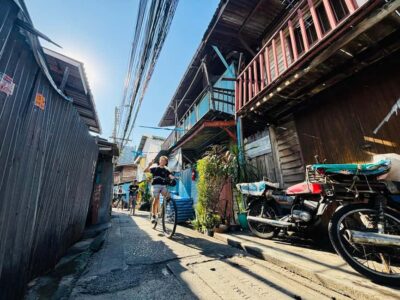
★ 5.0 · 3,936 reviews - Bangkok: Temples, Canals & Local Life Bike Tour
★ 4.9 · 3,511 reviews - Rome: Top Highlights & Hidden Gems Tour by Cannondale E-Bike
★ 4.9 · 1,760 reviews - Amsterdam: Off the Beaten Path Bike Tour in French
★ 4.9 · 1,632 reviews
More Hidden Gems Bike Tours in Japan
- 5-Hour Tokyo & Edo Hidden Gem Bike Tour with Lunch
★ 5.0 · 113 reviews - Tokyo: Hidden Gems Guided Bike Tour with Lunch
★ 4.5 · 30 reviews - Tokyo: 2-Hour Night Bike Tour of the City’s Hidden Gems
★ 4.9 · 25 reviews - Tokyo Bike Tour: Shibuya, Harajuku & Hidden Gems
★ 5.0 · 20 reviews
Just added around Tokyo
- Tokyo: West-Side Cycling and Food Tour with Guide★ 5.0 · 37 reviews
- Tokyo: Discover Traditional Tokyo Full-Day Bicycle Tour★ 4.7 · 131 reviews
- Tokyo: Rice Ball Making Class★ 5.0 · 14 reviews
- Tokyo: 3h Private E-bike Tours, Starting at Your Hotel★ 5.0 · 36 reviews
- Tokyo Bike Tour: Shibuya, Harajuku & Hidden Gems★ 5.0 · 20 reviews
- Tokyo: Private Cycling Tour with cute E-bike★ 5.0 · 11 reviews
- Tokyo: 2-Hour Night Bike Tour of the City’s Hidden Gems★ 4.9 · 25 reviews
- Tokyo: Hidden Gems Guided Bike Tour with Lunch★ 4.5 · 30 reviews
Hidden Gems Bike Tours, compared.
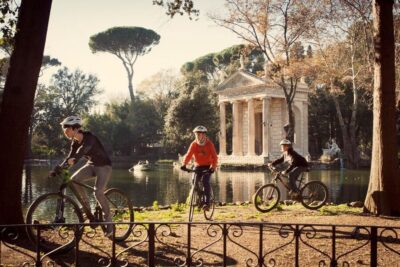
Top Highlights & Hidden Gems Tour by Cannondale E-Bike
Read our review →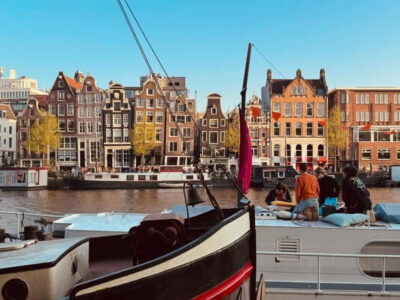
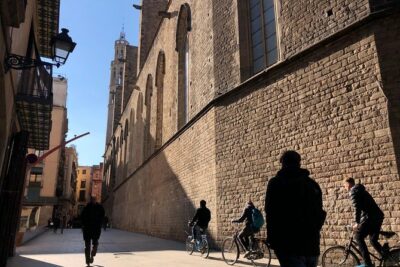
Barcelona 3-hour Bike or E-Bike Tour: Highlights and Hidden Gems
Read our review →