
REVIEW · COLOMBIA
Medellín: E-bike and Foodie Tour
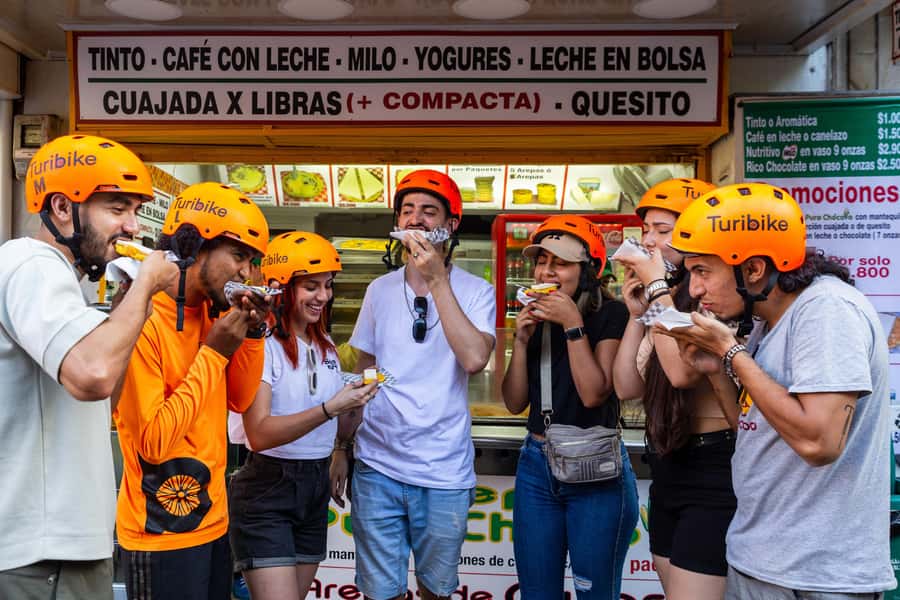
Medellín tastes better on two wheels. This three-hour ride offers a fine way to see ordinary neighborhoods, sample classic Colombian snacks, and understand how the city changed. I especially like the combination of local food with neighborhood history and the help of an electric motor on Medellín’s hills and long city routes. The small groups, capped at eight people, also make it easier to ask questions and keep pace with the guide.
I also like that the tour does not stay in the usual visitor zones. You pass through Belén, Laureles, Conquistadores, and the river parks, with stops for foods such as arepas, pandebono, buñuelos, empanadas, fruit drinks, and guarapo. The main drawback is that some costs remain outside the $48 price, including beverages at the first three stops and food at the final stop. You should also come hungry, since the tastings can add up quickly.
Key points at a glance
- A fast look at everyday Medellín: Ride beyond the city’s most familiar tourist areas and see plazas, quiet streets, local businesses, and ordinary daily life.
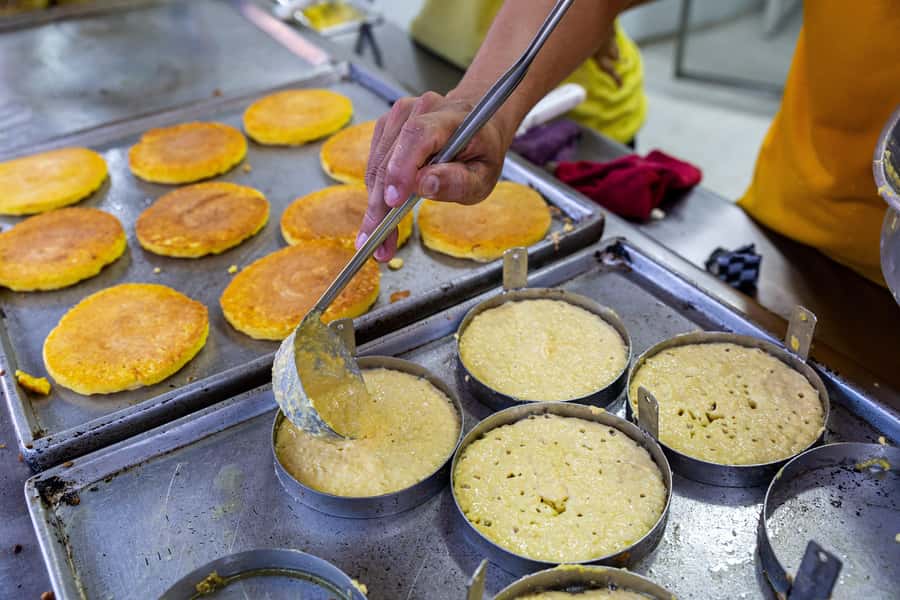
- Food with a story: Tastings can include arepas, pandebono, buñuelos, empanadas, salpicón de frutas, coffee, and guarapo, with explanations of their place in Colombian life.
- Electric bikes do the hard work: The e-bike makes it possible to cover a lot of ground without turning the outing into an exhausting physical test.
- Guides are a major strength: David, Daniela, Dany, Toto, Esteban, Diana, Juan, and other guides are praised for their warmth, safety care, and knowledge of Medellín.
- A useful first-day activity: The route helps you get familiar with neighborhoods, foods, bike paths, and city landmarks early in your stay.
- Know the limits: You must be able to ride a bicycle, wear closed shoes, and meet the minimum height of 140 centimeters.
Why an e-bike is a smart way to see Medellín
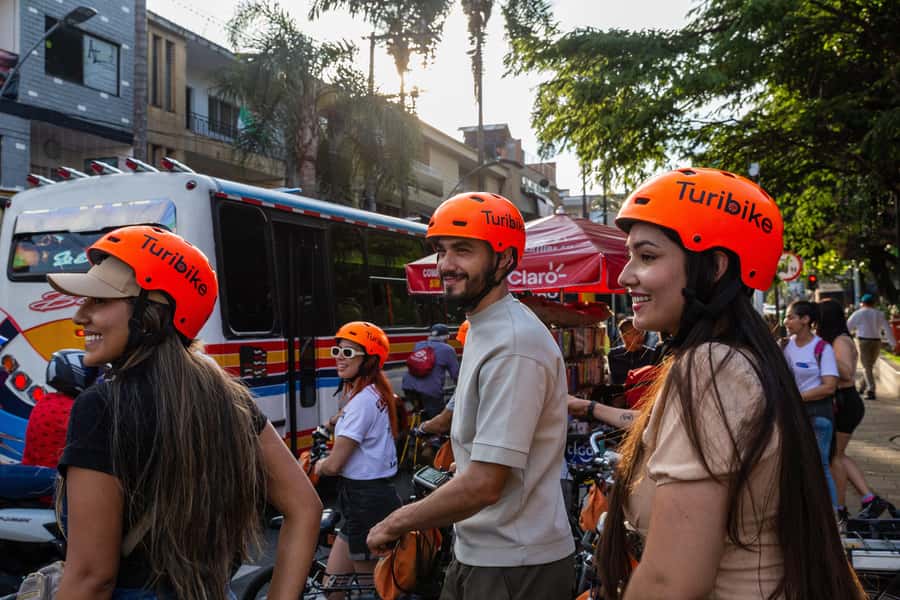
A standard walking tour gives you detail but not much range. A regular bicycle gives you range but can leave you tired, especially when the route crosses several districts. The electric bike offers a sensible middle ground. You still pedal, but the motor handles much of the effort.
That matters here because the tour covers several parts of the city in only three hours. You can move from Unidad Deportiva de Belén to Parque Belén, continue through Laureles and Conquistadores, and finish near the Medellín River Parks. You see more than you could on foot, yet the ride remains active rather than passive.
The bike also keeps you close to street life. You can notice a bakery as you pass, watch people gather in a plaza, and see how different neighborhoods change from one block to the next. A vehicle would cover the same distance, but it would leave you behind glass and traffic.
The route uses bike paths and city streets. Several people praised the guides for keeping the ride safe, and one person noted that Medellín’s bike-lane system made the experience feel secure. That said, this is still a city cycling tour. You should be comfortable riding around other people and traffic, even with a guide setting the pace.
More E-Bike Tours in the world:
- 3-Hour Porto Highlights on a Electric Bike Guided Tour
★ 5.0 · 4,392 reviews - Lisbon: Hills, Alfama, and Mouraria Tour by Electric Bike
★ 4.8 · 3,438 reviews - Athens Scenic Electric Bike Tour with optional Acropolis visit
★ 5.0 · 3,350 reviews
Starting at Turibike on an industrial street
The meeting point is not in a polished tourist plaza. Turibike operates from a coworking space on an industrial street, so give yourself a moment to find it. Look for the brick building with the large black metal door. If the door is closed, knock, and the guard should let you in.
This slightly rough-around-the-edges arrival fits the tour’s character. You are not being collected from a hotel or ushered into a visitor center. You meet at a working part of the city, get your bike, and begin from there.
Hotel pickup and drop-off are not included. You need to arrange your own way to the office and back. The tour is offered in English and Spanish, and the group limit of eight is useful for a city ride. Small groups are easier to manage at crossings and food stops, and you have a better chance to talk with your guide.
Belén introduces the city beyond the postcard
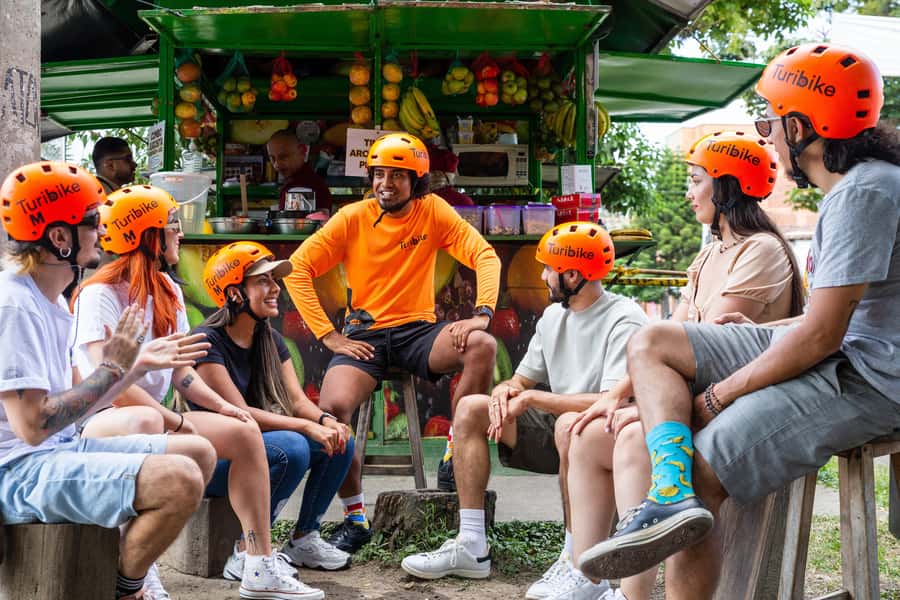
The first main area is Unidad Deportiva de Belén, where the food portion begins. The stop gives you a chance to settle into the bike and start with something edible before the route gathers speed.
The tour then moves into Parque Belén. This is where the experience begins to feel less like a standard sightseeing circuit. You are not simply stopping for a photograph. You are riding through a part of Medellín where people spend time, meet friends, and handle daily errands.
The descriptions of the route point to small details that guidebooks often miss: older men playing cards in a plaza, quiet streets, bakeries making traditional goods, and local food prepared in familiar ways. Those details matter because Medellín is not only its viewpoints, public art, or famous districts. The city is also made up of routines.
At a bakery, you might encounter buñuelos, the round fried cheese breads that are a familiar Colombian snack. Other tastings have included pandebono, a soft cheese bread, and arepas prepared from long-used recipes. The exact selection can vary, but the point is consistent: the food is used to explain place, habit, and family tradition.
Laureles brings food and daily life together
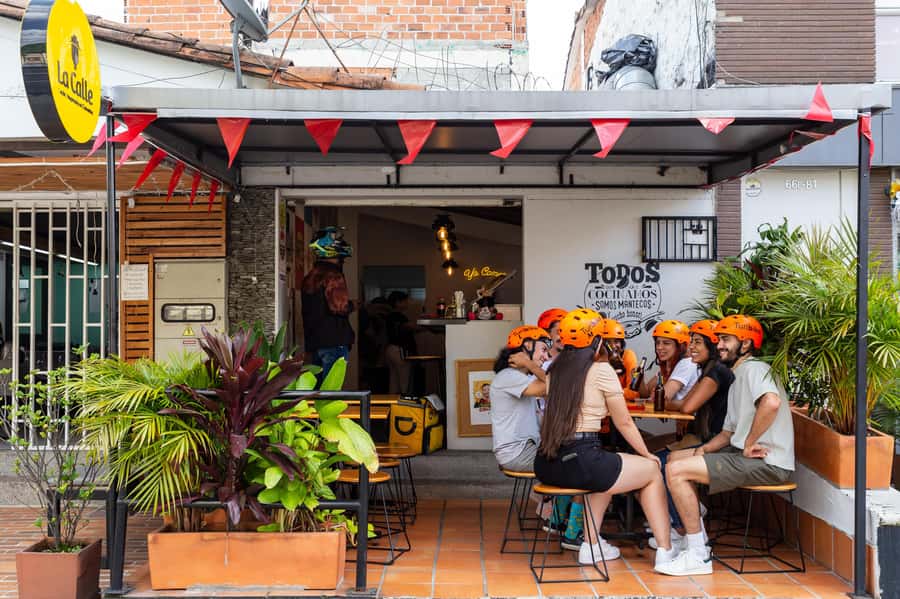
Laureles is one of the route’s named neighborhoods. Here, the ride continues through streets lined with trees and local businesses, with time for regional food.
The value of this section is not just the chance to eat. Your guide connects the dish to Colombian culture and explains differences between foods that may look similar to an outsider. One guide has been praised for explaining culinary distinctions and taking a participant to everyday places he personally liked.
That personal connection can make the difference between a food stop and a food lesson. You may learn why a certain snack is eaten at a particular time, how a drink is made, or what makes one type of arepa different from another. You are not expected to become a food expert in one afternoon, but you leave with a better idea of what to order later.
Past tastings have included coffee, salpicón de frutas, pandebono, and guarapo. Salpicón is a fruit mixture, while guarapo is a traditional sugarcane drink. Some participants also singled out crispy empanadas and arepas de huevo, an arepa with egg, as favorite bites.
One practical point: the first three stops do not include beverages. If you want drinks with those tastings, budget extra. This is easy to overlook because the tour includes food and drinks overall, but the exclusions apply to the early stops.
More Food and Market Bike Tours in the world:
- Versailles Palace Bike Tour with Market & Marie-Antoinette hamlet
★ 5.0 · 2,680 reviews - Madrid: 3 h. Guided Highlights Bike Tour with Optional Tapas
★ 4.9 · 1,623 reviews - Rome: Appian Way & Aqueducts E-Bike Tour (Catacombs & Food)
★ 4.9 · 1,498 reviews - Tuscany Bike Tours Through the Chianti Hills with Wine Tasting
★ 5.0 · 1,300 reviews
Conquistadores adds snacks and city context
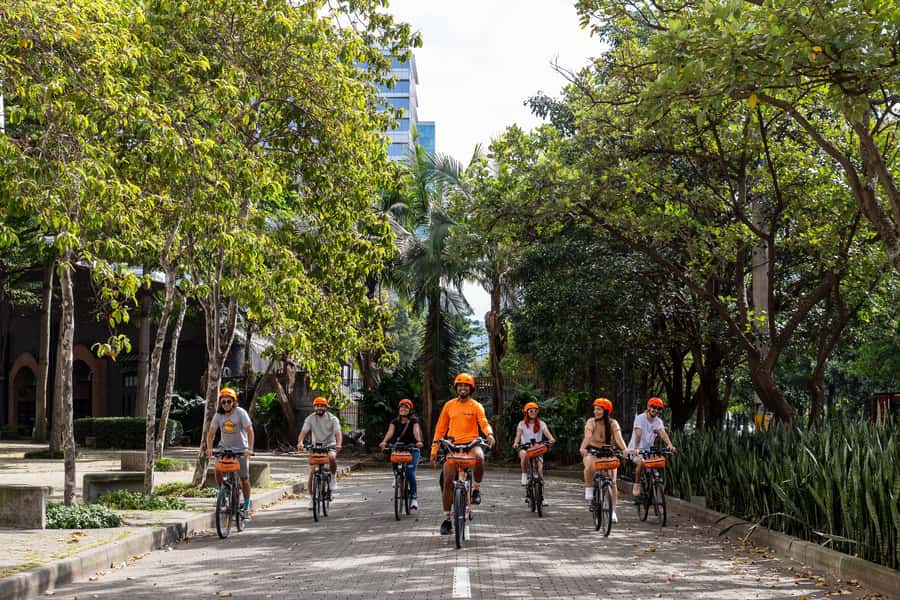
The route continues through Conquistadores, with another snack stop and more riding. This part helps connect the neighborhoods rather than treating them as isolated attractions.
A good city tour explains not just what you are seeing but how the pieces relate. Guides have spoken about Medellín’s past, its changing neighborhoods, and the city’s major transformation. One guide described how the city developed, while another answered detailed questions about Colombian society and local life.
You may also pass notable landmarks along the way. One participant described seeing two churches and watching workers string wires across the river. Those are the kinds of passing scenes that give the ride texture. They are not necessarily formal stops, so do not expect a checklist of major monuments. Instead, the city reveals itself while you move through it.
This is also where the route can feel personal. Some past outings ended with an unplanned stop at a local bar, where a participant was offered food and drinks by people there. That kind of warm exchange cannot be guaranteed, and it should not be treated as part of the official package. Still, it reflects the social character of the tour and the relationships guides may have in the neighborhoods.
The Medellín River Parks provide breathing room
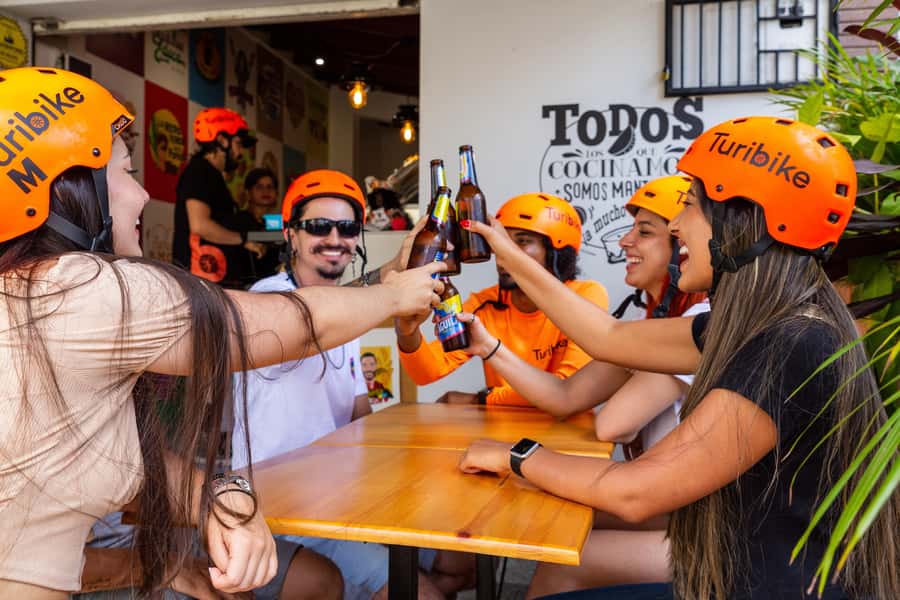
The Medellín River Parks are a later stop before you return to Turibike. After several food tastings and neighborhood streets, the river area gives the group space to pause and take in a broader view of the city.
The river corridor also helps explain Medellín’s urban evolution. You can see how public spaces, transport routes, parks, and infrastructure fit into the city’s larger story. The tour does not reduce Medellín’s past to a simple before-and-after tale. Instead, the guide uses what you see around you to talk about change.
Because the route includes several food stops, you should pace yourself. A small snack at each location can become a full meal by the end. One person even suggested trading one food stop for a drink stop, which is useful advice if you prefer tasting fewer items and spending more time talking or riding.
The guides make the difference
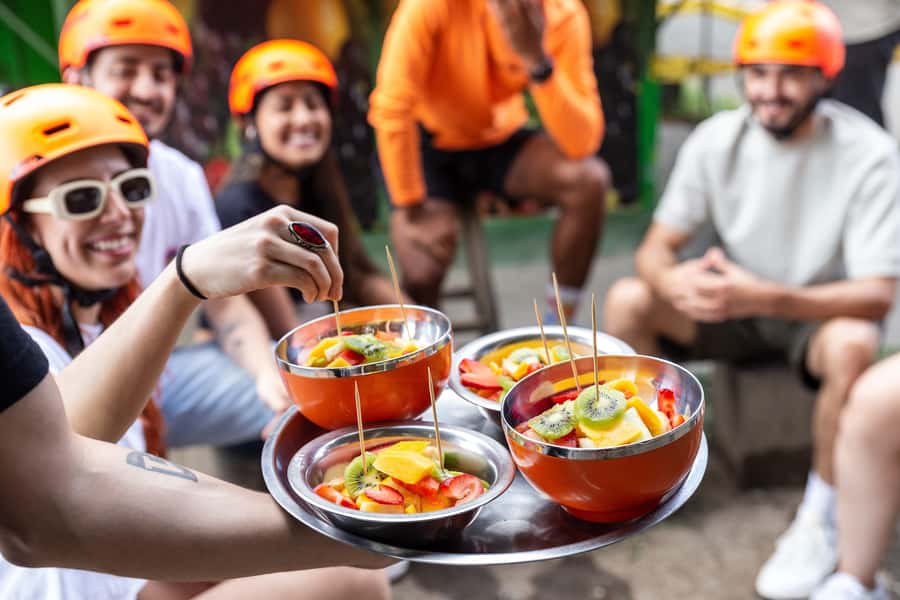
The strongest part of this experience is the guiding. Different outings have featured David, Daniela, Dany, Toto, Esteban, Diana, Juan, Juan Pablo, Camilo, Jhon, and Angie. The consistently praised qualities are friendliness, clear explanations, humor, local pride, and attention to cycling safety.
David has been praised for showing less touristy areas and explaining how Medellín developed. Daniela is described as warm and engaging, with a real affection for the city and its people. Dany has been singled out for detailed answers about Colombian history, culture, and food. Toto has been appreciated for mixing humor with useful information and keeping the group safe.
Those names matter because the quality of a small-group tour depends heavily on the person leading it. A good guide turns a street corner into a story and makes an unfamiliar dish less intimidating. The guides also seem willing to adjust the conversation to your questions, which is valuable if you want more than a rehearsed speech.
There is practical evidence of hands-on care, too. One participant had a flat tire, and the guide repaired it quickly so the ride could continue. That does not mean mechanical problems are impossible, but it suggests the staff are prepared to handle ordinary bicycle trouble.
Food portions, drinks, and what your $48 buys
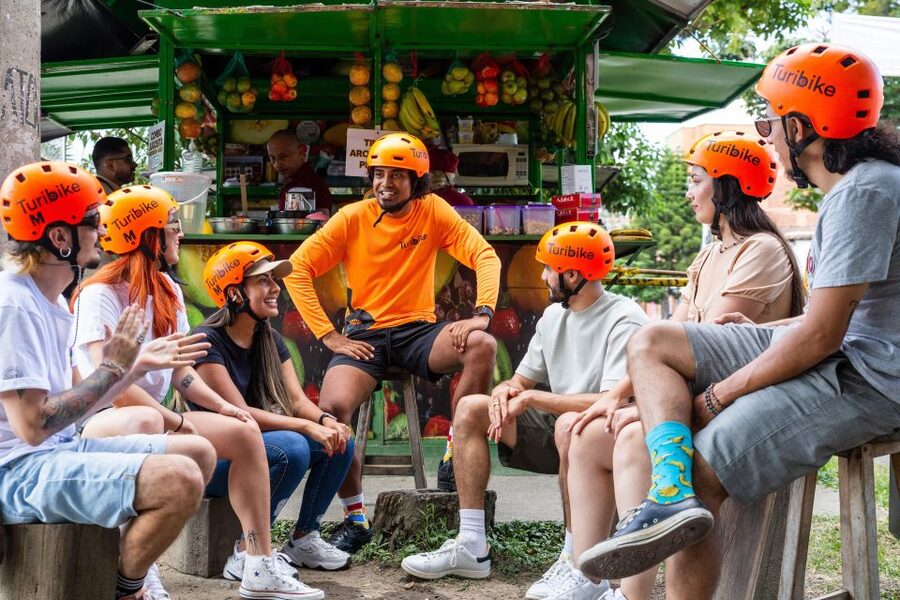
At $48 per person, this is not the cheapest way to buy snacks in Medellín. You could spend far less eating on your own. The value comes from combining several services in one short outing: an electric bike, a bilingual guide, medical insurance, multiple tastings, local context, and a route that covers a lot of ground.
The price is strongest for a first or second day in the city. You get an introduction to foods you might not recognize, neighborhoods you might not reach alone, and bike routes that can help you understand the city’s layout. The guide can also point out places you may want to return to later.
The food is substantial enough that you should eat lightly beforehand. Past tastings have included several savory snacks, breads, fruit, coffee, and traditional drinks. The selection is not presented as a formal restaurant meal, so expect small local bites rather than one seated lunch.
Remember the exclusions. Beverages at the first three stops are extra, and food at the final stop is not included. The tour also does not cover transportation to or from Turibike. These are modest costs, but they affect the final value.
Who should book this ride?
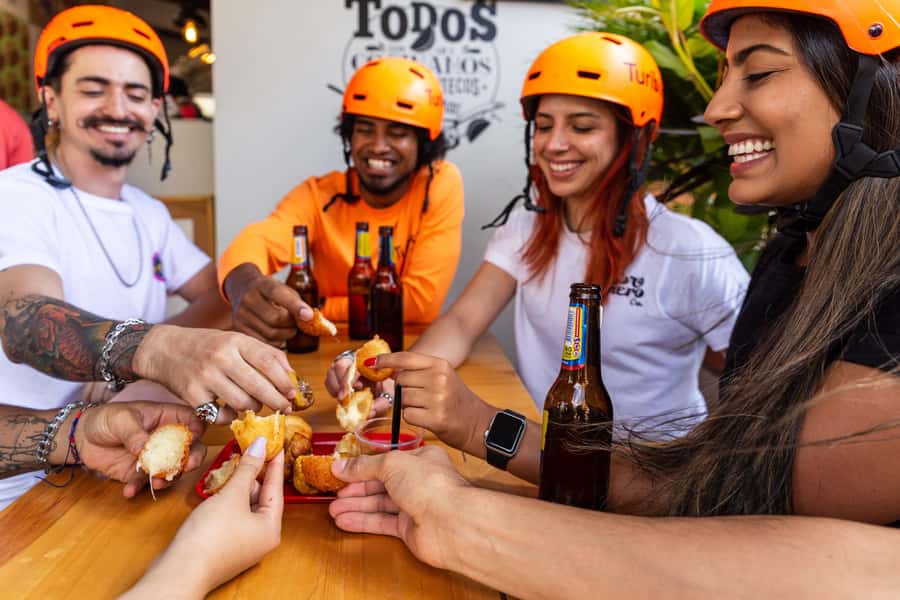
I would choose this tour if you want a quick, active introduction to Medellín and enjoy learning through food. It suits solo visitors, couples, and small groups who want to see several neighborhoods without spending the day walking.
It is also a good fit if you are curious about Colombian snacks but do not know where to begin. You can try a range of foods with a guide nearby to explain them, then use that knowledge for later meals.
The tour is not suitable for pregnant women, people with mobility impairments, people who cannot ride a bike, or anyone under 140 centimeters tall. Sandals and flip-flops are not allowed, so wear comfortable closed shoes.
You can cancel up to 24 hours before departure for a full refund, and the reserve-now, pay-later option keeps your schedule flexible. Starting times depend on availability, so check the chosen date carefully.
Should you book the Medellín E-bike and Foodie Tour?
Book it if you want to cover ground, eat local food, and hear about Medellín from someone who knows its streets personally. The combination is especially useful early in your stay, when you are still learning the city’s neighborhoods and Colombian food vocabulary.
Skip it if you dislike cycling, prefer a long sit-down meal, or want a tightly fixed menu with every drink included. For most active visitors, though, the $48 price is fair because it buys more than snacks. You get a practical city orientation, a small-group ride, and a closer look at Medellín’s everyday life.
FAQ
How long is the Medellín E-bike and Foodie Tour?
The tour lasts three hours, including cycling, food tastings, neighborhood visits, and the return to Turibike.
Where does the tour start?
It starts at the Turibike office inside a coworking space on an industrial street. Look for the brick building with the large black metal door. If the door is closed, knock so the guard can let you in.
What is included in the price?
The $48 price includes an electric bike, medical insurance, food and drinks, and a live guide in English or Spanish.
Are hotel pickup and drop-off included?
No. You need to make your own way to the Turibike meeting point and arrange your return after the tour.
What food might be included?
Tastings can include arepas, pandebono, buñuelos, empanadas, salpicón de frutas, coffee, and guarapo. The exact food selection may vary. Beverages at the first three stops and food at the final stop are not included.
Who cannot take this tour?
The tour is not suitable for pregnant women, people with mobility impairments, people who cannot ride a bicycle, or people under 140 centimeters tall. You should wear comfortable shoes, and sandals or flip-flops are not allowed.
Just added around the world
- Best of Copenhagen Biking Tour-3 Hours, Small Group max 10 people★ 5.0 · 22 reviews
- Urban Design and Livability E-bike Tour★ 5.0 · 18 reviews
- Copenhagen : Highlights Private Bike Tour★ 4.5 · 20 reviews
- Garden of the Gods Original Electric e-Bike Tour★ 5.0 · 45 reviews
- 3-Hour E-Bike Tour of Trail of the Silver Kings (Old Mine Tour)★ 5.0 · 18 reviews
- Gold Camp Road by E-Bike★ 5.0 · 21 reviews
- Pikes Peak & Garden of the Gods E-Bike Expedition★ 5.0 · 29 reviews
- EBIKE Mountain Adventure in Colorado Springs: Gold Camp Road★ 5.0 · 16 reviews
Food and Market Bike Tours, compared.
3 h. Guided Highlights Bike Tour with Optional Tapas
Read our review →
Appian Way & Aqueducts E-Bike Tour (Catacombs & Food)
Read our review →
Tuscany Bike Tours Through the Chianti Hills with Wine Tasting
Read our review →
Rome by Night – Ebike Small Group Tour – Food and Wine (Option)
Read our review →
Rome by Night: E-bike Small Group Tour -Food & Wine (Option)
Read our review →
Electric Bike Beach Adventure with Tequila Tasting and Lunch
Read our review →![Frida Kahlo VIP [Museum Tickets Included] Bike, Markets & Churros](https://6.thecycletraveler.com/wp-content/uploads/frida-kahlo-vip-museum-tickets-included-bike-markets-churros-400x300.jpg)
Frida Kahlo VIP [Museum Tickets Included] Bike, Markets & Churros
Read our review →
Wachau Valley Wine Tasting Bike Tour from Vienna
Read our review →Browse the lists this tour appears in