
REVIEW · ROME
Rome: City Highlights Electric Bike Tour
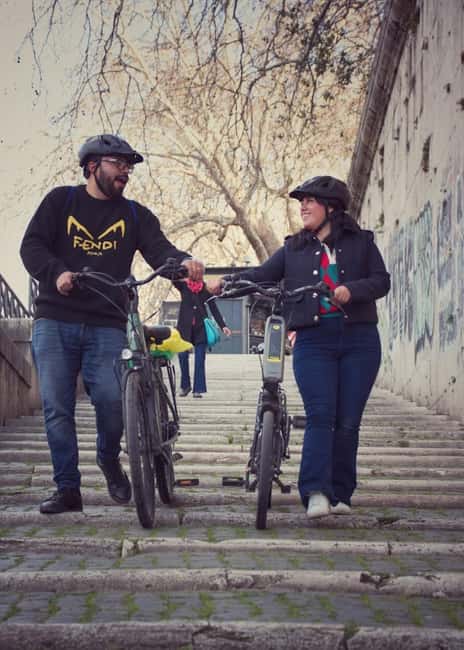
Rome rewards you when you keep moving. This four-hour electric bike tour links the Colosseum, Trevi Fountain, St. Peter’s Basilica, and lesser-known corners without asking you to spend the whole day on foot. I especially like the small groups of up to eight and the way guides such as Daniela, Fabio, and Alessio adjust the route to suit the group.
I also like the quiet-road planning, which uses the Tiber bike path, back streets, and calmer streets where possible. The main caution is simple: an e-bike still requires pedaling. You need a reasonable cycling level, and the guide can refuse participation after a pre-ride test if you cannot safely handle the bike.
Key points at a glance
- Seventeen kilometers can fit into four hours: One rider covered roughly 17 kilometers, showing how much ground this route can cover, though the exact distance and pace may vary.
- The route links Rome’s big names: You pass the Colosseum, Circus Maximus, Piazza Navona, Pantheon, Trevi Fountain, Piazza di Spagna, and St. Peter’s Basilica.
- Quiet routes do most of the work: The tour stays in Rome’s historic center and on the Tiber bike path, though some traffic and crowded walking areas remain unavoidable.
- Guides shape the experience: Daniela, Fabio, Giorgio, Ricardo, and other local guides have been praised for clear storytelling, patience, safety, and photo-taking.
- The bikes are pedal-assist, not motorbikes: You still pedal, but the electric help makes long distances and modest hills far easier.
- The value is strongest on a first Rome visit: At $80 per person, you pay for transport, orientation, local interpretation, and a broad look at the city in one morning or afternoon.
Why an e-bike works so well in Rome
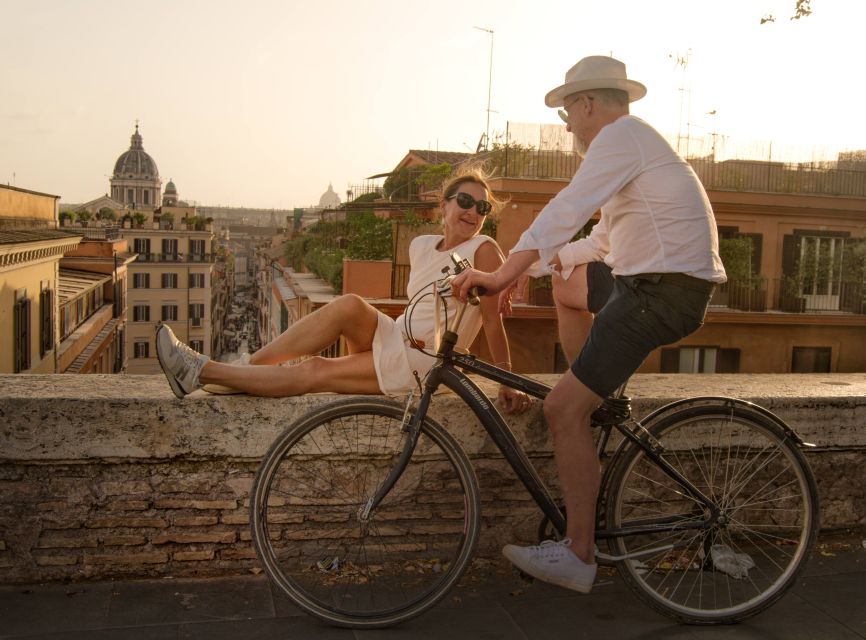
Rome is spread out. The Colosseum is not next door to the Vatican, and the Pantheon is not a quick stroll from Circus Maximus when summer heat, uneven paving, and crowds enter the picture. On foot, you may spend much of your sightseeing time simply getting from one monument to the next.
The e-bike solves that problem without turning the tour into a passive ride. You still feel the city under you, pass through ordinary streets, and stop often enough to understand where you are. The electric motor takes the edge off the distance, but you remain part of the movement.
I would not call this a leisurely pedal through empty lanes. Rome has pedestrians, scooters, taxis, rough surfaces, and moments when you must walk the bike. Still, the route favors the Tiber path, side streets, and quieter roads. Several guides have also adjusted the pace for first-time e-bike riders and nervous cyclists.
The short training session matters. Even people who have never used an e-bike before have found the controls simple, but you should arrive ready to balance, steer, brake, and pedal in a city environment. The guide leads the group and checks that each rider is comfortable before setting off.
More City Highlights Bike Tours in Italy
- Rome: Top Highlights & Hidden Gems Tour by Cannondale E-Bike
★ 4.9 · 1,760 reviews - Rome: Standard or E-Bike Highlights Guided Tour
★ 4.7 · 777 reviews - Rome: City Highlights E-Bicycle Tour
★ 4.9 · 740 reviews
Starting beside the Tiber
The meeting point is around Lungotevere delle Armi, with the exact location depending on the option you book. The opening section takes you toward the Tiber and Tiber Island, a useful introduction to the tour because it places you on one of the city’s calmer cycling corridors.
Tiber Island receives about ten minutes of guided attention and riding. It is a compact stop, but a good one for getting your bearings. You begin to see how the tour works: ride, pause for context, take photos if useful, then move on before one sight consumes the whole afternoon.
The Tiber path also helps settle first-day nerves. You are not immediately thrown into a major traffic junction. That said, the route is not fully separated from city traffic for four hours. Some surface streets and crossings are unavoidable, so this is best for riders who can remain alert around cars and pedestrians.
Circus Maximus and the Colosseum
Circus Maximus comes next, with about ten minutes for a photo stop and explanation. The broad open space once hosted Roman public spectacles, and its scale is easier to appreciate from a bike than from a packed pavement. You get a sense of how the ancient city used this valley between the Aventine and Palatine areas.
The Colosseum receives a longer pause of roughly fifteen minutes. This is a photo stop and outdoor visit, not an admission tour. You will not enter the amphitheater as part of this activity, so book a separate timed ticket if you want to see the interior.
The bike is especially useful here because the area can be thick with pedestrians. You may need to dismount and walk for part of the approach. That is not wasted time. It keeps the group safe and lets you look up at the monument instead of worrying about steering through a crowd.
A guide can give you the essential story of the arena, its public role, and its place in imperial Rome, but this is not a long archaeological lecture. The format favors broad context and movement. If you want an hour-by-hour study of ancient Rome, choose a dedicated walking or museum tour instead.
Piazza Venezia and the Jewish Ghetto
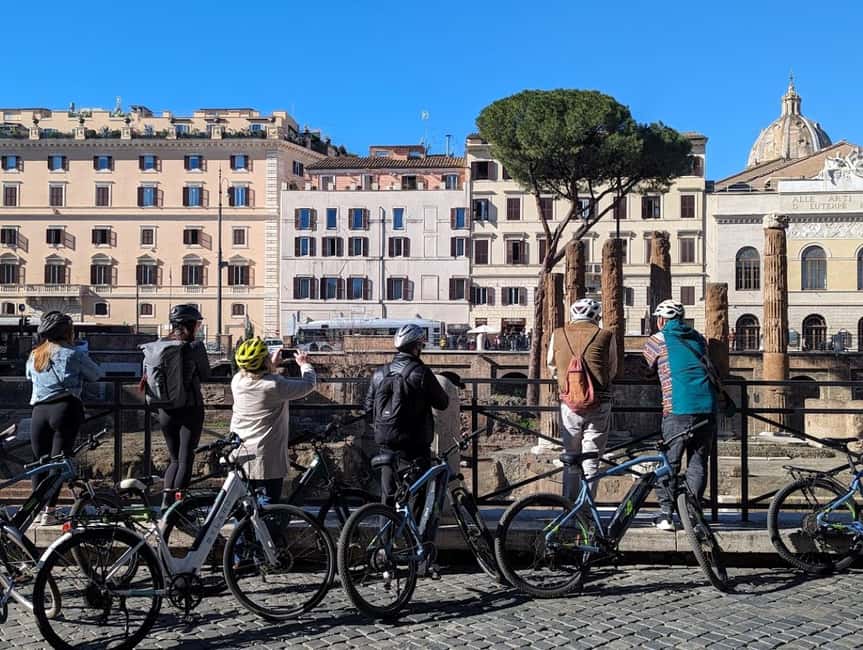
Piazza Venezia is another ten-minute photo stop. The monumental setting gives you a quick look at the political heart of modern Rome and the large avenues that cut through the historic center. Traffic can be more noticeable here, which is one reason the guide’s positioning and instructions matter.
The route then moves through the Jewish Ghetto. This section is less about ticking off one famous building and more about seeing an older neighborhood in its street pattern, stonework, and small-scale atmosphere. You ride rather than rush from one grand monument to another.
The Jewish Ghetto is also a useful reminder that Rome is not just a collection of imperial and papal showpieces. The city’s character often appears in narrow lanes, modest facades, and places that do not need a ticket or a long queue. Your guide may point out details you would likely pass without noticing.
More City Highlights Bike Tours in Rome
- Rome Highlights by E-Bicycle Small group
★ 5.0 · 486 reviews - Highlights & Hidden Gems Tour with Top E-bike
★ 5.0 · 300 reviews - Rome’s Best by E-bike: Guided City Tour (Small Group or Private)
★ 5.0 · 207 reviews - Rome: Panoramic Off-the-beaten-track Cannondale E-Bike tour
★ 5.0 · 71 reviews
Campo de’ Fiori and Piazza Navona
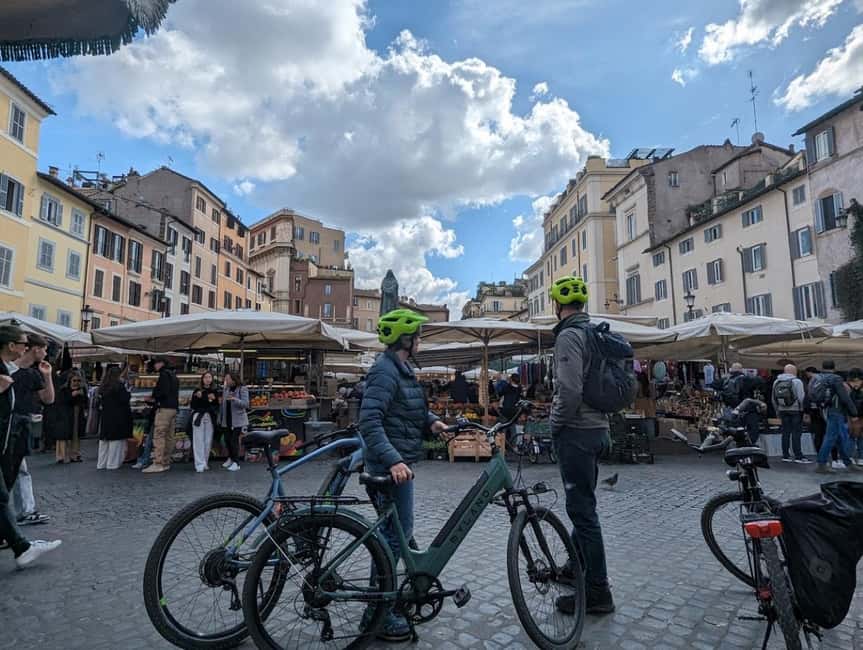
Campo de’ Fiori gets another ten-minute photo stop. Its open square is one of the places where Rome’s daily life and tourist sightseeing overlap. Depending on the time and day, the setting can feel busy, so keep your bike close and follow the guide’s instructions when the group dismounts.
Piazza Navona follows, also for about ten minutes. The oval piazza preserves the outline of an ancient Roman stadium and is framed by Baroque architecture and fountains. This is one of the tour’s best examples of Rome’s ability to place several layers of the past in one public space.
You should think of these stops as orientation points, not full visits. Ten minutes is enough for a story, a photograph, and a look around. It is not enough to study every fountain or church. The advantage is that you get a strong first pass through the city and can return later to the places that catch your attention.
Castel Sant’Angelo and St. Peter’s Basilica
Castel Sant’Angelo is a particularly useful stop because it connects ancient Rome with the papal city. You see the massive cylindrical fortress from outside and begin to understand its position beside the Tiber and the route toward Vatican City.
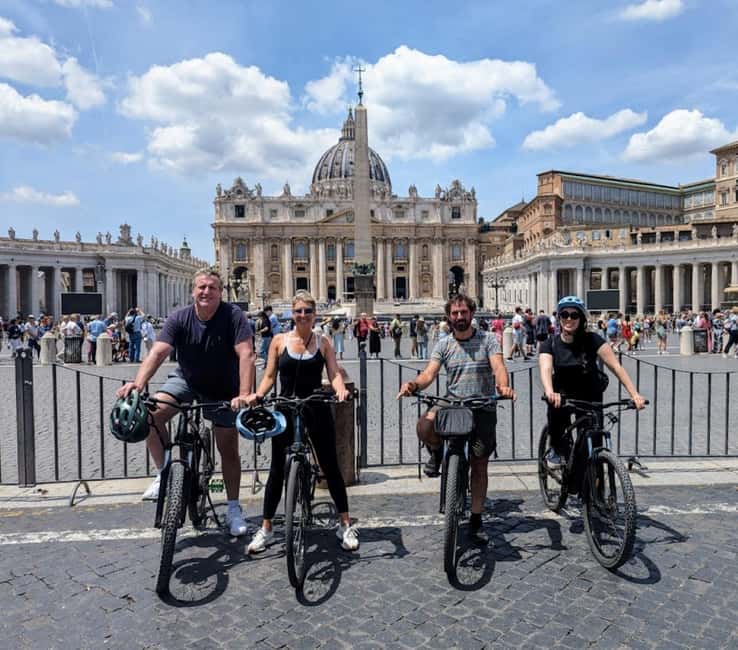
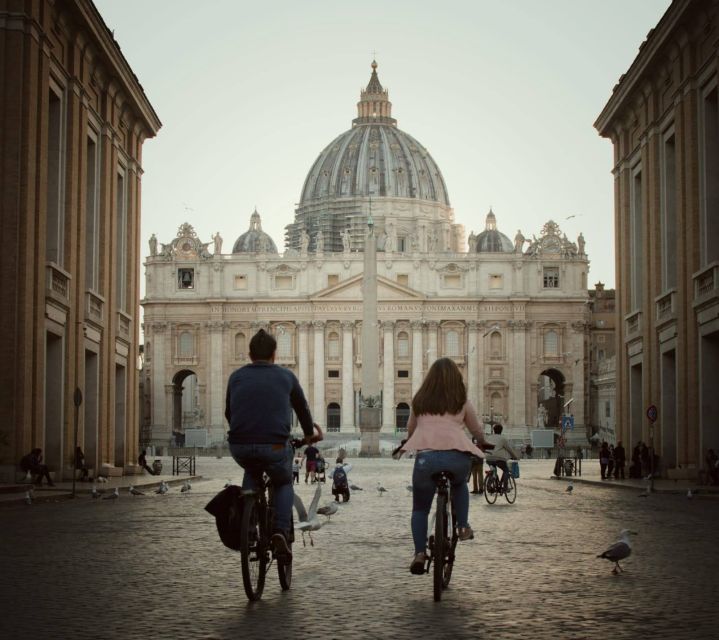
The tour then reaches St. Peter’s Basilica for another photo stop. Again, this is an exterior visit rather than a basilica tour. You get the grand approach, the dome, and the surrounding square, but you will not have time to pass through security and inspect the interior during the scheduled bike route.
This distinction is important when planning your Rome days. The e-bike tour gives you a citywide framework. Use it to decide where you want to spend a later morning inside the Colosseum, Pantheon, or St. Peter’s Basilica. It is a poor substitute for those interior visits, but an excellent way to see how the landmarks relate to one another.
Pantheon, Trevi Fountain, and Spanish Steps
The Pantheon is one of the tour’s strongest stops. Its ancient structure remains remarkably complete, and the surrounding square is a classic Roman meeting place. You get a photo stop and explanation, with enough time to appreciate the building from outside.
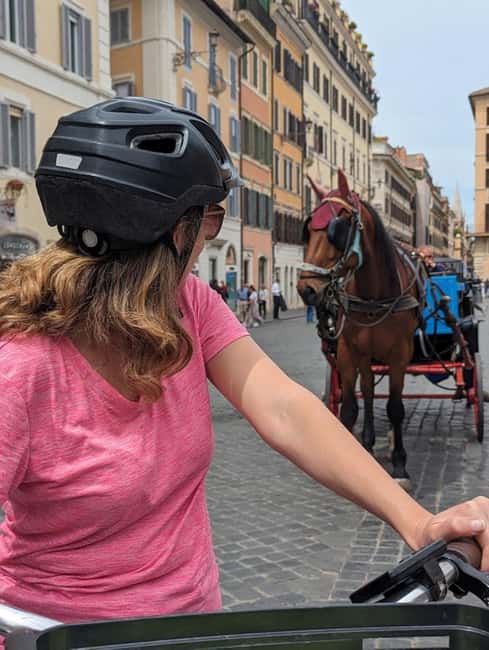
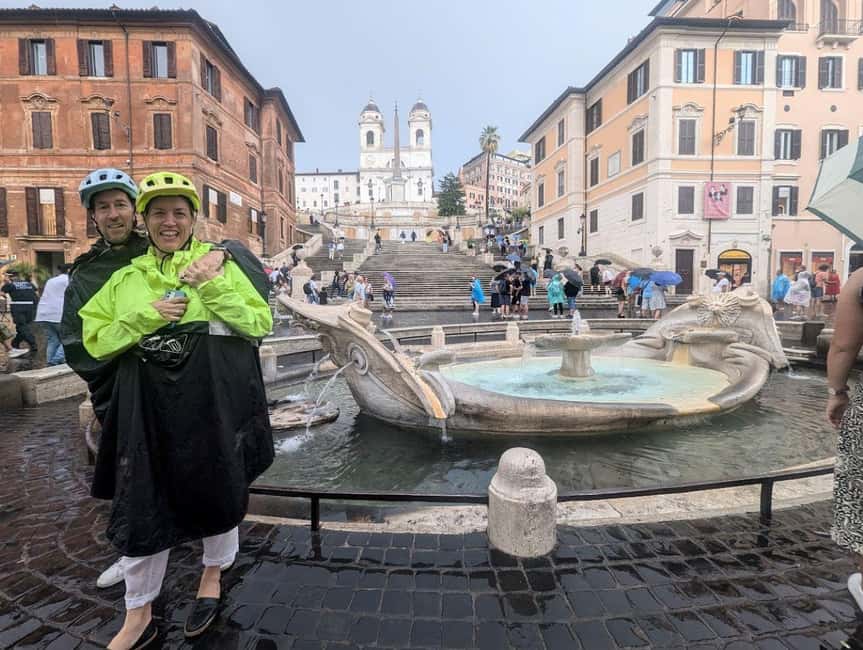
Trevi Fountain brings another familiar sight, though crowd levels can make the approach awkward on a bike. You may need to walk the final stretch, which is safer and more pleasant than trying to pedal through dense foot traffic. The stop gives you time for photographs, and one guide was even noted for helping with change for the fountain tradition.
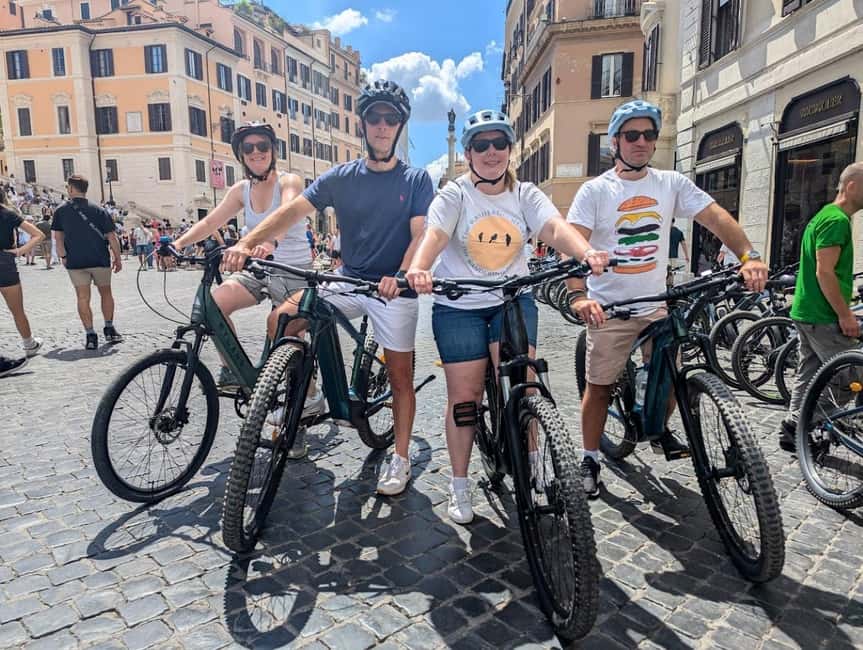
Piazza di Spagna and the Spanish Steps come next. This is another place where bicycles and crowds do not mix well. Expect to dismount if the area is packed. The tour is not promising uninterrupted riding at every landmark, and that is a sensible trade-off in central Rome.
These three stops show the tour’s rhythm at its best: ancient architecture, a famous fountain, and a grand public staircase in quick succession. You will see a lot, but you should not expect a long pause at each one.
Piazza del Popolo and the ride home
Piazza del Popolo is the final major area on the route before returning to the drop-off point. The large square provides a calmer closing view after the tight lanes and crowded monuments of central Rome. It is also a good place to reflect on how much of the city you have covered.
The tour returns to Lungotevere delle Armi, with drop-off arrangements depending on the option booked. The full duration is four hours, so allow some flexibility around the finish if your next reservation is tightly timed.
The route can change for public events or safety reasons. That is worth accepting in Rome, where streets and squares may be restricted without much warning. The operator may substitute a stop to keep the group secure.
Guides, group size, and the personal touch
The guide can make or break a bike tour, and this one has earned especially strong marks for its staff. Daniela has been praised for tailoring routes, sharing local stories, and taking excellent pictures. Fabio is described as relaxed and patient, while Giorgio has been noted for his engaging manner and pride in Rome.
Ricardo has also received credit for giving useful context without overloading the group with facts. Other guides, including Alessio, Marco, Noam, and Ilenia, have helped nervous riders manage traffic, changed routes for beginners, and offered restaurant suggestions.
The group is limited to eight people per guide, although the operator may run with fewer or add one or two people to keep a booking together. That size gives you a better chance to ask questions and receive help than you would on a large coach tour.
A private option is available if you want the guide entirely for your own party. It costs more than the shared experience, but it makes sense for families with different cycling abilities or for anyone who wants the route shaped around particular sights.
Is $80 a fair price?
At $80 per person, this is not the cheapest way to see Rome. You could walk through several central areas for free, and public transport costs much less. Those comparisons miss the point, though.
The fee includes the e-bike or mountain bike, local guide, helmet cover, rain poncho, and child seat if needed. More importantly, it buys four hours of movement between far-flung sights, along with a guide who handles route choices and city navigation.
I see the best value for a first visit, a short stay, or a family group that would struggle to walk between all the major landmarks. It is also useful if you want a broad overview before choosing which museums and monuments deserve a closer visit.
The value drops if you already know Rome well, dislike cycling near traffic, or want long visits inside individual monuments. The tour covers many sights, but it does not replace admission tickets or specialist guided visits.
Weather, children, and physical requirements
The operator provides ponchos, and guides have continued during rain. One group stopped at a historic coffeehouse when heavy rain arrived, while another used ponchos and carried on. Even so, wear comfortable clothing and bring water. Summer heat can make four hours of cycling tiring despite the motor assistance.
Infants weighing up to 20 kilograms can ride free in a supplied child seat. Children under 139 centimeters must use a bike extension, such as a tag-along or trailer. Riders must be at least 12 years old to operate an e-bike.
This activity is not suitable for people who cannot ride a bike, pregnant women, wheelchair users, people with vertigo, recent surgery, heart problems, low fitness, or mobility impairments. The listed weight limit is 100 kilograms. These are firm practical limits, not minor footnotes.
The guide conducts a pre-departure test. If you cannot control the bicycle safely or have a health concern that makes riding unsuitable, participation may be refused without a refund. Take that seriously and book only if you are comfortable with the physical demands.
Who should book this Rome bike tour?
You should book it if you want to see a large portion of central Rome in half a day, especially if long walks are hard on your legs. It also suits families with teenagers, mixed-age groups, and first-time e-bike users who want a guide close by.
Start early if you can. One family found a 9:30 start helpful because central streets were less crowded, and quieter conditions make the riding easier. The exact start times depend on availability.
I would skip it if your main goal is entering the Colosseum, Vatican Museums, Pantheon, or St. Peter’s Basilica. This is an outdoor overview with photo stops. You will need separate tickets and time for interiors.
FAQ
How long is the Rome City Highlights Electric Bike Tour?
The tour lasts four hours.
How much does the tour cost?
The listed price is $80 per person.
What sights does the route include?
The route includes Tiber Island, Circus Maximus, the Colosseum, Piazza Venezia, the Jewish Ghetto, Campo de’ Fiori, Piazza Navona, Castel Sant’Angelo, St. Peter’s Basilica, the Pantheon, Trevi Fountain, Piazza di Spagna, and Piazza del Popolo.
Does the tour enter the Colosseum or St. Peter’s Basilica?
The scheduled stops are guided visits and photo stops from the outside. Entry to those monuments is not included in the supplied tour details.
Are electric bikes provided?
Yes. You receive an e-bike or mountain bike, depending on the option selected. The e-bike still requires pedaling.
What languages are available?
Guides are available in Spanish, English, French, and Italian.
Can children join the tour?
Infants up to 20 kilograms can ride free in a supplied child seat. Children under 139 centimeters must use a bike extension. The minimum age to operate an e-bike is 12.
Is the tour suitable for beginner cyclists?
You need a minimum cycling ability, and the guide conducts a pre-ride test. The tour may suit a beginner who can balance, steer, brake, and pedal confidently, but it is not suitable for someone who cannot safely ride a bicycle.
Should you book it?
I would book this tour as an active first look at Rome, not as a replacement for monument interiors. The combination of a small group, pedal assistance, quiet-route planning, and strong local guides gives you a smart way to connect sights that are too far apart for a comfortable walk.
Book it if you want reach, stories, and photos in four hours. Skip it if cycling makes you uneasy or if you prefer to settle into one historic site at a time. For most capable riders with limited time, $80 is a fair price for seeing Rome’s major landmarks while still feeling the city at street level.
More E-Bike Tours in Rome
- Rome by Night – Ebike Small Group Tour – Food and Wine (Option)
★ 5.0 · 1,275 reviews - Rome by Night: E-bike Small Group Tour -Food & Wine (Option)
★ 4.9 · 1,233 reviews - Appian Way, Catacombs and Aqueducts Park Tour with Top E-Bike
★ 5.0 · 735 reviews - Rome: Appian Way E-Bike Tour Catacombs, Aqueducts & Picnic
★ 4.6 · 727 reviews
More E-Bike Tours in Italy
- Rome EBike Tour: Appian Way, Catacombs & Roman Aqueducts
★ 5.0 · 1,766 reviews - Rome: Appian Way & Aqueducts E-Bike Tour (Catacombs & Food)
★ 4.9 · 1,498 reviews - Rome: Appian Way, Catacombs, & Roman Aqueducts E-bike Tour
★ 4.9 · 1,421 reviews - Rome City Small Group Bike Tour with quality Cannondale EBike
★ 5.0 · 1,380 reviews
Just added around Rome
- Rome: Guided eBike Evening Tour with italian Aperitif★ 5.0 · 16 reviews
- Rome: Villa Borghese, Villa Ada, and Coppedè E-Bike Tour★ 4.8 · 78 reviews
- Sunrise in Rome: Small Group E-Bike Tour & Italian breakfast★ 4.9 · 177 reviews
- Rome: Top 10 Highlights Guided Tour by Bike or E-Bike★ 4.4 · 15 reviews
- Rome: Appian Way, Aqueducts, & Catacombs E-Bike Guided Tour★ 4.9 · 54 reviews
- Rome: Villa Borghese E-Bike Tour (Small Group or Private)★ 4.9 · 92 reviews
- Rome: Panoramic Off-the-beaten-track Cannondale E-Bike tour★ 5.0 · 71 reviews
- Rome: Taste of Rome by quality Cannondale E-Bike★ 5.0 · 12 reviews
City Highlights Bike Tours, compared.
3-Hour Porto Highlights on a Electric Bike Guided Tour
Read our review →
City Highlights 3-Hour Guided Electric Bike Tour
Read our review →
Highlights & Hidden Spots of Barcelona Bike Tour w/ Local Guide
Read our review →
Sights and Highlights Bike Tour with a Local Guide
Read our review →
Highlights 3 Hour Bike Tour with a Local Guide
Read our review →
Browse the lists this tour appears in