
REVIEW · INDONESIA
Bali Downhill Cultural Cycling Tour
See a quieter side of Bali by bicycle. This eight-hour outing combines an easy downhill ride from Kintamani with a local school visit, coffee tasting, a priest’s family compound, and lunch among rice paddies. I especially like the genuine village contact and the way the tour connects scenery with daily Balinese life, rather than treating the ride as a simple photo stop.
The route is mostly gentle and suits many average riders, including people in their 60s, but it is not entirely effortless. You may cover about 27 kilometres over roughly three and a half hours, with a few uphill sections and some riding on public roads. I also like the charitable school visit, though you should confirm the breakfast and Mount Batur viewpoint before booking, since that part has not always matched the advertised plan.
Key points at a glance
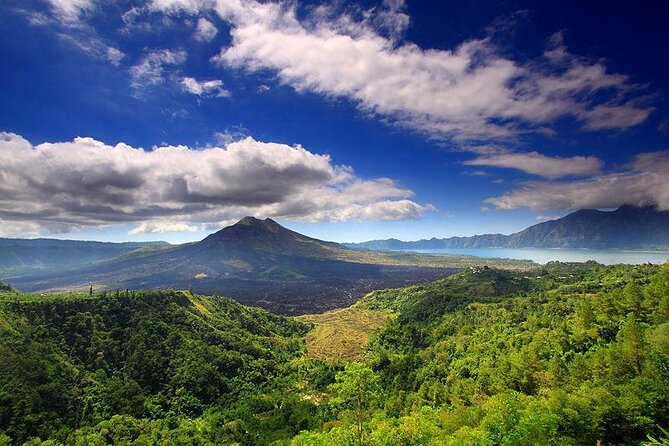
- About 27 kilometres of mostly downhill cycling: The ride runs from the Kintamani volcano area toward Ubud, with a few climbs that some people may prefer to walk.
- A school visit with a practical donation: Part of the tour price supports school supplies, and you can bring extra pencils or drawing books if you wish.
- A real family-compound visit: You meet a local priest and learn about Balinese family life through a translated conversation over coffee.
- Coffee and tea at an organic plantation: Several tastings are included, along with a look at the plants and coffee-producing process.
- Lunch beside rice paddies: The final meal at Padi Organic restaurant in Laplapan gives the day a satisfying local finish.
- Hotel pickup and return included: Transport matters here because Kintamani is far above the Ubud riding area.
What the day is really about
The Bali Downhill Cultural Cycling Tour costs $45 per person and lasts about eight hours. At that price, it offers more than a bike rental and a guided ride. You get hotel transportation, cycling equipment, mineral water, breakfast, lunch, school support, a guide, and personal insurance coverage up to $75,000.
I consider that strong value, especially because the vehicle transfer to Kintamani and the return to your hotel would otherwise add cost and planning. The cultural stops also give the day some purpose. You are not simply pedaling past pretty rice fields. You are given a chance to ask how school works, how a Balinese family compound is arranged, and how farming fits into village life.
The tour is run in English or Indonesian. Several guides have earned praise for their care and communication, including Agus, Ari, Dika, and Nyomah. Good guiding matters here. The scenery is pleasant on its own, but the explanations about traditions, family structure, farming, and modern rural life are what give the route meaning.
A few more days on two wheels around Indonesia worth a look
- Electric Cycling Tour of Ubud with Free Hotel Transfer and Lunch
★ 5.0 · 1,397 reviews - From Ubud: Downhill Bike Tour with Rice Terraces and Meal
★ 4.9 · 664 reviews - Menoreh Village Cycling
★ 5.0 · 611 reviews
The early drive to Kintamani and Lake Batur
Your day begins with a hotel pickup, usually about 30 minutes before the stated pickup time. The drive heads toward the high Kintamani volcano area, where cooler air and broad views offer a sharp change from the more crowded parts of southern Bali.
The planned morning includes a light breakfast with views toward Mount Batur and Lake Batur. On a clear day, this can be one of the prettiest pauses of the day. It also gives you food before the long ride begins.
There is one practical warning here. One participant found that the promised breakfast overlooking Lake Batur did not take place, even though the rest of the outing was excellent. If that view is a major reason you are booking, ask for confirmation before departure. Weather may also affect what you can see, so keep expectations sensible.
The school visit and a better way to bring gifts
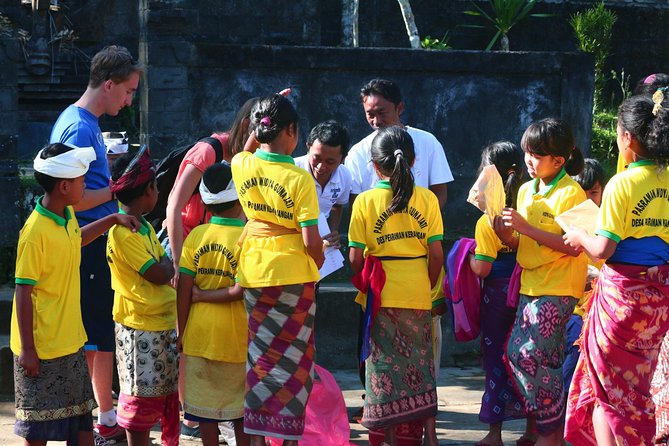
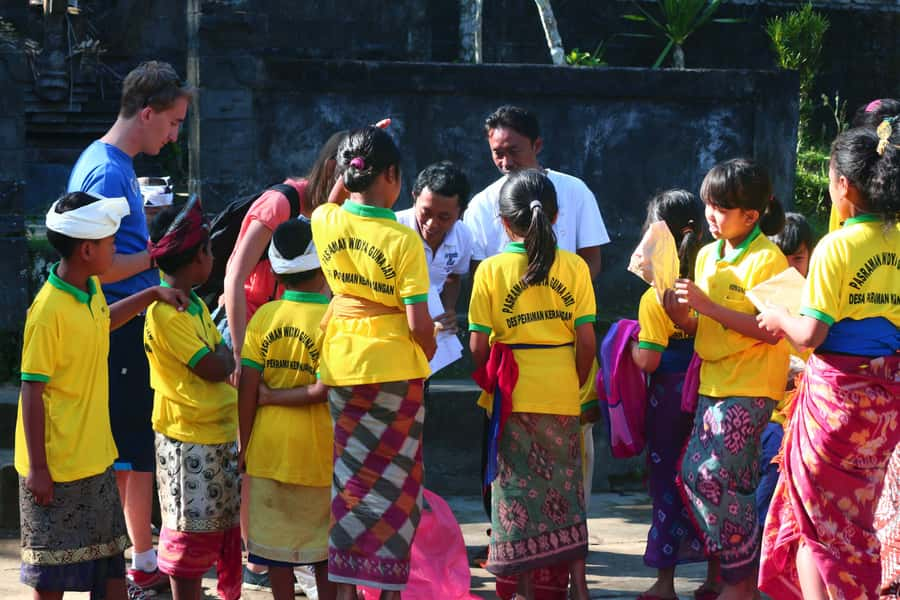
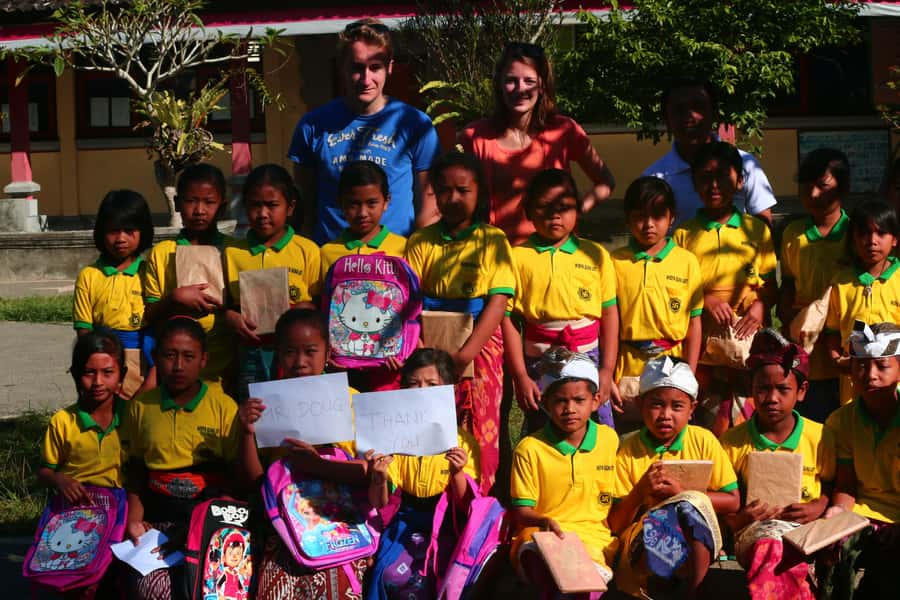
The local school visit is one of the tour’s strongest features. You meet children and see a rural Balinese school rather than a polished attraction designed for sightseeing. The supplier gives part of the tour cost to the school for essential supplies, with donations distributed during the visit.
You can also bring extra items yourself. The most useful advice is to bring supplies in quantities that can be shared fairly. One family suggested around 20 packs of pencils and 20 drawing books, since classes may have about 20 children and teachers try to spread gifts across different groups.
That advice is worth following if you want to contribute. Simple school materials are more practical than random souvenirs, and equal distribution avoids putting teachers in an awkward position. You should not feel obliged to bring anything, though. The built-in donation already gives the stop a useful purpose.
The school visit also adds balance to the day. Bali is often presented through temples, beaches, ceremonies, and hotels. A school visit gives you a look at an ordinary institution and a more grounded view of village life.
Coffee, tea, and the plantation stop
The organic plantation visit comes early in the route and includes several coffee and tea tastings. You may sample different drinks, including luwak coffee, along with locally grown products.
This is both a tasting stop and a shopping opportunity. One rider admitted to buying homemade coffee, tea, and chocolate after sampling them. You should expect that the plantation has a shop, so bring cash only if you are interested in buying something. Purchases are not included in the $45 price.
The tasting can be fun, but it is not the main reason to book the tour. If you do not care for coffee, the stop may feel less important than the school or family-compound visit. Still, it adds a useful link between agriculture and the products visitors see in Bali shops.
The luwak portion deserves a thoughtful approach. The tour information confirms the tasting and a look at the animals connected with luwak coffee, but it does not give details about the plantation’s animal welfare practices. If that matters to you, ask questions before buying a product.
Same roads, a different day in the saddle:
- Ubud: Rice Terraces & Villages Half-Day Fat Tire E-Bike Tour
★ 4.9 · 602 reviews - Ubud: Downhill Cycling with Volcano, Rice Terraces and Meal
★ 5.0 · 536 reviews - Ubud eBikes Tour to Tegallalang Rice Terrace
★ 5.0 · 507 reviews - Half-Day Ubud Electric Cycling Tour to Tirta Empul Water Temple
★ 5.0 · 315 reviews
The downhill ride from Kintamani toward Ubud
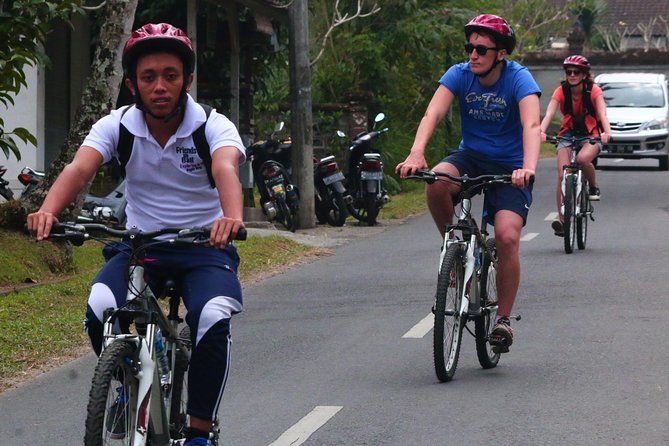
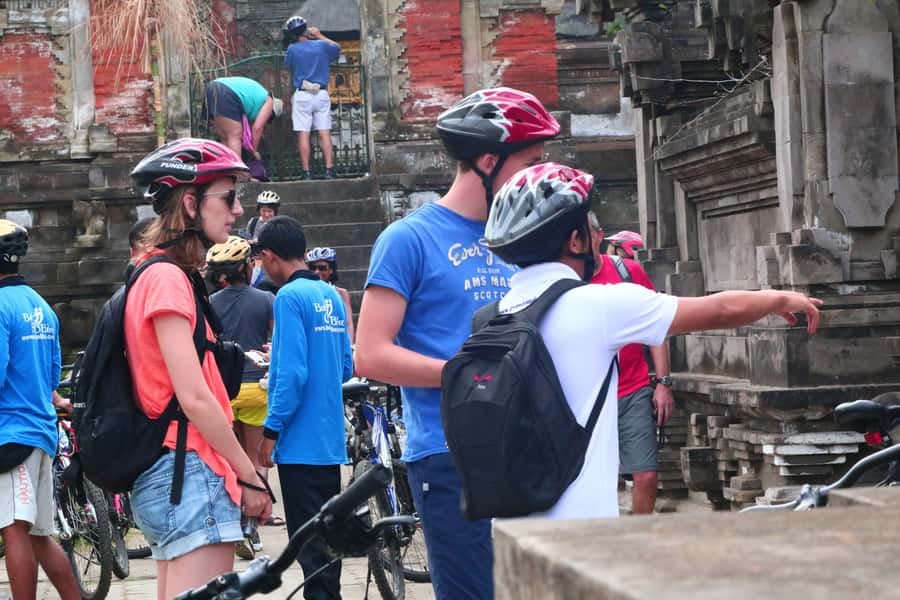
After the opening stops, you begin the main cycling section. The ride from Kintamani toward Ubud takes about three and a half hours and passes through villages, farms, and rice-growing areas.
The word downhill is accurate, but do not read it as effortless. Most of the route slopes down, and many average riders find it manageable. One older couple completed about 27 kilometres without trouble, while another rider simply walked the bike up one steep section. There are also a few smaller uphill stretches.
The tour is best for someone with a reasonable level of fitness who can remain comfortable on a bicycle for several hours. You do not need to be a serious cyclist, but you should be able to manage a long ride, braking, turning, and occasional climbs. Wear sports clothing, comfortable closed-toe shoes, and layers. The high starting point can feel cooler than the lower villages.
The road setting is important. Much of the riding takes place on village and public roads rather than directly through the middle of rice paddies. One participant expected more paths inside the fields and found more road riding than anticipated. The roads were described as fairly quiet, but traffic remains a consideration. Your guide helps manage the route, yet you should ride attentively.
This is not a technical mountain-bike route. Its appeal comes from the change in scenery and the steady movement through rural communities. You may pass farms, homes, and rice fields while your guide explains Balinese customs and everyday realities. The pace can also be adjusted. Dika, for example, slowed down for riders who were not regular cyclists.
Rice fields, farms, and the value of stopping
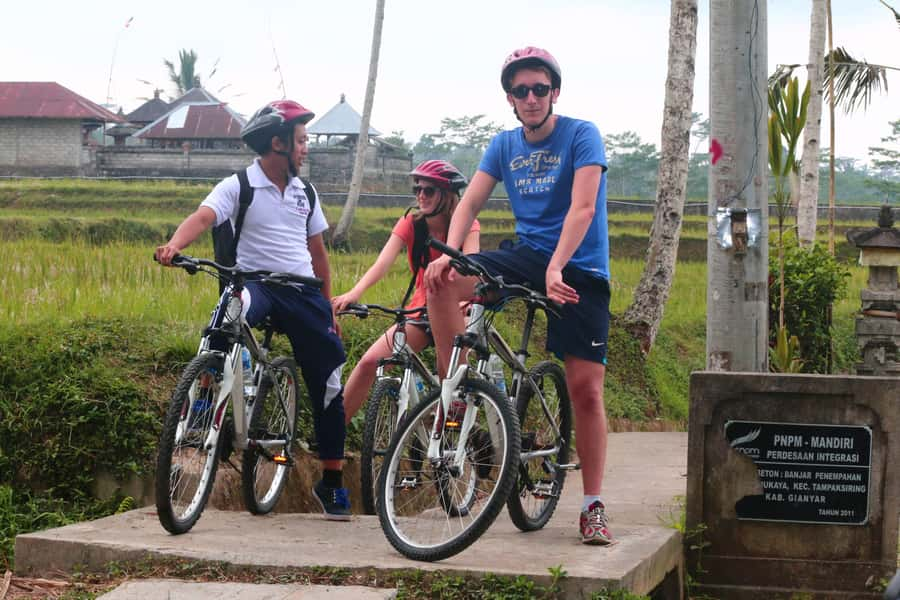
A short walk through the rice fields lets your guide explain rice planting culture. This pause is more useful than simply stopping for photographs. Rice farming affects work, family routines, village cooperation, and the appearance of the countryside.
The cycling route also moves through local farms and village areas. You get a view of Bali that is quieter and less polished than the major tourist centers. That is the part I find most appealing. The ride gives you time to notice how homes, farms, roads, and religious life fit together.
Do not expect every minute to be scenic. Some stretches are simply road connections between better stops. That is normal for a route linking Kintamani with Ubud. The payoff comes from the whole sequence: high volcanic views, coffee plants, village roads, rice fields, and the final meal.
Coffee with a priest in a family compound
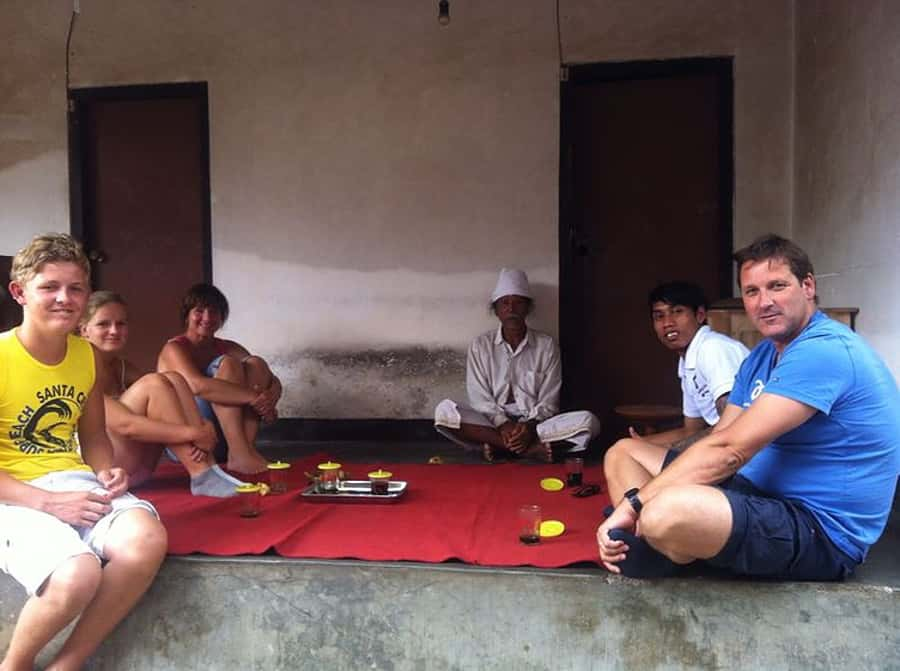
The visit to a local family compound is the most personal stop. You enter a working family space and meet a local priest. In one account, the spiritual figure was an 85-year-old man who welcomed the group with coffee and homemade snacks.
Conversation takes place with your guide translating. You can ask about family structure, rural life, and local traditions, rather than receiving only a memorized speech. That makes the stop feel more like a human meeting than a staged cultural display.
You should still remember that this is a hosted visit. Be polite with photography, follow your guide’s instructions, and dress respectfully. The tour description does not specify a formal dress code, but layered, comfortable clothing and covered shoes are required for the cycling portion anyway.
This stop may be especially rewarding if you want to understand how Balinese life works inside the home, not only at temples. The conversation is likely to vary with the guide, the family, and your questions. Guides such as Nyomah and Agus have been praised for explaining culture clearly and looking after small details.
Lunch at Padi Organic in Laplapan
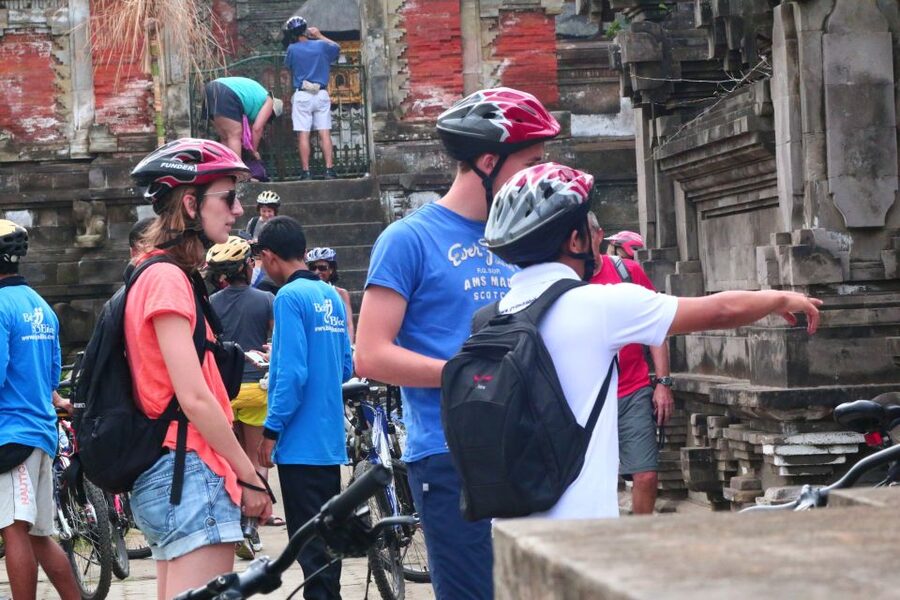
The ride finishes near the village of Laplapan at Padi Organic restaurant, surrounded by rice paddies. Balinese lunch is included, and it gives you time to rest after the ride.
Food received some of the strongest praise. Breakfast and lunch were both described as delicious, with chicken satay specifically remembered by one rider. The setting adds to the meal, especially after several hours on the road.
Lunch is also a sensible part of the schedule. You finish cycling before eating rather than trying to ride hard after a large meal. Mineral water is included during the tour, but you should still bring cash for personal purchases, drinks not covered by the package, souvenirs, and gratuity.
Who will enjoy this cycling day
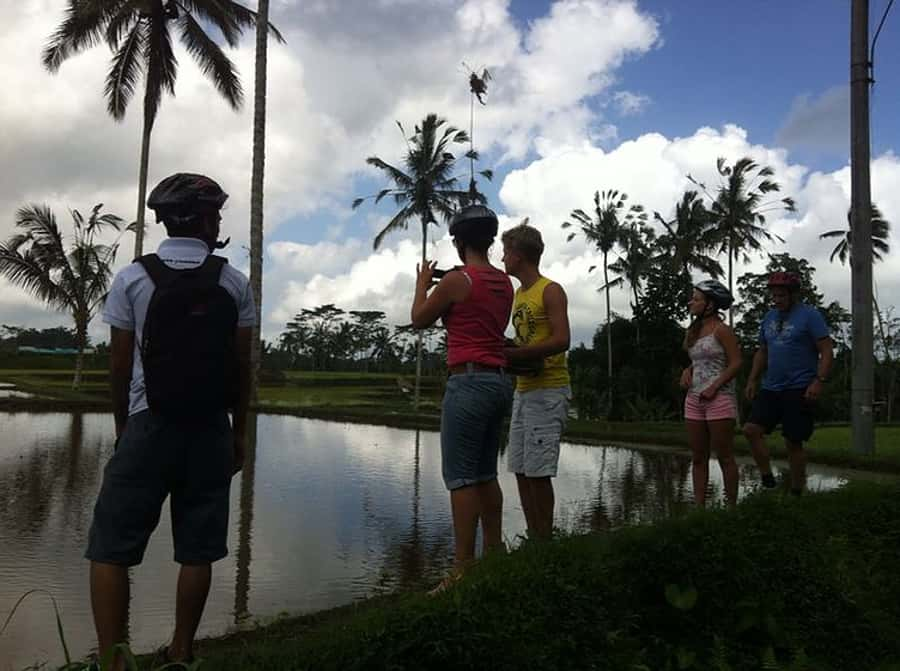
I would recommend this tour to you if you want a slower, more personal look at Bali and are comfortable spending much of a day outdoors. It suits:
- Average cyclists who can manage several hours in the saddle
- Couples, families, and small groups interested in village life
- People who want cultural conversation, not only scenery
- Riders who prefer a mostly downhill route
- Anyone seeking good value through included transport, meals, equipment, and guiding
It may not suit you if you are pregnant, use a wheelchair, dislike riding on public roads, or want a ride entirely inside rice fields. It also may disappoint you if the Mount Batur breakfast view is your main goal and you have not confirmed that part in advance.
The tour is not designed as a private, slow photography outing by default, although a small group or private departure can give you more freedom. One solo rider had time to stop for photographs without feeling rushed, but your pace will depend on the group.
Practical advice before you book
Wear layered clothing for the cool Kintamani start, then prepare for warmer conditions lower down. Closed-toe walking shoes are required, and sportswear will make the cycling much more comfortable.
Bring sunscreen, cash, and any school supplies you wish to donate. Alcoholic drinks, personal purchases, and gratuity are not included. Cancellation is free up to 24 hours before the tour, and you can reserve now and pay later, which helps if your Bali schedule is still changing.
Pickup begins about 30 minutes before the advised time, so do not plan a tight morning appointment. The day lasts eight hours, and the return transfer to your hotel is included.
Should you book the Bali Downhill Cultural Cycling Tour?
Book it if you want Bali beyond beaches, shopping streets, and temple photographs. The best parts are the school donation, the family-compound conversation, the careful guides, and the chance to ride through ordinary villages at a human pace.
At $45, the package offers unusually good value for a full day with transport, food, equipment, cultural visits, and insurance. Just understand the route correctly: it is mostly downhill, not entirely downhill; it uses roads, not only rice-field tracks; and the Lake Batur breakfast view should be confirmed.
For an easygoing rider with curiosity about Balinese life, this is one of the stronger ways to spend a day near Ubud.
FAQ
How long does the Bali Downhill Cultural Cycling Tour last?
The tour lasts approximately eight hours, including hotel transfers, cultural stops, cycling, and meals.
How much does the tour cost?
The listed price is $45 per person.
Where does the cycling begin and end?
Cycling begins in the Kintamani volcano area and finishes near Laplapan, close to Ubud.
Is the cycling route entirely downhill?
No. The route is mostly downhill, but it includes a few uphill sections. One steep section may be easier to walk for some riders.
How long is the cycling portion?
The cycling section takes approximately three and a half hours and covers about 27 kilometres according to one detailed account.
Is hotel pickup included?
Yes. Hotel pickup and return transfers are included. Pickup generally begins about 30 minutes before the advised pickup time.
What meals are included?
A light breakfast and Balinese lunch are included. The planned breakfast is described as taking place with views of Mount Batur and Lake Batur, though you should confirm this before departure.
Can I visit a local school?
Yes. The tour includes a visit to a local school, and part of the cost supports school supplies. You may also bring extra items such as pencils or drawing books.
What languages does the guide speak?
Guides are available in English and Indonesian.
What should I bring?
Bring cash, sunscreen, sportswear, layered clothing, and comfortable closed-toe walking shoes. Personal expenses, souvenirs, and alcoholic drinks are not included.
Just added around Indonesia
- Scenic Cycling Tours Through Bali’s Sidemen Countryside★ 5.0 · 12 reviews
- Mount Batur: Black Lava Cycling Tour w/ Natural Hot Spring★ 3.8 · 63 reviews
- Mount Batur: Sunrise Dirt Bike Trek with Trained Riders★ 4.6 · 15 reviews
- Kuta: Kintamani Culture and Nature Guided Cycling Tour★ 5.0 · 14 reviews
- Jatiluwih (UNESCO Site) 2-Hour E-Bike Cycling Tour★ 4.3 · 49 reviews
- Bali: Jatiluwih Rice Terraces 1 Hour Electric Bike Tour★ 4.7 · 41 reviews
- E-Bike: Ubud Rice Terraces & Traditional Villages Cycling★ 4.6 · 37 reviews
- Jogja Hidden Gems – Cycling Tour★ 5.0 · 12 reviews
Indonesia Cycling Tours, compared.
Electric Cycling Tour of Ubud with Free Hotel Transfer and Lunch
Read our review →
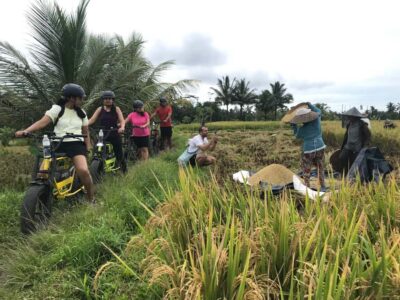
Rice Terraces & Villages Half-Day Fat Tire E-Bike Tour
Read our review →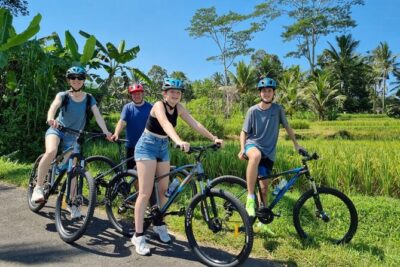
Downhill Cycling with Volcano, Rice Terraces and Meal
Read our review →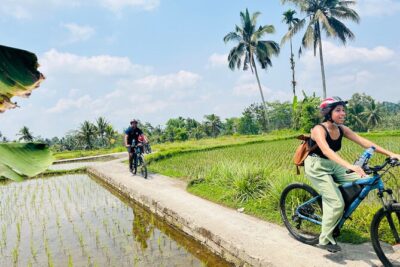
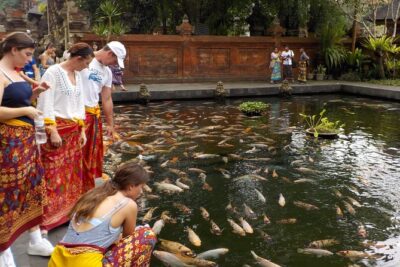
Half-Day Ubud Electric Cycling Tour to Tirta Empul Water Temple
Read our review →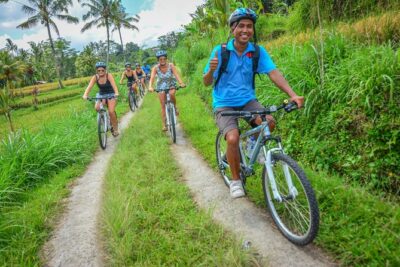
Browse the lists this tour appears in