
REVIEW · INDONESIA
Bali: Kintamani Downhill Bike Tour, Jungle and Waterfalls
Trade traffic for temples and bamboo. This Kintamani downhill cycling tour gives you a gentle way to see rural Bali, with Mount Batur views, village roads, rice terraces, and cultural stops along the route. I especially like the visit to a real family compound and the chance to finish with a Balinese lunch in Taro. The main consideration is simple: you must already feel comfortable riding a bicycle, and bike gloves are not provided.
I also like the strong value at $33 per person, since the price includes Ubud-area pickup, a mountain bike, helmet, guide, coconut water, lunch, and entrance to Kintamani. The ride is designed for most fitness levels because it heads downhill, but the route still requires you to pedal, steer, and stay alert.
Key things to know before you book
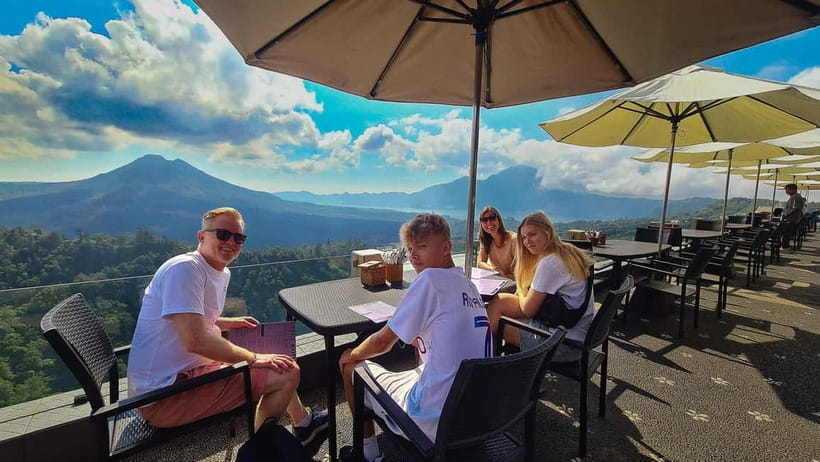
- Mount Batur starts the day: You get a highland view of the volcano, black lava fields, and crater lake before cycling begins.
- The ride is about village life: Expect bamboo forests, coffee plantations, rice fields, temples, and quiet rural roads rather than a fast sporting workout.
- The family compound is a real highlight: You see traditional Balinese architecture and learn how daily rituals shape village homes.
- Lunch is part of the experience: A fresh coconut and Balinese meal in Taro make a satisfying finish.
- Pickup is easiest from Ubud: Hotel transfers in the Ubud area are included, while transport from other parts of Bali costs extra.
- Afternoon trips may include fireflies: This optional add-on offers a twilight finish, but it is not part of every departure.
Starting above Bali at Kintamani and Mount Batur
Your day begins with pickup from your Ubud-area hotel or a designated meeting point. That included transfer matters in Bali, where getting between inland villages can take more effort than the map suggests. If you are staying outside Ubud, pickup and drop-off can be arranged for an added cost, so check the price before booking.
The drive takes you into the Kintamani highlands, where the air and scenery change from Ubud’s busy streets. The main view is Mount Batur, with its black lava fields and crater lake. A stop at a local restaurant is optional, but I would make time for it if the view is clear. This is the best point in the day for wide photographs before the route narrows into village roads.
The Kintamani entrance ticket is included. You should still think of this first stop as a scenic introduction, not the main event. The tour’s real strength comes later, when you move slowly through villages and meet the people who live there.
More Mountain Bike Tours in Indonesia:
- From Ubud: Downhill Bike Tour with Rice Terraces and Meal
★ 4.9 · 664 reviews - Waimea Canyon Downhill Bike Ride
★ 5.0 · 650 reviews - La Paz: Mountain Bike Down the World’s Most Dangerous Road
★ 4.9 · 386 reviews
A downhill ride through bamboo and coffee country
After a short safety briefing, you receive a mountain bike and helmet. The bicycles are described as well maintained, and the route is mainly downhill, making the outing accessible to most people who can ride a bicycle.
That said, downhill does not mean effortless. You still need to control your speed, steer around turns, and stay aware of the road. If you have not ridden for years, this may not be the right place to rebuild your confidence. You should be comfortable on a bicycle before you reserve a place.
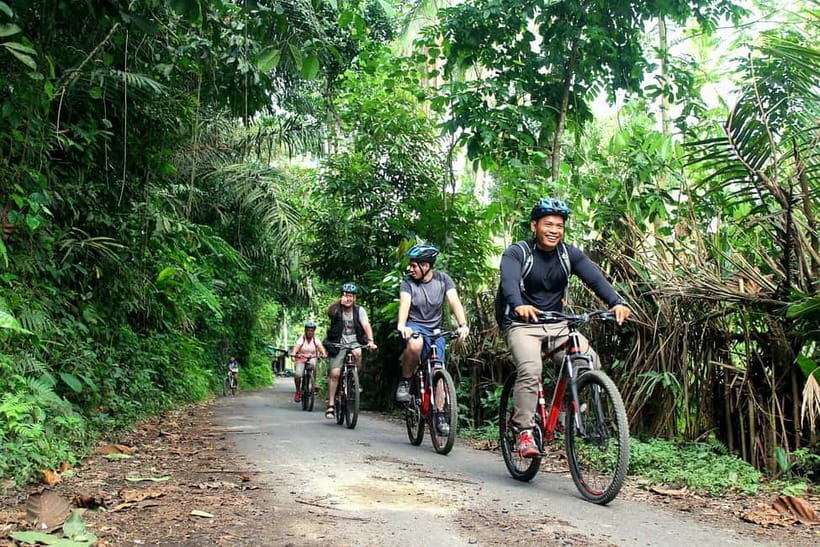
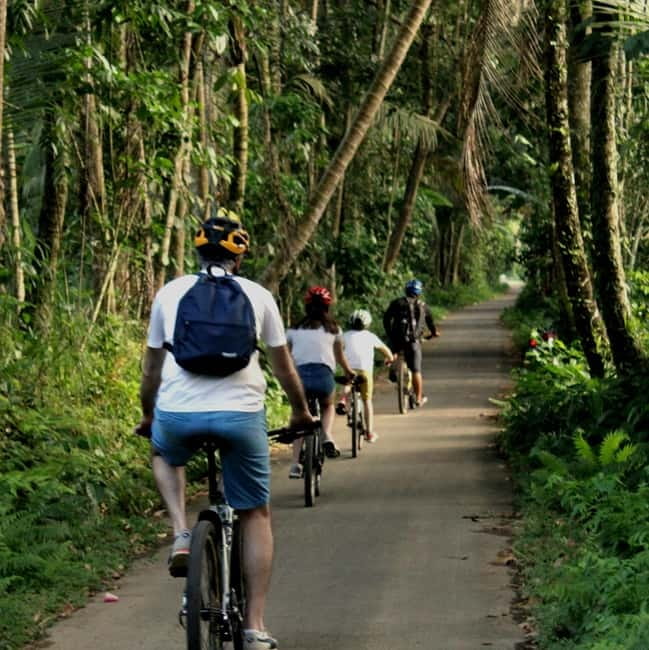
The route leads through coffee plantations, bamboo forest, jungle paths, rice terraces, and Balinese villages. I like this mix because the scenery keeps changing without turning the ride into a race. One moment you are surrounded by tall green bamboo, and the next you are passing fields, temples, or homes.
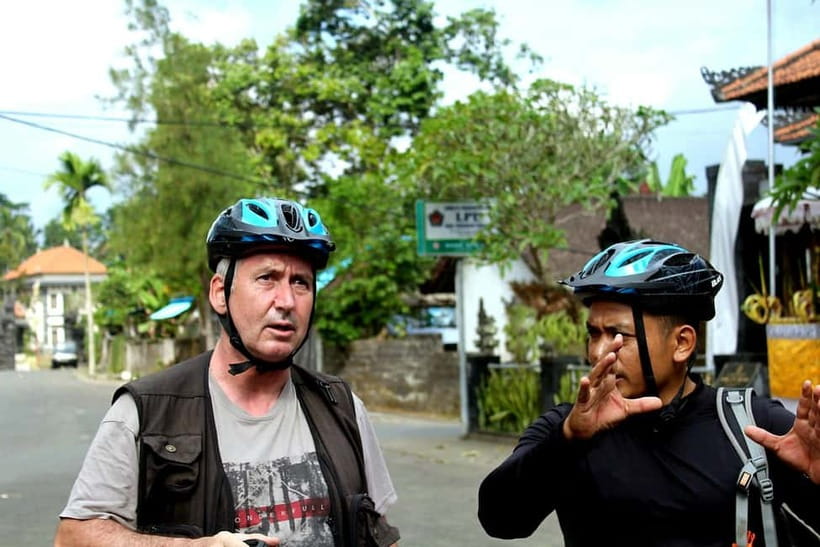
The guide rides with you and explains the customs, Hindu beliefs, and village life connected to the places you pass. That turns the ride into more than a scenic transfer. A temple or family compound can look like a quick photo stop if nobody explains it. Here, the cultural context gives those details a clear place in everyday life.
You should not expect a technical mountain-bike course or a high-speed cycling challenge. This is best understood as a relaxed countryside ride with frequent stops. The pace allows you to look around, ask questions, and take photographs.
Coffee, herbal tea, and the working countryside
The coffee plantation stop adds a pleasant break early in the ride. You can taste several local coffees and herbal teas and learn how Balinese coffee is prepared. This is a practical stop for people who enjoy food and drink as part of a cultural outing, not just as fuel between activities.
The plantation also helps you see how rural Bali uses the land. Coffee grows alongside the other crops and plants you pass during the day. You may find the tasting session more interesting if you ask the guide how the drink fits into local routines and hospitality.
There is one small point to keep in mind. Coffee tastings at tourist stops can vary in style, and the experience is not the same as visiting a large working farm. Still, it fits the route well and gives you time to rest before continuing through the countryside.
Fresh coconut water is included as well. In a warm climate, that simple drink is useful, especially after riding through open rice fields. It is a small inclusion, but a welcome one.
Sacred white cows and Balinese Hindu customs
One unusual stop is a conservation area for holy white cows. These animals have a role in Balinese Hindu rituals, so the visit connects the rural setting to religious practice.
This stop is valuable because it is easy to reduce Bali’s religious life to temple gates and stone carvings. The sacred cows offer a different view of belief, one tied to animals, ceremonies, and the responsibilities of the local community.
Your guide can explain the meaning behind the stop and answer questions about Hindu customs. Guide quality matters here. Several guides have been praised for being warm, careful, and clear in English. Komang Oyik, Tonic, Made, and a guide named Made are among the guides specifically praised for making the day both educational and enjoyable. Names can vary by departure, but the experience depends heavily on the person leading your group.
A few more days on two wheels around Indonesia worth a look
- Electric Cycling Tour of Ubud with Free Hotel Transfer and Lunch
★ 5.0 · 1,397 reviews - Menoreh Village Cycling
★ 5.0 · 611 reviews - Ubud: Rice Terraces & Villages Half-Day Fat Tire E-Bike Tour
★ 4.9 · 602 reviews - Ubud: Downhill Cycling with Volcano, Rice Terraces and Meal
★ 5.0 · 536 reviews
Inside a traditional Balinese family compound
For me, the family compound is the most useful cultural stop. You visit a local home and see how traditional Balinese architecture organizes domestic life. This is more revealing than simply photographing a house from the road.
The guide explains the layout, architecture, and daily rituals. You get a sense of how family life, prayer, and household space connect. The stop also gives you a chance to ask questions that might not come up during a standard temple visit.
Because this is a visit to a private family home, you should approach it with respect. Listen to the guide, follow local instructions, and ask before taking photographs. The point is not to treat the compound like a museum. It is a living home connected to a village community.
This stop also helps explain why a guide from the area can make such a difference. Made, one of the guides praised for this experience, comes from the community where the ride takes place and is involved in local tourism. A guide with that connection can explain traditions in a more personal way than a generic sightseeing script.
Taro Village, rice fields, and a proper Balinese lunch
The ride ends in Taro, described as one of Bali’s oldest settlements. Here, the focus shifts from movement to food and scenery. You have lunch in a natural setting with rice fields and jungle views, and a fresh coconut is included.
I would not treat lunch as an afterthought. A good meal at the end of a bike ride sets the tone for the whole day. The food is described as a well-prepared traditional Indonesian and Balinese meal, served in a peaceful setting rather than in a busy town.
The location is part of the appeal. After passing through villages and plantations, sitting down among rice fields gives you time to take in what you have seen. You can ask your guide more questions, cool down, and enjoy a slower final hour.
The meal is not designed as fine dining, and you should book this for local food and setting rather than a formal restaurant experience. The value comes from the combination of lunch, scenery, and the way it completes the route.
The optional firefly finish
If you choose an afternoon departure, you may be able to add a firefly experience at twilight. The fireflies appear as darkness arrives, creating a quiet end to the day.
This add-on is best for people who want a slower, more atmospheric finish after the cycling and cultural stops. It is not a core part of every tour, so you should confirm availability and any extra cost when booking.
The firefly option also changes the shape of the day. You will finish later than morning participants, so consider that if you have dinner plans or another activity scheduled. For many people, though, the chance to end in the countryside rather than return straight to Ubud is appealing.
What the $33 price really includes
At $33, this is a strong-value experience if you are staying in Ubud. The included parts are substantial:
- Ubud-area pickup and drop-off
- Kintamani entrance ticket
- Mountain bike and helmet
- Local English or Indonesian-speaking guide
- Coffee and herbal tea tasting
- Coconut water
- Balinese lunch
- Visit to a family compound
- Cultural explanations
The price combines transport, equipment, food, and several stops that would be difficult to arrange independently in one day. You also avoid the problem of finding a safe route through unfamiliar villages.
The price is less attractive if you are staying far from Ubud and must pay extra for transport. A pickup from another part of Bali can be arranged, but you should compare the added charge with the cost of reaching Ubud yourself.
Group size is not specified, so do not assume you will receive a private tour. One particularly unusual experience involved a one-person departure, with the operator still running the trip. That suggests some flexibility, but it does not guarantee a private ride.
Practical advice for a comfortable ride
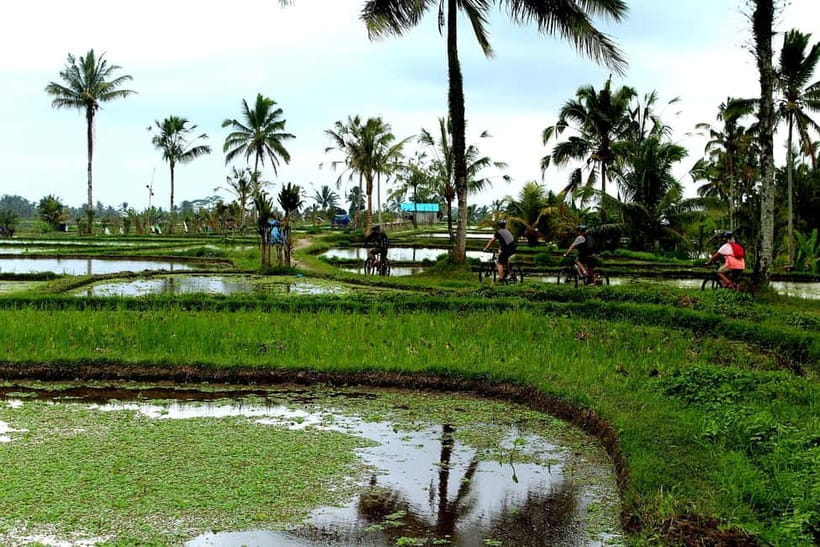
Wear comfortable clothes that allow easy movement. Sunscreen and insect repellent are useful because the route passes through open fields, forested areas, and village roads. Bring a camera if you want photographs of Mount Batur, the rice fields, and the family compound.
The available information does not say that gloves are provided. One rider found that some bike grips became uncomfortable after a while and suggested bringing or supplying bike gloves. I would pack a lightweight pair if you have them.
You should also expect changing surfaces and scenery, though the tour is described as suitable for most fitness levels. The key requirement is not athletic ability. It is basic bicycle confidence.
Weapons, sharp objects, alcohol, and drugs are not allowed. The tour is offered in English and Indonesian, and the guide is central to understanding the cultural stops.
Cancellation is flexible up to 24 hours before departure for a full refund, and you can reserve now and pay later. Those terms are useful if your Bali plans are still shifting.
Who should book this Kintamani cycling tour?
I would recommend it to you if you want to get out of Ubud for a day and see Bali at a human pace. It suits couples, families with bicycle-riding members, and solo visitors who prefer a guide and an organized route.
It is particularly good for you if cultural contact matters as much as scenery. The family compound, artisan work, sacred cows, coffee stop, and village explanations give the day more substance than a simple downhill ride.
You should look elsewhere if you want a hard cycling workout, a technical mountain-bike course, or a precise sports-focused itinerary. You should also skip it if you cannot ride a bicycle. The downhill format makes the outing easier, but it does not remove the need for balance and control.
Should you book it?
Book this tour if you want a good-value blend of Mount Batur scenery, easy countryside cycling, and village culture. The strongest parts are the local guide, family compound, changing rural scenery, and lunch in Taro.
I would book it from Ubud, bring sunscreen and bike gloves, and choose the afternoon option only if the firefly add-on is confirmed. For a modest price, you get a fuller picture of inland Bali than you would from a quick temple visit or a standard sightseeing drive.
FAQ
Where does the Kintamani downhill bike tour take place?
The tour begins in Kintamani and finishes in Taro Village, Bali. The route passes through bamboo forests, coffee plantations, rice fields, and Balinese villages.
Is hotel pickup included?
Pickup and drop-off are included for hotels in the Ubud area or from a designated meeting point. Transport from other parts of Bali can be arranged for an additional cost.
Is Mount Batur included in the tour?
Yes. The experience includes a visit to Kintamani, where you can see Mount Batur, its black lava fields, and the crater lake. An optional restaurant stop is available for views and photographs.
Do I need to be very fit?
The tour is downhill and described as suitable for most fitness levels. You must still be comfortable riding a bicycle and controlling it during the route.
Is a bicycle provided?
Yes. A maintained mountain bike and helmet are included.
What food is included?
The tour includes a Balinese lunch and fresh coconut water. Coffee and herbal tea tasting is also included at a coffee plantation.
Will I visit a Balinese family home?
Yes. The route includes a visit to a local family compound, where you can learn about traditional architecture, household layout, and daily rituals.
Is the tour available in English?
Yes. The tour is offered in English and Indonesian.
Can I see fireflies?
An optional firefly experience may be available for afternoon tours. You should confirm the availability and details when booking.
What happens if I need to cancel?
You can cancel up to 24 hours in advance for a full refund. The reserve-now, pay-later option also helps keep your plans flexible.
Just added around Indonesia
- Scenic Cycling Tours Through Bali’s Sidemen Countryside★ 5.0 · 12 reviews
- Mount Batur: Black Lava Cycling Tour w/ Natural Hot Spring★ 3.8 · 63 reviews
- Mount Batur: Sunrise Dirt Bike Trek with Trained Riders★ 4.6 · 15 reviews
- Kuta: Kintamani Culture and Nature Guided Cycling Tour★ 5.0 · 14 reviews
- Jatiluwih (UNESCO Site) 2-Hour E-Bike Cycling Tour★ 4.3 · 49 reviews
- Bali: Jatiluwih Rice Terraces 1 Hour Electric Bike Tour★ 4.7 · 41 reviews
- E-Bike: Ubud Rice Terraces & Traditional Villages Cycling★ 4.6 · 37 reviews
- Jogja Hidden Gems – Cycling Tour★ 5.0 · 12 reviews
Mountain Bike Tours, compared.

La Paz: Mountain Bike Down the World’s Most Dangerous Road
Read our review →
Chiang mai Hike & Downhill Bike Adventure –Suthep National Park
Read our review →
Guided Mountain Bike Tour of Mustang Trail in Red Rock Canyon
Read our review →
3 Hour Sonoran Desert Private Guided Mountain Bike Tour
Read our review →
Suthep National Park Hiking & DH Mountain Biking
Read our review →
Browse the lists this tour appears in