
REVIEW · BERLIN
3-Hour Bike Tour of Tiergarten and Berlin’s Hidden Places
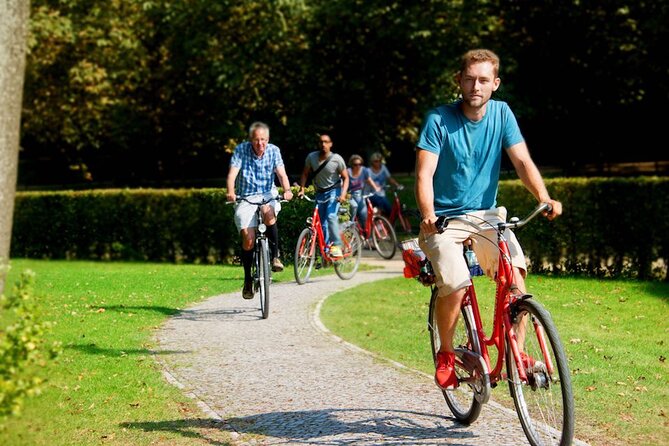
Berlin reveals itself best at bicycle speed. This three-hour ride links Tiergarten’s leafy paths with old quarters, rebuilt churches, unusual monuments, and lively city streets. I like the mix of major history and odd local stories, especially the stops at Nikolaiviertel, the Barenzwinger, and the Global Stone Project.
I also like the small group size, with no more than 15 people, and the included cruiser bike and helmet. The main consideration is language: this tour is offered only in German, and three hours is a long stretch without a planned food or drink stop.
Key points at a glance
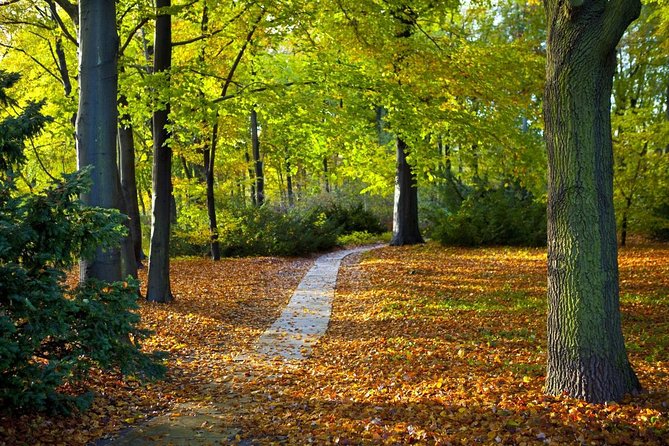
- Tiergarten without the tour-bus view: Quiet garden paths and bike lanes make Berlin’s central park a calm start to the city.
- A wide historical sweep: You move from medieval Berlin and wartime destruction to postwar housing and present-day urban renewal.
- Unusual stops matter here: The bear enclosure, 3D city models, abandoned monastery church, and Global Stone Project give the ride its local character.
- A real guide-led experience: A professional guide provides the stories, with David praised for his Berlin humor and strong subject knowledge.
- Good value at $45.10: The price includes the bike, helmet, guide, and three hours of sightseeing without extra admission charges.
- Plan for the language and weather: The tour runs in all weather, and an English version requires choosing a private tour.
Why Berlin works so well by bicycle
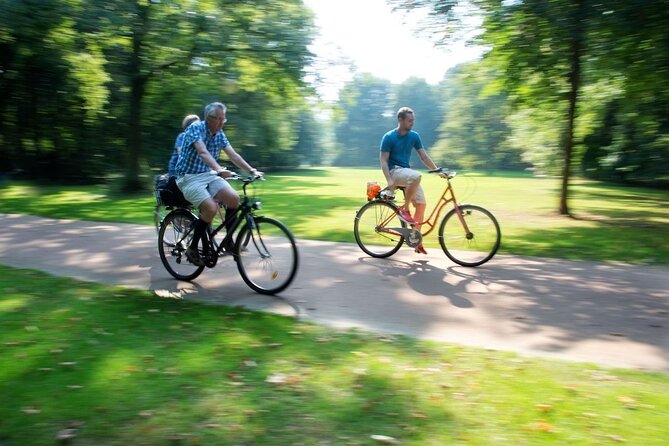
Berlin is spread out, and its important places do not sit neatly around one square. On foot, you can spend much of the day covering ground between districts. From a bus window, you miss the small courtyards, quiet paths, and sudden changes between old and new.
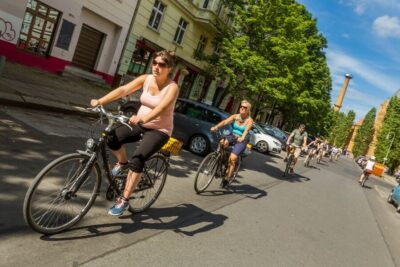
A bicycle solves much of that problem. You can cross Tiergarten on garden paths, use bike lanes, and move along quieter side streets. The pace is gentle rather than athletic, so you have time to listen and look around.
This is not a museum-heavy tour. You will not spend long inside buildings, and the stops are mainly outdoor visits with short explanations. That makes the ride useful early in a Berlin stay, when you want a broad sense of how the city fits together.
The route also avoids a single narrow version of Berlin. You see royal and medieval traces, wartime loss, postwar rebuilding, experimental housing, Jewish quarter history, nightlife, art, and current city planning. The city’s story comes through as a series of changes rather than a polished old-town display.
A few more days on two wheels around Berlin worth a look
- Berlin Highlights 3-Hour Bike Tour
★ 5.0 · 948 reviews - Berlin Highlights: 3-Hour Bike Tour
★ 4.9 · 809 reviews - Berlin: 3-hour bike tour – A journey through time in the capital
★ 4.8 · 24 reviews
Starting at Poststraße 11
The tour begins and ends at Free Berlin Bike Tours, at Poststraße 11 in the 10178 area. This puts you near central Berlin and close to public transportation, which makes the meeting point practical for a morning or afternoon outing.
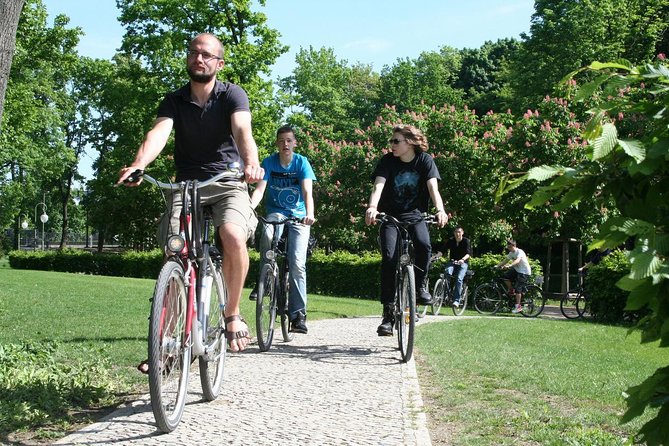
You receive a bicycle and helmet, then spend about 15 minutes at the departure point. The included urban cruiser is intended for a relaxed city ride, not speed or sport. You should arrive ready to adjust your pace to the group and follow the guide through bike lanes, paths, and side streets.
The group size ranges from five to 15 people. That is small enough for a more personal feel than a large city coach tour, while still large enough to create a social outing. The guide is an important part of the experience because many stops are interesting mainly for the story attached to them.
The tour is available in German only. If you need English, select a private tour instead. This point deserves attention before booking, since the route depends on spoken explanations rather than signs or audio equipment.
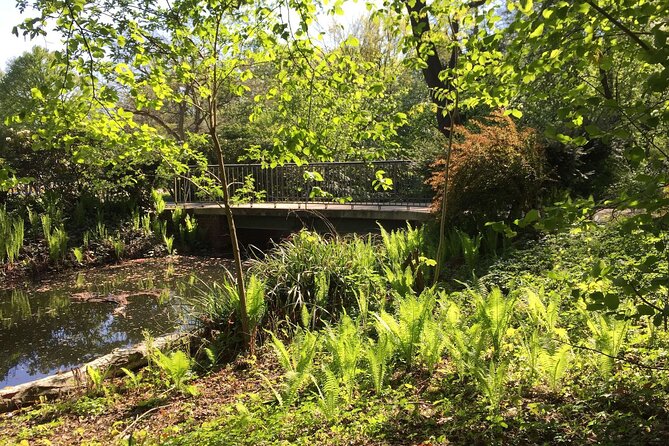
Tiergarten: Berlin’s green center
Tiergarten is the first major stop, with about 30 minutes in Berlin’s central park. The park gives you a break from traffic and a useful introduction to the city’s cycling setup.
You use garden paths and bike routes rather than simply circling famous monuments. That matters because Tiergarten is more than a patch of trees between sights. It is a large open area where Berliners walk, cycle, and take a breath from the city around it.
I like this opening because it eases you into the ride. You are not thrown straight into a dense street crossing. Instead, the guide can explain the route, point out the relationship between the park and central Berlin, and help the group settle into a comfortable rhythm.
You should still dress for the forecast. The tour operates in all weather, and the green setting offers no guarantee of shelter. Comfortable clothing and shoes are more important than looking polished for the city.
Nikolaiviertel and Berlin’s beginnings
The ride then reaches Nikolaiviertel, described as the place where Berlin began. You have around 10 minutes here, enough for a focused explanation and a look at the quarter’s rebuilt appearance.
The area was destroyed and later remodelled during the 1980s. That gives it an unusual character. It presents an old-looking version of Berlin, but much of what you see reflects a later effort to recreate a historic quarter.
That distinction is useful. You can look at Nikolaiviertel as a lesson in how cities decide what the past should look like after destruction. It is quieter than many central areas, and the short stop gives you a chance to take in the setting without turning the tour into a long architectural lecture.
If you want extended time for photographs or a meal, you will need to return on your own. The itinerary keeps moving, and the tour price does not include food or drinks.
Same roads, a different day in the saddle:
- Berlin: Sights and Highlights Bike Tour with a Local Guide
★ 4.8 · 2,698 reviews - Berlin City Bike Tour with Beer Garden Stop
★ 5.0 · 917 reviews - Berlin Highlights Sightseeing Bike Tour in Small Groups
★ 5.0 · 652 reviews - Berlin: The Wall and Third Reich Guided Bike Tour
★ 4.8 · 578 reviews
City models near Märkisches Museum
Near Märkisches Museum, the group pauses for about 15 minutes to look at large 3D models of Berlin. These models help explain the city’s constant renewal, a theme that runs through the whole route.
This is one of the more useful stops for understanding modern Berlin. Instead of only hearing that the city has changed, you can use the models to see how districts, buildings, and development fit together.
The stop also gives the guide a chance to connect old Berlin with the city you see today. The ride is not only about monuments left untouched. It is also about rebuilding, new construction, and the choices that shape the capital.
For anyone curious about urban planning, this may be more rewarding than another famous photo stop. It places Berlin’s past and present side by side in a compact, easy-to-read way.
Bears, churches, and medieval traces
The Barenzwinger Berlin stop lasts about 10 minutes and asks a simple question: what do bears have to do with the name Berlin? It is a brief, memorable piece of local storytelling, and the unusual subject helps break up the more familiar history of churches and reconstruction.
Next comes Parochialkirche, where the guide covers religion, destruction, rebuilding, and designated survivors. The wording points to a complicated story, and the stop is best approached as a lesson in what Berlin preserved, lost, and reconstructed.
The Franziskaner Klosterkirche adds another layer. This abandoned church is a rare reminder of medieval Berlin. Its condition gives you something that a fully restored building cannot: a visible sense of damage, age, and partial survival.
These stops are short, generally 10 minutes each. That keeps the ride moving, but it also means you should listen closely. You will not have a long period to study each site or explore inside. The value lies in the connections the guide makes between each place.
The Global Stone Project and its unusual story
The Global Stone Project receives about 15 minutes. It is described as Berlin’s Stonehenge, with a story involving love and difficulty.
This is exactly the kind of stop that gives the tour its own personality. Berlin has plenty of famous landmarks, but an odd public installation with a curious backstory is often easier to remember. The guide’s explanation turns an unfamiliar object into part of your mental map of the city.
You should not expect a major archaeological site or a long visit. The appeal is the combination of an unusual sight and the story around it. It also gives the group a change of mood after the more serious subjects of destruction, religion, and medieval remains.
Hansaviertel and the 1957 housing experiment
Hansaviertel offers a look at the future of housing from the perspective of 1957. The stop lasts around 15 minutes and shifts the focus from old Berlin to postwar ideas about urban living.
This is a valuable part of the route because Berlin’s twentieth-century story is not only about walls and war. It is also about architecture, planning, and the attempt to design better homes for a changing population.
The 1957 perspective is important. What once looked like the future can now be judged with some distance. You can consider which ideas have aged well and how a planned residential district differs from older quarters such as Nikolaiviertel or Scheunenviertel.
The stop may appeal most to you if you enjoy buildings and city planning. If your main goal is famous landmarks, it may feel less immediate, but it gives the tour more substance than a simple checklist of postcard sights.
Clärchens Ballroom and Berlin’s social side
At Clärchens Ballroom, the group pauses for about 10 minutes. The venue is associated with dancing and is surrounded by what the route describes as a slightly morbid charm.
This stop brings Berlin’s social life into the story. After churches, ruins, models, and housing, a historic dance hall shows another side of the city: entertainment, romance, and the ability of old places to keep functioning as the city changes around them.
The visit is a brief exterior or nearby stop rather than a dedicated evening at the ballroom. You should not expect dancing or a meal to be part of the tour. Still, it makes a good visual and emotional change near the end of the ride.
Scheunenviertel: courtyards, culture, and nightlife
The final major stop is Scheunenviertel, with about 15 minutes devoted to the district. Here the route turns toward courtyard spaces, shopping, restaurants, art, culture, and nightlife.
The area helps show how Berlin’s old urban fabric can support newer uses. A quiet courtyard can sit close to a fashionable shop, a restaurant, a gallery, or a place for an evening out. That mixture is one reason a bicycle route works well: you can cover the district without treating it as a single attraction.
You will get an introduction rather than an extended neighborhood visit. If the area interests you, mark it for a return walk, meal, or evening outing after the tour. The bike tour provides orientation, then leaves you with several possible places to explore at your own speed.
The ride returns to the Poststraße meeting point. That makes the ending simple and leaves you in a central part of Berlin rather than at an isolated drop-off point.
What the $45.10 price really covers
At $45.10 per person, the cost is reasonable for a three-hour guided city experience. You receive the bicycle, helmet, and professional guide, and the route uses free public spaces rather than paid museum admissions.
The strongest value is the amount of ground covered with interpretation. Renting a bicycle on your own might let you see more places, but you would need to plan the route, find safe connections, and research the stories behind the stops. Here, the guide handles that work.
The price does not include food, drinks, hotel pickup, or hotel drop-off. There is also no planned refreshment break. One person specifically found three hours long without a short pause to buy something to eat or drink, while still considering the ride worthwhile.
I would bring water and a small snack before setting off. That is especially sensible if you are not used to spending several hours on a bicycle.
Who will get the most from this ride
I would choose this tour if you want to see Berlin actively but do not want a strenuous cycling excursion. The route is described as leisurely, and the use of quiet paths and bike lanes keeps the emphasis on seeing and listening.
It suits you particularly well if you enjoy:
- Local history that goes beyond headline sights
- Architecture and city planning
- Rebuilt districts and traces of destruction
- Unusual public places and short stories
- A guide-led introduction during your first days in Berlin
Children must be accompanied by an adult. Most people can participate, but you should be comfortable cycling for roughly three hours and riding in changing weather.
The German-language format is the biggest dividing line. If you understand German well enough to follow a spoken city-history tour, the format should work nicely. If not, choose the private English option rather than hoping the sights alone will carry the experience.
Booking, weather, and cancellation details
The tour is often booked about 13 days ahead, so I would reserve early if your dates are fixed. Confirmation usually arrives at booking, although bookings made within two days of departure may take up to 48 hours and remain subject to availability.
You can cancel for a full refund up to 24 hours before the start time. Cancellations or changes inside that window are not refunded or accepted. The tour also needs a minimum number of participants. If that minimum is not reached and the experience is cancelled, you are offered another date or experience, or a full refund.
Because the ride operates in all weather, check the forecast and dress for it. The tour is not a good match if you want a fully indoor activity or a flexible schedule with long stops.
My verdict: book it for stories, not speed
I recommend this bike tour if you want Berlin explained through its lesser-known corners rather than delivered as a list of major monuments. The combination of Tiergarten, medieval remnants, rebuilt quarters, 1957 housing, odd public art, and Scheunenviertel gives you a useful cross-section of the city.
The strongest parts are the route’s variety, the manageable group size, and the guide-led stories. David, in particular, is praised for combining strong subject knowledge with Berlin humor, a rare pairing that can make a long ride feel light.
Skip it if you need English, dislike cycling in uncertain weather, or want a planned meal break. For everyone else, $45.10 buys a practical first look at Berlin, with enough unusual stops to help you decide where to return on foot later.
FAQ
How long does the bike tour last?
The tour lasts approximately three hours.
Where does the tour begin?
It begins at Free Berlin Bike Tours, Poststraße 11, 10178 Berlin, Germany.
Where does the tour end?
The tour ends back at the meeting point.
Is bicycle use included?
Yes. The bicycle is included in the tour price.
Is a helmet included?
Yes. Helmet use is included.
Is the tour offered in English?
No. This tour is available only in German. For English, you should choose a private tour.
What is the maximum group size?
The maximum group size is 15 people. The tour operates with a minimum of five participants.
Does the tour operate in bad weather?
Yes. The tour operates in all weather conditions, so you should dress appropriately.
Are food and drinks included?
No. Food and drinks are not included unless specifically stated. The tour also does not include a planned refreshment stop.
What is the cancellation policy?
You can cancel up to 24 hours before the start time for a full refund. Cancellations or changes made less than 24 hours before the start time are not refunded or accepted.
Just added around Berlin
- Berlin Wall and Cold War Bike Tour in Small Groups★ 5.0 · 114 reviews
- Berlin: Guided Private Bike Tour to Explore the Highlights★ 5.0 · 12 reviews
- Berlin : The best bike tour with a Berlin guide and insider tips★ 5.0 · 14 reviews
- Alternative Berlin Bike Tour – Off the Beaten Tracks in Small Groups★ 5.0 · 99 reviews
- Potsdam Bike Tour with Rail Transport from Berlin★ 4.5 · 81 reviews
- Berlin: Guided Bike tour of the Berlin Wall and Third Reich★ 5.0 · 160 reviews
- Berlin : Guided Private Sightseeing Tours with Funbikes, Teambikes★ 5.0 · 20 reviews
- Small-Group Berlin Wall Bike Tour★ 5.0 · 17 reviews
Berlin Cycling Tours, compared.
Sights and Highlights Bike Tour with a Local Guide
Read our review →
Berlin Highlights Sightseeing Bike Tour in Small Groups
Read our review →
Alternative Bike Tour of Kreuzberg & Friedrichshain
Read our review →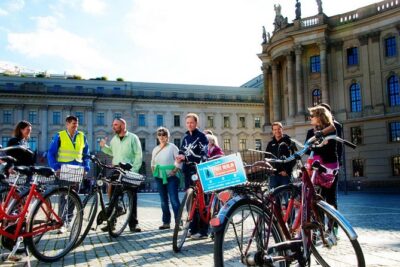
Browse the lists this tour appears in