
REVIEW · BERLIN
Berlin: Guided Bike tour of the Berlin Wall and Third Reich
Berlin’s past is easiest to read on two wheels. This three-hour ride links Berlin Wall sites, Nazi-era landmarks, Jewish memorials, and today’s government district, giving you a useful sense of how the city changed. I especially like the personal stories from local guides and the chance to reach places a walking tour might skip. The bikes, helmets, and rear baskets also make the outing easy to manage.
I also like the tour’s small maximum of 15 people and its family-friendly setup. Guides such as Paul, a native of West Berlin, and Simon, Theo, Juliette, Simone, and Constantine have each brought their own style and historical focus. The main caution is that the Free Berlin format lets guides design their own routes, so you may not visit every stop listed in the advertised program.
The riding is generally gentle because Berlin is flat, but traffic can feel daunting on main roads. If you want to spend serious time at the Berlin Wall Memorial, the Holocaust Memorial, or Checkpoint Charlie, treat this as an introduction and return to those places later.
Key points to know before you ride
- The route links several eras: You may cover the Berlin Wall, the Third Reich, Holocaust remembrance, Prussian military history, and modern Germany in one outing.
- The route can change: Guides use the Free Berlin concept, so each guide designs a route around the theme rather than following every listed stop.
- The pace is manageable: One family rode about 13 kilometers with many breaks, while other riders found the three-hour trip easy on Berlin’s mostly flat streets.
- Local voices add meaning: Guides including Paul, a West Berlin native, have added personal context about life before and after reunification.
- You ride prepared: A city bike, helmet, and basket carriage for belongings are included. Infant seats can be requested.
- English access has one limit: Checkpoint Charlie is specifically included only on the English version of the tour.
What this Berlin bike tour actually offers
At $42.34 per person, this is a good-value way to cover a lot of ground in three hours. You are not paying for admission to museums or monuments. Instead, you are paying for the bike, the guide, the route planning, and the ability to connect sites spread across central Berlin without spending the day on foot.
That value depends on your expectations. This is not a long stop-by-stop study tour. Most locations receive about five to ten minutes, enough for an explanation, a few questions, and a look around. I would use the ride to understand Berlin’s geography and choose which sites deserve a separate visit.
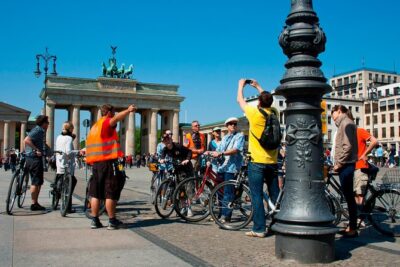
The experience begins at Free Berlin Bike Tours & Rental on Poststraße 11 in central Berlin. It ends back at the same place, near public transport. The group size ranges from four to 15 people, which is small enough for a guide to keep an eye on the group but large enough that red lights and city traffic can slow everyone down.
More Guided Rides in Berlin:
- Berlin: Sights and Highlights Bike Tour with a Local Guide
★ 4.8 · 2,698 reviews - Berlin: The Wall and Third Reich Guided Bike Tour
★ 4.8 · 578 reviews - Berlin: Guided Bike Tour to Explore the Highlights
★ 4.8 · 506 reviews
Nikolaiviertel and Berlin’s complicated old town
Nikolaiviertel is a smart starting point because it raises a basic question: how much of old Berlin is truly old? The area is presented as Berlin’s only real old town, but wartime bombing and later rebuilding make the answer less simple than the charming streets suggest.
You get about ten minutes here. That short stop sets up an important idea for the rest of the ride: Berlin often looks historic, but its buildings and streets may reflect reconstruction, political decisions, or careful preservation rather than an unbroken past.
This is not a stop where you will have time for a long wander. Instead, listen for the guide’s explanation of what survived, what was rebuilt, and why the old center looks the way it does today.
The New Synagogue and a story of civil courage
The stop at Stiftung Neue Synagoge Berlin, also called Centrum Judaicum, is brief, usually around five minutes. The building’s ornate appearance makes an immediate impression, but the key story is about the night of broken glass and a police officer who helped protect the synagogue.
That detail shifts the focus from broad political events to one act of personal courage. It is the kind of compact story that works well on a bike tour because you can understand the setting quickly, then continue with a sharper sense of how individuals responded to Nazi persecution.
Since the visit is outside rather than an interior tour, you should not expect museum exhibits or extended time inside. If Jewish Berlin is a major interest, plan a separate visit to the Centrum Judaicum.
The Berlin Wall Memorial and the death strip
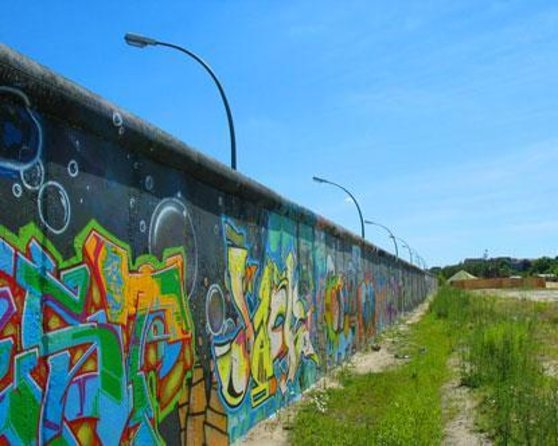
The Berlin Wall section is the heart of the ride. The guide explains that only a few parts of Berlin still let you grasp how the Wall actually divided the city, and this area is one of them.
The value here is spatial. You are not simply looking at a preserved slab of concrete. You are being shown the relationship between the wall, the former death strip, watchtowers, escape routes, and the surrounding neighborhoods. That helps you picture the Wall as a working border system rather than a single barrier.
The stop is listed at about ten minutes, though guides may spend more or less time depending on the route and group. One important practical point: the ride may not give you enough time to explore the Berlin Wall Memorial in detail. If you have never visited it, do not postpone your return visit just because it appears on the bike route.
A few more days on two wheels around Berlin worth a look
- Berlin Highlights 3-Hour Bike Tour
★ 5.0 · 948 reviews - Berlin City Bike Tour with Beer Garden Stop
★ 5.0 · 917 reviews - Berlin Highlights: 3-Hour Bike Tour
★ 4.9 · 809 reviews - Berlin Highlights Sightseeing Bike Tour in Small Groups
★ 5.0 · 652 reviews
Mauerpark and Humboldthain’s wartime remains
Mauerpark shows what happened after the Wall disappeared. A former border area became a place for markets, music, and public expression. Its Sunday flea market is now the best-known feature, but the larger lesson is how a painful division can leave behind open civic space.
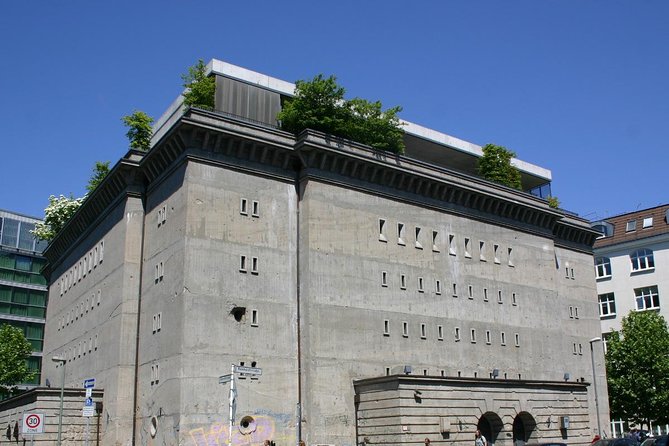
The tour then moves toward Humboldthain Flak Tower, a huge wartime structure that served as both fortress and air-raid shelter. The stop offers two different kinds of insight: the scale of Nazi military construction and a broad view across Berlin.
The tower area also adds a useful physical break from memorials and political sites. You get a chance to see the city from above and think about how Berlin’s neighborhoods fit together. The listed stop lasts about ten minutes, so the view is part of the guided explanation rather than an extended climb and visit.
Günter Litfin and the machinery of the border
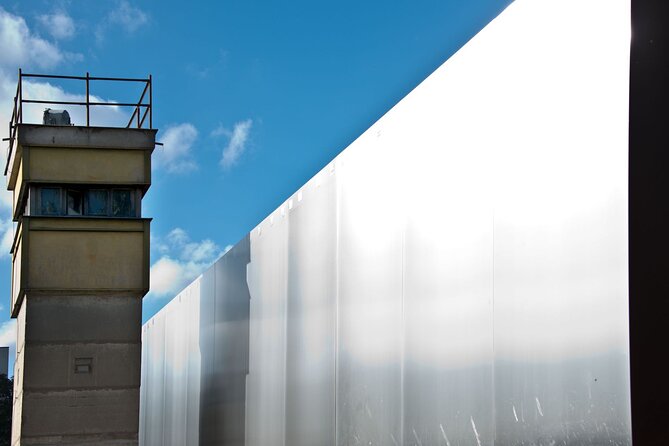
At the Günter Litfin Memorial, you see an original watchtower preserved in memory of Günter Litfin, described as the first person shot at the Wall. The stop lasts around five minutes, but it gives a human name to a border system that can otherwise feel abstract.
That is one of the best features of a route like this. The Wall was a political structure, but its effect was personal. A short explanation at the watchtower helps connect official decisions to the lives lost or changed because of them.
Invalidenfriedhof and escape stories
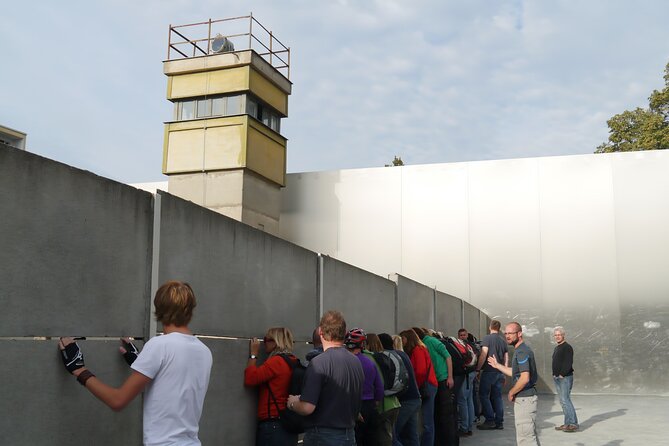
Invalidenfriedhof was created for Prussian military figures, but the Wall later cut through the cemetery. Its location near former checkpoints and a canal also makes it a useful place to discuss escape attempts and the physical challenges of crossing from East Berlin to West Berlin.
The contrast is striking. A burial ground associated with military history became part of the city’s Cold War border. You may hear about people who tried to escape through routes near the canal or other weak points along the divided city.
This is another very short stop, about five minutes. I would pay close attention here because the cemetery’s meaning can be easy to miss if you only see it from the bike.
Spreebogenpark, the Reichstag, and Hitler’s planned capital
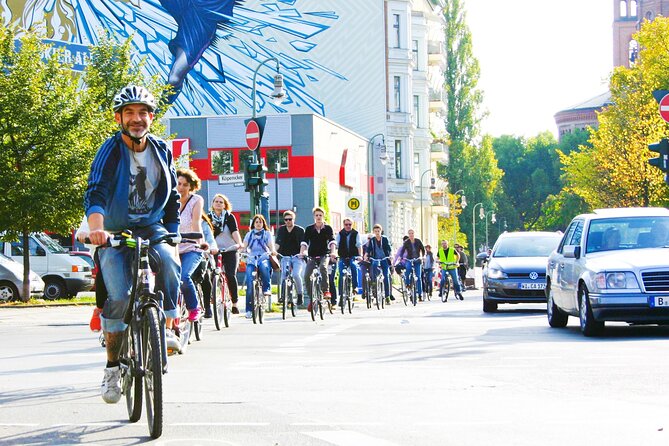
At Spreebogenpark, the guide looks across the modern government district and explains Albert Speer’s plans for Hitler’s proposed capital. The most startling detail is the planned Great Hall, which was intended to hold 180,000 people.
The view helps you compare the Germany that exists today with the authoritarian city Hitler wanted to build. You see ministries, public spaces, and the Reichstag area, then hear how the same part of Berlin was once imagined as a monumental stage for dictatorship.
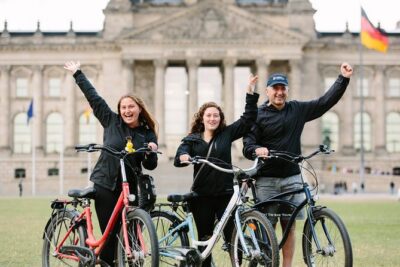
The stop at the Reichstag itself focuses on Hitler’s rise to power and Germany’s democratic development. You see the building from outside, but there is no time to go in. That is not a flaw if you understand the purpose of the stop. The guide is giving you political context, not replacing a Reichstag visit.
Memorials and the difficult work of remembrance
The route includes memorials connected with the victims of Nazi persecution and the Holocaust. Some stops are listed separately, including memorials for major victim groups and the Memorial to the Murdered Jews of Europe.
The Holocaust Memorial is given about ten minutes. Its field of concrete stelae is intentionally difficult to read at a glance, and the guide may encourage you to think about how the design affects your sense of scale, movement, and uncertainty.
A bike tour cannot provide the quiet time that a memorial deserves. You may feel that the stop is too short, especially at a site where personal reflection matters as much as historical explanation. I recommend returning on foot later, when you can move through the memorial without a group waiting beside the bikes.
The Führerbunker and an unmarked ending
The former Führerbunker is one of Berlin’s most unusual historical stops because there is almost nothing to see. Today, the site is a parking area. The guide explains why the bunker was not preserved as a shrine or conventional historic attraction.
That absence is part of the lesson. Some sites are marked by grand architecture, while this one is intentionally ordinary. You get about five minutes here, enough to understand the location and the decision to keep it visually unremarkable.
If you expect ruins, rooms, or an underground visit, you will be disappointed. If you are interested in how modern Germany handles places tied to Hitler, the stop is worthwhile.
Checkpoint Charlie and the English-tour difference
Checkpoint Charlie is included only on the English version of the tour. It was the famous Cold War border crossing associated with the United States and Soviet Union, and the guide explains how tensions there once came close to a third world war.
The site is now highly commercialized, so the guide’s historical framing matters more than the checkpoint’s present-day appearance. You may see a busy tourist area rather than an untouched Cold War border post.
Because the English tour specifically includes this stop while the German option may not, check your language selection carefully if Checkpoint Charlie is important to you. Also remember that the route can change under the Free Berlin approach.
Guides, stories, and the human side of Berlin
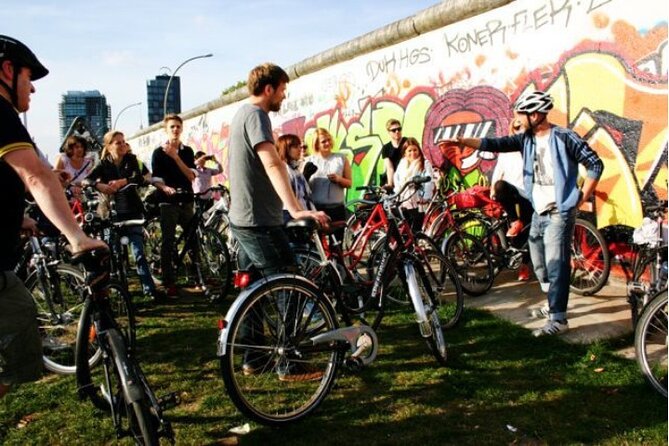
The strongest part of this experience is the guide. Paul, a native of West Berlin, has explained the differences between East and West before and after the Wall fell. Peter has used personal stories to give names and faces to the period of separation. Simone has brought a strong interest in history and remembrance, while Simon has been praised for clear explanations, good pacing, and safe riding.
You may be led by Juliette, Theo, Yonis, Constantine, Jacob, or another member of the team. That means the tone can vary. One guide may focus more on personal memories, another on Nazi Germany, and another on the Wall and escape attempts.
The operator’s Free Berlin concept is important here. Your guide can adapt the route to road closures, special events, weather, and the group’s interests. During the Berlin Marathon, for example, an alternative time and route kept the historical focus intact.
The tradeoff is predictability. If you have a must-see stop, tell the guide before setting off and ask what can realistically fit into three hours. That simple conversation may prevent disappointment.
Cycling conditions, families, and what to bring
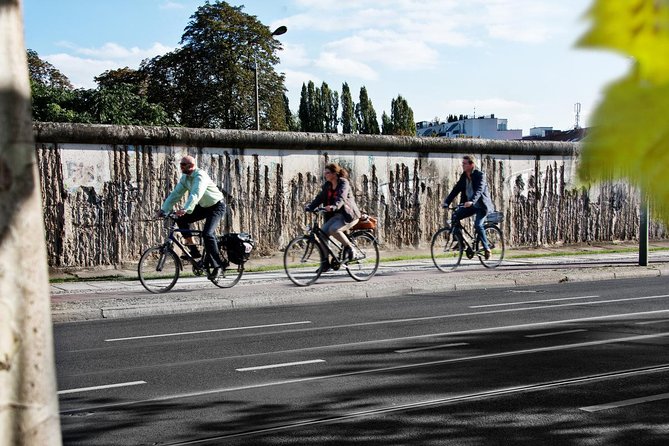
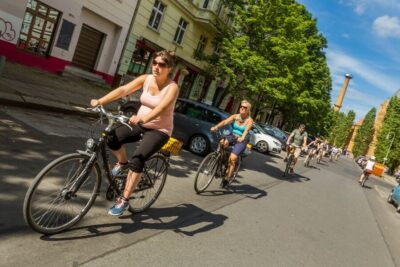
Berlin is flat, and one family covered about 13 kilometers at an easy pace with many breaks. Children are welcome, and infant seats can be provided if requested. Every rider gets a city bike and helmet, and a rear basket carriage can hold a water bottle, coat, or small bag.
Main roads can feel intimidating, especially if you are not used to urban cycling. Guides have helped groups stay together, waited at red lights, and given clear instructions, but you still need to be comfortable riding in city traffic.
Some routes use parks and quieter streets, while others may include cycle lanes along larger roads. Wear clothes suited to the weather because the tour operates in all conditions. Bring water, and do not count on food or drinks being included.
Should you book this three-hour ride?
Book it if you want a lively introduction to Berlin’s divided past, Nazi-era sites, and modern political center in one outing. It is especially useful early in your stay because it helps you understand distances and gives you a short list of places to revisit.
Families with older children and teenagers should find the mix of cycling and short historical stops appealing. The ride is also a good choice if you prefer seeing a city in motion rather than sitting on a bus.
Think twice if you need a fixed itinerary, long visits at memorials, or a detailed Third Reich study tour. The advertised stops are a guide to the theme, not a guarantee that every one will be visited. At $42.34, I find the tour worthwhile for its local interpretation and efficient coverage, but only if you accept that flexibility.
FAQ
How long is the Berlin Wall and Third Reich bike tour?
The tour lasts approximately three hours.
What is included in the price?
A city bicycle, helmet, and professional guide are included. Infant seats can be provided on request.
Where does the tour start and finish?
It starts at Free Berlin Bike Tours & Rental, Poststraße 11, 10178 Berlin, Germany. The ride ends back at the same meeting point.
Is the tour offered in English?
Yes. It is offered in English, and the operator also runs tours in German depending on the option selected.
Is Checkpoint Charlie included on every version?
No. Checkpoint Charlie is specifically included only on the English version of the tour.
Can children join the bike tour?
Yes. Children are welcome, but they must be accompanied by an adult. Infant seats can be requested.
What happens if the weather is bad?
The tour operates in all weather conditions, so you should dress appropriately.
Can the route change during the tour?
Yes. The Free Berlin concept allows each guide to design a route around the tour’s theme. As a result, the exact stops can vary.
Just added around Berlin
- Berlin Wall and Cold War Bike Tour in Small Groups★ 5.0 · 114 reviews
- Berlin: Guided Private Bike Tour to Explore the Highlights★ 5.0 · 12 reviews
- Berlin : The best bike tour with a Berlin guide and insider tips★ 5.0 · 14 reviews
- Alternative Berlin Bike Tour – Off the Beaten Tracks in Small Groups★ 5.0 · 99 reviews
- Berlin : Guided Private Sightseeing Tours with Funbikes, Teambikes★ 5.0 · 20 reviews
- Potsdam Bike Tour with Rail Transport from Berlin★ 4.5 · 81 reviews
- Small-Group Berlin Wall Bike Tour★ 5.0 · 17 reviews
- 3-Hour Bike Tour of Tiergarten and Berlin’s Hidden Places★ 5.0 · 26 reviews
Berlin Cycling Tours, compared.
Sights and Highlights Bike Tour with a Local Guide
Read our review →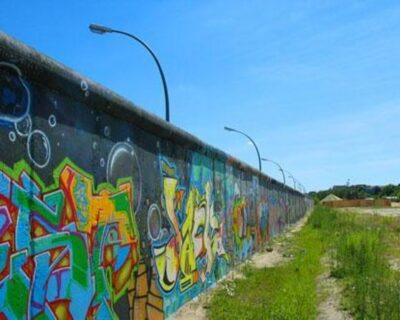
Berlin Highlights Sightseeing Bike Tour in Small Groups
Read our review →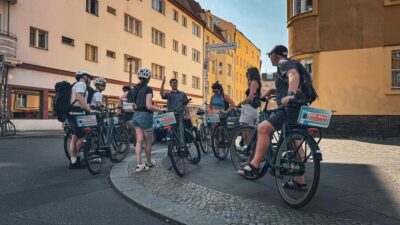
Alternative Bike Tour of Kreuzberg & Friedrichshain
Read our review →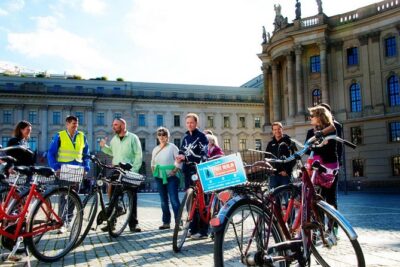
Browse the lists this tour appears in