REVIEW · ROMANIA
Bucharest: Communist Bike Tour
Romania’s past is best seen on two wheels. This four-hour Bucharest bike tour connects the old city center, Coral Temple, the first Romanian parliament, Soviet-era elite housing, Casa Radio, and Revolution Square in one useful route. I like the way it links buildings to political events, and I like that cycling lets you cover more ground than a walking tour. The main drawback is clear: dense city traffic and limited mobility make this a poor fit for anyone who is not comfortable on a bike.
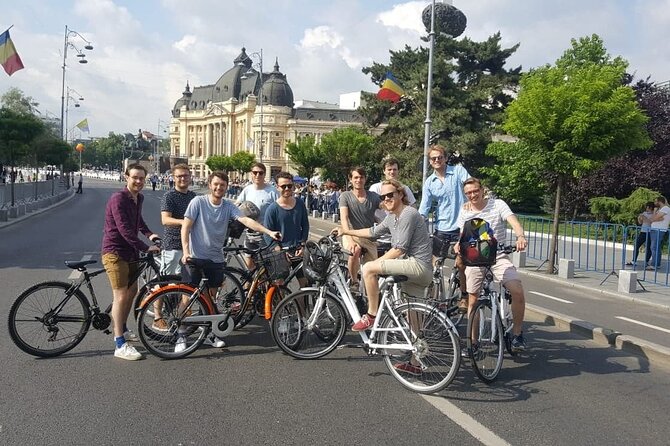
The English-speaking guides add plenty of context beyond the headline communist story. Horia received especially warm praise for his friendly, well-informed approach, while Alex was noted for explaining the political, economic, and social sides of the period. You should also expect a serious four-hour ride, not a gentle spin through quiet lanes.
Key points to know before booking
- The route connects several eras: You move from Bucharest’s old center to the communist period, Soviet occupation, and the 1989 Revolution.
- Casa Radio is the striking unfinished project: This huge communist-era building helps explain the scale and cost of Ceaușescu’s urban plans.
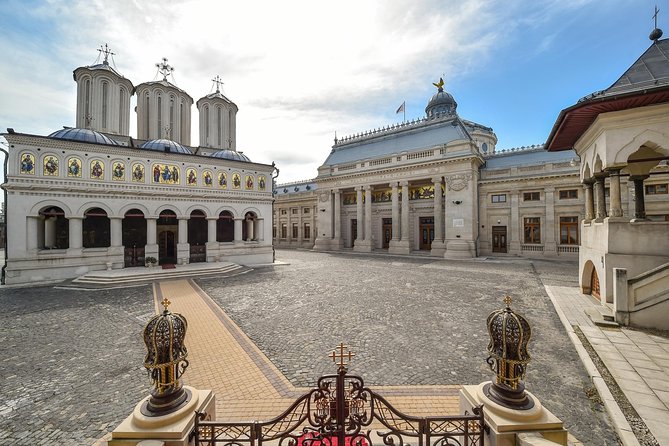
- Coral Temple adds an unusual political angle: The stop connects Bucharest’s Jewish community with the early communist movement of the 1920s.
- Revolution Square gives the tour its strongest finish: You stand where Ceaușescu gave his final speech and where the December 1989 uprising began.
- Four hours makes the bike useful: The route crosses a large city, so cycling gives you a wider view than a compact walking tour.
- The price includes the essentials: At $53 per person, your bike, helmet, lock, and live English-speaking guide are included, but food and drinks are not.
Why Bucharest’s communist past needs a bike
Bucharest does not keep its political story in one tidy museum. Soviet influence, communist planning, royal-era streets, religious buildings, and the 1989 Revolution are spread across the city. A bike gives you a practical way to connect them.
I like this format because the movement between stops becomes part of the lesson. You are not simply looking at a monument and hearing a date. You are seeing how a city was altered block by block, then riding onward to the places where power was exercised and challenged.
The four-hour length matters. Bucharest is large, and the tour covers several districts and major sites. On foot, this route would require more time and energy. Cycling lets you reach the former homes of Soviet-backed officials, the unfinished Casa Radio project, and Revolution Square in one morning or afternoon.
Still, the bike is not just a convenience. You need to be comfortable riding in city traffic. One especially useful piece of advice from the experience is that the extended range is worth the effort for people who feel confident cycling in dense urban conditions. If that description makes you nervous, a walking tour may be a better choice.
A few more days on two wheels around the world worth a look
- Lion City Bike Tour of Singapore
★ 5.0 · 6,211 reviews - Big Bike tour Amsterdam – See all in 3 unforgettable hours
★ 4.7 · 4,929 reviews - 3-Hour Porto Highlights on a Electric Bike Guided Tour
★ 5.0 · 4,392 reviews
Starting in the old city center
You meet just across from Hanu’ Berarilor, at Casa Oprea Soare. This puts you near Bucharest’s old city center, a natural place to begin a discussion about what communist rule did to the older parts of the capital.
The opening section focuses on the way the communist era damaged the historic center. The point is not simply that old buildings suffered neglect. The tour presents the wider political decision to reshape parts of Bucharest, reducing the importance of older streets and replacing pieces of the city with a new ideological image.
I find this a smart opening because it gives you a frame for everything that follows. You start with the city people recognize from photographs and restaurant streets, then learn how much of its earlier form was threatened or lost. It also helps explain why the communist story in Bucharest is about urban design as much as it is about party leaders.
The old center can be crowded, and you will be sharing streets with normal city traffic. Take the guide’s opening instructions seriously, keep your attention on the road, and wear shoes that are comfortable for several hours of riding and stops.
Coral Temple and the early communist movement
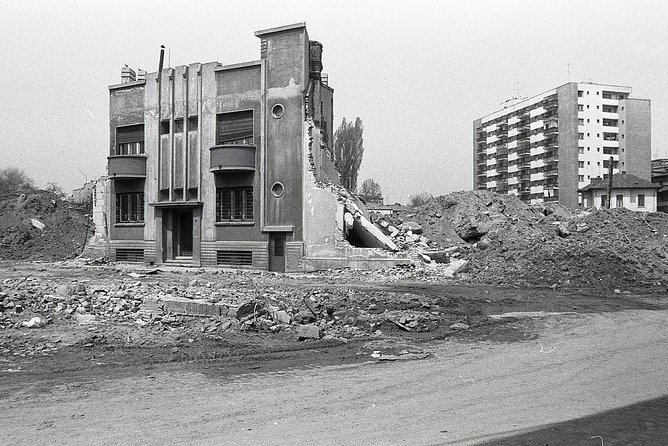
The next stop is Coral Temple, one of the tour’s more unexpected choices. It connects the Jewish community with the early communist movement in Romania during the 1920s.
This is valuable because it keeps the story from becoming a simple account of Soviet control after the Second World War. The tour reaches back to the movement’s earlier roots and shows that Romanian communism had a local political story before the country came under Soviet domination.
Coral Temple also broadens the tour beyond government buildings. Religion, minority communities, political movements, and urban life all enter the discussion. You get a more layered picture of the forces shaping Bucharest before the communist state fully took control.
The stop may appeal most to you if you enjoy political history with social context. If you only want to see giant communist structures, this part may feel less dramatic visually, but it adds important background to the route.
The first Romanian parliament and the communist bombing
The tour then goes to the site connected with a communist bomb attack against Romania’s democratic government and the country’s first parliament. This is one of the clearest moments where the guide ties a physical location to an act of political violence.
The stop helps show that communist power did not arrive as a sudden change with no warning. The movement developed through conflict and attacks on existing democratic institutions. Standing at the site gives that early stage a physical anchor.
I value this part because it prevents the later Soviet occupation from being treated as the whole story. The tour moves from the 1920s into the postwar years, showing the pressure points that shaped Romania before and after the Second World War.
Your guide’s role matters here. Alex was praised for explaining the political and economic setting, while Horia was noted for making the information clear and engaging. You should expect plenty of spoken history, so listen closely and ask questions when something needs clarification.
Same roads, a different day in the saddle:
- Ninh Binh Full-Day Tour from Hanoi to Hoa Lu, Tam Coc & Mua Cave Via Boat & Bike
★ 5.0 · 4,384 reviews - Small Group Guided Bike Tour of Amsterdam’s Hidden Gems
★ 5.0 · 3,936 reviews - 3-hour Complete Prague Bike Tour
★ 5.0 · 3,674 reviews - Bangkok: Temples, Canals & Local Life Bike Tour
★ 4.9 · 3,511 reviews
Soviet occupation and the neighborhood of power
After the early communist period, the route turns to the years after the Second World War, when Romania was occupied by the Soviet Union for 12 years. You cycle through a neighborhood associated with the Russian army generals who helped rule the country.
The setting gives you a useful way to think about power. Instead of hearing only about official treaties and party structures, you see where Soviet-backed authority had a physical presence in Bucharest. The neighborhood also connects with the Stalin era and housing built for communist elites.
This part may be less instantly photogenic than Casa Radio or Revolution Square, but I think it is one of the most useful stops for understanding how a new ruling class lived. The tour shows that ideology was reflected in addresses, access, and status, not only in speeches and flags.
The route also introduces a shift in focus. The first stops concern the rise of the communist movement. Here, the emphasis turns to occupation, control, and the people who held power after the war. That progression gives the tour a clear shape rather than a random collection of communist-era sights.
Casa Radio and the scale of unfinished ambition
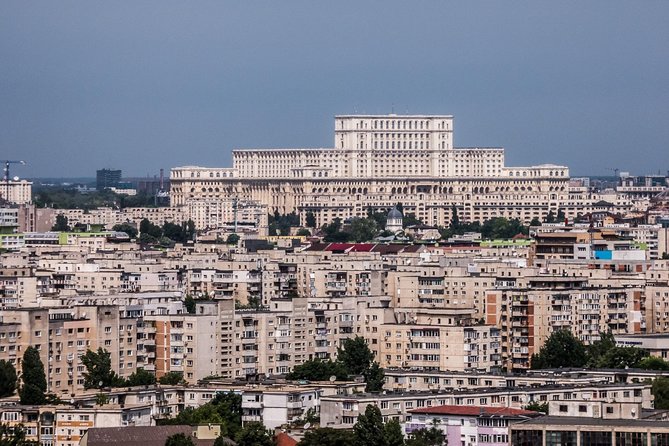
Casa Radio is the tour’s biggest visual reminder of communist urban planning. It is described as the largest unfinished communist urban project in Bucharest, a vast scheme that never reached completion.
Large unfinished buildings are useful historical evidence because they show both ambition and failure. Casa Radio helps you understand the scale of the regime’s construction plans, as well as the resources and disruption involved in reshaping a capital on such a large scale.
The information provided for the tour also refers to the National History Museum and to buildings that were completely reshaped by the communist regime. The route’s final urban section therefore deals with more than one building. It looks at how existing structures and major public projects were altered to serve the communist vision.
You should not expect a conventional museum visit with indoor galleries and exhibits. This is a cycling stop and an outdoor explanation of the city’s built environment. The value comes from seeing the project in place and hearing how it fits the larger story.
For me, Casa Radio is the kind of stop that makes a bike tour worthwhile. It is difficult to understand the size of Bucharest’s communist building program from a few photographs. Seeing the structure as part of the city gives the story more weight.
Revolution Square and Ceaușescu’s final speech
The final stop is in front of the former Communist Central Committee, now associated with Revolution Square. This is where Nicolae Ceaușescu delivered his last speech, and where the December 1989 Revolution began.
It is a strong ending because the tour arrives at the point where the communist system began to break apart. The earlier stops explain how the movement formed, how Soviet power shaped Romania, and how communist leaders transformed Bucharest. Revolution Square brings that story to its final crisis.
The setting also gives you a chance to connect national events with a specific public space. Ceaușescu’s last speech is remembered as a moment when his authority visibly weakened. Soon afterward, the revolution changed the country’s political direction.
This stop is likely to be the most emotionally charged part of the route, even though the experience remains an outdoor city tour rather than a formal memorial visit. I would allow a little time after the tour to revisit the square on your own if the story catches your attention.
What the guide adds to the experience
The guide is the difference between a bike ride past buildings and a serious history tour. You are not just given names and dates. The best version of this tour explains political decisions, economic pressures, religious life, population groups, and daily life in the city.
Horia was praised for being friendly and well informed, and for covering more than the advertised communist subject. He also brought in Bucharest’s founding period, the role of the Orthodox Church, and modern city life. That wider context is useful because communism did not erase everything that came before it.
Alex was praised for giving full political, economic, and historical context. Those comments point to a tour that works best if you want explanation rather than a fast checklist of sights.
The guide may also make the experience flexible in tone. One part of the group may want more political detail, while another may be more interested in architecture or daily life. Ask questions. Four hours gives you enough time for conversation, and the guides appear to be a major strength of the experience.
Bikes, traffic, and physical demands
Your ticket includes a bike, helmet, and bike lock. That keeps the booking simple and means you do not need to arrange equipment separately.
The tour is not recommended for people with limited mobility. That is not a minor warning. You will ride for four hours, stop repeatedly, and cover a broad section of Bucharest. Comfortable shoes are specifically recommended.
You also need to feel at ease cycling in dense city traffic. The route is designed to cover a lot of ground, which is one of its main benefits, but the same feature brings more road exposure than a short recreational ride.
There is no stated group size, route distance, or bike model, so I would not assume a particular pace or level of road separation. If you want to know those details before booking, ask the operator directly. The listed provider is Bike The City Bucharest.
Food and drinks are not included. Four hours is a long time to be out, so bring what you need or plan to eat before or after the tour. The available information does mention a pit stop across Bucharest, but it does not promise a meal or included refreshment.
Is $53 a fair price?
At $53 per person, this is not the cheapest way to see Bucharest, but the price is reasonable if you want a guided route through several districts. You are paying for four hours of instruction, equipment, and a wider range than most walking tours can offer.
The value is strongest if this is your first visit and you want an overview of the communist period early in your stay. One previous participant described it as a good way to begin a Bucharest visit because it provided useful background and inspiration for the rest of the holiday.
The price is less appealing if you already know the city well, prefer to move at your own speed, or are mainly interested in entering museums. This experience is built around outdoor sightseeing, cycling, and explanation from a live English-speaking guide.
Bikes, helmets, and locks are included, which removes several extra costs. Since food and drinks are not included, budget separately for those.
The booking terms also offer some flexibility. You can reserve now and pay later, and cancellation is free up to 24 hours before the activity for a full refund. Those terms are useful if your Bucharest schedule is still changing.
Who should book the Communist Bike Tour?
I would choose this tour if you want to understand how Bucharest was reshaped by communism rather than simply photograph a few imposing buildings. It suits first-time visitors, history-minded couples, and anyone who likes to learn through a city’s streets.
It is also a good choice if you want a broad introduction before visiting other parts of Bucharest. The route links the old center, religious history, early communist violence, Soviet occupation, elite housing, unfinished construction, and the 1989 Revolution.
You should think twice if you have limited mobility or do not feel safe riding in city traffic. The tour is also less suitable if you want a quiet, slow-paced ride or a small set of indoor museum visits.
FAQ
How long is the Bucharest Communist Bike Tour?
The tour lasts four hours.
What language is the tour in?
The live guided tour is conducted in English.
What equipment is included?
A bike, helmet, and bike lock are included in the ticket price.
Where does the tour meet?
The meeting point is just across from Hanu’ Berarilor, at Casa Oprea Soare, near Bucharest’s old city center.
Is food included?
No. Food and beverages are not included in the ticket price.
Can I cancel the tour for a full refund?
Yes. You can cancel up to 24 hours in advance for a full refund. You can also reserve now and pay later.
Should you book it?
Book this tour if you want a clear, citywide explanation of Romania’s communist era and feel comfortable riding through Bucharest traffic. The strongest reasons are the useful route, the excellent historical context provided by guides such as Horia and Alex, and the chance to reach sites that are spread too far apart for an easy walk.
Skip it if cycling is physically difficult for you or if you prefer a slow indoor history tour. For the right rider, $53 buys a practical introduction to Bucharest’s hardest-to-understand period, with Revolution Square and Casa Radio providing two especially memorable bookends.
Just added around the world
- Best of Copenhagen Biking Tour-3 Hours, Small Group max 10 people★ 5.0 · 22 reviews
- Urban Design and Livability E-bike Tour★ 5.0 · 18 reviews
- Garden of the Gods Original Electric e-Bike Tour★ 5.0 · 45 reviews
- Copenhagen : Highlights Private Bike Tour★ 4.5 · 20 reviews
- 3-Hour E-Bike Tour of Trail of the Silver Kings (Old Mine Tour)★ 5.0 · 18 reviews
- Gold Camp Road by E-Bike★ 5.0 · 21 reviews
- Pikes Peak & Garden of the Gods E-Bike Expedition★ 5.0 · 29 reviews
- EBIKE Mountain Adventure in Colorado Springs: Gold Camp Road★ 5.0 · 16 reviews
Tours, compared.
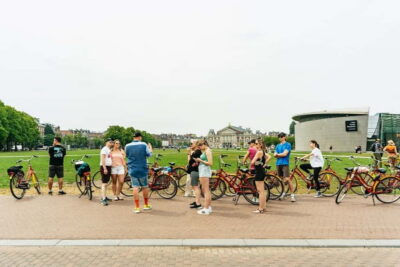
Big Bike tour Amsterdam – See all in 3 unforgettable hours
Read our review →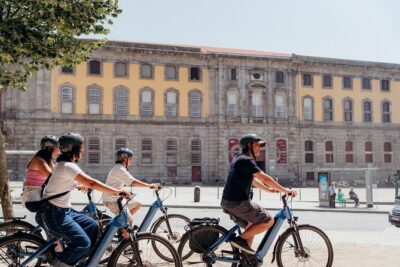
3-Hour Porto Highlights on a Electric Bike Guided Tour
Read our review →
Ninh Binh Full-Day Tour from Hanoi to Hoa Lu, Tam Coc & Mua Cave Via Boat & Bike
Read our review →
Hills, Alfama, and Mouraria Tour by Electric Bike
Read our review →