
REVIEW · ROME
Rome EBike Tour: Appian Way, Catacombs & Roman Aqueducts
Rome rewards you beyond the center. This e-bike outing takes you from central Rome to the Ancient Appian Way, underground catacombs, and the huge arches of the Roman aqueducts. I like the way the pedal assist lets you cover about 17 miles without turning the day into a cycling test, and I like the small groups, capped at 10 people.
The best parts are the quiet park roads, the dramatic ruins, and the change from city streets to open countryside. The main catch is the riding itself: around 40 percent of the route is in city traffic, while the rest uses rough dirt, stone, and narrow paths. You need to feel comfortable on a bike for several hours.
Choose the six-hour version if the catacombs are important to you. It includes a 45-minute guided visit, while the four-hour option does not normally take you inside. Guides such as Cas, Carmen, Nami, Fabio, Agnese, and Bita have earned praise for keeping groups together, explaining the sites clearly, and handling street crossings with care.
Six things to know before you ride
- The ride covers about 17 miles: The e-bike helps, but this is still a serious half-day outing.
- Sixty percent is off-road: Expect rocky Roman roads, dusty paths, and narrow tracks through grass.
- The six-hour tour includes the catacombs: San Callisto is usual, with San Sebastiano used on Wednesdays.
- The Appian Way is the star of the route: You ride an ancient highway that once linked Rome with Brindisi.
- The aqueduct park gives you open space: Huge arches rise across fields far from the tight streets of central Rome.
- The group stays small: A maximum of 10 people makes it easier for the guide to watch traffic, answer questions, and adjust the pace.
Why an e-bike makes this Roman outing work
Rome’s historic center is compact enough to walk, but the Appian Way and aqueduct parks are spread well beyond the usual sights. Public transport can get you near parts of them, yet it does not give you the same sense of moving through the old Roman countryside.
The e-bike solves the distance problem. You still pedal, but the motor takes the sting out of longer stretches and gentle inclines. That lets people of different ages and fitness levels ride together. One group included riders aged 42 to 70, and even the 70-year-old participant, who rode a regular bike every day, managed well on the e-bike.
That does not mean you can sit back and coast. You need to steer, brake, balance, and handle uneven ground. The bikes are Cannondale models with anti-puncture tires, comfortable saddles, and a handlebar bag. Helmets are supplied and required.
The route is rated intermediate. Several riders found it easy with the motor, but others warned that the rocky sections require confidence. If you have not ridden a bike in years, or if rough surfaces make you nervous, you may find the Appian Way harder than expected. You can walk the roughest parts, but you should not book this as a sightseeing tour with only a token amount of cycling.
More E-Bike Tours in Italy
- Rome: Top Highlights & Hidden Gems Tour by Cannondale E-Bike
★ 4.9 · 1,760 reviews - Rome: Appian Way & Aqueducts E-Bike Tour (Catacombs & Food)
★ 4.9 · 1,498 reviews - Rome: Appian Way, Catacombs, & Roman Aqueducts E-bike Tour
★ 4.9 · 1,421 reviews
Starting at Via Labicana and leaving central Rome
The tour begins at Via Labicana 49, a central location near public transportation. After the bikes and equipment are sorted out, the guide gives instructions and leads the group away from the center.
The first part uses city streets. This connection is necessary because the Appian Way and aqueduct park sit outside the core sightseeing zone. The operator plans routes with limited traffic, but no honest description should pretend that you avoid cars completely. You will cross streets and ride through urban areas before reaching the quieter parks.
This is where a careful guide matters. Cas has been praised for being patient and alert, while Carmen received strong marks for clear directions and good group control. Other guides named by riders include Nami, Fabio, Agnese, Arina, Christian, and Bita. Names may vary on your date, but the pattern is clear: the guide is not just there to recite dates. The guide manages the ride.
Porta San Sebastiano and the old city walls
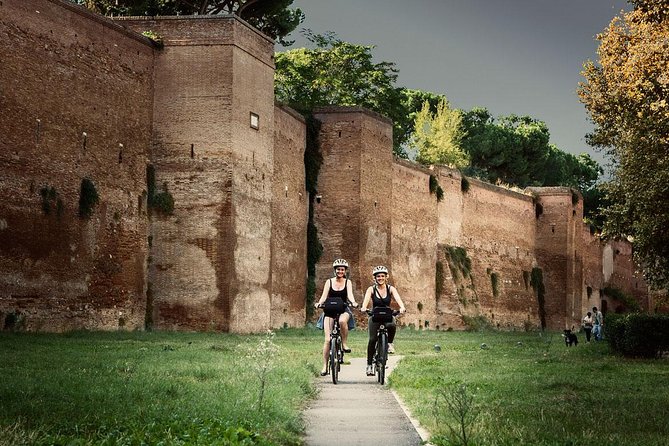
The first stop is Porta San Sebastiano, one of the major gates in Rome’s third-century defensive walls. You pause for about 10 minutes, enough to see the scale of the gate and understand how the road once entered the fortified city.
This stop works as a useful introduction. The tour is not only about isolated ruins in fields. Rome’s walls, roads, tombs, water systems, and villas formed one connected system. At the gate, you begin to see how the city was protected and how major roads fed into it.
Do not expect a long formal visit here. The stop is brief, but the guide’s explanation gives the structure meaning before you ride farther into the old Roman territory.
The Appian Way, Rome’s Queen of Roads
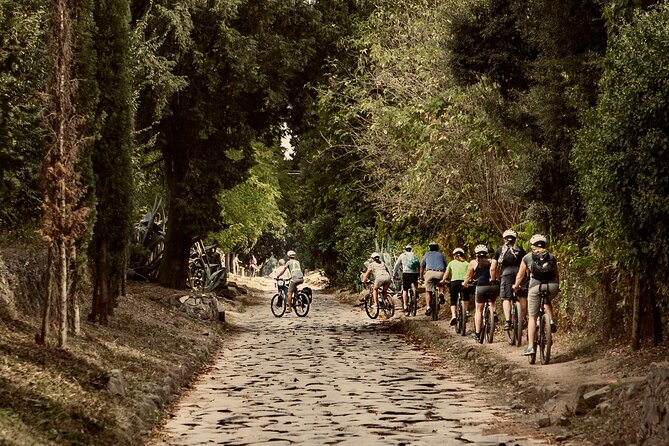
The Via Appia Antica is the heart of the outing. Built in the fourth century BC, it first connected Rome with southern Italy and eventually reached Brindisi. In its original form, the road stretched roughly 538 kilometers.
You ride on sections of the ancient route, passing stone surfaces and scattered ruins rather than viewing the road from a coach window. That closeness is the point. You can see how uneven the route is, feel the stones beneath the tires, and understand why a motorized bike is useful here.
The Appian Way is not a smooth cycle path. It can be rough, dusty, and tricky in places. One practical tip: wear clothes and shoes that can take a little dirt. The route passes through open fields and rustic farm areas, and narrow paths may run through tall grass.
This is also one of the most atmospheric parts of the tour. The city feels surprisingly distant, even though you have not gone far from Rome. You ride past old walls, farms, and open ground, with ancient remains appearing beside the road. It is a welcome change after several days of crowded streets and indoor monuments.
More E-Bike Tours in Rome
- Rome City Small Group Bike Tour with quality Cannondale EBike
★ 5.0 · 1,380 reviews - Rome by Night – Ebike Small Group Tour – Food and Wine (Option)
★ 5.0 · 1,275 reviews - Rome by Night: E-bike Small Group Tour -Food & Wine (Option)
★ 4.9 · 1,233 reviews - Rome: Standard or E-Bike Highlights Guided Tour
★ 4.7 · 777 reviews
The catacombs: choose six hours for the full visit
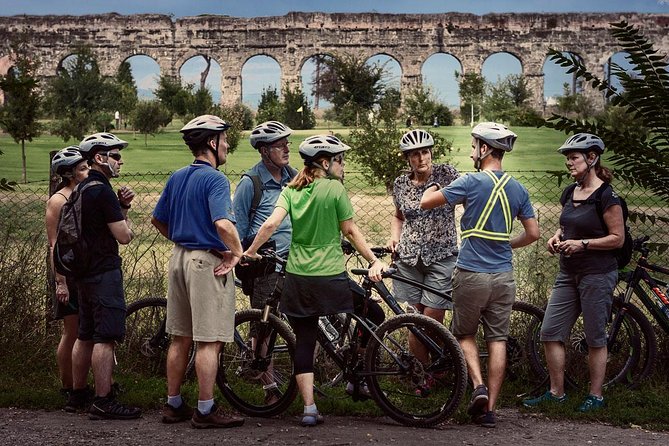
The catacombs are the most important difference between the two tour lengths. The four-hour tour includes a short pause near the burial complex, but it does not include the guided underground visit. The six-hour version includes about 45 minutes inside the catacombs.
At San Callisto, you learn about second-century burial practices and the underground network associated with early Christian Rome. The site is described as the resting place of roughly half a million people. The tunnels are narrow, dark, and solemn, with a very different mood from the sunny road above.
The catacombs are not a quick photo stop. Photography is not allowed inside, so leave your camera ready to stay in your bag. The appeal is the guided explanation and the physical sense of moving through the tunnels, not collecting pictures.
On Wednesdays, the six-hour tour visits the Catacombs of San Sebastiano instead of San Callisto. The four-hour route does not include the catacomb visit on Wednesdays. Easter Sunday, April 5, 2026, is another exception because the catacombs are closed, so the six-hour tour will not operate that day.
If underground spaces interest you, pay the extra time and choose six hours. If you mainly want the roads, parks, and aqueducts, the four-hour version gives you the main outdoor experience.
Circus of Maxentius and Cecilia Metella
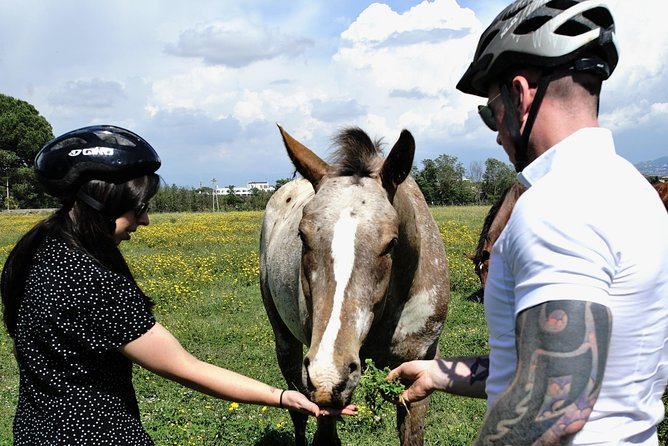
The route continues to the Circus of Maxentius, a large imperial complex from the early fourth century AD. The circus was a private chariot-racing track beside the villa. The stop is brief, about five minutes, but it gives you another view of Roman power and private wealth.
Next comes the Mausoleum of Cecilia Metella, one of the most imposing tombs along the Appian Way. It was built for a young noblewoman in the first century AD and is described as the largest mausoleum on the road.
These stops are viewed from the route rather than treated as long museum visits. That is both an advantage and a limitation. You see a lot in one day, but you will not get the same close study you would get from a dedicated archaeological tour. The guide’s short explanations help you connect the structures to the road and surrounding ruins.
Villa dei Quintili and the wider archaeological park
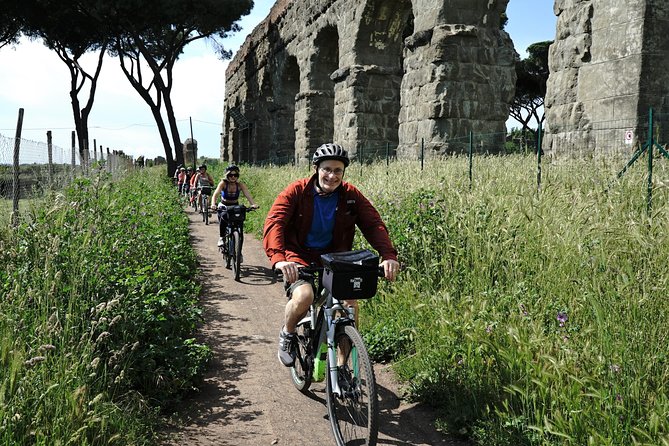
The six-hour route adds Villa dei Quintili and Santa Maria Nova. This sprawling second-century villa was so grand that it reportedly aroused the envy of Emperor Commodus.
The ruins help show how much of ancient Rome existed outside the famous center. The emperors and elite did not limit their building projects to the Forum or Palatine Hill. They built large country residences, estates, and private entertainment spaces along the roads leading away from Rome.
The stop is short, around five minutes, so think of it as a scenic and historical highlight rather than a full villa visit. The value comes from seeing the scale of the site while moving through the countryside by bike.
Aqueduct Park and the best open views
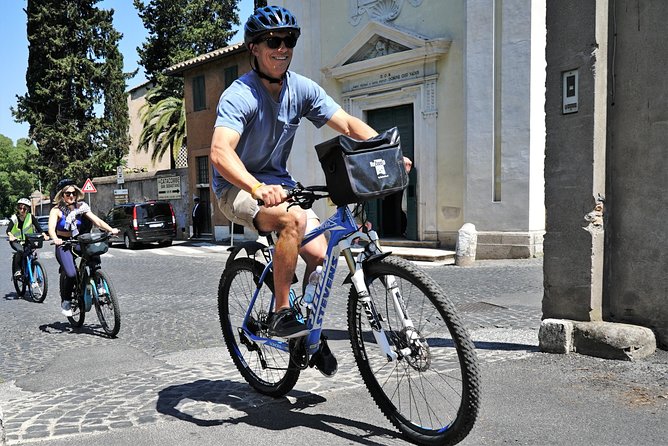
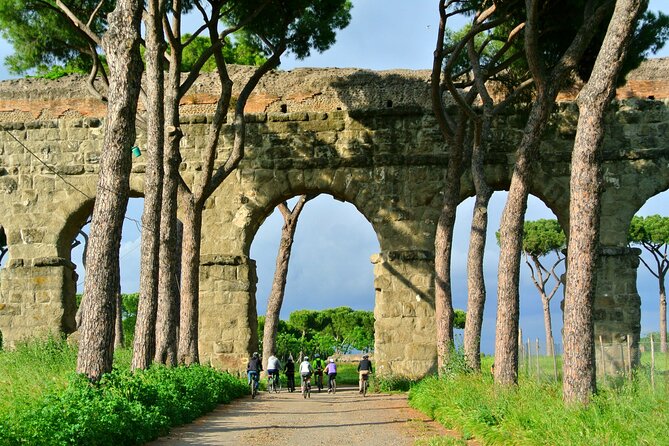
Parco degli Acquedotti is the other major highlight. The park is crossed by the arches of several aqueducts that supplied Rome with water. Against the open fields, the long lines of stonework are easy to appreciate.
You get about 30 minutes here, usually enough for photos, a rest, and a clear explanation of how Roman water systems worked. The scale is impressive because the aqueducts are not confined to a small ruin or museum room. They run across the open ground, showing the engineering as part of the countryside.
Some people feel the tour spends a little too long at the aqueducts compared with the other brief stops. I can understand that reaction, especially if the catacombs were your main reason for booking. Still, this is one of the places where the e-bike route earns its keep. A car can bring you near the arches, but riding through the park gives you a better sense of their length and setting.
The paths here may include narrow tracks through tall grass. They are scenic, but not always smooth. Keep your eyes ahead, follow the guide’s line, and do not treat this like a paved city cycleway.
Caracalla and the final ride back
The six-hour route also includes a view toward the Baths of Caracalla, among ancient Rome’s largest bath complexes. The pause is brief, but the ruins point to the scale of public life in imperial Rome. These were not small neighborhood baths. They were enormous civic buildings built for thousands of people.
From there, the group returns toward the meeting point. The day ends where it began, at Via Labicana. Food is not included, though the route offers opportunities to buy something to eat or drink during a suitable break. One group enjoyed a pizza lunch along the route, but you should not count on a meal being part of the package.
Bring water and a small snack if you prefer a set schedule. A biodegradable bottle of water is included, and the handlebar bag is useful for small personal items.
Price, group size, and what you get for $102.79
At $102.79 per person, this is not the cheapest way to see Roman ruins. It is a reasonable price if you value transport, equipment, a guide, and access to several spread-out sites in one outing.
You are covering about 27 kilometers, using a quality e-bike, helmet, water, and a small-group guide. The six-hour option adds the catacomb visit. You also avoid arranging separate transport between the Appian Way and the aqueduct park, which can take time and planning.
The value is strongest for someone who has already seen the major central sights and wants a different side of Rome. You get fresh air, exercise, rural views, and ancient sites that do not fit neatly into a walking itinerary.
The value is weaker if you dislike cycling, want long visits at each monument, or expect a fully off-road route. Around 40 percent is in the city, and about 60 percent is off-road. The maximum group size is 10, which is small enough for personal attention but not private.
A minimum of four participants is required. If fewer than four people are booked, the tour may be canceled after confirmation, with an alternative or full refund offered.
Practical advice for a smoother ride
Wear comfortable clothing that can get dusty. Closed shoes are a sensible choice, especially on rocky surfaces. You should have moderate physical fitness and be comfortable staying on a bike for several hours.
The bike equipment has a weight limit of 300 pounds, or 136 kilograms. A child seat or child extension makes the ride more difficult, so this is not the easiest choice for a family carrying a small child.
Wednesday tours can take about 30 minutes longer because of the route change. The four-hour outing may last four and a half hours, and the six-hour version may last six and a half. The same extra half hour may apply from January 14 through February 11, 2026.
Free cancellation is available up to 24 hours before the local start time. Changes or cancellations inside that window are not refunded. Bad weather may also affect the plan, so check the operator’s communication before setting out.
Who should book this e-bike tour?
I would choose this for active visitors who want history with fresh air and a little adventure. It suits couples, families with older children, and adults who can ride comfortably but do not want to tackle 17 miles on a standard bicycle.
It is especially good after a few days of museums and crowded piazzas. The open fields and old roads give you a needed change of pace, while the guide keeps the history in view.
I would not choose it for anyone who is uneasy in traffic, has trouble with rough ground, or wants a slow, indoor archaeological tour. The e-bike reduces effort, but it cannot remove bumps, steering, or street crossings.
Should you book it?
Book the six-hour tour if you want the catacombs and the fullest route, and confirm the Wednesday and Easter exceptions before paying. Choose four hours if outdoor riding is your priority and you can live without going underground.
For the right rider, this is one of Rome’s best ways to connect the road, tomb, villa, wall, bath, and aqueduct into one story. Just bring patience for rough surfaces, a willingness to share the road with a small group, and clothes that do not mind a little Roman dust.
FAQ
Where does the Rome e-bike tour start and end?
The tour starts at Via Labicana 49, 00184 Rome, Italy. It ends back at the same meeting point.
How long is the tour?
The standard choices are approximately four hours or six hours. Wednesday tours can run about 30 minutes longer because of a route change.
Does the tour include a catacomb visit?
The guided catacomb visit is included only with the six-hour tour. On Wednesdays, the six-hour tour visits San Sebastiano instead of San Callisto. The four-hour tour does not include the underground visit on Wednesdays.
How much cycling is involved?
You cover about 17 miles, or 27 kilometers. Roughly 40 percent of the route is in the city, and about 60 percent is off-road through parks and countryside.
Are bikes, helmets, and water included?
Yes. The tour includes a Cannondale e-bike, a required helmet, a handlebar bag, and water in a biodegradable bottle.
Can I cancel for a full refund?
Yes, if you cancel at least 24 hours before the experience begins in local time. Cancellations or changes made less than 24 hours before the start are not refunded.
Just added around Rome
- Rome: Guided eBike Evening Tour with italian Aperitif★ 5.0 · 16 reviews
- Rome: Villa Borghese, Villa Ada, and Coppedè E-Bike Tour★ 4.8 · 78 reviews
- Sunrise in Rome: Small Group E-Bike Tour & Italian breakfast★ 4.9 · 177 reviews
- Rome: Top 10 Highlights Guided Tour by Bike or E-Bike★ 4.4 · 15 reviews
- Rome: Appian Way, Aqueducts, & Catacombs E-Bike Guided Tour★ 4.9 · 54 reviews
- Rome: Villa Borghese E-Bike Tour (Small Group or Private)★ 4.9 · 92 reviews
- Rome: Panoramic Off-the-beaten-track Cannondale E-Bike tour★ 5.0 · 71 reviews
- Rome: Taste of Rome by quality Cannondale E-Bike★ 5.0 · 12 reviews
E-Bike Tours, compared.
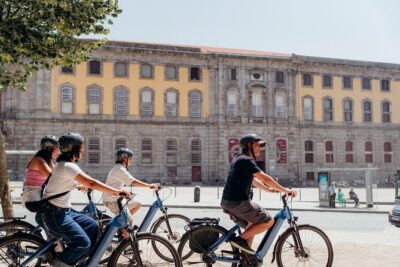
3-Hour Porto Highlights on a Electric Bike Guided Tour
Read our review →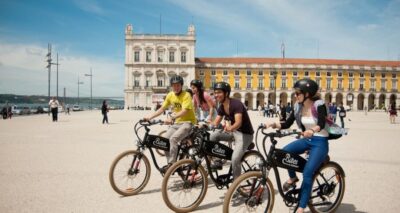
Hills, Alfama, and Mouraria Tour by Electric Bike
Read our review →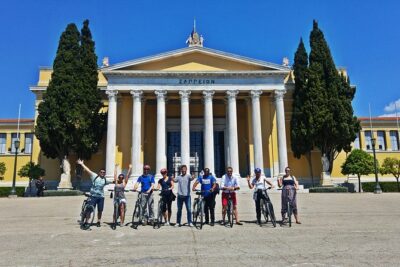
Athens Scenic Electric Bike Tour with optional Acropolis visit
Read our review →
City Highlights 3-Hour Guided Electric Bike Tour
Read our review →
Top Highlights & Hidden Gems Tour by Cannondale E-Bike
Read our review →
Lisbon E-Bike Tour Commerce Square, Mouraria and Alfama
Read our review →Browse the lists this tour appears in