
REVIEW · COPENHAGEN
Copenhagen & Christiania : Guided Bike Tour in French
Copenhagen makes more sense on two wheels. I like the tour’s focus on how Danish society and city planning work, and I like the route across newer bicycle bridges as well as classic sights. The main catch is clear: you must arrange your own bicycle and helmet, so this is not a grab-and-go activity.
The four-hour ride costs $53 per person and keeps the group small, with no more than 10 people. That gives the French-speaking guide room to explain details and answer questions instead of delivering a speech to a crowd. Guide Hamid earns especially warm praise for his humor, clear explanations, and ability to connect Copenhagen’s past with daily Danish life.
I also like that the ride ends at The Little Mermaid rather than returning to the starting point. You can continue sightseeing from there. Still, you need solid cycling experience, and app-based rental bikes are discouraged because some companies issue fines when bikes are left outside approved parking areas.
Key points before you book
- Four hours on Copenhagen’s cycle network: You cross Lille Langebro and Inderhavnsbroen, two useful examples of how the city gives bicycles a central role.
- French explanations of Danish society: The guide discusses the social welfare model, urban change, culture, and the way Copenhagen has developed.
- Christiania is part of the route: You pass through or alongside the famous autonomous neighborhood, known for street art and alternative living.
- Your bicycle is your responsibility: Bring your own bike or rent one locally. Daily rentals begin at about €12, but the supplier does not provide bikes or helmets.
- A small group with a useful finish: The tour is limited to 10 people and ends at The Little Mermaid, not back at City Hall.
- Best early in your stay: The broad introduction can help you decide which parts of Copenhagen deserve a longer visit later.
Why a bicycle is the right way to see Copenhagen
Copenhagen is compact enough to cross by bike, but spread out enough that walking between all these sights would eat up much of your day. On a bicycle, you can move from the old center to Christianshavn, Christiania, the harbor, and the royal district without treating each neighborhood as a separate outing.
The ride also shows Copenhagen as a working city, not only a postcard collection. You see historic buildings, modern architecture, waterfront paths, busy streets, and bridges built for everyday cycling. That mix matters because the city’s bicycle culture is not a decoration for visitors. It is part of how Copenhagen functions.
This is an active four hours. You need to be comfortable starting, stopping, steering, and riding in an urban setting. The tour is not suitable for anyone who cannot ride a bike, and it is not the right choice if you want to spend most of the day standing still while a guide talks.
You choose your own bicycle instead of accepting a standard rental supplied by the company. That can be a real advantage. You can select a frame that fits you, bring a cargo bike, or use an electric bike if that suits your needs. It also avoids the long adjustment period that a group bike handout can create.
The tradeoff is preparation. You need to arrange the bicycle before meeting the guide, and you need to think about the helmet yourself. Local shops and hotels offer rentals, with prices beginning at about €12 per day. App-based bikes are not recommended because returning them in the wrong place can lead to a fine.
More Guided Rides in Copenhagen:
- Copenhagen: Highlights 3 Hour Bike Tour with a Local Guide
★ 4.8 · 2,312 reviews - Copenhagen: 3-Hour City Highlights Bike Tour with Guide
★ 4.7 · 1,239 reviews - Copenhagen Highlights 3 Hour Bike Tour with local Guide
★ 5.0 · 1,125 reviews
Meeting at Copenhagen Visitor Service
The tour begins inside Copenhagen Visitor Service in the Axelborg building, directly across from the main entrance to Tivoli Gardens. The SAS Radisson Collection Hotel is next door, and a bakery is available at the meeting point.
That location is handy if you are already near the central station area or visiting Tivoli. If the Visitor Service is open, the guide meets you inside. If it is closed, look just outside for a guide wearing a distinctive hat or cap.
Give yourself enough time to arrive with your bike ready. The meeting point is easy to identify, but you do not want to use the first part of the tour sorting out a rental, adjusting a saddle, or finding a helmet.
The tour is conducted in French. That makes it a strong pick for French-speaking visitors who want more than basic sightseeing facts. The small group limit of 10 should also make it easier to hear explanations and ask about Danish customs, politics, architecture, or city life.
City Hall, Christiansborg, and the old harbor
The first major stop is Copenhagen City Hall. This puts you right into the civic center of the capital and gives the guide a natural place to discuss how the city is governed and how Danish public life fits into the wider social welfare model.
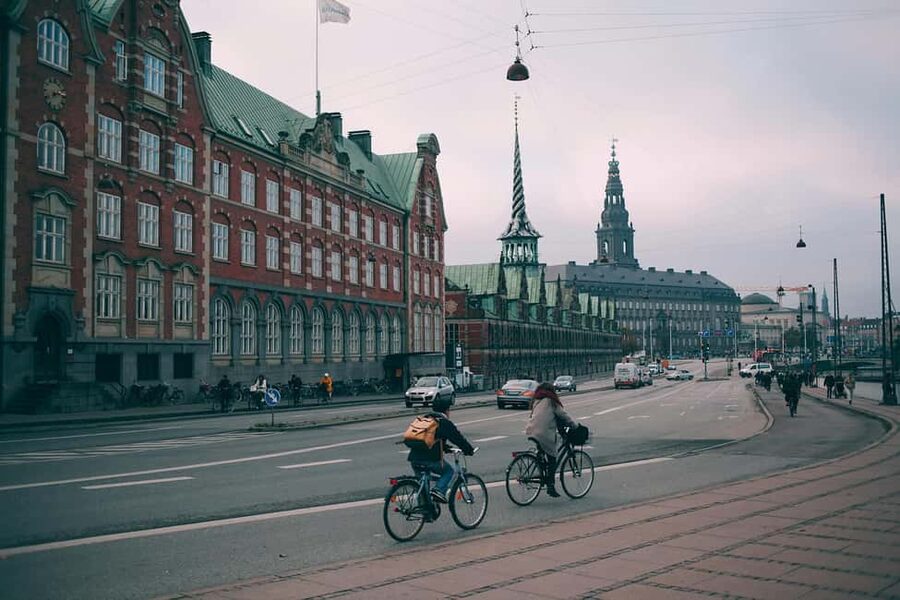
You then pass Christiansborg Palace. The palace is closely tied to Denmark’s political life, but on this tour it is a passing sight rather than a full indoor visit. That distinction matters. You get useful orientation and an exterior view, but you should not expect palace rooms or a long architectural presentation.
The Copenhagen Stock Exchange follows, another reminder that the central city combines government, commerce, royal institutions, and public spaces within a fairly small area. The route then passes Blox, a contemporary building connected with urban design and city development.
I like this opening because it sets up the main idea of the experience: Copenhagen is not simply old streets and attractive waterfronts. The guide places buildings and public spaces within a wider discussion about how the city has changed.
Lille Langebro and Copenhagen’s bicycle planning
Lille Langebro is one of the more useful stops for understanding Copenhagen by bike. You do not merely see a bridge from a tour bus window. You cross it as a cyclist, experiencing how the route links parts of the harbor area.
The bridge is also a practical example of the city’s newer bicycle infrastructure. The tour uses recently built bicycle bridges, including Lille Langebro and Inderhavnsbroen, so you see how Copenhagen has made cycling part of its transport network.
The route passes the Church of Our Saviour, a landmark in the Christianshavn area. The church is famous for its distinctive exterior and tower, though this experience does not include a climb or an interior visit. You should treat it as a quick visual stop and save extra time for a later visit if it interests you.
This section is less about checking off monuments and more about seeing how different parts of the city connect. You get water views, modern bridges, older buildings, and a moving lesson in urban planning, all while using the system yourself.
A few more days on two wheels around Copenhagen worth a look
- 3-hour Copenhagen City Highlights Bike Tour
★ 5.0 · 757 reviews - Copenhagen: 2-hour City Highlights Bike Tour
★ 4.7 · 632 reviews - Bike Tour Copenhagen. Private Guide, Concierge Service, Small Grp
★ 5.0 · 416 reviews - Copenhagen: 3-Hour Culinary Bike Tour
★ 4.7 · 301 reviews
Christiania: colorful, alternative, and not a formal museum visit
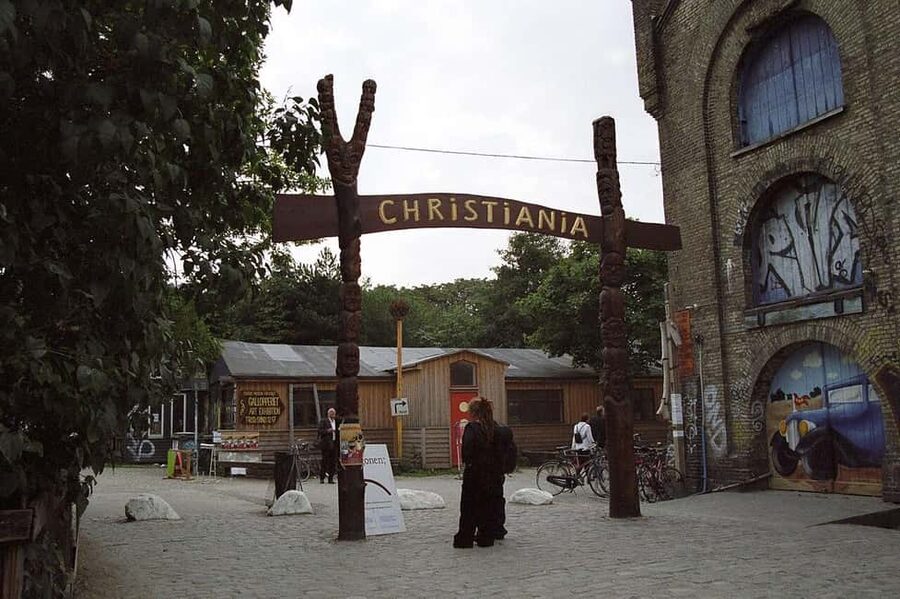
Christiania is one of Copenhagen’s most unusual areas, known for colorful street art and an alternative way of organizing community life. The bicycle route includes a pass by Christiania, giving you a look at this famous autonomous neighborhood.
It is important to set your expectations correctly. The tour does not promise an extended guided walk through Christiania, a special workshop, or a detailed stop at every notable corner. You pass through the area as part of a larger city ride.
That limited format can be useful. You get an introduction without giving up a large part of the four-hour route. The guide can also place Christiania within the larger story of Copenhagen’s culture and social development.
If Christiania is your main reason for booking, you may want to return on your own later. The tour works best when you see it as one chapter in a broader look at the city rather than as a dedicated Christiania tour.
Inderhavnsbroen, Nyhavn, and King’s New Square
Inderhavnsbroen provides a photo stop and another chance to see Copenhagen’s harbor from the level of the cycle route. The bridge is often called the Kissing Bridge because of the way its sections meet, but the main practical point here is that it connects the harbor districts for cyclists and pedestrians.
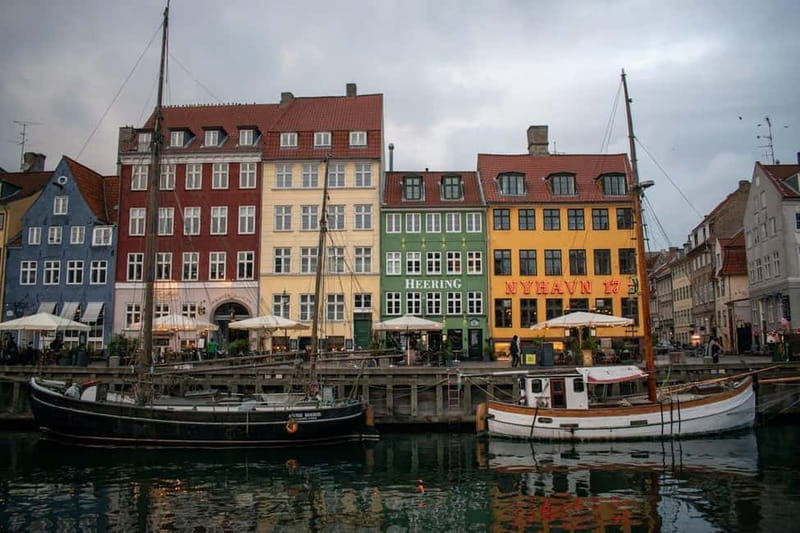
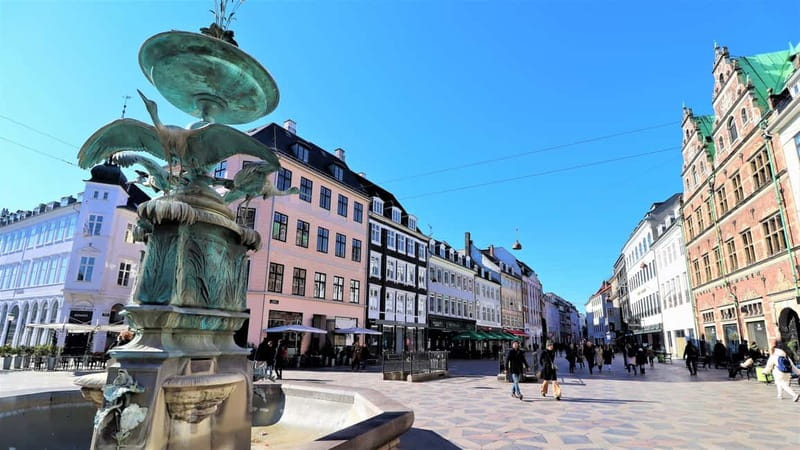
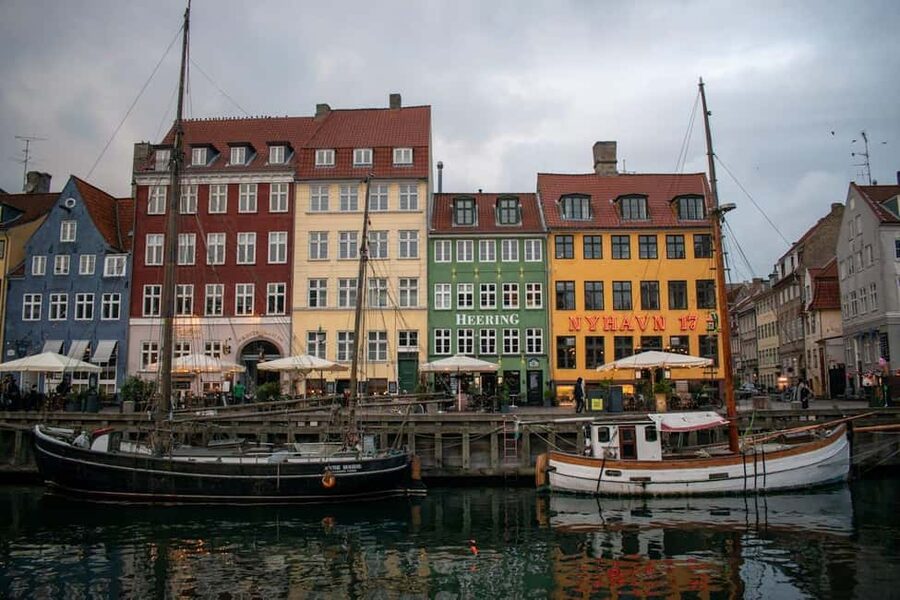
Next comes Nyhavn, the canal lined with colorful buildings and historic boats. This is one of Copenhagen’s most photographed areas, and the tour treats it as a photo stop and passing sight. That approach keeps the group moving, but it also means you do not get a long pause beside the canal.
King’s New Square provides a break and another photo opportunity. After several hours of cycling, even a short pause has value. You can catch your breath, take pictures, and listen without trying to balance on a bicycle.
The square also helps connect the harbor area with the grander royal quarter. The route shifts from working waterfront and cycle bridges to formal public spaces, churches, royal residences, and monumental fountains.
Marmorkirken, Amalienborg, and the royal quarter
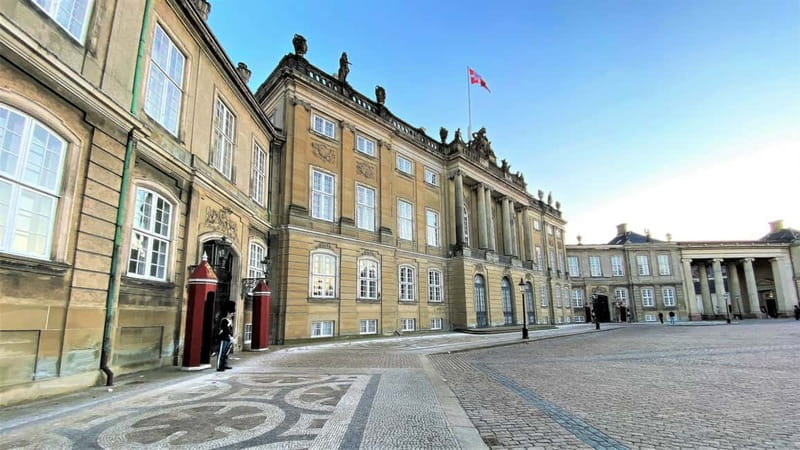
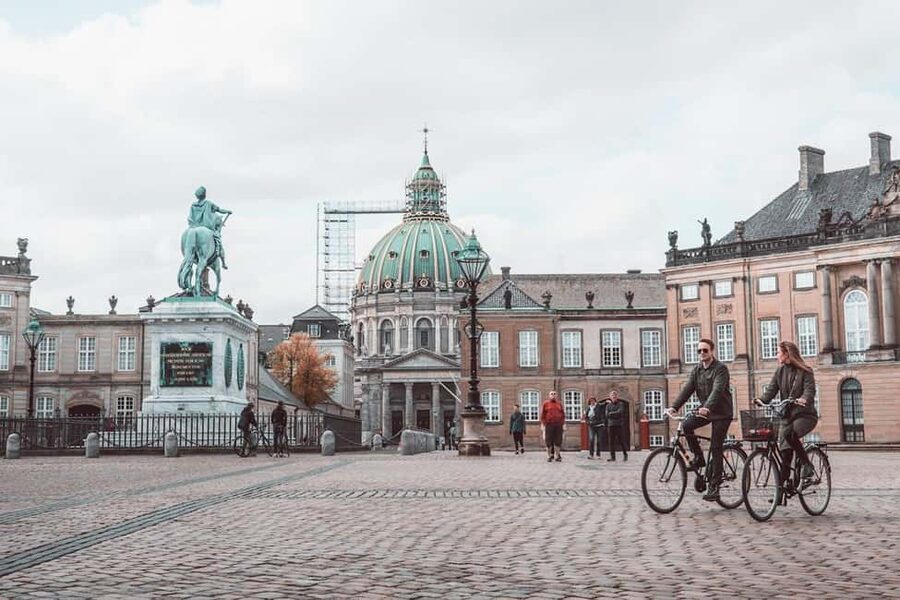
The Marble Church, officially Frederiks Church, is a striking stop on the route. You pass it and have a chance to take photographs, but the experience does not include a full interior visit.
Amalienborg Palace receives more attention. Here, the guide provides a guided tour and a photo stop, making it one of the more substantial royal highlights of the ride. The palace complex is known for its formal arrangement and connection with Denmark’s monarchy, so it gives the route a strong sense of place after the more informal neighborhoods earlier in the day.
The nearby Gefion Fountain is another photo stop and passing sight. It gives you a chance to see a major public sculpture while continuing toward the coast.
This portion of the tour works well for first-time visitors because the guide can connect the separate sights. Without that context, Copenhagen’s royal district can feel like a series of impressive facades. With a French-speaking guide explaining the city’s story, the stops become easier to place within Danish culture and public life.
Ending at The Little Mermaid
The tour finishes at The Little Mermaid, Copenhagen’s best-known waterfront statue. It is a sensible ending point because the route has taken you from central civic buildings and harbor bridges to the royal district and the coast.
The finish is also practical. You are not required to cycle back to the starting location, so you can continue exploring from the statue. This is one reason bringing your own bike, or arranging a flexible rental, can be useful.
The Little Mermaid itself is small and often surrounded by people taking photographs. Do not expect a grand monument. Its value is as a recognizable Copenhagen landmark and a clear endpoint after the longer ride.
If you are tired, the end of the tour gives you a natural point to stop. If you still have energy, you can continue with your own plans. The guide does not trap you in a loop that returns you to Axelborg.
What the guide adds to the experience
The strongest part of this tour is the explanation between the stops. Hamid is praised for humor, precise historical information, city anecdotes, and a thoughtful discussion of Danish culture and daily life.
That matters because the route covers a lot of ground. Without a guide, you would see bridges, palaces, churches, canals, and neighborhoods. With French commentary, you can understand why the city looks and functions as it does.
The social and economic angle is particularly useful. You hear about the Danish social welfare model and Copenhagen’s urban evolution, not just the dates attached to buildings. The guide also takes time to make the material understandable, which is helpful if you are not familiar with Danish political or cultural history.
Several people find the tour especially useful at the start of a stay. I agree with that advice. A first-day ride can give you a mental map of the city, show you several districts, and help you decide where to return for a slower visit.
Is $53 a fair price?
At $53 per person, the tour is not the cheapest way to see Copenhagen. You still need to pay for a bicycle rental, which begins at about €12 per day, and a helmet is also your responsibility.
The value comes from the four-hour length, small group size, French-language guidance, and broad route. You are paying for interpretation and route planning, not simply access to landmarks. The tour covers central Copenhagen, Christianshavn, Christiania, harbor bridges, Nyhavn, the royal district, and The Little Mermaid in one outing.
The price makes more sense if you want a serious introduction to the city. It is less attractive if you already know Copenhagen well, prefer to cycle alone, or mainly want a short photo ride.
Teenagers receive a half-price discount, which can improve the value for families with older children who already ride confidently. Younger children or anyone uncertain on a bike may find the four-hour urban ride too demanding.
Free cancellation is available up to 24 hours before the start, and you can reserve while paying later. Those policies are useful if your plans may shift, but the main decision remains physical and practical: can you arrange a suitable bike and ride comfortably for four hours?
Who should book this ride?
I would choose this tour if you speak French, want a city overview early in your stay, and enjoy learning how a place works. It suits couples, families with cycling teenagers, and solo visitors who prefer a small group to a large coach tour.
You should also book it if bridges, urban design, Danish society, and local culture interest you as much as famous buildings. The route offers plenty of recognizable sights, but the guide’s explanations are the reason to choose it.
I would skip it if you cannot ride a bike, dislike urban cycling, or want a dedicated visit inside Christiansborg Palace, the Church of Our Saviour, or the Marble Church. Those places are seen from outside or passed by rather than explored at length.
FAQ
Is the tour conducted in French?
Yes. The live guide speaks French, and the tour is designed for a French-speaking group.
How long does the bike tour last?
The tour lasts four hours.
Are bicycles included?
No. The supplier does not provide bicycles. You can bring your own bike, cargo bike, or electric bike, or rent one from a local shop or hotel.
Are helmets included?
No. Helmets are not supplied. They are recommended, so you should arrange one yourself.
Can I use an app-based rental bike?
App-based rentals are discouraged because some providers issue fines when bikes are left in unauthorized locations.
Where does the tour start and finish?
It starts at Copenhagen Visitor Service in the Axelborg building, across from Tivoli Gardens. It finishes at The Little Mermaid.
Is the tour suitable for people who cannot ride a bike?
No. Prior cycling experience is required, and the tour is not suitable for people who cannot ride a bicycle.
Should you book the Copenhagen and Christiania bike tour?
Book it if you want a French-speaking guide, a small group, and a useful first look at Copenhagen’s history, society, architecture, and cycling network. The strongest reason to go is the combination of practical city orientation and thoughtful commentary from a guide such as Hamid.
The main condition is simple: arrange a comfortable bike before you arrive and be ready for four hours of urban riding. If that sounds enjoyable, $53 is a fair price for a well-planned introduction that ends at The Little Mermaid and leaves you with plenty of ideas for the rest of your stay.
Just added around Copenhagen
- Best of Copenhagen Biking Tour-3 Hours, Small Group max 10 people★ 5.0 · 22 reviews
- Urban Design and Livability E-bike Tour★ 5.0 · 18 reviews
- Copenhagen : Highlights Private Bike Tour★ 4.5 · 20 reviews
- Copenhagen: 3 Hour Private Bike Tour★ 4.8 · 64 reviews
- Copenhagen: 2,5-Hour ‘Must See’ Bike Tour with a Local Guide★ 4.9 · 70 reviews
- Copenhagen: City Highlights Guided Bike Tour★ 4.7 · 122 reviews
- Copenhagen: 3 Hours Private Bike Tour with a local Guide★ 4.8 · 100 reviews
- Copenhagen Private Tour: Highlights & Hidden Gems by Bike or Foot★ 4.5 · 145 reviews
Copenhagen Cycling Tours, compared.
Highlights 3 Hour Bike Tour with a Local Guide
Read our review →
Copenhagen Highlights 3 Hour Bike Tour with local Guide
Read our review →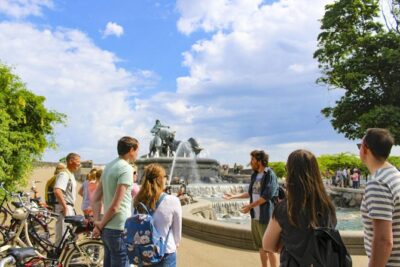
Bike Tour Copenhagen. Private Guide, Concierge Service, Small Grp
Read our review →
Browse the lists this tour appears in