
REVIEW · BERLIN
Berlin: Experience the Alternative Kreuzberg on a Bike Tour
Berlin rewards curious cyclists. This three-hour ride moves beyond the postcard sights into Kreuzberg, Friedrichshain, Kreuzkölln, and former border zones where Berlin’s past and present sit side by side. I like the personal stories from guides such as Jake, Bjorn, Karl, Rico, and Rufus, and I like that each guide can shape a different route.
The tour also gives you a useful view of Berlin’s alternative culture without requiring athletic effort. Stops come often, and the route mixes history, architecture, art, politics, and everyday city life. The main drawback is that you may spend more time listening than pedaling, and the bikes can leave a dirty chain mark on loose trousers.
You meet at Free Berlin Bike Tours & Rental on Poststraße at 2:24 pm and return there after roughly three hours. At $42.33 per person, the price is fair if you value a guide’s stories and a broad introduction to eastern and southern Berlin, though you will need to buy your own food and drinks.
Key points to know before you ride
- Kreuzberg takes center stage: You see immigrant neighborhoods, former squats, street life, parks, canals, and stark 1970s architecture.
- The Wall is part of the story: East Side Gallery, Osthafen, Oberbaum Bridge, and the former border zone connect Berlin’s past to its rapid redevelopment.
- Guides shape the route: The Free Berlin concept lets each guide design a personal ride, so no two outings are guaranteed to be identical.
- It is more cultural than sporty: Frequent stops make the ride manageable, but anyone expecting nonstop cycling may find the pace slow.
- Small groups help: The group size ranges from 4 to 15 people, with a professional guide leading in English or German depending on the option chosen.
- Bring practical clothing: The tour runs in all weather, and fitted trousers can help avoid catching fabric in the bike chain.
Why this ride shows a different Berlin
Central Berlin gives you grand boulevards, museums, and famous monuments. This ride points you toward the city’s rougher, stranger, and more ordinary corners. That is the appeal.
You pedal through areas shaped by migration, the Berlin Wall, squatting, artistic experiments, political activism, and fast property development. The guide’s job is not simply to name buildings. It is to explain why a small garden house beside the Wall mattered, how an old railway station became a park, and why a luxury car lift can sit among old apartment blocks and alternative communities.
The route is especially useful early in your Berlin stay. It gives you a mental map of districts you might otherwise skip, and several stops can become places to revisit later. One French-speaking participant appreciated having difficult terms translated into Dutch, while other comments praised guides for making complex history easy to follow. The common thread is clear: the stories are the main product.
That also explains the rating of 4.8 from 126 reviews and the 97 percent recommendation rate. The strongest praise goes to the guides’ energy, humor, local perspective, and attention to safety. The one recurring caution is pace. This is not a three-hour workout. It is a moving walking tour, with a bicycle allowing you to cover more ground.
A few more days on two wheels around Berlin worth a look
- Berlin: Sights and Highlights Bike Tour with a Local Guide
★ 4.8 · 2,698 reviews - Berlin Highlights 3-Hour Bike Tour
★ 5.0 · 948 reviews - Berlin City Bike Tour with Beer Garden Stop
★ 5.0 · 917 reviews
From Nikolaiviertel to Kreuzberg’s many identities
The meeting point is at Poststraße 11, near public transport, and the first brief stop is Nikolaiviertel. This historic-looking quarter works as a deliberate contrast to what follows. It represents an older, more established version of Berlin, complete with reconstructed streets and a tidy central-city feel.
You do not spend long here, only about five minutes. That is enough to set up the tour’s main idea: Berlin cannot be understood through its polished center alone.
From there, the ride turns toward Kreuzberg. This is the heart of the experience, and the guide uses the district to explain Berlin as a meeting place for different languages, incomes, political views, and building styles. Kreuzberg is not presented as a single neat neighborhood. It is a collection of communities and contradictions.
You might hear about the district’s Turkish influence, its former counterculture, its squatting scene, and the way redevelopment is changing streets that once felt more marginal. The best guides add personal observations rather than giving you only dates and slogans. Bjorn, Jake, Rico, Rufus, and Karl all received especially strong praise for humor, clear explanations, or thoughtful local stories.
Engelbecken and Das Baumhaus by the Wall
Engelbecken offers one of the tour’s quieter pauses. Between prefabricated buildings, older apartment blocks, and newer construction, this water feature creates an unexpected pocket of calm. It is a useful place to understand how closely different eras of Berlin architecture can sit together.
The stop lasts about ten minutes, so you have time to look around and listen without feeling rushed. It also breaks up the more intense urban scenes ahead.
Das Baumhaus, or the Treehouse by the Wall, carries a more unusual story. The stop focuses on a guest worker who arrived in Berlin, adapted quickly to Kreuzberg’s independent spirit, and claimed a small garden house beside the Wall. The tale reflects the district’s do-it-yourself attitude, where legal boundaries, official planning, and personal determination did not always align.
This is the sort of anecdote that gives the tour its character. You are not just looking at a remnant of the Wall. You are hearing how people lived beside it and how ordinary residents made their own space in a divided city.
Squats, artists, and the view from YAAM
The route includes a former squatted building that later became a place for artists. Several squats helped shape its identity, particularly during the alternative scene of the 1980s and again in the early 2000s. The building’s story shows how temporary occupation can lead to lasting cultural use.
The exact building or order can vary because guides design their own routes. That flexibility is part of the Free Berlin approach, but it also means you should treat the published stops as a guide to the themes rather than a guaranteed script.
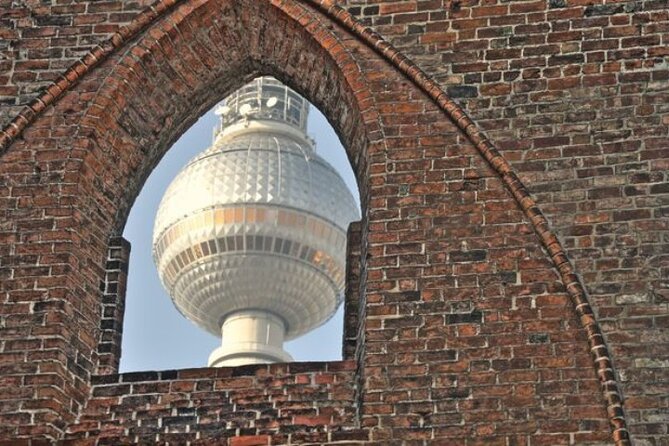
Near YAAM, the view becomes a reward in its own right. From this area, you can take in the TV Tower, Holzmarkt, Oberbaum Bridge, and the Spree. YAAM is known as a club, but the panorama from outside may be the more memorable part during daylight.
This is a good example of the tour’s mix. One minute you are discussing alternative culture and squatting. The next, you are looking at Berlin’s changing riverfront and new development. The city’s old counterculture and new investment are often only a few streets apart.
Same roads, a different day in the saddle:
- Berlin Highlights: 3-Hour Bike Tour
★ 4.9 · 809 reviews - Berlin Highlights Sightseeing Bike Tour in Small Groups
★ 5.0 · 652 reviews - Berlin: The Wall and Third Reich Guided Bike Tour
★ 4.8 · 578 reviews - Berlin: Alternative Bike Tour of Kreuzberg & Friedrichshain
★ 4.7 · 548 reviews
East Side Gallery and Oberbaum Bridge
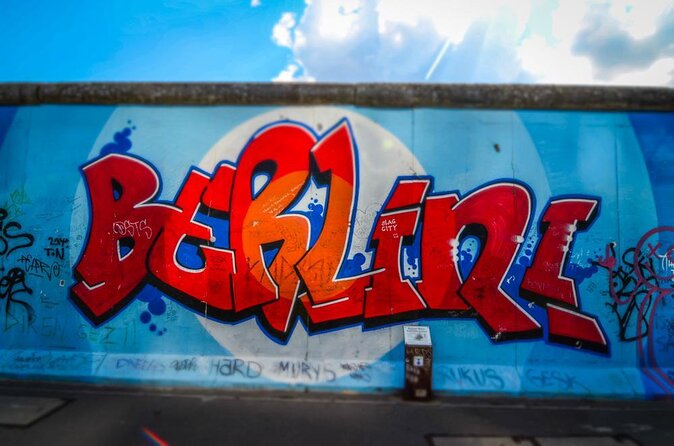
East Side Gallery is the longest remaining section of the Berlin Wall. Its painted panels turn a former barrier into a long public artwork, though the setting is no longer isolated or heavily restricted. It now sits beside a newly designed business district, making the contrast hard to miss.
You get about ten minutes here. That is enough for an introduction, but not enough for a close look at every mural. If Wall art is a major priority for you, plan to return independently with more time.
Oberbaum Bridge follows, usually with another ten-minute stop. Its arches and river crossing make it one of the district’s best-known landmarks, but the guide uses it for more than photographs. The bridge represents borders in several ways: between former East and West Berlin, between neighborhoods, and between older communities and newer commercial development.
The bridge also helps connect the tour’s two major themes. Berlin’s divisions were once enforced by concrete and guards. Today, the boundary is easier to cross, but social and economic differences remain visible.
Osthafen and a city changing fast
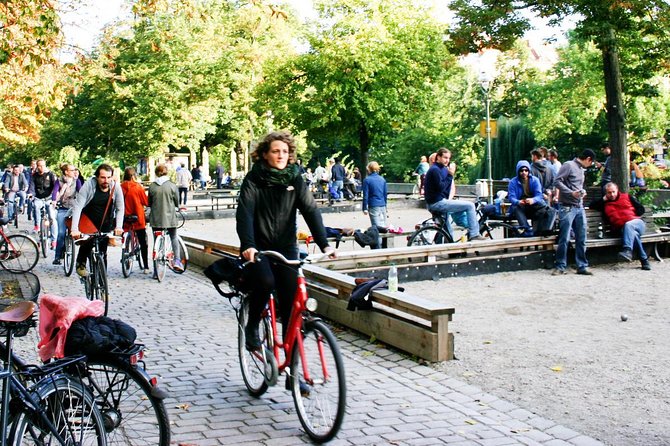
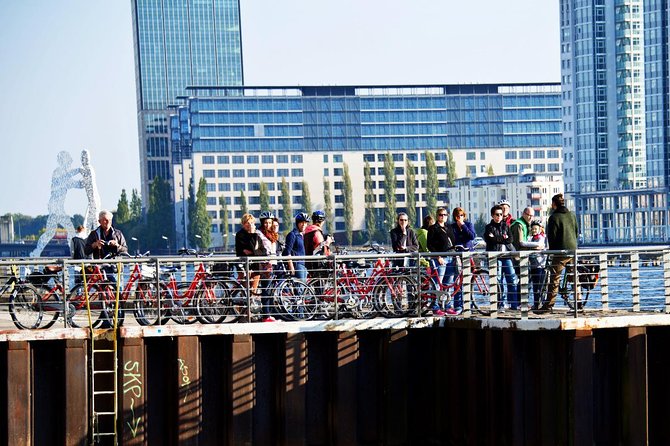
Osthafen was once restricted borderland along the Spree. Today, it attracts creative businesses, new construction, and young urban culture. The river offers a short rest, with about five minutes to pause and take in the view.
This stop is valuable because it makes the old East German border system easier to imagine. The guide explains how the Wall, river access, and restrictions shaped the area. Then you look at the same waterfront as it exists now, with redevelopment replacing much of the former emptiness.
The tour also includes a distinctive sculpture with an open-ended meaning. Its official interpretation is apparently less convincing than the competing explanations people have developed around it. That gives the stop a lighter tone after the heavier Wall history.
If you enjoy tidy historical conclusions, this may frustrate you. If you like the odd details that make a city memorable, it is a welcome change from formal monuments.
Falckensteinstraße and Görlitzer Park
Falckensteinstraße gives you a compact lesson in Kreuzberg’s variety. The street brings together different building types, people, histories, and ways of using public space. It also captures the district’s ability to feel intensely urban while offering moments of escape.
Görlitzer Park occupies the site of a former railway station. Its transformation from transport infrastructure into public park reflects Berlin’s habit of recycling old spaces for new purposes. The guide uses it to discuss the narrow line between alternative living and anarchy.
The wording may sound dramatic, but the point is practical. Kreuzberg has long attracted people who want to live outside conventional patterns. That can produce creativity, community, and freedom, but also disorder and social problems. A good guide will let you see both sides rather than turning the district into a romantic counterculture postcard.
This section is one reason the ride suits repeat visitors. You are not just checking off famous sights. You are seeing how residents, artists, activists, businesses, and city planners have all left marks on the same streets.
Liegnitzer Straße, the car loft, and waterfront life
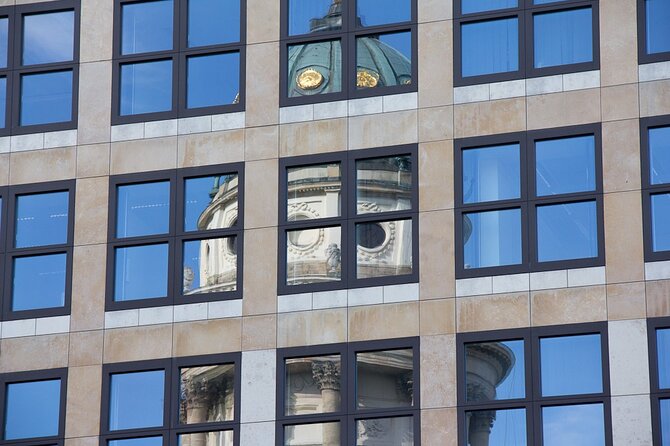
Liegnitzer Straße contains one of the tour’s strangest contrasts: a car loft where vehicles can be taken up to a balcony. It is an unmistakable symbol of wealth and engineering placed inside a neighborhood associated with activism, artists, and long-time Berlin residents.
The point is not simply that the building is unusual. It shows how different versions of Berlin can occupy the same block. Alternative culture and high-end development are not separate worlds here. They often meet face to face.
The route then moves toward a waterfront setting associated with Turkish markets on Tuesdays and Fridays. The market detail matters if you are planning your trip around food or local shopping. Food and drinks are not included in the tour, so you should budget separately if you want to eat along the way.
Another stop offers a slower, bohemian mood, with people playing boule and enjoying a break from the city. The contrast is deliberate. Kreuzberg can feel rough, social, commercial, relaxed, political, and fashionable within a short ride.
Admiral Bridge and Kottbusser Tor
Admiral Bridge is a classic Kreuzberg meeting place. You can imagine starting an evening at a bar or watching the summer sunset with strangers gathered around. The guide presents it as a place where you do not need a special role or dress code. You simply arrive as you are.
That easygoing atmosphere quickly changes at Kottbusser Tor. Known locally as Kotti, it has heavy traffic, stark 1970s architecture, and a visible drug scene. It is not polished, and that is exactly why it matters to the tour.
Kotti gives you a direct look at the social pressures that sit behind Berlin’s creative image. The ride does not treat Kreuzberg as only cool cafés, murals, and nightlife. It also shows difficult public spaces and the hard edge of city life.
This final contrast makes the route more honest. You see the district’s pleasures, but you also see the strains caused by poverty, drugs, traffic, and redevelopment.
How much cycling is involved?
The ride lasts about three hours and is described as suitable for most people, including families. Children must be accompanied by an adult, and infant seats can be provided on request.
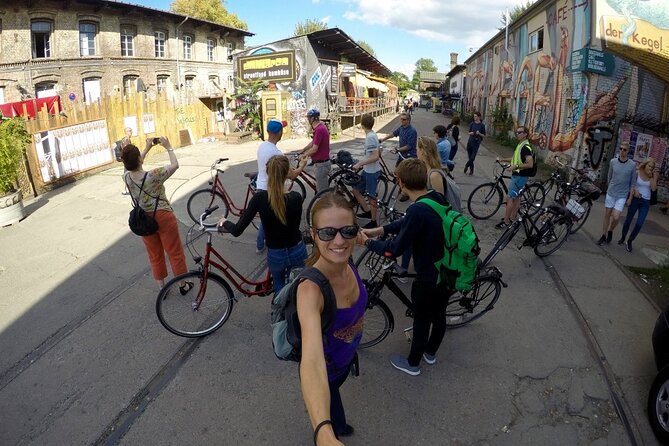
You receive a bicycle, helmet, and professional guide. The group can include 4 to 15 people, which is small enough for questions but large enough that you should stay close to the guide at busy crossings.
Expect frequent stops. One rating specifically noted that the experience included more explanation and less cycling than expected. That is helpful information. If you want speed, exercise, or long uninterrupted stretches on two wheels, choose a more athletic cycling tour. If you want context, photos, and time to ask questions, this format works well.
The tour operates in all weather, so dress for the forecast. Rain did not stop one outing, but wet conditions can make any city ride less comfortable. Fitted trousers are also sensible because a loose trouser leg may brush the chain.
Price, timing, and who gets the best value
At $42.33, this is not the cheapest way to move around Berlin, but the bicycle, helmet, guide, and three hours of local interpretation make the cost reasonable. You are paying for access to a route that would be difficult to assemble on your own, plus the explanations that connect scattered places.
The strongest value comes if you are new to Berlin, interested in the Wall and counterculture, or planning to spend more time in Kreuzberg afterward. The ride helps you decide where to return for markets, parks, nightlife, river views, or further exploration.
The tour is offered in English, with German available depending on the selected option. Confirmation arrives at booking, and free cancellation is available up to 24 hours before the start time. The minimum group requirement matters, especially in low season, since an outing can be changed or canceled if too few people book.
Should you book the Kreuzberg bike tour?
Book it if you want Berlin’s less formal side explained by an energetic guide, and if you enjoy moving between art, Wall history, migration, architecture, and daily life. It is particularly good near the start of a visit, when its wide route can help you decide where to return.
Skip it if you want a fast ride, a tightly fixed route, or long visits at major sights. The experience is built around stopping and talking. For most people, that is the point. You get a thoughtful introduction to Kreuzberg and nearby districts, with enough odd details to make Berlin feel like a living city rather than an open-air museum.
FAQ
Where does the bike tour begin?
It begins at Free Berlin Bike Tours & Rental, Poststraße 11, 10178 Berlin, Germany.
What time does the tour start?
The stated start time is 2:24 pm.
Where does the tour finish?
The tour ends back at the meeting point.
How long does the experience last?
The bike tour lasts approximately three hours.
What is included in the price?
The price includes use of a bicycle, a helmet, and a professional guide.
Is the tour offered in English?
Yes. English is available, and German is offered depending on the option selected.
How many people can join the tour?
The group has a minimum of 4 and a maximum of 15 participants.
Are children allowed?
Yes. Children are welcome, but they must be accompanied by an adult. Infant seats can be provided on request.
Does the tour run in bad weather?
Yes. It operates in all weather conditions, so you should dress appropriately.
Can I cancel for a full refund?
Yes, if you cancel at least 24 hours before the experience starts. Cancellations or changes made less than 24 hours before the start time are not accepted for a refund.
Just added around Berlin
- Berlin Wall and Cold War Bike Tour in Small Groups★ 5.0 · 114 reviews
- Alternative Berlin Bike Tour – Off the Beaten Tracks in Small Groups★ 5.0 · 99 reviews
- Berlin: Guided Private Bike Tour to Explore the Highlights★ 5.0 · 12 reviews
- Berlin : The best bike tour with a Berlin guide and insider tips★ 5.0 · 14 reviews
- Potsdam Bike Tour with Rail Transport from Berlin★ 4.5 · 81 reviews
- Berlin: Guided Bike tour of the Berlin Wall and Third Reich★ 5.0 · 160 reviews
- Berlin : Guided Private Sightseeing Tours with Funbikes, Teambikes★ 5.0 · 20 reviews
- Small-Group Berlin Wall Bike Tour★ 5.0 · 17 reviews
Berlin Cycling Tours, compared.
Sights and Highlights Bike Tour with a Local Guide
Read our review →
Berlin Highlights Sightseeing Bike Tour in Small Groups
Read our review →
Alternative Bike Tour of Kreuzberg & Friedrichshain
Read our review →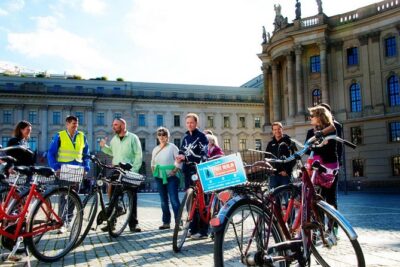
Browse the lists this tour appears in