
REVIEW · BERLIN
Berlin: Experience the Alternative Kreuzberg on a Bike Tour
Berlin’s rough edges tell the best stories. This relaxed 17-kilometer bike tour links Kreuzberg, Friedrichshain, Neukölln, and Treptow through quiet side streets, canal paths, and former Wall districts. I like the mix of street culture and serious history, and I like that local guides such as Vincent, Carl, Jake, and Fiona make the stops personal. The main consideration is that Berlin weather can shape the experience, especially on a hot or rainy day.
I also appreciate the easy pace. You stop every few minutes, so this is not three hours of hard pedaling. The route covers a lot, but the group size of up to 15 keeps it friendly and manageable. If you want grand museums and royal buildings, this is not your tour. If you want to see how Berliners live now, it is a strong choice.
Key points before you book
- About 17 kilometers in three hours: You ride steadily, but frequent five-minute stops keep the outing from becoming a workout.
- A local look at Berlin: The route focuses on alternative projects, nightlife districts, street art, former squats, and social change.
- Four very different districts: Kreuzberg, Friedrichshain, Neukölln, and Treptow show how sharply Berlin can change from one neighborhood to the next.
- Quiet routes where possible: Most riding takes place on side streets and bike paths, with scenic stretches beside the Spree and Landwehr Canal.
- Bikes and rain gear included: You get a rental bike, a basket, and a helmet if you request one. Ponchos are available if the weather turns.
- Good value at $41: The price covers three hours, the bike, a guide, and a route that reaches places a standard central-city tour skips.
Starting in Nikolaiviertel, then leaving the postcard Berlin
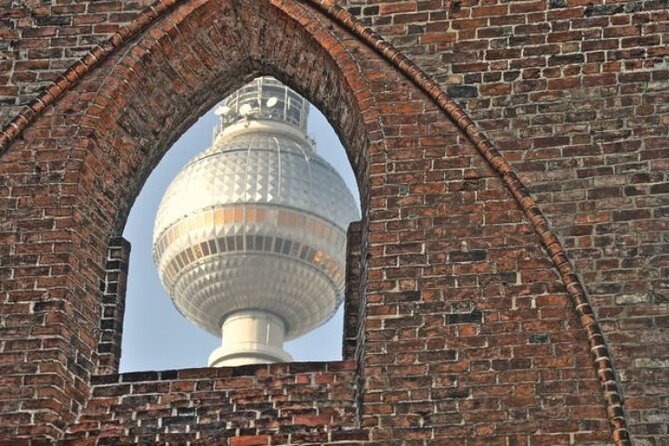
You meet at Free Berlin Bike Tours & Rental in the courtyard entrance at Poststraße 11. Look for the FREE BERLIN sign. The office is in Nikolaiviertel, about five minutes from the TV Tower, which makes the start easy to reach from central Berlin.
Nikolaiviertel is a fitting place to begin. It presents a more polished, historic version of the city, while the ride soon shifts toward Berlin’s rougher and more experimental districts. That contrast sets up the whole outing: renovated buildings beside improvised projects, glossy new development beside old working-class streets.
The guide gives a short introduction before the group sets off. Because the guides can adjust the route to the group and current events, no two outings are promised to be exactly alike. That flexibility is useful in Berlin, a city where construction, new venues, political projects, and neighborhood changes can alter what you see from one year to the next.
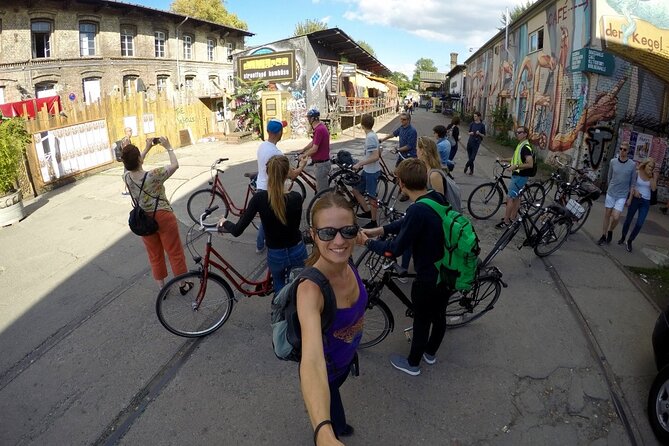
You ride with a small group of up to 15 people. That is large enough to create a social mood, but small enough for the guide to answer questions and keep an eye on the group. The pace is described as relaxed, and the frequent stops mean you are not expected to pedal hard for three straight hours.
A few more days on two wheels around Berlin worth a look
- Berlin: Sights and Highlights Bike Tour with a Local Guide
★ 4.8 · 2,698 reviews - Berlin Highlights 3-Hour Bike Tour
★ 5.0 · 948 reviews - Berlin City Bike Tour with Beer Garden Stop
★ 5.0 · 917 reviews
The Treehouse and Berghain: Berlin’s alternative side
The Treehouse is one of the first unusual stops. Its name points to the kind of creative, improvised urban project that gives this part of Berlin its character. The guide uses the stop to explain how residents have claimed small corners of the city and turned them into personal or community spaces.
Next comes the area around Berghain Panorama Bar. Even if you are not interested in clubbing, the stop helps explain Berlin’s international nightlife reputation. The guide connects the club scene to the city’s wider culture of former industrial sites, unusual buildings, and spaces that have been repurposed for art and music.
Do not expect to enter the club. This is an outdoor stop with a short talk, not a nightlife ticket. The value is in the context. You learn how places associated with Berlin’s after-dark identity fit into the city’s changing neighborhoods.
This section also shows why the tour works best for people interested in urban life rather than a checklist of famous monuments. You are not simply looking at buildings. You are hearing why a place matters, how its use has changed, and what tension surrounds it now.
East Side Gallery and Oberbaumbrücke connect Wall history with modern Berlin
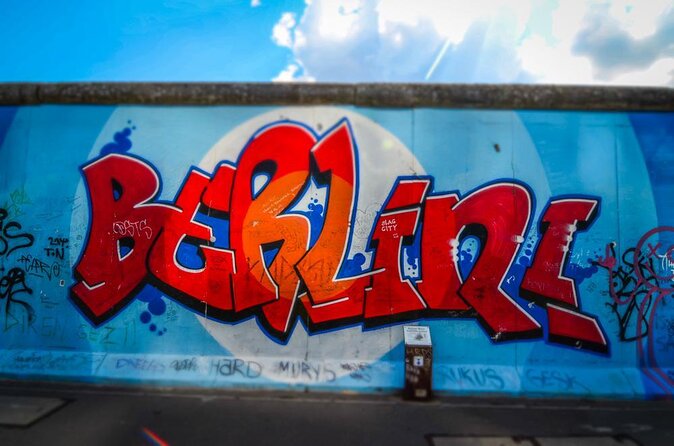
The East Side Gallery provides one of the clearest historic moments on the route. The long painted section of the former Berlin Wall turns political history into a public art walk. You stop for photographs and hear about the Wall, its fall, and the way Berlin rebuilt itself afterward.
The short stop is enough to give the area meaning, but it is not a full museum visit. If the Wall is your main reason for coming to Berlin, you will need a separate visit to a more detailed memorial or museum. Here, the focus is on how Wall history sits inside a living neighborhood.
Oberbaumbrücke is another photo stop and one of the route’s most recognizable structures. Its towers and arches make a strong picture, but its importance goes beyond appearance. The bridge links districts that were once separated by the Wall and now form part of Berlin’s creative and nightlife corridor.
The ride between these points matters as much as the stops. You move through streets where office blocks, apartments, clubs, and old industrial buildings meet. That mixture helps you understand the city better than a single historic sight can.
RAW-Gelände and the houseboat: rough edges beside new money
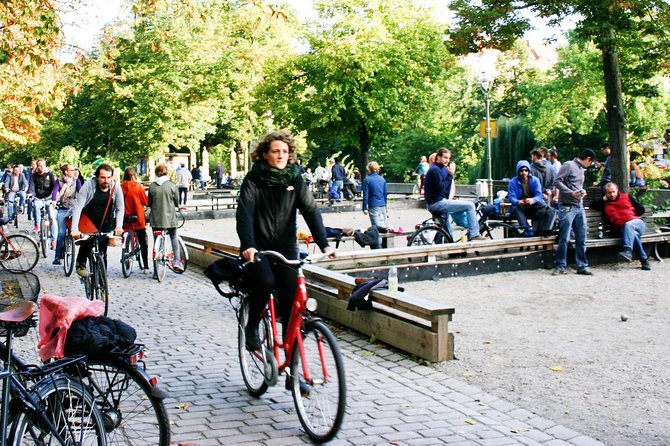
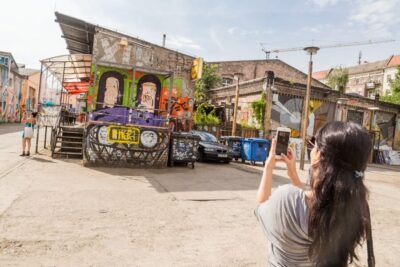
RAW-Gelände is a major stop for seeing Berlin’s alternative culture in physical form. The former industrial grounds have been used for art, music, nightlife, and other creative projects. The area also raises a question that runs through the entire tour: how long can informal culture survive once a district becomes fashionable?
Your guide explains that tension without reducing it to a simple good-versus-bad story. Berlin’s creative spaces attract people, money, and development. The same attention that helps a neighborhood grow can also make it harder for older projects and lower-cost communities to remain.
The Berlin Tag und Nacht houseboat adds another unusual detail. It is an example of how water, entertainment, and media culture overlap in the city. You receive a short explanation rather than a long visit, so keep your expectations practical. This is a moving city tour, not a series of indoor attractions.
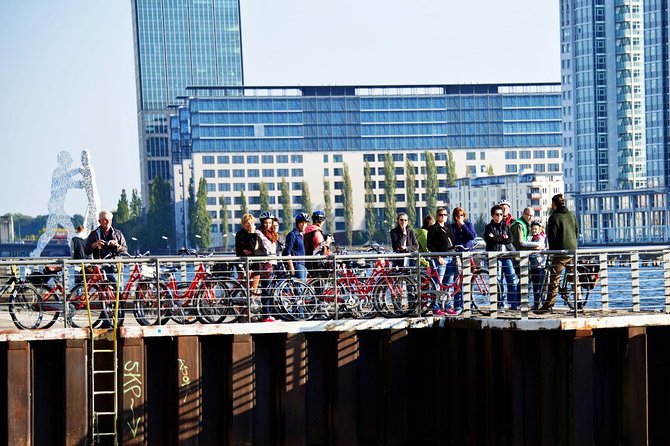
Molecule Man appears next, set on the Spree. The large metal sculpture is easy to photograph from the river area and gives the guide another chance to discuss Berlin’s public art and changing waterfront. Along the Spree, the city’s contrast is especially clear: old industrial traces and alternative spaces face newer, more polished development.
Same roads, a different day in the saddle:
- Berlin Highlights: 3-Hour Bike Tour
★ 4.9 · 809 reviews - Berlin Highlights Sightseeing Bike Tour in Small Groups
★ 5.0 · 652 reviews - Berlin: The Wall and Third Reich Guided Bike Tour
★ 4.8 · 578 reviews - Berlin: Alternative Bike Tour of Kreuzberg & Friedrichshain
★ 4.7 · 548 reviews
Club der Visionäre, Wrangelkiez, and Görlitzer Park
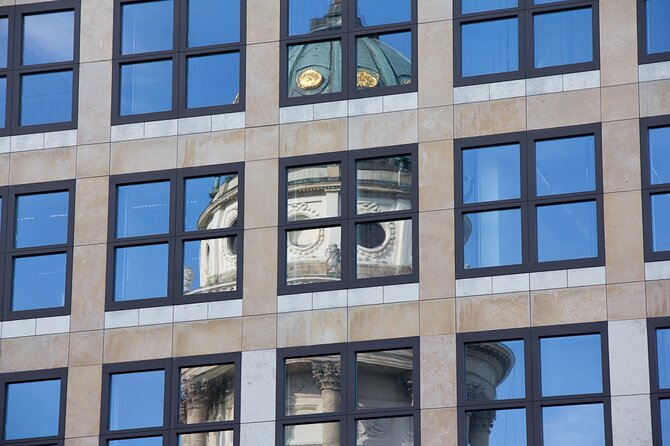
Club der Visionäre brings the route back to Berlin’s open-air nightlife culture. Its canal-side setting helps explain why waterways are part of the city’s social life, not just scenic backdrops. Again, you see the place from outside and hear its role in the neighborhood.
Wrangelkiez offers a closer look at everyday Kreuzberg. The term refers to the neighborhood around Wrangelstrasse, an area shaped by immigrant communities, small businesses, nightlife, and rising property pressure. This is one of the better places to pay attention to the guide’s comments about social change.
Görlitzer Park adds another layer. The park is a major public space in the district, and discussion here can touch on how parks serve residents, how public concerns shape a neighborhood, and why Kreuzberg has such a complicated reputation. The stop is brief, so you will not get a full tour of the park. You will get a sharper sense of how public space fits into city life.
Some riders may find the themes less comfortable than a standard sightseeing tour. That is part of the point. The guide does not present Berlin as a perfectly restored capital. You see both the charm and the problems.
Neukölln by bike: CarLoft Modul, Maybachufer, and Admiralbrücke
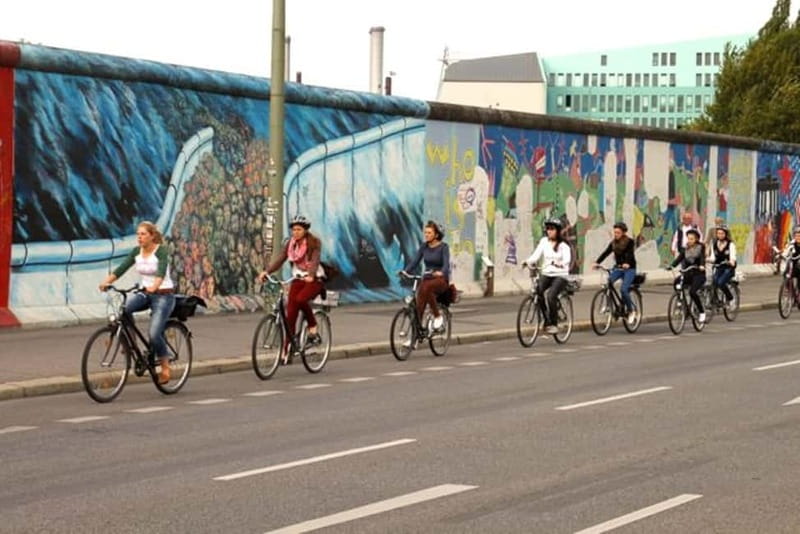
The route then reaches Neukölln, where redevelopment and older neighborhood life sit close together. CarLoft Modul GmbH is an unusual stop connected with innovative urban design. Its presence shows how Berlin experiments with housing and architecture, even as the city struggles with affordability and growth.
Maybachufer shifts the mood toward the canal. The waterway gives you a pleasant riding stretch and a view of daily neighborhood life. It is also a place where the guide can explain how markets, apartment blocks, public spaces, and new businesses have changed the district.
Admiralbrücke is a photo stop and a good place to appreciate the Landwehr Canal. The bridge has long been associated with informal social life, particularly in warm weather. You are not spending an afternoon here, but the stop helps you see how a simple bridge can become a gathering point in a dense city.
This part of the route is especially useful if you have already seen central Berlin. You get away from the big-ticket sights and into districts where the city’s current debates are visible in the streets. The tradeoff is that the experience may feel less tidy and less predictable than a conventional monument tour.
Kottbusser Tor, Rio-Reiser-Platz, and Künstlerhaus Bethanien
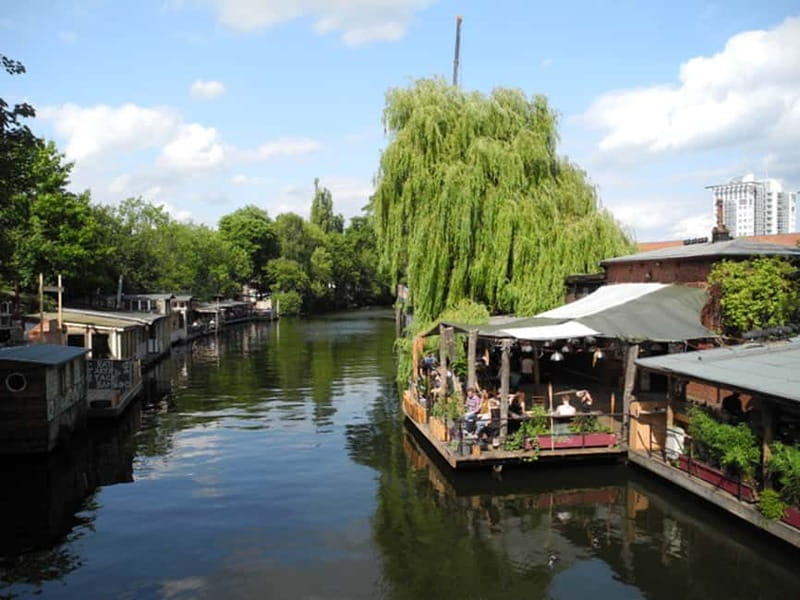
Kottbusser Tor is one of Berlin’s busiest and most recognizable urban junctions. It is not conventionally pretty, but it is important for understanding Kreuzberg’s transport links, immigrant communities, housing pressure, and nightlife. The guide puts the surroundings into context so you can look past the traffic and concrete.
Rio-Reiser-Platz offers a more cultural pause. Named for musician Rio Reiser, the square connects Berlin’s political and musical traditions. It is a reminder that alternative Berlin is not only about clubs and street art. Music, protest, community organizing, and local identity are all part of the story.
The final major stop is Künstlerhaus Bethanien, a former hospital complex used for art and cultural work. It makes a fitting ending because it brings together architecture, creativity, and neighborhood change. Buildings like this show how Berlin has reused older spaces instead of wiping the past away entirely.
The tour then returns to the starting office in Nikolaiviertel. You finish with a much broader sense of Berlin than you would get from staying in the historic center. The route has taken you through districts that are not simply alternative for show. They are places where real housing, cultural, and political questions play out.
How difficult is the 17-kilometer ride?
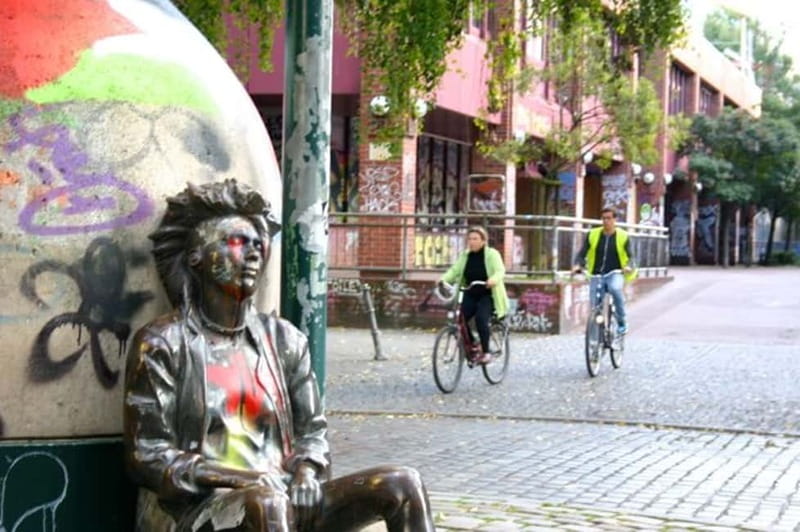
You should be comfortable riding a bicycle for three hours, but you do not need to be an athlete. The distance sounds substantial, yet the frequent stops break it into manageable sections. One rider described the outing as safe, with a sturdy bike and plenty of pauses rather than nonstop cycling.
The route mostly uses quiet side streets and bike paths, but you are still riding in a large city. Pay attention, follow the guide, and stay with the group. Guides have adjusted the pace for families and mixed abilities, and one family described the guide taking care to keep everyone safe in hot weather.
Bikes come with baskets and are serviced by certified mechanics. A helmet is available if you request one. Infant seats can also be provided on request, and children are welcome, making this a practical option for families who want something beyond museums.
Berlin weather deserves respect. Summer heat can make the ride tiring, while rain can affect comfort even with the provided ponchos. Spring, early autumn, and mild summer days should make the cycling more pleasant, but the flexible cancellation policy gives you some protection if your plans change. You can cancel up to 24 hours in advance for a full refund.
What $41 buys you
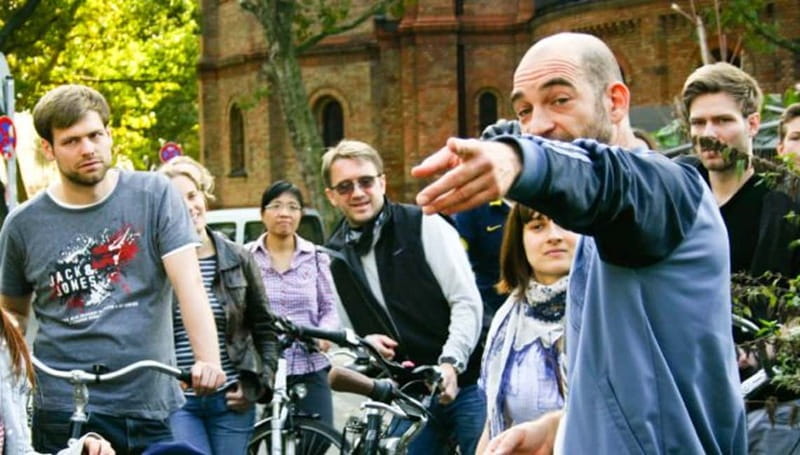
At $41 per person, the tour offers solid value. You receive a bike, a three-hour guided route, short talks at a long list of stops, and access to districts that are not always easy to understand on your own.
You are also paying for interpretation. Anyone can cycle past the East Side Gallery or Kottbusser Tor. A good guide explains why those places matter and how they connect. Guides such as Vincent, Peter, Theo, Carl, Fiona, Björn, and Jake have been praised for personal stories, humor, local insight, and careful pacing.
The price is less attractive if you want extended time at each stop. Most talks last about five minutes, with another five to ten minutes of riding between points. You will see a lot, but you will not spend long inside museums, galleries, or attractions.
The reserve-now-and-pay-later option is useful if your schedule is still shifting. You can also request a private tour, choose a starting time, and adjust the route to your interests. That will likely cost more, but it makes sense for families, private groups, or anyone who wants more time at a particular neighborhood or theme.
Who will enjoy this Berlin bike tour?
I would choose this outing if you want to understand Berlin’s present-day culture, not just its famous past. It suits curious first-time visitors who have already seen some central sights, as well as repeat visitors who want a fresh route.
It is especially good for:
- People interested in street art, music, nightlife, architecture, and social change
- Families who want an active outing with regular stops
- Visitors who prefer local stories to formal sightseeing
- Riders who want to cover several districts in one morning or afternoon
- Anyone who enjoys seeing contrasts rather than polished attractions
I would think twice if you dislike city cycling, dislike discussing gentrification and social problems, or want a slow museum-focused experience. You should also allow extra energy on a hot day. This is relaxed, but it is still a 17-kilometer ride.
The strongest part of the experience is the guide. The route matters, but the storytelling makes the difference. Vincent has been singled out for personal stories and humor, while Carl, Jake, Fiona, and Björn have also been praised for making the ride engaging and clear. Since guides shape their own routes, your exact emphasis may vary.
Should you book it?
Book this tour if you want to see Berlin’s alternative districts as working neighborhoods rather than tourist backdrops. For $41, you get a bike, a well-paced three-hour route, and a useful explanation of how the city changed after the Wall fell.
Skip it if your Berlin wish list is limited to Museum Island, palace interiors, and World War II memorials. For everyone else, especially families, repeat visitors, and people curious about the city’s creative side, this is one of the better ways to get your bearings fast while seeing Berlin’s polished and wonderfully rough sides together.
FAQ
Where does the bike tour begin?
It begins at Free Berlin Bike Tours & Rental in the courtyard entrance of Poststraße 11. Look for the FREE BERLIN sign in Nikolaiviertel.
How long does the tour last?
The tour lasts three hours.
How far do you ride?
The route covers roughly 17 kilometers.
Which Berlin districts does the route visit?
It includes Kreuzberg, Friedrichshain, Neukölln, and Treptow, with riding along side streets, bike paths, the Spree River, and the Landwehr Canal.
Is the bike included in the price?
Yes. A rental bike of your choice is included.
Can I request a helmet?
Yes. Helmets are available if requested.
What happens if it rains?
Waterproof ponchos are provided in case of rain.
Are children allowed to join?
Yes. The tour is family-friendly, and infant seats can be provided on request.
Which languages are available?
The live tour guide can lead the experience in English, German, or French.
Can I book a private tour?
Yes. Private tours are available, with a personal starting time and a route that can be adjusted to your interests.
Just added around Berlin
- Berlin Wall and Cold War Bike Tour in Small Groups★ 5.0 · 114 reviews
- Berlin: Guided Private Bike Tour to Explore the Highlights★ 5.0 · 12 reviews
- Berlin : The best bike tour with a Berlin guide and insider tips★ 5.0 · 14 reviews
- Alternative Berlin Bike Tour – Off the Beaten Tracks in Small Groups★ 5.0 · 99 reviews
- Potsdam Bike Tour with Rail Transport from Berlin★ 4.5 · 81 reviews
- Berlin: Guided Bike tour of the Berlin Wall and Third Reich★ 5.0 · 160 reviews
- Berlin : Guided Private Sightseeing Tours with Funbikes, Teambikes★ 5.0 · 20 reviews
- Small-Group Berlin Wall Bike Tour★ 5.0 · 17 reviews
Berlin Cycling Tours, compared.
Sights and Highlights Bike Tour with a Local Guide
Read our review →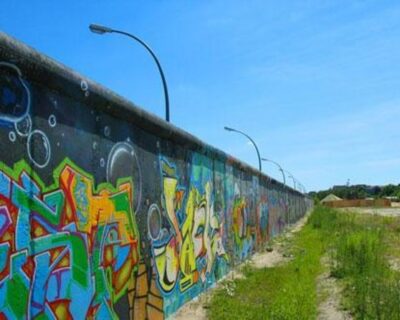
Berlin Highlights Sightseeing Bike Tour in Small Groups
Read our review →
Alternative Bike Tour of Kreuzberg & Friedrichshain
Read our review →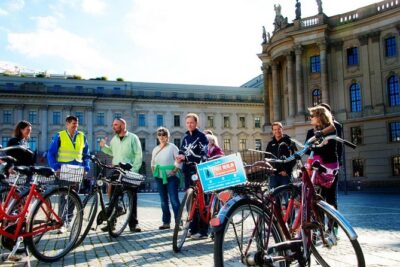
Browse the lists this tour appears in