REVIEW · ROMANIA
Bucharest Half a Day Bike Tour
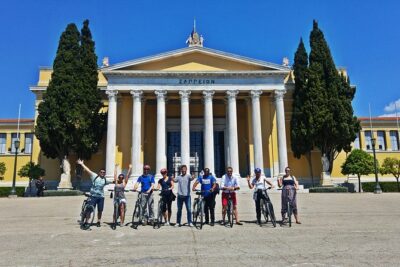
Start with Bucharest’s big stories on two wheels. This four-hour ride with Bike the City gives you a useful first look at the capital, linking old monasteries, grand boulevards, communist monuments, and the city’s most important political sites. I like the easy pace and the way the route covers far more ground than a walking tour. I also like the mix of famous places and smaller corners, including Hanul Gabroveni and Manuc’s Inn.
The main caution is Bucharest’s traffic and uneven cycling conditions. Construction, pedestrians, and stretches that are not designed with bikes in mind can interrupt the ride. Still, the route is generally flat, with only one short hill noted in the tour feedback, and guides such as Lucia, Dan, Ed, Eduard, and Alex receive repeated praise for clear English, good stories, and a friendly manner.
Key points to know before booking
- Four hours of sightseeing by bicycle: You cover central Bucharest without spending the whole morning on foot.
- A strong history focus: The ride connects Ottoman influence, royal Romania, Jewish heritage, communism, and the 1989 revolution.
- A relaxed cycling pace: Stops for photos and explanations keep this from feeling like a race.
- Good equipment included: A bicycle and helmet are provided, and e-bikes are available according to tour feedback.
- A useful first-day activity: Guides offer suggestions for food, museums, drinks, and places to explore later.
- City riding requires some flexibility: Construction and pedestrian areas can make the cycling less smooth than in a purpose-built bike city.
Why this four-hour ride works well in Bucharest
Bucharest is spread out enough that walking can leave you with a narrow view of the city. You might spend hours around the Old Town and still miss the Palace of Parliament, the former civic center, Revolution Square, and the long boulevards that reveal the capital’s royal and communist past.
A bicycle fixes that problem. You move between districts quickly, but you still travel slowly enough to notice façades, courtyards, churches, and street life. The route is not simply a list of monuments. It gives you a basic timeline for Bucharest, from early religious foundations and trading inns to royal rule, dictatorship, and the end of communist government.
The guides also add personal context. Lucia is praised for explaining history in an easy-to-follow way and for sharing her experience of living in the city. Dan brings in Romanian politics and daily life, while Ed is described as a strong storyteller with wide knowledge of the country’s past and culture. Alex receives similar praise for keeping the ride interactive and at a comfortable speed.
That variety matters. A bike tour can feel thin if the guide only names buildings. Here, the best part is the connection between places. You hear why a church matters, then cycle a short distance to a former seat of power, then see how communist planning changed the city around it.
A few more days on two wheels around the world worth a look
- Lion City Bike Tour of Singapore
★ 5.0 · 6,211 reviews - Big Bike tour Amsterdam – See all in 3 unforgettable hours
★ 4.7 · 4,929 reviews - 3-Hour Porto Highlights on a Electric Bike Guided Tour
★ 5.0 · 4,392 reviews
Starting at Strada Operetei 12
The tour begins at Strada Operetei 12 at 10:00 in the morning and returns to the same meeting point. The opening portion, listed as Bike the City, takes about 10 minutes and serves as the start of the route rather than a major sightseeing stop.
You can expect to receive the included bicycle and helmet before heading into central Bucharest. The tour is offered in English, and the guides are repeatedly praised for speaking clearly and making explanations easy to follow. That is especially helpful on a route filled with unfamiliar names and political events.
Starting at 10:00 has a practical advantage. You get a full morning and early afternoon activity without needing to navigate Bucharest at dawn. In hot weather, however, four hours on a bicycle can still feel demanding. One ride took place in temperatures around 35 degrees Celsius, with the guide choosing a gentle pace and shaded stops. If you are visiting in warm weather, bring water and dress for the conditions. Water stops have been part of some tours, but food and drinks are not included in the price.
Banks, monasteries, and the oldest layers of the city
Early stops include the National Bank of Romania and one of Bucharest’s oldest monasteries. These places begin the tour with a look at the city before the communist period.
The National Bank helps show Bucharest as a financial and commercial center. It is a useful counterpoint to the later political landmarks because it points to institutions that survived major changes in government. The monastery adds another layer, connecting the city to Orthodox religious life and older traditions.
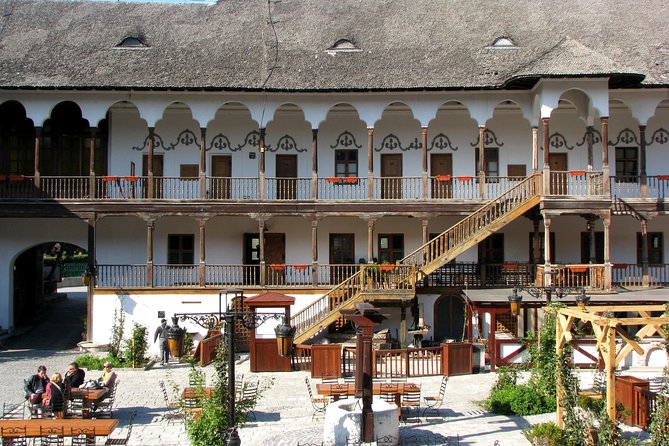
The route then moves toward Hanul Gabroveni, a former inn with Oriental architectural touches and a small photo gallery focused on old Bucharest. You only spend about five minutes here, so this is a quick visual stop rather than a long gallery visit. Even so, it gives you a glimpse of a city shaped by trade and contact with the Ottoman world.
Manuc’s Inn continues that theme. The stop takes about five minutes and introduces the influences behind Romanian traditional food. You will not receive a meal here, since food and drinks are not included, but the setting helps connect architecture and cuisine to Bucharest’s position between different cultural worlds.
I like this early section because it avoids presenting Romania as only a communist-era destination. You see that the city’s identity was already formed by religion, commerce, architecture, and regional exchange long before the twentieth century.
The new civic center and Bucharest’s changing identity
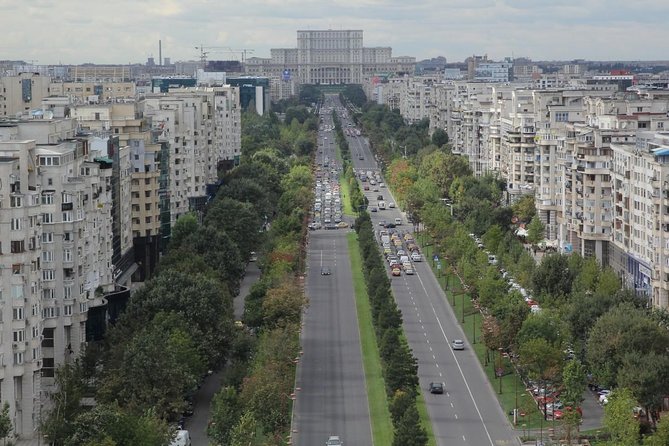
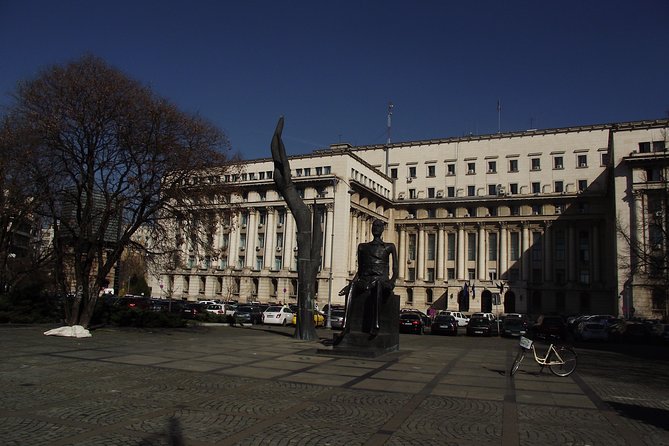
From the old inns, the ride moves toward the new civic center, the planned district associated with Nicolae Ceaușescu’s communist government. This shift can feel abrupt, and that is the point. Historic streets give way to a much larger, more controlled urban vision.
The tour also includes a playful reference to the place where you get yourself a smart wife or husband. The supplied route does not identify the exact location by name, so you will need to rely on the guide’s explanation during the ride. It appears to be one of the local cultural points that adds humor to an otherwise serious history lesson.
Another stop focuses on Bucharest’s Romanian Jewish community. This is important because the city’s story is not limited to rulers and buildings. The Jewish community formed part of Bucharest’s social and cultural life, and the stop broadens the tour’s view of who shaped the capital.
The route works best when you listen for these links. You are not just passing from one monument to another. You are watching the city move from commercial crossroads to royal capital, then to a heavily controlled communist center.
Same roads, a different day in the saddle:
- Ninh Binh Full-Day Tour from Hanoi to Hoa Lu, Tam Coc & Mua Cave Via Boat & Bike
★ 5.0 · 4,384 reviews - Small Group Guided Bike Tour of Amsterdam’s Hidden Gems
★ 5.0 · 3,936 reviews - 3-hour Complete Prague Bike Tour
★ 5.0 · 3,674 reviews - Bangkok: Temples, Canals & Local Life Bike Tour
★ 4.9 · 3,511 reviews
Palatul Patriarhiei and the first Romanian Parliament
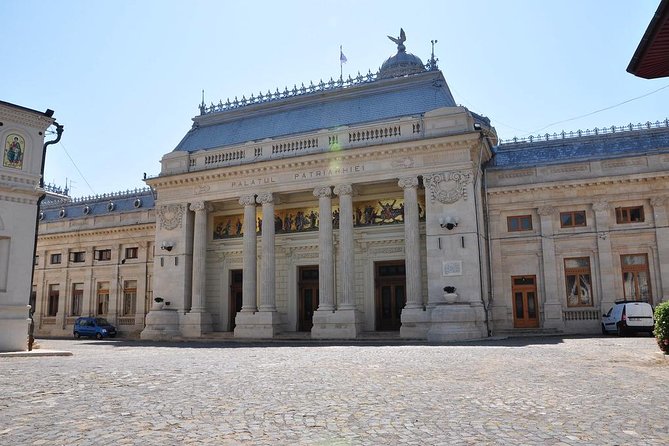
Palatul Patriarhiei is one of the longer stops, at around 10 minutes. The building is tied to the first Romanian Parliament, making it an important point for understanding the country’s political development.
The name can be confusing because the site is also closely linked to Romania’s Orthodox religious institutions. Your guide helps sort out those layers, explaining how religion and government have shared space and influence in Romanian public life.
This is a good place to pause and ask questions. The tour’s strongest guides are not simply reciting dates. They explain how institutions shaped modern Romania and how earlier systems still affect the city. Dan, Lucia, Ed, and Alex are all praised for answering questions and keeping the tone friendly rather than academic.
The ten-minute format also keeps the tour moving. You get enough time for an explanation and photographs, but you are not stuck indoors or at one monument for half an hour.
Manastirea Antim and the role of religion
Manastirea Antim provides another 10-minute stop, this time focused directly on religion in Romania. The monastery offers a calmer contrast to the broad civic spaces and heavy political subjects elsewhere on the route.
This part is valuable if you want to understand why churches and monasteries matter so much in Bucharest’s story. The tour does not treat religion as a decorative extra. It places Orthodox traditions alongside royal authority, community life, and the political changes that followed.
You should keep your expectations realistic. This is a guided overview, not an extended religious visit or a formal interior tour. The stop is short, and the main value comes from the explanation and the position of the monastery within the wider route.
The Palace of Parliament and communist ambition
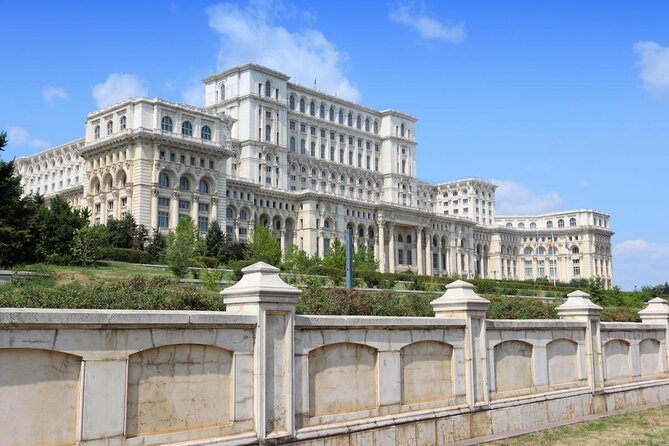
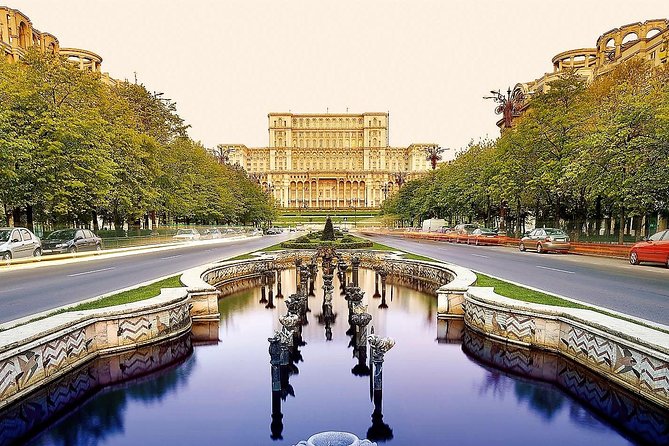
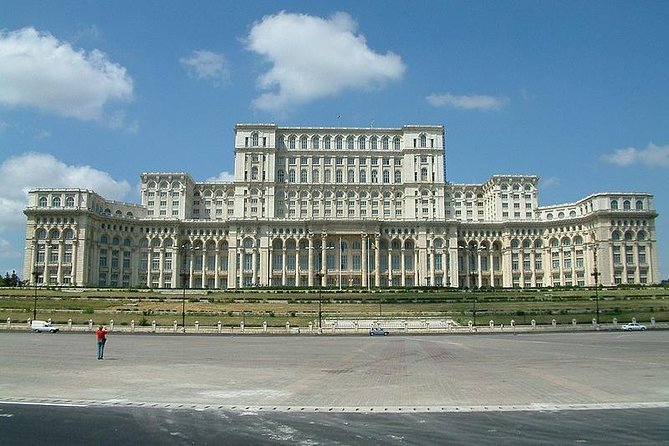
The Palace of Parliament is the tour’s largest visual statement. It represents the last major megalomaniac communist project and the scale of Ceaușescu’s rebuilding program.
The ride gives you time to stop, take photographs, and hear how the building fits into the new civic center. You will not be taking a full interior tour as part of this experience. The attraction here is the exterior, the surrounding plan, and the story of how an entire part of Bucharest was reshaped.
This is one of the places where a bicycle makes a clear difference. The building is too large to understand from one close viewpoint. Cycling around the wider area lets you grasp its scale and its relationship to the boulevard and surrounding government architecture.
The subject can be politically heavy, but the guides keep it approachable. The strongest feedback describes explanations of the Ceaușescu years, Romanian politics, and the communist past as easy to absorb. One guide even gave a full semester’s worth of history and political science in a way that remained comfortable during the ride.
Parks, boulevards, and the royal city
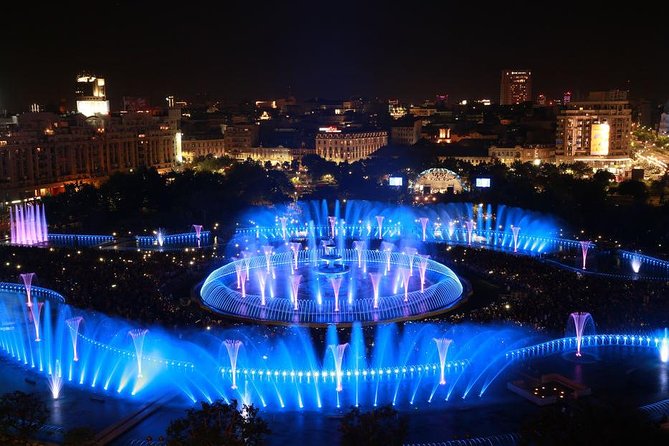
After the Palace of Parliament, the route takes in Bucharest’s first park, communist futuristic architecture, the city’s main old boulevard, notable older buildings, and the royal dynasty.
These short stops help you read Bucharest as an urban collage. One block may show nineteenth-century or royal-era design, while another reflects communist planning. The contrast is one of the city’s defining features, and you see it more clearly from a bicycle than from a vehicle.
The old boulevard gives you a sense of the capital’s formal side. It was built for movement and display, while the older architecture adds detail and texture. The royal references then bring the story back to Romania’s monarchy and the period when Bucharest looked toward European royal capitals.
Because the route covers so much ground, explanations may vary by guide and group. Some stops are only five or ten minutes. That is enough for orientation, but not enough for a detailed architectural study. If you want long museum visits or time inside every church, this is not the right format. If you want a broad city map in your head, it works very well.
Revolution Square and the end of communist rule
The final major stop is Revolution Square, where the tour addresses the end of the communist regime. This is the natural closing chapter after the Palace of Parliament and the civic center.
The square gives the earlier stops a clear conclusion. You have seen the institutions, streets, and buildings shaped by the communist state. Here, the focus turns to the collapse of that system and the changes that followed.
A guide can make this stop especially meaningful by explaining not only what happened, but how the events affected ordinary Romanian life. The tour feedback repeatedly praises guides for discussing both national history and personal experience. That human angle keeps the subject from becoming a string of dates.
The ride then returns to Strada Operetei 12. You finish with a better sense of where Bucharest’s main districts sit in relation to one another, plus practical suggestions for museums, restaurants, drinks, and further sightseeing.
Bikes, pace, group size, and comfort
The bicycle and helmet are included, so you do not need to arrange equipment separately. The bikes are described as being in good condition, and the ride is generally easy and fairly flat. One short hill is noted, but the route is not presented as strenuous.
E-bikes are available, which may help older riders or anyone worried about heat and distance. Confirm the e-bike arrangement when booking if you need one, since the main tour details do not explain availability or any extra charge.
The experience is described as a private tour, while the booking information also gives a maximum of 30 participants. That is a wide possible range, so ask how your date is organized if the group size matters to you. A small group should make it easier to hear the guide and ask questions, while a larger group may feel less personal.
The city itself is the main practical issue. Construction, pedestrians, and sections that are not ideal for cycling can slow the group. The guides appear to handle this with a calm pace and regular stops, but you should be comfortable riding in an urban setting.
Is $45.97 a fair price?
At $45.97 per person, the tour is not the cheapest way to see Bucharest, but the value is solid if you want both transportation and interpretation. You receive a bicycle, helmet, guide, and four hours of organized sightseeing. You also cover sites that would take much longer to connect on foot.
The price is especially fair for a first day in the city. You get a working map of central Bucharest, learn which areas deserve a return visit, and receive food and museum suggestions from the guide. Several guides also add small personal touches, such as water, chocolates, or a Romanian chocolate tasting.
The cost does not include meals, drinks, hotel pickup, or entry tickets. Most listed stops are viewed from outside or treated as brief orientation points, so budget separately if you want paid attractions after the tour.
Who should book this Bucharest bike tour?
I would choose this tour if you are visiting Bucharest for the first time and want a quick but serious introduction. It suits couples, families with older children, and active adults who prefer seeing a city in motion rather than following a slow walking route.
It is also a good fit for anyone interested in Romania’s recent political past. The route gives real attention to communism, Ceaușescu, the 1989 revolution, royal Romania, religion, Jewish life, and Ottoman influence.
You might choose another activity if you dislike city cycling, need long indoor visits, or want a food-focused tour. The route offers context about food at Manuc’s Inn, but it is not a tasting tour. It also does not include hotel pickup, so you need to reach the meeting point yourself.
Free cancellation is available up to 24 hours before the 10:00 start time. Changes or cancellations inside that window are not accepted for a refund, and the activity may be moved or refunded if its minimum number is not met.
Should you book it?
Yes, if you want an efficient first look at Bucharest with real historical context. The combination of a mostly gentle ride, good bicycles, major landmarks, and guides such as Lucia, Dan, Ed, Eduard, and Alex makes this a strong introduction for the price.
Book it early in your stay so you can use the guide’s suggestions afterward. Just expect an urban ride rather than a protected cycle path, and consider an e-bike if heat, hills, or four hours in the saddle might be an issue.
FAQ
How long is the Bucharest Half a Day Bike Tour?
The tour lasts approximately four hours. It begins at 10:00 am and returns to the starting point.
Where does the tour start and finish?
The meeting point is Strada Operetei 12, București 030167, Romania. The activity ends back at the same meeting point.
Is bicycle equipment included?
Yes. The tour includes use of a bicycle and helmet.
What language is the tour offered in?
The tour is offered in English.
Does the tour include food, drinks, or hotel pickup?
No. Food and drinks, as well as hotel pickup and drop-off, are not included.
Can I cancel for a full refund?
Yes, if you cancel at least 24 hours before the experience start time. Cancellations or changes made less than 24 hours before the start are not refunded or accepted.
Just added around the world
- Best of Copenhagen Biking Tour-3 Hours, Small Group max 10 people★ 5.0 · 22 reviews
- Urban Design and Livability E-bike Tour★ 5.0 · 18 reviews
- Garden of the Gods Original Electric e-Bike Tour★ 5.0 · 45 reviews
- Copenhagen : Highlights Private Bike Tour★ 4.5 · 20 reviews
- 3-Hour E-Bike Tour of Trail of the Silver Kings (Old Mine Tour)★ 5.0 · 18 reviews
- Pikes Peak & Garden of the Gods E-Bike Expedition★ 5.0 · 29 reviews
- Gold Camp Road by E-Bike★ 5.0 · 21 reviews
- EBIKE Mountain Adventure in Colorado Springs: Gold Camp Road★ 5.0 · 16 reviews
Tours, compared.
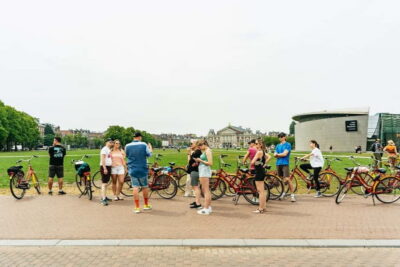
Big Bike tour Amsterdam – See all in 3 unforgettable hours
Read our review →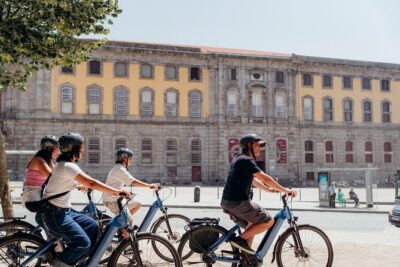
3-Hour Porto Highlights on a Electric Bike Guided Tour
Read our review →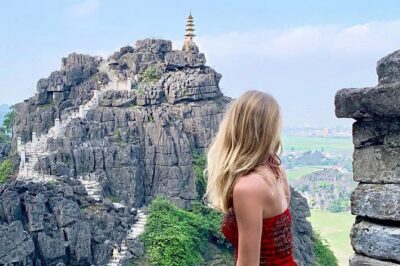
Ninh Binh Full-Day Tour from Hanoi to Hoa Lu, Tam Coc & Mua Cave Via Boat & Bike
Read our review →
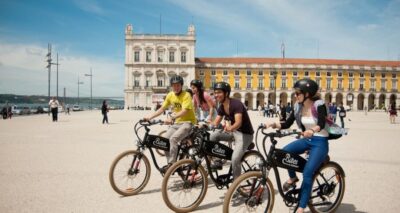
Hills, Alfama, and Mouraria Tour by Electric Bike
Read our review →