
REVIEW · OSAKA
5-Hour Osaka Highlights Bike Tour with Lunch
Osaka is easier to understand on two wheels. This five-hour ride links a quiet shrine, an old-style shopping area, the Osaka Museum of Housing and Living, Osaka Castle Park, a local lunch, and matcha tea without trapping you on a crowded bus. I especially like the small groups of six or fewer and the way the route mixes everyday Osaka with famous sights. The $85 price includes the bike, guide, lunch, tea, snack, and tour photos, which makes the outing good value for a half-day.
The main catch is that you need to be comfortable cycling in city streets and parks, though the ride is described as easy and several guides have helped nervous or inexperienced riders gain confidence. You also need to bring or arrange your own helmet, and the Osaka Castle admission fee is extra. Rain can also change the plan, since the tour is canceled when the forecast gives a 40 percent or higher chance of rain.
Key points at a glance
- A practical five-hour route: See several Osaka sights without spending the day walking across the large 105-hectare Osaka Castle Park.
- A real local meal: Lunch is typically an Osaka soul-food dish, with okonomiyaki, a savory cabbage pancake, appearing often in the experience.
- Small groups matter: With no more than six people, guides can keep an eye on the group and adjust the pace.
- The museum adds context: The Osaka Museum of Housing and Living shows how Osaka looked and how people lived during the Edo period.
- A gentle cultural finish: Matcha and a traditional snack, sometimes grilled rice cakes or sweets, make a pleasant final stop.
- Good for first-time visitors: The route gives you a useful first look at northern Osaka, the river paths, local neighborhoods, and the castle area.
Meeting at Tenmabashi Station
The tour starts in front of the FamilyMart at Tenmabashi Station on the Osaka Metro Tanimachi Line. From Exit 2, the meeting point is about a two-minute walk, which is much simpler than trying to find a bike shop on a side street.
At the start, you receive a cross bike and meet your English-speaking guide. The guide handles the route, so you can focus on riding and looking around. The group limit of six is useful here. It is large enough for a social outing but small enough for the guide to check on each rider.
Do not arrive with large luggage. A coin-operated locker near the station may be available for 500 yen, but availability is not guaranteed. I would leave suitcases at your hotel before coming to the meeting point.
A helmet is not included, so check your own preferences before booking. The supplied information does not state that helmets are provided. Comfortable clothes, closed shoes, sun protection, and water are sensible choices, especially in warm weather.
More City Highlights Bike Tours in Japan
- Tokyo Top Highlights 3h Guided E-bike Tour
★ 5.0 · 714 reviews - 5 Top Highlights of Kyoto Full Day Bike Tour (E-bike option)
★ 5.0 · 511 reviews - Tokyo: 3-Hour Bike or E-Bike City Highlights Tour
★ 4.8 · 435 reviews
Osaka Tenmangu Shrine and the first ride
The first major stop is Osaka Tenmangu Shrine, reached by bike through local roads and cycling paths. The shrine offers a calmer opening than beginning with Osaka Castle and gives your guide room to explain how religious sites fit into daily life in Japan.
This is also where the tour starts to feel different from a standard city sightseeing route. You are not simply being driven from one landmark to the next. You ride through parts of Osaka, stop at a shrine, and hear about local customs while still close to the city center.
Guide quality is a major part of this experience. Guides including Ayaka, Megumi, Masumi, Yusuke, Hide, Mike, and Yoto have been praised for explaining both Osaka history and ordinary city life. Megumi, in particular, has shared personal connections to the shrine area, while other guides have been happy to answer questions rather than rush through prepared facts.
The ride itself is not presented as an athletic challenge. Still, Osaka streets can have pedestrians and traffic, so you need to pay attention and follow the guide closely. One useful detail from the experience is that guides regularly check that the whole group is together. That matters when crossing busy areas or riding with people who use different road habits at home.
The Osaka Museum of Housing and Living
The Osaka Museum of Housing and Living is one of the most useful stops because it gives shape to the city’s past. Inside, you can see how Osaka looked during the Edo era and how people lived in earlier periods.
This stop helps you read the city outside the museum. After seeing an older Osaka recreated indoors, you ride through the modern city and notice the contrast between traditional buildings, commercial streets, riverside routes, and newer urban development.
Allow about 40 minutes for this portion of the tour. It is not just a quick photo stop. You get a guided explanation, then carry that historical context with you for the rest of the ride.
The museum may be the least exciting part for children or anyone who wants nonstop cycling. On the other hand, it gives the tour more substance. Without it, the day could become a pleasant ride between food stops and photo locations. With it, you gain a clearer sense of how Osaka changed over time.
Lunch in an old Japanese house
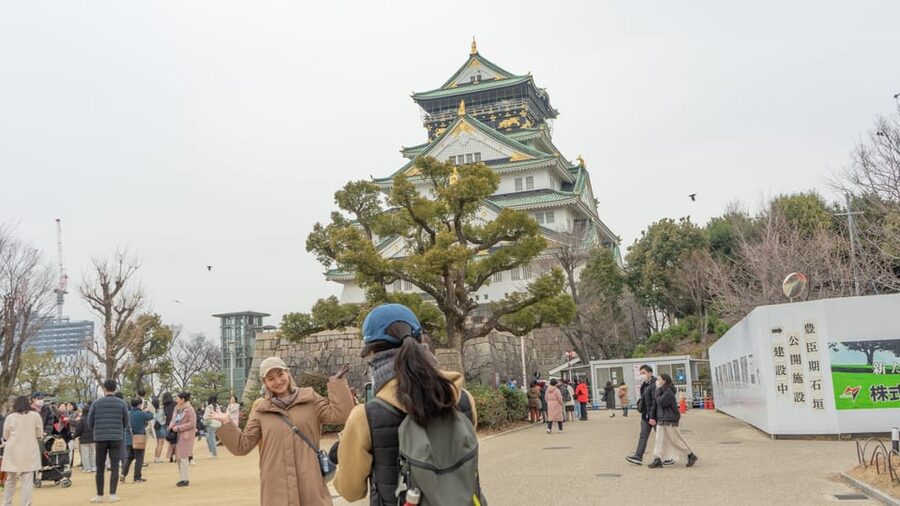
Lunch is one of the strongest parts of the tour. The meal takes place in a local restaurant, described as being in an old Japanese house, and gives you a chance to try an Osaka specialty rather than relying on familiar restaurant chains.
Okonomiyaki appears often in the tour experience. This savory cabbage pancake is associated with Osaka and makes a fitting midday meal. The format is relaxed, and guides help explain what you are eating. That is useful when the dish, toppings, or preparation are new to you.
The food has received especially strong praise, though one person wanted a more interesting option. That is a fair point. The meal is a good introduction to Osaka comfort food, but it is not designed as a full food tour with many tastings.
Vegetarian food is available, but the vegetarian meal contains dashi made from fish. There is no vegan or gluten-free option. If you have serious dietary needs, contact the provider before booking. One guide, Alice, has accommodated special dietary requests by arranging an Indian restaurant, but that is not the standard promise of the tour, so do not assume a substitution will always be possible.
Lunch is included in the $85 price. That helps the value, particularly in Osaka, where a comparable meal, bike rental, guide, tea, snack, and several hours of sightseeing would quickly add up if arranged separately.
Same roads, a different day in the saddle:
- Hidden Kyoto E-Biking tour
★ 5.0 · 1,843 reviews - Tokyo Guided Small-Group Biking Tour
★ 5.0 · 1,250 reviews - Bike Tour Exploring North Kyoto plus Lunch
★ 5.0 · 1,087 reviews - Tokyo Great Cycling Tour
★ 5.0 · 811 reviews
Cycling through Osaka Castle Park
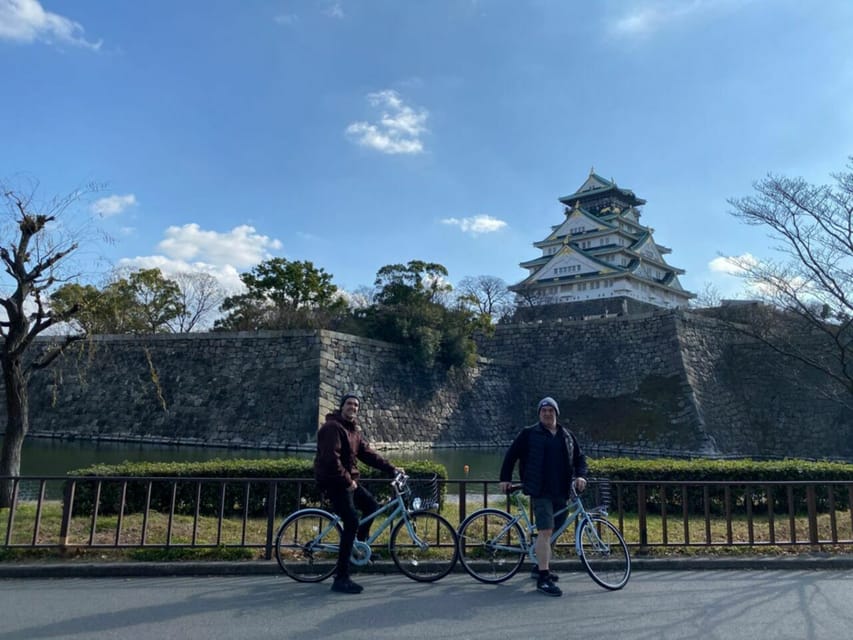
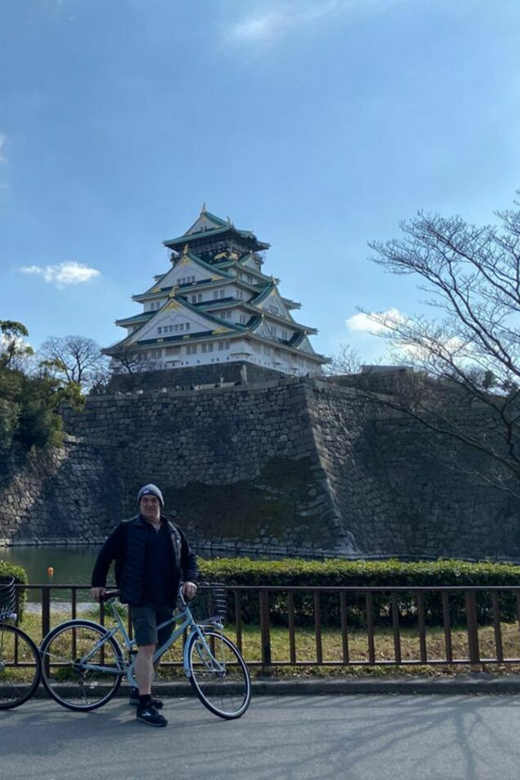
After lunch, the route heads toward Osaka Castle. The castle grounds sit inside Osaka Castle Park, an enormous area of about 105 hectares. This is where a bike is more than a novelty. Walking across the park can take time and energy, while cycling lets you cover more ground and enjoy the breeze.
The route includes riding around the castle area, a guided visit, and photo opportunities. The tour description also says the group cycles around the premises and takes a stroll for pictures. That means you should expect views of the castle and its grounds, but not assume that admission to the castle interior is included.
The entry ticket is extra. This is important because the promotional wording can make the castle visit sound like a complete indoor tour. Treat this outing as a castle-park and exterior sightseeing stop unless you are ready to pay separately for entry.
The castle is a strong visual high point of the day, especially after the more local opening stops. You get a sense of its size and setting without spending the entire afternoon on foot. In spring, the park can be particularly appealing during cherry blossom season, though the tour operates in other seasons as well.
Weather and traffic can alter the order of the stops. A rainy day may mean more sheltered routing or a shorter ride. One guide offered an early finish and partial refund when rain began, while the group chose to continue. That example shows why you should keep some flexibility in your schedule.
Matcha and a small Japanese sweet
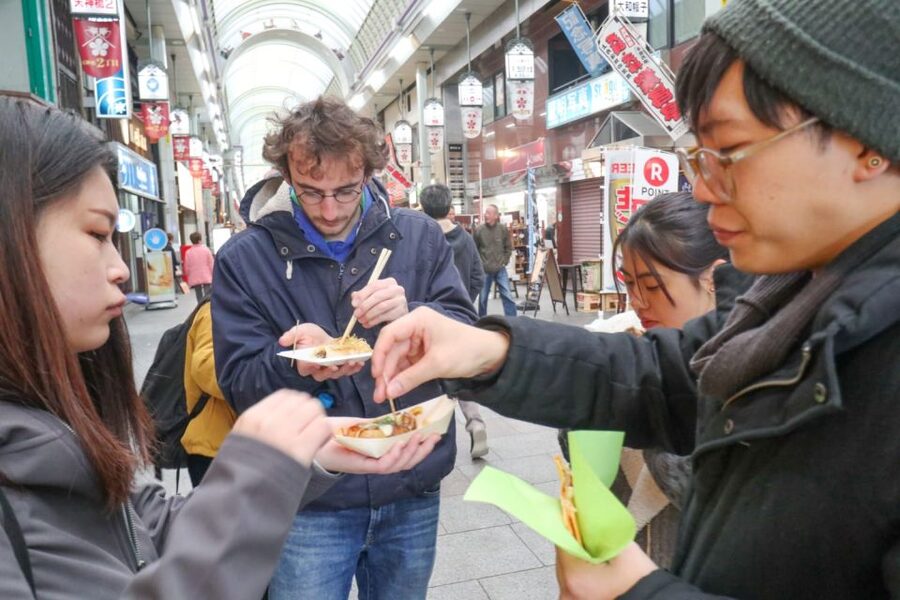
The final cultural stop is a small café or tea setting where you try matcha with a snack. It is a quieter ending after several hours of cycling, food, history, and city traffic.
The exact treat can vary. Options described for the tour include chimaki, steamed buns, modern sweets, and grilled rice cakes with soy sauce or red bean toppings. The tea experience has been singled out repeatedly as a highlight, especially when the matcha is prepared with care.
This stop is not a full formal tea ceremony unless your guide specifically describes it that way on the day. Think of it as a thoughtful introduction to matcha and a traditional sweet. The calm setting also gives you time to ask final questions and get recommendations for the rest of your Osaka stay.
What the cycling is really like
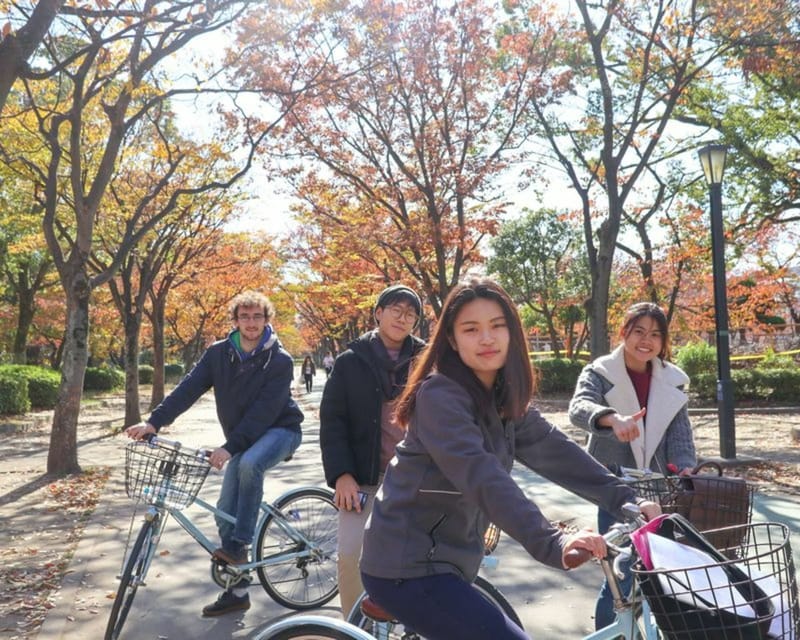
The tour uses cross bikes and follows cycling roads, riverbank paths, streets, and park routes. Several guides have been praised for choosing comfortable bikes and keeping the pace manageable.
You do not need to be a serious cyclist, but you should be able to ride a bicycle. One rider who rarely cycles said the guide helped build confidence and made the experience feel comfortable. That is encouraging, though the tour cannot remove every challenge of riding in an urban setting.
Osaka has pedestrians, road crossings, and busy sections. One person suggested that it would be useful for the guide to speak while riding, but explanations are generally given at stops. That is a sensible approach because listening while navigating traffic is not always safe.
The ride includes rest stops and is balanced with shrine visits, museum time, lunch, photos, and tea. You are not pedaling continuously for five hours. Still, wear something you can sit and ride in comfortably, and avoid scheduling a demanding activity immediately afterward.
Guides make the difference
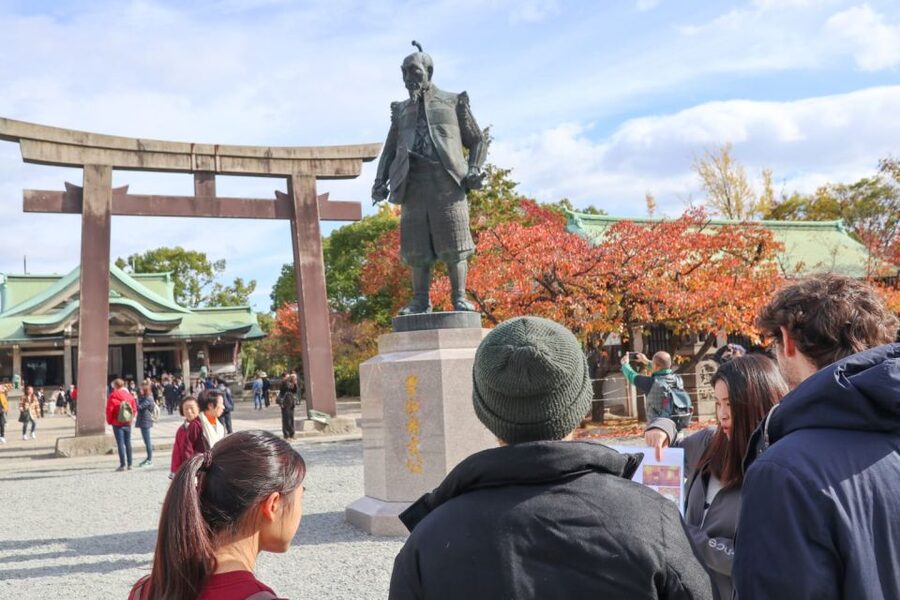
The strongest praise goes to the guides. The names that appear across the experience include Ayaka, Megumi, Masumi, Yusuke, Hide, Mike, Yoto, Fuka, Duncan, John, Taka, Nobu, and others. Their styles differ, but the recurring strengths are clear: friendly conversation, clear English, careful pacing, and useful local explanations.
Some guides focus on Osaka’s past. Others add stories about daily life, food, family connections, or neighborhood customs. That personal element is important because the route includes places you could visit on your own, but you would miss much of the meaning without explanation.
A guide also makes the bike portion less stressful. The group stays together, the route is managed, and the guide can help with photos. That is especially useful for first-time visitors who are still learning how Osaka’s streets and train stations fit together.
Is $85 a fair price?
At $85 per person, this is not the cheapest way to see Osaka. You could visit a shrine, ride trains to the castle, eat an inexpensive lunch, and explore the park for less.
The value comes from combining several services into one well-paced morning and afternoon:
- Bike rental
- English-speaking local guide
- Shrine and museum visits
- Osaka Castle Park route
- Included lunch
- Matcha and a snack
- Tour photos
- A small group capped at six people
The lunch and tea are important to the calculation. So is the time saved in Osaka Castle Park. If you value local explanation and prefer an active tour over a bus or long walking route, the price is reasonable.
The value is weaker if you mainly want to enter Osaka Castle, eat your way through the city, or cycle at a fast pace. Castle admission is extra, dietary choices are limited, and the tour is designed as a broad introduction rather than a specialist food or architecture tour.
Who should book this Osaka bike tour?
I would recommend it to first-time visitors who want a quick orientation to Osaka. You see a shrine, historic housing displays, a local restaurant, the castle grounds, a river route, and a tea stop in one half-day.
It also suits people who prefer active sightseeing but do not want a long, hard ride. The schedule includes frequent stops and meals, and the small group allows the guide to adjust the pace.
Families with teenagers can consider it because participants must be at least 15 years old. The experience has worked well with a 15-year-old who stayed engaged with the guide, but younger children cannot join under the stated rules.
I would hesitate if you do not ride bikes, need vegan or gluten-free food, dislike changing plans in poor weather, or want a full tour inside Osaka Castle. In those cases, a walking tour or private sightseeing plan may suit you better.
Should you book it?
Book this tour if you want to cover a lot of Osaka without spending the whole day on foot. The best parts are the small group, friendly English-speaking guides, local lunch, river and park cycling, and the matcha stop at the end.
Before booking, confirm that you can ride comfortably, bring suitable clothing, plan for the separate castle admission fee, and accept fish-based dashi in the vegetarian meal. If the weather forecast looks uncertain, keep your schedule flexible.
For a first Osaka day, this is a strong choice. It gives you landmarks, local food, history, and a useful sense of the city’s shape, all at a pace that leaves room to enjoy the ride.
FAQ
Where does the tour meet?
Meet in front of the FamilyMart at Tenmabashi Station on the Osaka Metro Tanimachi Line. It is about a two-minute walk from Exit 2.
How long does the bike tour last?
The tour lasts five hours, including the cycling, sightseeing stops, lunch, and matcha stop.
How many people can join?
The group is limited to six participants.
Is the tour conducted in English?
Yes. The tour includes a live English-speaking guide.
Is the bike included?
Yes. Bike rental is included in the tour price.
Is a helmet included?
No. A helmet is not listed among the included items.
Is lunch included?
Yes. Lunch is included, and a vegetarian menu is available.
Does the vegetarian meal contain fish?
Yes. The vegetarian meal includes dashi made from fish broth. There is no vegan or gluten-free option.
Is Osaka Castle admission included?
No. Entry to Osaka Castle is not included. The tour includes sightseeing around the castle area and photo opportunities.
Can I cancel for a full refund?
You can cancel up to 24 hours in advance for a full refund. The tour can also be canceled if there is a 40 percent or higher chance of rain.
More Rides with Lunch in Japan
- 4.5-Hour Kyoto Bike Tour with Lunch and UNESCO Zen Temples
★ 5.0 · 122 reviews - 5-Hour Tokyo & Edo Hidden Gem Bike Tour with Lunch
★ 5.0 · 113 reviews - Kyoto: Full-Day City Highlights Bike Tour with Light Lunch
★ 5.0 · 52 reviews - Tokyo: Hidden Gems Guided Bike Tour with Lunch
★ 4.5 · 30 reviews
Just added around Japan
- Private E-MTB guided cycling around Mt. Aso volcano & grasslands★ 5.0 · 16 reviews
- Handmade Goshuin Book Experience Eco Friendly Upcycling in Tokyo★ 5.0 · 21 reviews
- Tokyo: West-Side Cycling and Food Tour with Guide★ 5.0 · 37 reviews
- Tokyo: Discover Traditional Tokyo Full-Day Bicycle Tour★ 4.7 · 131 reviews
- Tokyo: Rice Ball Making Class★ 5.0 · 14 reviews
- Tokyo: 3h Private E-bike Tours, Starting at Your Hotel★ 5.0 · 36 reviews
- Tokyo Bike Tour: Shibuya, Harajuku & Hidden Gems★ 5.0 · 20 reviews
- Tokyo: Private Cycling Tour with cute E-bike★ 5.0 · 11 reviews
City Highlights Bike Tours, compared.
3-Hour Porto Highlights on a Electric Bike Guided Tour
Read our review →
City Highlights 3-Hour Guided Electric Bike Tour
Read our review →
Highlights & Hidden Spots of Barcelona Bike Tour w/ Local Guide
Read our review →
Sights and Highlights Bike Tour with a Local Guide
Read our review →
Highlights 3 Hour Bike Tour with a Local Guide
Read our review →
Browse the lists this tour appears in