
REVIEW · HIROSHIMA
Hiroshima: City and Miyajima Bike and Boat Tour
Two worlds, one rewarding day. This small-group bike and boat tour links Hiroshima’s solemn Peace Park with the green, shrine-filled setting of Miyajima, giving you a strong sense of how different the city and island feel. I especially like the flat cycling route and the careful move from modern Hiroshima into its feudal past at Hiroshima Castle.
The ferry ride adds real variety, and lunch, water, bike, helmet, train, and boat transfers are included. Guides such as Ishan, Melissa, Sage, and Aimée-Linh have been praised for clear explanations, humor, patience, and strong answers to questions. The main consideration is time: at 450 minutes, this is a full day with several transport changes and plenty of walking.
Key things to know before booking
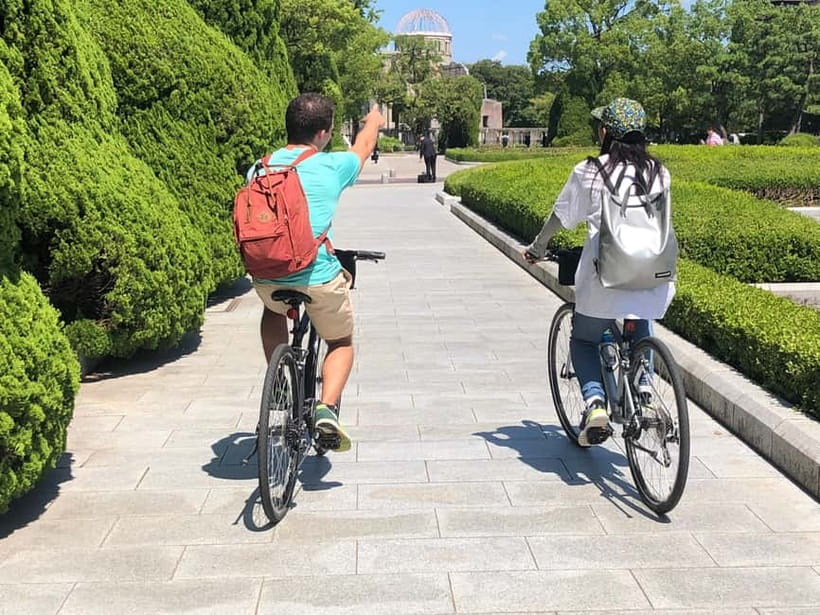
- The cycling is completely flat: You do not need advanced riding skills, though you must be able to ride a bike.
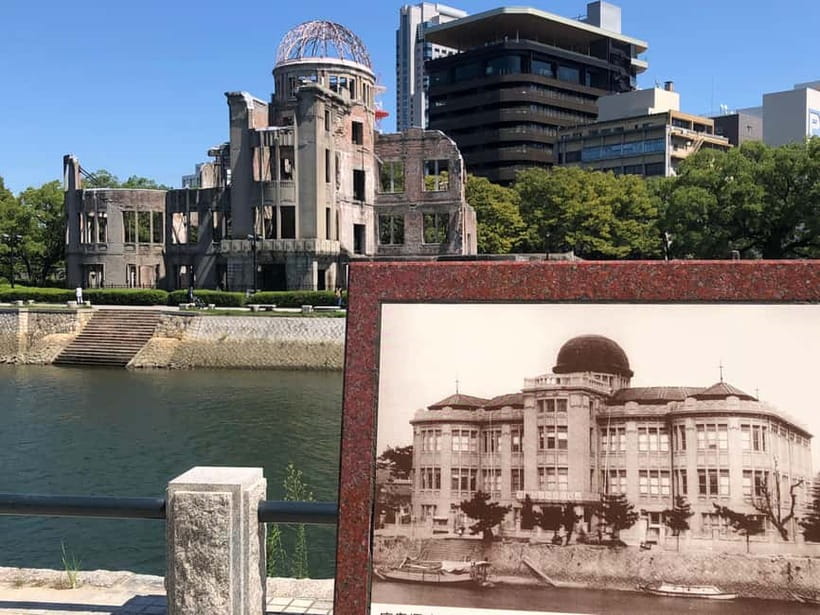
- Peace Park receives thoughtful commentary: The guide helps explain the A-bomb Dome and the wider story of Hiroshima’s bombing and remembrance.
- Miyajima is the day’s big change of mood: After the city’s difficult history, the island brings wooded slopes, orange Shinto buildings, and quiet lanes.
- The group is limited to eight people: That makes it easier to ask questions and stay supported if you ride slowly.
- The tour includes more than cycling: Hiroshima Castle, a train ride, a ferry crossing, Itsukushima Shrine, lunch, and water are all part of the day.
- Rain can change the plan: You may be offered a walking tour around Peace Park or a full refund, so stay reachable before the tour.
Why this tour works so well in Hiroshima
Hiroshima can be hard to organize in one day. Peace Park sits in one part of the city, Hiroshima Castle tells a very different story, and Miyajima requires a train and ferry connection. This experience gathers those pieces into one guided route.
I like that the day does not treat Hiroshima as only a place of wartime memory. You begin with the atomic bombing and its human cost, then move into the city’s older political history, before ending on an island shaped by religion, nature, and traditional architecture.
That range gives you a more rounded picture. You see the Hiroshima people associate with the Peace Memorial, but also the city’s earlier identity and the island that has long drawn people for spiritual reasons.
The pace is active without being athletic. The cycling section is flat, and the route is designed for anyone who can ride. You still need comfortable clothes and shoes, since the day combines riding, walking, trains, a ferry, and sightseeing on foot.
More Bike and Boat Tours in Japan:
- Hiroshima and Miyajima by Bike and Boat
★ 5.0 · 172 reviews - Ninh Binh Full-Day Tour from Hanoi to Hoa Lu, Tam Coc & Mua Cave Via Boat & Bike
★ 5.0 · 4,384 reviews - From Perth: Rottnest Island Full-Day Bike and Ferry Trip
★ 4.7 · 2,548 reviews
Starting with Peace Park and the A-bomb Dome
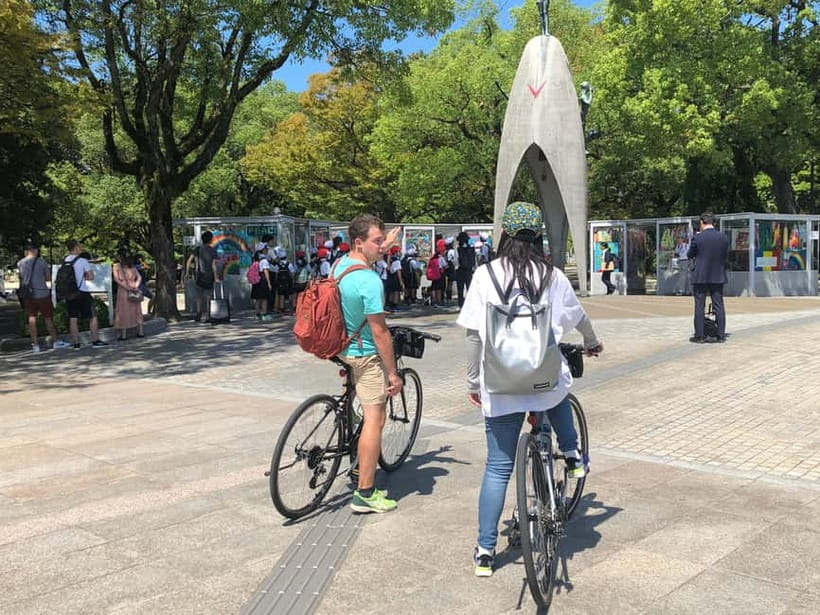
The day begins on a bicycle around Hiroshima’s Peace Park. This is a useful way to get oriented because the park covers a broad area, and cycling lets you move between important sights without spending the first part of the day waiting for local transport.
The A-bomb Dome is the most recognizable structure in the park. Its damaged frame remains as a powerful reminder of the destruction caused by the atomic bomb. Your guide provides commentary around the site, helping place the building and surrounding memorials in the wider story of August 6, 1945, and Hiroshima’s later work of remembrance.
This part of the tour deserves a quiet pace. It is not simply a photo stop. The setting is evocative, and the subject can be emotionally heavy. Several guides have been praised for handling that difficult material with care while also explaining the city’s recovery and positive direction.
Melissa, one guide named in the feedback, was praised for explaining both the terrible effects of the bombing and the hopeful side of remembrance. Sage was also singled out for giving detailed background on the Peace Park and the bombing while keeping the ride comfortable in wet weather.
The cycling format has an advantage here. You are not sealed into a vehicle or rushed from one point to another. You move slowly, stop to listen, and can ask questions in a small group. The limitation is that this is still a bike tour, not an extended museum visit. If you want a very detailed look at every memorial or museum display, you may need extra time before or after the tour.
Hiroshima Castle and the city before 1945
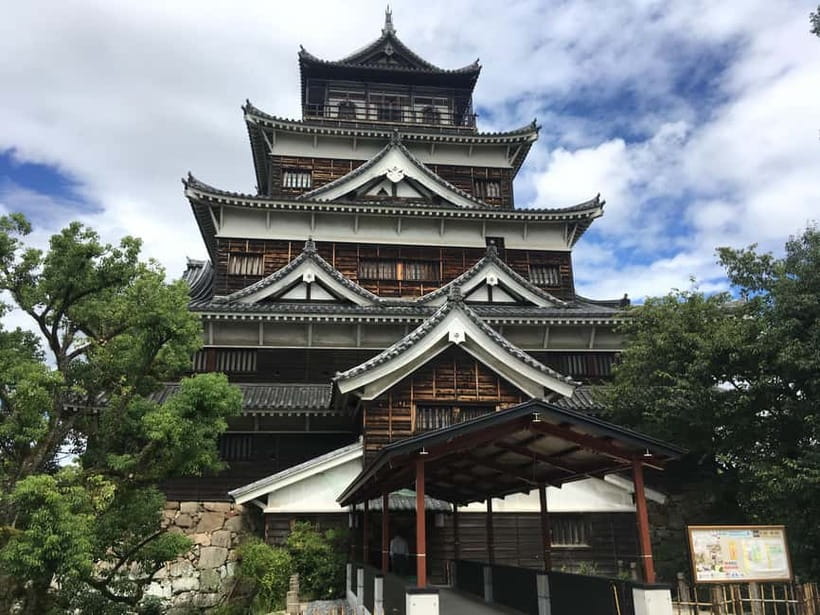
After Peace Park, the route turns to Hiroshima Castle. This stop adds a useful layer because it shifts the focus from modern tragedy to the city’s feudal past.
The castle represents a Hiroshima that existed long before the atomic bombing. Your guide explains the city’s earlier political and historical setting, including the pre-Meiji period. That context helps prevent the city from being reduced to a single event in the twentieth century.
The stop is also a welcome change in mood. Peace Park asks for reflection. Hiroshima Castle brings you back to older Japan, with a focus on feudal power and the development of the city. The contrast makes both places more meaningful.
Do not expect a long, self-guided castle visit with unlimited time. The tour has to continue toward Miyajima, so this is one part of a packed route. Still, it earns its place because it gives you a quick but useful look at Hiroshima before the modern era.
The train and ferry to Miyajima
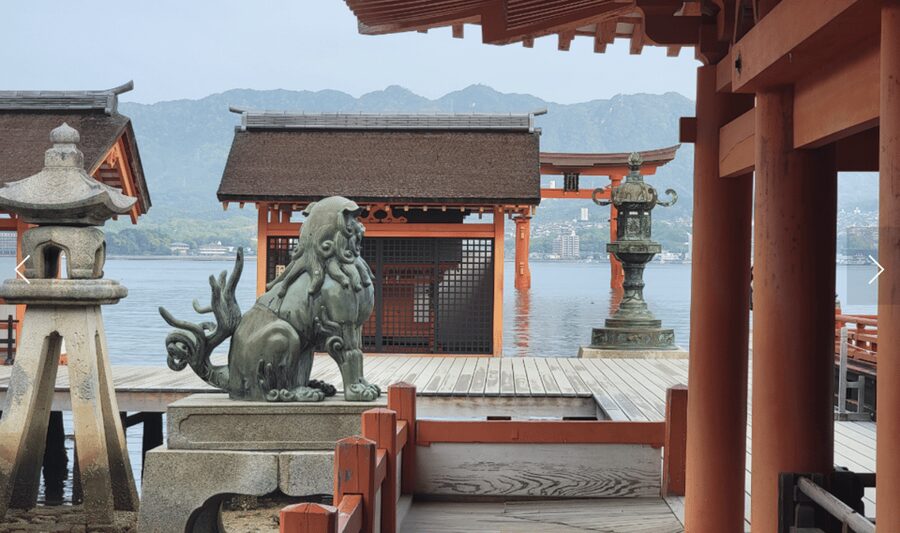
The move to Miyajima is part of the experience, not just a way to get from point A to point B. You take a train and then board a ferry, with the boat ticket included.
That change in transport gives the day a natural break. After the serious subject matter in Peace Park and the historical focus at Hiroshima Castle, the ferry crossing opens up a different side of the region. Miyajima feels separate from central Hiroshima, even though it is easy to reach as part of this organized route.
The ferry is also one reason the tour offers good value at $138 per person. You are not paying only for a guide and bicycle. The price includes the train and ferry transfers, a full guided route, bike and helmet, lunch, and water. You avoid having to work out the connections yourself while trying to keep to a sightseeing schedule.
There are still practical limits. A 450-minute tour is about seven and a half hours, so transport takes up part of the day. That is a fair trade if you want to see both places in one outing, but less appealing if you prefer to spend an entire day at Miyajima alone.
A few more days on two wheels around Japan worth a look
- Hidden Kyoto E-Biking tour
★ 5.0 · 1,843 reviews - Tokyo Guided Small-Group Biking Tour
★ 5.0 · 1,250 reviews - Bike Tour Exploring North Kyoto plus Lunch
★ 5.0 · 1,087 reviews - Tokyo Great Cycling Tour
★ 5.0 · 811 reviews
Walking through Miyajima’s religious center
Miyajima is the emotional shift of the tour. Its wooded setting and orange Shinto buildings create a strong contrast with Hiroshima’s urban streets and memorial sites.
The walking portion explains how the island developed as a religious center. That background matters because the shrine buildings and traditional lanes are not just attractive scenery. They reflect the island’s long spiritual role and explain why the setting has drawn visitors for generations.
Itsukushima Shrine is included. The orange structures and island setting provide some of the day’s best photo opportunities, but the value of the stop goes beyond pictures. You get an explanation of the island’s religious importance and a chance to see how architecture and natural surroundings work together.
The walking tour also takes you through picture-friendly lanes. You should bring a camera, but keep some attention on the guide. The island is more rewarding when you understand what you are seeing, rather than simply moving from one attractive view to the next.
Miyajima is likely to be the highlight for many people. One positive account called the island visit and temple the strongest part of the day. That makes sense: after the intensity of Peace Park, the island offers a calmer setting and a completely different visual experience.
The trade-off is that the island portion comes after several earlier stops. By then, you may be ready for a slower afternoon, but the schedule still includes walking and sightseeing. Comfortable shoes are important.
What the small group changes
The maximum group size is eight people. That is a useful middle ground. You get the social feel of a group outing, but the guide can still hear your questions and keep an eye on the pace.
This matters especially on bicycles. You do not need to be fast, and the route is slow and flat. One account specifically noted that slower riders received good support. That is reassuring if you ride occasionally but do not want to hold everyone up.
The available bicycles include Trek bikes in different sizes, step-through models, and child-sized bikes. You must provide the height of each person in your group when booking so the operator can prepare suitable bikes.
The guide quality is a major part of the experience. Ishan was praised for enthusiasm and for answering many questions. Aimée-Linh was described as combining strong knowledge of Hiroshima’s past with humor. Melissa was highly prepared and even stayed longer to help the group. These details suggest that the guide is not just there to lead the route, but to shape the day’s meaning and respond to your interests.
Because the tour is in English, it suits English-speaking visitors who want steady explanation throughout the day. If you prefer to explore silently and set your own pace, a private plan may suit you better.
Lunch, equipment, and everyday comfort
Bike and helmet are included, so you do not need to arrange your own cycling equipment. Trek bikes are available in several sizes, along with step-through and child-sized options.
Lunch and water are included too. That makes the long schedule easier, especially since the day includes physical movement and several stops. You should still wear clothes you can cycle and walk in comfortably.
The tour is not suitable for wheelchair users, pregnant women, or people who cannot ride a bike. It is also not a good choice if rain would make cycling uncomfortable for you. In wet weather, the operator may offer a walking tour around Peace Park instead of cycling, or a full refund. Stay reachable so you can receive that update.
Smoking is not allowed during the activity.
Is $138 a fair price?
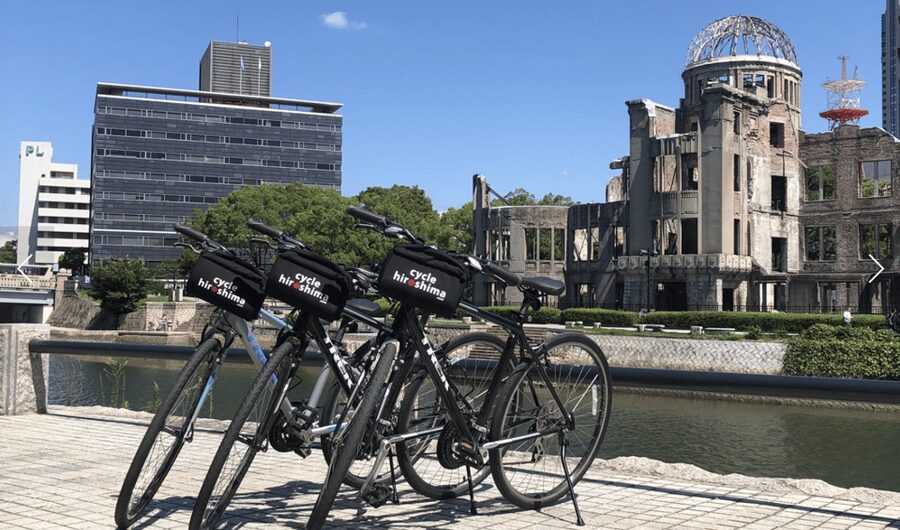
For a seven-and-a-half-hour guided day, $138 is a reasonable price if you want both Hiroshima and Miyajima without managing the connections yourself.
The strongest value comes from the number of elements bundled together: bike, helmet, guide, lunch, water, train, ferry, Hiroshima Castle, Peace Park, Itsukushima Shrine, and the Miyajima walking tour. You also gain the practical benefit of a small group and an English-speaking guide.
You are paying for structure as much as transport. Hiroshima and Miyajima are easy to visit independently in theory, but fitting both into one day requires planning. You would need to decide when to cycle or walk, arrange the train and ferry, monitor the time, and choose where to eat. This tour removes much of that work.
The price is less attractive if you already have several days in Hiroshima. With more time, you could visit Peace Park and Miyajima separately, spend longer at each, and choose your own meals and transport. The tour earns its cost best when your schedule is tight and you want a broad introduction.
Who should book this experience?
I would recommend it to first-time visitors who want a guided overview of Hiroshima’s major themes. It works especially well for people who enjoy light activity but do not want a demanding ride.
It is also a good fit for families, provided everyone can ride and the children fit the available bike sizes. The flat route and child-sized bikes help, while the small group gives the guide a better chance to support different riding speeds.
History-focused visitors will appreciate the movement from the atomic bombing to the feudal city and then to Miyajima’s religious past. Photographers will like the contrast between the A-bomb Dome, castle, shrine buildings, ferry crossing, and wooded island setting.
I would hesitate if you want a slow, unstructured day. The itinerary covers a lot, and the train, ferry, cycling, and walking all require you to keep moving. I would also choose another plan if you cannot ride a bike, use a wheelchair, are pregnant, or want to spend all day at Miyajima.
Should you book the Hiroshima bike and boat tour?
Book it if you want to see three sides of Hiroshima in one day: the memorial city, the feudal city, and the religious island. The flat route, small group, included transport, and strong guide support make it an efficient choice without turning the day into a race.
The best reason to choose it is the contrast. Peace Park is serious and reflective. Hiroshima Castle adds older Japanese history. Miyajima closes the day with shrine architecture, green surroundings, and a walking route through traditional lanes.
Skip it if you prefer complete freedom, need step-free access, or cannot ride. For everyone else, $138 buys a well-organized introduction to two of the Chugoku region’s most important places, with enough explanation to make the sights mean more than a quick photograph.
FAQ
How long does the Hiroshima bike and boat tour last?
The tour lasts 450 minutes, which is about seven and a half hours.
Is the cycling route difficult?
No. The cycling route is completely flat and is suitable for all skill levels, as long as you can ride a bike.
What destinations are included?
The tour includes Peace Park, the A-bomb Dome, Hiroshima Castle, Miyajima Island, and Itsukushima Shrine.
Are the train and ferry included?
Yes. Train and ferry transfers to Miyajima Island are included, as is the boat ticket.
Is lunch included?
Yes. Lunch and water are included in the tour price.
What kind of bikes are available?
The operator provides Trek bikes in different sizes, along with step-through bikes and child-sized bikes. You should provide the height of everyone in your group.
What happens if it rains?
The operator may offer a walking tour around Peace Park or a full refund. You should remain reachable in case the plan needs to change.
Is the tour suitable for everyone?
No. It is not suitable for pregnant women, people who cannot ride a bike, or wheelchair users.
Just added around Japan
- Private E-MTB guided cycling around Mt. Aso volcano & grasslands★ 5.0 · 16 reviews
- Handmade Goshuin Book Experience Eco Friendly Upcycling in Tokyo★ 5.0 · 21 reviews
- Tokyo: West-Side Cycling and Food Tour with Guide★ 5.0 · 37 reviews
- Tokyo: Discover Traditional Tokyo Full-Day Bicycle Tour★ 4.7 · 131 reviews
- Tokyo: Rice Ball Making Class★ 5.0 · 14 reviews
- Tokyo: 3h Private E-bike Tours, Starting at Your Hotel★ 5.0 · 36 reviews
- Tokyo Bike Tour: Shibuya, Harajuku & Hidden Gems★ 5.0 · 20 reviews
- Tokyo: Private Cycling Tour with cute E-bike★ 5.0 · 11 reviews
Bike and Boat Tours, compared.
Ninh Binh Full-Day Tour from Hanoi to Hoa Lu, Tam Coc & Mua Cave Via Boat & Bike
Read our review →
Ninh Binh Day Trip: Hoa Lu-Trang An/Tam Coc-Mua Cave-Cycling-Boat
Read our review →
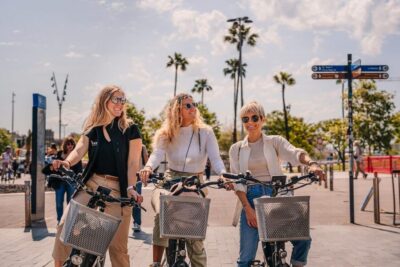
E-Bike Tour with Montjuic Cable Car & Boat Ride
Read our review →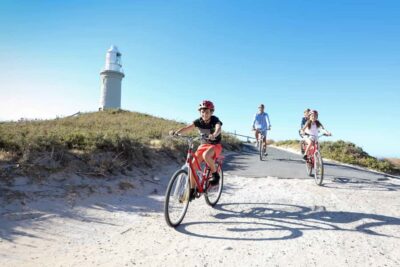
From Fremantle: Rottnest Island Ferry and Bike Day Tour
Read our review →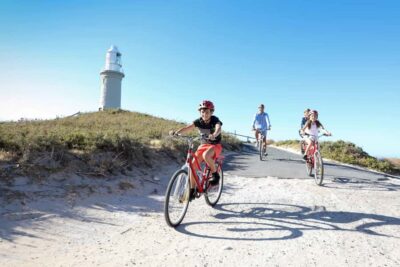
Browse the lists this tour appears in