REVIEW · TOKYO
Tokyo: 3-Hour Bike or E-Bike Tour of City’s Hidden Gems
Tokyo makes sense on two wheels. This three-hour ride links temples, palace grounds, quiet corners, and famous streets in one useful sweep of the city. I like the excellent Bianchi and Fuji bikes, plus the way guides such as Shin, Casey, Naoki, and Miguel add history and everyday local detail. The main consideration is simple: this is a cycling tour, not a sightseeing bus, so you should expect a real workout.
I also like the small-group feel and the route’s mix of old and new Tokyo. You can pedal from Zojo-ji Temple and the Imperial Palace toward Cat Street, Miyashita Park, and Shibuya Crossing, seeing far more ground than you could cover on foot. Choose the e-bike if you do not cycle often, and remember that helmets cost an extra ¥1,000 in cash.
Key points to know before you book
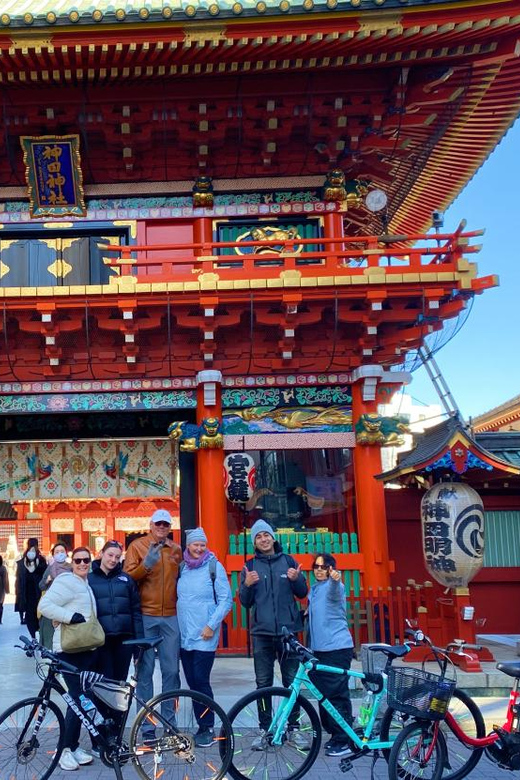
- The route connects major sights across central Tokyo: You ride from the Commodore Perry statue near Daimon to Zojo-ji, the Imperial Palace, Akasaka, Yoyogi, Aoyama, Harajuku, and Shibuya.
- The bikes are a real strength: Bianchi and Fuji cross bikes are supplied, with an e-bike option for riders who lack stamina or do not cycle regularly.
- You get history and daily-life context: Guides explain temples, shrines, landmarks, and modern Japanese culture rather than simply pointing out buildings.
- Three hours covers a lot of territory: The distance is useful for first-time visitors, but it means some stops are photo breaks rather than full visits.
- The route suits small groups best: A smaller party is easier to manage on Tokyo streets and makes it simpler to ask questions or adjust the pace.
- Budget for a helmet: Helmets are not included and cost ¥1,000 each, payable in cash on site.
Why a bike works so well in Tokyo
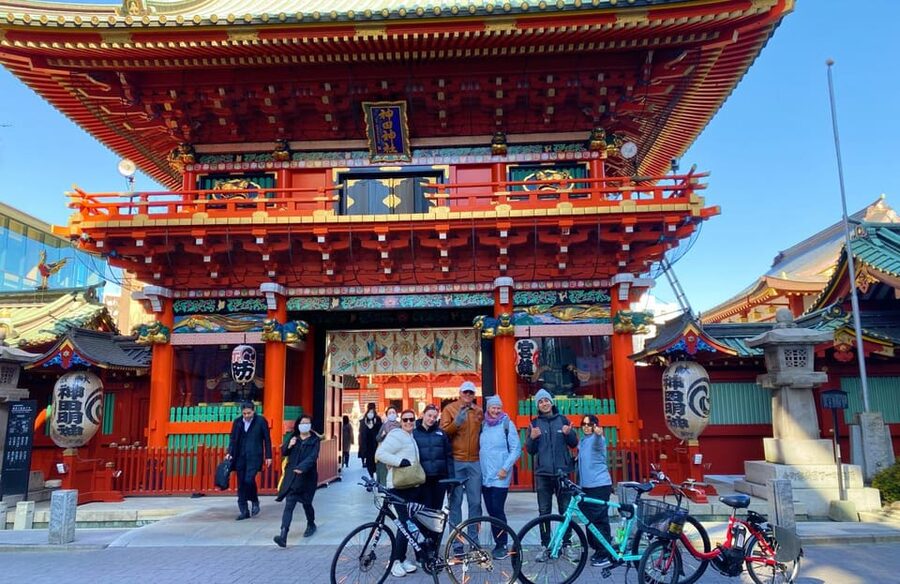
Tokyo is too large for a comfortable walking tour that covers this many districts. The train is efficient, but it puts you underground or inside stations just when the city gets interesting. A bicycle gives you the useful middle ground: you cover serious distance, then stop at places where you can step off and look around.
I like the rhythm of this tour. You ride through central neighborhoods, pause for a short explanation or photo, then get moving again. That keeps the outing active and prevents three hours of standing beside a guide while traffic and crowds pass by.
The route also gives you a quick lesson in Tokyo’s contrasts. Zojo-ji and the palace area point to imperial and religious traditions. Aoyama, Cat Street, Miyashita Park, and Shibuya show the city’s fashion, design, youth culture, and commercial energy.
Do not expect long visits inside every attraction. The listed stops include several five to fifteen-minute pauses, and some are exterior viewing points. That is a fair trade if your goal is orientation and variety. It is less suitable if you want to study one temple or palace area at length.
More E-Bike Tours in Japan
- Tokyo Top Highlights 3h Guided E-bike Tour
★ 5.0 · 714 reviews - 3h Tokyo E-Bike Tour: Hidden Gems, and Local Life with guide
★ 5.0 · 670 reviews - Tokyo: 3-Hour Bike or E-Bike City Highlights Tour
★ 4.8 · 435 reviews
Starting near Daimon and Zojo-ji Temple
The meeting point is around the Statue of Commodore Perry, about a three-minute walk from Daimon Station’s A6 exit. This is one place where you should allow extra time. One rider found the meeting point difficult to locate, so I would arrive early and keep your phone ready for contact with the guide.
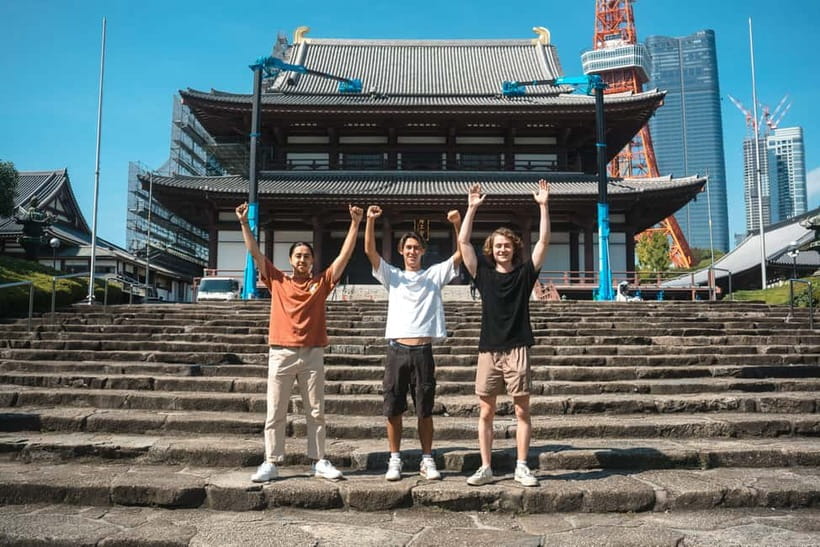
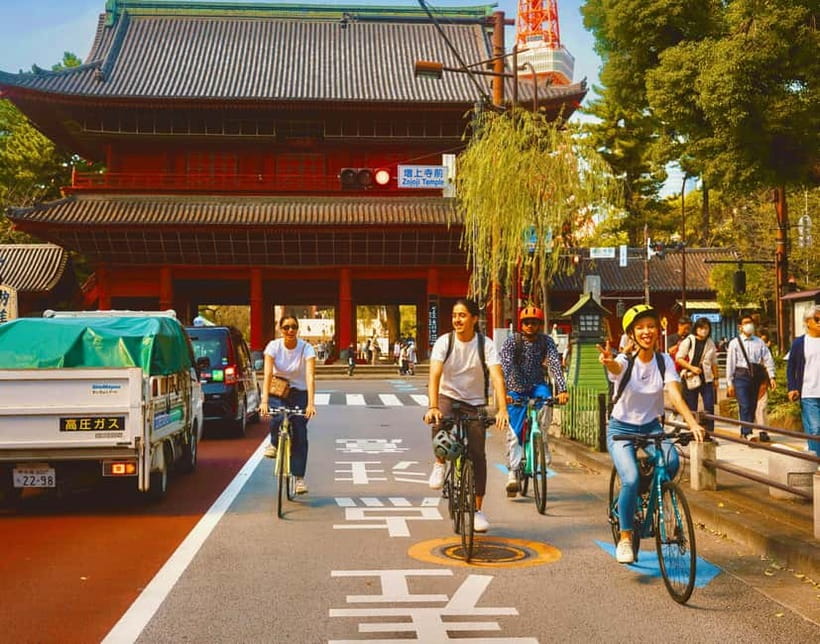
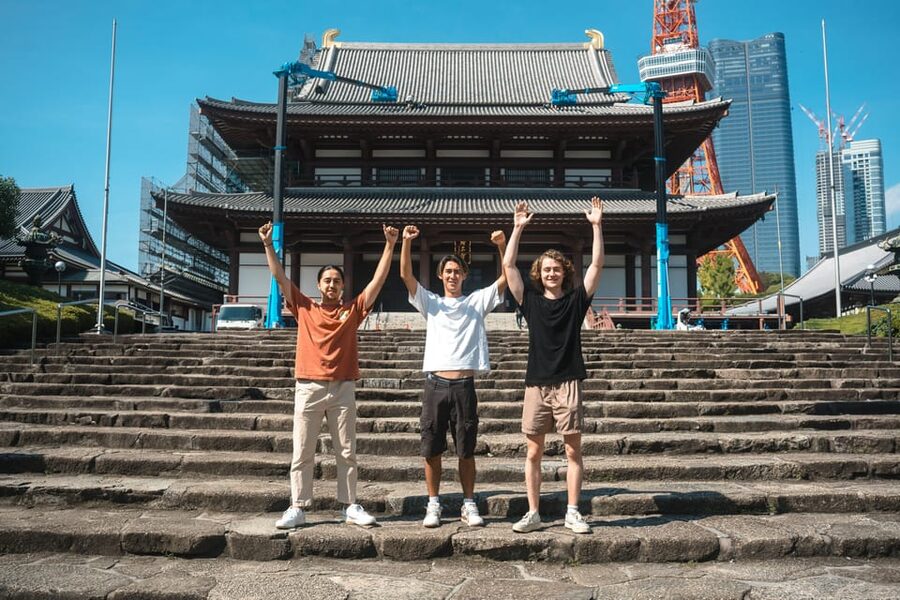
From there, the ride heads toward Zojo-ji Temple in Shiba Park. The temple is one of the most rewarding early stops because it brings together religious history, broad temple grounds, and a clear view of Tokyo’s modern skyline nearby. The contrast is immediate: old wooden architecture and Buddhist traditions set against high-rise Tokyo.
You get about 15 minutes here with a guided explanation and time for photographs. That is enough to understand the site and take pictures, though not enough for a slow temple visit. Guides explain the difference between temples and shrines, a point that several riders found especially useful when learning about Japanese customs.
The first section also helps you settle into the bike. You are not thrown straight into Shibuya traffic. You begin with a major cultural site, listen to the riding instructions, and get a feel for the group.
The Imperial Palace and Ōte-mon Gate
The Imperial Palace stop lasts about 10 minutes. You should think of this as an overview rather than a palace tour. The palace grounds carry major importance in modern Japan, but the tour focuses on the exterior setting and the surrounding area.
Next comes Ōte-mon Gate, with roughly five minutes for a photo stop and short explanation. The gate gives you a more tangible sense of the old castle area and its defensive layout. It is a compact stop, yet it works well in a bike itinerary because you can see a key feature without spending half the morning walking across palace grounds.
The value here is the sequence. Zojo-ji introduces religious tradition, then the Imperial Palace area shifts the focus to the emperor and the city’s political center. You get useful context without needing a full day devoted to one district.
If you want a detailed palace visit, plan that separately. This tour is designed to show you the area and move on.
Akasaka Palace and the New National Stadium
The State Guest House Akasaka Palace is another photo stop, listed at about 10 minutes. Its formal architecture adds a different note to the route. You are not going inside, but the exterior gives you a change from temples, gates, and dense commercial streets.
The New National Stadium follows, with another 10-minute stop. The stadium represents modern Tokyo and provides an easy bridge between the city’s formal civic spaces and the more casual neighborhoods later in the ride.
These stops are useful partly because they break up the cycling. You can get off, stretch, take pictures, and hear a short explanation. Still, the route moves quickly. If your travel style involves reading every plaque or exploring interiors, you may find the pace brisk.
The good news is that the guides appear willing to keep the experience human rather than mechanical. Casey, for example, was praised for stopping at key places, taking photographs, and watching out for the group. That kind of attention matters more on a bicycle than it would on a standard walking tour.
More E-Bike Tours in Tokyo
- Tokyo: 3-hour Guided E-Bike Tour of the City’s Hidden Gems
★ 4.8 · 251 reviews - 3-Hour Tokyo Private E-Bike Tour Starting from Your Hotel
★ 5.0 · 117 reviews - Tokyo: 3h Private E-bike Tours, Starting at Your Hotel
★ 5.0 · 36 reviews - Tokyo: Private Cycling Tour with cute E-bike
★ 5.0 · 11 reviews
A quieter corner before Aoyama
The itinerary includes a 15-minute visit to an unspecified local stop described as a hidden spot, followed by a brief visit in Minamiaoyama. Since the exact location can vary, I would treat this section as a flexible neighborhood pause rather than a guaranteed named attraction.
That flexibility is part of the appeal. You get a look at Tokyo away from the headline sights, with the guide supplying the local context. You might find this more memorable than another large landmark because it shows how the city feels between its famous destinations.
The Minamiaoyama stop lasts about five minutes. This district is associated with design, fashion, and polished urban streets, so it helps explain the modern side of Tokyo before the route reaches Harajuku and Shibuya.
Do not expect a long café break or shopping session here. The stop is short, and the tour’s main purpose is to keep moving through the city.
Cat Street, Miyashita Park, and Shibuya Crossing
Cat Street is a compact five-minute visit. The short stop gives you a taste of the pedestrian-friendly fashion and youth scene around Harajuku and Aoyama. You will not have time for serious shopping, but you can see how the area differs from the formal palace district.
Miyashita Park gets about three minutes, making it more of a passing look than a full stop. That may sound brief, but it fits the tour’s larger purpose. You are connecting neighborhoods rather than spending an hour at each one.
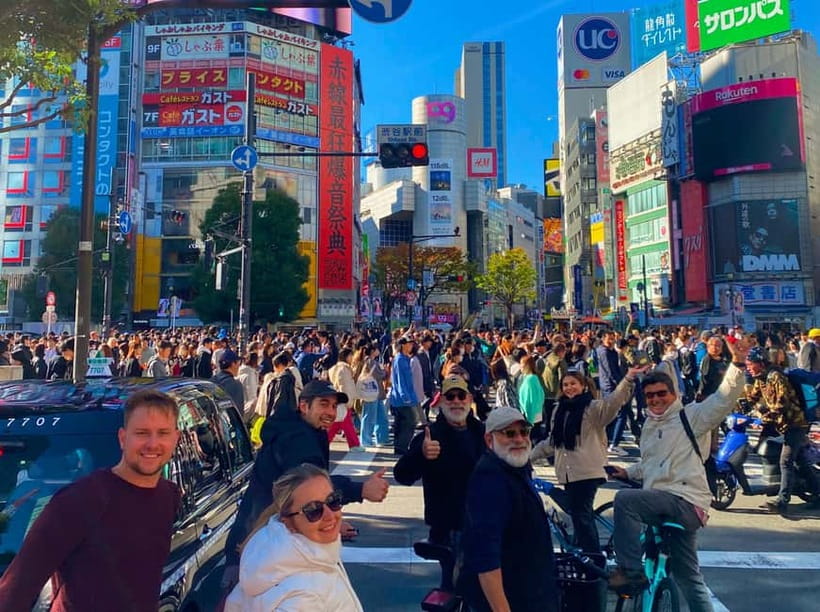
The final major sight is Shibuya Crossing, with around five minutes for photographs and a quick look. This is one of Tokyo’s most recognizable urban scenes, and arriving by bike gives you a useful sense of how the surrounding streets fit together.
A five-minute Shibuya stop will not satisfy anyone hoping to explore the shops, department stores, or side streets. It does give you a clear first look and an easy place to return later. I would plan another visit if Shibuya is high on your list.
The tour finishes at the Bell of Peace. That endpoint lets you end in the Shibuya area rather than returning to the starting point near Daimon, which can be handy if you want to continue sightseeing in western central Tokyo.
What the cycling is really like
The tour description welcomes all skill levels, but the route still involves extended cycling. One rider called it a workout, while another appreciated being able to cover distances that would be too far on foot. Those comments fit together: casual riders can manage it, but this is not a gentle roll around one park.
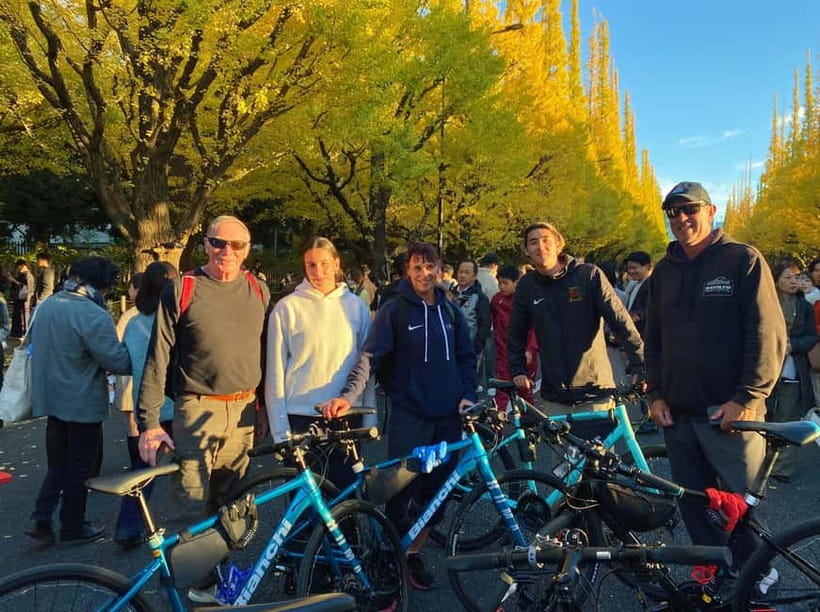
The bikes are a major advantage. Bianchi and Fuji cross bikes are better suited to city riding than heavy rental bicycles, and the quality matters when you are on the road for three hours. The e-bike option is especially useful if you do not ride often, have limited stamina, or simply want to save energy for the stops.
You must be able to ride a bike, and the tour is not suitable for children under 12, pregnant women, or people with back problems. Comfortable clothes, comfortable shoes, and water are sensible choices. Smoking, alcohol, drugs, and littering are not allowed.
The tour includes bike insurance and a small pouch attached to the bike for a phone, wallet, or keys. That is a small but practical touch. You will still want to keep valuables secure and avoid bringing anything awkward to carry.
Helmets are available for ¥1,000 per unit, but they are not included in the advertised price. Bring cash. The separate child seat costs ¥3,000, although the age restriction means this will not suit every family.
Guides and the small-group advantage
The guide can make or break a city cycling tour. Here, the strongest part of the experience appears to be the personal approach. Shin was described as flexible and able to adjust the route to suit the group’s interests. Casey was praised for clear explanations, photographs, and careful attention along the way. Naoki, Marika, Nouchi, Georgie, Miguel, and KG also received warm comments for being friendly and easy to spend time with.
The tour operates in English or Japanese, with private and small-group options available. A small group is worth considering in Tokyo because intersections, narrow streets, and stopping points require coordination. It also means you can ask why a place matters instead of simply collecting photographs.
The guides cover history, customs, and modern Japanese life. That mix is more useful than a string of dates. You learn why a temple differs from a shrine, how old and new districts relate, and what you are seeing as you pass through.
The quality of the guiding can vary slightly from person to person, as it does on any multi-guide operation. Still, the repeated praise for safety, friendliness, clear explanations, and local stories makes the guide service one of the tour’s best reasons to book.
Is $60 a fair price?
At $60 per person, the value is good if you want a broad first look at Tokyo. The price includes a quality cross bike, the guide, local explanations, the small bike pouch, and bike insurance. You are also paying for route planning in a city where crossing several districts on your own can take time and patience.
The e-bike option is particularly valuable if it prevents you from tiring out early. Check the booking choices carefully so you select the bike type you want. One rider found it unclear whether a standard bike or e-bike was being booked, so do not assume the upgrade or option is automatic.
The price is less attractive if you want long interior visits, extensive free time, or a slow photography tour. Several stops last only three to ten minutes. You are paying for movement, orientation, and commentary, not admission to a series of attractions.
Free cancellation up to 24 hours before the tour and the option to reserve now and pay later make the booking less rigid. Starting times vary, so check availability for your date.
Who should book this Tokyo bike tour?
I would choose this for a first or second day in Tokyo, especially if you want to understand how central districts connect. It is also a good fit if you like active sightseeing and would rather ride past a dozen places than spend half a day in one museum.
It suits adults and teens aged 12 or older who can ride comfortably. The standard bikes fit riders who enjoy cycling, while the e-bike is the smarter choice for occasional riders. If you are unsure about your stamina, choose the e-bike rather than treating the ride as a test of willpower.
I would skip it if you cannot ride, have a back problem, are pregnant, or dislike city cycling. I would also choose a walking or private sightseeing tour if your priority is a detailed visit to the Imperial Palace area, Zojo-ji Temple, or Shibuya.
Should you book it?
Book this tour if you want three active hours, strong bicycles, and a wide Tokyo sampler with local explanation along the way. Its best qualities are the route, the bike quality, the small-group feel, and guides who add useful context rather than rushing you from sign to sign.
Choose the e-bike if you rarely cycle, bring cash for the helmet, and arrive early at the Commodore Perry statue. With those details handled, this is a practical way to see Tokyo’s old traditions, civic landmarks, and modern neighborhoods in one outing.
FAQ
How long is the Tokyo bike tour?
The tour lasts three hours. It includes cycling between stops, guided explanations, and short photo or walking breaks.
Where does the tour start?
The meeting point is near the Statue of Commodore Perry, about a three-minute walk from Daimon Station’s A6 exit.
Where does the tour finish?
The tour finishes at the Bell of Peace, after the Shibuya Crossing area.
Are helmets included?
No. Helmets are available on site for ¥1,000 per person, payable in cash.
Can I choose an e-bike?
Yes. An e-bike option is available. It is recommended if you do not cycle often, are not comfortable riding longer distances, or do not have much stamina.
Who cannot join the tour?
The tour is not suitable for children under 12, pregnant women, people with back problems, or people who cannot ride a bicycle.
More Hidden Gems Bike Tours in Tokyo
- Small Group Guided Bike Tour of Amsterdam’s Hidden Gems
★ 5.0 · 3,936 reviews - Bangkok: Temples, Canals & Local Life Bike Tour
★ 4.9 · 3,511 reviews - Rome: Top Highlights & Hidden Gems Tour by Cannondale E-Bike
★ 4.9 · 1,760 reviews - Amsterdam: Off the Beaten Path Bike Tour in French
★ 4.9 · 1,632 reviews
More Hidden Gems Bike Tours in Japan
- 5-Hour Tokyo & Edo Hidden Gem Bike Tour with Lunch
★ 5.0 · 113 reviews - Tokyo: Hidden Gems Guided Bike Tour with Lunch
★ 4.5 · 30 reviews - Tokyo: 2-Hour Night Bike Tour of the City’s Hidden Gems
★ 4.9 · 25 reviews - Tokyo Bike Tour: Shibuya, Harajuku & Hidden Gems
★ 5.0 · 20 reviews
Just added around Tokyo
- Tokyo: West-Side Cycling and Food Tour with Guide★ 5.0 · 37 reviews
- Tokyo: Rice Ball Making Class★ 5.0 · 14 reviews
- Tokyo: Discover Traditional Tokyo Full-Day Bicycle Tour★ 4.7 · 131 reviews
- Tokyo: 3h Private E-bike Tours, Starting at Your Hotel★ 5.0 · 36 reviews
- Tokyo Bike Tour: Shibuya, Harajuku & Hidden Gems★ 5.0 · 20 reviews
- Tokyo: Private Cycling Tour with cute E-bike★ 5.0 · 11 reviews
- Tokyo: 2-Hour Night Bike Tour of the City’s Hidden Gems★ 4.9 · 25 reviews
- Tokyo: Hidden Gems Guided Bike Tour with Lunch★ 4.5 · 30 reviews
Hidden Gems Bike Tours, compared.
Top Highlights & Hidden Gems Tour by Cannondale E-Bike
Read our review →
Barcelona 3-hour Bike or E-Bike Tour: Highlights and Hidden Gems
Read our review →