
REVIEW · KYOTO
Hidden Kyoto E-Biking tour
Kyoto looks different from a bicycle seat. This 3-hour-45-minute e-bike tour links famous temples with quiet lanes, small gardens, and corners most visitors pass by. I like the easy pace and the chance to see Kinkakuji, Daitokuji, Kitano Tenmangu, Koto-in, and Zuihoin in one half-day outing. The main thing to consider is that this is still a bike ride, with hills, descents, and city streets, so you need to feel comfortable cycling.
I also like the small group size, capped at eight people, and the included folding bike, helmet, and water. Guides such as Yuta, Michael, Sean, Henry, and Shizuka are praised for explaining Zen Buddhism, Shinto, geisha traditions, temple etiquette, and Japanese history in clear, engaging ways. Some people may find the explanations a little long, especially if they prefer more time to wander independently.
Key points to know before you book
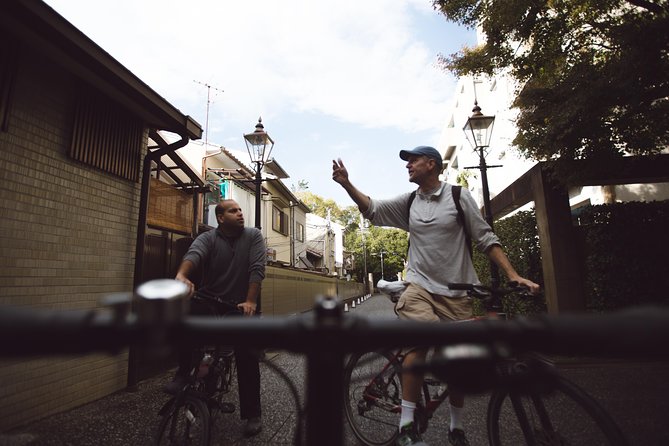
- A calm route through northern Kyoto: You visit major religious sites, then pedal through quiet streets and less-visited temple grounds.
- Electric assistance matters: The bikes make Kyoto’s hills far less tiring, especially on warm or humid days.
- Small groups help: With no more than eight people, the guide can keep an eye on the group and answer questions.
- Strong cultural commentary: Guides explain Zen, Shinto, Buddhism, geisha history, samurai-era Japan, and proper shrine and temple etiquette.
- The route mixes famous and local: Kinkakuji draws the crowds, while Koto-in, Zuihoin, and quiet neighborhood lanes offer a slower side of Kyoto.
- Plan for the rules: Arrive 15 minutes early, be at least 13 years old, and cancel at least 24 hours ahead if plans change.
Why an e-bike works so well in northern Kyoto
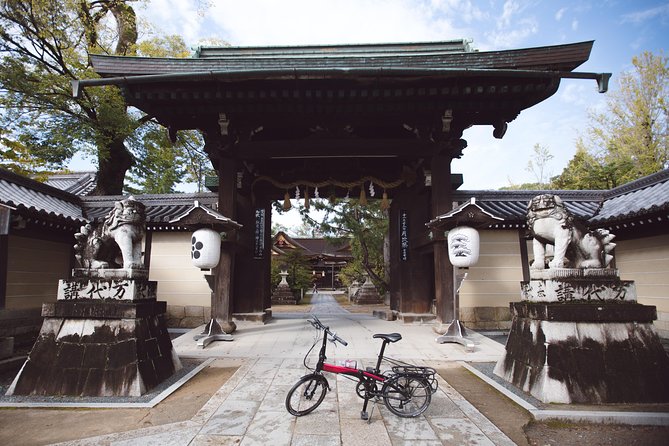
Kyoto is often treated as a city of train rides and long walks between temples. That works, but it can eat up a lot of time. On this tour, the bicycle becomes your transport between the sights, and the ride itself becomes part of the experience.
The route covers roughly 7 to 8 kilometers, depending on how the distance is described, and takes about three hours and 45 minutes. That is not a hard athletic ride. The electric motor supplies help when the road rises, so you can spend your energy looking around rather than fighting every incline.
The ride is especially useful in northern Kyoto, where the temples are spread out and some streets are narrow or quiet. The e-bikes are described as easy to use, and the tour includes a short introduction to operating them. That is helpful if you have not ridden an e-bike before or have not cycled in years.
You still need basic confidence on two wheels. The route includes hills and descents, and you will be riding on city streets. One person who had not cycled for more than a decade managed the outing, while another described the ride as challenging but rewarding. The sensible approach is to tell the guide if you are nervous, pay close attention during the bike briefing, and do not treat the electric motor as a substitute for careful riding.
More E-Bike Tours in Japan
- 5 Top Highlights of Kyoto Full Day Bike Tour (E-bike option)
★ 5.0 · 511 reviews - Kyoto: Memory Kyoto E-Bike Tour
★ 4.8 · 297 reviews - E-Bike Tours of the highlights of Kyoto!!!
★ 5.0 · 291 reviews
Starting at NORU and settling into the ride
You meet at NORU Kyoto Bike Tours, at 429-22 Takigahanacho in Kyoto’s Kamigyo Ward. The shop is near public transportation, and the tour returns to the same place at the end.
Departure times are listed at 8:30 a.m., 9 a.m., 12:30 p.m., and 1 p.m. You need to arrive 15 minutes before departure. This matters. The group leaves on time, and missing the start because you are late does not qualify for a refund.
At the shop, you receive a rental bicycle, helmet, and water. The bikes are foldable, which is practical for handling at the start and finish, and the electric assistance takes much of the strain out of the ride. The group maximum of eight is another useful feature. It is large enough for a social outing but small enough for the guide to manage safely.
The tour is open to people aged 13 and older. Most people who can ride a bicycle should be able to take part, but you should be honest about your cycling ability before booking. If you decide you cannot ride or choose not to participate, the price is not refunded.
Kinkakuji, Kyoto’s famous golden opening act
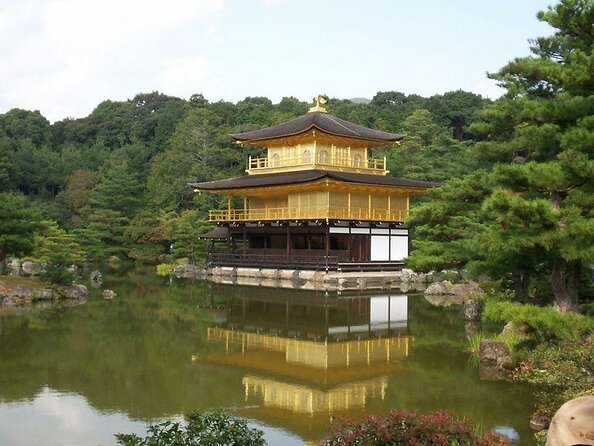
Kinkakuji, the Golden Pavilion, is the best-known stop on the route. Its gold-covered upper stories reflect over a pond, creating one of Kyoto’s most familiar views.
This is the stop most likely to feel crowded. The value here is not solitude. It is the chance to see one of Kyoto’s essential sights as part of a larger route, rather than spending your entire morning making your way there and back on foot.
Your guide can add context that a photograph cannot. The tour’s strongest guides are praised for explaining the relationship between Shinto and Buddhism, the role of Zen in Japanese culture, and the customs involved in visiting religious sites. That extra information can make the temples feel less like a series of pretty buildings and more like places with living traditions.
Allow yourself patience here. Kinkakuji is a famous stop for a reason, and you should expect more people than at the later sites. The payoff comes when the ride moves away from the main sightseeing circuit.
Daitokuji and the quieter rhythm of temple Kyoto
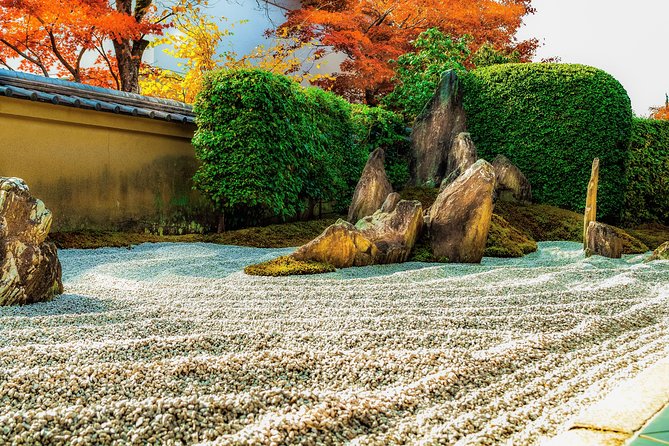
Daitokuji is a large temple complex with a number of sub-temples, each with its own character. It gives you a better sense of how Kyoto’s religious districts work than a single isolated building does.
The complex is linked closely with Zen practice, making it a natural place for a guide to discuss meditation, garden design, and the way Japanese religious traditions developed over time. The guides are particularly praised for making these subjects approachable. Yuta, Michael, Sean, and Henry are repeatedly singled out for clear storytelling and for connecting historical details to what you are seeing.
Daitokuji also helps shift the tone of the tour. After the public spectacle of Kinkakuji, the route becomes more reflective. You may spend time listening to an explanation before moving on, so this is not a quick photo stop. If you enjoy context, that is a strength. If you want constant motion, it can feel slow.
More E-Bike Tours in Kyoto
- Kyoto: City Secrets eBike Tour
★ 4.9 · 196 reviews - Kyoto: Hidden Gems E-Bike Tour with Local Japanese Guide
★ 4.9 · 189 reviews - Historical Kyoto E-Bike Tour
★ 5.0 · 181 reviews - Best of Kyoto: Ginkakuji & Path of Philosophy E-Bike Tour
★ 4.9 · 79 reviews
Kitano Tenmangu, a shrine with a different character
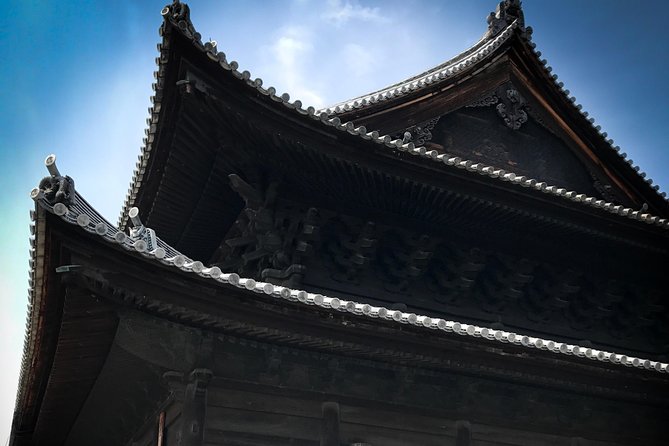
Kitano Tenmangu adds a Shinto site to the temple-heavy route. That contrast is useful. Your guide can point out differences in how you approach, behave at, and understand a shrine compared with a Buddhist temple.
The shrine is also part of the cultural story of Kyoto, not just an architectural stop. This is where the tour’s practical etiquette advice earns its keep. Guides explain customs and dos and don’ts in a friendly way, so you can visit other shrines and temples during the rest of your Japan trip with more confidence.
The ride between the major stops is important here. Instead of simply being driven from one attraction to the next, you pass through ordinary streets and get glimpses of Kyoto beyond its formal monuments. That in-between time is one of the tour’s best features. It gives you a sense of scale and rhythm that a bus tour rarely provides.
Koto-in and Zuihoin, the quieter rewards
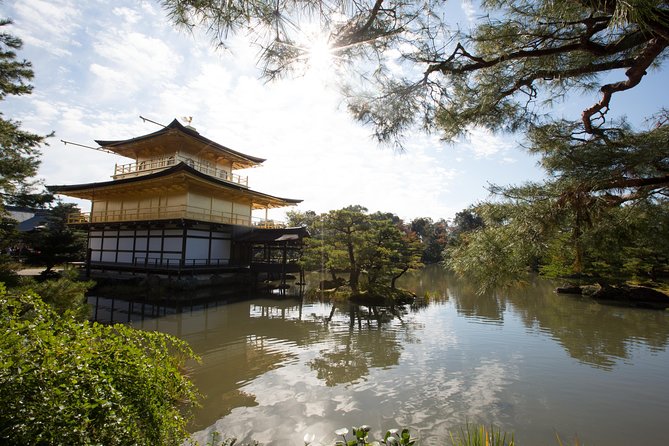
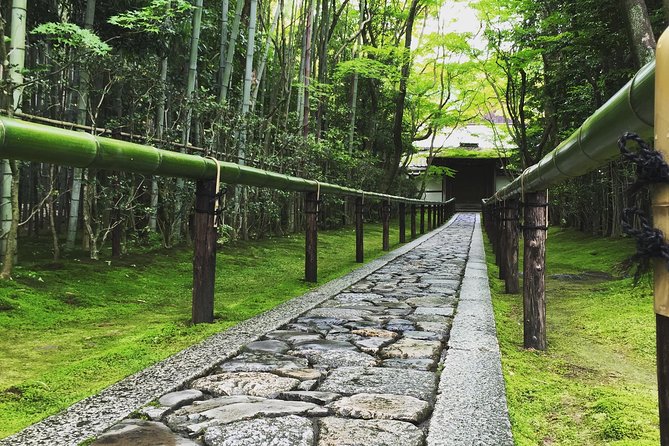
Koto-in is one of the places that gives the tour its hidden Kyoto character. It is associated with a calmer temple setting and intimate garden spaces, rather than the grand visual drama of Kinkakuji.
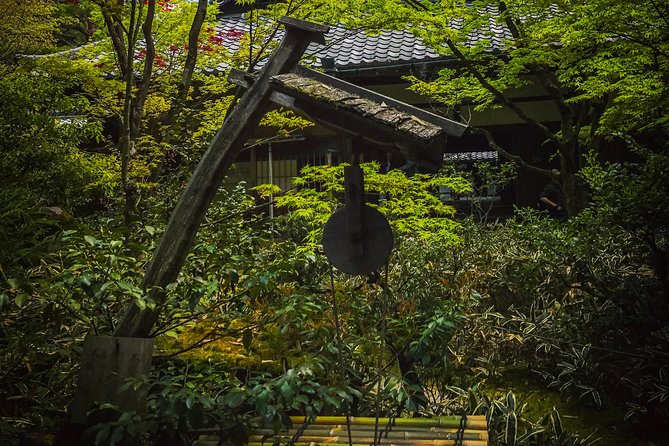
Zuihoin adds another quieter Zen stop. These places are suited to slowing down, looking closely, and listening to how the guide explains Zen ideas through the gardens and buildings. You may find the experience more memorable here than at the larger attractions because the setting allows your attention to settle.
The tour does not promise complete emptiness. Kyoto’s quieter sites can still have other visitors, and access or exact time at each location can vary. But the route is designed to get away from the main tourist flow, and the overall feel is far less hectic than the city’s headline attractions.
A tea stop is also part of the experience described by several participants. The place has a long family story, with more than a thousand years and many generations connected to it. Food and drinks are not generally included, so treat this as a charming possible stop rather than a full meal. Bring money if you want to purchase something, and do not count on the tour replacing breakfast or lunch.
What the guides add to the ride
The guide can make or break a cultural tour, and this one has received especially strong praise for its staff. Yuta is often noted for his English, Zen explanations, tea background, and practical suggestions for food and shopping. Michael is praised for lively storytelling and for his background teaching Japanese history. Sean is described as clear, kind, funny, and well prepared for changing weather. Henry brings long experience living in Japan, while Shizuka has led a memorable small-group ride through temples, gardens, and hill roads.
The best part of this commentary is its range. You may hear about feudal Japan, samurai, geisha and maiko, Shinto, Buddhism, Zen, temple behavior, and local food. These subjects are not random add-ons. They help explain why Kyoto’s shrines, gardens, neighborhoods, and ceremonies look and function as they do.
There is one fair criticism to keep in mind. One participant felt the guide spent too much time speaking and not enough time exploring. That is useful information, not a reason to reject the tour. If you like stories and historical context, you will probably appreciate the pace. If you prefer to wander silently, tell the guide early that you would like some independent viewing time.
Riding in rain, heat, and changing conditions
The experience depends on reasonable weather. If poor weather forces cancellation, you are offered another date or a full refund. That policy is reassuring, but you should still check the forecast before setting out.
Rain does not necessarily ruin the ride. One family completed it in drizzle and still enjoyed the temples, neighborhood views, and family photographs. Another guide was prepared with rain gear for cooler, wet conditions. Still, bring your own raincoat or poncho if rain is expected, along with weatherproof gloves if you have them.
The e-bike is most valuable on warm and muggy days. Electric assistance lets you keep moving without arriving at every temple exhausted. In cooler weather, the ride may feel easier still, though you should remember that descents and wet roads require care.
Is $116 a fair price?
At $116 per person, this is not the cheapest way to see Kyoto. You could rent a bicycle independently for less, and many temples can be reached by public transportation.
The price makes more sense when you count what is included: the bike, helmet, water, English-speaking route coordinator, route planning, and nearly four hours of guided time. You are paying for access to a carefully arranged sequence of sights, not just the bicycle. You also avoid spending part of your day working out how to connect northern Kyoto’s temples on your own.
Value depends on your priorities. If you want a list of famous temples with little commentary, the price may feel high. If you want help navigating, cultural explanations, a small group, and a route that includes quieter corners, it is a reasonable half-day splurge.
The high satisfaction rate, with 99 percent recommending the experience and a 5.0 rating from 1,844 reviews, reflects strong consistency. Still, numbers cannot tell you if the pace suits you. The key question is simple: do you want to pedal, listen, and explore a little beyond the standard route?
Who should book the Hidden Kyoto E-Biking tour?
I would recommend it to first-time Kyoto visitors who want an early orientation to the city. It is also a smart choice for repeat visitors who have already seen the major central temples and now want a slower look at northern Kyoto.
Families with teenagers can consider it, since the minimum age is 13. The electric assistance also makes it suitable for adults who are not regular cyclists but can manage a bicycle safely. Several people in their 60s found the ride manageable, including on hills and descents.
You may want a different activity if you have limited mobility, dislike cycling, or want a fully passive sightseeing experience. You also need to accept that the guide may spend a fair amount of time talking. For many people, that is the point. For others, it may feel like too much instruction during a short outing.
Practical booking advice before you commit
Book only when you can arrive 15 minutes early. Missed departures, no-shows, and late arrivals are not refundable, and changes made within 24 hours are not accepted.
You can cancel for a full refund up to 24 hours before the local start time. If the operator cancels because of bad weather or because too few people book, you receive a different date or experience, or a full refund.
The tour returns to NORU, so you do not need to arrange a separate pickup at the end. Food and drinks are not included, aside from the supplied water, so eat beforehand or plan your next meal after returning. Several guides offer food suggestions, which can help you choose a nearby bowl of noodles or another Kyoto specialty.
Should you book it?
Book this tour if you want Kyoto with movement, stories, and quiet temple lanes rather than a simple checklist of major sights. The e-bikes make the hills practical, the eight-person limit keeps the outing personal, and the guides bring real warmth to subjects such as Zen, Shinto, geisha culture, and temple etiquette.
Skip it if you do not feel secure on a bicycle or if you want to spend every minute exploring independently. For everyone else, the strongest reason to book is the balance: Kinkakuji and Kitano Tenmangu give you Kyoto’s famous face, while Koto-in, Zuihoin, Daitokuji, and the backstreets show you a calmer one.
FAQ
How long is the Hidden Kyoto E-Biking tour?
The tour lasts approximately 3 hours and 45 minutes.
How far do you ride?
The route is described as approximately 7 to 8 kilometers, or about 4.3 to 4.9 miles.
What sights are included?
The itinerary includes Kinkakuji Temple, Daitokuji Temple, Kitano Tenmangu Shrine, Koto-in, and Zuihoin.
Is the bicycle included?
Yes. A rental bicycle, helmet, and water are included in the price.
What is the minimum age?
The minimum age is 13.
Where does the tour start and finish?
You start at NORU Kyoto Bike Tours, 429-22 Takigahanacho, Kamigyo Ward, Kyoto. The tour ends back at the same meeting point.
What happens if the weather is bad?
If poor weather causes the tour to be canceled, you are offered another date or a full refund. You can also cancel for a full refund if you do so at least 24 hours before the experience begins.
Just added around Kyoto
- Kyoto: Tailored E-Bike Tour to Highlights & Hidden Gems★ 4.9 · 32 reviews
- Best of Kyoto: Ginkakuji & Path of Philosophy E-Bike Tour★ 4.9 · 79 reviews
- Kyoto: Early Bird E-Bike Tour with Lunch★ 5.0 · 14 reviews
- Kyoto: Half-day Guided Bike Tour with Fushimi Inari★ 4.9 · 21 reviews
- Kyoto: Full Day Bike Tour★ 4.9 · 39 reviews
- Kyoto: Full-Day City Highlights Bike Tour with Light Lunch★ 5.0 · 52 reviews
- Cycle Kyoto’s Hidden Gems & Gion Stroll★ 5.0 · 29 reviews
- Kyoto: Arashiyama Bamboo Forest Morning Tour by Bike★ 5.0 · 115 reviews
E-Bike Tours, compared.

3-Hour Porto Highlights on a Electric Bike Guided Tour
Read our review →
Hills, Alfama, and Mouraria Tour by Electric Bike
Read our review →
Athens Scenic Electric Bike Tour with optional Acropolis visit
Read our review →
City Highlights 3-Hour Guided Electric Bike Tour
Read our review →
Rome EBike Tour: Appian Way, Catacombs & Roman Aqueducts
Read our review →
Top Highlights & Hidden Gems Tour by Cannondale E-Bike
Read our review →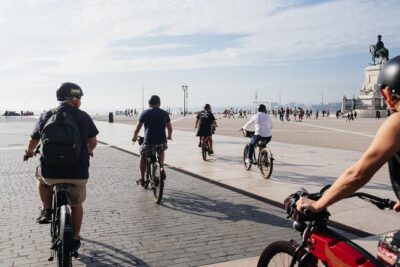
Lisbon E-Bike Tour Commerce Square, Mouraria and Alfama
Read our review →Browse the lists this tour appears in