
REVIEW · YOGYAKARTA
Authentic Yogya Bicycle Tour
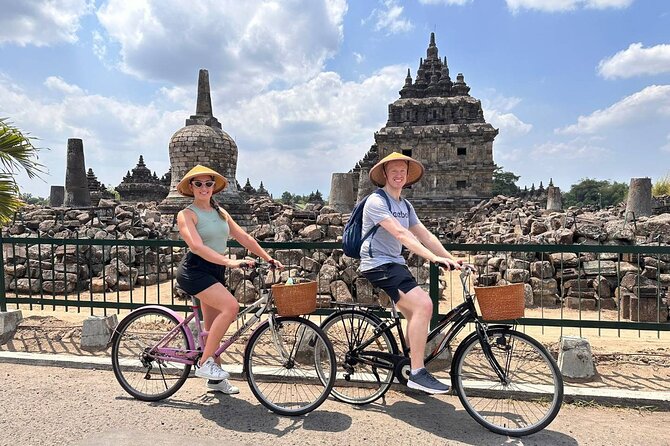
Village life beats another city street. This two-hour bicycle ride near Prambanan packs sport, culture, food, nature, and local work into one easy outing. I like the peaceful route through rice fields and small villages, and I especially like the stops at the emping and tofu makers, where you see ordinary Javanese food being made rather than simply buying it in a market. The main consideration is the heat, plus the tour is not suitable for anyone who cannot ride, weighs over 220 pounds, or is over 70.
The price is $22 per person, including a bicycle, guide, drinks, sunhat, raincoat, and entrance fees at the stops. Guides such as Randi and Salwa are praised for clear English, patience, and helping with photos. The ride is generally relaxed and flat, although you may cross a few busier roads.
What makes this Prambanan bike ride special
- A five-part local experience: Cycling, heritage, culture, nature, and village life all fit into a compact two-hour trip.
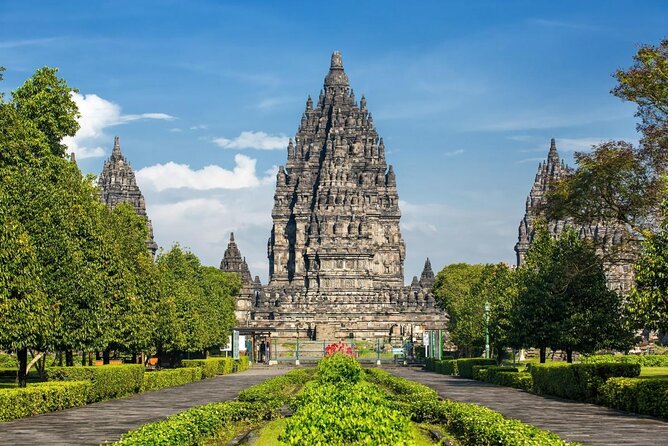
- A temple beyond the main sight: You visit a smaller temple near Prambanan, with Hindu and Buddhist elements, from close outside the site.
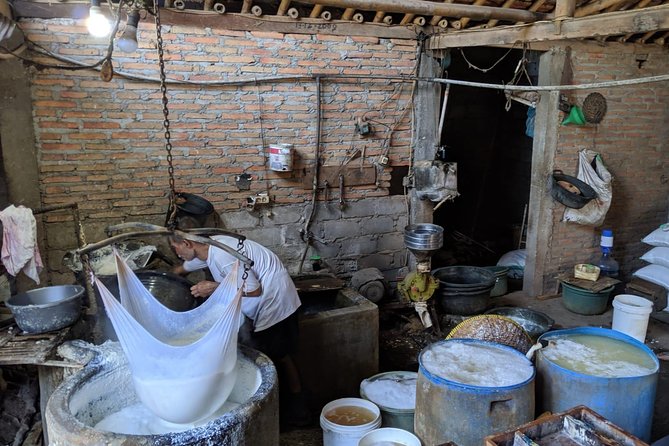
- Food made by hand: See traditional emping crackers and tofu being produced in local homes and small workshops.
- Unusual honey tasting: A stingless-bee farm explains the bees and offers pure honey with a gently sour, fermented taste.
- Easy countryside riding: The route follows rice fields and village lanes, with guides helping at busier crossings.
- Good support for solo riders: Guides take photos, answer questions, and may provide close attention when bookings are small.
Starting near Prambanan Temple
The meeting point is Alga Lova Tour, north of the Prambanan Temple complex. You can go directly there, or arrange pickup in the temple parking area. Put your WhatsApp number on the booking, since the operator uses it to make contact easier.
This is not a bicycle tour through the main temple compound. The cycling begins outside the complex, in the quieter area north of Prambanan. That distinction matters. If you want a detailed visit inside Prambanan Temple, buy a separate temple ticket and allow extra time. This ride gives you a view of the wider area and its villages instead.
The tour runs every day, including Monday. That is useful because many cultural attractions and local businesses have different opening patterns, while this experience keeps Monday available. Starting times vary, so you need to check availability when booking.
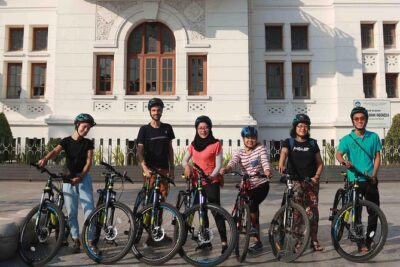
At Alga Lova, you receive the bicycle and sunhat. Mineral water, coffee or tea, cold water, and a raincoat are included. The equipment list is simple, but practical for Java’s heat and sudden rain. You should still wear light clothing, use sunscreen, and bring only what you need. Large bags and luggage are not allowed.
A few more days on two wheels around Indonesia worth a look
- Electric Cycling Tour of Ubud with Free Hotel Transfer and Lunch
★ 5.0 · 1,397 reviews - From Ubud: Downhill Bike Tour with Rice Terraces and Meal
★ 4.9 · 664 reviews - Menoreh Village Cycling
★ 5.0 · 611 reviews
Rice fields and a quieter side of Prambanan
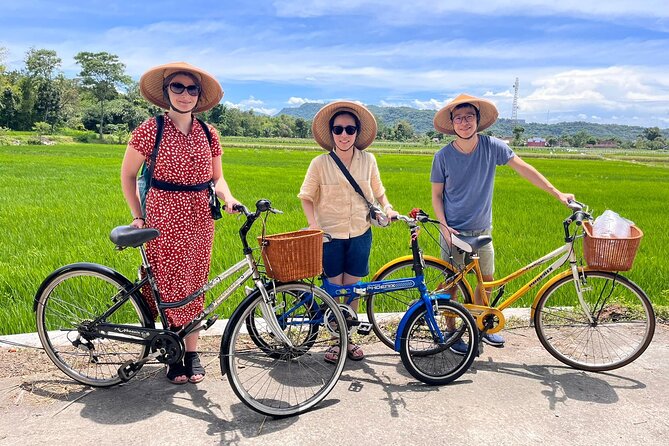
The first part is the ride itself. You follow the guide through rice fields, small villages, and countryside outside the main tourist zone. This is the part I find most useful for understanding the area. From a car, the fields and houses become scenery. On a bicycle, you move slowly enough to notice the working countryside and stop when something catches your eye.
The route is described as easy and relaxing, with flat cycling and no need for athletic ability beyond being comfortable on a bicycle. You are not signing up for a race. The strongest praise goes to the calm pace and the chance to stop for photographs. Guides including Salwa, Randi, and Wulan are noted for patience and for explaining plants, farming, and village life along the way.
You may see local crops and garden plants, including rice, chili, corn, long beans, eggplant, dragon fruit, and Jamaican cherries. The guide may ask you to guess a plant before explaining it. That small touch turns a passing field into a useful lesson about what people grow and eat.
The ride is not entirely free of traffic. Some roads and intersections can be busy, and one guide may help keep the way clear while another leads the group. That support is reassuring, especially for families or anyone who does not often cycle in Indonesia. Still, you should be alert at crossings rather than assuming the route is traffic-free.
The heat is the bigger practical issue. A morning ride can be more comfortable, while an afternoon departure may finish near sunset, with the changing light adding a lovely end to the route. Bring sunscreen and wear breathable clothes. The included water helps, but you should arrive ready for a tropical outdoor activity.
A close look at the smaller temple
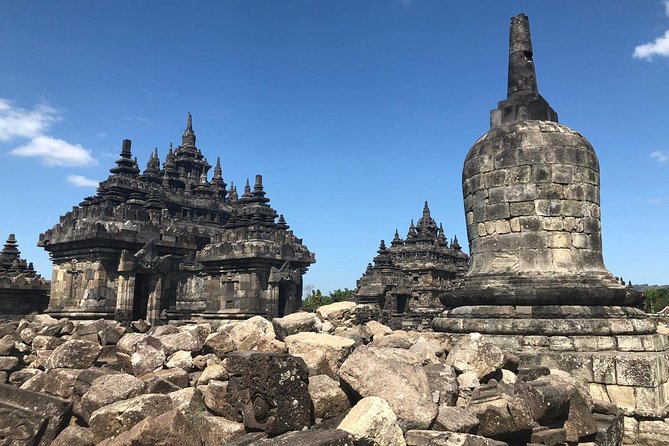
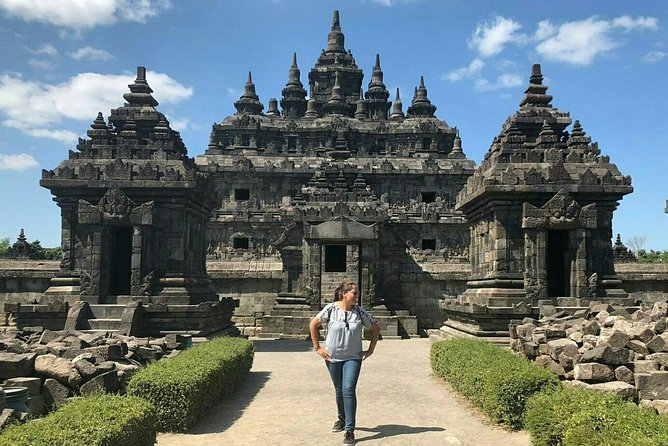
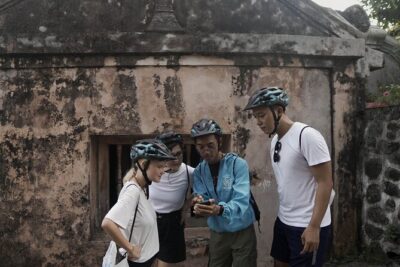
One stop takes you near a smaller temple north of the main Prambanan complex. It combines Hindu and Buddhist features in one location, an unusual detail that gives the stop more interest than a quick photo pause. You view it from outside, very close to the structure.
The temple is also being rebuilt, so do not expect the polished presentation of a major monument. That is part of the appeal. You see a place still connected to local repair and preservation rather than only a finished attraction prepared for visitors.
Your guide explains the site and gives you time for photographs. The stop works best as part of the larger route. If you are seeking a full archaeological tour with extensive dates, architectural detail, and interior access, this is not designed for that. It is a brief heritage stop within a village cycling trip.
That balance is worth understanding before you book. The tour gives you several glimpses of the area, not a long visit at one monument. You trade depth at Prambanan for a broader look at temples, fields, food production, and local homes.
Emping crackers made the traditional way
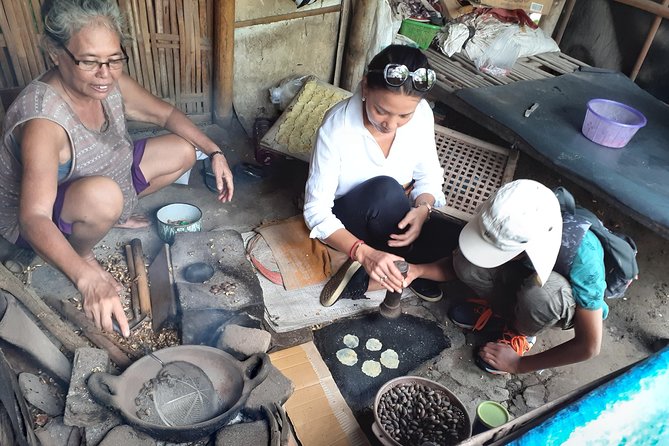
The next stop brings you to a home industry or local house making emping chips. Emping is a familiar Indonesian snack made from the seeds of the melinjo tree, though the precise process and ingredients you see may depend on the household operating that day.
Here, the value comes from watching the work. You see how a local food product is prepared rather than encountering it in a packet with no context. The guide explains the steps, and you may have the chance to taste local snacks or other traditional food along the route.
This stop also gives you a more direct connection with small-scale village business. The tour is not only taking you past houses. It brings you into contact with people who produce and sell food as part of daily work. Some profits from the bicycle tour go toward the small businesses visited, making the stop feel more connected to the community.
Do not expect a large factory or a formal demonstration space. These are local homes and small enterprises. Conditions may be modest, and the pace depends on what is happening that day. That is precisely why the visit feels more personal, though it also means the exact activity can vary.
Same roads, a different day in the saddle:
- Ubud: Rice Terraces & Villages Half-Day Fat Tire E-Bike Tour
★ 4.9 · 602 reviews - Ubud: Downhill Cycling with Volcano, Rice Terraces and Meal
★ 5.0 · 536 reviews - Ubud eBikes Tour to Tegallalang Rice Terrace
★ 5.0 · 507 reviews - Half-Day Ubud Electric Cycling Tour to Tirta Empul Water Temple
★ 5.0 · 315 reviews
Tofu, soya milk, and fresh local food
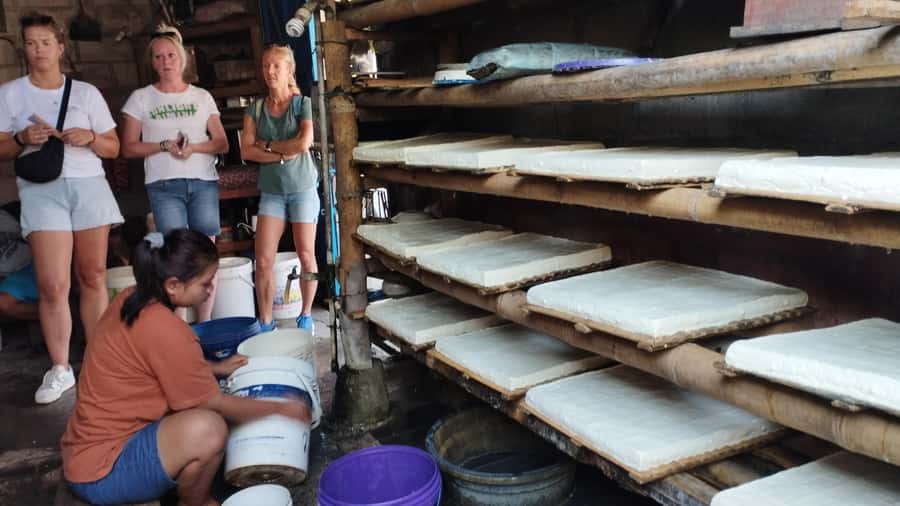
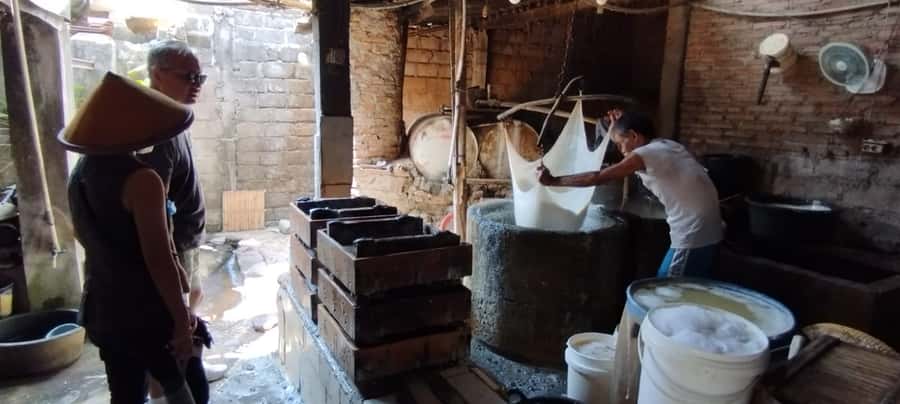
The route continues to a tofu-making workshop. This is one of the strongest stops for anyone interested in how everyday food reaches the table. You learn about the traditional process, and if production is underway, you may taste fresh tofu or soya milk.
The experience is educational without becoming a lecture. Guides explain what you are seeing, answer questions, and help translate the process into plain language. Fresh tofu has a different character from packaged tofu, and tasting it close to where it is made gives the visit a simple, memorable payoff.
Food tasting can extend beyond tofu. Some visits include banana cake, fried bananas, fruit, vegetables, or other local snacks. The exact selection is not guaranteed, so think of this as a chance to sample what is available rather than a fixed tasting menu.
The tofu stop has the same trade-off as the emping visit. You get access to a working local business, but not the polish of a museum exhibit. If you prefer formal demonstrations and carefully timed presentations, the informal nature may feel basic. If you want to see how village businesses really operate, it is a strong part of the ride.
Stingless bees and sour honey
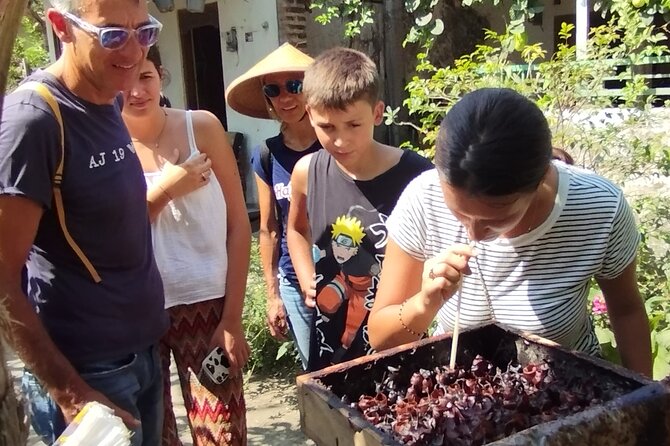
The most unusual stop is the stingless-bee farm. These bees are a special local species, and the guide explains how they produce honey. You also taste the honey, which may have a mildly sour flavor because of fermentation.
This is not the familiar supermarket honey experience. The taste can be sharper and more complex, and one useful detail is that the honey becomes more sour if kept outside for longer. Some people enjoy that tang and buy a bottle to take home. Buying local products is optional and not included in the tour price.
The farm adds a nature lesson to the food stops. You are not simply sampling something sweet. You are learning about a bee species, local production, and a small business that relies on the surrounding environment.
The visit may appeal especially to curious eaters and anyone who has already seen standard honey farms. It is also a good stop for families, provided children can listen carefully and follow the guide’s instructions around the bees. The supplied information does not promise a particular amount of honey or a specific product selection, so keep expectations flexible.
Guides who make the difference
The guides are central to the experience. Randi is praised for explaining the area and its agriculture, while Salwa is noted for patience, energy, and her ability to identify plants along the route. Wulan and Bagus are also named in positive accounts, and the operator provides English and Indonesian-speaking guides.
A helpful guide matters here because the scenery alone is not the whole point. Rice fields can look beautiful, but the explanation of crops, food production, temples, and local work gives those views meaning. The best guides also help you speak with local people respectfully and make the route feel safe.
Photo help is another small but valuable feature. Guides regularly offer to take pictures at stops, which is especially useful if you are traveling alone. Solo bookings may sometimes become private tours, though that depends on who books the same time slot. You should not assume a private guide, but small groups can allow a more personal pace.
The operator also uses a second guide or scooter support at times, especially around busy intersections. That extra help is useful, though the exact staffing may depend on the group and departure.
Is $22 good value?
At $22, this is strong value if you want more than a bicycle rental. The fee covers the bicycle, sunhat, mineral water, coffee or tea, cold water, raincoat, local guide, and fees for the destinations. You also receive a guided route, food-related visits, honey tasting, and photo assistance.
The value comes from variety. In two hours, you combine exercise, countryside views, a temple, three types of local production, and direct contact with village residents. Paying separately for a bicycle, guide, transport to small businesses, and entry fees could easily cost more, while giving you less context.
The limitation is the short duration. Two hours passes quickly, and each stop is an introduction rather than a long workshop. If you want extended time at the temple or a full cooking class, this will feel too brief. For a first look at the Prambanan countryside, the compact format works well.
Tips are not included, and purchases of local products cost extra. Bring some Indonesian rupiah if you hope to buy honey, snacks, or other goods, but do not feel pressured to shop.
Who should book this ride?
I would recommend it to you if you want a relaxed outing away from the main tourist sights, enjoy easy cycling, and like meeting people through food and work. It suits solo visitors, couples, families with cycling children, and anyone with a free morning or afternoon near Prambanan.
It is particularly good for first-time visitors who want context for rural Java. The guides connect the rice fields, crops, temple traditions, and small businesses in a way that a standard temple visit cannot.
You should choose another activity if you cannot ride a bicycle, dislike hot outdoor conditions, or want a serious athletic challenge. The tour is not suitable for people over 220 pounds, or 100 kilograms, or over 70 years old. Large bags and luggage are also not allowed.
For families, the ride is described as safe with children, but adults should still make sure every child can control a bicycle and follow directions. The tour is not advertised as accessible for people who cannot cycle.
Cancellation is free up to 24 hours before the start, and you can reserve now and pay later. That gives you some flexibility if you are arranging a wider Yogyakarta schedule.
My verdict: a smart two-hour addition to Prambanan
Book this tour if you want to see how people live and work around Prambanan, not just photograph the famous temple. The rice-field riding is calm, the local food stops are practical and memorable, and the stingless-bee honey gives the outing an unusual final note.
The best reason to go is the combination. You get a little exercise, a little heritage, useful food knowledge, countryside scenery, and genuine contact with local businesses without committing to a full day. I would schedule it beside a separate Prambanan Temple visit, wear light clothing, carry sunscreen, and leave your large bag behind.
FAQ
Where does the Authentic Yogya Bicycle Tour start?
It starts at Alga Lova Tour, north of the Prambanan Temple complex. Pickup can be arranged in the Prambanan parking area.
How long does the bicycle tour last?
The experience lasts two hours. Available starting times depend on the date you select.
Does the tour run on Mondays?
Yes. The tour operates every day, including Monday.
What does the $22 price include?
The price includes bicycle rental, a sunhat, mineral water, coffee or tea, cold water, a raincoat, a local guide, and fees for all listed destinations.
Can I taste local food during the tour?
Yes. The route includes food tasting and visits to emping and tofu makers. You may taste fresh tofu, soya milk, snacks, fruit, or other local food depending on what is available.
Who is the tour not suitable for?
It is not suitable for people who cannot ride a bicycle, people over 220 pounds or 100 kilograms, or people over 70 years old. Large bags and luggage are also not allowed.
Just added around Indonesia
- Scenic Cycling Tours Through Bali’s Sidemen Countryside★ 5.0 · 12 reviews
- Mount Batur: Black Lava Cycling Tour w/ Natural Hot Spring★ 3.8 · 63 reviews
- Mount Batur: Sunrise Dirt Bike Trek with Trained Riders★ 4.6 · 15 reviews
- Kuta: Kintamani Culture and Nature Guided Cycling Tour★ 5.0 · 14 reviews
- Jatiluwih (UNESCO Site) 2-Hour E-Bike Cycling Tour★ 4.3 · 49 reviews
- Bali: Jatiluwih Rice Terraces 1 Hour Electric Bike Tour★ 4.7 · 41 reviews
- E-Bike: Ubud Rice Terraces & Traditional Villages Cycling★ 4.6 · 37 reviews
- Jogja Hidden Gems – Cycling Tour★ 5.0 · 12 reviews
Yogyakarta Cycling Tours, compared.
Browse the lists this tour appears in