
REVIEW · YOGYAKARTA
Kotagede Royal Route – Cycling Tour
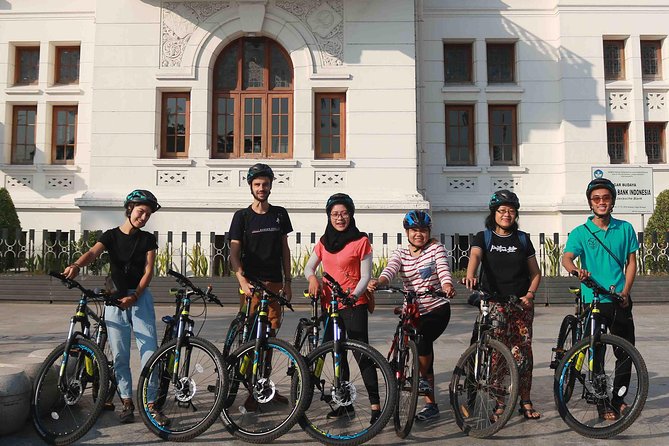
Old Yogyakarta feels best at bicycle speed. This three-hour ride takes you through Kota Gede, the city’s old royal quarter, where narrow lanes, old buildings, temples, markets, and daily life all sit close together. I like the chance to see Yogyakarta beyond its main sights, and I especially like the stops for local snacks and drinks.
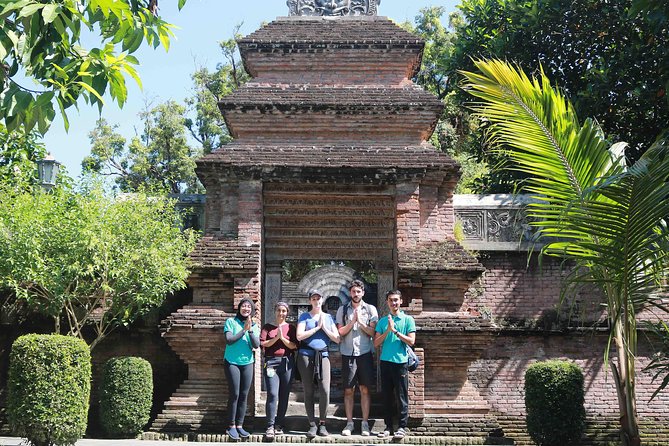
The tour also visits the tombs of the Mataram Kingdom, with traditional Javanese clothing worn for the royal compound. That cultural detail gives the ride more purpose than a simple city bike tour. The main caution is the cycling itself: you need medium-level confidence, since the route includes main roads, tight alleys, uneven cobblestones, and narrow footpaths. Children are not permitted.
Key things to know before you book
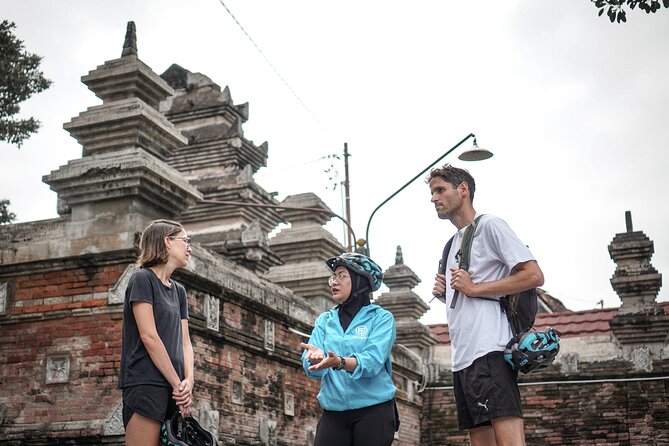
- Kota Gede at street level: You cycle through the old town’s maze of lanes instead of viewing it only from a car or bus.
- Mataram royal tombs: The tour includes a visit to the old royal burial grounds and an introduction to the sultan’s servants.
- Local food stops: Traditional market snacks, Indonesian food, and refreshing drinks are included.
- A small-group ride: The activity has a maximum of 10 participants, which helps the guide manage streets and stops.
- Two useful departure times: Choose the 7:00 to 10:00 morning ride or the 14:30 to 17:30 afternoon ride.
- Lower-impact touring: Cycling replaces a motor vehicle for the route, and part of the price supports a local community and a sustainability fund.
Why Kota Gede works so well by bicycle
Kota Gede, also written Kotagede, was the old royal center of the Mataram Kingdom. Its importance is not limited to one monument. The district is made up of lanes, homes, religious sites, old architecture, markets, and working neighborhoods.
That makes a bicycle useful. You can move through passages that would be awkward for a car and too slow to cover on foot in three hours. The route covers about 12 to 15 kilometers, so you see a fair amount of the area without spending the entire morning or afternoon pedaling hard.
I like the way this tour treats the old town as a living place rather than a museum. You are not simply brought to a famous building, given a short explanation, and sent back to the bus. The route is designed around the sights, smells, sounds, and ordinary activity of Yogyakarta.
That also means the ride may feel less polished than a standard sightseeing circuit. Streets can be busy, alleyways can be tight, and cobblestones can make the bicycle jump beneath you. One rider described the mix of main roads and small alleys as a little harrowing, so do not book this if you want a completely calm, traffic-free spin.
A few more days on two wheels around Indonesia worth a look
- Electric Cycling Tour of Ubud with Free Hotel Transfer and Lunch
★ 5.0 · 1,397 reviews - From Ubud: Downhill Bike Tour with Rice Terraces and Meal
★ 4.9 · 664 reviews - Menoreh Village Cycling
★ 5.0 · 611 reviews
The 7:00 morning start and the 14:30 afternoon option
You can begin at 7:00 in the morning or at 14:30 in the afternoon. Both rides last about three hours and return to the starting point.
I would choose the morning departure if you are comfortable getting up early. The earlier start gives you a cooler part of the day and fits well with the traditional market visit. One particularly positive account called the early start well worth it because the ride offered quieter streets, local food, history, and a visit with a traditional baker.
The afternoon option is useful if your morning is reserved for another Yogyakarta sight. It also gives you a different feel as the day moves toward late afternoon. The information provided does not promise a sunset finish, so you should book it for the timing rather than for a particular light effect.
Both departures meet at MOANA Hub Prawirotaman, at Jl. Gerilya No. 646 in Brontokusuman, Mergangsan. Transport to the meeting point is not included, but the starting area is near public transportation. The ride ends back at the same place, which keeps the logistics simple.
What the 12 to 15 kilometer route feels like
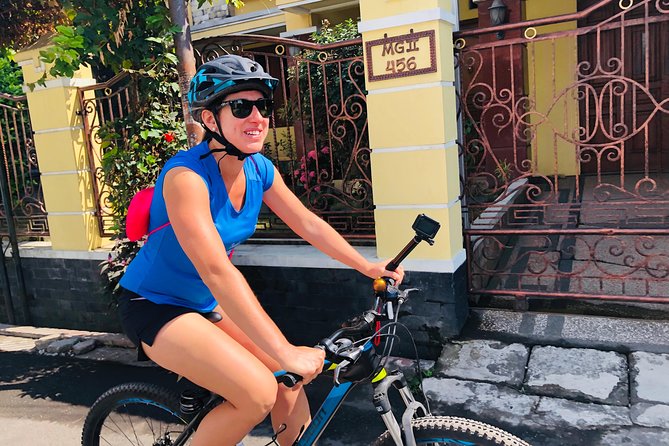
The route uses either a mountain bike or a city bike. A helmet is available if you want one, and I would use it for this ride, especially since the route includes public roads and uneven surfaces.
You should expect a combination of ordinary city cycling, narrow residential lanes, footpaths, and cobblestones. The cycling is not presented as a technical mountain-bike trip, but it does call for medium-level skill. You need to control your bicycle at low speed, respond to changing road conditions, and feel comfortable riding near traffic.
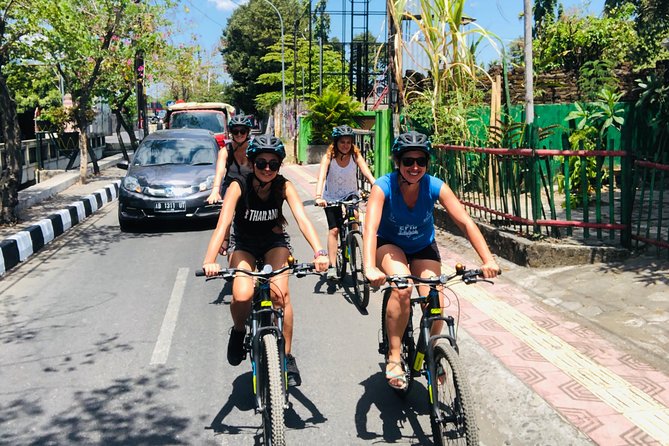
The guide leads you through streets that many people would miss when moving around Yogyakarta by car. You may pass old walls, traditional homes, temples, street art, and small businesses. Since the activity is limited to 10 people, the guide can give directions and keep the group together more easily than on a large coach excursion.
Still, do not assume that a small group removes every challenge. You will need to pay attention. The route’s appeal comes partly from its ordinary setting, and ordinary city streets do not always provide a smooth cycling surface.
Old buildings, temples, and street art
A main pleasure of the ride is the changing texture of Kota Gede. The tour takes you through old buildings and temples, with time to look at the architecture from close range.
The information does not name every building or temple on the route, which is actually a reason to focus on the guide’s commentary rather than expect a fixed checklist of monuments. The point is to understand how the old quarter works as a neighborhood, not to race between a series of isolated photo stops.
Street art adds another layer to the ride. It gives you a view of present-day Yogyakarta alongside the older royal and religious sites. That mixture helps explain why cycling suits this district: you can notice small details, stop without a large vehicle blocking the lane, and see how old and new sit side by side.
I would expect the experience to reward curiosity more than checklist sightseeing. If you like hearing about local life and looking closely at streets, it should be satisfying. If you want major monuments with long formal explanations at each stop, this may feel less structured.
Same roads, a different day in the saddle:
- Ubud: Rice Terraces & Villages Half-Day Fat Tire E-Bike Tour
★ 4.9 · 602 reviews - Ubud: Downhill Cycling with Volcano, Rice Terraces and Meal
★ 5.0 · 536 reviews - Ubud eBikes Tour to Tegallalang Rice Terrace
★ 5.0 · 507 reviews - Half-Day Ubud Electric Cycling Tour to Tirta Empul Water Temple
★ 5.0 · 315 reviews
Entering the Mataram royal tombs
The royal tombs are the most ceremonial part of the tour. You visit the burial grounds of the Mataram Kingdom and wear traditional Javanese clothing before entering. You also meet the sultan’s servants, a detail that gives the stop a human connection beyond architecture.
This portion requires respect. The tombs are not simply another attraction on a cycling route, so you should follow the guide’s directions about clothing and conduct. The supplied information does not list the exact dress code or any additional rules, but the provision of traditional clothing signals that this visit has a formal character.
The royal tomb stop gives the ride historical weight. Without it, the tour might be mainly an enjoyable neighborhood cycle with food stops. With it, you get a link to the rulers who shaped this part of Yogyakarta and a clearer sense of why Kota Gede matters.
The experience may not suit someone who dislikes changing clothes or participating in cultural customs. For me, that is part of its value. You are asked to enter the site in a way that acknowledges its meaning rather than treating it as a quick backdrop for photographs.
Markets, snacks, and a traditional baker
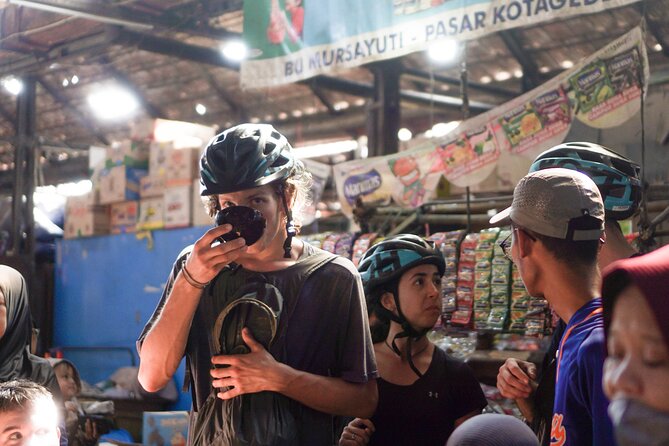
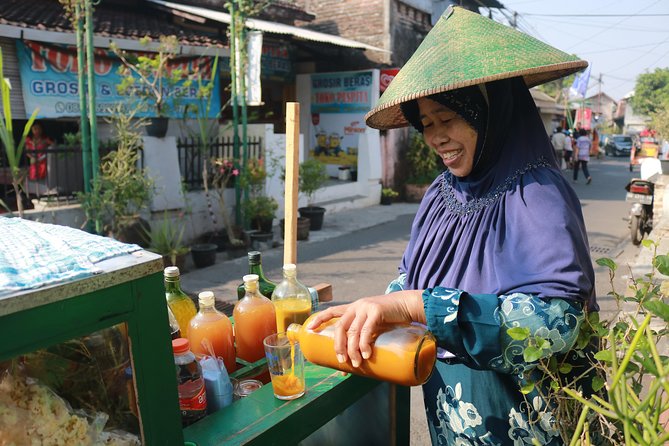
Food is one of the strongest parts of this experience. The route includes a stop at a traditional market where you can try local snacks or Indonesian food, along with refreshing local drinks.
A market visit by bicycle feels different from a restaurant stop. You are closer to the sounds and movement of daily shopping, and the guide can help explain what you are seeing. The exact dishes are not specified, so you should not book this expecting a particular meal or a full lunch. Think of it as a tasting break built into the route.
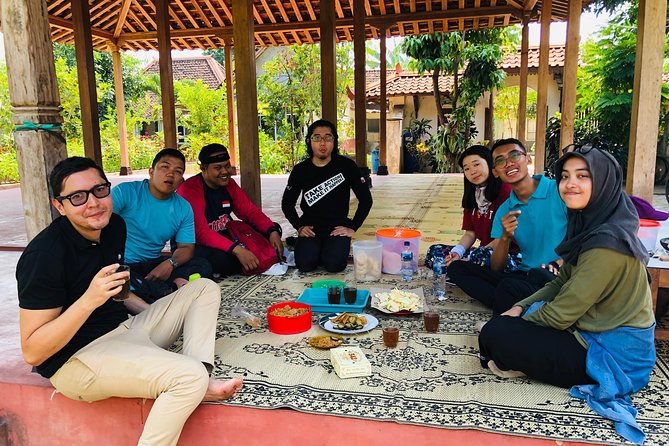
The tour can also include a meeting with a traditional baker. That is the kind of small encounter that gives the ride its character. You are not just looking at old streets. You are seeing how local skills and food traditions remain part of the neighborhood.
I would eat a light breakfast before the morning departure, but not a large one. The tour includes food, yet it lasts three hours and covers a useful distance. You will likely appreciate the snacks more if you are ready for a modest break rather than expecting a substantial meal.
The guide’s role makes or breaks the ride
The guide is central to this tour. Cycling through unfamiliar lanes is much easier when someone knows where to turn, how to manage the group, and when to pause for local details.
The strongest praise for this activity centers on the guide’s ability to explain history and culture while leading the group through quieter alleys and side streets. One account specifically noted that the guide helped avoid the worst of the traffic and made the city easier to see from the bicycle.
That does not mean the roads are free of traffic. You may still cycle on main streets, and conditions can change quickly. But a good route leader can make the difference between feeling lost in city traffic and feeling guided through it.
The tour provider is MOANA, a sustainable cycling operator. No individual guide names are provided, so you cannot request a specific person based on the information available. The important point is to choose this activity for the guided local interpretation, not simply for bicycle rental.
Is $57 good value?
At $57, the price is higher than renting a bicycle and exploring on your own. That comparison is fair, but it misses much of what you are paying for.
The fee includes the bike, an experienced guide, local food and drinks, entrance fees for sites included in the program, a donation to the local community, and a sustainability action fund. You also receive the traditional clothing arrangement for the royal tomb visit. Tips are not included, but they are optional and appropriate only if you feel the guide did a good job.
The value is strongest if you want context and a planned route. Finding the old lanes, royal tombs, market stops, and appropriate entrance arrangements on your own would take time and may be difficult. The guide also helps you handle the cycling conditions.
The value is weaker if you already know Kota Gede well or want a private ride with complete control over the pace. The activity is described as a private guided tour, while the maximum group size is 10, so check how your booking will be organized if that distinction matters to you.
The community donation and sustainability fund are worthwhile additions, though they should not be the only reason to book. The main benefit is the chance to travel through the old town using low-carbon transport while supporting a local program.
Who should book this cycling tour?
I would recommend it to confident city cyclists who want to see Yogyakarta through neighborhoods rather than only through major attractions. It is a good match if you enjoy local food, cultural sites, street art, and conversations about everyday life.
It also suits a short stay. In three hours, you can combine history, food, royal tradition, and ordinary city streets without giving up an entire day. The return to the same meeting point makes it easy to plan around.
I would hesitate if you rarely cycle, dislike riding near traffic, or find uneven paths stressful. The route is not suitable for children, and medium cycling ability is required. You should also be comfortable with a little uncertainty, since the appeal lies in moving through real neighborhoods rather than on a protected tourist track.
Bring a willingness to pay attention. Watch the road, listen to the guide, and allow the route to be about more than photographs. That approach will give you the best chance of enjoying the ride.
Booking details and cancellation
Confirmation is received at booking, and the activity accepts up to 10 participants. You can cancel for a full refund up to 24 hours before the start time. Cancellations or changes made within 24 hours are not refunded or accepted, and the cut-off follows Yogyakarta local time.
That rule matters if you are arriving by air on the same day. A delayed flight caused one booking to miss the start, and a refund was not granted. I would avoid scheduling this tour too close to an airport transfer or arrival.
Should you book the Kotagede Royal Route?
Book it if you want to understand Yogyakarta through its side streets, food traditions, royal past, and present-day neighborhoods. The mix of cycling, local snacks, Mataram tombs, and community support gives the three hours real variety.
Skip it if you want a gentle ride on quiet paths or if you are not confident on a bicycle. For the right rider, though, this is a strong way to see Kota Gede at street level. Choose the morning if you can handle the early start, wear the offered helmet, and treat the traffic and cobblestones as part of the experience rather than an unexpected problem.
FAQ
Where does the Kotagede cycling tour start?
The tour starts at MOANA Hub Prawirotaman, Jl. Gerilya No. 646, Brontokusuman, Mergangsan, Yogyakarta.
Where does the tour end?
The activity returns to the same meeting point where it begins.
How long is the cycling tour?
The tour lasts approximately three hours.
How far do you cycle?
The route covers about 12 to 15 kilometers.
What departure times are available?
The morning tour runs from 7:00 to 10:00. The afternoon tour runs from 14:30 to 17:30.
What kind of bicycle is provided?
You can use either a mountain bike or a city bike.
Is a helmet included?
A helmet is available if you want one.
Is the tour suitable for children?
No. The activity is not suitable for children and requires medium cycling ability.
What does the price include?
The price includes bicycle rental, an experienced guide, local food and drinks, entrance fees for included sites, a donation to the local community, and a sustainability action fund. Transport to the meeting point and guide tips are not included.
Just added around Indonesia
- Scenic Cycling Tours Through Bali’s Sidemen Countryside★ 5.0 · 12 reviews
- Mount Batur: Sunrise Dirt Bike Trek with Trained Riders★ 4.6 · 15 reviews
- Mount Batur: Black Lava Cycling Tour w/ Natural Hot Spring★ 3.8 · 63 reviews
- Kuta: Kintamani Culture and Nature Guided Cycling Tour★ 5.0 · 14 reviews
- Jatiluwih (UNESCO Site) 2-Hour E-Bike Cycling Tour★ 4.3 · 49 reviews
- Bali: Jatiluwih Rice Terraces 1 Hour Electric Bike Tour★ 4.7 · 41 reviews
- E-Bike: Ubud Rice Terraces & Traditional Villages Cycling★ 4.6 · 37 reviews
- Jogja Hidden Gems – Cycling Tour★ 5.0 · 12 reviews
Yogyakarta Cycling Tours, compared.
Browse the lists this tour appears in