
REVIEW · JAPAN
Kanazawa Half Day E-bike Tour
Kanazawa is made for two wheels. This four-hour ride links Kenrokuen Garden, Kanazawa Castle, and the geisha districts without making you spend the whole day walking between them. I especially like the small-group format and the stop for matcha in Gyokusen-an Garden, where the city tour slows down for a peaceful cultural moment. The main consideration is that the tour includes a fair amount of walking, and rain, snow, strong wind, or unsafe roads can cancel the ride.
The e-bikes also remain available until midnight, which adds real value to the $125 price. Guides such as Rina, Liam, Ti, and Maria are praised for clear English, good local suggestions, and adjusting the pace for hot weather, older riders, families, and different interests. Still, you need to be comfortable on a bicycle, and children under 10 cannot join.
Key reasons to consider this Kanazawa e-bike tour
- A four-hour route covers the city’s main historic districts, including Kazuemachi, Higashi Chaya, Kenrokuen, Kanazawa Castle, and Nagamachi.
- Gyokusen-an Garden provides the tour’s quiet highlight, with matcha and Japanese sweets overlooking a traditional garden.
- The small group is limited to eight people, making it easier to ask questions and receive help with the bikes.
- The e-bike saves time and effort, especially in summer heat or when you want to see several parts of Kanazawa in one morning or afternoon.
- You can keep using the bicycle until midnight, giving you a useful way to reach dinner or explore after the guided portion ends.
- The route mixes famous sights with ordinary streets, giving you both postcard views and a better sense of how Kanazawa fits together.
Why a bicycle works so well in Kanazawa
Kanazawa’s sights are spread across several districts. The geisha neighborhoods sit near the Asano River, Kenrokuen and the castle occupy the central historic area, and Nagamachi lies farther west. On foot, you can visit them all, but the gaps between them take time and energy.
An e-bike changes the equation. You still get fresh air and street-level views, but the motor helps when you are tired or dealing with warm weather. Several riders found the bicycles easy to use, even without previous e-bike experience. That matters because the tour is not a race. You ride as a group, stop often, and spend plenty of time walking through gardens and historic areas.
The route is also a good choice if Kanazawa is a short stop on a larger Japan itinerary. In four hours, you get an overview of the city’s old quarters, major garden, castle grounds, samurai district, and tea culture. You will not have time to explore every museum or residence in depth, but you will know which places deserve a longer return visit.
The small-group limit of eight is another plus. You are not being herded through the streets in a large pack. Your guide can help with the bike, answer questions, take photographs, and slow down when the heat becomes tiring. Rina is often praised for keeping riders safe and comfortable, while Ti is praised for his humor and clear explanations.
More E-Bike Tours in Japan
- Hidden Kyoto E-Biking tour
★ 5.0 · 1,843 reviews - Tokyo Top Highlights 3h Guided E-bike Tour
★ 5.0 · 714 reviews - 3h Tokyo E-Bike Tour: Hidden Gems, and Local Life with guide
★ 5.0 · 670 reviews
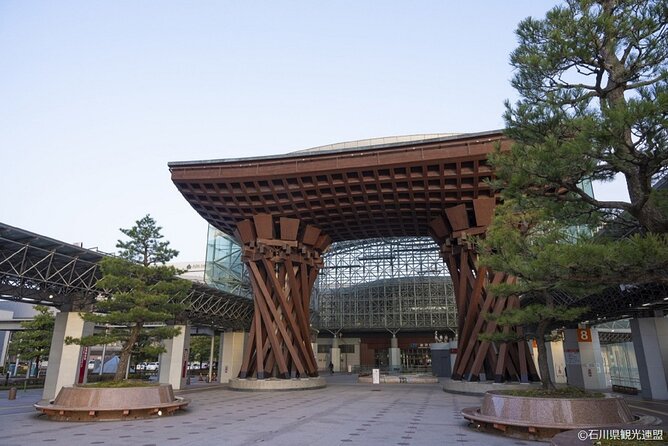
Meeting under Kanazawa Station
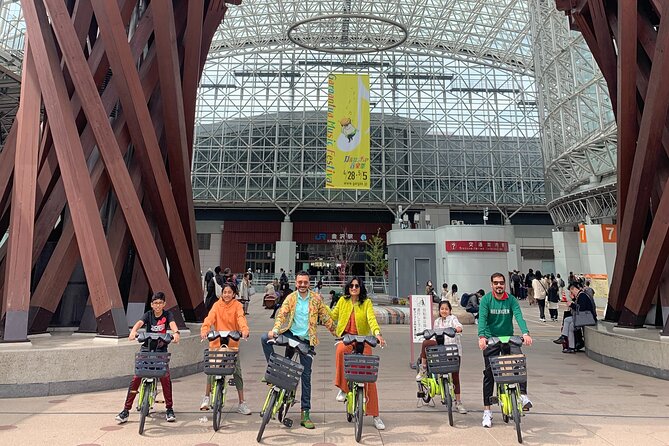
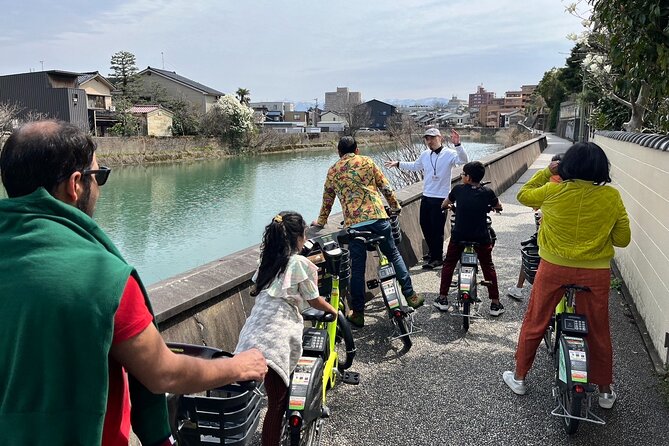
The meeting point is next to Kanazawa Station, under the train overpass at the Machi-Nori bike rental location, number 19. Look for the parking area with many green electric bicycles. Your guide carries a blue flag marked with the company name, New Japan Tourist.
That clear meeting point is useful in a busy station area. You will receive a brief introduction and get fitted to an e-bike before setting out. This is the time to ask questions about braking, electric assistance, and riding in a group.
The tour finishes in the Nagamachi Samurai District, not back at the station. Plan your day around that. The ending point is convenient if you want to keep exploring Nagamachi, but you will need to make your own way back to the station or hotel afterward.
One of the best practical features is continued bicycle access until midnight. The guided section ends in Nagamachi, but the bike can remain with you for the rest of the day. That can turn a $125 tour into a more useful day of transportation, particularly if you want to ride to dinner or revisit a district later.
Kazuemachi and Higashi Chaya: old Kanazawa beside the river
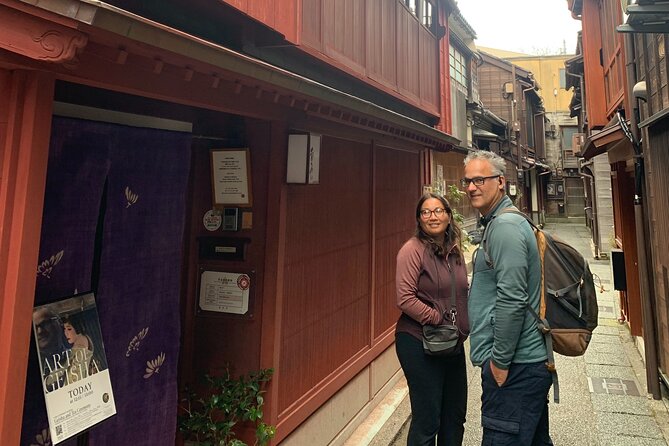
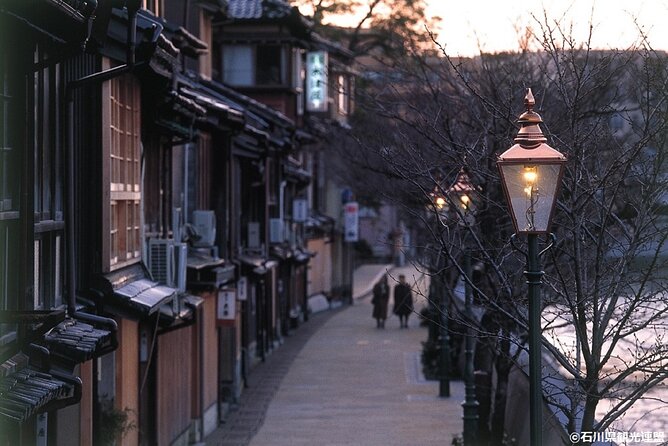
The first stops introduce two of Kanazawa’s most atmospheric areas. Kazuemachi Chaya District sits along the Asano River, with traditional wooden buildings and narrow streets. You stop for photographs and a short explanation before continuing toward Higashi Chaya.
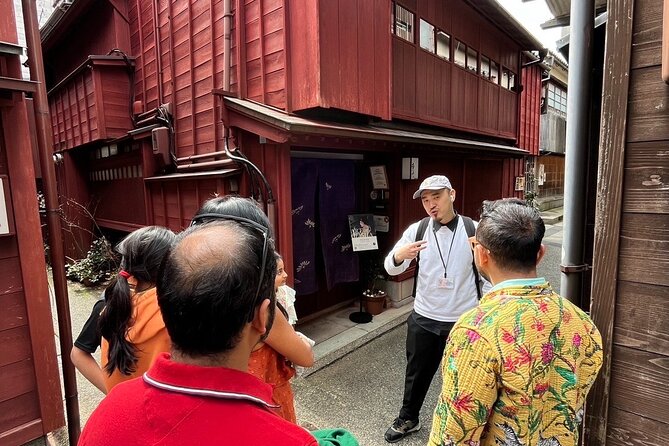
Higashi Chaya is one of Kanazawa’s best-known geisha districts. Its preserved wooden teahouses give the streets a strong sense of place, but you should remember that this is still a working neighborhood, not an open-air stage set. A guide helps you understand how the district functioned and points out details you might pass without noticing.
The listed stop is brief, about five minutes in Kazuemachi and ten minutes in Higashi Chaya, with some walking. That makes sense in a four-hour route, but it also sets a limit. If you want to enter several teahouses, browse shops slowly, or visit a museum in the district, you will need to return on your own.
This is where a local guide adds the most value. The buildings are attractive by themselves, but stories about geisha culture, traditional architecture, and present-day life give the streets more meaning. Guides including Rina and Ti have been praised for adding local details and answering questions in an approachable way.
Kenrokuen Garden deserves the longest stop
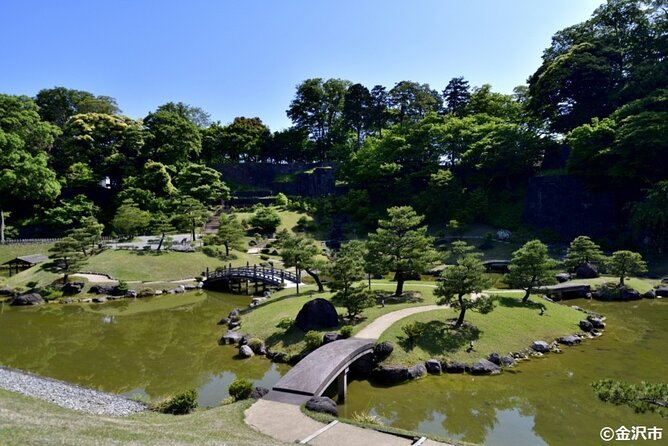
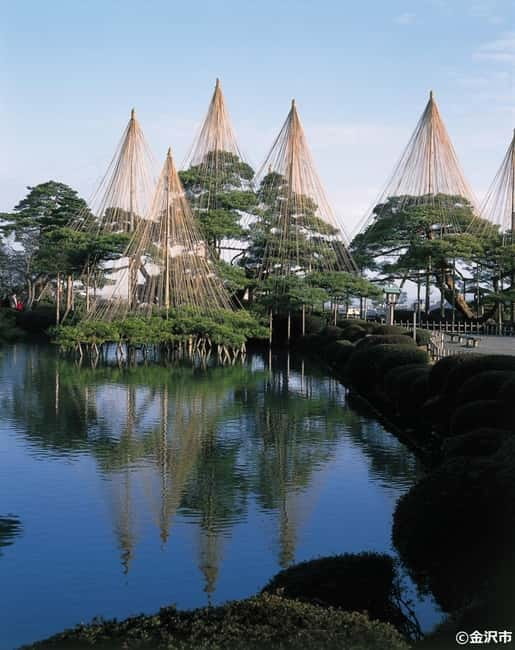
Kenrokuen receives about an hour, making it the central visit of the tour. It is one of Japan’s three most celebrated garden settings, known for carefully placed ponds, bridges, trees, and paths. The garden is designed for changing views, so the experience is not just one famous photograph. As you walk, the arrangement keeps shifting.
The hour gives you enough time to see the main character of the garden without turning the tour into a full garden study. Your guide explains how the elements work together and points out notable views. You will also have time for photographs and a slower look at the planting and water features.
I like this balance. Kenrokuen is too important to rush through, yet a guided tour covering several districts cannot give it half a day. If you have a special interest in Japanese gardens, plan to return independently for more time.
The walking here is important to understand. You park the bicycles and explore on foot, so this is not a ride where you stay in the saddle for four hours. One rider specifically noted that the tour includes substantial walking in addition to cycling. Wear shoes that can handle garden paths and bring water, especially in summer.
Same roads, a different day in the saddle:
- Tokyo Guided Small-Group Biking Tour
★ 5.0 · 1,250 reviews - Bike Tour Exploring North Kyoto plus Lunch
★ 5.0 · 1,087 reviews - Tokyo Great Cycling Tour
★ 5.0 · 811 reviews - Arashiyama Bamboo Forest & Hidden Gems Bike Tour (Early Bird)
★ 5.0 · 613 reviews
Kanazawa Castle and the calm of Gyokusen-an Garden
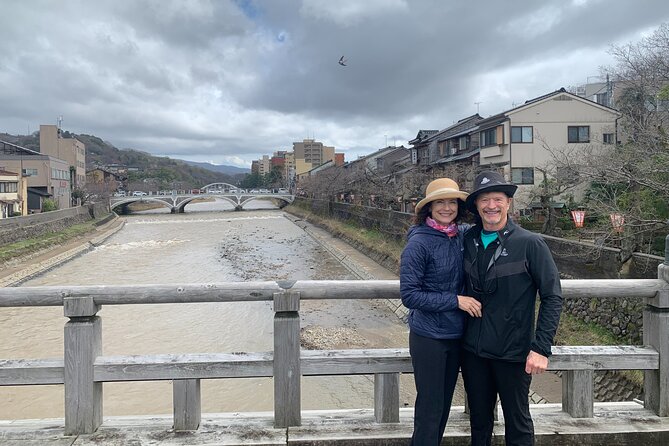
After Kenrokuen, the route continues to Kanazawa Castle, once the seat of the powerful Maeda clan. The castle visit is shorter, about 15 minutes, so expect an introduction to the grounds, architecture, and historical role rather than a detailed examination of every structure.
The castle is especially useful as context for the rest of the tour. Kanazawa’s gardens, samurai quarters, and cultural traditions are easier to understand once you know how much influence the Maeda family had over the city. The stop also offers broad views across the central part of Kanazawa.
The tour then slows down at Gyokusen-an Garden for about 30 minutes. Here you enjoy matcha and traditional Japanese sweets while looking across a serene samurai garden. This is not simply a snack break. It gives you a chance to sit, observe, and experience a small part of Japanese tea culture after the activity of the morning or afternoon.
This tea stop is one of the strongest reasons to choose this particular route. The bicycle gets you efficiently around town, but the matcha moment gives the day a different rhythm. You do not need to know tea ceremony etiquette in advance. The guide introduces the setting and helps you understand what you are being served.
The tea experience has been singled out as a highlight by several riders. It is also a good reason to avoid packing the rest of your day too tightly. You will appreciate the garden more if you are not already worrying about the next appointment.
Passing the 21st Century Museum
The route passes the 21st Century Museum of Contemporary Art, Kanazawa. You can admire its distinctive design from outside, but the museum is not a full tour stop.
That distinction matters. If you want to see the museum’s exhibitions, plan a separate visit. The e-bike tour is focused on giving you a broad view of Kanazawa, not covering every major attraction inside. Passing the museum works well as a quick piece of orientation, but it will not satisfy someone whose main goal is contemporary art.
This brief look also shows the range of the city. In a single ride, you move from wooden teahouses and castle grounds to modern museum architecture, then on to samurai residences. That contrast is one of the pleasures of Kanazawa.
Nagamachi brings the tour back to the samurai era
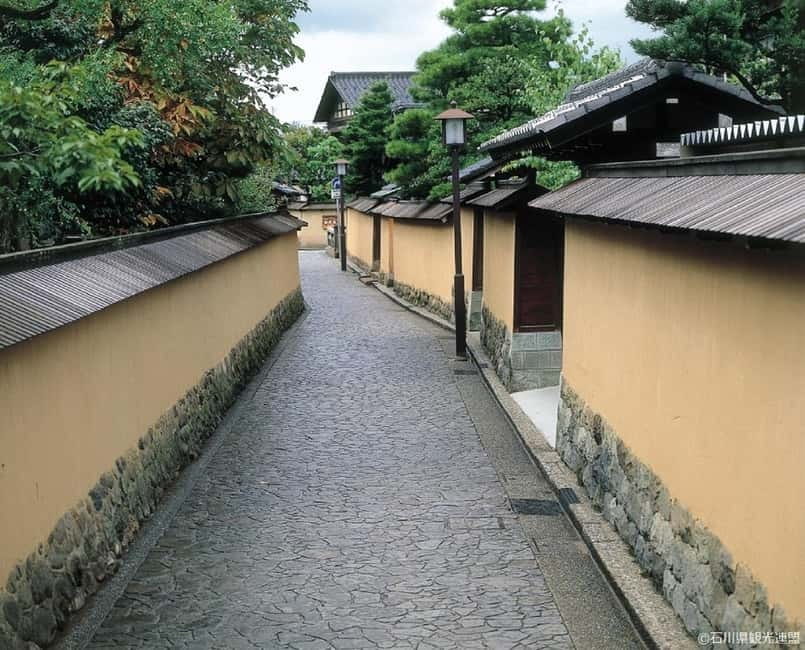
The final major stop is Nagamachi Samurai District. Preserved samurai residences and narrow streets offer a different mood from Higashi Chaya. Here, the focus shifts from entertainment districts and tea houses to the homes and daily world of the samurai class.
You spend about 20 minutes in the area, with sightseeing, photographs, walking, and some bicycle riding. That is enough for an introduction and a look at the district’s character. If you want to enter individual residences or spend more time examining gardens and walls, use the remaining bike access to return later.
Finishing in Nagamachi is practical. You can continue sightseeing immediately, stop for food, or ride elsewhere before midnight. The end point also means the tour does not waste time returning to the station after the last sight.
The guides make the difference
The strongest pattern in the feedback is the quality of the guiding. Rina is repeatedly praised for her history, humor, safety awareness, restaurant suggestions, and ability to adjust the pace. Liam is noted for clear English and a friendly approach. Ti is remembered for combining cultural context with a warm personality, while Maria is praised for her strong interest in Kanazawa’s past.
Other guide names include Yuki and Liqm. The exact guide depends on the day and language arrangement, but the experience appears designed around personal attention rather than a fixed speech delivered to every group.
That flexibility can matter more than polished commentary. Rina adjusted the route and pace for older riders and took extra care during very hot weather. Another guide made time for drink, restroom, and ice cream stops on a sunny day. These details show what you should expect from a good outing: not just facts, but practical attention to how the group is doing.
The tour is offered in English and Chinese. If you have particular interests, tell the guide early. The route can be tailored to some degree, and several riders appreciated recommendations for cafés, restaurants, and places to visit after the tour.
What $125 includes, and where the value lies
At $125 per person, this is not the cheapest way to see Kanazawa. The price includes the e-bike, English-speaking local guide, entrance fees, matcha, and traditional snacks. The small group and four-hour duration also matter because you are paying for a guided route, not simply a bicycle rental.
The strongest value comes from combining transport and interpretation. You cover more ground than you could comfortably walk, then get explanations at the places that make Kanazawa distinctive. The bicycle access until midnight improves the deal, especially if you use it after the guided portion.
The price is less compelling if you already plan to rent a bicycle independently and prefer to explore without a guide. It is also not the right choice if you want long, unhurried visits inside the museum, castle, or samurai homes. Think of it as a well-organized introduction to the city, with transportation built in.
Hotel pickup, drop-off, extra food, drinks, and personal expenses are not included. Bring money for anything beyond the supplied snacks and tea.
Weather, fitness, and who should book
Cycling tours depend on safe conditions. Rain, snow, strong winds, or unsafe roads can lead to cancellation. Keep some flexibility in your Kanazawa schedule, particularly during unsettled weather.
You should be able to ride a bicycle with confidence. The e-bikes are described as comfortable and easy to use, but electric assistance does not remove the need to steer, brake, and ride safely with a group. The tour is not suitable for children under 10, people who cannot ride a bike, or people over 95.
The route suits:
- First-time visitors who want a broad introduction to Kanazawa
- Couples and families with older children
- People with only one or two days in the city
- Anyone who finds long walking days tiring
- Riders who want local food and sightseeing suggestions
- Visitors who like a mix of famous sights and quieter streets
It may not suit you if you dislike bicycles, need step-free access throughout, or want to spend most of the day inside museums and historic buildings. Baby strollers and baby carriages are not allowed, and alcohol and drugs are prohibited.
Should you book the Kanazawa Half Day E-bike Tour?
I would choose this tour if you want to understand Kanazawa’s layout quickly and prefer seeing a city at street level. The combination of e-bike transport, Kenrokuen, the castle, the two geisha districts, Nagamachi, and matcha at Gyokusen-an gives you a broad and varied first look.
Book it early in your stay if possible. You can use the guide’s suggestions for the rest of your visit, and the bikes may help you get around until midnight. Just leave room in your schedule for weather and remember that the tour includes walking as well as riding.
Skip it if you want a slow, specialist visit to one attraction or if cycling is not comfortable for you. For most active visitors, though, the small group, flexible guides, and extra bike time make the $125 cost reasonable.
FAQ
Where does the Kanazawa e-bike tour begin?
It begins at Machi-Nori bike rental number 19, next to Kanazawa Station under the train overpass. Look for the green electric bicycles and a guide holding a blue flag marked with New Japan Tourist.
Where does the tour finish?
The guided tour finishes in the Nagamachi Samurai District.
How long is the tour?
The guided experience lasts four hours.
What sights are included?
The route includes Kazuemachi Chaya District, Higashi Chaya District, Kenrokuen Garden, Kanazawa Castle, Gyokusen-an Garden, and Nagamachi Samurai District. It also passes by the 21st Century Museum of Contemporary Art, Kanazawa.
Is the tea ceremony included?
Yes. Matcha and traditional Japanese snacks are included at Gyokusen-an Garden.
Are bicycle rentals included?
Yes. Electric bicycle rental is included in the tour price.
Can I keep the bicycle after the guided tour?
Yes. You have access to the bikes for the rest of the day until midnight.
What languages are available?
The tour is offered with English-speaking and Chinese-speaking guides.
How many people are in the group?
The tour is limited to eight participants.
Can the tour be canceled because of weather?
Yes. Cycling tours may be canceled for rain, snow, strong winds, or unsafe road conditions.
Is the tour suitable for children?
Children under 10 cannot join. Anyone taking part must be able to ride a bicycle.
Are hotel pickup and drop-off included?
No. You are responsible for reaching the meeting point and leaving the finishing point.
Just added around Japan
- Private E-MTB guided cycling around Mt. Aso volcano & grasslands★ 5.0 · 16 reviews
- Handmade Goshuin Book Experience Eco Friendly Upcycling in Tokyo★ 5.0 · 21 reviews
- Tokyo: West-Side Cycling and Food Tour with Guide★ 5.0 · 37 reviews
- Tokyo: Discover Traditional Tokyo Full-Day Bicycle Tour★ 4.7 · 131 reviews
- Tokyo: Rice Ball Making Class★ 5.0 · 14 reviews
- Tokyo: 3h Private E-bike Tours, Starting at Your Hotel★ 5.0 · 36 reviews
- Tokyo Bike Tour: Shibuya, Harajuku & Hidden Gems★ 5.0 · 20 reviews
- Tokyo: Private Cycling Tour with cute E-bike★ 5.0 · 11 reviews
E-Bike Tours, compared.

3-Hour Porto Highlights on a Electric Bike Guided Tour
Read our review →
Hills, Alfama, and Mouraria Tour by Electric Bike
Read our review →
Athens Scenic Electric Bike Tour with optional Acropolis visit
Read our review →
City Highlights 3-Hour Guided Electric Bike Tour
Read our review →
Rome EBike Tour: Appian Way, Catacombs & Roman Aqueducts
Read our review →
Top Highlights & Hidden Gems Tour by Cannondale E-Bike
Read our review →Browse the lists this tour appears in